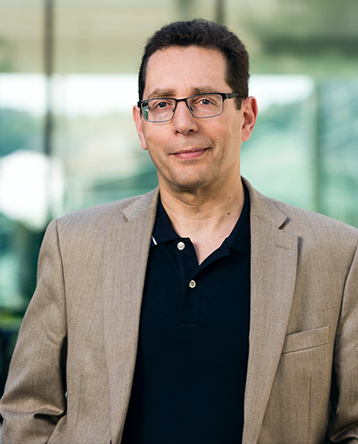
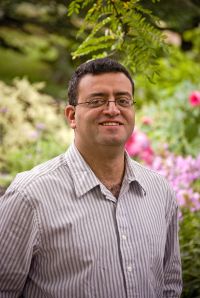
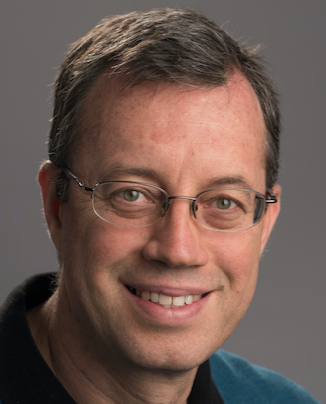
Mathias Lécuyer is an Assistant Professor in the Computer Science Department at the University of British Columbia (UBC) , part of the Faculty of Science . His research focuses on trustworthy AI systems, with emphasis on privacy (differential privacy), adversarial robustness, and causal machine learning. He leads the Systopia Lab and collaborates with groups such as UBC S&P, TrustML, and CAIDA. Education: PhD in Computer Science from Columbia University (2019), MSc from Columbia University (2013) and École Polytechnique (2011). Research Interests: Ensuring rigorous guarantees for AI systems via differential privacy, robustness against adversarial attacks, and causal inference. His work spans theoretical foundations and practical implementations in areas like privacy-preserving systems, federated learning, and transparent machine learning. Awards: SOSP Distinguished Artifact Honorable Mention (2024), Google Research Award (2022), Bourse Carnot Fellowship (2011), and UBC’s top teaching evaluations (2021). Advising & Service: Supervised over 20 students (PhD, MSc, undergrad) across privacy and machine learning topics. Serves on PCs for top conferences (OSDI, S&P, NeurIPS) and organizes workshops like TrustML @ UBC. Actively mentors high school students in ML research through outreach programs. Labs/Teams: Leads the Systopia Lab at UBC, focusing on AI safety and privacy. Collaborates with MSR, Google, and industry partners on practical system implementations.
Michael Farber is a Professor of Mathematics at Queen Mary University of London's School of Mathematical Sciences. Previously, he held professorships at the Universities of Warwick, Durham, and Tel Aviv. His research focuses on applied and computational topology, topological robotics, stochastic topology, and their applications in distributed computing, genomics, and brain connectivity modeling. He has authored influential monographs such as Invitation to Topological Robotics and Topology of Closed One-Forms . Farber's current research includes projects funded by the Leverhulme Trust and EPSRC, addressing probabilistic and deterministic topology, automated motion planning, and topological robotics. He advises PhD students including Lewin Strauss, Gabriele Beltramo, and Lewis Mead. His work has been recognized with the Royal Society Wolfson Research Merit Award. Key research interests include parametrized topological complexity, sequential motion planning algorithms, and the intersection of topology with AI and robotics. His collaborations span interdisciplinary fields, such as using topological methods in cancer research and genomic analysis. Grants and funding include the Leverhulme Trust's 'Probabilistic and Deterministic Topology' and EPSRC's 'Topology of Automated Motion Planning.' Farber is affiliated with Queen Mary's Centre for Geometry, Analysis, and Gravitation, contributing to advancing topological methodologies in algorithmic and stochastic systems.
Xiaolei Fang is Associate Professor in the Edward P. Fitts Department of Industrial and Systems Engineering at North Carolina State University. His research develops advanced statistical learning, deep learning, and optimization methods for industrial applications involving high-dimensional data, with particular focus on condition monitoring, failure prognostics, and system performance optimization. He holds a PhD in Industrial Engineering and MS in Statistics from Georgia Tech. Professor Fang's research integrates machine learning with industrial engineering to solve complex problems in predictive maintenance, quality control, and energy systems. His methodological innovations include federated learning approaches for privacy-preserving prognostics, distributionally robust machine learning models, and tensor-based statistical methods for manufacturing quality diagnostics. He has received multiple prestigious awards including the ISE Outstanding Research Award (2024), Sigma Xi Best PhD Thesis Award (2019), and SAS Data Mining Best Paper Award (2016). His research has been funded by NSF, Cisco Systems, and the US Department of Energy. Professor Fang teaches courses in Quality Design & Control, Statistical Models for Systems Analytics, High-Dimensional Data Analytics, and Optimization Models. He has supervised 9 PhD students to completion and currently advises 7 graduate students working on projects spanning federated learning for prognostics, tensor-based quality control, and machine learning applications in manufacturing and energy systems.
Anshumali Shrivastava is an Associate Professor of Computer Science, Electrical and Computer Engineering, and Statistics at Rice University, affiliated with the George R. Brown School of Engineering. His research focuses on large-scale machine learning, randomized algorithms for big data, and graph mining. He holds a PhD from Cornell University (2015) and an MSc from the Indian Institute of Technology Kharagpur (2008). His research interests span scalable deep learning, efficient neural network inference, and probabilistic algorithms. He has pioneered techniques in compressed learning, hashing-based search, and distributed optimization for handling massive datasets. Notable contributions include methods for accelerating LLM inference, memory-efficient quantization, and graph processing algorithms. Teaching: Probabilistic Algorithms, Large-Scale ML, and Machine Learning Seminars Awards: Charles W. Duncan Jr. Achievement Award (2023), Young Faculty Research Award (2021), NSF CAREER Award (2017), and multiple best paper awards His work bridges algorithm design with practical applications in recommendation systems, genomics, and edge computing. Current efforts focus on sustainable AI, hardware-aware compression, and efficient training/inference pipelines for large models.
Shirin Saeedi Bidokhti is an Assistant Professor at the University of Pennsylvania's School of Engineering and Applied Science with primary appointment in Electrical and Systems Engineering and secondary appointment in Computer and Information Science. She is affiliated with the Warren Center for Network and Data Sciences. She holds M.Sc. and Ph.D. degrees from EPFL and completed postdoctoral work at Stanford and Technical University of Munich. Her research focuses on information theory, networking, data compression, and machine learning. Her recent publications demonstrate strong emphasis on neural compression algorithms, network optimization during the COVID-19 pandemic, and age-of-information theory. Awards include: 2023 IEEE Communications Society & Information Theory Society Joint Paper Award 2021 NSF CAREER Award 2019 NSF-CRII Award Swiss National Science Foundation Fellowships She advises PhD students including Xingran Chen. Current research involves developing data compression algorithms for IoT applications and network strategies for pandemic response.
Venkatesan Guruswami is a Chancellor's Professor in the Department of EECS and a Senior Scientist at the Simons Institute for the Theory of Computing at UC Berkeley . He also holds a Professor position in the Department of Mathematics . His academic journey began with a B.Tech in Computer Science from the Indian Institute of Technology, Madras (1997) , followed by a Ph.D. in Computer Science from the Massachusetts Institute of Technology (2001) . After a Miller Research Fellowship at UC Berkeley (2001–02), he held faculty roles at the University of Washington and Carnegie Mellon University before returning to UC Berkeley in January 2022. Education : B.Tech, IIT Madras (1997) Ph.D., MIT (2001) Professional Affiliations : Chancellor's Professor, UC Berkeley (EECS) Senior Scientist & Interim Director, Simons Institute Professor, UC Berkeley (Mathematics) Guruswami's research spans multiple domains within Theoretical Computer Science , focusing on Error-Correcting Codes , Approximation Algorithms , Randomness in Computing , Probabilistically Checkable Proofs , and Computational Complexity . His groundbreaking work in List Decoding has enabled codes with minimal redundancy for correcting worst-case errors, while recent advancements include Polar Codes , Deletion-Correcting Codes , and Constraint Satisfaction Problems . He has also contributed to Quantum Coding Theory , Locally Recoverable Codes , and Approximation Hardness in various computational contexts. His publications reflect a deep engagement with interdisciplinary topics. Key trends include: Quantum Information Theory : Quantum LDPC codes, transversal gates, and quantum storage. Algebraic Coding : Reed-Solomon codes, AG codes, and polynomial-based constructions. Computational Complexity : Hardness of approximation, CSPs, and parameterized intractability. Data Transmission : Polar codes, deletion channels, and feedback mechanisms. Algorithmic Techniques : Spectral methods, semirandom models, and Lasserre hierarchy applications. Guruswami has received numerous accolades, including the Simons Investigator Award , Presburger Award , Packard Fellowship , Sloan Research Fellowship , ACM Doctoral Dissertation Award , and the IEEE Information Theory Society Paper Award . He is an ACM Fellow (2017) and IEEE Fellow (2019) , with recent honors like the Guggenheim Fellowship (2023) and AMS Fellow (2023) . As an advisor, he has mentored over 25 PhD and postdoctoral researchers , including Atri Rudra , Prasad Raghavendra , and Peter Manohar , whose work has won awards like the Edmund M. Clarke Doctoral Dissertation Award and CRA Outstanding Undergraduate Researcher Award . His research is supported by grants from the National Science Foundation , Packard Foundation , and Sloan Foundation . He also serves as Editor-in-Chief of the Journal of the ACM and holds leadership roles in IEEE and arXiv moderation. Guruswami is actively involved in Simons Institute programs and co-organized workshops on Coded Computation and Information Theory . His work bridges theoretical advancements with practical applications in Cloud Storage , Quantum Computing , and Group Testing , including pandemic-era contributions like AC-DC: Amplification Curve Diagnostics for SARS-CoV-2 .
Nikolai Matni is an Assistant Professor in the Department of Electrical and Systems Engineering at the University of Pennsylvania. He holds a secondary appointment in the Department of Computer and Information Science and is a member of the Applied Mathematics and Computational Sciences (AMCS) graduate group. His research focuses on integrating learning, optimization, and control for safety-critical and data-driven cyber-physical systems, with applications in robotics, autonomy, and distributed control. Secondary Appointment: Computer and Information Science (University of Pennsylvania) Labs/Centers: GRASP Lab, PRECISE Center His research bridges machine learning, robust control, and autonomous systems, particularly in developing guaranteed-safe strategies for cyber-physical systems. He emphasizes the importance of reliability and robustness in learning-based control for applications like self-driving vehicles and agile robots, where failures could be catastrophic. Recent publications highlight advancements in vision-based robotic control, neural ODEs for motion planning, adversarial exploration strategies, and stability-constrained learning. These works span conferences such as ICRA, CoRL, WACV, IROS, and L4DC, with a focus on safety-critical applications. Notable scientific awards include the NSF CAREER Award, George S Axelby Award (for his work on System Level Synthesis), AFOSR YIP award, and Google Research Scholar Award. He was also elevated to IEEE Senior Member. Matni advises Ph.D. students in Computer and Information Science (CIS), Electrical and Systems Engineering (ESE), and Applied Mathematics and Computational Sciences (AMCS). His teaching includes courses like ESE 2030 (Linear Algebra with Engineering/AI applications) and others focused on control theory and robotics.
Artur Czumaj is a Professor in the Department of Computer Science at the University of Warwick and serves as the Director of the Centre for Discrete Mathematics and its Applications (DIMAP). He is a member of the Division of Theory and Foundations (FoCS) and holds affiliations with the Alan Turing Institute, the Warwick Data Science Institute (WDSI), and the Warwick Centre for Doctoral Training in Mathematics of Real-world Systems (MathSys). Previously, he served as Head of Department and President of the European Association for Theoretical Computer Science (EATCS) from 2020 to 2024. His research lies at the core of theoretical computer science, focusing on the design and analysis of algorithms, particularly randomized, sublinear, parallel, and distributed algorithms. His work spans graph theory, combinatorics, computational geometry, algorithmic game theory, and property testing. He has led major research initiatives funded by EPSRC, IBM, the Royal Society, and Weizmann-UK grants. The trends in his recent publications highlight a strong emphasis on sublinear algorithms, dynamic graph algorithms, and property testing, with recurring themes in randomized methods, graph processing, and efficient data structures. His work bridges foundational theory with applications in data summarization, network analysis, and computational geometry. EPSRC grants: EP/D063191/1, EP/G064679/1, EP/G069034/1, EP/J021814/1, EP/N011163/1, EP/V01305X/1, EPSRC studentship IBM Faculty Award Royal Society International Exchanges Scheme Weizmann-UK Making Connections Grants on combinatorial and algorithmic primitives and the interplay between algorithms and randomness Peter Davies received the 2020 Warwick Faculty of Science Thesis Prize under his supervision Artur Czumaj has supervised numerous PhD students, including Anna Adamaszek, Michal Adamaszek, Sam Coy, Peter Davies, Michail Fasoulakis, Jan Hladky, Wang Xin, and Hairong Zhao. His research has been supported by sustained grant funding, reflecting his leadership in theoretical computer science. He has organized major workshops at Dagstuhl, Oberwolfach, Simons Institute, and the University of Warwick, and has served on the steering committees of HALG and as PC Chair for SODA 2018 and ICALP 2020. He is actively involved in organizing key research events, including the Simons Institute Special Semester on Sublinear Algorithms (2024), the Workshop on Sublinear Graph Simplification (2024), and the Computational Complexity Conference (CCC 2023) at Warwick. He also co-organizes the Warwick-Weizmann workshops and the IGAFIT Algorithmic Postdocs Workshop, fostering international collaboration in algorithms research.
Prof. Dr. Peter Gomber is a Professor of e-Finance at the Faculty of Economics and Business Administration , Goethe University Frankfurt, since 2004. He co-chairs the Data Science Institute (efl) and holds adjunct professorships at the University of Bamberg (2004), Mannheim (2009), and Luxembourg (2018). His roles include board memberships at the Frankfurt Stock Exchange, Clearstream Banking AG, and advisory positions for European regulatory bodies. Education : Diplom-Kaufmann in Economics, University of Gießen (1999), PhD in Business Informatics. Research Interests focus on market microstructure , FinTech , electronic trading , and regulatory impacts on financial markets. His work explores algorithmic trading , liquidity dynamics , and AI-driven compliance . Publication Trends (15 most recent) emphasize digital finance , market fragmentation , regulatory analysis , and AI applications in trading and compliance. Key subfields include blockchain , high-frequency trading , and news-driven liquidity shocks . Scientific Awards : Reuters Innovation Award (2000) Hochschulpreis des Deutschen Aktieninstituts (1999) IBM SUR Grant (2007) Best Paper Awards (multiple conferences) Best Information Systems Publications Award (2020) Advising & Grants : Teaches in executive programs (Goethe Business School, Amsterdam Institute of Finance). Secured grants from public/private institutions, including a U.S. patent for market model innovation. Labs & Teams : Leads the e-Finance professorship and contributes to the Data Science Institute (efl) , fostering industry-academia collaborations with Deutsche Börse, Capveriant, and others.
Norman Sadeh is a Professor in the School of Computer Science at Carnegie Mellon University (CMU), where he has made significant contributions to cybersecurity, privacy, and AI research. He has co-founded and co-directed several groundbreaking graduate programs at CMU, including the Privacy Engineering Program (2012-present), the Ph.D. Program in Societal Computing (2003-2013), and the MBA track in Technology Strategy and Product Management (2005-2017). Carnegie Mellon University, School of Computer Science Software and Societal Systems Department CyLab Security and Privacy Institute Manufacturing Futures Institute Dr. Sadeh received his Ph.D. in Computer Science at CMU with a major in Artificial Intelligence and a minor in Operations Research. He holds an M.Sc. in computer science from the University of Southern California and a BS/MS degree in electrical engineering and applied physics from the Free University of Brussels (Belgium) as 'Ingénieur Civil Physicien.' Professor Sadeh's research spans cybersecurity, online privacy, Human-AI Interaction, AI governance, mobile computing, the Internet of Things, user-oriented machine learning, and language technologies. He is particularly known for his pioneering work on AI-based privacy enhancing technologies, including privacy assistants, automated privacy compliance tools, and NLP-based privacy solutions. His work has influenced the design of privacy features at major technology companies including Apple, Google, and Facebook/Meta, as well as privacy policies at regulatory agencies like the Federal Trade Commission and the California Office of the Attorney General. Analysis of his recent publications shows a strong focus on practical privacy solutions, particularly in mobile and IoT contexts, with an emphasis on making privacy more usable and understandable for end users. His work bridges technical innovation with policy implications, addressing both the technological and human aspects of privacy protection. 2018 Outstanding Entrepreneur of the Year award from the Pittsburgh Venture Capital Association Test of time award by the AAAI Conference on Web and Social Media (ICWSM) Gartner Group's Magic Quadrant leader in Security Awareness Computer-Based Training for 4 consecutive years Deloitte's Technology Fast 500 recognition for 3 consecutive years Professor Sadeh has advised numerous students, including PhD candidates like Aerin (Shikhun) Zhang, whose dissertation focused on understanding diverse privacy attitudes. His research has been funded through various grants, including NSF SaTC projects, and has resulted in technologies that protect tens of millions of users worldwide. He also founded Wombat Security Technologies, which was acquired by Proofpoint in 2018 and whose technologies are used by over 75% of Fortune 100 companies. Professor Sadeh leads several research initiatives including the Privacy Engineering Program, the Usable Privacy Policy Project, the Personalized Privacy Assistant Project, and CMU's Privacy Infrastructure for the Internet of Things. His Mobile Commerce Lab and E-Supply Chain Management Lab have produced influential research that has been commercialized by major organizations including IBM, Raytheon, Boeing, and the U.S. Army.
M. Tamer Özsu is a University Professor of Computer Science at the David R. Cheriton School of Computer Science, University of Waterloo, where he holds a Cheriton Faculty Fellowship. He also serves as a Distinguished Visiting Professor at Tsinghua University and is the Founding Director of Waterloo-Huawei Joint Innovation Laboratory since 2018. His extensive contributions to computing have earned him numerous prestigious awards including the 2024 ACM Presidential Award for long-standing and significant contributions to the computing field. Professor Özsu's research focuses on data engineering aspects of data science, particularly addressing data management issues with two main foci: management of non-traditional data and large-scale distributed data management. He is renowned for his seminal book "Principles of Distributed Database Systems" (co-authored with Patrick Valduriez), now in its fourth edition, and the "Encyclopedia of Database Systems" (co-edited with Ling Liu), in its second edition. His work bridges theoretical foundations with practical system implementations, targeting grand societal challenges through computational approaches. His recent publications reveal a strong trend toward graph analytics, streaming data processing, and the integration of large language models with vector data management. The research shows increasing focus on GPU-accelerated graph processing, RDF query optimization, and multimodal data analysis, reflecting the evolution of data management challenges in the era of big data and AI. His work continues to address fundamental challenges in distributed data systems while adapting to emerging technologies and application domains. Scientific Awards and Fellowships ACM Presidential Award (2024) IEEE TCDE Education Award (2024) IEEE Innovation in Societal Infrastructure Award (2022) CS Can | Info Can Lifetime Achievement Award (2018/2019) ACM SIGMOD Test-of-Time Award (2015) ACM SIGMOD Contributions Award (2006) The Ohio State University College of Engineering Distinguished Alumnus Award (2008) Fellow of the Royal Society of Canada Fellow of the American Association for the Advancement of Science (AAAS) Life Fellow of the Association for Computing Machinery (ACM) Life Fellow of the Institute of Electrical and Electronics Engineers (IEEE) Fellow of the Asia-Pacific Artificial Intelligence Association (AAIA) Elected member of the Science Academy, Türkiye Professor Özsu has been deeply involved in academic leadership and community building. As Founding Editor-in-Chief of ACM Books (2013-2019), he launched a series that by 2019 had published 28 major books with another 30 under contract. His service to ACM, particularly through SIGMOD, has been exemplary and widely recognized. He directs the Waterloo-Huawei Joint Innovation Laboratory, which focuses on cutting-edge research in data management and distributed systems, fostering strong industry-academia collaboration.
Olga Kokshagina serves as an Associate Professor in Innovation & Entrepreneurship at The University of Sydney, with adjunct research appointments at Monash University's Emerging Technology Lab and the UNU Hub - Learning Planet Institute. She is also an active member of the French Digital Council. Her research program investigates technology-mediated collaboration in complex innovation systems, focusing on healthcare transformation, deep tech commercialization, and co-design methodologies. Kokshagina has led high-impact projects with global institutions including the World Health Organization, OECD, STMicroelectronics, Vall d’Hebron Hospital, and Roche, demonstrating strong translational research capabilities. Her scholarly work centers on value-based healthcare innovation, digital platform governance, and AI-enhanced collaborative systems. She examines how organizational capabilities evolve during technological transitions, particularly in healthcare ecosystems, and investigates regulatory frameworks for algorithmic control in digital markets. Kokshagina's research bridges theoretical innovation management with practical applications, evidenced by her co-founding of Ninti—an initiative advancing women's health in workplace environments—and her Open Covid-19 crowdsourcing campaign that mobilized global expertise during the pandemic. Analysis of her 2021-2025 publications reveals a cohesive trajectory examining innovation in socio-technical systems. Key themes include value digitalization in healthcare, mission-oriented interdisciplinary collaboration, and the impact of big data on technology management. Her work consistently addresses grand challenges through mixed-methods approaches, spanning conceptual frameworks in journals like Research Policy to applied studies in Technovation and R&D Management, with increasing focus on quantum readiness and AI-augmented learning systems. No scientific awards are documented in the provided materials. Kokshagina currently holds a 2025 research grant for "Co-designing societal readiness and scenario building for quantum" through the University of Sydney Nano Institute/Catalyst program. While no student supervision activities are mentioned, her collaborative projects involve multi-institutional teams across industry, government, and academic sectors. Kokshagina maintains active roles within the University of Sydney Nano Institute and contributes to international policy discourse through the French Digital Council. Her Ninti initiative exemplifies her commitment to human-centered innovation, while ongoing collaborations with healthcare providers like Roche and Vall d’Hebron Hospital demonstrate sustained engagement with real-world implementation challenges in value-based care systems.
Mohamed F. Mokbel is a Distinguished McKnight University Professor in the Department of Computer Science and Engineering at the University of Minnesota - Twin Cities , where he also serves as the Director of Graduate Studies. He is recognized as an IEEE Fellow and ACM Distinguished Member for his contributions to spatially- and privacy-aware systems. His research focuses on database systems , spatial data management , and GIS (Geographic Information Systems) , with significant work in spatiotemporal data, location-based services, and machine learning for spatial applications. His most recent publications address scalable BERT-based trajectory imputation , spatial logistic regression frameworks , and spatiotemporal big data decay techniques . Key Awards: Distinguished McKnight University Professor (2023) ACM SIGSPATIAL 10-Year Impact Award (2022) IEEE Fellow (2020) ACM Distinguished Member (2017) NSF CAREER Award (2010) Selected Conference Papers: Recathon (2015, IEEE MDM Best Paper) ST-Hadoop (2017, SSTD Best Paper) KAMEL (2023, ACM SIGMOD Demo) Academic Service: Editor-in-Chief, ACM Transactions on Spatial Algorithms and Systems (2024–) General Co-Chair, ACM SIGSPATIAL 2025 Past Chair, ACM SIGSPATIAL (2014–2017)
Ion Stoica is a Professor in the Electrical Engineering and Computer Sciences Department at the University of California, Berkeley, where he holds the Xu Bao Chancellor Chair. He serves as Director of the Sky Computing Lab and is Executive Chairman of both Databricks and Anyscale. His research spans distributed systems, cloud computing, and AI systems, with significant contributions to large-scale data processing frameworks. Stoica's research interests focus on the intersection of AI and systems, with emphasis on developing practical implementations that bridge theoretical foundations with real-world deployability. His work addresses fundamental challenges in distributed computing, resource management, and large-scale machine learning systems. Current projects include Ray (a distributed execution framework), vLLM (a high-throughput inference engine for LLMs), Chatbot Arena (an open platform for human preference evaluations), and SkyPilot (a framework for running AI workloads across clouds). His research output demonstrates a consistent trajectory toward more efficient, scalable systems for modern AI workloads, particularly focusing on optimizing inference performance, resource utilization, and cross-cloud deployment. Recent publications reflect growing interest in large language model serving, video generation optimization, and agent-based systems. ACM Fellow SIGOPS Hall of Fame Award (2015) SIGCOMM Test of Time Award (2011) ACM Doctoral Dissertation Award (2001) Member of National Academy of Engineering Honorary Member of the Romanian Academy Stoica has advised an extensive number of doctoral students who have gone on to prominent positions in academia and industry, including assistant professorships at Stanford, MIT, Carnegie Mellon, and other top institutions. He has received significant research funding through his lab activities and startup ventures. His research group has been particularly successful in translating academic research into widely adopted open-source technologies and commercial products. Stoica leads the Sky Computing Lab at UC Berkeley, which focuses on developing systems for AI workloads across multiple clouds. His research group has produced numerous influential open-source projects including Apache Spark, Apache Mesos, and Alluxio, which have become industry standards for large-scale data processing. The lab maintains strong industry partnerships while pursuing fundamental research in distributed systems and AI infrastructure.
Yaoqing Yang is an Assistant Professor at the Department of Computer Science, Dartmouth College. He earned his PhD in Electrical and Computer Engineering (ECE) from Carnegie Mellon University (CMU) and completed postdoctoral research at UC Berkeley's RISE Lab. His work focuses on robustness in machine learning systems, spectral analysis of neural networks, and algorithm design for structured data like graphs and point clouds. PhD in ECE, Carnegie Mellon University Postdoc, RISE Lab, UC Berkeley BS in Electrical Engineering, Tsinghua University Research interests include diagnosing and mitigating model failures through heavy-tailed spectral analysis, decision boundary studies, and loss landscape visualization. He develops methods such as AlphaPruning and SharpBalance to enhance large language models and ensemble learning. Recent work spans 2025 publications on spectral evolution of neural networks, agentic AI for science, and LLM safety. Key collaborations include Michael W. Mahoney and other researchers. Burke Research Initiation Award, Dartmouth (2024) DOE grant for scientific foundation models (2024) DARPA grant for AI robustness (2024) He serves as Area Chair at NeurIPS 2025 and ICLR 2026, and has presented at Google Research, Lawrence Berkeley National Laboratory, and leading universities worldwide. His lab at Dartmouth engages in theoretical and applied research, with connections to UC Berkeley's RISE Lab and collaborations across institutions like CMU and Tsinghua University.