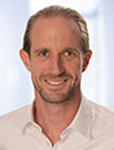
Matthias BeckmannView profile
Researcher
Matthias Beckmann is an active researcher specializing in mathematical imaging, with a strong focus on the Radon Transform and its applications in computerized tomography and image processing. His work spans theoretical developments, algorithm design, and practical implementations in medical and computational imaging. He has established significant collaborations with researchers across multiple institutions, particularly with Ayush Bhandari, Felix Krahmer, and Robert Beinert. Beckmann's research primarily centers on the Modulo Radon Transform, a specialized area within mathematical imaging that addresses challenges in high-dynamic-range tomography and limited data scenarios. His work bridges theoretical mathematics with practical computational methods, developing novel inversion formulas, reconstruction algorithms, and classification techniques. He has made significant contributions to understanding the properties of the Modulo Radon Transform, developing Fourier-domain inversion methods, and creating normalized transforms that provide invariance and robustness in image classification tasks. Analysis of Beckmann's publication trends reveals a consistent progression from theoretical foundations to practical applications. His early work established the mathematical framework for the Modulo Radon Transform, while more recent publications demonstrate applications in machine learning, optimal transport theory, and specialized imaging scenarios like thermogram analysis of watermarks in manuscripts. His research shows increasing integration of neural network approaches with traditional mathematical imaging techniques, particularly in addressing indirect measurement problems. Beckmann has contributed to multiple prestigious journals including SIAM Journal on Imaging Sciences, SIAM Journal on Mathematics of Data Science, and IEEE Transactions on Computational Imaging, demonstrating the significance and recognition of his work within the mathematical imaging community. His publications span conference proceedings, journal articles, and technical reports, showing versatility in communicating research findings to different academic audiences. Through his collaborations and publication record, Beckmann appears to be actively involved in research teams focused on computational imaging and mathematical methods for image processing. His work on lecture notes suggests involvement in educational activities related to computerized tomography, though specific teaching roles or institutional affiliations are not explicitly documented in the available publication records.