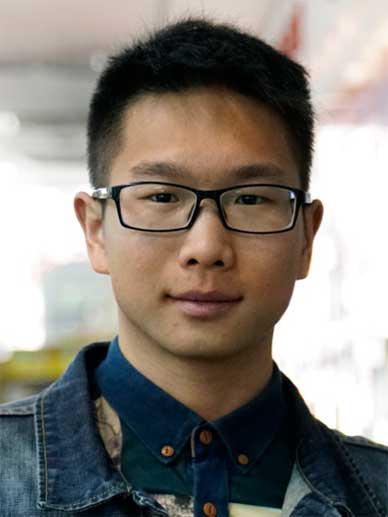
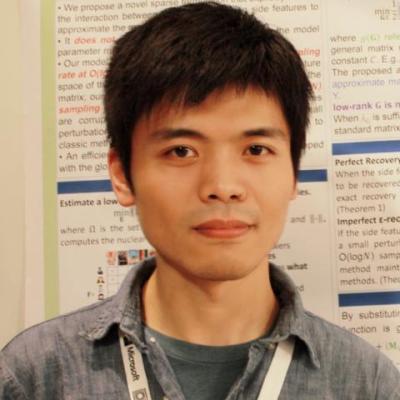
Heng Huang is the Brendan Iribe Endowed Professor in the Department of Computer Science and the Department of Electrical and Computer Engineering at the University of Maryland, College Park . He earned his Ph.D. in Computer Science from Dartmouth College and holds prior degrees from Shanghai Jiao Tong University. His research focuses on advancing the foundations and applications of artificial intelligence, particularly in machine learning, data mining, natural language processing, computer vision, and biomedical informatics . His work integrates large-scale optimization, fairness, and robustness in deep learning systems. Heng Huang’s recent publications demonstrate a strong trend in large language models, federated learning, model watermarking, continual learning, and medical image analysis . His work appears consistently in top venues like NeurIPS, ICML, CVPR, ICLR, and MICCAI, reflecting a broad impact across theoretical and applied AI. He actively mentors students and postdocs, seeking highly motivated researchers in machine learning and related domains. His work has significant implications for healthcare, privacy, and trustworthy AI.
Dai Zhongxiang is an Assistant Professor and Presidential Young Fellow at the School of Data Science, The Chinese University of Hong Kong, Shenzhen (CUHKSZ), where he joined in August 2024. Previously, he was a Postdoctoral Associate at MIT's Laboratory for Information and Decision Systems (January-June 2024) and a Postdoctoral Fellow at the National University of Singapore's Department of Computer Science (April 2021-December 2023). He completed his Ph.D. in Artificial Intelligence at NUS under the supervision of Bryan Kian Hsiang Low and Patrick Jaillet. Dr. Dai's research focuses on the intersection of theoretical and practical AI, with particular emphasis on large language models (LLMs) and optimization techniques. His work spans both theoretical foundations of multi-armed bandits and Bayesian optimization, as well as practical applications in LLM inference, including prompt optimization, in-context learning, personalization of LLMs, LLM-based agents, and scaling up test-time computation of LLMs. His research approach often bridges theoretical principles with real-world applications, particularly in AI4Science problems. His recent publications demonstrate a clear trend toward advancing LLM capabilities through optimization techniques, with increasing focus on practical deployment challenges. The research spans both theoretical contributions to optimization theory and applied work on enhancing LLM performance in real-world scenarios. His work on dueling bandits, neural bandits, and zeroth-order optimization has been consistently published in top-tier venues including NeurIPS, ICML, ICLR, and ACL. Presidential Young Fellow, CUHKSZ (2024) Dean's Graduate Research Excellence Award, NUS (2021) Research Achievement Award × 2, NUS (2019 & 2020) Singapore-MIT Alliance Graduate Fellowship (2017) Dr. Dai actively mentors multiple Ph.D. students and research assistants, with several of his students' papers accepted to top conferences. His research has received significant attention, with invitations to serve as Area Chair for NeurIPS 2025 and ICLR 2025, reflecting his growing influence in the machine learning community. His work bridges theoretical machine learning with practical applications in large-scale AI systems.
Haitong Li is an Assistant Professor in the School of Electrical and Computer Engineering at Purdue University's College of Engineering, joining the faculty in 2022. His research bridges nanoelectronic devices, integrated circuits, and nanotechnology-inspired AI hardware to address critical challenges in energy-efficient artificial intelligence systems. Education: Ph.D. in Electrical Engineering, Stanford University Research Interests: Dr. Li pioneers emerging memory technologies—particularly Resistive RAM (RRAM)—for in-memory computing and neuromorphic systems. His work focuses on 3D monolithic integration of RRAM and gain cell memory with CMOS to enable edge AI, with recent breakthroughs in hardware acceleration for large language models and sustainable computing. Key innovations include carbon footprint prediction for LLMs and zeroth-order fine-tuning techniques. Publication Trends: Dr. Li's 2023-2025 publications reveal a strategic shift toward sustainable AI hardware, emphasizing carbon-aware LLM inference and edge deployment. His research consistently targets data movement reduction through memory-centric architectures, spanning photonic accelerators, neuro-symbolic computing, and heterogeneous 3D integration. Awards: No scientific awards were documented in the provided sources. Advising and Grants: Current advisees and grant funding details were not specified in the available materials. Labs and Teams: Research group composition and laboratory facilities were not described in the source text.
Geng Yuan is an Assistant Professor at the University of Georgia's School of Computing, specializing in AI systems, energy-efficient deep learning, and hardware-software co-design. His work bridges machine learning algorithms with emerging hardware technologies like superconducting circuits and ReRAM. He holds a Ph.D. in Computer Engineering from Northeastern University (2023) and a Master's in Electrical & Computer Engineering from Syracuse University (2016). Doctor of Philosophy (Ph.D.) in Computer Engineering, Northeastern University (2023) Master of Science (M.S.) in Electrical & Computer Engineering, Syracuse University (2016) Bachelor of Science (B.S.) in Electrical Engineering, Beijing University of Technology (2014) His research focuses on optimizing deep learning systems for edge computing and mobile platforms through techniques like model compression, sparse training, and hardware-aware neural architecture search. Recent projects include adapting large language models via hybrid-grained pruning and developing ultra-low-power AQFP circuits for binary networks. Geng Yuan's publications span top venues like NeurIPS, CVPR, ICML, ICLR, ISCA, and DAC, with notable awards including a Best Paper Award at ICLR Workshop 2021, Spotlight Papers at ICLR 2023 and NeurIPS 2021, and a Design Contest 1st Place at ISLPED 2020. Best Paper Award (ICLR Workshop'21) Spotlight Paper Award (ICLR'23, NeurIPS'21) Design Contest 1st Place (ISLPED'20) Best Paper Nomination (DATE'21, ISQED'18) He actively recruits Ph.D., Master's students, and interns to his research group, focusing on advancing AI systems through interdisciplinary approaches combining machine learning, computer architecture, and electronic design automation.
Jianghai Hu is a Professor of Electrical and Computer Engineering at Purdue University, affiliated with the Elmore Family School of Electrical and Computer Engineering within the College of Engineering. He holds a BE from Xi'an Jiaotong University (1994), MS and MA from the University of California, Berkeley (1999-2000), and a PhD in Electrical Engineering from UC Berkeley (2003). His research focuses on control systems, optimization theory, multi-agent systems, hybrid systems, and energy-efficient building management. Key areas include automatic controls, sensor networks, and signal processing. Research Interests: Hybrid systems and multi-agent coordination Optimal control and optimization Applications in energy-efficient buildings and autonomous systems Stochastic control and game theory Recent publications highlight contributions to zeroth-order learning in games, robust control for autonomous vehicles, and distributed optimization algorithms. His work bridges theoretical foundations with practical applications in robotics, energy systems, and networked control. Jianghai Hu advises numerous graduate students and collaborates on projects involving building control systems and distributed algorithms. His research has been supported through interdisciplinary initiatives at Purdue and industry partnerships.
Giancarlo Ferrari Trecate is an Adjunct Professor at the Swiss Federal Institute of Technology Lausanne (EPFL) , affiliated with the School of Engineering and the SCI-STI-GFT department. He is also involved in teaching and research through the STI-SGM and EDRS-ENS programs. Research Interests : Automatic control, state estimation, system identification, machine learning, distributed control, hybrid systems, microgrids, biochemical networks, voltage and frequency stabilization in AC/DC microgrids. Publications Trends : His recent work focuses on integrating Neural ODEs and Hamiltonian structures for stable control systems, regret minimization in distributed control, and robust state estimation under uncertainty. Applications include autonomous mobility-on-demand , power grid optimization , and secure microgrid control against cyber-attacks. Scientific Awards : No specific awards mentioned in the provided data. Teaching & Advising : He supervises PhD students in mechanical engineering and teaches courses on Multivariable control and Networked control systems . His lab, DECODE , specializes in Dependable Control and Decision systems.
Karl Henrik Johansson is a Professor at the School of Electrical Engineering and Computer Science, KTH Royal Institute of Technology in Stockholm, Sweden, where he also serves as the Founding Director of Digital Futures. He is a Fellow of both IEEE and the Royal Swedish Academy of Engineering Sciences, and has held leadership positions including Immediate Past President of the European Control Association and IEEE Control Systems Society Vice President Diversity, Outreach & Development. Dr. Johansson earned his MSc in Electrical Engineering and PhD in Automatic Control from Lund University. His academic journey includes visiting positions at prestigious institutions such as UC Berkeley, Caltech, and NTU. His research focuses on networked control systems and cyber-physical systems with applications in transportation, energy, and automation networks. His work investigates fundamental challenges in connecting physical world systems through communication networks, exploring how wireless communication and sensor technology can enhance system robustness, reliability, energy efficiency, and safety. Current research directions include security of cyber-physical systems, distributed optimization, multi-agent systems, and applications to intelligent transportation and energy networks. Analysis of his recent publications reveals a strong focus on distributed optimization algorithms, secure networked control, multi-agent systems, and applications to transportation and energy networks. His work increasingly integrates machine learning techniques with traditional control theory, addressing challenges in privacy-preserving distributed computation, resilient state estimation, and resource allocation in complex networked systems. IEEE Control Systems Society Hendrik W. Bode Lecture Prize (2024) Swedish Research Council Distinguished Professor (2018-2027) Wallenberg Scholar (2009-2026) IFAC Young Author Prize IEEE CSS Distinguished Lecturer (2017-2019) IFAC Outstanding Service Award IEEE Fellow Dr. Johansson has supervised over 100 postdocs and PhD students, with many now holding prominent positions at institutions worldwide. His research has been supported by significant grants including the Swedish Research Council Distinguished Professor Grant (2018-2027), multiple Wallenberg Foundation grants, and numerous EU and national research projects. He has directed major research centers including ACCESS Linnaeus Centre (2009-2016) and Strategic Research Area ICT TNG (2013-2020). His research group operates within the Digital Futures initiative and maintains strong connections with industry partners through projects like the Integrated Transport Research Lab (supported by Scania and Ericsson) and Smart Mobility Lab. The group actively collaborates with international institutions and participates in major EU-funded projects addressing challenges in cyber-physical systems, transportation, and energy networks.
Maximilian Egger is a Doctoral Researcher at the Institute for Communications Engineering under Prof. Antonia Wachter-Zeh at the Technical University of Munich (TUM). His research focuses on distributed machine learning, privacy-preserving computing, and information theory. He holds an M.Sc. in Electrical Engineering and Information Technology (2022, TUM) and a B.Eng. in Electrical Engineering (2020). He has conducted research stays at École Polytechnique Fédérale de Lausanne (2024) and Imperial College London (2023). Egger has received several awards, including the DAAD Scholarship (2023) and the VDE Award Bavaria (2020). His work emphasizes secure federated learning, Byzantine-resilient systems, and efficient distributed algorithms. He is affiliated with the Chair of Coding and Cryptography and actively contributes to advancements in decentralized learning systems. Recent publications highlight breakthroughs in privacy preservation, channel capacity estimation, and scalable federated edge learning.
Guodong Shi is Associate Professor at the University of Sydney's Australian Centre for Robotics, heading the Centre for Robotics and Intelligent Systems. His research develops theoretical frameworks for multi-agent coordination, distributed optimization, and networked control systems. Current projects investigate collective decision-making under information constraints, privacy-preserving optimization, and game-theoretic formulations for social and robotic networks. His group develops algorithms for distributed solution of linear equations, Boolean networks, and equilibrium seeking. Doctoral supervision includes projects on acrobatic legged robots, reinforcement learning for robotic stability, and safe control under dynamic environments. Laboratory capabilities support theoretical and experimental validation. Research has applications in autonomous swarm robotics, smart grid optimization, and social network analysis. Teaching includes graduate courses on networked systems and optimization.
Yuning Jiang is a Visiting Professor at the École Polytechnique Fédérale de Lausanne (EPFL), affiliated with the Automatic Control Laboratory (LA3) within the School of Engineering (STI). He teaches the doctoral course Optimal Control for Dynamic Systems and contributes to research in distributed optimization, model predictive control (MPC), and smart grid technologies. His work bridges theoretical advancements in control systems with practical applications in power networks and autonomous systems. Current research emphasizes scalable solutions for AC optimal power flow, real-time MPC for embedded systems, and robust optimization under uncertainty. His research interests span Optimal Control , Power Systems , Smart Grids , and Federated Learning . Notable contributions include distributed algorithms for large-scale power systems and privacy-preserving co-simulation frameworks. Recent publications focus on microservice deployment in satellite-terrestrial networks and real-time pricing mechanisms for vehicle-to-grid (V2G) integration. Yuning holds a position in the EDEE-ENS unit under EPFL’s Academic Affairs division (VPA-AVP-DLE), reflecting his role in academic administration and teaching infrastructure. His lab, the Automatic Control Laboratory, focuses on cutting-edge research in control theory and its interdisciplinary applications.
Tianyi Lin serves as an Assistant Professor in the Department of Industrial Engineering and Operations Research (IEOR) at Columbia Engineering, Columbia University, a position he assumed in 2024. He holds dual affiliations as a verified Data Science Institute (DSI) Member and an Affiliated Member of both the Financial and Business Analytics Center and the Foundations of Data Science Center. His academic credentials include: Ph.D. in Electrical Engineering and Computer Science, UC Berkeley Postdoctoral Researcher, Laboratory for Information & Decision Systems (LIDS), MIT (2023-2024) M.S. in Operations Research, UC Berkeley M.S. in Pure Mathematics and Statistics, University of Cambridge B.S. in Mathematics, Nanjing University Dr. Lin's research spans optimization theory , game-theoretic models , and machine learning algorithms , with emphasis on nonconvex minimax problems , variational inequalities , and data science applications . His work bridges theoretical guarantees with practical implementations in high-dimensional settings, particularly focusing on convergence properties and computational efficiency in complex systems. Analysis of his 15 most recent publications (2022-2025) reveals dominant themes in high-order optimization methods , no-regret learning in games , and optimal transport algorithms . His contributions demonstrate consistent innovation in developing doubly optimal algorithms for monotone games, spectral regularization techniques for policy optimization, and structure-driven approaches for nonconvex problems, reflecting strong interdisciplinary connections between operations research, computer science, and applied mathematics. No scientific awards or honors were documented in the provided source material. Information regarding student advising and research grants remains unspecified in the current documentation, though his center affiliations suggest active participation in collaborative research initiatives. Dr. Lin maintains significant interdisciplinary engagement through his affiliations with Columbia's Data Science Institute and specialized research centers, positioning his work at the intersection of theoretical optimization and real-world data science applications.
Haibo Yang is an Assistant Professor in the Department of Computing and Information Sciences at Rochester Institute of Technology's Golisano College of Computing and Information Sciences. He earned his Ph.D. in Electrical and Computer Engineering from The Ohio State University under the supervision of Prof. Jia (Kevin) Liu. Rochester Institute of Technology , Golisano College of Computing and Information Sciences Ohio State University , Ph.D. in Electrical and Computer Engineering His research focuses on distributed and federated learning systems, examining how statistical and system variability affect algorithm performance under constraints like privacy and communication limitations. Key areas include optimization algorithms, communication-efficient frameworks, Byzantine robustness, and multi-modal adversarial attacks. He is actively involved in developing theoretically grounded solutions for scalable and intelligent distributed learning. Recent publications highlight advancements in multi-objective reinforcement learning, zeroth-order federated optimization, and robustness against heterogeneous client participation. His work has appeared in top venues like UAI, IJCAI, ICLR, AAAI, NDSS, ACM CCS-LAMPS, and ACM MobiHoc, with notable acceptance rates (e.g., 19.3% for IJCAI 2025). Current projects investigate exact convergence mechanisms and adaptive weighting strategies. Dr. Yang received the RIT AI Seed Funding and GWBC Award in February 2024. He supervises funded Ph.D. students and teaches advanced machine learning topics, including CSCI-635: Introduction to Machine Learning.
Xiaodong Yu is an Assistant Professor in the Department of Computer Science at Stevens Institute of Technology (since 2023), leading the Advanced Parallel and distributEd Computing and Systems (APECS) lab. Previously, he served as an Assistant Computer Scientist at Argonne National Laboratory (2019–2023) and a Scientist-at-Large at the University of Chicago’s Consortium for Advanced Science and Engineering (2022–2023). He holds a Ph.D. in Computer Science from Virginia Tech (2019). His research focuses on parallel/distributed computing systems, next-generation AI hardware, high-performance MLSys for large language models (LLMs), and federated learning communication/privacy. Over 50 peer-reviewed publications appear in top-tier venues like HPDC, ICS, and SC. He leads NSF and DOE-funded projects, including an NSF CRII award (2024–2026) and Argonne LDRD initiatives. Technical leadership roles include serving on conference committees (ICS, SC, IPDPS) and review boards (IEEE TPDS). Key contributions include compressor frameworks for AI accelerators (e.g., DCT-based), MPI collective communication optimizations, and GPU-based ptychographic reconstruction. His work bridges hardware-software co-design for HPC and AI systems. Current advising includes five Ph.D. students at Stevens and prior mentorship of over 10 researchers at Argonne. Professional activities include institutional service (Stevens CS faculty search committee) and roles as finance chair (ISPASS), technical program committee member (DRBSD, IWBDR), and reviewer for journals like Future Generation Computer Systems.
Mingyi Hong is an Associate Professor in the Department of Electrical and Computer Engineering at the University of Minnesota , where he leads the OptimAI-Lab . His work bridges optimization theory , machine learning , and signal processing , with a focus on foundation models like LLMs and diffusion models. Education : Not explicitly mentioned in the text Current Projects : NSF grants on bilevel optimization, LLM unlearning, and inverse reinforcement learning Research Themes : Bilevel Optimization : Applications in LLM alignment, unlearning, and wireless systems LLM Safety : Unlearning, alignment with human feedback, robustness Diffusion Models : Inference-time alignment, adversarial training Distributed Optimization : Privacy-preserving algorithms, federated learning Recent Publications highlight trends in LLM unlearning (BLUR, LUME), optimization theory (Barrier Functions, νSAM), and diffusion models (Direct Noise Optimization). His group has secured NSF , AWS , Cisco , and Open Philanthropy grants. Scientific Recognition : IEEE Fellow (2025) SPS Best Paper Award (2022, 2021, 2018) Doctoral Dissertation Fellowship (2024) IBM Pat Goldberg Memorial Award (2022) He mentors PhD students like Siliang Zeng and Xinwei Zhang , and collaborates with institutions including Michigan State University , Amazon , and NIH on projects spanning UHF MRI technology to climate-smart agriculture .
Jin Lu is an Assistant Professor at the University of Georgia's School of Computing, part of the Franklin College of Arts & Sciences. He earned his Ph.D. (2019) and M.S. (2019) in Computer Science and Engineering from the University of Connecticut. Prior to his current role, he served as an Assistant Professor at the University of Michigan–Dearborn (2019–2023). Educational Background: Ph.D. in Computer Science and Engineering, University of Connecticut, 2019 M.S. in Computer Science and Engineering, University of Connecticut, 2019 Research Interests: Dr. Lu focuses on machine learning, optimization, bio-informatics, and smart mobility. His work spans federated learning, healthcare applications (e.g., depression and BMI monitoring), IoT systems, and computer vision. Recent projects explore AGI's potential in medical and educational contexts, leveraging models like CycleGAN and reinforcement learning. Grants & Funding: Develop digital brains to advance portable diagnosis of neurological conditions (Google, 2025) Lab/Teams: While specific lab affiliations are not explicitly stated, his research involves collaborations in interdisciplinary areas such as health informatics and smart mobility.