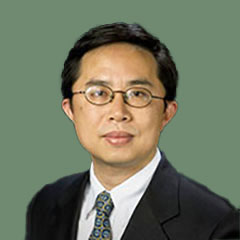
Luca Schenato is a Full Professor in the Department of Information Engineering at the University of Padova. His research focuses on distributed control systems, federated learning, multi-agent optimization, and wireless communication protocols. He has extensive experience in developing algorithms for cyber-physical systems, with applications in robotics, smart grids, and sensor networks. Education and Appointments section lists his academic journey but lacks explicit details. He has held positions related to control systems and information engineering throughout his career. Research interests include: Design of resilient wireless control systems Federated learning architectures for edge computing Distributed optimization under communication constraints Robotics and multi-agent coordination Smart energy management systems His recent publications (2021–2025) demonstrate a strong focus on: Over-the-air federated learning innovations High-speed wireless control systems (e.g., 1 kHz Wi-Fi control) Resilient distributed optimization algorithms Human-centric building automation He has contributed to numerous projects related to networked control systems and has organized conferences like ECC13. His work emphasizes bridging theoretical control principles with practical industrial applications.
Ye He serves as a Hale Visiting Assistant Professor in the School of Mathematics at the Georgia Institute of Technology, hosted by Prof. Molei Tao. His research bridges mathematical theory and artificial intelligence, focusing on developing rigorous frameworks for machine learning and data science applications. Education: Ph.D. in Mathematics, University of California, Davis (advised by Prof. Krishna Balasubramanian) Research Interests: Dr. He specializes in the mathematical foundations of artificial intelligence , with particular emphasis on scalable inference methods for complex data distributions. His work addresses fundamental challenges in sampling theory , diffusion-based generative modeling , and stochastic optimization , aiming to establish theoretical guarantees for practical machine learning algorithms. Current investigations focus on heavy-tailed distributions, non-log-concave sampling, and discrete data generation mechanisms. Publication Trends: His 11 most recent publications (2020-2025) reveal a concentrated research program advancing theoretical understanding of sampling algorithms and diffusion models. Work spans top venues including NeurIPS, COLT, and IEEE Transactions on Information Theory, with recurring themes in heavy-tailed distribution sampling, convergence analysis of Langevin dynamics, and optimization of generative architectures. The output demonstrates strong interdisciplinary connections between probability theory, statistics, and machine learning. Scientific Awards: No awards were documented in the source materials. Advising and Grants: The provided information contains no details regarding student supervision, research grants, or funding sources. Teaching responsibilities include undergraduate courses in calculus, linear algebra, and differential equations. Research Environment: Dr. He operates within Georgia Tech's School of Mathematics, collaborating closely with Prof. Molei Tao's research group. His office is located in Skiles 016, and his work contributes to the institution's strengths in mathematical data science and computational theory.
Dvinskikh Darina Mikhailovna serves as both Associate Professor and Senior Research Fellow at the National Research University Higher School of Economics (HSE), affiliated with the Faculty of Computer Science, the Institute of Artificial Intelligence and Digital Sciences, and the Department of Big Data and Information Retrieval. She earned her PhD from Humboldt University of Berlin in 2021, following Master's (2018) and Bachelor's (2016) degrees in Applied Mathematics and Physics from Moscow Institute of Physics and Technology. Prior to joining HSE in 2022, she conducted research at the Weierstrass Institute for Applied Analysis and Stochastics in Berlin (2018-2021). Dr. Dvinskikh specializes in convex optimization, optimal transport, distributed optimization, and numerical optimization methods. Her research bridges theoretical foundations with practical applications in machine learning and artificial intelligence, with particular expertise in zeroth-order optimization methods, stochastic optimization frameworks, and decentralized computing approaches. Her work has advanced the field through novel algorithms for black-box optimization and improved complexity bounds for Wasserstein barycenter problems. Her publications span top venues including NeurIPS, Optimization Methods and Software, and Computational Mathematics and Mathematical Physics, demonstrating her contributions to both theoretical and applied aspects of optimization. She has received institutional recognition including a Letter of gratitude from the First Vice-Rector of HSE (May 2024) and a publication bonus for work in List A journals (2023-2024). Dr. Dvinskikh teaches Mathematical Statistics 1 and Modern Algorithmical Optimization for undergraduate and graduate students, emphasizing both theoretical understanding and practical implementation of optimization algorithms. Her teaching philosophy aims to provide students with a comprehensive understanding of how optimization techniques power modern machine learning systems.
Bo Hui is an Assistant Professor of Computer Science at The University of Tulsa's College of Engineering & Computer Science. He received his Ph.D. in Computer Science and Software Engineering from Auburn University in 2023 and earned his B.S. in Computer Science from Xi'an Jiaotong University in 2013. Prior to his Ph.D., he worked as a senior software engineer in the industry. Education: Ph.D., Computer Science and Technology, Auburn University, 2023 B.S., Computer Science and Technology, Xi'an Jiaotong University, 2013 Dr. Hui's research focuses on data mining and machine learning, particularly in designing machine learning methods for complex real-world data while addressing social concerns such as privacy in AI. His work spans multiple application domains including traffic prediction, social recommendation systems, and biological data analysis. He has made significant contributions to graph neural networks, knowledge graph unlearning, and federated learning systems. Dr. Hui's publication record demonstrates a strong focus on machine unlearning (the 'right to be forgotten' in AI models), graph neural networks, and traffic prediction systems. His work bridges theoretical machine learning with practical applications, with a growing emphasis on privacy-preserving AI techniques. He frequently publishes in top-tier venues including ICCV, ICLR, KDD, and AAAI. Awards and Honors: NSF award #2348177 for machine unlearning research AAAI student scholarship award Dr. Hui currently advises two Ph.D. students (Ruimeng Ye and Yang Xiao) who began their studies in Fall 2024. His research is supported by an NSF grant (#2348177) focused on machine unlearning. He has served as a reviewer for major conferences including ICLR, AAAI, KDD, CVPR, ACL, and EMNLP. His teaching includes Data Mining (2024 Spring) and Interaction Design (2023 Fall). His research group appears to focus on data mining and machine learning with applications to real-world problems requiring privacy-aware solutions.
Tommaso Cesari serves as an Assistant Professor in the EECS department at the University of Ottawa, cross-appointed with the Department of Mathematics and Statistics. He currently teaches Machine Learning (CSI 4145) and Introduction to Computing II (ITI 1121 A), courses he has instructed since 2024 and 2023 respectively. His research centers on theoretical machine learning with applications in market design and operational systems. Key interests include online learning frameworks for bandit problems, pricing mechanisms, bilateral trade optimization, and spacecraft operations scheduling. This work bridges algorithmic theory with real-world economic systems, emphasizing regret minimization under adversarial conditions and smoothed analysis. Analysis of his 2023-2025 publications reveals a cohesive trajectory in applying online learning to bilateral trade mechanisms (appearing in 7 of 15 recent papers), auction theory, and brokerage models. His work consistently targets top venues including JMLR, NeurIPS, and STOC, with growing emphasis on fairness constraints and multi-platform systems in 2024-2025 outputs. Professor Cesari actively recruits Master's and Ph.D. students for research in his domains; prospective candidates may apply through the university portal. His collaborative publications with prominent researchers like Nicolò Cesa-Bianchi indicate strong engagement in the theoretical machine learning community.
Bin Gu is a professor at Mohamed bin Zayed University of Artificial Intelligence (MBZUAI), specializing in machine learning and artificial intelligence. Previously affiliated with institutions including Nanjing University of Information Science and Technology (former position) and Nanjing University of Aeronautics and Astronautics (PhD 2011). His research focuses on optimization algorithms, spiking neural networks, federated learning, kernel methods, adversarial robustness, and neuromorphic computing. Education: PhD in Computer Science (2011) from Nanjing University of Aeronautics and Astronautics. Prior affiliations include Tianjin University, Boston University, University of Science and Technology of China, and Southeast University. Research Interests: Extensive work on machine learning theory and applications, including robust learning, federated systems, neural architecture design, and privacy-preserving techniques. Over 200 publications in top venues such as AAAI, NeurIPS, ICLR, ICML, KDD, and IEEE journals. Publications Trends: Recent focus on spiking neural networks (SNNs), federated learning frameworks, and optimization methods for handling adversarial attacks and privacy constraints. Notable contributions include scalable algorithms for kernel-based learning, robust SVM formulations, and neuromorphic computing architectures. Labs/Teams: Active in AI research groups focused on neural networks, optimization, and distributed learning systems. Collaborates with industry and academic partners on applied AI solutions.
Zifan Wang is a doctoral student and researcher at the Division of Decision and Control Systems (DCS), School of Electrical Engineering and Computer Science, KTH Royal Institute of Technology. He is jointly advised by Prof. Karl H. Johansson and Prof. Michael M. Zavlanos at Duke University. He holds a Master's and Bachelor's degree from the Honors School of Harbin Institute of Technology. His research focuses on decision-making under uncertainty, leveraging tools from Machine Learning , Optimal Transport , Game Theory , and Control Theory , with a special interest in generative models and risk-averse optimization . Recent publications highlight his work on risk-averse learning in online convex games, constrained optimization with decision-dependent distributions, and distributional reinforcement learning for LQR systems. His methodological contributions include zeroth-order gradient estimation, one-point sampling strategies, and residual feedback for variance reduction. Honors include a 2024 Travel scholarship from Björns Foundation and a 2023 Travel grant from Karl Engvers Foundation . He actively participates in peer review for top conferences (NeurIPS, ICLR, L4DC, CDC, ACC) and journals (IEEE Transactions on Automatic Control, Automatica).
Shengli Fu is a Professor and Chair of Electrical Engineering at the University of North Texas. His office is located at Discovery Park, B276 with contact available via phone (940-891-6942) and email. His research focuses on Unmanned Aerial Vehicles (UAVs) , Airborne Computing , Wireless Communications , and Networked Systems . Key innovations include developing platforms for UAV-based airborne computing, exploring millimeter wave communications for aerial networks, and creating educational tools for cyber-physical systems. Recent publications (2019-2024) demonstrate strong emphasis on: Advanced aerial communication systems using directional antennas and software-defined radio Networked airborne computing infrastructures and testbeds Distributed optimization algorithms for mobile networks UAV-enabled data collection and trajectory planning Coded computation methods for heterogeneous systems No scientific awards, students, or lab information were mentioned in the provided materials.
Wotao Yin is a Professor of Mathematics at the University of California, Los Angeles, with a distinguished research career spanning over two decades in optimization theory and its applications. His work bridges theoretical mathematics with practical applications in machine learning, image processing, and signal analysis. As a leading researcher in optimization algorithms, he has made significant contributions to the development of methods like ADMM (Alternating Direction Method of Multipliers), proximal algorithms, and decentralized optimization techniques. Department: Department of Mathematics School: College of Letters and Science University: University of California, Los Angeles Yin's research focuses on developing efficient algorithms for large-scale optimization problems, with particular expertise in convex and nonconvex optimization, distributed and decentralized optimization, and mathematical foundations of machine learning. His work has profound implications for image reconstruction, signal processing, and modern machine learning systems. He has pioneered methods for handling sparse data, non-smooth objectives, and constrained optimization problems that arise in real-world applications. An analysis of his recent publications reveals a strong trend toward addressing optimization challenges in machine learning, particularly in federated learning, attention mechanisms, and nonconvex problem structures. His work demonstrates a consistent pattern of bridging theoretical optimization with practical machine learning applications, developing algorithms that balance computational efficiency with theoretical guarantees. Recent papers show increasing focus on heterogeneous data settings, large language model optimization, and fundamental limitations of optimization methods in complex learning scenarios. Throughout his career, Professor Yin has mentored numerous PhD students and postdoctoral researchers who have gone on to successful careers in academia and industry. His collaborative network spans multiple institutions worldwide, with particularly strong connections to researchers in China and across the United States. His work has been supported by various funding agencies recognizing the fundamental importance of optimization theory for advancing computational science. Professor Yin leads a vibrant research group focused on mathematical optimization and its applications, where students and collaborators work on cutting-edge problems at the intersection of mathematics, computer science, and engineering. The group maintains strong connections with both theoretical and applied research communities, participating in major conferences across optimization, machine learning, and computational mathematics.
Andrea Paudice is an Assistant Professor in the Department of Computer Science at Aarhus University. Their primary affiliation is with the Department of Computer Science, located at Åbogade 34, Building 5335, Room 317 in Aarhus N, Denmark. Paudice's research focuses on theoretical and algorithmic aspects of machine learning, optimization under uncertainty, adversarial robustness, and clustering methods. Research interests include developing robust statistical learning frameworks for heavy-tailed distributions, designing optimization algorithms with provable guarantees in stochastic settings, and exploring active learning strategies for efficient label usage. Recent work emphasizes high-probability bounds for stochastic methods, median-of-means techniques, and zeroth-order optimization under budget constraints. Publications span topics like adversarial noise mitigation, margin-based active learning, and exact cluster recovery via oracle queries. While no specific grants or awards are listed, their work demonstrates contributions to foundational machine learning theory and algorithmic robustness. No lab affiliations or student advising information is included in the provided text.
Saeed Mahloujifar is a researcher in the Department of Computer Science at Princeton University's School of Engineering and Applied Science. He has established himself as a prominent researcher in machine learning security, privacy, and robustness, with extensive collaborations with leading researchers including Prateek Mittal, Mohammad Mahmoody, and Somesh Jha. His research primarily focuses on security and privacy challenges in machine learning systems. Mahloujifar has made significant contributions to understanding and mitigating membership inference attacks, developing defenses against poisoning and backdoor attacks, advancing differential privacy techniques, and exploring the fundamental limits of robust machine learning. His work bridges theoretical foundations with practical applications, often developing novel algorithms and frameworks that have been widely adopted in the security and privacy communities. The analysis of his recent publications reveals a strong research trajectory centered on privacy-preserving machine learning, with particular emphasis on large language models, differential privacy guarantees, and security vulnerabilities. His work spans theoretical foundations of privacy through practical security mechanisms like watermarking and robustness benchmarking. A notable trend is his increasing focus on large language models and their security implications, alongside continued contributions to foundational privacy theory. Mahloujifar has co-authored over 90 publications since 2017, with a significant acceleration in output since 2020. His work appears consistently in top-tier venues including NeurIPS, ICML, IEEE S&P, and USENIX Security, demonstrating both breadth and depth in his research contributions.
Tianlong Chen is an Assistant Professor in the Department of Computer Science at The University of North Carolina at Chapel Hill , starting in Fall 2024. His research focuses on AI trustworthiness, efficiency, and scientific applications , particularly through sparsity, multimodal learning, and large language model (LLM) innovations. Research Interests include: Sparsity techniques for LLM optimization Multimodal learning and graph neural networks AI safety and privacy preservation Quantum computing applications Biological-informed AI systems Recent Trends in his publications emphasize Mixture-of-Experts (MoE) , LLM safety mechanisms , and lifelong learning architectures . Awards highlight recognition from Amazon, UNC Provost, NAIRR, and AAAI. Scientific Awards : Amazon Research Award (2025) UNC Accelerating AI Awards (2025) NAIRR Pilot Award (2025) CPAL/KAUST Rising Star Awards (2025) AAAI New Faculty Highlights (2025) Advising : Mentors 19 Ph.D. students across UNC Chapel Hill and remote collaborations, focusing on AI4Science, LLMs, and quantum computing. Grants include Cisco Research funding and UNC Provost AI support.
Mohamad Assaad is a Professor at CentraleSupélec and researcher at L2S (CNRS). He holds the 5G Chair and has authored over 160 publications. His research focuses on 5G/6G systems, Age of Information, resource optimization, and Machine Learning in wireless networks. He has led major projects funded by Qualcomm, Orange, Thales, and Nokia. Assaad is an Editor for IEEE Wireless Communications Letters and has served as TPC co-chair for IEEE conferences. His work spans RIS-aided networks, distributed optimization, and semantic communications. Education: M.Sc. and PhD in Telecommunications from Telecom ParisTech (2002, 2006) Research Interests: 5G/6G systems, Reconfigurable Intelligent Surfaces (RIS), Federated Learning, Massive MIMO, Networked Control Awards: Best paper finalist at IEEE WiOPT 2019, Guest co-editor roles, TPC leadership Grants: €250K/year 5G Chair (2017–2021), Qualcomm €180K (2023–2024), RTE Smart Grids project Labs/Teams: IPHYCOM Team (Intelligent Physical Layers), ILOCOS Team (Optimization & Learning), and collaborations with Orange Labs, Huawei, and Nokia Bell Labs.
David Love is the Nick Trbovich Professor of Electrical and Computer Engineering at Purdue University's College of Engineering . His research focuses on advanced wireless communication systems, machine learning applications in networked environments, and next-generation 6G technologies. He leads efforts in federated learning, signal processing, and secure communication protocols. Key research themes include: Federated learning architectures and their applications in cyber-physical systems Optimization of resource allocation in heterogeneous networks Development of robust coding schemes for adversarial channels Wireless IoT solutions for precision agriculture and rural connectivity Publications from 2023-2025 reflect a strong emphasis on machine learning-driven solutions for wireless channel modeling, interference mitigation, and secure federated learning frameworks. His work bridges theoretical advancements with practical implementations in 5G/6G systems and satellite networks. Notable contributions include innovations in waveform design for integrated sensing and communication (ISAC), decentralized backdoor attack mitigation strategies, and low-latency full-duplex MIMO systems. Current projects involve cooperative federated learning over hybrid terrestrial/satellite networks and sparsity-preserving algorithms for distributed matrix computations.
Chaoyue Liu is an Assistant Professor in the Elmore Family School of Electrical and Computer Engineering at Purdue University, located in West Lafayette. His research focuses on the mathematical foundations of deep learning, deep learning theory, and optimization techniques. He holds a position in the Department of Electrical and Computer Engineering and contributes to advancing theoretical and practical aspects of machine learning systems. Research Interests: Mathematical underpinnings of deep learning architectures and their theoretical guarantees Optimization algorithms for large-scale machine learning models Federated learning and privacy-preserving techniques Analysis of neural network training dynamics and loss landscapes Key Research Trends in Publications: Recent work emphasizes optimization challenges in over-parameterized systems, federated learning frameworks, and the dynamics of neural network training. His articles explore topics like SGD batch saturation, differential privacy integration, and the emergence of linear behavior in wide neural networks. Grants & Advising: No specific grants or student advisement information is listed. Collaborations may involve Purdue's research groups in machine learning and electrical engineering. Labs/Teams: Affiliated with Purdue's Electrical and Computer Engineering research clusters, likely contributing to interdisciplinary projects in AI and signal processing.