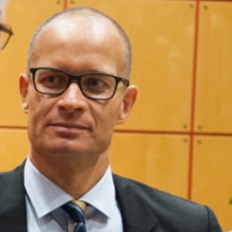
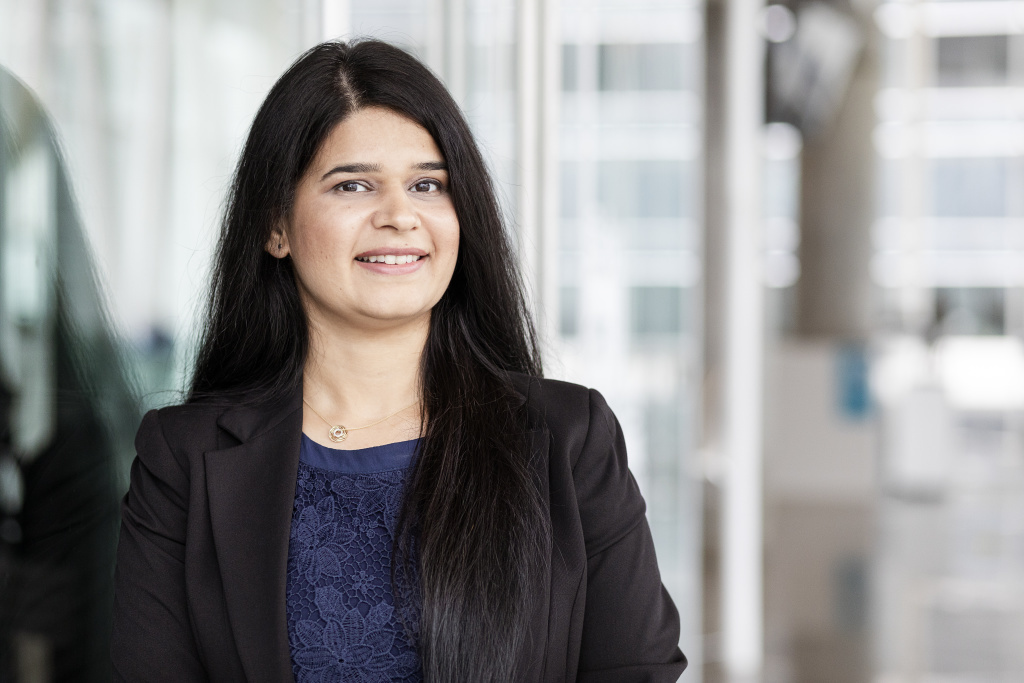
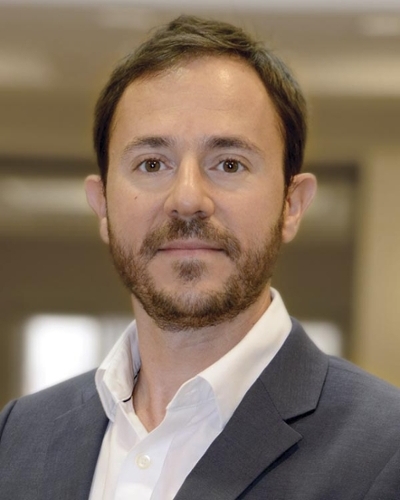
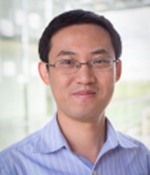
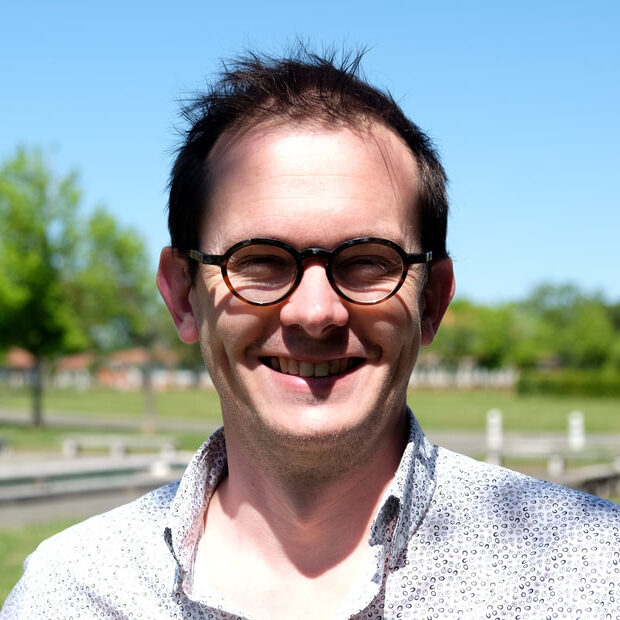
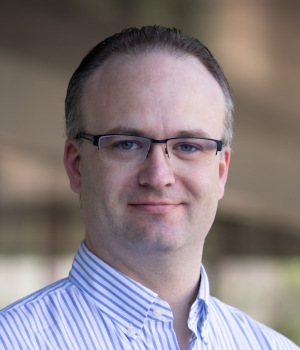
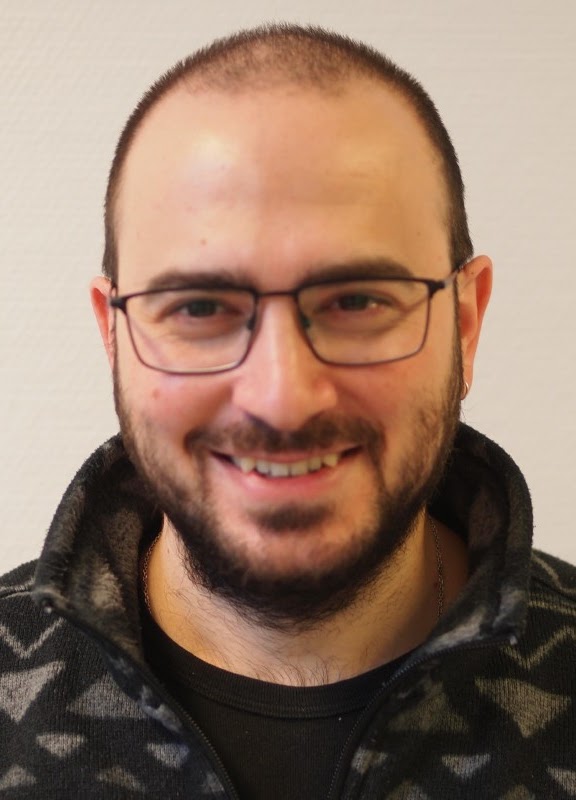
Andreas Wladis is an Adjunct Professor at the Department of Biomedical and Clinical Sciences (BKV) at Linköping University , Sweden. He also serves within the Department of Surgery, Orthopaedics and Oncology (KOO) , where his interdisciplinary research bridges clinical surgery with disaster medicine frameworks. His academic mission focuses on strengthening disaster medicine as a formal discipline and developing traumatology as a clinical research field in Sweden. Research Focus : Disaster medicine preparedness and response systems Global surgery accessibility in low-resource and conflict-affected settings Trauma care optimization in non-specialist environments Pandemic response structures and indirect health consequences Humanitarian surgical education and competency development Recent Research Trends emphasize surgical outcomes in resource-limited contexts (e.g., Rwanda, Uganda), trauma triage accuracy in non-trauma hospitals, and pediatric injury patterns in war zones. His 2025 publications include groundbreaking studies on groin hernia repair techniques and war-related pediatric trauma in Ukraine. Professional Affiliations include: Disaster Medicine Center, Linköping University Former Chief Surgeon at the International Committee of the Red Cross (ICRC) (2022-2023) Medical Expert for the European Union (CPCC) (2008-2020) Current adjunct professorship at BKV since 2024
Patrick Desrosiers serves as an Adjunct Professor in the Department of Physics, Physical Engineering and Optics within Université Laval's Faculty of Science and Engineering, while conducting neuroscience research at the CERVO Brain Research Center. He co-directs Dynamica, a multidisciplinary complex systems research group, and participates in UNIQUE (neuroscience-AI integration) and CIMMUL (mathematical modeling applications). His academic training spans physics and mathematics at Université Laval, the University of Melbourne, and CEA-Saclay. Dr. Desrosiers' research centers on mathematical and computational neuroscience , with signature contributions in dimensionality reduction and network resilience analysis . His work bridges biological and artificial neural networks , zebrafish brain mapping , and neurovascular coupling using advanced techniques from spectral graph theory , random matrix theory , and dynamical systems . Current investigations focus on neural decoding under chronic stress and structural-functional relationships in brain networks. Analysis of his 2023-2025 publications reveals three dominant trajectories: (1) Low-dimensional representations for predicting cognitive decline and neural dynamics, (2) Network reconstruction methodologies applied to neuroscience and biodiversity, and (3) Development of computational tools like NeuroTorch for neural data analysis. His work consistently integrates mathematical rigor with biological relevance across species and scales. His recognition includes: Professeur étoile prize for exceptional teaching (Faculty of Science and Engineering, Université Laval, 2018) As Dynamica co-director, he mentors a research team comprising Antoine Légaré, Arthur Légaré, Benjamin Claveau, Jordan Charest, Marziyeh Pourmousavi, Pierre-Luc Larouche, Vincent Savard, Vincent Thibeault, and Zahra Yazdani. His collaborative framework connects physics, mathematics, and neuroscience to address fundamental questions in neural network organization, with funding evident through sustained publication output and lab operations. Dynamica Lab ( https://dynamicalab.github.io/ ) serves as the operational hub for his interdisciplinary research, maintaining active collaboration with CERVO Brain Research Center and international institutions.
Kuljeet Kaur is a Professor in the Department of Electrical Engineering at École de technologie supérieure (ÉTS) in Montreal, Canada. Her research is conducted through the LACIME (Communications and Microelectronic Integration Laboratory), a renowned research unit focusing on communications and microelectronic integration. She maintains an active research program with numerous publications and student supervision activities. Professor Kaur's research spans multiple interconnected domains focused on next-generation computing and communication systems. Her primary research axes include Sensors, Networks and Connectivity; Intelligent and Autonomous Systems; and Software Systems, Multimedia and Cybersecurity. Within these broad areas, she specializes in Cloud Computing, Edge/Fog Computing, Internet of Things (IoT), Cybersecurity, Privacy, Federated Learning, and Energy Management. Her work bridges theoretical foundations with practical implementations in intelligent transportation systems, healthcare applications, and smart grid technologies. Analysis of Professor Kaur's recent publications reveals a strong focus on security and privacy challenges in emerging computing paradigms. A significant portion of her work addresses federated learning approaches that maintain data privacy while enabling collaborative AI model training. Her research also demonstrates expertise in edge computing architectures, particularly for IoT applications, with emphasis on energy efficiency and security. The publications show consistent interdisciplinary collaboration across computer science, electrical engineering, and transportation domains. Professor Kaur actively supervises multiple graduate students at various levels. Her supervision portfolio includes doctoral candidates working on topics like decentralized AI networks and secure federated learning, as well as master's students focusing on edge AI for IoT applications, sensor drift compensation, and zero trust architecture for IoT. She also guides project students working on practical implementations of AI for smart grid optimization and secure IoT protocols. Her research is conducted within the LACIME laboratory, which brings together researchers working on everything from micro- and nanofabrication processes to communication protocols and signal processing. The lab provides a transdisciplinary environment where Professor Kaur's work on cyber-physical systems and secure communications benefits from complementary expertise in integrated circuit design and microsystems.
Dharanidhar Dang serves as Assistant Professor in the Department of Computer Engineering at the College of AI, Cyber and Computing, The University of Texas at San Antonio (UTSA), where he advances hardware-centric artificial intelligence solutions through photonic and memristor technologies. Education Ph.D., Texas A&M University His research program bridges hardware innovation and biomedical applications, with primary focus on photonic computing architectures for real-time AI acceleration and memristor-based neuromorphic systems. He investigates critical challenges in hardware reliability (particularly degradation in memristor crossbars), energy efficiency in photonic accelerators, and co-design methodologies that optimize both algorithms and physical implementations. His biomedical work applies machine learning to macrophage biology, identifying predictive signatures for inflammatory diseases through computational immunology approaches. Analysis of his 2020-2025 publications reveals three dominant research trajectories: 1) Silicon photonic accelerators (P-ReTI, P-ReTiNA, SOFTONIC) targeting real-time and energy-efficient AI, 2) Memristor reliability frameworks addressing aging effects in deep learning hardware, and 3) Translational biomedical applications where machine learning deciphers macrophage behavior in inflammatory bowel disease and preterm infant lung conditions. This tripartite focus demonstrates exceptional versatility across hardware engineering and life sciences.
Nikolaos Gatsis serves as Associate Professor and GreenStar Endowed Associate Professor in Energy within the Department of Electrical and Computer Engineering at UTSA's Klesse College of Engineering and Integrated Design. His work centers on optimizing and securing smart power grids integrated with critical infrastructure systems including water, transportation, and GPS networks. Education: Ph.D. in Electrical Engineering with minor in Mathematics, University of Minnesota, 2012 Diploma in Electrical and Computer Engineering, University of Patras, Greece His research program tackles critical vulnerabilities in cyber-physical systems through six interconnected domains: smart grid modeling, water distribution security, transportation electrification impacts, inverter-based grid protection, stochastic renewable integration, and GPS spoofing defense. This multidisciplinary approach addresses systemic risks in modern infrastructure through advanced optimization and security frameworks. Recognition includes: NSF CAREER Award (2019) Lutcher Brown Endowed Fellowship (2020-2021) Teaching Excellence Award (2021) President’s Research Achievement Award (2021) Annual Innovation Award (2022) Funded by the NSF CAREER grant and institutional fellowships, his research group develops security protocols for interdependent infrastructure systems. His lab facilities support experimental validation of grid protection mechanisms and spoofing countermeasures, training engineers for next-generation energy challenges.
Tara Salman is an Assistant Professor in the Department of Computer Science at Texas Tech University , focusing on distributed systems, blockchain technology, and security/privacy in next-generation networking applications. Her research bridges scalable distributed systems, AI, and security to address challenges in healthcare and financial systems. Research Interests: Distributed, intelligent, and secure networking applications Blockchains and scalable distributed systems Distributed artificial intelligence Security and privacy techniques Publication Trends: Recent work emphasizes federated learning, blockchain security, multi-cloud environments, and quantum blockchain applications. Her research combines machine learning, deep learning, and distributed consensus mechanisms to enhance security in heterogeneous networks.
Ioannis Iglezakis is an Associate Professor at the School of Law, Aristotle University of Thessaloniki (AUTH), specializing in the intersection of law and technology. His academic career spans over three decades with continuous contributions to informatics law, cyber law, data protection, and privacy law. At AUTH, he teaches courses including Law of Informatics, Computers and Law I (Cyberlaw I), Computers and Law II (Privacy and Security in the Information Society), Legal Aspects of Cybercrime, Internet-Law, and Law and Information Technology. Dr. Iglezakis earned his undergraduate degree in Law from AUTH in 1987, followed by a Magister Legum Europae from Hannover University in 1993. He completed his postgraduate studies in History, Philosophy and Sociology of Law at AUTH in 1990 and earned his PhD in Law from AUTH in 1999. His educational background combines Greek legal training with European legal perspectives. His research interests focus on the legal challenges posed by digital technologies, with particular emphasis on data protection, privacy law, cybercrime regulation, digital rights, and the application of GDPR in various contexts. He has published extensively on topics including the right to be forgotten, digital identity management, workplace surveillance in the digital age, hate speech online, and the legal implications of emerging technologies like blockchain and artificial intelligence. His work bridges theoretical legal analysis with practical applications in the rapidly evolving digital landscape. The trends in his publications reveal a consistent focus on the evolving relationship between law and technology, with increasing attention to GDPR implementation, health data protection, and the challenges of algorithmic decision-making. His work spans multiple disciplines including legal theory, privacy studies, cyber security, and digital governance, reflecting the interdisciplinary nature of modern informatics law. Dr. Iglezakis has supervised over 50 master's theses at AUTH, mentoring the next generation of legal scholars in areas including cloud computing contracts, personal data protection, social media law, intellectual property in digital environments, and cybercrime. His administrative roles have included membership on the European Educational Programs Committee (2011-2012) and the Legal Committee of AUTH (2013-2014). His research projects include the 2018-2019 study on 'Legal Issues of Mobile Applications Development, Distribution and Use,' the 2014 '6th International Conference on Informatics Law,' and the 2013-2015 Center of Excellence for Cybercrime for Education, Research and Training in Greece. These projects highlight his commitment to addressing practical legal challenges in the digital domain while contributing to academic discourse.
Dong Li is an Associate Professor at the University of California, Merced , where he directs the Parallel Architecture, System, and Algorithm Lab (PASA) and co-directs the High Performance Computing Systems and Architecture Group . He co-founded Yotta Labs Inc. and previously held research roles at Oak Ridge National Laboratory (2011-2014) and a PhD from Virginia Tech. Research Interests: Dong's work focuses on High performance computing (HPC) Memory heterogeneity and non-volatile memory Systems for machine learning and AI Fault tolerance in large-scale systems His innovations include heterogeneous memory optimization for recommendation models and GNNs, CXL memory integration, and persistent memory debugging tools. Recent Publications highlight advancements in CXL-based inter-node communication Memory tiering for laminography reconstruction ML-guided memory optimization for DLRM and GNN Fault tolerance benchmarks and error analysis Awards & Recognition: NSF CAREER Award (2016) Oracle Research Award (2022) ASPLOS Distinguished Artifact Award (2021) Virginia Tech Early Career Alumni Award (2023) Advising & Funding: Dong has mentored 22 students (8 PhD, 6 Master’s, 8 undergraduates) and secured grants from NSF, NVIDIA, Meta, and national labs (Argonne, Lawrence Berkeley, Lawrence Livermore). Collaborations include Microsoft (DeepSpeed, Intel PMDK), AMD, SK Hynix, and Intel/MICRON hardware donations.
Didier Raboisson is a Full Professor in Ruminant Population Medicine and Animal Health Economics at the National Veterinary School of Toulouse (ENVT), France. Holding a DVM, MSc, PhD, and Diplomate status in the European College of Bovine Health Management (ECBHM), his career spans from clinical practice (2004-2006) to academic leadership at ENVT since 2006, progressing from contractual assistant to full professor in 2019. His educational credentials include a Doctor in Veterinary Medicine (2003), ruminant clinical internship (2005), MSc in Agricultural Socio-economics (2007), PhD in Institutional Economics (2011), and HDR accreditation (2017). His research pioneered the DairyHealthSimulator® (DHS®), a stochastic dynamic bioeconomic model optimizing dairy herd management under constraints like antimicrobial use. Key contributions address veterinary workforce shortages, disease cost analytics, and veterinary business models through innovative frameworks like the DODforD herd health approach. Raboisson's publication portfolio exceeds 75 international peer-reviewed papers, with recent work focusing on antimicrobial reduction strategies, lameness economics, and dairy cooperative development. His research demonstrates consistent interdisciplinary integration of veterinary science, economics, and stochastic modeling, particularly evident in the shift from descriptive disease cost analysis to utility-optimized decision frameworks. Scientific recognition includes: ECBHM Diplomate status (2011) HDR accreditation (2017) DHS® and App Qost® patents Academic editor roles at PlosOne and Frontiers in Veterinary Sciences As supervisor of 8 PhD students and 6 post-doctorates, Raboisson leads the VetEconomics research group while directing France's continuous training program in bovine population medicine. His grant portfolio exceeds €1.4 million from INRAE, Ministry for Agricultural Sovereignty, ANR, and EU programs. International collaborations span Cornell, Liverpool, and Indian institutions through CEFIPRA and Prezode initiatives, with policy impact evidenced by DGAL working group contributions on veterinary shortages and biosecurity.
Eric P. Xing is a Professor at the Language Technologies Institute of Carnegie Mellon University , and currently serves as President of the Mohamed bin Zayed University of Artificial Intelligence . His work bridges machine learning methodology with computational biology and large-scale AI systems . Research Focus: Developing machine learning theory for high-dimensional, dynamic data Building foundation models for biology (AIDO, scLong, ProteinAligner) Designing scalable AI architectures (Pollux, LLM360, PAN) Advancing interpretable and controllable NLP systems Scientific Leadership: Founded the SAILING Lab at CMU Co-chaired ICML 2014 and ICML 2019 Recipient of the Jay Lepreau Best Paper Award (OSDI 2021) Education & Mentorship: Advises PhD students across machine learning and computational biology Alumni include faculty at ETH Zurich, University of Chicago, and UC San Diego
Laurent Condat is a Senior Research Scientist at King Abdullah University of Science and Technology (KAUST) in Saudi Arabia, where he conducts research in optimization algorithms and their applications. He is affiliated with the College of Engineering, Department of Computer Science, and has previously held research positions at CNRS in France, working at GREYC in Caen and GIPSA-Lab in Grenoble. Dr. Condat received his PhD in 2006 from Grenoble Institute of Technology, followed by a 2-year postdoc in Munich, Germany. He was recruited as a permanent researcher by CNRS in 2008 and has been on leave from CNRS since November 2019 to work at KAUST. In February 2025, he was promoted to 'chargé de recherche hors classe' (senior research scientist) by CNRS. His research focuses on deterministic and stochastic optimization algorithms, convex relaxations, and applications to machine learning, signal and image processing. His work spans theoretical foundations of optimization methods to practical implementations for distributed and federated learning systems. He has developed several influential algorithms including RandProx, TAMUNA, and LoCoDL that address communication efficiency in distributed optimization. His recent publications demonstrate strong trends in communication-efficient distributed optimization, with particular emphasis on federated learning, compression techniques, and local training methods. His work bridges theoretical optimization with practical machine learning applications, showing consistent innovation in algorithmic design for large-scale problems. Best reviewer award at AISTATS 2025 Meritorious Service Award from Mathematical Programming Stanford's list of world's top 2% most influential scientists Dr. Condat has co-supervised PhD students including Daniele Picone and Julien Baderot. He serves as an Associate Editor for IEEE Transactions on Signal Processing and has presented his work at numerous international conferences including plenary talks at major optimization workshops. His research is supported through KAUST funding and collaborative projects with researchers worldwide.
Javier Saez Valero is a Professor in the Department of Biochemistry and Molecular Biology at Miguel Hernandez University of Elche, where he also serves as Deputy Vice Rector for Research - Management of Research and Transfer. His academic roles include teaching Biochemistry I in the Bachelor's in Medicine program and courses in the Master's in Neuroscience and Master's in Translational Neuropsychopharmacology, while coordinating the Doctorate in Neuroscience program. His research focuses on neurochemical mechanisms in neurodegenerative disorders, particularly Alzheimer's disease biomarker discovery in cerebrospinal fluid and blood. Key areas include NMDA receptor dynamics, ACE2 fragments, apolipoprotein E interactions, and reelin signaling pathways. His work bridges molecular biochemistry with clinical neurology to develop diagnostic tools and understand disease pathogenesis. Analysis of his 15 most recent publications (2023-2025) reveals a dominant focus on Alzheimer's disease biomarkers, especially CSF protein alterations (nicastrin, ADAM10, ACE2). Significant themes include synaptic vs extrasynaptic receptor distributions, COVID-19 neurological impacts, and nanocarrier drug delivery limitations. His work consistently targets translational applications for early diagnosis and therapeutic development. No scientific awards were documented in the provided information. Professor Saez Valero provides academic guidance through tutorials and course coordination across undergraduate, master's, and doctoral programs. As Doctorate in Neuroscience coordinator, he oversees research training while managing institutional research transfer activities through the Vice Rectorate. His teaching spans biochemistry, neuropathology, and molecular neuroscience with laboratory components. He operates from Laboratory 241 at the Institute of Neurosciences (Campus de San Juan), a joint research center with CSIC. His work integrates with the university's Vice Rectorate for Research and Transfer, facilitating technology transfer and collaborative neuroscience research within the university's research infrastructure.
Richard Barichello is a Professor in the Department of Food and Resource Economics at the Faculty of Land and Food Systems, University of British Columbia (UBC), where he serves as Graduate Advisor for Agricultural Economics. His academic career spans over four decades with significant contributions to agricultural policy analysis and international trade economics, particularly focused on Southeast Asia. His educational background includes a PhD in Economics (1979) and MA in Economics (1972) from the University of Chicago, and a BA in Agricultural Economics (1969) from UBC. This foundation supports his expertise in complex policy analysis and economic modeling. Dr. Barichello's research centers on agricultural policy instruments, quota systems, trade reform, and development economics with special emphasis on Indonesia and Southeast Asia. His work examines capitalization of government program benefits, raw material export bans, and the intersection of agricultural policy with poverty reduction. Current research increasingly addresses pandemic impacts on food systems and sustainable resource management. Analysis of his recent publications (2015-2024) reveals persistent focus on agricultural trade dynamics, policy risk assessment, and Southeast Asian economic development. Key thematic threads include dairy industry economics, food price inflation mechanisms, and the complex relationship between globalization, poverty, and food security - often using Indonesia as a critical case study. No scientific awards are explicitly documented in the provided materials. As Graduate Advisor for Agricultural Economics, Dr. Barichello mentors students in the Master of Food and Resource Economics program. His extensive policy engagement includes advising Vietnam's Prime Minister (1995-97), Harvard Institute for International Development collaborations in Indonesia (1986-88), and leadership as Department Head (1988-1994), indicating substantial grant-funded research and international policy influence. His international project work includes the Customs and Economic Management Project with Indonesia's Department of Finance and co-presenting agricultural policy training for Indonesia's Ministry of Agriculture (1994-97), demonstrating sustained engagement with Southeast Asian economic institutions through interdisciplinary policy teams.
Georgios Arvanitidis is an Associate Professor at the Technical University of Denmark (DTU) in the Department of Applied Mathematics and Computer Science, specifically within the Section for Cognitive Systems (CogSys). He has established himself as a leading researcher in geometric machine learning, focusing on the application of differential geometry principles to enhance machine learning models. His work bridges theoretical mathematics with practical applications in artificial intelligence, with particular emphasis on understanding the geometric structure of data manifolds and latent spaces. Dr. Arvanitidis completed his educational journey with a Bachelor's degree from the Department of Informatics at the Aristotle University of Thessaloniki, followed by a Master's degree in Computer Science from Saarland University supported by the Max Planck Institute for Informatics. He earned his PhD at DTU's Cognitive Systems section under the supervision of Søren Hauberg, with additional research experience at Philipp Hennig's Probabilistic Numerics group. Prior to his current position as associate professor, he was a PostDoc at the Max Planck Institute for Intelligent Systems working with Bernhard Schölkopf. Dr. Arvanitidis's research primarily focuses on differential geometry in machine learning , where he explores how geometric structures can enhance representation learning and statistical modeling. His work in generative models investigates how learning the geometry of data manifolds can improve deep learning architectures. In the domain of deep learning theory , he examines why deep learning models generalize effectively on unseen data, with particular attention to the curvature properties of loss landscapes. His research in approximate Bayesian inference applies geometric principles to improve uncertainty quantification in neural networks. Through his innovative approaches, Dr. Arvanitidis has established himself as a leading researcher in geometric machine learning, contributing to both theoretical foundations and practical applications across various domains including robotics and life sciences. The publication trends of Dr. Arvanitidis reveal a consistent and evolving focus on geometric approaches to machine learning problems. His recent work (2023-2025) demonstrates increasing sophistication in applying Riemannian geometry to deep learning architectures, with particular emphasis on latent space geometry, optimization on manifolds, and geometric interpretations of neural network behavior. A notable pattern is the progression from foundational work on geometric representations to more applied research in areas like robotics and causal inference. His publications span top-tier conferences including NeurIPS, ICML, ICLR, and AISTATS, reflecting the high impact of his research. The interdisciplinary nature of his work is evident in collaborations across mathematics, computer science, and robotics domains, with recent papers addressing challenges in multimodal sampling, safety guarantees for dynamical systems, and counterfactual explanations. Dr. Arvanitidis has received several notable scientific awards and recognitions: Sapere Aude starting grant from the Independent Research Fund Denmark (DFF) GADL funding i-Rase, Pathfinder, and EIC (European Innovation Council) funding Best reviewer award for NeurIPS 2019 Best reviewer award for NeurIPS 2018 Best student paper award at Robotics: Science and Systems (R:SS) 2021 Dr. Arvanitidis actively mentors PhD students and researchers, currently supervising Alejandro Valverde, Johanna Gegenfurtner, and Albert Kjøller Jacobsen. He has previously co-supervised Alison Pouplin's PhD and worked with research assistant Georgios Pantis. His group receives substantial funding through multiple prestigious grants including the Sapere Aude starting grant from the Independent Research Fund Denmark, as well as European Innovation Council funding. He has been instrumental in creating opportunities for students interested in geometric machine learning, offering BSc and MSc thesis projects focused on generative models, deep learning theory, and optimization techniques. Dr. Arvanitidis also contributes significantly to the academic community as a reviewer for top conferences including ICLR and TMLR, and as an area chair for NeurIPS, ICML, AISTATS, and UAI. He co-organized the Machine Learning Summer School 2020 in Tübingen, further demonstrating his commitment to education and community building. Dr. Arvanitidis leads a vibrant research group focused on geometric machine learning within the Cognitive Systems section at DTU. His team includes multiple PhD students working on cutting-edge research at the intersection of differential geometry and artificial intelligence. The group has developed notable software tools, including the "geometric_ml" GitHub repository with over 70 stars, which contains implementations for applying Riemannian geometry in machine learning. His research has practical applications in robotics, where geometric approaches enable more robust motion planning, as evidenced by his work on "Reactive Motion Generation on Learned Riemannian Manifolds" which received a best student paper award. Additionally, his methodologies have found applications in life sciences, as mentioned in his 2022 AISTATS paper. The collaborative nature of his work is evident through extensive partnerships with researchers at institutions including the Max Planck Institute for Intelligent Systems, University of Cambridge, and various European universities. His recent news items indicate active engagement with the academic community through talks, conference presentations, and ongoing supervision of new PhD students joining his group.
Xin Li is a Professor in the Department of Electrical and Computer Engineering at Duke University and serves as the Associate Vice Chancellor at Duke Kunshan University. He holds a Ph.D. from Carnegie Mellon University (2005) and has held leadership roles in research consortia like the FCRP Focus Research Center and the Center for Silicon System Implementation (CSSI). His research bridges integrated circuits , machine learning , and cyber-physical systems , with applications in autonomous driving, battery lifetime prediction, and smart buildings. Education : Ph.D., Carnegie Mellon University (2005); M.S., Fudan University (2001); B.S., Fudan University (1998) His work emphasizes robust design methodologies for analog/RF circuits, data-driven predictive modeling , and Bayesian inference for high-dimensional variation spaces. Recent publications focus on generative adversarial networks for circuit design, multi-view imputation for incomplete data, and knowledge-driven autonomous systems . He has received numerous accolades, including the NSF CAREER Award (2012) , IEEE Donald O. Pederson Best Paper Awards (2013, 2016) , and IEEE Fellow (2017) . He has served as Editor for journals like IEEE Transactions on Biomedical Engineering and as Chair for conferences including ISVLSI and CAD/Graphics.