Luca Barra is Full Professor of Television and Digital Media at the Department of Arts, University of Bologna. His research focuses on media studies, particularly television history and contemporary evolution, transnational circulation of content, serialization, and comic/humorous genres. He has coordinated the Master's Degree in Information, Cultures and Media Organization since 2021 and serves as editor-in-chief of VIEW. Journal of European TV History and Culture. University of Bologna, Department of Arts Research areas: Television History, Transnational Media, Digital Transformation, Italian TV Production Barra's work examines the international mediation of ready-made TV formats, Italian streaming partnerships, and the cultural implications of digital television. His recent articles analyze dystopian narratives, sitcom reception in Italy, and the redefinition of celebrity during the pandemic. He contributes to academic discourse through editorial roles in journals like SERIES and Comunicazioni Sociali. His publications include monographs on Italian television programming, sitcoms, and co-edited volumes exploring European premium TV fiction and digital media frameworks. Barra has led research projects such as ATLas and F-ACTOR, and collaborates with international institutions including Brown University and NECS.
Dr Manuela Truebano is a Lecturer in Marine Molecular Biology at the University of Plymouth, affiliated with the School of Biological and Marine Sciences (part of the Faculty of Science and Engineering). She holds a BSc in Marine Biology from the University of Liverpool, an MSc in Shellfish Biology from Bangor University, and a PhD in Molecular Ecophysiology (focusing on thermal stress) from Swansea University and the British Antarctic Survey. Her research group is part of the Ecophysiology and Development Research group within the Marine Biology and Ecology Research Centre. Her teaching portfolio includes module leadership roles in Marine Molecular Biology, Ecophysiology of Marine Animals, Conservation Physiology, and field courses. She has supervised two postgraduate research degrees: Michael Collins (PhD, 2019) and George Mason (ResM, 2021). Dr Truebano’s research focuses on thermal tolerance, hypoxia, and environmental stress responses in marine organisms, particularly invertebrates. She employs molecular and physiological approaches to study climate change impacts, including the development of tools like Dev-ResNet and HeartCV for automated phenotyping. Her work intersects with global sustainability goals, emphasizing organismal resilience to environmental shifts. Her recent publications highlight advancements in understanding transgenerational plasticity, thermal acclimation, and the interplay of multiple stressors. Teaching and learning grants include a 2015 initiative exploring video tutorials for lab skill training. She collaborates extensively in interdisciplinary projects, contributing to both academic and applied marine science.
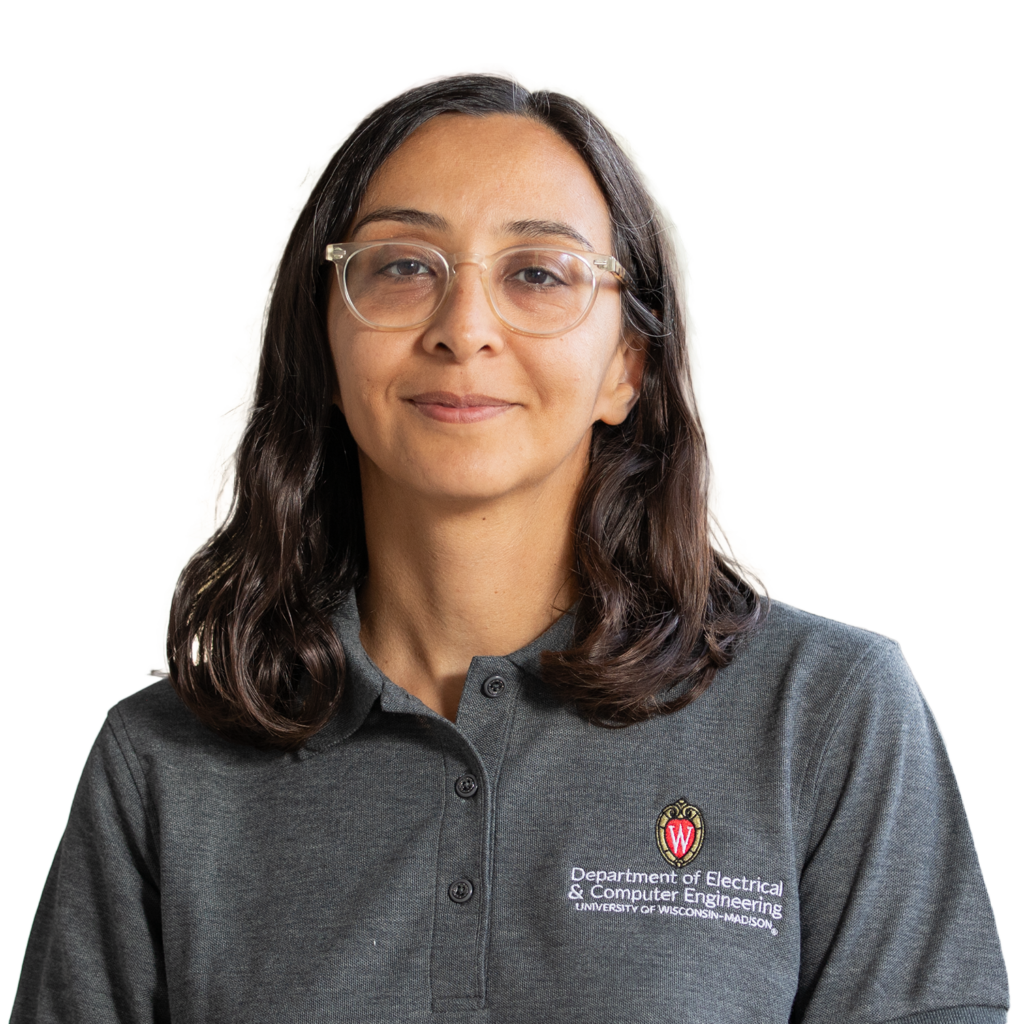
Azadeh Davoodi is a Vilas Distinguished Achievement Professor and Associate Chair of Undergraduate Studies in the Department of Electrical and Computer Engineering at the University of Wisconsin-Madison. Her research focuses on Electronic Design Automation (EDA), integrated circuit debug, and machine learning applications in VLSI design. She holds editorial roles in journals like IEEE TCAD and ACM TRETS, and has chaired major conferences such as ISPD 2015 and served on technical program committees for DAC, ICCAD, and others. Education: PhD in Electrical Engineering, University of Maryland-College Park (2006) Research Interests: Machine learning for VLSI chip design VLSI design automation for machine learning IC-CAD for emerging nanotechnologies Hardware security Recent Research Trends: Her work bridges machine learning and hardware design, with publications on neural network optimization, distributed inference, and explainable AI for circuit design. She emphasizes energy-efficient CNNs, latency reduction in edge computing, and security in split manufacturing. Awards: 2025 DATE Best Paper Candidate 2024 Vilas Distinguished Achievement Professor 2015 ACM Best Paper Award 2011 NSF CAREER Award Service and Grants: Leads NSF-funded projects on explainable ML for CAD and holds grants for distributed neural network synthesis. Her service includes roles as IEEE HKN member and editorial board positions. Labs/Teams: Engages in interdisciplinary research teams at UW-Madison, focusing on EDA innovation and hardware-software co-design.
Sara Shafiee is a Senior Researcher at the Department of Civil and Mechanical Engineering , Technical University of Denmark (DTU) . She specializes in product configuration systems, manufacturing engineering, and AI-driven innovation. Her work bridges technical systems with organizational agility, emphasizing sustainability and customer-centric design. External Roles: Founder & CEO of DivERS (Jan 2021–) External Lecturer at Copenhagen Business School (2022–2024) Senior Business Consultant at Haldor Topsoe AS (2017–2019) Research Focus: Her work addresses challenges in product configuration systems, generative AI applications, and sustainable construction. Key themes include: Optimal product design through recommendation systems Agile methodologies in knowledge-intensive development Environmental impact monitoring via configurators Publications Trends (2023–2025): Recent work explores AI-driven manufacturing optimization, consumer-centric innovation strategies, and the integration of environmental monitoring into design systems. High-impact areas include generative AI applications (13K+ downloads) and modular construction configurators. Awards: Agnes & Betzy Award (2025) Nordic Women in Tech Leadership Award (2022) Best Digital Startup (Venture Cup Denmark, 2021) Innovation Fund Denmark Role Model (2018) Advising & Grants: Supervised PhD projects on recommendation systems and configurator design. Lead PI of the RECODE project (DFF Grant DKK 10M+, 2024–2027) focusing on deep learning for engineer-to-order systems. Labs & Teams: Core member of DTU’s Design and Manufacturing Systems group, collaborating with industry partners like Haldor Topsoe and DivERS to develop scalable configurator solutions.
Dr. Frances Yung is a Postdoctoral Researcher at Saarland University's Department of Language Science and Technology within the Department of Computer Science. She has been affiliated with Prof. Vera Demberg's research group since April 2017 and is currently working on the DFG-funded SFB-1102 project "Information Density and Linguistic Encoding," specifically on project B2 "Cognitive modelling of information density for discourse relations." She is pursuing her habilitation, indicating career progression toward a higher academic position in the German university system. Dr. Yung's research focuses on discourse relations at the intersection of NLP, corpus linguistics, and experimental psycholinguistics. Her work explores how information density affects discourse relation marking through cognitive modeling approaches. She has developed expertise in discourse parsing, resource construction, annotation aggregation, and experimental pragmatics, with particular attention to multilingual aspects of discourse phenomena. Her research combines computational modeling with experimental methods to understand how speakers produce and comprehend discourse relations. Analysis of Dr. Yung's recent publications reveals a strong focus on discourse relation resources, particularly multilingual corpora like DiscoGeM 2.0 covering English, German, French, and Czech. Her work increasingly incorporates crowdsourcing methodologies and examines how large language models can be leveraged for discourse annotation tasks. She has made significant contributions to understanding the challenges of implicit discourse relation annotation and the biases introduced by different task designs in crowdsourcing environments. Active reviewer for major computational linguistics conferences (ACL, EMNLP, NAACL, EACL, COLING, IJCNLP) and workshops since 2016 Served as area chair for Sigdial 2024 Regular service on program committees for discourse-related workshops Dr. Yung has supervised multiple Master's theses on topics related to discourse relations, implicit relation identification, and domain adaptation. Her teaching portfolio includes courses on crowdsourcing linguistic annotations, discourse relations from cognitive and NLP perspectives, and recent advances in discourse processing. She has also served as a teaching assistant for data science and AI courses, demonstrating her commitment to interdisciplinary education at the intersection of computer science and linguistics.
Fenglong Ma is an Associate Professor at Pennsylvania State University, affiliated with the Institute for Computational and Data Sciences and the Center for Socially Responsible Artificial Intelligence. His research focuses on data mining, healthcare informatics, machine learning, natural language processing, and multimodal learning. He holds a Ph.D. from the University at Buffalo (2019) and degrees from Dalian University of Technology. His work addresses challenges in federated learning, medical AI, adversarial robustness, and multimodal systems. Key contributions include innovations in quantization for large language models, federated knowledge injection, and medical vision-language benchmarking. Recent publications explore topics like collaborative fairness in federated learning, robust medical vision-language models, and adversarial attack mitigation. His research bridges theory and practical applications in healthcare, cybersecurity, and personalized recommendation systems. He leads the PSU Data Science Lab and collaborates on projects involving AI ethics, multimodal data integration, and scalable medical foundation models.
Prof. Uner Colak is a Professor at Istanbul Technical University's Energy Institute, specializing in nuclear reactor engineering, computational fluid dynamics, and thermal hydraulics. His research focuses on high-temperature reactors, neutron flux analysis, and reactor safety. He has led numerous projects on nuclear fuel management, hydrogen production, and energy systems optimization. Colak has received the TÜBA Scientific Copyright and Translated Works Awards Program (TEÇEP) in 2015. His work spans reactor core design, neutron transport analysis, and droplet dynamics, with over 49 publications and 12 projects since 2001. Research interests include nuclear reactor core physics, computational modeling for reactor safety, and advanced energy systems. His recent work involves validating reactor analysis codes, optimizing load dispatch algorithms, and investigating droplet-surface interactions for heat transfer applications. Projects include developing pebble flow dynamics for high-temperature reactors and assessing nuclear power localization strategies. His articles highlight contributions to reactor physics, fluid dynamics, and energy policy. Current activities include active projects on hydrogen technologies and sustainable energy solutions until 2027. Colak collaborates internationally, contributing to global nuclear energy advancements and training future researchers through ongoing theses supervision.
Janarthanan Rajendran is an Assistant Professor and the Sexton Chair in Reinforcement Learning at the Faculty of Computer Science, Dalhousie University, in Halifax, Nova Scotia, Canada. He is actively involved in research, teaching, and mentoring, with a focus on deep reinforcement learning and its applications in complex, dynamic environments. Education: Postdoctoral Fellow, Mila Quebec AI Institute and University of Montreal, Canada (2023) PhD in Computer Science and Engineering (AI stream), University of Michigan, Ann Arbor, USA (2021) MTech and BTech in Electrical Engineering, Indian Institute of Technology Madras, India (2016) His research focuses on enabling machines to learn through interaction, with core interests in deep reinforcement learning, model-based RL, multi-agent systems, transfer learning, and applications in materials science and economics. He also explores the integration of large language models and foundation models into reinforcement learning frameworks. His work emphasizes adaptivity, lifelong learning, and societal implications of AI. The most recent publications show a strong trend in advancing cooperative multi-agent systems, developing adaptive and memory-efficient RL methods, and applying RL to real-world challenges such as crystal design and dynamic pricing. His research bridges theoretical innovation with practical application, often in interdisciplinary contexts. Scientific Awards: Sexton Chair in Reinforcement Learning Dr. Rajendran is actively involved in mentoring graduate students and fostering an inclusive research environment. He is currently recruiting PhD and MCS students at Dalhousie University. He has no formal grants listed in the text, but his research chair and active publication record suggest strong funding support. He is also engaged in the broader AI community, having organized and participated in major conferences such as the Atlantic Canada AI Summit and NeurIPS. Labs and Research Groups: He leads a research group focused on deep reinforcement learning at Dalhousie University, working on topics including model-based RL, off-policy learning, and leveraging external knowledge sources. The group emphasizes inclusivity and supports underrepresented groups in computer science research.
Max Schleser is Associate Professor in Film and Television at Swinburne University of Technology, where he also conducts research with the Centre for Transformative Media Technologies (CTMT). He is an Adobe Creative Educator Innovator, Founder of the Mobile Innovation Network & Association (MINA), and Screening Director of the International Mobile Innovation Screening & Festival. His work spans academic, artistic, and community domains, with a focus on innovative screen practices. Max holds a PhD in Creative Arts from the University of Westminster, an MA in Art and Media Practice with Distinction, and a BA Hons. His research centers on immersive media, documentary film, and creative arts 4.0, particularly cinematic VR and interactive filmmaking. He investigates screen production, emerging media, and smartphone filmmaking as tools for community engagement, creative transformation, and transmedia storytelling. His recent publications reveal a strong trend toward integrating Generative AI into documentary and city film genres, exploring the 'AI eye' and computational non-fiction. He also investigates novel immersive production methods in VR, HyFlex pedagogies in film education, and collaborative mobile storytelling through workshops. His work consistently bridges creative practice with theoretical inquiry. Best Cinematography, International Cell Phone Cinema - Cannes (2025) Best Mobile Film, Nitiin International Film Festival (2024) Dean's Award for Teaching and Research, Swinburne University (2023) International Visiting Research Scholar, Auckland University of Technology (2024) Early Career Award - Research, Massey University (2012) Max leads multiple research grants focused on health storytelling, intergenerational connection, AI in screen industries, and sustainability education. He supervises creative projects and has conducted digital storytelling workshops for cultural institutes and government bodies worldwide. As founder of MINA and director of major festivals, he leads international networks in mobile media innovation. He also serves on the editorial board of the Media Practice and Education journal and has co-edited several key volumes on mobile media and storytelling.
Tandra R. Chakraborty is a tenured Professor in the Department of Biology at Adelphi University’s College of Arts and Sciences, where she has served since 2006. She earned her Ph.D. from Calcutta University in 2000 and completed a postdoctoral fellowship at Mount Sinai School of Medicine. She has held leadership roles including Chair of the Biology Department (2020–2024), Director of the Biology Graduate Program (2014–2020), and Interim Associate Dean of Student Success and Strategic Initiatives. Ph.D., Calcutta University, India (2000) Postdoctoral Fellow, Mount Sinai School of Medicine (2006) Her research lies at the intersection of Endocrinology and Neurobiology, focusing on the role of estrogen in neuroprotection, obesity, metabolic syndrome, and reproductive health. She investigates hormonal changes in aging and high-fat diet models, neuroprotective effects of estrogen in Alzheimer’s and hypoglycemic injury, and the impact of endocrine-disrupting chemicals on development and pregnancy. Her work combines molecular, cellular, and animal model approaches to understand the interplay between metabolism and neural function. Her recent publications reflect a strong trend in biomedical research involving hormonal regulation, neuroprotection, and metabolic disease. Key themes include estrogen’s protective role in neurodegenerative models, the effects of high-fat diets on endocrine and reproductive systems, and environmental impacts on human health. Her work spans both basic science and public health, with applications in obesity, diabetes, and neurodegenerative disorders. She has received multiple scientific recognitions, including: Frederick Bettelheim Research Award Adelphi Faculty Development Grant (2007, 2008) CASHE Award for innovative academic support (2023) Multiple ASBMB Travel Awards for student mentors Nominations for Teaching and Service Excellence Awards (2019) She has advised numerous graduate and undergraduate theses, mentoring students in research on obesity, diabetes, neuroprotection, and environmental health. Many of her students have co-authored publications, presented at national conferences, and won awards. She has secured internal funding and led curriculum development, including the BS in Neuroscience program. She is also an active journal reviewer and science fair judge, contributing significantly to academic service and community outreach. Dr. Chakraborty leads a vibrant research lab focused on endocrine and neurobiological mechanisms in disease. Her team includes undergraduate and graduate students trained in animal care, cell culture, immunocytochemistry, and molecular techniques. She is involved in the Collegiate Science and Technology Entry Program (CSTEP) and promotes diversity in STEM through mentoring and outreach.
Dr. David Kelly is a Lecturer in the Department of Sport and Health Science at Dublin City University (DCU), within the Faculty of Science and Health. He teaches across Sport Science, Athletic Therapy, and Physical Activity programs, with a focus on Applied Sport Science. David Kelly obtained his BSc in Sport Science and Health in 2010 and a PhD in Exercise Physiology in 2014, both from DCU. His academic journey reflects a strong foundation in sport and health sciences. His research employs a multidisciplinary approach integrating physiological, nutritional, and biomechanical methodologies. Key interests include Exercise Training Specificity, Energy Demands, Nutritional Knowledge and Dietary Intake of Adolescent Team Sport Players, and Performance Profiling of elite and sub-elite athletes. His work has significant application in Gaelic games and team sports performance. The most recent articles indicate a growing trend toward data-driven athlete monitoring, including machine learning applications for performance prediction, meta-analyses of training methods, physiological comparisons in Gaelic football, athlete recovery perceptions, and nutritional behaviors. These span sports science, physiology, nutrition, and data analytics. David is actively involved in national sports organizations, serving on the Sport Science Working Group for the Gaelic Athletic Association (GAA) and the Player Welfare and Safety Committee for the Gaelic Players Association (GPA). These roles reflect his commitment to athlete welfare and performance optimization. There is no public information on specific research grants or students he has supervised. He is not listed as part-time, retired, or deceased, and there are no mentions of scientific awards in the provided text. He is associated with collaborative research networks and contributes to interdisciplinary projects, particularly in athlete performance and health. His work bridges academic research and practical application in elite sports settings.
Dr. Tim Lynar serves as a Senior Lecturer at the University of New South Wales Canberra within the School of Systems & Computing. With a strong background in both academic research and industry practice, he has established himself as a leading figure in cyber security and computer science. His work bridges theoretical research with practical applications, focusing on innovative solutions for complex computing challenges across multiple domains including IoT security, machine learning applications in cyber defense, and high-performance distributed systems. Dr. Lynar's research interests span a wide spectrum of cyber security applications, with particular emphasis on the application of machine learning techniques to security challenges and the innovative use of epidemiological approaches to understand and combat cyber threats. His work in modeling & simulation, statistical & data analysis, network & systems administration, and high-performance distributed computing demonstrates his commitment to developing comprehensive security frameworks that address evolving threats in digital environments. The interdisciplinary nature of his research connects computer science with biological modeling approaches, creating novel methodologies for understanding security vulnerabilities. Analysis of Dr. Lynar's recent publications reveals a strong trend toward applying advanced machine learning techniques to cyber security challenges, particularly in IoT environments. His work increasingly integrates epidemiological models with security frameworks, creating a unique approach to threat detection and mitigation. The research spans practical applications in network security, drone systems, and AI security, demonstrating both theoretical depth and real-world applicability. A notable pattern is the consistent application of cutting-edge deep learning architectures like Vision Transformers and Variational Autoencoders to solve specific security problems across diverse domains. IBM Master Inventor (2016) Multiple IBM Innovation Awards (2011-2018) Client Value Outstanding Technical Achievement Awards (2015-2016) High Value Patent Awards (2014-2016) Best Article Award – International Journal of Information Systems & Social Change (2010) Multiple research scholarships from 2007-2010 Dr. Lynar's extensive patent portfolio demonstrates significant industry impact, with numerous issued US patents spanning diverse applications from energy efficient supercomputing to vehicle collision avoidance and drone-based microbial analysis. His research has attracted substantial industry collaboration, particularly with IBM, where he received multiple prestigious awards including the IBM Master Inventor designation. The practical applications of his work are evident in the wide range of patented technologies addressing real-world security and optimization challenges across multiple industries. Dr. Lynar's work spans multiple research domains simultaneously, with active projects in cyber security, drone systems, AI safety, and maritime traffic analysis. His research methodology consistently combines theoretical modeling with practical implementation, often leveraging simulation environments to test and validate approaches before real-world deployment. The interdisciplinary nature of his work creates connections between traditionally separate fields, enabling innovative solutions to complex problems.
Ashish Khisti is an Associate Professor at the University of Toronto's Department of Electrical and Computer Engineering (ECE), where he directs the Signals, Multimedia and Algorithms Laboratory (SMA Lab). He holds the Canada Research Chair (Tier II) and maintains affiliations with the Vector Institute for Artificial Intelligence. His research bridges communication systems, information-theoretic security, and machine learning, with a focus on real-time streaming and privacy-preserving algorithms. Research Trends: Recent publications emphasize streaming codes for latency-sensitive networks , machine learning-driven compression , and privacy mechanisms in federated learning . Scientific Recognition: Canada Research Chair (Tier II), 2012 and 2017 renewal Cisco Research Center Award, 2017 Ontario Early Researcher Award, 2012 Best Paper at NeurIPS 2021 Deep Generative Models Workshop Academic Contributions: Supervised PhD students Ahmed Badr, Farrokh Etezadi, and Si-Hyeon Lee. Served as Associate Editor for IEEE Transactions on Communications (2012-2015) and IEEE Transactions on Information Theory (2015-2018). Labs & Collaborations: Leads the Signals, Multimedia and Algorithms Laboratory, collaborating with institutions like KAUST, Texas A&M University (Qatar), and the Vector Institute. Organized workshops at BIRS and IEEE conferences.
Fraser King is an incoming Assistant Professor in the Department of Atmospheric and Oceanic Sciences (AOS) at the University of Wisconsin–Madison, starting in Winter 2026. He holds a PhD in Machine Learning and Remote Sensing of Precipitation from the University of Waterloo (2022) and is currently a postdoctoral research associate at NASA Goddard Space Flight Center. His research integrates machine learning with atmospheric physics to advance precipitation and snowfall retrieval, cloud microphysics, and climate modeling. He has held research positions at the University of Michigan and NASA Jet Propulsion Laboratory. His research interests include: Climate and Climate Change Radiation and Remote Sensing Synoptic Meteorology Atmospheric and Cloud Physics Large Scale Dynamics Machine Learning and Model Interpretability Arctic Snowfall Prediction His recent publications reflect a strong trend in applying deep learning (e.g., U-Net, CNNs) and unsupervised methods (PCA, t-SNE, UMAP) to radar and satellite data for precipitation and snow microphysics. Key themes include radar gap inpainting, melting layer detection, and dimensionality reduction for physical interpretation. His work bridges geoscience and AI, aiming for interpretable models that enhance physical understanding. Scientific awards and professional service include: Finalist for the 2023 Governor General's Gold Medal, University of Waterloo Associate Editor, Journal of Atmospheric and Oceanic Technology (AMS) Member, AMS Committee on Artificial Intelligence Applications to Environmental Science Executive Council Member, AGU Precipitation Technical Committee Executive Member, Eastern Snow Conference Research Board Fraser King has mentored students through research projects and led educational initiatives such as a 12-week course on machine learning for land cover classification. He has secured research experience through internships at Aquanty Inc. and multiple NASA-affiliated institutions. He founded MapsByFraser, a company combining cartography and satellite data, and has collaborated with Google's Quantum AI team. His technical skills span Python, deep learning frameworks, and high-performance computing platforms. He leads several major research projects: Towards Interpretable Physical Models : Using sparse autoencoders and nonlinear dimensionality reduction to interpret geoscience models. Microphysical Dimensionality Reduction : Applying PCA, t-SNE, and UMAP to identify physical modes in precipitation data. BlindPaint : A U-Net for radar gap inpainting in spaceborne systems. DeepPrecip : A deep learning model for surface precipitation retrieval. iPhone LiDAR : Using consumer smartphones for snow depth measurement via drones. NRCan Machine Learning Land Cover Classifier : Training ML models on Sentinel-2 data. Climate Model Calibration : Using ML to correct biases in snow-related climate variables. CloudSat Snowfall Validation : Validating high-latitude snowfall estimates. Snow Modelling : A Rust-based physical/temperature-index snow model.
Greg Wright is an Associate Professor of Economics at the University of California, Merced , affiliated with the School of Social Sciences, Humanities and Arts and Social Sciences & Management department. He also holds a Non-Resident Senior Fellow position at Brookings . His research focuses on International Trade , Immigration Economics , and Economic Growth , with particular emphasis on: Labor market responses to globalization Immigration's role in economic development ICT's impact on income distribution Trade liberalization effects Workforce planning for energy transitions Policy tools for urban economic growth Recent publications analyze the second wave of globalization's local incidence, immigrant workforce support for U.S. jobs, and workforce development programs' optimization. His work appears in journals like Journal of International Economics , European Economic Review , and American Economic Review . Wright earned his PhD in Economics (2011), MA in Economics (2006) from UC Davis, and BA in Astrophysics (1998) from UC Berkeley. He explores intersections between immigration, offshoring, and technological change through empirical studies and policy analysis.