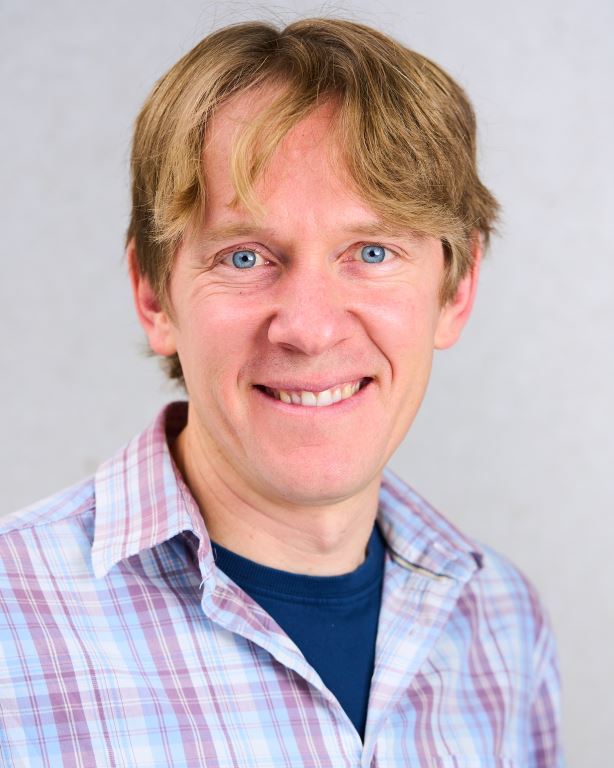
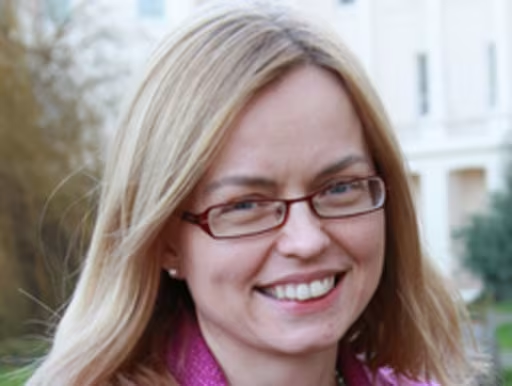
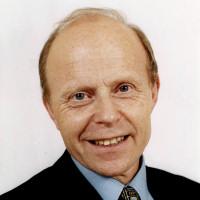
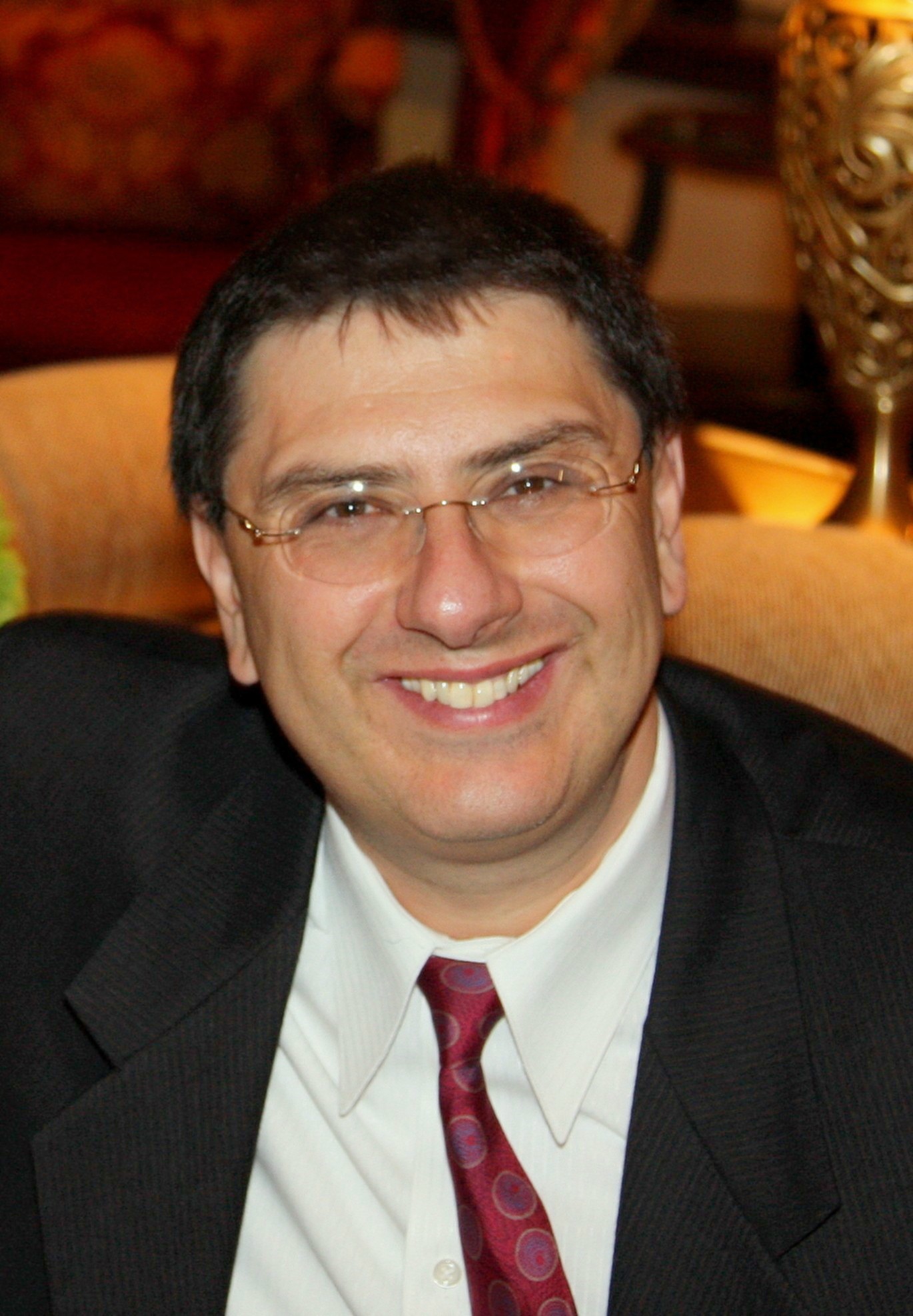
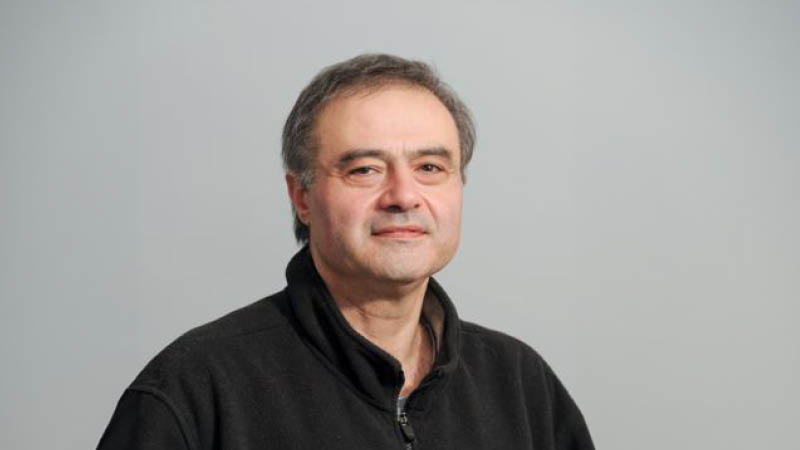
Prof. Valerio Pruneri is an ICREA Professor and Group Leader at the Institute of Photonic Sciences (ICFO), holding the Corning Inc. Chair in Optoelectronics. He leads a research group focused on quantum optics, nanophotonics, and biomedical imaging. His academic background includes a PhD in Laser Physics from the University of Southampton (UK). Research interests span quantum communication technologies, plasmonic sensors, and nanomaterials for optical applications. Recent advancements include work on quantum key distribution systems, graphene-based devices, and super-sensitive phase imaging techniques. Articles highlight innovations in quantum-enhanced imaging, integrated photonic circuits, and hyperbolic metamaterials. His team collaborates on EU projects like NANO-GLASS ITN and FLIGHT, with a strong emphasis on translational research. Over 50 students and researchers are advised, many funded by national and international grants (e.g., Agencia Estatal de Investigación, CELLEX Foundation). Key lab facilities include state-of-the-art cleanrooms and optical characterization tools.
Roles: Prof Peter Bell holds a personal chair in speech technology at the University of Edinburgh's School of Informatics and is a core member of the Centre for Speech Technology Research (CSTR). His primary research focus is automatic speech recognition (ASR), particularly in cross-domain adaptation, lightly supervised training, and minority language systems. He teaches the Automatic Speech Recognition course and advises multiple PhD students. Research Interests: Prof Bell's work spans ASR system development for diverse domains, audio-visual integration, end-to-end models, and under-resourced languages. His projects include the CoG-MHEAR healthcare initiative and the Unmute project addressing language marginalization. He has pioneered techniques for speaker adaptation, raw-waveform modeling, and multi-task learning. Commercial Activities: He advises industry on speech tech adoption, co-founded Quorate Technology (acquired by LSEG), and provides consultancy to firms developing speech solutions. His work bridges academic research with commercial impact through projects like the BBC's MGB Challenge and EU-funded SUMMA platform. Grants & Projects: Leads EPSRC-funded CoG-MHEAR and Unmute initiatives, collaborates on IARPA MATERIAL for low-resource ASR, and contributed to the SpeechWave waveform-based ASR project. His research has been supported by Bloomberg, Ericsson, Samsung, and Toshiba. Labs & Teams: Active in CSTR, leading teams in speech representation learning, adaptation techniques, and multi-modal ASR. His lab supports interdisciplinary work with NLP, HCI, and biomedical engineering groups. Personal: A passionate hillwalker, he explores Scottish Highlands and Corbetts. Previously active in Edinburgh University Hillwalking Club, his outdoor pursuits reflect his disciplined approach to research exploration.
Ben Goddard is a Professor in the School of Mathematics at the University of Edinburgh. His work bridges applied mathematics with real-world scientific challenges, emphasizing interdisciplinary collaboration across engineering, biology, chemistry, and physics. He earned his PhD at the University of Warwick, later completing his final year at TU Munich following his advisor. His research focuses on mathematical modeling, numerical methods, and asymptotic analysis applied to problems such as quantum chemistry, fluid dynamics, and biological systems. Education: Bachelor’s degree in Mathematics (undergraduate details unspecified) PhD in Mathematical Quantum Chemistry (University of Warwick/TU Munich) Research interests include: Dynamic density functional theory (DFT) for complex fluids and nanoparticles Interfacial phenomena and contact line dynamics Numerical optimization and pseudospectral methods Biological systems modeling (e.g., RNA transcription mechanics) Recent work explores applications like ouzo phase behavior, aerosol droplet stability, and opinion dynamics in social networks. His collaborations span diverse fields, including experimental biology at the Welcome Centre for Cell Biology. He advocates for mathematicians’ role in interdisciplinary problem-solving, emphasizing clear communication and adaptability. Advising and grants: While specific grant details are not listed, his projects reflect significant funding and team-based research. He actively promotes STEM engagement through activities like designing math-themed escape rooms with his spouse, a statistician. Labs/Teams: Collaborates extensively with Edinburgh’s Schools of Engineering, Biology, and Informatics, though no specific lab names are mentioned.
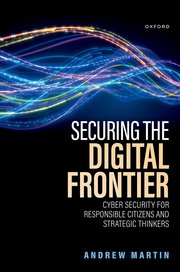
Professor Andrew Martin is a leading academic in Systems Security at the Department of Computer Science, University of Oxford, and a Governing Body Fellow at Kellogg College. His research focuses on trusted computing, cybersecurity, and secure distributed systems, with applications in cloud computing, IoT, and smart grids. He has been instrumental in advancing secure architectures using hardware-based trust mechanisms such as Intel SGX and Trusted Platform Modules. Research Interests: His work spans Systems Security , Trusted Computing , Confidential Computing , Secure Multi-Party Computation , and Privacy in Distributed Systems . He investigates how hardware-enforced security can mitigate risks in large-scale environments, particularly where privacy and trust are paramount. Publication Trends: His recent publications reveal a strong focus on Trusted Execution Environments (TEEs), remote attestation, and secure cloud architectures. He critically examines the feasibility of using hardware enclaves for both defensive and offensive security, emphasizing architectural soundness and real-world applicability. Scientific Awards: No specific awards mentioned in the provided text. Advising and Grants: Professor Martin has supervised numerous PhD and Master’s students in cybersecurity and systems research. His projects include CRANE , Trustworthy Logging , webinos , TCLOUDS , and Secure Networking by Design (SNbD) . He has secured funding for research in trusted computing and secure distributed systems, contributing to both theoretical foundations and practical implementations. Labs and Teams: He leads a research group focused on systems security and trusted computing, collaborating with industry and academic partners on large-scale security challenges. His team works on developing secure middleware, analyzing vulnerabilities in consumer devices, and designing privacy-preserving protocols for smart infrastructure.
Dr. Ciara Rafferty is a Senior Lecturer at Queen's University Belfast's School of Electronics, Electrical Engineering and Computer Science, affiliated with the Centre for Secure Information Technologies. She leads research in advanced cryptography, focusing on post-quantum systems, homomorphic encryption, and hardware acceleration. Her work includes quantum-safe cryptography projects like the UK Quantum Communications Hub and AQuASeC (Innovate UK). She co-teaches CSC2056 - Systems Security and Cryptography and actively supervises PhD students. Dr. Rafferty is a Senior Member of IEEE and an EPSRC SPRITE+ Expert Fellow. Research Interests: Homomorphic Encryption Post-Quantum Cryptography Cryptographic Hardware Architectures Privacy-Preserving Technologies Side-Channel Attack Mitigation Key Projects: UK Quantum Communications Hub (Phase 2) SAFEcrypto (H2020 Project) AQuASeC (Toshiba Europe-funded) SEQURED (Rolls Royce-funded) Awards: Senior Member of IEEE EPSRC SPRITE+ Expert Fellow Advising & Grants: PhD Supervision: Shabnam K (Secure Cloud Computation) Funding: EPSRC, Innovate UK, Industry Partners Lab/Teams: Centre for Secure Information Technologies (CSIT), collaborating on hardware-accelerated cryptography and quantum-safe systems.
Prof. Philippe Michel is a Professor in the Mathematics Institute at the École Polytechnique Fédérale de Lausanne (EPFL), where he leads research in the Number Theory group (TAN). His office is located at MA C3 634, Station 8, 1015 Lausanne, Switzerland. Michel received his education at ENS Cachan and obtained his PhD from Université Paris XI in 1995 under the supervision of E. Fouvry. His academic career includes positions as maître de conférence at Université Paris XI (1995-1998), full professor at Université Montpellier II (until 2008), before joining EPFL. Prof. Michel's research spans across analytic number theory and related fields. His work integrates diverse mathematical techniques including arithmetic geometry, exponential sums, sieve methods, automorphic forms and representations, L-functions, and more recently, ergodic theory. His research has significant implications for understanding the distribution of prime numbers, properties of L-functions, and connections between number theory and other mathematical disciplines. Michel has made substantial contributions to the study of Kloosterman sums, trace functions, and the analytic properties of families of L-functions. Peccot-Vimont prize Member of the Institut Universitaire de France Invited speaker at the 2006 International Congress of Mathematicians Member of the Academia Europaea (Academy of Europe) since 2011 Fellow of the American Mathematical Society since 2012 Prof. Michel serves on the editorial boards of several prestigious mathematical journals including Archiv der Mathematik, Journal of Algebra and Number Theory, Journal of the European Math. Society, and Journal of Number Theory. His research has been consistently funded by major mathematical institutions, supporting his work on analytic number theory and its applications. At EPFL, Prof. Michel leads the Number Theory group (TAN) within the Mathematics Institute, fostering research collaborations and mentoring young mathematicians. His team focuses on cutting-edge problems in analytic number theory, connecting with broader mathematical fields and maintaining strong international collaborations.
Dr. Jia Rao is an Associate Professor in the Department of Computer Science and Engineering at the University of Texas at Arlington, College of Engineering. He previously served as an Assistant Professor at the University of Colorado, Colorado Springs from 2012 to 2016. His research spans operating systems, distributed and parallel computing, cloud computing, virtualization, and machine learning. Education: Ph.D., Computer Engineering, Wayne State University, 2011 M.S., Computer Science, Wuhan University, 2006 B.S., Computer Science, Wuhan University, 2004 Dr. Rao's research focuses on building adaptive, scalable, and efficient computer systems for cloud and data center environments. His interests include resource management, performance modeling, adaptive scheduling, and quality-of-service (QoS) guarantees in virtualized and containerized systems. He combines machine learning and feedback control techniques with low-level system design to improve efficiency, fairness, and predictability in heterogeneous and multi-tenant environments. An analysis of his recent publications reveals a strong trend toward memory and resource management innovations in cloud-native systems. His work explores tiered memory architectures, secure container deployment, preemptive multitasking for deep learning, and efficient packet processing in container networks. These efforts reflect a consistent focus on optimizing system-level performance, security, and scalability in modern data centers. Scientific Awards: NSF CAREER Award (2019) Best Paper Award, APSys (2016) Best Paper Award, ICAC (2013) Best Paper Nomination, HPCA (2013) Best Paper Nomination, HPDC (2013) Best Paper Award, Middleware (2021) Researcher of the Year, UCCS (2014) Dr. Rao actively advises students and serves on dissertation and thesis committees for numerous Ph.D. and Master’s candidates. He leads federally funded research projects supported by the National Science Foundation, including a major CAREER grant on virtualized architectures and collaborative big data initiatives. His research has been sponsored by NSF, IEEE, and Intel Corporation, reflecting strong industry and academic collaboration. He leads and contributes to major research labs and teams focused on cloud systems, operating systems, and performance optimization. His team has produced high-impact work in top-tier venues such as OSDI, SOSP, ATC, EuroSys, and ICDCS. Current and future work includes next-generation memory architectures using CXL, intelligent resource provisioning, and resilient container networking.
Thomas Henzinger is a Professor at the Institute of Science and Technology Austria (ISTA), where he leads the Henzinger Thomas Group focused on improving software reliability through mathematical methods. He previously served as ISTA's President (2009–2022) and held academic positions at EPFL, Max Planck Institute, UC Berkeley, and Cornell University. Education: Dipl.-Ing. in Computer Science (Johannes Kepler University, Austria), M.S. in Computer and Information Sciences (University of Delaware), PhD in Computer Science (Stanford University), and Honorary Doctorates from Fourier University (France) and Masaryk University (Czech Republic). The group's research spans concurrent systems , embedded systems , quantitative model checking , runtime monitoring , and trustworthy AI . They develop tools like HyTech and VAMOS, emphasizing predictability, robustness, and fairness in safety-critical software. Recent publications highlight trends in quantitative automata , fairness in AI , quantum algorithms , and automata theory , reflecting interdisciplinary applications from cyber-physical systems to neural networks. Collaborative projects include SPyCoDe (security foundations) and VAMOS (software monitoring). Honors & Awards: 2024 Fellow of the Royal Society 2020 Member, US National Academy of Sciences 2015 Royal Society Milner Award 2012 Wittgenstein Award 2006 ACM and IEEE Fellow 1995 NSF CAREER and ONR Young Investigator Awards Henzinger advises current and former PhD students including Mahyar Karimi, Pavol Kebis, and Mathias Lechner. His grants include ERC Advanced Grants (QUAREM, VAMOS) and FWF funding (Wittgenstein Award, NFN RISE). Labs & Teams: He leads the Henzinger Thomas Group at ISTA, collaborating with FORSYTE (TU Wien) and contributing to EU-funded initiatives. The group integrates postdocs, PhD students, and interns in formal methods and system verification.
Olenka Kacperczyk is a Professor of Strategy and Entrepreneurship at London Business School. She earned her PhD from the Ross School of Business at the University of Michigan and previously held a faculty position at MIT's Sloan School of Management. PhD - Ross School of Business, University of Michigan BA - Mount Holyoke College Her research focuses on entrepreneurship, particularly examining inequality in startup ecosystems, labor market dynamics, and institutional impacts on innovation. Key themes include gender disparities in entrepreneurial funding, the role of institutional protections for minority employees, and the paradoxical effects of corporate social responsibility on firm value. Recent publications highlight her work on gender homophily in venture hiring, wage dispersion mechanisms, and the racial entrepreneurship gap. Her articles span journals like Strategic Management Journal , Organization Science , and Administrative Science Quarterly . Kauffman Junior Faculty Scholarship for Entrepreneurship Research William F. Glueck Award at the Academy of Management Olenka serves as Associate Editor for Management Science , Organization Science , and Administrative Science Quarterly . She has also held editorial roles at Strategic Management Journal and Management Science . Her teaching portfolio includes entrepreneurship strategy and strategic management courses.
Professor Cathryn Birch is a leading academic in Meteorology and Climate at the University of Leeds' School of Earth and Environment. She holds a Professorship specializing in high-impact weather systems and climate modeling, with extensive collaborations across international meteorological services including the Indonesian Met Service (BMKG) and the UK Met Office. Her research focuses on tropical meteorology , particularly thunderstorm formation and extreme rainfall mechanisms in Southeast Asia. She employs convection-permitting models , satellite observations, and machine learning techniques to develop nowcasting systems that predict severe weather 2-3 hours in advance. Key research areas include: Weather and climate extremes in tropical regions Flood forecasting and early warning system development Climate impacts on health (particularly humid heat extremes) Machine learning applications for weather prediction Her recent publications demonstrate strong trends in applied meteorology with emphasis on real-world implementation - 60% of her 2023-2025 work involves operational forecasting systems, while 40% focuses on climate-health linkages. Notable methodological innovations include satellite-based humid heat early warning systems and deep learning frameworks for convection initiation. Major scientific recognition includes: 2024 Emerging Environmental Impact Award for flood early warning systems 2021 Queen's Anniversary Prize for tropical community resilience 2014 European Meteorological Society Young Scientist Award Professor Birch actively supervises 6 PhD students and 3 postdocs while leading multi-million pound projects including the £6M National Hub on Net Zero, Health and Extreme Heat (HEARTH). Her team develops practical forecasting tools currently being tested with African meteorological services and the Indonesian Met Service. She also serves on the European Meteorological Society Awards Committee and the Met Office K-scale project steering group.
David Miller , Professor of Political Theory at the University of Oxford, is affiliated with the Department of Politics and International Relations and the Faculty of Philosophy. He was trained in philosophy at Cambridge and politics at Oxford, later joining Nuffield College as an Official Fellow in 1979. His work uniquely bridges political philosophy and empirical social science. Research Focus : Justice (social and global), democratic theory, nationality, citizenship, multiculturalism, and immigration ethics. Awards : 2020 Lifetime Achievement Award by the European Consortium for Political Research (ECPR). Collaborations : Co-edited works with Christine Straehle, Alice Baderin, and Lea Ypi; current projects include climate-induced migration ethics and meritocracy debates. Students : Supervises doctoral candidates like Henrik Dahlquist, Rufaida Al-Hashmi, and Clare Cai. Recent Publications emphasize immigration control, global justice, and the intersection of political philosophy with empirical evidence. His 2024 works include analyses of involuntary displacement and Kantian immigration ethics, while 2023 saw debates on municipal immigration authority and political equality. Scientific Awards 2020 ECPR Lifetime Achievement Award Advising : Mentors students in political theory and related areas, including B.Phil and M.St candidates. Teams & Labs : Collaborates with the Blavatnik School of Government, focusing on foundational public policy components.
Rafail Ostrovsky is the Norman E. Friedman Chair in Knowledge Sciences at UCLA Samueli School of Engineering, where he serves as a Distinguished Professor of Computer Science and Mathematics. He also directs the Center for Information and Computation Security at UCLA. His academic leadership extends to his role as a foreign member of Academia Europaea and his fellowship in multiple prestigious organizations including the National Academy of Inventors, AAAS, ACM, IEEE, and IACR. Professor Ostrovsky's research spans multiple domains in theoretical computer science, with primary focus on cryptography, secure computation, and algorithms. His work on garbled circuits, zero-knowledge proofs, and private information retrieval has had significant theoretical and practical impact. He has pioneered research in secure multi-party computation, oblivious RAM, and cryptographic protocols that maintain privacy while enabling complex computations on sensitive data. His research bridges theoretical foundations with practical applications in secure systems, ranging from database security to hardware-based cryptographic primitives. Ostrovsky's publication record shows a consistent trajectory of innovation in cryptographic theory and its applications. His recent work focuses on optimizing secure computation protocols for efficiency while maintaining strong security guarantees, with particular attention to communication complexity, round complexity, and practical implementations. He has made significant contributions to homomorphic encryption, non-malleable commitments, and zero-knowledge proofs, often developing techniques that transform theoretical constructs into practically viable solutions. 1993 Henry Taub Prize 2017 IEEE Computer Society Edward J. McCluskey Technical Achievement Award 2018 RSA Award for Excellence in Mathematics (RSA Prize) 2022 W. Wallace McDowell Award (highest award from IEEE Computer Society) Fellow of National Academy of Inventors, AAAS, ACM, IEEE, and IACR Foreign member of Academia Europaea With over 350 peer-reviewed publications and 16 issued USPTO patents, Professor Ostrovsky has significantly shaped the field of cryptography and secure computation. His mentorship has cultivated numerous students and postdocs who have gone on to make their own contributions to the field. His editorial roles on prestigious journals including Journal of ACM and Algorithmica reflect his standing in the theoretical computer science community. His leadership extends to chairing major conferences including FOCS 2011 and serving on over 40 international conference program committees. As Director of the Center for Information and Computation Security at UCLA, Professor Ostrovsky leads a team focused on advancing the theoretical foundations and practical applications of secure computation. His center serves as a hub for interdisciplinary research connecting cryptography with systems security, network protocols, and hardware security. The center's work spans from foundational cryptographic primitives to real-world applications requiring privacy-preserving computation.
Abolfazl Hashemi is an Assistant Professor in the Elmore Family School of Electrical and Computer Engineering at Purdue University, directing the MINDS Group. He holds a B.Sc. from Sharif University of Technology (2014), and M.S.E. and Ph.D. degrees from The University of Texas at Austin (2016, 2020). His research focuses on Large-Scale Optimization for AI/ML, Learning at the Edge, and Decision-Making under Uncertainty, with applications in Federated Learning, Medical Image Analysis, and Cyber-Physical Systems. He leads the MINDS Group and collaborates with EnCORE and ICON centers. Key research areas include optimizing algorithms for machine learning, robustness in distributed systems, and adversarial learning. He has developed algorithms with mathematical guarantees for efficient deployment under resource constraints. Teaching includes Optimization for Deep Learning (graduate) and undergraduate courses like ECE 20001. He advises the Purdue RoboMaster robotics team and has mentored students through programs like SURF and Summer Stay Scholars. Outreach activities include fostering diversity through robotics competitions and research fellowships. His work bridges theoretical optimization with practical AI applications, emphasizing equitable and robust solutions in federated and decentralized learning.
Professor Mihran Tuceryan is a Professor of Computer Science at Purdue University Indianapolis, affiliated with the Department of Computer Science within the College of Science. He holds a PhD from the University of Illinois at Urbana-Champaign (1986) and a BS from MIT (1978). His expertise spans Computer Vision, Image Processing, Pattern Recognition, and Augmented Reality. Recent research focuses on crime prediction via video analysis, forensic imaging, and distributed tracking systems. He is a Senior Member of IEEE and ACM. Key research interests include augmented reality integration for industrial training, real-time illumination modeling, and monocular SLAM algorithms. His work addresses challenges in photorealistic AR, dynamic object labeling, and medical imaging applications such as hepatic fibrosis detection. He has contributed to projects like the e-DOTS indoor tracking system and forensic 3D impression acquisition. His publications span over three decades, emphasizing real-world applications in security, healthcare, and robotics. Education: Bachelor of Science in Computer Science and Engineering, MIT, 1978 PhD in Computer Science, University of Illinois at Urbana-Champaign, 1986 Awards: Senior Member, IEEE Senior Member, ACM Labs/Teams: Focus on AR, SLAM, and medical imaging applications Collaborative frameworks for distributed visual SLAM
Rowan C Martindale is an Associate Professor at the University of Texas at Austin's Department of Earth and Planetary Sciences within the Jackson School of Geosciences. His research focuses on marine paleoecology, mass extinctions, and carbon cycle perturbations in deep time, particularly the Triassic-Jurassic and Toarcian Ocean Anoxic Event. He leads the Martindale Lab, which investigates Jurassic reef crises, Lagerstätten preservation, and modern reef decline. His work integrates field studies, geochemical analyses, and educational tools like board games to enhance STEM engagement. Affiliations: UT Austin Non-vertebrate Paleontology Lab GSA Geobiology & Geomicrobiology Division (Executive Committee) Education: Doctoral research centered on Triassic/Jurassic boundary reef collapse linked to ocean acidification. Postdoctoral opportunities at Scripps and Humboldt Foundation were declined. Research Interests: Reconstruction of ancient reef ecosystems, exceptional fossil preservation mechanisms, and applying paleontological insights to modern conservation. Key projects include the Pliensbachian/Toarcian reef crisis and Jamaican coral reef monitoring. Publications: Over 50 peer-reviewed articles since 2015, emphasizing Jurassic paleoecology, fossil preservation, and education innovation. Top-tier journals include Paleontology , Geology , and Papers in Palaeontology . Awards: NSF CAREER Award (2019) UT Austin Teaching Excellence Award (2017) Advising & Grants: Supervised 15+ graduate students and postdocs. Secured NSF grants for reef research and educational initiatives like the GeoPATHS program in Jamaica. Labs/Teams: Collaborates with global institutions on field projects in Morocco, Jamaica, and the Caribbean. Lab focuses on combining fieldwork, microscopy, and geochemical analyses.