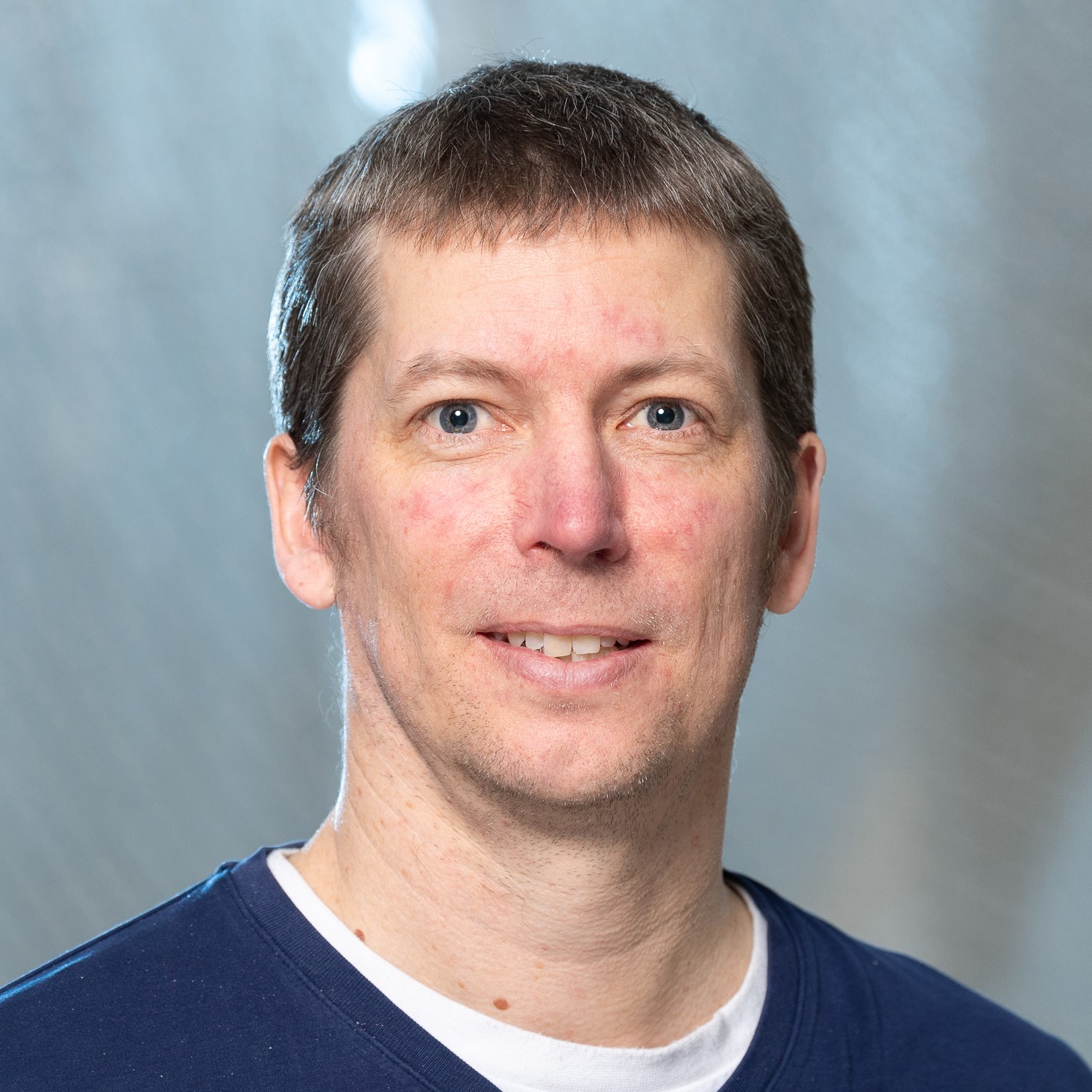
Peter H. Gruber is a Senior Lecturer and Senior Scientist at the Università della Svizzera Italiana (USI), Faculty of Economics, in Lugano, Switzerland. He has been affiliated with USI since 2008. PhD in Physics from TU Wien PhD in Finance from Università della Svizzera Italiana His research spans multiple disciplines, focusing on: Asset Pricing, particularly risk premia and stochastic volatility models Numerical Methods in finance and econometrics Economics of Cryptocurrencies and Entrepreneurship High-Performance Computing applications in economics His publication trends highlight expertise in option pricing models , matrix affine jump diffusion (MAJD) frameworks, and stochastic skewness analysis. Earlier work in particle physics demonstrates interdisciplinary technical proficiency. At USI, he teaches numerical methods using MATLAB and R, and develops computational resources for financial econometrics and macroeconomic analysis.
Prof. Torsten Hoefler is a Full Professor at the Department of Computer Science, ETH Zürich. His research focuses on High-Performance Computing (HPC), parallel systems, networking, and AI-infrastructure. He leads projects on scalable interconnects, network topology design, and cloud computing benchmarks like SeBS. His work bridges theoretical foundations with practical implementations in distributed systems. Research Interests : High-Performance Computing & Networking Parallel Algorithms & Architectures AI Infrastructure & Distributed Systems Chiplet Interconnects & Topology Optimization Key Contributions : Developed tools like ATLAHS (AI/HPC network simulation) Advanced RDMA-based communication protocols (SDR-RDMA) Benchmarks for serverless computing (SeBS-Flow) His recent articles (2025) emphasize adaptive networks, low-precision AI models, and energy-efficient HPC systems. He also explores ethical computing and sustainability in supercomputing through initiatives like Core Hours & Carbon Credits.
Aurelio Muttoni is an Honorary Professor at EPFL’s School of Architecture, Civil and Environmental Engineering (ENAC), where he led the Concrete Construction Laboratory from 2000 to 2024. He holds a diploma and doctorate in civil engineering from ETH Zurich (1982 and 1989). His teaching focuses on structural design, concrete structures, and bridge design. Research interests include concrete behavior, innovative structural design, shear forces, nonlinear analysis, bond mechanics, and ultra-high-performance concrete. He co-founded engineering consultancies Muttoni Partners and Lurati Muttoni Partner. Key awards include the Freyssinet Medal (2022), Chester Paul Siess Award (2010), and Wason Medal (2014). He co-authored the Eurocode EN 1992-1-1 (2023). Education: Diploma in Civil Engineering, ETH Zurich, 1982 Doctorate in Civil Engineering, ETH Zurich, 1989 Research Highlights: Behavior and design of concrete structures Innovative structural concepts (e.g., textile/concrete composites) Shear force analysis and punching shear Aggregate interlocking and material durability Ultra-high-performance concrete applications Professional Contributions: Advised 30+ PhD/Master’s students at EPFL Co-founded engineering firms focusing on structural design and consultancy Lead role in drafting Eurocode 2’s second generation Recent Article Trends: Focus on experimental methods (e.g., crack kinematics imaging), bond-slip mechanics, and shear failure verification in modern concrete structures. Emphasis on integrating advanced models into codes like Eurocode 2.
Robin Zbinden is a Researcher at the École Polytechnique Fédérale de Lausanne (EPFL) , affiliated with the School of Architecture, Civil and Environmental Engineering (ENAC) . He is part of the Laboratoire de science computationnelle pour l'environnement et l'observation de la Terre (ECEO) , focusing on computational methods for environmental and Earth observation challenges. His work bridges machine learning, remote sensing, and ecological modeling to address climate-driven environmental questions. He is also a doctoral student in the Programme doctoral en informatique et communications at EPFL, specializing in data-driven approaches for species distribution and environmental systems. Research interests include species distribution modeling (SDM), multi-modal data fusion, and algorithmic solutions for imbalanced ecological datasets. His work emphasizes adaptive machine learning frameworks like MaskSDM , integrating climate, satellite, and field data to predict species responses to environmental changes. Applications span biodiversity conservation, climate impact assessments, and sustainable food systems. His lab’s computational methods prioritize explainability and scalability, addressing gaps in ecological modeling robustness and generalization. Notable contributions include foundational work on MaskSDM (2025), which enhances SDM flexibility through Shapley values, and studies on monarch butterfly migration under climate shifts. His 2024 research on pseudo-absence selection for deep learning models and 2023 exploration of neural networks in SDM highlight methodological innovations. Recent projects address food environment metrics via sales logs and carbon footprint perception studies (2019). Collaborations span environmental policy, geospatial analysis, and interdisciplinary sustainability challenges. Lab affiliations include the ECEO team at EPFL Valais Wallis, where he develops computational tools for environmental observation. His research narrative combines technical algorithm design with ecological applications, aiming to bridge data science and real-world conservation needs.
Petr Listov is a former researcher at the Swiss Federal Institute of Technology in Lausanne (EPFL), affiliated with the School of Engineering. His work focuses on advanced control systems, particularly Model Predictive Control (MPC) for autonomous systems, robotics, and mechatronics. Listov contributed to developing the PolyMPC software framework, enhancing real-time embedded optimization for applications like rocket control and autonomous driving. His research emphasizes nonlinear control, stochastic systems, and optimization under uncertainty. Education: Completed a doctoral thesis titled Real-Time Nonlinear Model Predictive Control for Fast Mechatronic Systems under supervision at EPFL. Research Interests: Development of MPC algorithms for high-speed systems Applications in autonomous vehicles and robotics Stochastic control and uncertainty quantification Optimization-based control strategies Key Contributions: His publications address real-time MPC implementations, thrust vector control for rockets, and stochastic trajectory planning. Experimental validations include indoor/outdoor rocket testing and automotive hardware-in-the-loop systems. Labs/Teams: Collaborated with the Laboratoire d’Automatique (LA) and contributed to the PolyMPC open-source library.
Prof. Dr. Matthias Bürgi is a Visiting Lecturer at the University of Bern’s Institute of Geography and Head of the Research Unit 'Landscape Dynamics' at the Swiss Federal Institute for Forest, Snow and Landscape Research (WSL). He holds a titular professorship (since 2022) and teaches a Master-level course on European and Swiss landscape and land-use history. With a PhD from ETH Zurich (awarded with the ETH Medal) and postdoctoral training at Harvard University and the University of Wisconsin-Madison, his career spans roles such as Deputy Head of Nature Protection at WSL and Senior Researcher under Prof. Ewald at ETH Zurich. His research focuses on historical ecology, landscape dynamics, and sustainable land management, with key projects including the Tamangur forest study, the Historical Habitat Map of Switzerland (HIHAMAS), and climate change impacts on cultural landscapes (e.g., KLANG project). He has supervised over 40 Master/Diploma theses and 15 PhD theses, contributing to over 100 scholarly publications. His work bridges historical, ecological, and social dimensions of land-use change, emphasizing interdisciplinary approaches. Key achievements include the ETH Medal for his PhD (1997), leadership in international collaborations (e.g., with China and Spain), and roles in organizations like the Swiss Biodiversity Forum and the Ballenberg Open-Air Museum. Current initiatives explore sustainable intensification pathways, historical habitat mapping, and climate-resilient landscapes. His outreach includes the Waldlabor Zürich project, which educates on historical and future forest management practices.
Dr. Tobias Sprafke is a Guest Researcher in Soil Science at the Institute of Geography, University of Bern. His work focuses on Quaternary geology, loess-palaeosol systems, and geoarchaeology. He has contributed to studies on sediment dynamics, paleoenvironmental reconstruction, and human-natural interactions across Europe and beyond. Research interests include loess formation and chronostratigraphy, fluvial and aeolian processes, and interdisciplinary approaches combining geology, archaeology, and geography. Key projects involve analyzing loess sequences in Germany, Austria, and Poland, as well as investigating anthropogenic impacts on soils in the Amazon and Galápagos regions. Dr. Sprafke’s recent publications highlight his expertise in sedimentological and geochemical analyses, multi-proxy paleoenvironmental reconstructions, and the integration of archaeological data with geological records.
Georges Wagnières is a Professor at the École Polytechnique Fédérale de Lausanne (EPFL) in the School of Basic Sciences (SB), Department of Physics (IPHYS), leading the LIFMET laboratory. He holds roles in multiple educational entities within EPFL, including SCGC, SPH, and SSV. His research focuses on biomedical optics, photodynamic therapy (PDT), photobiomodulation, and technology transfer. He co-founded Medlight SA, a spin-off developing light delivery systems for PDT. Education: MSc in Physics from the University of Lausanne (1986), PhD in Biomedical Optics from EPFL (1992), postdoc at Harvard (1993-1994), and an Executive Master in Technology Management from HEC Lausanne (2001). Research interests include fluorescence spectroscopy/imaging, PDT for cancer and inflammatory diseases, oxygen measurement in tissues, and mitochondrial modulation for neurodegenerative diseases. He has supervised 12 PhD students and teaches courses in biomedical optics, photomedicine, and general physics. Publications: Over 235 articles, including 150 in peer-reviewed journals, and 18 patents. His work bridges preclinical/clinical development of photosensitizers and optical devices, with applications in oncology and vascular disorders.
Dr. Linus Villiger is a Senior Scientist at the Swiss Seismological Service (SED) at ETH Zurich. His research focuses on seismology, geothermal energy, and induced seismicity, with expertise in software/hardware development for high-frequency data acquisition and analysis of hydraulic stimulation experiments. He holds a PhD from ETH Zurich (2020) and has led research projects on geothermal reservoir stimulation and seismic monitoring. Education 2023–present: Senior Scientist at ETH Zurich/SED 2021–2022: Postdoc at ETH Zurich/SED 2016–2020: PhD in Seismology and Geothermal Engineering (ETH Zurich/SED) 2013–2015: Master's in Sustainable Energy Engineering (Chalmers University/Iceland) 2008–2011: Bachelor's in Mechanical Engineering (Northwestern Switzerland) Research Interests Dr. Villiger specializes in hydraulic stimulation experiments , geothermal energy systems , and seismic monitoring . His work integrates hardware/software development for high-frequency data acquisition, analysis of induced seismicity patterns, and characterization of fractured rock reservoirs. Key projects include the BedrettoLab underground facility and Grimsel Test Site stimulations. Grants & Advising He leads EU/CH-funded research projects and supervises student projects (Master level). His work emphasizes scalable reservoir stimulation protocols and risk assessment for geothermal development. Labs & Teams Affiliated with the Swiss Seismological Service (SED), collaborating on large-scale geoscience infrastructure like the Bedretto Underground Laboratory and Grimsel Test Site.
Prof. Dr. Thomas Michael Bohnert is a faculty member at ZHAW School of Engineering, specializing in distributed systems and cloud computing. He has led multiple projects including: Bringing FIWARE to the NEXT step (completed), Enterprise Cloud Robotics Platform (completed), Apache Cloudstack for NFV (completed), Solidna cloud storage (completed), T-NOVA NFV services (completed), and Mobile Cloud Network (completed). Research Focus: Cloud robotics Network Functions Virtualization (NFV) Software-Defined Networking (SDN) Mobile cloud networking Resilient cloud systems Energy-efficient cloud platforms Publications Trends: His work spans 2012-2024 with consistent focus on cloud-native application design, NFV orchestration, SDN implementation, and mobile cloud integration. Key themes include self-managing systems, distributed computing frameworks, and infrastructure optimization. Collaborations: Frequently collaborates with Andrew Edmonds, Giovanni Toffetti Carughi, Piyush Harsh, and Sandro Brunner across EU projects and industry partnerships.
Shailesh Mishra is a Doctoral Assistant and PhD student at École Polytechnique Fédérale de Lausanne (EPFL), affiliated with the Decentralized and Distributed Systems Lab (DEDIS) in the School of Computer and Communication Sciences. He is enrolled in the Doctoral Program in Computer and Communication Sciences (EDIC) and holds a dual status as both academic staff and student. His research focuses on distributed and decentralized systems , with particular interest in blockchain technology, consensus algorithms, and fault-tolerant network architectures. His work is conducted within the DEDIS laboratory, a leading research group in secure and scalable distributed computing. No awards or scientific honors are currently listed in the provided information. As a doctoral researcher, Shailesh is actively involved in advancing core challenges in decentralized computing. While no formal advisees are mentioned, his role involves contributing to research projects, likely mentoring junior students, and collaborating within the DEDIS team. He is expected to publish in top-tier venues in systems and security. The DEDIS lab at EPFL, where he conducts his research, is known for pioneering work in secure multi-party computation, blockchain scalability, and privacy-preserving protocols. The team fosters a collaborative environment focused on building robust, decentralized infrastructure for future applications.
Jonathan R. Macey is the Sam Harris Professor of Corporate Law, Corporate Finance, and Securities Law at Yale Law School and a Research Member of the European Corporate Governance Institute (ECGI). His research spans corporate law, securities regulation, banking law, and the law-and-economics of financial institutions, with more than 150 scholarly papers and multiple books to his credit. Education & Affiliations Yale Law School – Sam Harris Professor (endowed chair) European Corporate Governance Institute (ECGI) – Research Member Regular visiting or adjunct affiliations with Columbia, NYU, Cornell, Chicago, and other leading institutions (evidenced by co-authorship networks) Research Interests Macey investigates the intersection of law, finance, and governance. Central themes include: Corporate governance mechanisms – board structure, fiduciary duties, shareholder rights, and the role of controlling shareholders. Securities regulation and market structure – disclosure regimes, insider trading, market manipulation, and the impact of technological change on trading venues. Banking and systemic risk – governance of banks and bank holding companies, money-market mutual funds, resolution regimes, and the regulation of systemically important financial institutions. Law-and-economics methodology – applying economic analysis to assess legal rules, with particular attention to regulatory efficiency and distributive consequences. Publication Trends Between 2019 and 2025 Macey has published at an accelerating pace on post-crisis financial regulation, ESG investing, digital-asset markets, and Delaware corporate law. His recent work critiques the shareholder-primacy narrative, explores extended liability regimes for mega-banks, and interrogates the legal foundations of retail trading platforms such as Robinhood. Scientific Awards & Honors Sam Harris Professor of Corporate Law, Corporate Finance, and Securities Law (endowed chair, Yale Law School) Top-1,524 SSRN download rank among all scholars worldwide Over 39,000 cumulative SSRN downloads; 6,982nd most-cited author on SSRN Frequent keynote speaker at ALEA, ABF, NBER Corporate Finance, and SFS Cavalcade Advising & Grants Macey has served as principal investigator or co-investigator on grants from the John M. Olin Foundation, the Ewing Marion Kauffman Foundation, and the George Mason Law & Economics Center. He has advised the SEC, FDIC, Federal Reserve Board, and numerous international regulators on corporate governance and systemic-risk issues, and is regularly retained as an expert witness in high-profile securities and appraisal litigation. Laboratories & Research Teams While not running a traditional laboratory, Macey collaborates through the Yale Law & Economics Research Group and the ECGI Law Working Paper series, mentoring PhD students, post-docs, and JD researchers working at the intersection of law, finance, and public policy.
Dr. Dario Ferreira Sanchez is a Senior Scientist at the Paul Scherrer Institute (PSI) in Switzerland, affiliated with the Laboratory for Femtochemistry and the Center for Photon Science. Since joining PSI in 2015, he has led research on Hyperspectral Chemical Imaging using synchrotron techniques. His responsibilities include developing multimodal tomographic approaches at the microXAS beamline, focusing on real-time chemical reaction analysis in energy and catalytic systems. He holds a PhD in Physics from Universidade Federal do Rio Grande do Sul (UFRGS, Brazil, 2009-2012), where he specialized in nanostructured material characterization using techniques like MEIS, TEM, and GISAXS. His Master's degree from Universidade Federal do Paraná (UFPR, Brazil, 2007-2009) investigated chalcogenide glasses through XRD and Raman spectroscopy. Sanchez's research centers on resolving chemical processes in complex energy materials across spatial and temporal scales. Key interests include: Synchrotron-based chemical imaging for catalysis and energy storage Tomographic X-ray absorption spectroscopy Degradation mechanisms in batteries and electrolysis cells Nanomaterial toxicity using advanced X-ray fluorescence His publications emphasize multimodal characterization techniques , with recent work (2023-2025) focusing on battery material degradation, uranium toxicokinetics, geological mineral analysis, and operando imaging of electrochemical interfaces. The research consistently integrates synchrotron methods like XRF, XRD, and tomography. Sanchez oversees the development of beamline capabilities for hyperspectral imaging and collaborates on projects involving solid oxide cells, additive manufacturing, and environmental material analysis. No advising relationships or awards are documented in the source material.
Mark Robinson is a Professor at the Department of Molecular Life Sciences, University of Zurich, and affiliated with the Swiss Institute of Bioinformatics. He leads the Robinson Research Group, focusing on Computational Biology Bioinformatics Single-Cell RNA Sequencing Statistical Genomics His work bridges computational method development with applications in cancer immunology, epigenetics, and developmental genetics. Key research contributions include Development of bioinformatics tools like pubassistant.ch, scDblFinder, and DESpace Advancements in spatial transcriptomics and single-cell data analysis Studies on epigenetic aging and tumor microenvironment dynamics Notable collaborations span institutions in Switzerland, Germany, and international agricultural pest research groups. His recent publications (2023-2025) emphasize Spatial omics data interpretation Interdisciplinary collaboration frameworks Optimized tissue processing methods Computational benchmarks for reproducible research While no specific scientific awards are mentioned in the data, his software tools and methodological papers demonstrate significant impact on open science and bioinformatics communities.
Simone Rametti is a Researcher at the Distributed Electrical Systems Laboratory (DESL) within the School of Engineering at École Polytechnique Fédérale de Lausanne (EPFL). He is based in Lausanne, Switzerland, and works in the ELL building on EPFL's campus. His research focuses on Electrical Engineering , with specific interests in Power Systems , Renewable Energy , Smart Grids , Distributed Energy Systems , and Energy Modeling . His work contributes to advancements in sustainable and distributed energy technologies at EPFL.