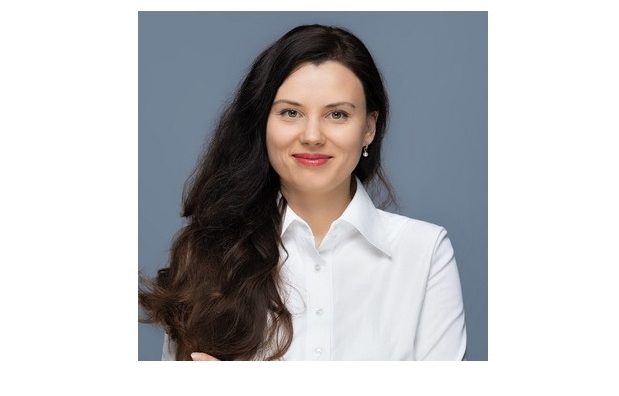
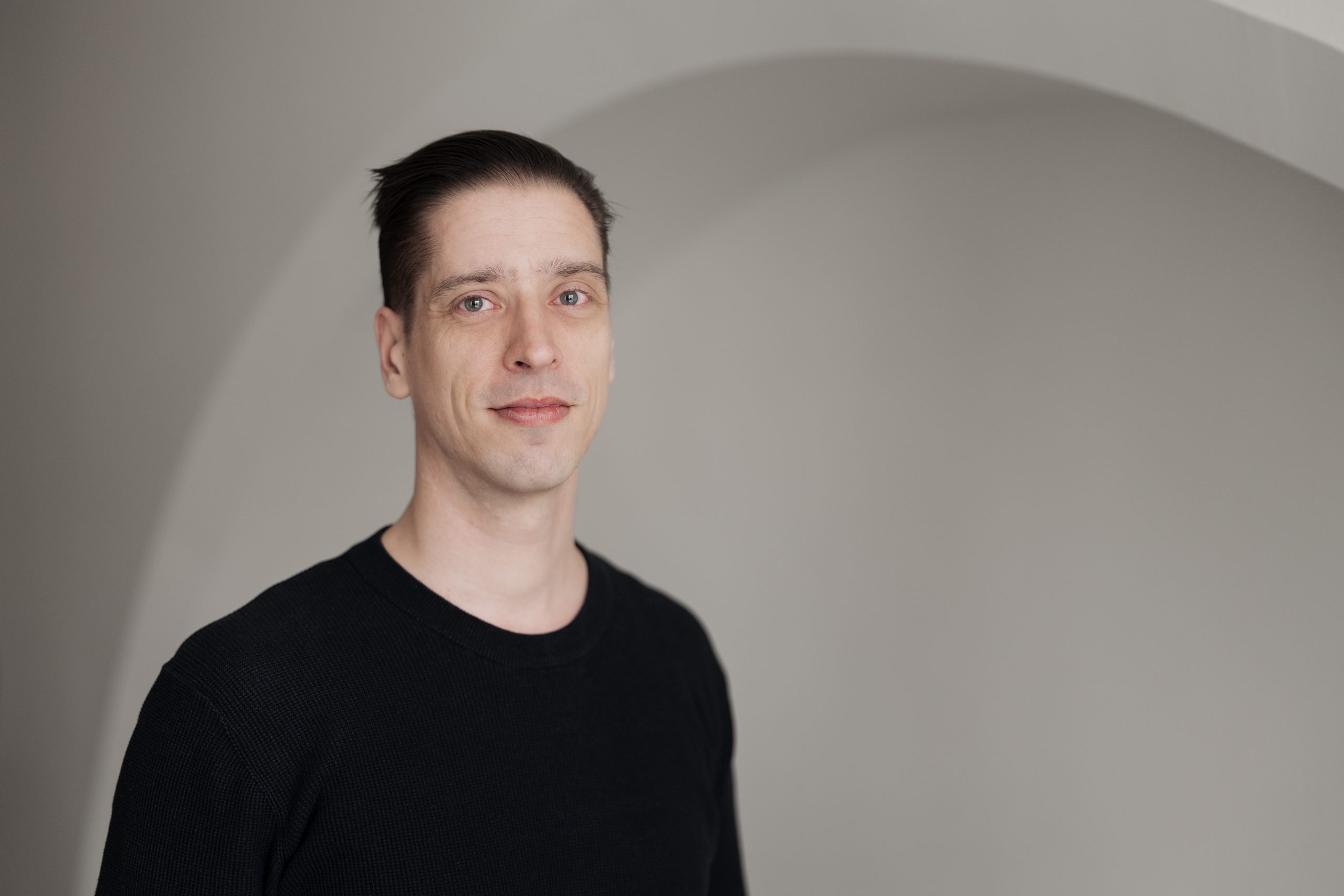
Katažyna Bogdzevič is a Professor at Mykolas Romeris University (MRU) Law School, specializing in Private International Law , European Law , Human Rights , and Environmental Law . She leads the MRU Human Rights LAB and contributes to the Environmental Management Research LAB, focusing on legal frameworks for ecosystem services, climate change mitigation, and stakeholder engagement. Key Research Themes: Integration of Private International Law with Environmental Law , analysis of legal conflicts in nature-based solutions, and name rights under international human rights conventions. Policy Engagement: Serves as advisor to Lithuania's Minister of Justice Ewelina Dobrowolska , emphasizing knowledge transfer to legislative and judicial practices. Email: roffice@mruni.eu
Saulius Grigaitis is an Associate Professor at the Faculty of Mathematics and Informatics, Vilnius University . His research and teaching focus on Blockchain Technology , with contributions to Distributed Systems and broader Computer Science disciplines. His scholarly work highlights critical trends and challenges in blockchain technology, including simulator development, platform evaluation, and systemic scalability issues. Key sub-fields of his research include decentralized ledger frameworks, consensus mechanisms, and future directions for blockchain applications.
Darius Plikynas is a Senior Researcher at the Smart Technologies Research Group within the Institute of Data Science and Digital Technologies at Vilnius University . His research integrates computational intelligence methods with agent-based simulation to model cognitive and social processes. Position: Senior Researcher, Chief Researcher in the Project Address: Akademijos St. 4, room 224, Vilnius Contact: +370 5 210 9333, +370 620 95101 Email: darius.plikynas@mif.vu.lt Personal page: http://www.dariusplikynas.eu Dr. Plikynas' research spans interdisciplinary domains including neuroscience, physics methods, complexity theory, and distributed cognitive systems. He led the 2017–2019 project "Development of a metric, conceptual and simulation model of the social impact of cultural processes" under the LMT Research Group Funding Program. His recent publications (2016–2025) reflect trends in combining machine learning with social science questions (fake news analysis, propaganda detection) and agent-based modeling of cultural/social capital dynamics. Key collaborations include Leonidas Sakalauskas, Rimvydas Laužikas, and Arunas Miliauskas. Scientific supervision includes doctoral students: Andrius Budrionis (University of Tromsø, Norway) Ieva Rizgelienė (PhD topic: "Propaganda detection and classification in social media using hybrid deep learning") He also serves as an expert at Vilnius University and has contributed to projects involving: 2D financial market visualization Neural oscillation-based cognitive modeling Indoor navigation for blind individuals Cultural participation impact on social capital
Florian Rabitz is a Professor in the Department of International Relations at Vilnius University's Institute of International Relations and Political Science (VU TSPMI). His work focuses on global environmental politics , international institutions , and the governance implications of new and emerging technologies in sustainability contexts. He holds a PhD in Political Science from the Free University of Brussels. Education : PhD in Political Science (Free University of Brussels) Rabitz's research explores the intersection of technology and global governance, particularly in areas like space resource utilization , gene drive organisms , and solar radiation management . His recent publications analyze the formation of international regimes for space resources and the equity challenges of asteroid mining. He contributes to global policy discussions through his role as a Senior Research Fellow at the Earth System Governance Project and as a member of the Ad Hoc Technical Expert Group on Synthetic Biology under the Convention on Biological Diversity. His methodological approaches include social network analysis and topic modeling to map complex governance systems. Key Affiliations : Earth System Governance Project Convention on Biological Diversity (Expert Group) Rabitz has presented his research at major international conferences, including the European Consortium for Political Research General Conference and the Toronto Conference on Earth System Governance.
Assoc. Prof. Dr. Saulius Šimkonis serves as an Associate Professor at the ISM Executive School (ISM University of Management and Economics) and currently holds the position of Project Portfolio Manager at Swedbank. With over 20 years of experience, he specializes in Project, Program, and Portfolio Management (PPM), risk management, and lessons learned processes. He holds certifications such as IPMA-A, PMP, and PRINCE2, and is an IPMA Assessor in Lithuania. His academic roles include leading the Project Management Program at ISM Executive School and teaching at Vilnius University Business School. Education: Graduated from ISM University of Management and Economics and earned a PhD from Vilnius University with a dissertation on 'Factors influencing lessons learned processes in innovative projects'. Research focuses on governance of interorganizational project networks, balanced leadership transitions, and ESG implementation frameworks. Recent work explores multi-level governance models, collaboration in distributed teams, and horizontal leadership dynamics. Teaching areas include PPM, risk management, and lessons learned methodologies. He contributes to professional bodies like the Project Management Institute and Lithuanian Project Management Association.
Prof. Jannis Angelis is a Visiting Professor at ISM and a Docent/Reader in Operations Strategy at Indek. Previously, he held roles at Cambridge Judge Business School, Warwick, and Stockholm, and served as a country champion for teaching excellence at Oxford University’s education society. His academic journey includes a PhD in operations management from Cambridge, MPhil in political economy (Cambridge), MA in China studies from SOAS, and an MSc in international relations from Stockholm. His research focuses on the intersection of technology and management, exploring areas such as blockchain applications in supply chains, circular economy strategies for EV batteries, and digital transformation in manufacturing. Notable contributions include studies on blockchain in food supply chains, DLT ecosystems, and lean operational excellence, as evidenced by his receipt of the Shingo Prize and Skinner/Voss best paper awards. Angelis has supervised 9 PhDs and 400 student projects, secured €1.4m in grants, and led major research initiatives. His professional experience spans roles at the ILO, venture capital firms, and international consultancies like ITC (WTO/UNCTAD). He currently leads research at the Gunilla Bradley Centre and IFN Research Institute, focusing on digitalization and operational excellence. Teaching Awards: Four teaching awards, including recognition for pedagogical innovation. Research Grants: Over €1.4m secured, with leadership in three major projects. Labs/Teams: Active in the Gunilla Bradley Centre (Digitalisation) and IFN Research Institute (Industrial Economics).
Audrius Aleknavičius is a Researcher at Vytautas Magnus University's Bioeconomy Research Institute, specializing in land management and consolidation. Previously serving as Professor (2010-2020) and Head of the Department of Land Management (2008-2012), he has been affiliated with the Agriculture Academy since 1997, when it was known as the Lithuanian University of Agriculture until 2011, and later as Aleksandras Stulginskis University (2011-2018). Dr. Aleknavičius earned his Doctor of Technological Sciences degree in 2002 after graduating from the Lithuanian Academy of Agriculture in 1995. He furthered his education at the Royal Institute of Technology in Stockholm, completing studies there in 2007. His international experience includes internships in Sweden (1999, 2000, 2001) and Taiwan (2003), which have informed his comparative approach to land management systems. His research focuses on critical aspects of land administration, with particular expertise in land consolidation, agricultural land use development, and real estate valuation. Dr. Aleknavičius has pioneered methods for optimizing large farm holdings, analyzing land market dynamics across Lithuanian municipalities, and adapting European land consolidation models to different national contexts including Ukraine. His work bridges theoretical land management principles with practical applications for improving agricultural efficiency and rural development. Recent publications reveal a strong trend toward practical solutions for land fragmentation issues, with significant attention to municipal-level land planning schemes and pre-emption rights for farm owners. His research increasingly incorporates comparative analysis of Baltic states' land administration systems while addressing contemporary challenges in land markets following Lithuania's land reform completion. Dr. Aleknavičius has supervised numerous master's theses covering diverse aspects of land management, from agricultural land use in specific municipalities to land lease processes and special land use conditions. His academic mentorship has produced research addressing practical land administration challenges across Lithuania's regions. Working within the Department of Land Use Planning and Geomatics, he contributes to the Agriculture Academy's mission of advancing sustainable land management practices. His current research activities focus on optimizing land holdings for large agricultural enterprises, analyzing land market intensity across Lithuanian municipalities, and developing more efficient land administration models through comparative analysis of European systems.
Linas Martišauskas is an Associate Professor at the Department of Mathematics and Statistics within the Faculty of Informatics , Vytautas Magnus University , Lithuania. His work focuses on statistical methods, energy security, and reliability analysis. Academic Rank: Associate Professor Department: Mathematics and Statistics University: Vytautas Magnus University Cluster: Security, Reliability, and Risk Analysis Methods Research Interests His research spans statistical modeling , energy system forecasting , and reliability analysis . Key areas include: Applied machine learning for sales and energy production forecasting Neural networks and ARIMA/SARIMA time series models Renewable energy integration and risk assessment Climate data analysis and temperature prediction Academic Contributions He has supervised 6 theses (2020-2025) on topics like photovoltaic energy forecasting ( ARIMA models ), lithium battery degradation ( nonlinear regression ), and meteorological data prediction using neural networks and hybrid methods . Labs & Teams Active in the Cluster of Reliability, Security, and Risk Analysis Methods , focusing on multidisciplinary applications.
Valiulis Gediminas serves as an Associate Professor at Vilnius University's Šiauliai Academy within the Department of Informatics Engineering. His academic career spans both engineering fundamentals and advanced environmental applications, with a pronounced shift toward bioaerosol monitoring and computer vision systems since 2018. His research interests focus on Environmental Informatics and Automatic Bioaerosol Detection , particularly developing computer vision models for pollen classification using light scattering techniques. This work bridges Environmental Science , Computer Vision , and Public Health through real-time pollen monitoring systems that serve allergy sufferers. His methodology combines fluorescent particle analysis , clustering algorithms , and sensor calibration to advance aerobiological research. Analysis of his publication trends reveals a strategic evolution: early work (2004-2012) centered on control systems engineering (granulation processes, microinverters), while recent output (2018-2024) demonstrates deep specialization in bioaerosol informatics . Key contributions include the Rapid-E particle counter validation, ozone-pollen interaction studies, and real-time pollen forecasting systems for clinical applications. His interdisciplinary approach connects atmospheric science with machine learning to solve environmental monitoring challenges. Automatic pollen recognition systems development Fluorescent bioaerosol characterization Real-time environmental data applications Computer vision for ecological monitoring While no formal advising relationships or scientific awards are documented in the source material, his collaborative research consistently involves multi-institutional teams across Lithuania and Europe. Current projects focus on enhancing bioaerosol sensor accuracy and developing clinical decision-support tools for allergy management through real-time environmental data integration.
Dr. Gurram Gopal serves as an Industry Professor at Illinois Institute of Technology and a Visiting Professor at ISM. He has held roles as a strategy consultant, manager at ZS Associates, and supply chain executive at Tellabs. His research focuses on business strategy, supply chain optimization, sustainability, and corporate social responsibility. He has published over 50 papers and presented globally at conferences like PRME. Dr. Gopal has received prestigious honors including the Fulbright Scholar Award (2011-2012) and selection as a Fulbright Specialist Candidate (2013-2018). He teaches courses in operations management, supply chain analytics, and global business processes. His work integrates technology applications with ethical business practices, emphasizing innovation in process management and B2B marketing. Notable contributions include studies on blockchain in humanitarian logistics, AI adoption in retail, and sustainable marketing's impact on customer loyalty. He leads educational initiatives in Ireland, India, and Turkey, advocating for global supply chain resilience and data synchronization strategies.
Jurgita Spaičienė is a Lecturer at the Department of Public Law , Faculty of Law , Vytautas Magnus University. She specializes in Insolvency Law and Legal History , with a focus on Baltic legal systems and historical codification processes. Doctor of Sciences (2008) Lecturer since 2002 Active in interdisciplinary research on globalization's impact on law Published extensively on pre-WWII Lithuanian legal history Her research explores bankruptcy proceedings (2006-2020), emphasizing fraudulent insolvency, creditor priorities, and historical continuities in legal frameworks. She has contributed to comparative studies on Lithuanian private law and civil code development. Recent work analyzes social aspects of bankruptcy law and the evolution of legal norms across different territorial systems in Lithuania (Russian, French, German). She employs historical, comparative, and legislative analysis methods.
Jolita Greblikaitė is an Associate Professor at Vytautas Magnus University, affiliated with the Faculty of Bioeconomy Development and the Department of Business and Rural Development Management. Her work spans academic supervision and research in logistics and bioeconomy sectors. Primary Affiliation: Department of Business and Rural Development Management, Vytautas Magnus University Secondary Affiliation: Bioeconomy Research Institute Her research focuses on entrepreneurship, logistics management, and sustainable bioeconomy practices. She has supervised numerous Master's theses analyzing supply chain challenges in Nigeria, India, and Lithuania, emphasizing smart technologies and Lean methodologies. Key research domains include: Cross-border e-commerce logistics Smart transportation systems in developing economies Agri-food supply chain optimization Consumer behavior in rural and urban markets Lean warehouse management Sustainable bioeconomy policies
Gintautas Grigas is an Associate Professor and Affiliated Scientist at the Institute of Mathematics and Informatics , Vilnius University, Lithuania, serving within the Educational Systems Group . Since joining the Institute in 1965, he has become one of Lithuania’s most prolific authors in computer science education and software localization. Education: 1959 – Graduated, Faculty of Electrical Engineering, Kaunas Polytechnic Institute (now Kaunas University of Technology) 1970 – Candidate of Technical Sciences (post-graduate), nostrified 1992 to Doctor of Mathematical Sciences Continuing education courses in programming languages, data types and programming technology at Vytautas Magnus University, Vilnius University and Vilnius Pedagogical University Research Interests Grigas’ scientific work centres on four tightly interwoven themes: abstract data types , programming teaching methodology , computer terminology , and software localization . His contributions range from theoretical analyses of data structures to practical guidelines for localizing major software suites into Lithuanian. He has also pioneered studies on how interface defects influence national language culture and on letter-frequency analyses supporting cryptography and linguistic research. Publication Trends Across more than 150 scholarly and professional works, a clear progression is evident: early focus on programming fundamentals and Lithuanian computing history, followed by intensive investigation of localization pedagogy, and more recently, mobile-device text input and cultural impacts of internationalization errors. Collaborative volumes such as the Encyclopedic Dictionary of Computing and the textbook Fundamentals of Software Localization have become standard references in Lithuanian computer science curricula. Awards & Recognition No specific competitive awards are listed; however, his sustained output—40 books, 100+ scientific articles, 250+ popular/professional articles—is itself a testament to national academic recognition. Doctoral Advising & Grants While individual doctoral students are not named, Grigas has long contributed to doctoral education through the Institute’s doctoral committees and study guides. His research has been supported by national projects on software localization and educational technology, although explicit grant numbers are not provided in the text. Labs & Teams He carries out his work within the Educational Systems Group , a subdivision of the Institute of Mathematics and Informatics, located at Akademijos St. 4, Vilnius. The group investigates learning technologies, curriculum design, and the societal impact of digital systems, providing a collaborative environment for his ongoing projects.
Alfredas Chmieliauskas is a Professor at ISM University of Management and Economics, where he teaches project, program, and portfolio management, innovation, and change management. He co-founded ISM in 1999 and served as its Rector from 2014 to 2018. His academic background includes a mathematics degree from Vilnius University (1978), a doctoral degree in computer systems from the Latvian Academy of Sciences (1989), and an MPA from Hamline University (1994). He holds IPMA Level A certification and is an accredited IPMA assessor. Chmieliauskas has advised over 250 organizations through his consulting firm and serves on the board of Lithuania's Strategic Analysis Center (STRATA). His research focuses on project work organizations, governance of interorganizational networks, and leadership dynamics. Notable contributions include studies on ESG implementation governance, multi-level governance frameworks, and balanced leadership. He co-authored the award-winning Analysis of Balanced Leadership Phenomenon in Projects (2019) and contributed to the 2025 Governance of ESG Implementations paper. Chmieliauskas also lectures internationally and chairs conferences on project management. Education: Bachelor's in Mathematics, Vilnius University (1978) Doctorate in Computer Systems, Latvian Academy of Sciences (1989) Master's in Public Administration, Hamline University (1994) Affiliations: Founder and Former Rector of ISM University Board Member, Strategic Analysis Center (STRATA) President, Lithuanian Project Management Association (2004–2015) His awards include the ISM Researcher of the Year Team Award (2018) and the IPMA Award (2019). Current research explores ESG governance, agile methodologies in globally distributed teams, and multi-level project network frameworks.
Prof. Dr. Adomas Butrimas is a distinguished art historian and archaeologist affiliated with the Vilnius Academy of Arts (VAA), serving as a Professor in the Department of Art History and Theory since 2002. He has held significant administrative roles including Rector (2004–2011) and Vice-Rector for Education (2011–2014), and initiated the Institute of Art Research (1994) and VAA Publishing House. 1978: BA in Archaeology, Faculty of History, Vilnius University 1985: PhD in Art History, Vilnius University His research focuses on art history, archaeology, prehistoric art, and Lithuanian history , with particular expertise in Baltic amber traditions, Mesolithic-Neolithic transitions, and Western Lithuanian cultural landscapes. He has led major projects like Prehistoric Art: Chronology, Context, Ritual and Symbols (2015–2018) and Crafted Bone and Horn Artefacts from Western Lithuania (2021–2024). Current research trends emphasize hunter-gatherer technology (e.g., T-shaped antler axes, socketed harpoon heads), bioarchaeological identity formation , and Baltic cultural landscape evolution over 5,000 years. His work bridges archaeological methodology with artistic symbolism, particularly in Mesolithic-Neolithic contexts. Scientific Awards Knight of the Order of Orange-Nassau, Netherlands (2008) Cross of Recognition, Latvia (2011) Order for Merits to Lithuania (Knight's Cross, 2014) Man of the Year in Design (2009) As editor-in-chief of Acta Academiae Artium Vilnensis , he has supervised numerous doctoral theses and organized international conferences. His lab affiliations include VAA's Art and Research Department, Art and Design Lab, and the Institute of Art Research, which he founded in 1994.