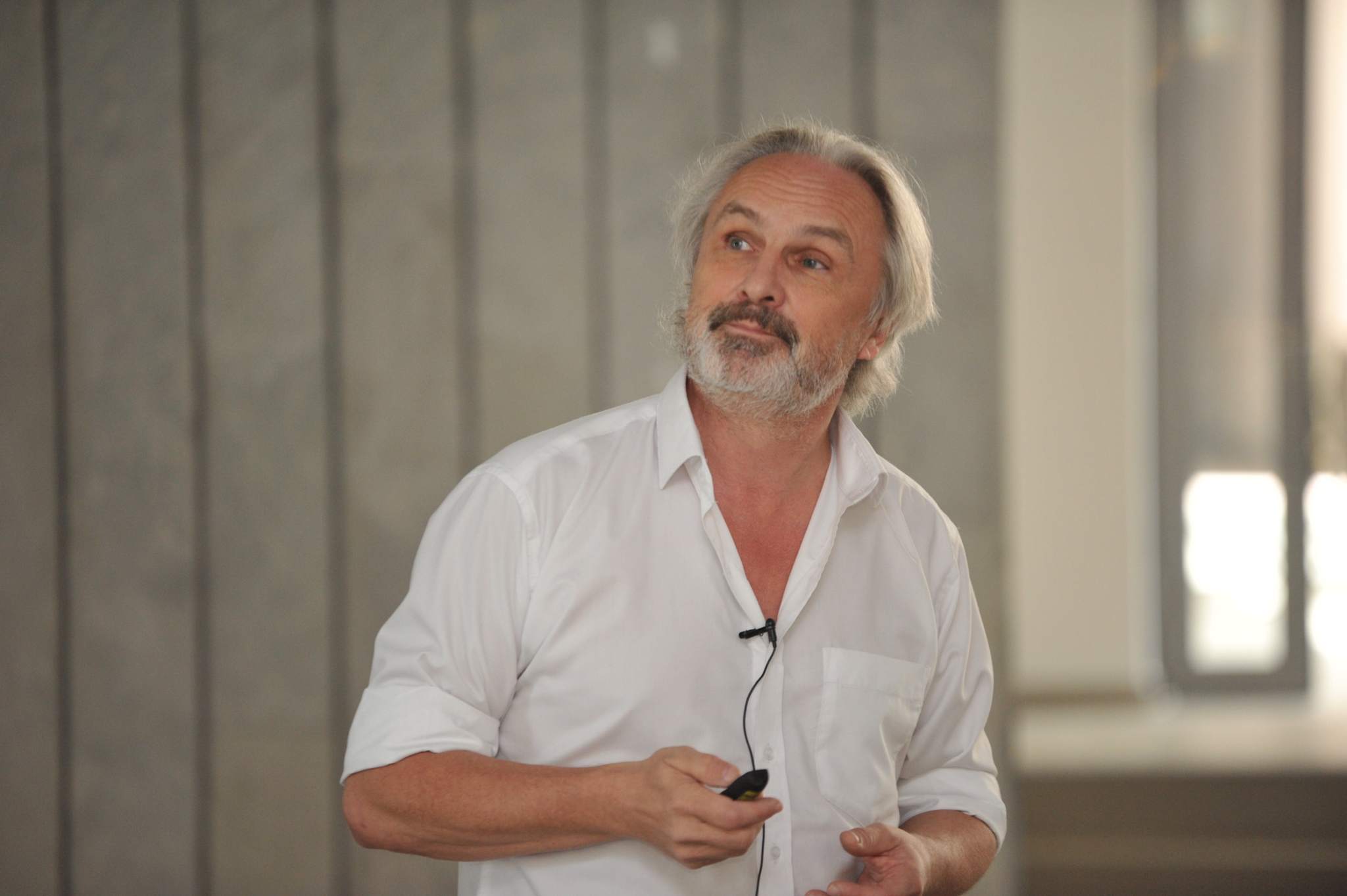
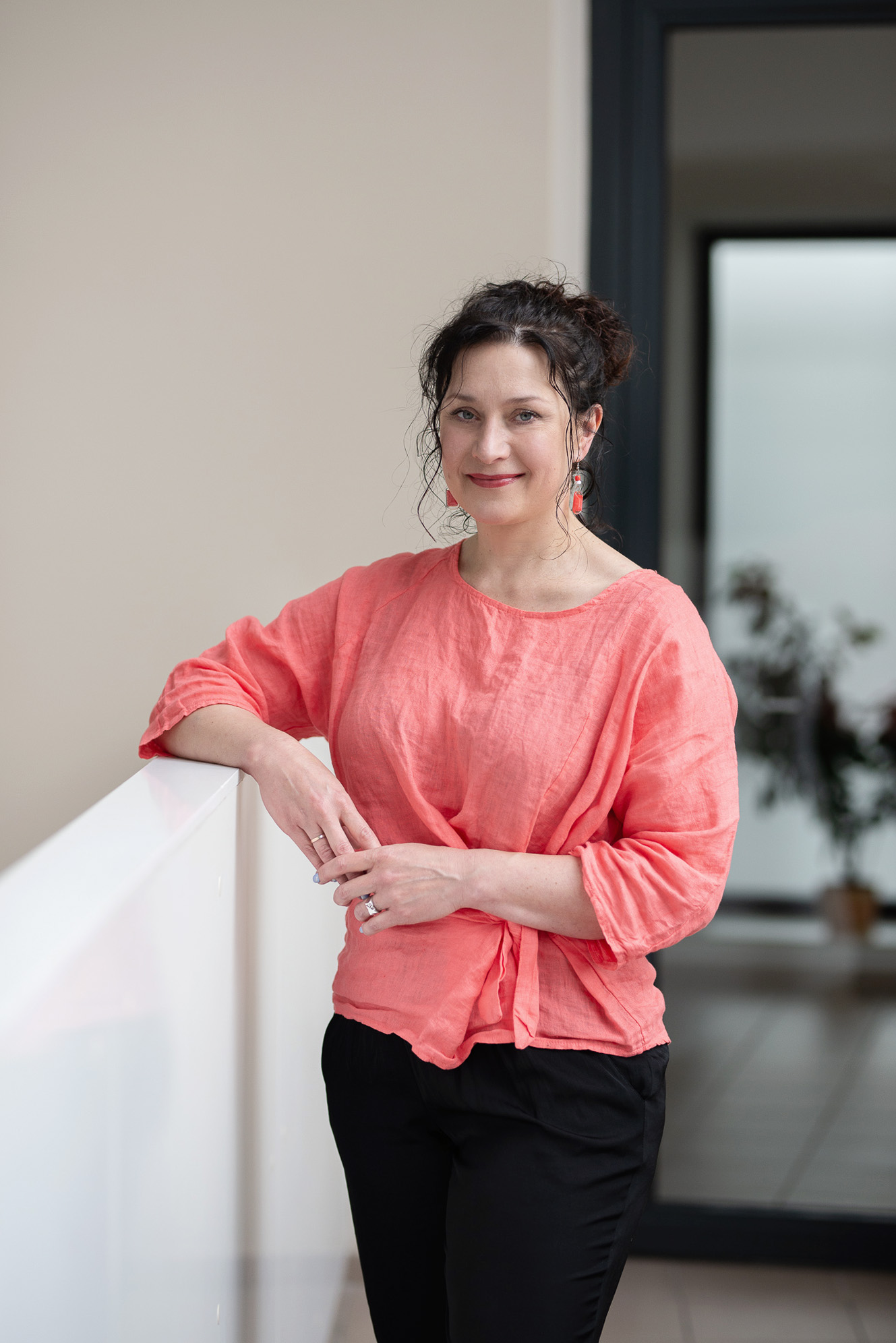
Rokas Masiulis , an Associate Professor at the Faculty of Mathematics and Informatics of Vilnius University, specializes in operating systems and UNIX programming. He has been actively teaching courses such as Programming in OS UNIX and Operating Systems since 2016/2017, delivering lectures and exercises remotely.
Karolis Petrauskas is an Associate Professor at Vilnius University's Faculty of Mathematics and Informatics, actively engaged in teaching and academic work. He has been involved in delivering courses such as Distributed Systems , reflecting his expertise in computational methodologies. His research interests span broad and specific domains within computer science and informatics, including: Computer Science Distributed Systems Information Technology Software Engineering Mathematics Informatics While no detailed lists of publications, awards, or advisees are provided in the available data, his academic role and institutional affiliation underscore his contributions to education and research in computational disciplines.
Professor Igor Belov is a Senior Researcher and Professor at Vilnius University's Institute of Data Science and Digital Technologies, specializing in analytic number theory, information security, and mathematical modeling. His research spans theoretical mathematics with practical applications in finance and computer science, particularly focusing on zeta functions, prime number theory, and stable distribution models. Education: Doctor of Physical Sciences (Mathematics) from Vilnius University and Vilnius Gediminas Technical University (2004) Master's degree in Statistics from Vilnius University (1999) Bachelor's degree in Mathematics Applications from Vilnius University (1997) Professor Belov's research interests center on analytic number theory with emphasis on Riemann zeta function and Dirichlet L-functions, combinatorial analysis, information security, and mathematical modeling of financial data using stable distributions. His recent work explores fractal structures related to zeta functions, efficient algorithms for zeta function calculations, and applications of machine learning in financial document analysis and securities price forecasting. His publication record demonstrates a strong trajectory from pure mathematical research toward interdisciplinary applications. While maintaining a robust foundation in analytic number theory, his recent work increasingly bridges theoretical mathematics with practical computing applications, particularly in financial modeling and information security. This evolution reflects a strategic expansion of his research impact across multiple domains. Scientific Awards: 1st place at the Vilnius Young Mathematicians' Olympiad (1990) Honorable mention at the Lithuanian Young Mathematicians Olympiad (1991) Letter of Commendation at the Lithuanian Young Mathematicians Olympiad (1992) Professor Belov actively supervises doctoral research and has served on numerous dissertation defense committees. He currently mentors four doctoral students working on zeta function algorithms, financial forecasting, document recognition, and blockchain acceleration. His research has been supported by multiple grants including the LMT project P-SV-23-9 on Mandelbrot bulbs visualization associated with the Riemann zeta function. He has also participated in international research collaborations at CINECA supercomputing center and Karlsruhe Institute of Technology. As a member of the Smart Technologies Research Group, Professor Belov contributes to Vilnius University's leadership in mathematical research and its applications, particularly in the areas of zeta function analysis and computational finance.
Romas Alonderis is a Researcher at the Cybersocial Systems Engineering Group within the Institute of Data Science and Digital Technologies at Vilnius University, Lithuania. His work focuses on mathematical logic and its applications in computer science, particularly in the areas of proof theory and automated reasoning. Dr. Alonderis earned his Doctor of Mathematics degree in 2001 with a dissertation titled "Investigation of the Proof Theory of Time Logic with Time Slots." His academic career has been dedicated to advancing the understanding of logical systems and their computational applications. Dr. Alonderis specializes in the proof theory of classical and non-classical logics, with particular expertise in temporal logic, intuitionistic logic, and modal logic. His research focuses on developing efficient proof-search methods, analyzing sequent calculi, and exploring applications of logical systems in computer science. He has made significant contributions to the understanding of cut elimination, loop-check mechanisms, and the automation of reasoning processes in various logical frameworks. His work bridges theoretical foundations with practical applications in formal verification, knowledge representation, and multi-agent systems. Analysis of Dr. Alonderis's recent publications reveals a consistent focus on advancing proof-theoretic methods for various logical systems. His work spans mathematical logic, theoretical computer science, and artificial intelligence, with particular emphasis on temporal reasoning, epistemic logic, and automated theorem proving. A notable trend in his research is the development of efficient algorithms for proof search in non-classical logics, addressing challenges related to termination, complexity, and practical implementation. His publications demonstrate a progression from foundational work on temporal logic to more recent applications in multi-agent systems and quantum computing contexts. Member of the Lithuanian Mathematical Society Throughout his career, Dr. Alonderis has participated in research projects focused on "Proof-finding methods for non-classical logics and communicative complexity." His work has been presented at numerous Lithuanian Mathematical Society Conferences, covering topics such as Indexed Multisuccessive Constructive Logic Calculus, intuitionistic discrete-time logic, and structural rules in temporal logic. As a member of the Cybersocial Systems Engineering Group at Vilnius University, Dr. Alonderis collaborates with interdisciplinary teams working at the intersection of logic, computer science, and social systems. His office is located at Akademijos St. 4, room 228, Vilnius, where he continues his research on advanced logical frameworks and their computational applications.
Prof. habil. dr. Leonidas Sakalauskas is an Affiliated Scientist at the Smart Technologies Research Group within the Institute of Data Science and Digital Technologies at Vilnius University. His extensive research career spans mathematical modeling, stochastic programming, and statistical analysis with significant contributions across multiple disciplines. He maintains an active research profile with recent publications extending into 2025. Professor Sakalauskas' research focuses on stochastic programming, mathematical modeling, financial mathematics, statistical analysis, optimization, and queueing theory. His work demonstrates a consistent pattern of interdisciplinary research, bridging theoretical mathematics with practical applications in finance, social sciences, and computer science. He has developed innovative approaches to agent-based modeling, fractal analysis, and Monte Carlo methods, contributing significantly to both theoretical frameworks and practical implementations. His recent publications reveal a continuing evolution of research interests, with increasing emphasis on data science applications, computational social science, and advanced statistical modeling techniques. The articles demonstrate sophisticated methodological approaches to complex problems across diverse domains including financial modeling, social cohesion analysis, and network performance optimization. Throughout his career, Professor Sakalauskas has maintained a strong publication record in high-impact journals and conference proceedings, reflecting his ongoing engagement with the international research community. His work shows consistent methodological rigor combined with practical relevance across multiple application domains. Professor Sakalauskas has collaborated extensively with researchers across Lithuania and internationally, demonstrating strong teamwork and interdisciplinary engagement. His research has practical applications in financial modeling, social science analysis, and computational systems optimization, contributing to both theoretical advances and real-world implementations.
Aida Pliuškevičienė serves as an Associate Professor and Affiliated Scientist at Vilnius University's Institute of Data Science and Digital Technologies within the Cybersocial Systems Engineering Group. Her research is centered at the intersection of mathematical logic and theoretical computer science. Her primary research interests include Temporal Logic , Modal Logic , and Proof Theory , with significant contributions to sequent calculi, loop-check elimination, and termination methods in automated deduction. Her work demonstrates consistent focus on formal verification systems and computational logic frameworks. Analysis of her 25+ publications reveals sustained expertise in developing decision procedures for temporal and modal logics, with recent work advancing cyclic sequent calculus strategies (2025) and loop-check specifications (2022). Her research trajectory shows evolution from foundational work on Gentzen-type calculi (1992) to contemporary applications in distributed knowledge systems. As an active researcher at Vilnius University's Akademijos St. 4 campus, she collaborates extensively with Romas Alonderis, Regimantas Pliuškevičius, and Haroldas Giedra on temporal logic frameworks. Her publication record in journals like Lithuanian Mathematical Journal and Journal of Automated Reasoning demonstrates sustained scholarly output over three decades.
Agnė Brandišauskienė is an Associate Professor at the Department of Preschool and Primary Education, part of the Education Academy at Vytautas Magnus University (Lithuania). She holds a Doctor of Sciences degree and has been active in academic roles since 2018. Her primary affiliations include the Educational Research Institute and Teacher Training Institute, alongside her core role in the Education Academy. Education & Qualifications: Doctor of Sciences in Pedagogy (2011) Associate Professor designation (2018) Research Interests: Her work focuses on gifted education , teacher leadership , quality research methodologies , and learning-friendly environments . She emphasizes collaborative leadership models in early childhood education and strategies to enhance teacher professional growth. Recent projects include studies on gifted student engagement, distributed leadership in preschool institutions, and parental collaboration frameworks. Recent Research Trends: Her articles (2022–2025) highlight themes such as shared leadership structures , parental involvement mechanisms , and pedagogical strategies for special educational needs . She also explores institutional decision-making in behavior management systems and comparative international education policies (e.g., TALIS data analysis). Awards & Recognition: No specific awards are listed, though her work contributes to Lithuania's education policy frameworks. Advising & Grants: She has supervised numerous master’s theses on topics like gifted education, preschool leadership, and parental collaboration. Her grants likely focus on early childhood and inclusive education initiatives, though specific funding details are not provided. Labs/Teams: Associated with the Gifted Education Center at VMU and collaborates with the Educational Research Institute on transformative education projects.
Prof. Robert van Voren is a Professor and Director of the Andrei Sakharov Research Center for Democratic Development at Vytautas Magnus University (VMU). His work focuses on analyzing public health policies, pandemic responses, and their societal impacts. He critiques global lockdown measures and highlights systemic failures in healthcare preparedness, emphasizing the need for proactive strategies to mitigate future pandemics. Research Interests: Public Health Crisis Management Evaluating Lockdown Policies Healthcare Resource Distribution Political Dimensions of Pandemic Responses Key Analysis: Van Voren’s writings underscore the unintended consequences of pandemic lockdowns, such as reduced access to essential healthcare services and economic fallout. He advocates for differentiated hospital systems to balance pandemic and routine care, citing Dutch and U.S. case studies. Grants & Labs: Leads the Andrei Sakharov Research Center, focusing on democratic development and crisis analysis. Collaborates with international institutions to model pandemic response strategies.
Damkuvienė Milda is an Associate Professor and senior researcher at Vilnius University Šiauliai Academy, specializing in Management and Leadership, Change Management, and Educational Leadership. She is affiliated with the Faculty of Social Sciences and Department of Management, with extensive experience in both academic and practical settings. Dr. Damkuvienė earned her Doctor of Social Sciences (Management and Administration) from Kaunas University of Technology in 2009, her Master of Social Sciences (Management) from Šiauliai University in 2000, and her Bachelor of Business Administration from Šiauliai University in 1998. Her research interests span Management And Leadership, Change Management, Educational Leadership, Customer Engagement/Participation Management, Value Co-Creation, Customer Perceived Value of Services, Relationship Marketing, and Marketing Communications. Her work demonstrates a strong focus on educational leadership, school change, and value co-creation in service contexts. Her recent publications show a clear trend toward educational leadership and inclusive school development, with a particular emphasis on teacher professional development, collaborative learning, and social justice leadership. She has conducted extensive research on the impact of international professional development on school leadership and change. Dr. Damkuvienė has received recognition through her membership in the Lithuanian Educational Research Association (LERA) and the European Educational Research Association (EERA), highlighting her contributions to educational research. She has supervised numerous research projects related to educational leadership and change, including "Time for Leaders," "I choose to teach!," and studies on the impact of Erasmus+ programs. Her applied research has significantly contributed to understanding school improvement processes and educational leadership development in Lithuania. Dr. Damkuvienė also leads research initiatives evaluating educational programs and policies, working with institutions like the Centre for Schools Improvement and the Ministry of Education and Science. Her work bridges academic research and practical application in educational settings.
Sholpan Primbetova serves as Director of Regional Projects at the Columbia University Global Health Research Center of Central Asia in Almaty, Kazakhstan. Her work focuses on public health, epidemiology, and HIV prevention strategies, particularly among populations affected by substance use and migration. She has led and co-investigated multiple international research initiatives funded by agencies like NIDA, NIMH, and USAID. Key research interests include HIV/STI risk reduction among drug-involved couples, migrant worker health, and tuberculosis (TB) epidemiology in Central Asia. Her projects emphasize evidence-based interventions, policy advocacy, and scaling up harm reduction measures such as naloxone distribution. Recent projects include evaluating microfinance interventions for high-risk women and assessing TB risk factors in migrant populations. These efforts aim to address structural barriers to healthcare access and improve health outcomes in vulnerable communities.
Loreta Bukšnytė-Marmienė is a Professor at Vytautas Magnus University’s Department of Psychology within the Faculty of Social Sciences. With a Doctor of Social Sciences (2001) and professorial status (2016), her research focuses on psychosocial functioning, organizational psychology in education, and workplace well-being. She explores how leadership styles, equity, and organizational factors impact teacher commitment, learning strategies, and student outcomes in low socioeconomic status (SES) contexts. Research Interests: Organizational Functioning, Teacher Well-being, Equity in Education, Leadership Studies. Key Publications: Analyze teacher empowerment, job satisfaction, and pandemic-driven educational challenges. Collaborations: Works with researchers like Juratė Česnavičienė and Agnė Brandišauskienė on educational psychology projects. Grants: Funded by the Research Council of Lithuania and European Social Fund for studies on teacher retention and organizational dynamics.
Kastytis Šimkevičius is a Lecturer at the Department of Forest Sciences, Faculty of Forest Sciences and Ecology, Vytautas Magnus University. His work focuses on wildlife resources and management, particularly game animal populations and innovative research methods in forestry and ecology. His research interests include: Wildlife Resources and Management Forestry Game Animal Population Management Innovative Methods in Wildlife Research Forest Ecology Bird Communities Ungulate Population Studies Šimkevičius conducts research on various aspects of wildlife ecology, with a particular focus on forest bird populations, game animal management, and the application of innovative methods such as unmanned aerial vehicles with thermal imaging for wildlife monitoring. His recent work shows a trend toward integrating technology with traditional wildlife management practices, addressing challenges in game animal population monitoring, human-wildlife conflicts, and forest ecosystem conservation. His research spans multiple ecological systems from forest habitats to agricultural landscapes, with studies on species ranging from small birds to large mammals like deer and beavers. His scientific work demonstrates expertise in bioacoustic analysis of deer communication, population dynamics of game species, and assessment of wildlife impacts on forest resources and agricultural systems. Šimkevičius employs diverse methodologies including point count surveys, thermal imaging, statistical analysis, and GIS mapping to address complex wildlife management questions.
Sidona Buragienė is a Senior Researcher at Vytautas Magnus University's Department of Agricultural Engineering and Safety, affiliated with the Bioeconomy Research Institute. Her work focuses on precision agriculture, soil science, and sustainable agricultural technologies. Doctor of Technology (2013) Fluency in Lithuanian (native), Russian (very good), English (good), German (good) Research Focus Development of environmentally friendly tillage technologies Precision management of soil properties using proximal sensing and telematics Optimization of organic fertilizer application Creation of artificial soil systems with sapropel amendments Reduction of greenhouse gas emissions in agricultural operations Integration of autonomous robotics in farming Project Trends Her recent work emphasizes variable-depth tillage systems, soil spectroscopy for real-time analysis, and telemetric control. Projects focus on reducing fuel consumption and environmental impact through precision technologies, with applications for both conventional tractor-drawn machinery and autonomous robots. Key innovations include UV-VIS-NIR spectrometry for sowing optimization and localized sapropel-based soil amendment technologies.
Rimvydas Aleksiejūnas is an Assistant Professor at Vilnius University's Institute of Applied Electrodynamics and Telecommunications (IAET) and affiliated with the Department of Radiophysics . His work focuses on Wireless Network Technologies , Microwave Electrodynamics , and Antenna Theory . Research Interests : Radio Wave Propagation, GNSS Systems, MIMO Channel Modeling, Electromagnetic Compatibility, Antenna Design, Radio Interference Analysis Recent Publications : 15+ works on wireless channels, UAV detection systems, and microwave engineering from 2011-2022 Awards : Galileo Masters 2020 prize (with S. Rudys and P. Ragulis) Best lecturer of Physics faculty 2018
Assoc. Prof. Dr. Edvardas Kazakevičius is affiliated with the Institute of Applied Electrodynamics and Telecommunications at Vilnius University , where he serves as an Associate Professor in the Faculty of Physics . His research focuses on impedance spectroscopy and solid state ionics , particularly in the context of ionic conductivity and dielectric relaxation in crystalline materials. Research Area: Physics Primary Affiliation: Institute of Applied Electrodynamics and Telecommunications His recent publications investigate charge carrier dynamics in solid electrolytes like yttria-stabilized zirconia (YSZ) and calcium scandium zirconia (CaSZ), as well as temperature-dependent conductivity in lithium lanthanum titanate. These works emphasize analytical methods such as distribution of relaxation times (DRT) for understanding ionic transport mechanisms. He leads projects such as the M-ERA.NET project "Planar architecture all solid state batteries" (2017-2019) and has presented at the 14th International Symposium on Systems with Fast Ionic Transport (ISSFIT-14) in Slovenia. His teaching includes courses on Wireless Propagation Channel Modeling and Digital Signal Processing , and he contributes to the Faculty of Physics Council .