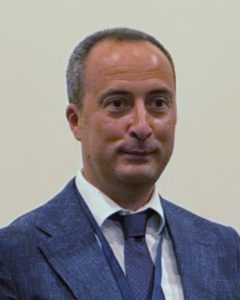
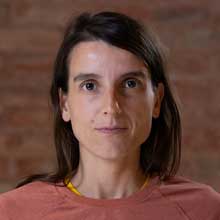
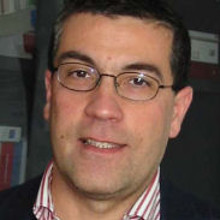
Marina Mongiello is Associate Professor at Polytechnic University of Bari focusing on blockchain applications, IoT security, and distributed software systems. Her work integrates formal methods with practical solutions for cybersecurity challenges. Research Focus: Develops secure blockchain architectures for supply chain traceability, IoT security frameworks, and intrusion detection systems combining formal modeling with machine learning approaches. Technical Innovations: Designs hybrid systems using Petri nets and LSTM networks for enterprise security, and biometric-based cryptographic solutions for blockchain platforms. Application Domains: Implements traceability solutions for agri-food supply chains, secure data transmission frameworks, and decentralized alternatives to cloud computing infrastructures.
Eugenio Di Sciascio is a Full Professor and Scientific Coordinator at Politecnico di Bari. His research spans artificial intelligence, semantic web technologies, machine learning, and explainable AI, with applications in recommender systems, healthcare, and cybersecurity. As evidenced by 413+ publications, his work frequently bridges theoretical computer science with practical implementations. Recent research trends focus on trustworthy AI systems, particularly in healthcare diagnostics and recommendation security. His 2024-2025 publications demonstrate strong emphasis on explainable AI methodologies in medical applications (e.g., BRAINEX for brain age prediction, MORIX for mortality inference) and adversarial robustness in recommender systems. Additional work explores neurotechnology interfaces and semantic web foundations.
Prof. Raffaele Carli is an Associate Professor in Systems and Control Engineering at Politecnico di Bari, Italy. He holds a PhD in Electrical and Information Engineering (2016) and has been qualified as a Full Professor since 2023. His roles include technical lead of the Decision and Control Laboratory (DCLAB) and Vice-Coordinator of the National PhD program in Autonomous Systems (DAuSy). He has extensive editorial roles, including Associate Editor for IEEE Transactions on Automation Science and Engineering and IEEE Transactions on Systems, Man, and Cybernetics. Education: Laurea (Master’s) in Electronic Engineering (2002), PhD in Electrical and Information Engineering (2016), both from Politecnico di Bari. Professional experience includes roles as a System Engineer in the defense sector (2004–2012) and military service as a Reserve Officer (2003–2004). Research focuses on decision and control techniques for energy systems, industrial automation, and complex systems. Key areas include smart grids, energy communities, robotics, and optimization. Recent work emphasizes distributed control for renewable energy integration, human-robot collaboration, and sustainable manufacturing. Publications span 120+ international articles in journals like IEEE Transactions and conferences such as CDC and CASE. His research trends include game-theoretic control, MPC applications, and energy system optimization. Awards include the 2024 IEEE Italy SMCS Chapter Award and recognition for editorial contributions. Advising 8 current PhD students and supervising 7 past candidates. Active in organizing international conferences (e.g., General Chair of SENSYS 2025). Grants include projects on energy communities and smart city technologies funded by the Apulia Region. Labs include the Decision and Control Laboratory (DCLAB), focusing on automation, energy systems, and industrial applications. Collaborations with global institutions like TU Delft, UPC Barcelona, and Chinese Academy of Sciences.
Dr. Nicola Cordeschi is an Assistant Professor in Telecommunications at Polytechnic University of Bari's Department of Electrical and Information Engineering. He earned his Laurea degree (summa cum laude, 2004) and Ph.D. (2008) in Electronic Engineering from Sapienza University of Rome. Contact: +39 080 5963913. Research spans adaptive wireless systems and IoT: Q-learning approaches for wireless energy transfer systems Multi-link optimization in IEEE 802.11be networks Quantum network entanglement distribution strategies Optimized MAC protocols for IoT networks Awarded 2nd Best Paper at ICT-DM 2023 for work on scheduling algorithms in wireless-powered IoT. Teaching includes Internet of Things courses.
Michele Ciavotta is an Associate Professor at the University of Milano-Bicocca's Department of Computer Science, Systems, and Communication, specializing in AI-driven optimization for complex systems. His research integrates reinforcement learning, graph neural networks, and metaheuristics applied to distributed computing and physical systems like smart mobility and production lines. Research spans cloud/edge computing optimization, industrial production systems, smart city applications, and graph-based learning methods. Recent publications demonstrate focus on decentralized AI systems, geospatial data processing, and hypergraph neural networks for chemical and urban applications. Extensive involvement in European R&D projects addresses challenges in cloud computing infrastructure, Industry 4.0 implementations, and distributed AI solutions.
Giulia Rivellini is a Full Professor of Social Statistics and Demography at the Catholic University of the Sacred Heart in Milan, affiliated with the Department of Statistical Sciences and the Department of Sociology. She holds dual roles in the Faculty of Political and Social Sciences, co-coordinating the Sociology program. Her expertise spans quantitative demography, network analysis, and socio-demographic phenomena. She has served as a researcher at ISTAT and collaborates with institutions like Telefono Amico Italia and the Laboratory on Longevity and Aging (LOLA). Her research focuses on aging, family dynamics, migration integration, and emotional distress analysis. She has led projects on priest demographic trends in Lombardy, population forecasts in Valle d'Aosta, and IoT-based elderly support systems. Education: Bachelor's in Political Economy (1993) from Bocconi University PhD in Demography (1997) from the University of Padua Research Interests: Network analysis for behavioral modeling Family instability and demographic forecasting Social capital and well-being Ageing populations and intergenerational support Immigrant integration via relational networks Key Collaborations: Telefono Amico Italia (scientific committee member since 2023) CERISSAP research center (2019-2023) University of Milan-Bicocca and University of Padua Teaching: Offers courses in Statistics, Demography, and Human Capital Policies across undergraduate and master's programs in Sociology and Political Sciences.
Valeria Maggian is Associate Professor of Public Finance at Ca' Foscari University of Venice. As Coordinator of the VERA Laboratory for Experiments in Social Sciences (VERALabEx), her research focuses on public goods, gender disparities in education/employment, behavioral economics, and experimental analysis of social norms. Recent publications investigate gender dynamics in supervisory relationships, behavioral spillovers between tasks, distributive justice experiments, and institutional impacts on ethical behavior. Methodologically emphasizes laboratory experiments and econometric analysis of socio-economic inequalities.
Michele Bernasconi is a Full Professor at Ca' Foscari University of Venice's Department of Economics. He serves on the Management Committee of the University Scientific Instrumentation Service Center. His research focuses on public finance, tax evasion, income inequality, and behavioral economics. Bernasconi's publications demonstrate expertise in experimental economics methods applied to tax compliance and distributive justice. Recent work analyzes psychological aspects of inequality perception, welfare system design, and behavioral responses to tax policies. His research frequently incorporates microsimulation modeling and cross-disciplinary approaches combining economics with psychology and political science. His body of work shows consistent focus on Italian fiscal policy challenges, with methodological contributions to experimental design and nonparametric estimation techniques in behavioral research.
Professor Stefano Panzieri is a Full Professor in the Department of Civil, Computer and Aeronautical Engineering at Roma Tre University. He has held academic positions since 1996, including Associate Professor (2003–present) and Assistant Professor (1996–2003). His research focuses on automatic control, robotics, critical infrastructure protection, and cyber-physical systems. He coordinates the Ph.D. program in Computer Science and Automation and leads initiatives like the CISIApro model for infrastructure resilience. Panzieri directs the Robotics Laboratory, MCIPlab, and Automation Lab, contributing to 10 Ph.D. students' supervision. His work spans distributed control, sensor networks, and smart grid technologies, with over 180 publications and projects funded by the EU and Italian Ministry of Economic Development. Key contributions include interlaced Kalman filters and anomaly detection frameworks. Research Interests: Automatic Control: Nonlinear techniques, iterative learning control, and MPC. Robotics: Mobile robotics, sensor fusion, and navigation. Critical Infrastructure: Protection strategies, cascading effects modeling, and decision support systems. Cybersecurity: False data injection defense, game-theoretic models, and resilient networks. Recent Articles Trends: Focus on distributed state estimation, cyber-physical system resilience, and adaptive filtering techniques. Recent work addresses adversarial attacks, multirate systems, and pandemic impact modeling. Grants & Projects: SMART Environments (2015): Smart city and infrastructure development. ATENA (2017): Secure IACS using Software-Defined Networking. URANIUM (2014): Resource allocation and game theory for critical infrastructure. Labs & Teams: Leads MCIPlab (Critical Infrastructure Protection) and the Automation Lab, collaborating on robotics and smart grid technologies.
Stefano Schiavo is Professor of Economics and Director of the School of International Studies at University of Trento. His research examines international trade networks, firm behavior under financial constraints, and economic policy impacts. Research focuses on: Trade networks and shock propagation Firm-level responses to globalization Food trade and nutrition security Labor market interactions with trade Pandemic economic policies Publications analyze COVID-19 economic support, food trade vulnerabilities, and anti-dumping activities against China. Leads project 'Food connections: consequences of trade on food security' (PRIN-PNRR 2022). Fellow of CESifo Research Network and OFCE-SciencesPo.
Francesco Pellegrino is an Assistant Professor in the Department of Chemistry at the University of Turin. His research focuses on nanomaterials, particularly titanium dioxide (TiO₂) nanoparticles and MXenes, with applications in environmental remediation, photocatalysis, and sustainable materials. He specializes in nanoparticle synthesis, characterization, and their performance optimization under controlled conditions. He contributes to teaching in the Bachelor's Degree in Chemistry and Chemical Technologies, the Master's Degree in Environmental Chemistry, and PhD programs in Chemical and Materials Sciences, as well as the Innovation for the Circular Economy program. His work emphasizes interdisciplinary approaches, integrating analytical chemistry, materials science, and environmental engineering. Key research themes include the influence of nanoparticle morphology on photocatalytic activity, development of advanced characterization techniques (e.g., STEM-in-SEM, AFM metrology), and standardization protocols for nanoparticle measurements through international collaborations like VAMAS. He explores applications such as pollutant degradation, hydrogen evolution reactions, and energy-efficient photocatalytic systems using controlled periodic illumination (CPI). His publications highlight advancements in MXene synthesis, silver nanoparticle sensors, and the role of metal centers in electrocatalytic reactions. While no awards are explicitly listed, his contributions to nanomaterials and environmental science are recognized through his extensive publication record and academic roles. He advises students in PhD programs and collaborates on grants related to photocatalytic systems, sustainable materials, and metrological standards. His lab, associated with the environmental chemistry group at the University of Turin, focuses on translating fundamental research into practical solutions for environmental challenges.
André Cieplinski serves as a Research Fellow in the Department of Economics and Management at the University of Pisa, where his work bridges ecological macroeconomics and industrial relations to analyze how renewable energy technologies reshape labor markets and income distribution. Education PhD in Economics (2018) from the joint doctoral program of the Universities of Tuscany (Florence, Pisa, Siena) Research Focus His investigations into job/wage polarization mechanisms, digital workplace surveillance systems, and computational modeling for decarbonization transitions reveal critical tensions between technological progress and socioeconomic equity. Current projects examine how automation in green energy sectors amplifies wage disparities while reshaping traditional industrial relations frameworks. Awards and Recognition No scientific awards, fellowships, or honors were documented in available institutional records. Academic Service Information regarding graduate student mentorship, research grant leadership, or laboratory directorship responsibilities remains unspecified in public faculty profiles, though his affiliation with the university's sustainable economy research initiatives suggests collaborative project involvement.
Antonella Ferrara is a Full Professor of Automatic Control at the University of Pavia's Department of Electrical, Computer and Biomedical Engineering (ECBE). She holds leadership roles, including Head of the Intelligent Robotics Laboratory and President of the Department's Research Standing Committee. Her academic journey includes a Laurea Degree (MSc equivalent) in Electronic Engineering from the University of Genova (1987) and a PhD in Computer Science and Electronics (1992). She transitioned from Assistant to Full Professor at the University of Pavia, contributing significantly to nonlinear control, automotive systems, robotics, and power systems. Her research focuses on sliding mode control, vehicular traffic modeling, and applications in autonomous systems. She has authored/co-authored over 450 publications, including 160 journal papers and monographs on topics like vehicle dynamics and freeway traffic control. Awards include IEEE Fellow (2020), IFAC Fellow (2021-2023), and AAIA Fellow (2024). She teaches courses such as Process Control, Robot Control, and Nonlinear Control in English, and contributes to international collaborations, including projects on sustainable mobility and medical robotics. Her institutional roles span research leadership, international mobility coordination, and editorial contributions to journals like Automatica and IEEE Transactions. Prof. Ferrara supervises numerous PhD, postdoc, and graduate students, leading over 200 MSc theses since 2020. She chairs major conferences, including the 24th IFAC World Congress (2029) and the 2024 IEEE Workshop on Variable Structure Systems. Her work bridges theoretical advancements with practical applications in industry, including collaborations with automotive companies like Ferrari F1 and FIAT.
Alessandro Bosisio is a Researcher at the Department of Industrial and Information Engineering, University of Pavia. His research focuses on power distribution systems, renewable energy integration, smart grid technologies, and machine learning applications in energy systems. He has conducted extensive studies on voltage control, fault prediction in distribution grids, and optimization algorithms for grid reliability and resilience. Key research areas include: Impact of extreme weather on power systems Renewables-to-hydrogen systems Machine learning for load forecasting and grid automation GIS-based planning for distribution networks His work emphasizes real-world case studies in Milan and other Italian regions, addressing challenges such as electromobility integration, grid digitalization, and energy transition strategies. Bosisio has also contributed to patents related to distribution network reconfiguration and smart grid automation systems.
Musci Myrtle is a Researcher at the Department of Industrial and Information Engineering, University of Pavia. Their work focuses on information processing systems, neural networks, and embedded systems applications in healthcare and cultural heritage preservation. They have contributed to 3D modeling of historical artifacts and developed neural network architectures for wearable devices. Research interests include interdisciplinary topics such as digital heritage documentation, real-time health monitoring systems, and scalable neural network architectures. Publications span conference proceedings, book chapters, and peer-reviewed journals in neural networks and information systems. Teaching activities are documented but lack specific details in the provided materials. No awards or grants are explicitly mentioned.