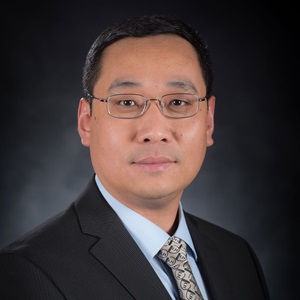
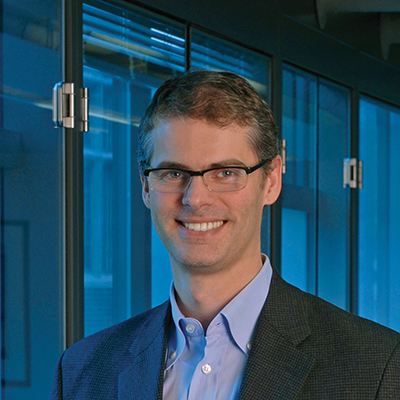
Dr. Tao Xing is a Professor in the Department of Mechanical Engineering at the University of Idaho. He holds a Ph.D. in Mechanical Engineering from Purdue University (2002) and is a licensed Professional Engineer (P.E.). His research focuses on computational fluid dynamics (CFD), verification/validation (V&V), biofluids, and wind turbine design. He directs the 3D Imaging and Printing Laboratory and has secured $3.8M+ in research funding from NSF, NIH, and industry. Key awards include the 2019 University Excellence in Interdisciplinary Collaboration Award and 2018 Mid-Career Faculty Award. His educational contributions include developing adaptive learning modules for ABET outcomes and integrating CFD into engineering curricula. He has advised 6 graduate students and currently mentors 2 Ph.D. candidates. Notable projects include aerogel insulation systems, CSF drug delivery modeling, and offshore wind turbine simulations.
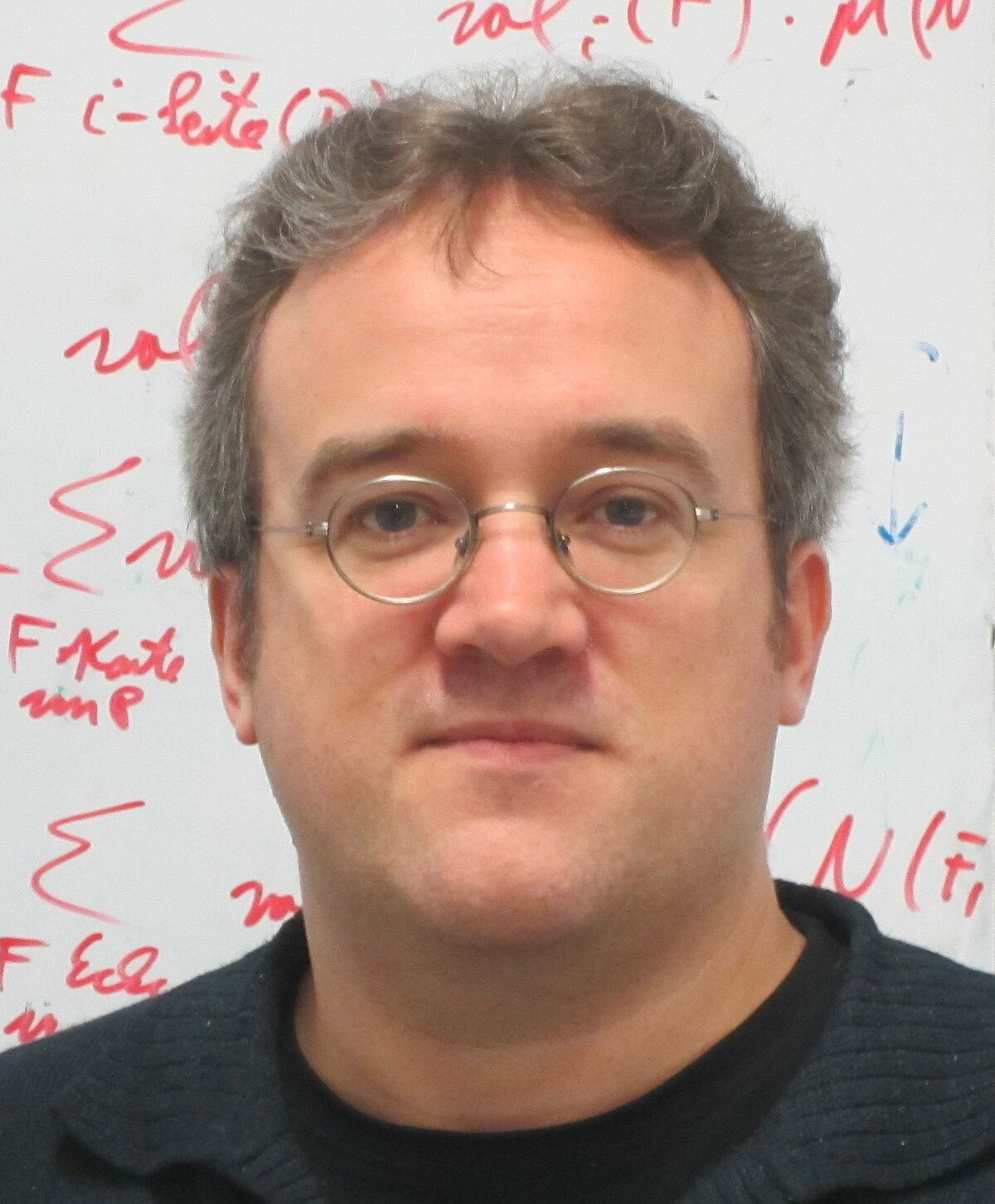
PD Dr. Frieder Ladisch serves as an Associate Professor at the Institute for Mathematics within the Faculty of Mathematics and Natural Sciences at the University of Rostock, Germany. His institutional affiliation includes membership in the Geometry working group (AG Geometry), with office location at Ulmenstraße 69, Haus 3, Room 231, and contact via university email and phone. His research program centers on Quantum Physics and Quantum Information , with specialized expertise in: Non-Hermitian quantum systems and PT-symmetry phenomena Topological photonic implementations including Su-Schrieffer-Heeger lattices Non-Abelian geometric phases and quantum holonomy Quantum random number generation using solid-state photon sources Experimental quantum optics with integrated photonic circuits Analysis of his 15 most recent publications (2019-2025) reveals consistent focus on PT-symmetry breaking experiments, quantum walk implementations in topological photonic structures, and quantum random number generation using hexagonal boron nitride emitters. His work bridges theoretical non-Hermitian quantum mechanics with practical photonic implementations. Dr. Ladisch operates within the Geometry working group at Rostock's Institute for Mathematics, where his research integrates mathematical geometry concepts with quantum information processing through photonic chip technologies and single-photon source applications.
Jinghai Rao is a Researcher at Carnegie Mellon University's School of Computer and Information Science within the Institute for Software Research International. His work focuses on semantic web services, security policies, and logic-based programming. He holds a PhD in Computer Science from the Norwegian University of Science and Technology (NTNU) and has Master's and Bachelor's degrees from Renmin University of China. His research emphasizes web service composition, policy enforcement, and automated reasoning. Notable contributions include the use of linear logic for service composition and frameworks for interleaving policy reasoning with service discovery. He has received a best paper runners-up award at ICWS 2004. Rao has been actively involved in professional activities, serving on committees for workshops like ECWS'06 and SOT'06, and as a reviewer for conferences such as IJCAI'05 and ISWC'05. His work bridges theoretical foundations of semantic web services with practical applications in security and collaborative systems.
Micah Beck is an Associate Professor in the Min H. Kao Department of Electrical Engineering and Computer Science at the University of Tennessee, Knoxville, within the Tickle College of Engineering. His research focuses on foundational challenges in computer networking, internet architecture, and system design principles like minimal sufficiency. He holds a PhD in Computer Science from Cornell University (1992), an MS from Stanford (1980), and a BA from the University of Wisconsin (1979). Education: PhD in Computer Science, Cornell University, 1992 MS in Computer Science, Stanford University, 1980 BA in Mathematics & Computer Science, University of Wisconsin, 1979 Research Interests: Beck critiques traditional internet architecture paradigms, exploring flaws in assumptions like end-to-end arguments and TCP reliability. He advocates for minimal sufficiency principles to enhance deployment scalability. Recent work addresses broadband accessibility, digital monopolies, and exposed buffer architectures for stateful networking. His writing often bridges theoretical rigor with practical system design critiques. Recent Article Themes: His 2025 article Hit the Goalie analyzes formal proof misapplications in engineering systems, while 2024's End-to-End Arguments re-evaluates foundational networking principles. He co-authored Breaking Up Digital Monopolies (2023) proposing regulatory frameworks for data governance. Awards & Grants: No explicit awards listed, but his work has influenced networking discourse through venues like ACM and IEEE. Active in initiatives like Cybercosm and Exposed Buffer Architecture development. Teaching & Advising: Teaches operating systems (COSC 361), computer networks (ECE 453/553), and cloud/edge computing (COSC 494/594). Projects include xv6 kernel modifications and network protocol analysis. No formal advisee roster provided. Labs/Teams: Collaborates on projects like the Wildfire Data Logistics Network and Cybercosm ecosystem. Engages with industry through presentations at conferences like IEEE MASS and ACM workshops.
Eugene Stark is a Professor in the Department of Computer Science at Stony Brook University, affiliated with the College of Engineering and Applied Sciences. His work focuses on theoretical foundations and practical applications in systems and programming languages. Educational Background: He earned his Ph.D. in Computer Science from the Massachusetts Institute of Technology (MIT) in 1984. Research Interests: His primary areas include Operating Systems, Programming Language Semantics, Concurrency Theory, Distributed Algorithms Verification, and Functional Programming Languages. He explores formal methods to ensure correctness and efficiency in complex systems, leveraging category theory for rigorous semantic frameworks. His work often addresses challenges in indeterminate dataflow networks and probabilistic models. Publications Overview: Stark’s recent articles emphasize categorical structures (e.g., residuated transition systems, bicategories) and probabilistic I/O automata. They reflect a trajectory from foundational theory to tool development for concurrent system analysis. Academy of Teaching Scholars award Department Award for Undergraduate Teaching (2000) Advising & Grants: No formal advisees are listed in current records. His research projects include the Probabilistic I/O Automata framework, CARA Infusion Pump specifications, and SAMSON Network Memory Server initiatives. Grants and funding details are not explicitly mentioned. Labs/Teams: He is associated with the Laboratory for 體魯 Institute of (1988), though the lab name’s full English title remains unclear. Collaborations likely extend to interdisciplinary projects involving formal methods and systems engineering.
Michael S. Branicky is Professor of Electrical Engineering & Computer Science (EECS) at the University of Kansas School of Engineering. Previously serving as KU's Dean of Engineering from July 2013 to June 2018, he maintains active research leadership following his tenure as professor and chair at Case Western Reserve University (CWRU) since 1996. His research spans Cyber-Physical Systems/IoT , Artificial Intelligence , Machine Learning , and Robotics , with particular expertise in switched and hybrid control systems. His work bridges theoretical control theory with practical applications in rehabilitation engineering and autonomous systems, evidenced by his h-index of 40 and nearly 17,000 citations. Recent publications demonstrate strong focus on reinforcement learning for human-robot interaction and cyber-physical systems. His editorial leadership in IEEE Transactions reflects his standing in the CPS community. Notable funding includes NSF awards for Active Sensing in Deformable Environments and CPS Week support. Fellow, IEEE (2016) NSF Director's Award for Collaborative Integration (2012) NSF Director's Superior Accomplishment Award (2010) Walter R. Fried Memorial Best Paper Award (2010) Multiple teaching awards at CWRU and Case School of Engineering Branicky leads significant research initiatives including the IUCRC Center for High-Assurance Secure Systems and IoT (CHASSI) and NRT-HDR: Internet of Catalysis. His laboratory work focuses on image-guided interventions and deformable environment mapping, supported by over $1 million in NSF funding.
Dhrubajyoti Goswami is an Associate Professor and Graduate Program Director in the Department of Computer Science and Software Engineering at Concordia University, Montreal. He holds a PhD from the University of Waterloo, with prior degrees from McGill University and the Indian Institute of Science. His research focuses on high-performance computing, parallel algorithms, and distributed systems, with recent work emphasizing blockchain sharding and fault tolerance in distributed environments. Dr. Goswami teaches courses such as Operating Systems, Parallel Programming, and Distributed Systems, reflecting his expertise in system software and parallel computing. His publications span conferences like IEEE SBAC-PAD, IEEE ICBC, and IEEE ISPDC, addressing challenges in GPU computing, scalable algorithms, and blockchain optimization. He has secured grants including NSERC Discovery and CFI funding, supporting research in high-performance systems. Dr. Goswami’s advisory work includes supervising over 20 graduate and undergraduate students, with notable contributions in areas like efficient matrix multiplication on GPUs, hierarchical blockchain architectures, and fault-tolerant distributed systems. His professional memberships include IEEE Senior Member status.
Farzaneh Derakhshan is an Assistant Professor in the Computer Science Department at Illinois Institute of Technology. She received her Ph.D. in Pure and Applied Logic from Carnegie Mellon University in 2021 under Prof. Frank Pfenning and completed a postdoctoral fellowship at CMU with Profs. Limin Jia and Stephanie Balzer. Her research focuses on formal methods for concurrent and secure systems. Education: Ph.D. in Pure and Applied Logic, Carnegie Mellon University (2021) Dr. Derakhshan's research explores logical foundations for concurrent program design, emphasizing correctness guarantees (safety, reactivity) and security properties (fault tolerance, side-channel protection). Current projects include modal logics for under/over-approximation, relational logic for GPU security, type systems for intermittent computing, and behavioral types for security enforcement. Her work bridges theoretical logic with practical systems challenges. Recent publications (2021-2025) reveal strong thematic continuity in concurrency, security, and formal verification. Key trends include session-typed process models for secure communication, modal type systems for intermittent computing, and logical frameworks for program assurance. These contributions demonstrate consistent innovation at the intersection of programming languages, logic, and cybersecurity. Scientific Awards: No scientific awards are mentioned in the provided text. Advising and Research Funding: Current Students: PhD: Godha Pallavi Bhogadi, Myra Dotzel, Lang Liu; Master's: Akash Madhu Former Students: Narasimha Karthik G. (MS), Griffin Colomer (BSc) Grants: NSF SaTC CORE #2350217: "Mixed Assurance Reasoning via Modal Logic" (2024) Dr. Derakhshan leads an active research group focused on programming language security, collaborating with Carnegie Mellon University researchers. She co-organizes community initiatives including the 2026 Dagstuhl Seminar on Behavioural Types for Resilience and serves on multiple program committees for top programming languages conferences.
Federico Reghenzani is an Assistant Professor at Politecnico di Milano in the Department of Electronics, Information and Bioengineering. His research focuses on computer science, embedded systems, fault tolerance, high-performance computing, real-time systems, and compiler technology. He leads the HEAP Lab where his team investigates reliability engineering and hardware-software co-design for safety-critical applications. Reghenzani's research examines software-based approaches to hardware fault tolerance, compiler technologies for reliability enhancement, and resource management in high-performance computing environments. His work has significant applications in aerospace systems, real-time embedded platforms, and next-generation computing architectures. His publications demonstrate a consistent focus on improving system reliability through compiler techniques, fault injection methodologies, and hardware-software co-design. The research spans theoretical frameworks, practical implementations, and experimental validation across diverse computing environments.
Dr. Feng (George) Yu is an Associate Professor of Computer Science and Information Systems at Youngstown State University in Youngstown, Ohio. He serves as the Campus Champion of NSF Extreme Science and Engineering Discovery Environment (XSEDE) at YSU and has been collaborating with XSEDE and Pittsburgh Supercomputing Center since 2014 to bring national workshop series on High-Performance Computing to YSU. Ph.D. in Computer Science, Southern Illinois University (2013) M.S. in Pure Mathematics, Shandong University (2008) B.S. in Information and Computation Science, Northeastern University (2005) Dr. Yu's primary research focuses on database management systems, particularly Approximate Query Processing (AQP) for big data analytics. His work spans multiple areas including Cloud Computing , Blockchain , NoSQL Databases , and Bioinformatics . His recent research has centered on error assessment for AQP using bootstrap sampling techniques, as evidenced by his 2024 publications AQPrius and Error Assessment for Multi-Join AQP . He has also made significant contributions to plant genomics through alternative splicing analysis in various crops. His publication trends show a consistent focus on query processing and optimization, with a recent shift toward more sophisticated error estimation techniques in approximate query processing. His work bridges theoretical database research with practical applications in bioinformatics and educational technology, as seen in his 2024 paper on computing curriculum accessibility for students with ASD. Best of QUEST 2024 Finalist (Faculty Advisor) Research Professorship (2023, 2022, 2019, 2018) Distinguished Professor in Scholarship (2020) Best Paper Award at International Conference on Software Engineering and Data Engineering (2019) Faculty Membership in The Honor Society of Phi Kappa Phi (2022) Dr. Yu actively mentors undergraduate researchers, having advised students including Govardhan Gula for the BEST of QUEST project on accelerating bootstrap resampling, and led a CREU-funded project on recommender systems with undergraduate researchers Alyssa Adams, Olivia Bindas, Maddie Cope, and Elizabeth Durflinger. His research has been supported by external funding sources including Amazon Inc. and the Computer Research Association. He directs the YSU Data Lab , which focuses on data-oriented sciences and operates multiple high-performance research clouds including Sarah Cloud and YSU STEM Cloud. The lab conducts cutting-edge research in approximate query processing, blockchain, and heterogeneous cloud infrastructure.
Dr. Miguel Juarez is a Lecturer in Statistics at the University of Sheffield's School of Mathematical and Physical Sciences. He holds a PhD in Mathematical Sciences from Universidad de Valencia (2004), an MSc in Economics from CIDE (Mexico), and a BSc in Actuarial Sciences from ITAM (Mexico). His research focuses on Bayesian hierarchical modeling for panel/longitudinal data with applications in biology, medicine, and econometrics. Key projects include the STriTuVaD initiative for integrating computer simulations with clinical trials and developing models for super-resolution microscopy image analysis. He has contributed to advancing in silico trial methodologies through the UISS-TB simulator and works on objective Bayesian methods for non-Gaussian data. Professional activities include teaching MAS2010 Statistical Inference and Modelling. His recent work emphasizes accelerating tuberculosis vaccine development via augmented clinical trials and establishing credibility frameworks for in silico trials. He collaborates with interdisciplinary teams in systems biology and biomedical informatics. Research outputs span Bayesian statistical theory, computational epidemiology, and medical technology innovation. Notable collaborations include the Warwick Systems Biology Centre and EU-funded H2020 projects.
Prof. Dr. rer. nat. Matthias S. Müller is a Universitätsprofessor and Director of the IT Center at RWTH Aachen University. His research focuses on High-Performance Computing (HPC), parallel programming models, correctness verification, energy-aware computing, and tools for distributed systems. He leads the High-Performance Computing group, contributing to advancements in HPC resource management, runtime systems, and sustainable computing practices. Key areas of expertise include MPI and OpenMP correctness checking, static and dynamic analysis techniques, performance optimization for heterogeneous architectures, and energy footprint modeling. Müller has extensively collaborated on projects like MUST (MPI correctness tool), OMPT tools, and frameworks for analyzing hybrid parallel applications. His work bridges theoretical computer science with practical implementation challenges in large-scale computing environments. Notable contributions include developing methods for data race detection in Remote Memory Access (RMA) programs, latency-aware power management models, and educational frameworks for HPC lab courses. His research often emphasizes tool development, runtime systems, and interdisciplinary applications of HPC across engineering domains. Müller's lab is part of RWTH Aachen's IT Center, which provides infrastructure and expertise for computational research. He actively publishes in top-tier conferences and journals, addressing challenges in parallel programming, energy efficiency, and distributed computing systems.
Prof. Timo Hönig is a Professor leading the Bochum Operating Systems and System Software (BOSS) Research Group at Ruhr-Universität Bochum (RUB). Previously, he served as an Assistant Professor at Friedrich-Alexander-University Erlangen-Nürnberg (FAU), where he was part of Department of Computer Science 4. His research focuses on Energy-Aware Computing Systems, Operating Systems, and System Software design with applications in embedded and real-time systems. Key research projects include the DFG Collaborative Research Center/TR 89 (Invasive Computing) and the DFG SPP 1914 (Latency- and Resilience-Aware Networking). He has received notable awards such as the SOSP SRC Gold Medal (2019) and the ISORC Best Paper Award (2017). He actively contributes to conferences like ACM EuroSys and USENIX ATC, and has led initiatives like the Albatross runtime system for energy-efficient HPC clusters. Teaching includes courses on Energy-Aware Computing and Operating Systems Technology. His work bridges theoretical system software design with practical applications in energy efficiency and heterogeneous architectures. The BOSS group explores future system software challenges for many-core and NVM-based systems.
Dr. Glenn Matthews is a Senior Lecturer in the School of Engineering at RMIT University, specialising in Electrical and Computer Engineering. He holds positions in both academic and research capacities, including Principal Investigator roles at CSIRO and Smart Services CRC. His teaching responsibilities include coordinating undergraduate courses such as Introduction to Engineering Computing and Engineering Design modules. Dr. Matthews' research focuses on high-performance computing, acoustic wave device modeling using Finite Element Method (FEM), and embedded system design. Notable projects include developing FEM software for SAW device analysis and investigating asynchronous computing architectures for high-throughput systems. He has supervised numerous research projects spanning machine learning applications in clinical analysis, gas sensing technologies, and neuromorphic learning. His work integrates hardware-software co-design principles, with contributions to radar SLAM systems, mercury vapor sensors, and neural network frameworks like SwiftSpike. Dr. Matthews collaborates with industry partners through ARC Linkage Grants and maintains affiliations with IEEE and DSP/Embedded Systems groups. His research outputs include over 20 peer-reviewed articles, with impactful contributions to sensor technology, circuit design, and biomedical applications.
Benjamin C. Pierce is Henry Salvatori Professor of Computer and Information Science at the University of Pennsylvania, with appointments in the School of Engineering and Applied Science. A Fellow of the ACM, his research spans programming languages, formal verification, and security-privacy technologies. He directs the DeepSpec project on verified systems infrastructure and leads climate computing initiatives. Research interests focus on: Formal methods for reliable software via proof assistants like Coq Bidirectional programming and data synchronization Language-based security and differential privacy Publication trends show consistent contributions to type theory foundations, with recent emphasis on property-based testing methodologies and real-world verification. Articles frequently appear in top PL/SEC venues with practical applications in compilers and secure systems. Scientific Awards: ACM Fellow (systems verification) SIGPLAN Distinguished Educator Award (textbook innovations) Advises graduate students through the Penn PL Club. PI for NSF Expeditions in Sustainable Computing. Leads the VERSE project for verified C code and Unison file synchronizer. Directs the Penn Programming Languages Research Group collaborating with industry partners including Amazon and Microsoft Research.