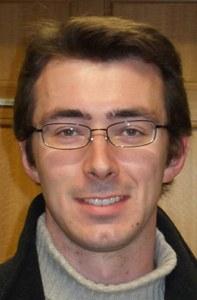
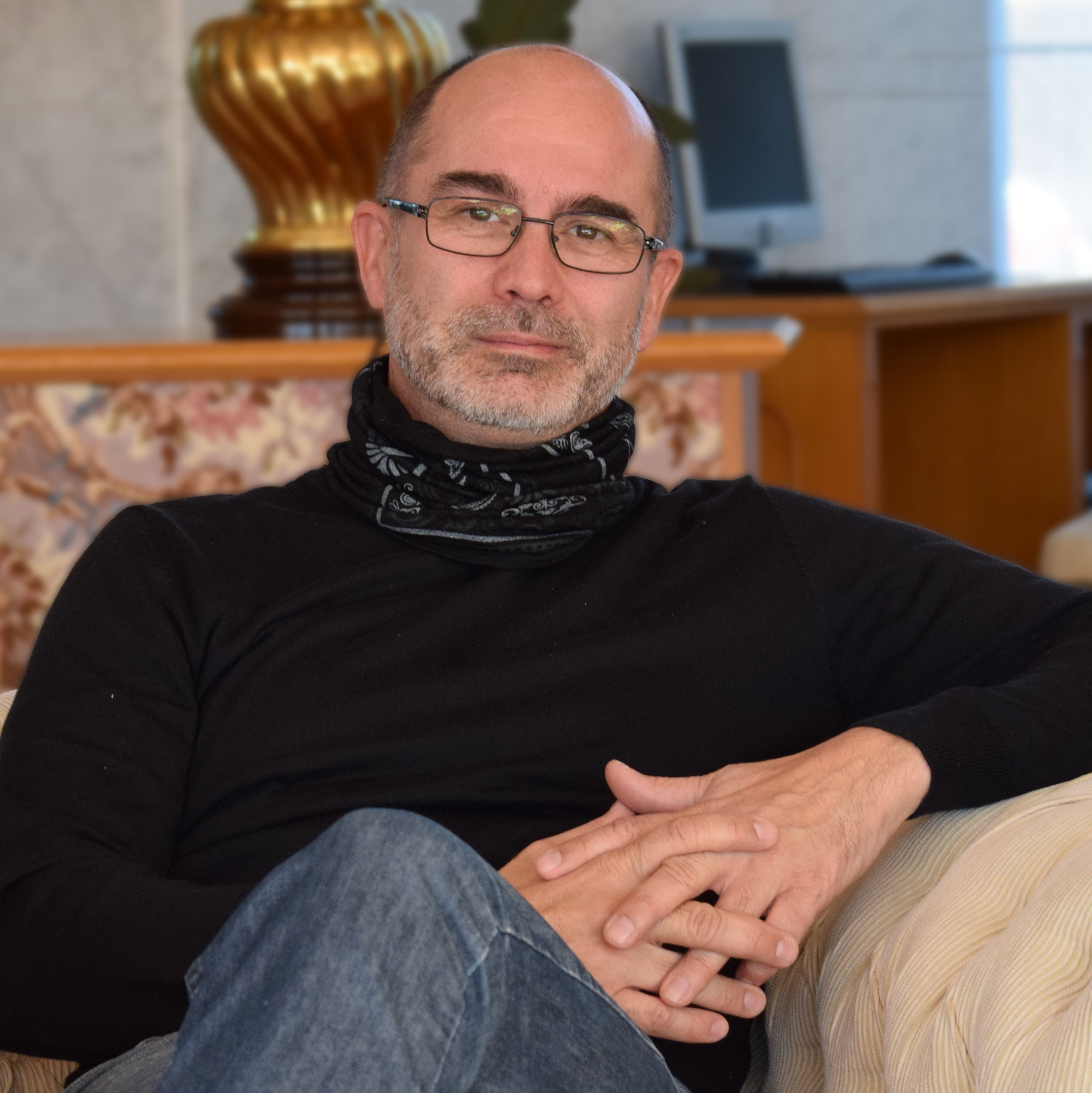
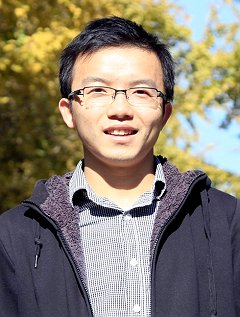
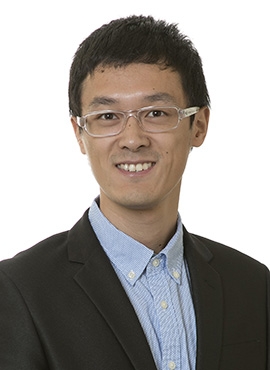
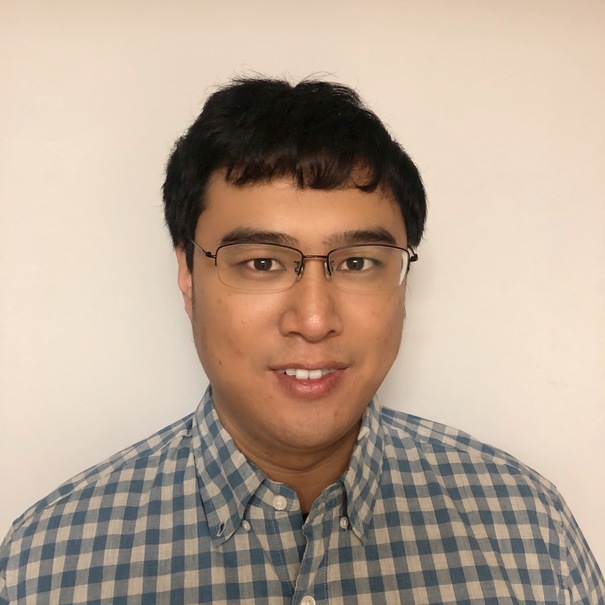
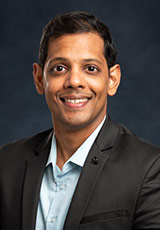
Dr. Matt Castle is a Researcher affiliated with the University of Cambridge , specializing in interdisciplinary approaches to food security and plant sciences. He serves as the Head of Bioinformatics Training and Head of PSLS Biostatistics Initiative within the Department of Plant Sciences . His work spans multiple domains, including plant disease modelling, infectious disease dynamics, and global governance of food systems. Research Themes: Modelling for Food Security, Plant Disease Modelling, Food Landscapes, Political Economy of Hunger His recent publications highlight expertise in ecological and agricultural modelling, with a focus on: Aflatoxin contamination in maize Urban forest pest dynamics Climate-driven range expansions Size-structured ecosystem resilience While his work intersects with food supply chains, land resources, and health, no specific scientific awards or student advisement details were listed in available public records.
Charu Sharma is an Associate Professor in the Department of Electrical Engineering at UiT The Arctic University of Norway, specializing in power systems and smart grid technologies. Her work focuses on reactive power control, voltage stability, and optimization of renewable energy-integrated networks. Research on cyber-physical co-simulation frameworks for real-time grid management Development of hybrid renewable energy microgrids for rural and industrial applications Expertise in optimization algorithms (e.g., BFOA-PSO, ANFIS) for energy systems Recent publications highlight her contributions to DER-enriched distribution networks, low-inertia system stability, and intelligent load frequency control. She actively collaborates with researchers on projects like Cooperative Isolated Renewable Energy Systems and arcICE , addressing reliability and sustainability challenges.
Manuel Fontaine Campos serves as Associate Professor at the Faculty of Law of the Catholic University of Portugal (UCP), where he has held directorial responsibilities since 2013 and previously served as Vice-President of UCP's Porto Regional Center (2017-2021). His academic journey includes a Law degree (1996), Master's in Political Science (1999), and Doctorate in Law (2012), all from UCP. His research focuses on Public Law , European Union Law , and International Trade Law , with particular expertise in State Aid regulation, constitutional interpretation, and EU competition policy. His publication record spans over two decades, including commentaries on Portugal's Civil Code and Constitution, analyses of EU regulatory frameworks, and historical studies of international trade regulations. Professionally, he has held visiting positions at universities in Mozambique, Macau, Spain, and Portugal, and contributes to legal discourse through scholarly publications and expert opinions. His teaching portfolio includes International Trade Law, Public Law, and European Economic Law modules across multiple UCP degree programs. As both academic and practitioner (having worked as a lawyer and legal consultant), Campos bridges theoretical scholarship with practical legal application, particularly in EU regulatory compliance and constitutional interpretation. His current work continues to influence Portuguese legal scholarship through ongoing publications and institutional leadership.
Michael Nothnagel is a Professor at the University of Cologne, where he leads the Department of Statistical Genetics and Bioinformatics within the Cologne Center for Genomics (CCG). His work spans statistical genetics, genetic epidemiology, and forensic genetics, focusing on methodological development and large-scale genomic data analysis. His research interests encompass theoretical and applied statistical genetics, with emphasis on human genetic diversity, disease etiology, and forensic applications. Key areas include Y-chromosomal phylogeography, genome-wide association studies for complex diseases, development of statistical methods for variant interpretation, and forensic marker optimization. His group leverages next-generation sequencing data and specialized forensic markers to address questions in population history, disease mechanisms, and identification systems. Recent publications reveal a strong focus on computational approaches to genetic analysis, including spatial frequency interpolation for haplogroup mapping, polygenic risk score applications for behavioral traits, and advanced methods for variant classification. His work demonstrates consistent integration of statistical theory with practical applications in medical and forensic genetics, often through international collaborations like the VISAGE Consortium. Nothnagel maintains active involvement in the Cologne Center for Genomics, contributing to seminars and collaborative projects including the upcoming 34th International Genetic Epidemiology Society meeting. His research group operates at the intersection of computational biology and medicine, with particular strengths in handling complex genomic datasets and developing novel analytical frameworks for genetic epidemiology.
Gerardo Schneider is a Full Professor in Computer Science at the University of Gothenburg, Sweden, and holds a joint appointment at Chalmers University of Technology. He serves as Head of the Data Science and Artificial Intelligence (DSAI) Division and has previously led the Formal Methods Division and acted as Director of Graduate Studies. University of Gothenburg: 2009–present Chalmers University of Technology: 2009–present Uppsala University: 2002–2003 University of Oslo: 2005–2009 His research focuses on formal methods for software engineering, including contract specification and analysis , privacy policy formalization , model checking , and runtime verification . He works on verification of real-time systems, embedded systems (e.g., smart Java cards), and blockchain-based smart contracts. Key projects include: X-LEGAL (2020–2023): Smart Legal Contracts (Swedish Research Council) PolUser (2016–2019): User-Controlled Privacy Policies (Swedish Research Council) ARVI (2014–2018): Runtime Verification Beyond Monitoring (ICT COST Action) ReMU (2013–2017): Reliable Multilingual Digital Communication (Swedish Research Council) He has supervised numerous PhD and Master’s students in formal methods, blockchain security, and privacy compliance. His tools include SPeeDI (Polygonal Hybrid Systems Verification), CLAN (Contract Normative Conflict Detection), and AnaCon (Controlled Natural Language Analysis).
Dr. Justin L. Benoit is an Assistant Professor at the University of Cincinnati College of Medicine, Department of Emergency Medicine. His work focuses on prehospital medicine, cardiac arrest resuscitation, and blood-based biomarkers, with a clinical emphasis on cardiovascular disease and airway management. He is board-certified in Emergency Medicine and Emergency Medical Services by the American Board of Emergency Medicine. Bachelor's Degree: University of Maryland, College Park (Cell and Molecular Biology and Genetics) Master's Degree: University of Cincinnati (Clinical and Translational Research) Medical Degree: Case Western Reserve University Residency: University of Cincinnati (Emergency Medicine) Fellowship: University of Cincinnati (EMS and Clinical Research) His research spans sudden cardiac arrest, emergency airway management, and biomarker development, particularly in the context of OHCA and SARS-CoV-2. Recent publications highlight advancements in ECPR accessibility, cooling duration protocols, and ventilation practices. He leads multiple federally and privately funded grants, including NIH and Bill & Melinda Gates Foundation projects. Dr. Benoit's work integrates emergency medicine, critical care, and public health, emphasizing data-driven improvements in resuscitation and pandemic response. Collaborations with international researchers and institutions underscore his impact on global clinical practices.
Nao Nishida serves as Assistant Professor at Waseda University's Institute for Advanced Study since 2022, following appointments at Tokyo Medical University and Fred Hutchinson Cancer Center. Her research bridges cancer biology and cell-cell communication mechanisms within tumor microenvironments. Her educational background includes: PhD in Agriculture (2014) from Kyoto University Master's in Applied Life Sciences (2011) from Kyoto University Bachelor's in Applied Life Sciences (2009) from Kyoto University Nishida's research centers on extracellular vesicle-mediated tumor-stroma crosstalk, with particular focus on exosome-driven metastasis, tumor-associated macrophage reprogramming, and organotypic culture modeling. She investigates how lipid composition and serine metabolism in cancer-derived EVs regulate microenvironmental remodeling and therapeutic resistance. Her work integrates advanced lipidomics, real-time tissue imaging, and spatial EV distribution analysis to uncover metastatic mechanisms. Analysis of her 17 publications reveals dominant themes in exosome biology (71% of works), cancer microenvironment dynamics (63%), and therapeutic targeting strategies (41%). Recent work increasingly incorporates spatial tissue context (2022-2024) and clinical translation potential. Her awards include: ISEV2025 New Parents Scholarship Japan Society for Promotion of Science Outstanding Researcher Candidate (2021) ISEV2017 Junior Member Scholarship Young Researcher Excellent Presentation Award (2015) Nishida directs multiple active grants including JSPS KAKENHI projects on EV secretion mechanisms (2023-2026) and nutritional stress adaptation (2025-2028), plus Mitsubishi Foundation and Uehara Memorial Foundation awards. She mentors through Waseda's bioscience curriculum while developing organotypic slice platforms for drug screening. Her laboratory utilizes advanced tumor slice culture systems and spatial EV mapping techniques to dissect microenvironmental heterogeneity, with current work focusing on stromal contribution to therapeutic resistance and organ-specific metastatic niches.
Dr Polly Vizard serves as Associate Director and Associate Professorial Research Fellow at the Centre for Analysis of Social Exclusion (CASE) at the London School of Economics and Political Science (LSE). With over 20 years of research experience, she specializes in multidimensional poverty and inequality, social policy analysis, and human rights-based approaches to social exclusion. Dr Vizard's research interests focus on multidimensional poverty and inequality , with particular attention to hard-to-reach population groups including Roma, Gypsy and Traveller communities, migrant households, and children with special educational needs. Her work applies Amartya Sen's capability approach to develop social indicators and human rights monitoring frameworks. She has extensive experience using both social surveys and administrative data to analyze deprivation across critical domains including living standards, health, education, physical safety, and security. Her recent publications demonstrate consistent focus on child poverty , multidimensional disadvantage , and policy evaluation . The research trend shows increasing attention to data exclusion issues affecting marginalized groups and the development of more comprehensive measurement frameworks that go beyond income-based poverty metrics. Her work spans both UK-focused studies and international comparative analyses, particularly in European contexts. Dr Vizard has previously served as principal investigator for the CASE research programme Social Policies and Distributional Outcomes in a Changing Britain and is currently a co-investigator on the Children's Information Project . Her current projects include testing the Growing Up in England dataset with Gypsy, Traveller and Roma communities, and investigating multidimensional child poverty and disadvantage.
Yu Jiang is an Associate Professor at the School of Software, Tsinghua University, China. His research focuses on software security with emphasis on fuzz testing, embedded systems, and database security. He leads the Software System Security Assurance Group which has discovered over 1,000 bugs in major system software with 300+ CVEs registered. Dr. Jiang's research interests include Software Engineering , Embedded Systems Security , and Cross-Layer Fuzzing . His work addresses vulnerabilities in operating systems, databases, communication protocols, and IoT firmware through innovative fuzzing frameworks. Key contributions include semantic-aware fuzzing for heterogeneous software stacks and learning-based vulnerability detection for embedded systems. His recent publications demonstrate strong trends in database security (Hulk, PUPPY, THANOS), ransomware defense (Fawkes, Preventing Disruption), and web security (JANUS). Research spans both theoretical advances in fuzzing techniques and practical industrial applications, with significant impact evidenced by numerous distinguished paper awards. Career Award, NSFC: 2026 Distinguished Paper Award, ISSTA: 2025 First Prize for Technical Invention, CCF: 2024 Distinguished Paper Award, USENIX Security: 2024 SIGSOFT Distinguished Paper Award, FSE: 2022 Dr. Jiang has advised over 50 graduate students including 20 PhD candidates. His research is supported by major grants including NSFC projects ($600,000 for Software Trustworthiness Construction and $350,000 for Distributed Database Reliability), Huawei ($80,000 for LLM-Powered Fuzzing), and Tencent ($120,000 for LLM-Powered Unit Testing). The Software System Security Assurance Group maintains strong industry partnerships with Huawei, Alibaba, Tencent, and Webank. The group operates cutting-edge infrastructure for fuzz testing across multiple domains including database systems, operating kernels, blockchain platforms, and industrial control systems. Current projects integrate LLM technologies with traditional fuzzing techniques to enhance vulnerability detection in complex software stacks.
Minshuo Chen is an Assistant Professor in the Department of Industrial Engineering and Management Sciences at Northwestern University. He previously served as an Associated Research Scholar in the ECE department at Princeton University, collaborating with Prof. Mengdi Wang. His research focuses on developing methodologies and theoretical foundations in generative AI, reinforcement learning, and optimization. He holds a Ph.D. from Georgia Tech (supervised by Prof. Tuo Zhao and Wenjing Liao), a Master's from UCLA, and a Bachelor's from Zhejiang University. Key research areas include diffusion models for distribution estimation, foundations of learning (approximation and optimization), and reinforcement learning applications in complex systems. He has presented at major conferences like INFORMS 2024 and NeurIPS 2023, and serves as an area chair for NeurIPS 2023. His recent work emphasizes theoretical guarantees for diffusion models, including statistical rates and optimization perspectives. He has received awards such as the ARC-TRIAD Student Fellowship and William S. Green Fellowship. Collaborations include studies on POMDPs, policy evaluation, and manifold learning.
Lillian Lee is a Professor of Computer Science at Cornell University, affiliated with the College of Computing and Information Science. Her research bridges natural language processing (NLP) and social interaction, focusing on how computational methods can analyze and facilitate socially embedded processes. She co-developed the course “Natural Language Processing and Social Interaction” and leads the Cornell NLP Group. Her work spans sentiment analysis, computational social science, and multimodal interaction, with notable contributions to understanding language features in persuasion, online debate dynamics, and humor comprehension. Key research interests include analyzing digital traces of social interaction, evaluating AI systems through human-centered criteria, and exploring the interplay between language structure and societal influence. Recent projects examine pivotal moments in mental health counseling, cross-cultural historical narratives on Wikipedia, and the role of wording in message propagation. Awards: ACM Fellow, ACL Distinguished Service Award (2021), Test of Time Award, Fellow of the Association for Computational Linguistics Labs/Teams: Member of the Cornell Natural Language Processing Group Advising: Mentored numerous students whose work has driven impactful projects in NLP and computational social science
Charles Gillan is a Senior Lecturer at Queen's University Belfast's School of Electronics, Electrical Engineering and Computer Science, affiliated with the High Performance and Distributed Computing department and the Institute of Electronics, Communications & Information Technology. His research bridges HPC systems, AI applications in healthcare, and computational physics. Key projects include managing ICU patient care via neural networks, exascale-ready mathematical packages, and edge computing architectures. Research interests focus on high-performance computing (HPC), quantum computing, real-time data analytics, and electron-molecule scattering simulations. Notable contributions include developing microserver architectures for edge analytics and advancing AI-driven clinical decision support systems. Gillan has collaborated on interdisciplinary projects like food authenticity testing using spectroscopy and improving ventilator management in intensive care units. Publications span AI in healthcare, HPC system design, and computational methods for physics problems. He has secured funding for initiatives such as the KTP partnership with Foods Connected Ltd and the HANDHELD olfactory detection project. Gillan's work emphasizes practical applications of advanced computing across healthcare, engineering, and cybersecurity domains.
Meng Xu is an Assistant Professor in the Cheriton School of Computer Science at the University of Waterloo, Canada. He is affiliated with the Cryptography, Security, and Privacy (CrySP) group and the Cybersecurity and Privacy Institute (CPI). His research focuses on system and software security, emphasizing secure-by-design languages (e.g., Rust, Move), automated program analysis, and runtime defense techniques. Education : Ph.D., Computer Science (2020), Georgia Institute of Technology B.Eng. and B.Business (First Class Honors), Nanyang Technological University (2014) Research Interests : Secure-by-design languages Automated security analysis (fuzzing, symbolic execution) Runtime defense mechanisms (moving target defense, secure hardware) Key Awards : EAPLS Best Paper Award (2022) USENIX Security Distinguished Paper Award (2018) Grants & Funding : BlackBerry Research Grant (CAD $200,000) Amazon Research Award (USD $60,000) NSERC Discovery Grant (CAD $170,000) Labs & Collaborations : CrySP (Cryptography, Security, and Privacy Group) Cybersecurity and Privacy Institute (CPI)
Shivam Saxena is an Assistant Professor in the Department of Electrical and Computer Engineering at the University of New Brunswick, located in Head Hall D65, Fredericton. His research focuses on smart grid technologies, including distributed energy resource integration, blockchain applications for energy trading, electric vehicle-grid interactions, and resilient microgrid design. This work addresses decarbonization challenges through technological and market innovations. Publications demonstrate a strong emphasis on real-world implementation, with field-tested solutions for V2X integration, blockchain-based transactive energy, and distributed control systems. Recent work explores novel applications in agricultural energy management and trust mechanisms for decentralized systems.
Dr. Rafid Al-Khannak is an Associate Professor in Computing at Buckinghamshire New University. He holds a PhD in Engineering and IT from the University of Bolton, completed in collaboration with Siemens AG. His research focuses on engineering and IT operational development, particularly in cloud computing, distributed systems, cybersecurity, and infrastructure automation. Al-Khannak maintains industry collaborations with Amazon and Siemens on cloud implementation and security projects. Key research areas include: Secure cloud migration frameworks using AWS hybrid models Infrastructure automation through CI/CD pipelines Penetration testing methodologies for cloud applications AI-enhanced education system transformation Healthcare application development for specialized needs