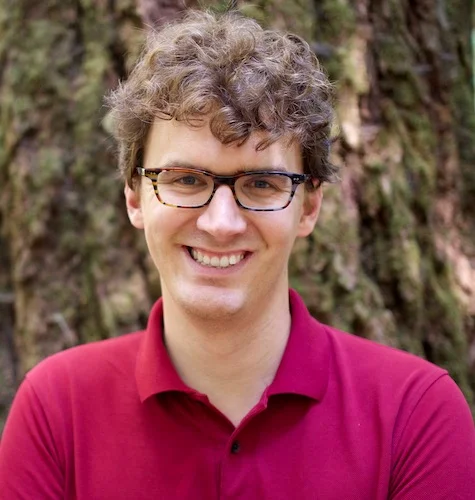
Carl Vondrick is a Professor in the Department of Computer Science at Columbia University. His research focuses on creating robust and versatile perception systems that leverage video and interaction with the natural world, with applications in 3D reconstruction, visual question answering, and robot manipulation. Former research scientist at Google Visiting researcher at Cruise Education: PhD (2017) from MIT, advised by Antonio Torralba BS (2011) from UC Irvine, advised by Deva Ramanan His research explores multimodal approaches for cross-task and cross-modal transfer, scene dynamics, audiovisual perception, interpretable models, and spatial awareness systems. The lab emphasizes zero-shot generalization and neuro-symbolic methods while addressing safety and robustness in AI systems. Key publication trends include: 2025: Video generation for robotics 2024: Differentiable rendering and cross-modal reasoning 2023: Robust perception and 3D modeling Scientific Awards: 2024 PAMI Young Researcher Award 2021 NSF CAREER Award Teaching Roles: Teaching Computer Vision II (2021-2025), Computer Vision I (2018-2019), and Representation Learning (2020-2022). Advising: Advises 8 current PhD students and has mentored 5 graduated students now at institutions like MBZUAI and UMD. The lab recruits 1-2 PhD students annually through Columbia’s PhD program. Grants and Collaborations: Funded by NSF, DARPA, Toyota Research Institute, Amazon Research, and Google.
Lutz Schubert is a researcher at the Institute of Computer Science , University of Cologne. He focuses on efficient distributed and parallel execution environments for heterogeneous systems, notably the MyThOS operating system in collaboration with Brandenburg University of Technology, Cottbus-Senftenberg. His interdisciplinary work bridges computer science and digital archaeology , addressing modeling of non-deterministic events from sparse excavation data and exploring human behavior constraints in archaeological contexts. Research Interests Design of modular, scalable operating systems for distributed systems Optimization of execution environments for heterogeneous hardware Application of complex systems modeling to digital archaeology Statistical and probabilistic methods for archaeological interpretation Autonomic resource distribution and adaptation in computing Publication Trends : His work spans operating systems , parallel computing , and digital humanities , with recent emphasis on probabilistic reasoning in archaeology and adaptive OS design for multicore architectures. Labs & Collaborations : He collaborates with Brandenburg University of Technology on MyThOS and leads research in computational archaeology as chair of Computer Applications and Quantitative Methods in Archaeology (CAA) , Germany.
Jonas Fischer is the head of the Explainable Machine Learning group at the Max Planck Institute for Informatics, Department of Computer Vision and Machine Learning. His research focuses on interpreting complex machine learning models, particularly in genomics and healthcare, aiming to enhance robustness and alignment with human decision-making. Prior to his role at MPI, he was a postdoctoral fellow at Harvard University's Department of Biostatistics, where he worked on interpretable models for gene regulatory systems in cancer. Education: PhD in Computer Science from Saarland University (2022), with a thesis titled More than the sum of its parts , exploring the intersection of pattern mining and deep learning. He has contributed to advancing methods in neural network pruning, federated learning, and low-dimensional embeddings (e.g., dtSNE, Mercat). His work bridges computational biology, data mining, and machine learning, with applications in DNA methylation analysis, graph-based differential networks, and biomedical informatics. Key research areas include: (1) Explainable AI and neural network interpretability, (2) Biomedical applications of machine learning (e.g., gene regulatory networks, cancer genomics), (3) Low-dimensional embeddings and visualization techniques, (4) Federated learning for privacy-preserving collaborative models, and (5) Pattern mining for error analysis in NLP and classification tasks. Publications span top venues like NeurIPS, ICLR, Bioinformatics, and Genome Biology. His group develops tools such as BONOBO for omics data integration and node2vec2rank for scalable graph analysis. He actively collaborates with biomedical researchers to address challenges in data-driven healthcare and precision medicine.
Prof. Dr. Jörg E. Drewes is a Full Professor and Chair at the Research Institute for Urban Water Management, Technical University of Munich (TUM), Germany. He also serves as Academic Program Director for Environmental Engineering at TUM and is a co-founder of Waterloop Solutions GmbH. His work spans advanced water treatment technologies, wastewater reuse, and environmental health surveillance. Affiliations : TUM, Colorado School of Mines, King Abdullah University of Science and Technology, UNSW Water Research Centre Research focuses on advanced oxidation processes , membrane fouling mitigation , micropollutant removal , and wastewater epidemiology for public health. His team develops integrated systems for water-energy-food nexus applications and graphene oxide-based treatment solutions. Recent publications address PFAS remediation , UVC-LED pre-treatment for biofouling control, and GIS-based wastewater surveillance models . Awards include the Bayerische Staatsmedaille (2023) and William Dunbar Medal (2022). 2023 : Bayerische Staatsmedaille 2022 : William Dunbar Medal 2018 : IWA Fellow He leads the Nexus@TUM initiative and contributes to EU water resilience strategies. Collaborations include projects in Germany, China, India, and Spain, focusing on climate-resilient water systems and resource recovery .
PD Dr. Christian Zillinger is a researcher at the Karlsruhe Institute of Technology (KIT), specifically within the Department of Mathematics. He leads the Junior Research Group "Stability and Instability in Fluids and Materials" (AP6) as part of the CRC 1173. His office is located at Kollegiengebäude Mathematik (20.30), room 2.024 in Karlsruhe, Germany. Dr. Zillinger obtained his PhD under the supervision of Herbert Koch at the University of Bonn. Following his doctorate, he served as an assistant professor (NTT) at the University of Southern California and was a postdoctoral fellow at BCAM (Basque Center for Applied Mathematics). He recently completed his habilitation thesis titled "On Mixing and Resonances in Fluid Systems" at KIT in 2023. Dr. Zillinger's research focuses on partial differential equations motivated by physical problems, particularly in fluid dynamics and material sciences. His work encompasses several key areas: Mixing as a (de)stabilizing mechanism in fluids and inviscid damping Cascades of resonances and instabilities in fluids and plasmas Convex integration and microstructures in materials, including rigidity and flexibility phenomena Magnetic fluids and magnetohydrodynamics Partial dissipation in the Boussinesq equations His recent publications demonstrate a strong focus on stability and instability phenomena in fluid systems, with particular attention to mathematical analysis of PDEs governing fluid behavior. He has made significant contributions to understanding echo chains, resonance phenomena, and damping mechanisms in various fluid models. His work bridges theoretical mathematics with applications in physics and materials science, often employing advanced analytical techniques to address challenging problems in nonlinear PDEs. Dr. Zillinger actively teaches courses at KIT, including "Klassische Methoden für partielle Differentialgleichungen" (Classical Methods for Partial Differential Equations), "Introduction to convex integration," "Introduction to Kinetic Equations," and seminars on microstructure in materials and fluid dynamics. He leads the Junior Research Group "Stability and Instability in Fluids and Materials" which is part of the Collaborative Research Centre (CRC) 1173 at KIT, focusing on wave phenomena. This research group investigates mathematical aspects of stability and instability in physical systems, with applications to fluid dynamics and material science.
Renate Sachse is a Researcher at the Chair of Structural Analysis, Technical University of Munich (TUM), where she has worked since May 2024. Previously, she held postdoctoral positions at Harvard University's Bertoldi Lab (2024) and TUM's Chair of Computational Mechanics (2021-2024), following academic staff roles at the University of Stuttgart (2015-2020). Her interdisciplinary work bridges civil engineering, biomechanics, and computational modeling. Her educational foundation includes a Master's in Civil Engineering from the University of Stuttgart (2014; thesis: 'Isogeometric contact analysis of thin-walled structures') and a Bachelor's from the same institution (2011; thesis: 'A Primary School Pavilion for Magagula in South Africa - Structural Analysis'). She also completed ERASMUS studies at ESTP Paris and internships at Foster + Partners and Werner Sobek AG. Dr. Sachse's research centers on biomechanics and biomimetics, with pioneering work on plant-inspired structures. She investigates snapping mechanisms in carnivorous plants (Venus flytrap, waterwheel plant) to develop bio-inspired adaptive systems, soft robotics, and metamaterials. Her expertise spans motion design for large-deformation structures, isogeometric analysis, and hygroscopic actuation in 4D-printed materials, emphasizing computational modeling of contact mechanics and structural stability. Analysis of her 15 most recent publications reveals a dominant focus on biomechanics (60% of articles), particularly plant movement mechanics translated into engineering solutions. Her work consistently integrates computational structural analysis with biological principles, showing increasing emphasis on motion design (25% of recent output) and additive manufacturing applications (15%). Key trends include translating snap-buckling phenomena into robotics and developing material design spaces for responsive structures. Her distinguished awards include the Bertha Benz Prize (2022), Klaus Tschira Boost Fund Fellowship (2022-2024), and University of Stuttgart Publication Award (2022). Additional recognition comprises GAMM Juniors Fellowship (2020-2022), AVK Innovation Award (2017), and Emil Mörsch Study Prize (2014). She has secured independent funding through the Klaus Tschira Boost Fund for high-risk interdisciplinary projects and participates in collaborative initiatives including CoDA, MistralWind, WINSENT, and FlexWing. While teaching advanced courses at TUM (Advanced Finite Element Methods, Theory of Plates), her mentorship focuses on computational mechanics and biomimetic design principles. Currently based at TUM's Chair of Structural Analysis under Prof. Bletzinger, she maintains active collaboration with Harvard University's Bertoldi Lab in developing next-generation adaptive structures.
Nils Fleischhacker is an Assistant Professor for Cryptography at Ruhr University Bochum, where he leads the Theoretical Cryptography group within the Faculty of Computer Science. His research focuses on foundational aspects of cryptography with particular emphasis on zero-knowledge proofs, digital signatures, and secure computation. Prior to joining Ruhr University, he held postdoctoral positions at Johns Hopkins University and Carnegie Mellon University. Dr. Fleischhacker received his PhD in Computer Science from Saarland University in February 2017, advised by Dominique Schröder. During his doctoral studies, he was a research intern at Microsoft Research with Chris Brzuska and a research visitor at the University of Maryland, College Park with Jonathan Katz and Dana Dachman-Soled. His research spans theoretical cryptography with significant contributions to zero-knowledge proofs, multi-signature schemes, property-preserving hash functions, and security proofs for cryptographic primitives. Fleischhacker's work often addresses fundamental questions about the limits and possibilities of cryptographic constructions, with particular attention to black-box separations and lower bounds. His recent publications demonstrate a strong focus on lattice-based cryptography and post-quantum secure protocols. Fleischhacker's publications over the past five years reveal a consistent research trajectory focused on improving the efficiency and security of cryptographic primitives, with particular emphasis on signature schemes, zero-knowledge protocols, and secure computation frameworks. His work frequently appears in top-tier cryptography venues including CRYPTO, EUROCRYPT, and CCS. Dr. Fleischhacker actively mentors PhD students, with numerous successful graduations spanning from 2010 to 2024. His former PhD students include Önder Askin (2024), Floyd Zweydinger (2023), and Lars Schlieper (2022), among others. His research is supported through various academic channels and collaborations. He is affiliated with several prominent research organizations including the Horst Görtz Institute (HGI) for Information Security, the DFG Excellence Cluster CASA, the EU Marie Curie Network QSI, and the International Association for Cryptologic Research (IACR). These affiliations provide a strong institutional framework for his theoretical cryptography research.
Prof. Alessandro Golkar is a Professor at the Technical University of Munich (TUM), leading the Chair of Picosatellites, Nanosatellites, and Satellite Constellations. He joined TUM in September 2022 and previously served as one of the founding faculty members at Skoltech, a Moscow-based graduate research university. His research focuses on advanced space mission concepts, systems engineering for picosatellites, and federated satellite systems. Prior to academia, he held roles at Airbus CTO, contributing to technology roadmapping and planning. His academic background includes expertise in aerospace engineering, systems design, and agile development methodologies for space hardware. Key research areas include CubeSat constellations, distributed satellite systems, and the integration of AI tools like Large Language Models (LLMs) into spacecraft design processes. He has pioneered projects such as the FSSCat mission, winner of the ESA Sentinel Small Satellite Challenge, and has explored applications of additive manufacturing for lunar missions. Prof. Golkar’s awards include the 2021 Karman Fellowship and IEEE Senior Membership (2018). His recent work emphasizes optimizing satellite networks, digital twin implementation, and orbital maneuvering for collision avoidance. He actively contributes to technology roadmapping, focusing on future human landing systems and lunar infrastructure development. Education: Ph.D. in Aerospace Engineering (details not explicitly stated). Grants & Funding: Extensive grants for CubeSat projects, federated systems research, and space technology innovation. Labs/Teams: Leads the Chair’s research group at TUM and collaborates with industry partners like Airbus on advanced mission concepts. His publications span over two decades, addressing topics like constellation design, machine learning in space, and agile processes for hardware development. He advocates for hybrid agile methodologies to bridge traditional systems engineering and modern product development.
Andreas Rietbrock is Professor and Director of the Geophysical Institute (GPI) at the Karlsruhe Institute of Technology (KIT) , Germany, where he also serves as Dean of Studies for Geophysics . He is a leading expert in earthquake seismology, seismic tomography, and subduction zone dynamics, with a strong focus on integrating advanced observational techniques and computational methods. Education: While specific degrees are not listed in the provided text, his extensive publication record and leadership roles indicate advanced academic training in geophysics and seismology. Research Interests: His work spans a wide range of topics including: Seismic imaging of subduction zones (e.g., Nazca, Lesser Antilles) Earthquake rupture dynamics and fault mechanics Volcanic seismology and magma transport Full waveform inversion and AI-enhanced seismic analysis Distributed Acoustic Sensing (DAS) applications Induced seismicity and reservoir monitoring Research Trends: His recent publications (2022–2025) emphasize the use of dense seismic arrays, AI-based data processing, and multi-method tomography to study complex tectonic environments. Key themes include high-resolution imaging of slab structures, fluid migration in subduction zones, and the integration of DAS and machine learning for seismic monitoring. Scientific Contributions: Andreas has led major international projects such as the ANTICS Large-N deployment in Albania and the VoiLA project in the Lesser Antilles. He has published extensively in top-tier journals like Nature , Geophysical Research Letters , and Journal of Geophysical Research , with over 200 peer-reviewed articles. Teaching and Supervision: He teaches courses such as "Introduction to Geophysics II", "Seismology", and "Current Topics in Seismology and Risk". While specific student names are not listed, his role as Dean and principal investigator on numerous projects indicates active supervision of graduate students and postdocs. Labs and Teams: He leads the seismology group at GPI, coordinating large-scale deployments of seismic instruments, including ocean-bottom seismometers and fiber-optic DAS systems. His team collaborates globally with institutions in Europe, South America, and Asia.
Yin Tat Lee is an Associate Professor at the Paul G. Allen School of Computer Science & Engineering , University of Washington, and a Senior Principal Researcher in Microsoft AI. His research spans convex optimization , convex geometry , graph algorithms , online algorithms , and differential privacy , with applications in machine learning and theoretical computer science.
Jun Liu is a distinguished scientist and academic, serving as a Battelle Fellow at Pacific Northwest National Laboratory (PNNL) and holding the position of Campbell Chair Professor at the University of Washington. His career spans over three decades in materials science and energy storage research, with significant leadership roles including Director of the Battery500 Consortium, a major DOE initiative focused on developing next-generation battery technologies. Dr. Liu earned his Bachelor's degree in Chemical Engineering from Hunan University, followed by a Master's degree in Ceramic Engineering and a Ph.D. in Materials Science and Engineering, both from the University of Washington. His educational background provided the foundation for his extensive career in advanced materials development. Dr. Liu's research focuses on the development, synthesis, and characterization of new materials for energy applications, with particular emphasis on battery technologies. His work spans lithium-ion batteries, lithium-sulfur systems, redox flow batteries, and magnesium-based energy storage solutions. He has pioneered approaches to improve energy density, cycle life, and safety of battery systems through innovative materials design and interface engineering. Analysis of Dr. Liu's recent publications reveals a strong focus on practical battery applications, with particular attention to lithium metal anodes, solid electrolyte interphases, and high-energy battery systems. His research increasingly addresses the challenges of translating laboratory discoveries into commercially viable battery technologies, with growing emphasis on pouch cell development and real-world performance metrics. Distinguished Inventor of Battelle (2007) PNNL's Inventor of the Year (2012, 2016) Electrochemical Society Battery Division Technology Award DOE EERE Exceptional Achievement Award PNNL Lifetime Achievement Award Fellow of the American Association for the Advancement of Science Fellow of the Materials Research Society Member of the Washington State Academy of Science Dr. Liu has secured substantial research funding through his leadership of the Battery500 Consortium and other DOE initiatives. He has mentored numerous researchers and students throughout his career, contributing to the development of the next generation of energy storage scientists. His research group at PNNL collaborates extensively with academic institutions, national laboratories, and industry partners to advance battery technology. Dr. Liu leads the Battery500 Consortium, a major collaborative effort involving multiple national laboratories, universities, and industry partners focused on developing lithium-metal batteries with significantly higher energy density than current technologies. His research group at PNNL maintains state-of-the-art facilities for materials synthesis, characterization, and battery testing, enabling comprehensive investigation of next-generation energy storage systems.
Professor Matthias Mann is a world-leading scientist serving as Director of the Proteomics and Signal Transduction department at the Max Planck Institute of Biochemistry in Martinsried, Germany, and Director of the Proteomics department at the Novo Nordisk Foundation Center for Protein Research, Faculty of Health Sciences, University of Copenhagen, Denmark. With an h-index exceeding 277 and over 350,000 citations, he is recognized as the highest cited German researcher and one of the most influential scientists globally in proteomics. His educational background includes: Ph.D. in Chemical Engineering from Yale University (1988) Master's Degree in Physics from Georg August University Göttingen (1984) Bachelor's of Arts in Mathematics from Georg August University Göttingen (1982) Professor Mann's research focuses on advancing mass spectrometry-based proteomics to understand biological systems at the protein level. His work spans technological developments in mass spectrometry, bioinformatics and computational analysis, signal transduction and posttranslational modifications, and clinical proteomics applications for disease diagnosis and treatment. The Mann lab has pioneered groundbreaking methods like SILAC for quantitative proteomics and MaxQuant for proteome data analysis. Their vision is to translate proteomics knowledge into clinical practice for predictive, diagnostic, and preventive medicine, with recent work focusing on AI-guided platforms for analyzing proteomes from minimal tissue samples. Analysis of Professor Mann's recent publications reveals a strong trend toward clinical applications of proteomics, particularly in cancer research, metabolic diseases, and neurodegenerative disorders. His work increasingly integrates spatial proteomics, single-cell resolution techniques, and artificial intelligence approaches to uncover disease mechanisms and identify potential biomarkers, with a clear shift from basic technology development toward direct clinical applications and personalized medicine. Professor Mann has received numerous prestigious awards throughout his career: 2025: Elected member of the American National Academy of Sciences 2024: Dr. H.P. Heineken Award for Biochemistry and Biophysics 2023: Otto Warburg Medal 2019: Nominated member of the Bavarian Academy of Sciences 2013: Elected member of Leopoldina German National Academy of Sciences 2012: Körber European Science Award, Louis-Jeantet Foundation Prize for Medicine, Ernst Schering Prize, and Leibniz Prize Professor Mann leads a highly collaborative research team involved in multiple international networks including the Bill & Melinda Gates Foundation, Michael J. Fox Foundation for Parkinson's Research, CLINSPECT-M, and Munich Heart Alliance. His lab has mentored numerous successful researchers, with several former postdocs receiving prestigious ERC Starting Grants. The Mann group has developed innovative clinical proteomics pipelines for analyzing archived tissue specimens and body fluids, aiming to identify protein markers for early detection of diseases such as diabetes and cancer. The Mann lab operates across two major research centers with state-of-the-art mass spectrometry facilities. Their Clinical Knowledge Graph platform integrates multi-omics data with extensive metadata, creating an ecosystem for machine learning applications in proteomics. Current research focuses on developing highly sensitive methods that can profile thousands of proteins from minimal cell samples, enabling the identification of critical disease-related proteins and supporting the development of individualized therapies.
Professor Rainer Böhme is a prominent academic in the field of IT security and privacy at the University of Münster's School of Business and Economics, Department of Information Systems. He also holds a professorship for Security and Privacy at the University of Innsbruck's Institute of Computer Science. His research spans multiple dimensions of digital security, with particular expertise in steganography, digital forensics, privacy-enhancing technologies, and the economic aspects of cybersecurity. Dr. Böhme earned his Doctoral Degree from TU Dresden's Faculty of Computer Science in 2008, following studies in Communications, Economics and Computer Science at Technische Universität Dresden and Université Paris XII. His academic journey includes positions as Assistant Professor at the University of Münster (2010-2015), Postdoctoral Fellow at the International Computer Science Institute in Berkeley (2009-2010), and Scientific Staff at TU Dresden's Chair of Privacy and Data Security. His research interests focus on steganography and steganalysis, digital forensics, privacy-enhancing technologies, security and usability, economic and behavioral aspects of information privacy, virtual currencies, and the economics of information security. His work bridges technical security mechanisms with economic and behavioral considerations, creating a unique interdisciplinary approach to cybersecurity challenges. Analysis of his recent publications reveals a strong trend toward the economics of security, particularly regarding blockchain technologies, cryptocurrency, and privacy valuation. His work increasingly examines the intersection of technical security mechanisms with market dynamics, regulatory frameworks, and user behavior. The research spans theoretical game-theoretic models, empirical studies of user behavior, and practical applications in digital forensics and privacy protection. Program Co-Chair, Financial Cryptography and Data Security (2015) Program Co-Chair, New Security Paradigms Workshop (NSPW) (2015) General Chair, 8th International Conference on IT Security Incident Management & IT Forensics (2014) Organizer and Program Co-Chair, 1st Workshop on Bitcoin Research (2014) Associate Editor, Electronic Commerce Research (since 2013) Associate Editor, EURASIP Journal on Information Security (since 2013) Professor Böhme has supervised multiple Master's theses in Information Systems, including work on static code analysis for smart contracts, remote maintenance protocol security, and application protection requirements in retail banking. His research is supported by significant grants from the German Federal Ministry of Research, Technology and Space, the DFG, and the EU FP7 program, with projects focusing on digital forensics, privacy-enhancing technologies, and cryptocurrency crime prevention. He leads the IT Security Research Group at the University of Münster, which investigates theoretical and applied aspects of information security with particular emphasis on the economic dimensions of security decisions.
Chita R. Das is a Professor at Pennsylvania State University, known for extensive contributions in computer architecture, machine learning, and high-performance computing. Their research focuses on optimizing hardware-software co-design for edge computing, cloud infrastructure, and energy-efficient systems. Key areas include FPGA acceleration, GPU optimization, and serverless computing frameworks. Das collaborates frequently with institutions like AMD and Intel, addressing challenges in parallel computing and distributed systems. Their work bridges theoretical advancements with practical applications in recommendation systems, bioinformatics, and real-time video processing. Research interests span across hardware acceleration techniques, cloud resource management, and sustainable computing. Notable projects include adaptive training frameworks for intermittent power environments and neural-augmented game streaming for mobile platforms. Das's publications often address performance bottlenecks in modern architectures and propose novel solutions for latency and energy efficiency. Recent articles highlight innovations in serverless computing cost optimization, low-bandwidth VR streaming, and FPGA-based bioinformatics tools. Their contributions are characterized by interdisciplinary approaches combining computer architecture with machine learning and embedded systems.
Prof. Dr. Barbara Kraus is the Chair of Quantum Algorithms and Applications at the Technical University of Munich (TUM), affiliated with the TUM School of Natural Sciences. She previously held academic positions at the University of Innsbruck, where she founded her research group in 2010. Education : Physics and Mathematics at the University of Innsbruck; Post-doctoral work at MPI for Quantum Optics and University of Geneva. Her research focuses on foundational problems in quantum information theory, particularly entanglement in multipartite systems, quantum simulation, and verification of quantum processors. She develops theoretical tools for quantum many-body systems and explores applications in quantum computing, emphasizing error characterization and experimental validation. Recent publications highlight advancements in Hamiltonian learning, symmetry-resolved entanglement detection, and multipartite state transformations. Her work bridges theoretical quantum physics with practical implementations, including Rydberg platforms and quantum metrology. Key Awards : START Prize (2010), Ignaz L. Lieben Award (2013), Boltzmann Prize (2011), Südtiroler Sparkasse Research Prize (2019). She supervises doctoral students and postdocs in quantum information theory, with a focus on stabilizer states, quantum networks, and entanglement measures. Her courses at TUM include Quantum Information , Quantum Algorithms , and workshops on entanglement manipulation.