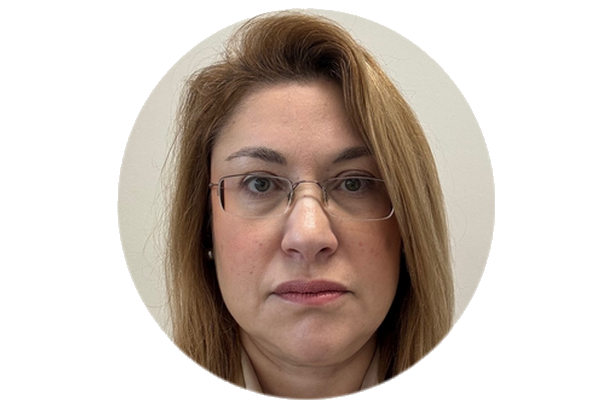
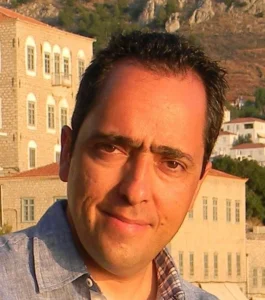
Irene Koronaki is a Professor at the National Technical University of Athens , affiliated with the School of Mechanical Engineering and the Thermal Engineering Section . She serves as Director of the Laboratory of Applied Thermodynamics, Cooling Technology & Refrigerated Vehicles since 2022 and has held academic roles at NTUA since 1999. Her research focuses include thermodynamics, heat pumps, energy efficiency, and renewable energy systems. Diploma in Mechanical Engineering, NTUA (1996) PhD in Thermal Engineering, NTUA (2000) Postdoctoral Researcher, NTUA (2002) Her research spans thermodynamics of cooling cycles, heat pumps, power cycles, energy saving in buildings, and thermal energy storage. She has pioneered work in nanofluids, solar cooling, and CO2 absorption systems. Her publications and projects reflect expertise in Stirling engines, hybrid solar collectors, and building energy optimization. Her recent articles highlight advancements in superfluid thermodynamics, solar PV/T systems, and medical robotics. Awards include the Edward F. Obert Award (2022) and leadership of the 2021 ASHRAE Student Design Competition winning team. She serves on ASME and ASHRAE committees and co-authored educational materials for refrigeration and energy inspection standards.
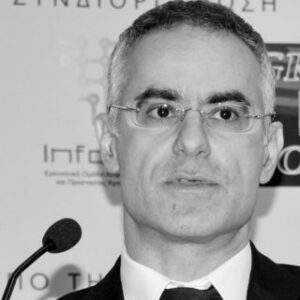
Professor Siris Vasilios holds the position of full Professor at the Department of Informatics, Athens University of Economics and Business (AUEB). Previously, he served as Assistant and Associate Professor at AUEB (2009–2020) and the University of Crete (2002–2009). His expertise spans resource management in networks, blockchain-based IoT security, and future communication systems. He has published over 150 papers in top venues like IEEE INFOCOM and ACM Mobicom, and holds three patents in wireless resource management. Education: Diploma in Physics (1990), National and Kapodistrian University of Athens M.S. in Computer Science (1992), Northeastern University, Boston, USA Ph.D. in Computer Science (1998), University of Crete Research Interests: His work focuses on trusted communication in IoT , leveraging blockchain technologies for secure systems. Key areas include distributed ledger applications, energy-efficient network protocols, and satellite-terrestrial integration. He emphasizes combining theoretical methods with practical system implementations. Awards & Recognition: He has coordinated EU-funded projects (e.g., SOFIE) and served as Technical Program Chair for IEEE WoWMoM 2018 and IQ2S 2015. His research has been recognized through grants from Greek governmental and industry partners. Grants & Projects: Principal Investigator for multiple EU research projects Lead on Greek national and industry-funded initiatives Contributed to the SOFIE project addressing IoT security via interledger technologies Labs & Teams: Active in the Department of Informatics' research groups, focusing on experimental systems like Dedalus for wireless maritime networking and blockchain-based IoT prototypes.
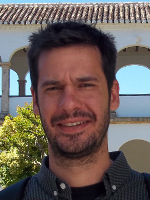
Georgios Keramidas is an Assistant Professor in Computer Architecture at the Department of Informatics, Aristotle University of Thessaloniki . He also holds an Adjunct Professor position at the Hellenic Open University and collaborates with institutions like the University of Peloponnese and University of Patras . Research Interests : Computer Architecture, Memory Systems, Multicore/GPU Design, Low-Power Techniques, Fault-Tolerant Systems His work focuses on cache optimization , energy-efficient computing , and security-aware memory design . Key contributions include DVFS frameworks , reuse-distance prediction , and non-deterministic cache mechanisms . Recent article trends highlight innovations in computation-in-memory , IoT platform components , and security/low-power co-design . Patents on image compression and GPU optimization reflect practical applications of his research. Academic Network : Collaborates with institutions including University of Patras , University of Manchester , and TU Dresden
Irene Kilanioti is a Teaching Professor at the National Technical University of Athens (NTUA), affiliated with the Division of Communication, Electronic and Information Engineering under the School of Electrical and Computer Engineering. She holds a Ph.D. in Computer Science from the University of Cyprus and has extensive experience as a PostDoc researcher at Ludwig-Maximilians-Universität München. Her career includes roles as an informatics teacher in Greece and Germany, software engineer at Vodafone, and teaching assistant in tertiary education. Dr. Kilanioti specializes in knowledge graphs, social media analytics, sustainable development goals, and AI-driven education technologies. Education: B.Sc. in Informatics and Telecommunications (NKUA), M.Sc. in Advanced Information Systems (NKUA with best student award), Ph.D. in Computer Science (University of Cyprus). She completed German teaching licensure studies at Friedrich-Alexander-Universität (Erlangen) and holds a translator’s diploma from the Institute of Linguists (London). Fluent in English and German, she is a member of the Cyprus Scientific and Technical Chamber. Research focuses on knowledge graph optimization, social media misinformation detection, and IoT applications in transportation. Notable achievements include the Best Paper Award at the 2022 IEEE International Conference on Knowledge Graphs and contributions to IEEE/UL Standard 2933™ for Clinical IoT Interoperability. She co-leads the EU-funded cHiPSet initiative for big data simulation and serves as an editor for Frontiers in Digital Education. Awards include a Greek State Scholarship Foundation PhD grant (2012-2015) and the Best Student Award for her M.Sc. Her work bridges technical innovation with societal impact, spanning education technology, healthcare IoT, and global sustainable development.
Tsichlas Kostas serves as an Associate Professor in the Department of Computer Engineering and Informatics at the University of Patras, Greece, within the Division of Applications and Foundations of Computer Science. His research spans fundamental and applied computing domains with active involvement in the ML@Cloud laboratory. His expertise centers on algorithmic innovation across multiple dimensions: Memory-optimized algorithms for primary/secondary storage systems Distributed environment data structures and computational geometry Physics-informed computing and complex network analysis Specialized domains including alphanumeric and graph algorithms Recent publication trends (2022-2025) demonstrate concentrated research in historical graph management systems, temporal network analysis, and physics-computing intersections. Key contributions include vertex-centric partitioning strategies, temporal community detection frameworks, and machine learning applications for energy data motif discovery. He maintains active laboratory affiliations with the LARGE-SCALE CLOUD DATA MACHINE LEARNING WORKSHOP (ML@Cloud lab), Combinatorial Algorithms Laboratory, and Distributed Systems and Telematics Laboratory, contributing to Greece's computational research infrastructure.
Prof. Christos Xenakis is a Professor at the Department of Digital Systems within the University of Piraeus , where he has served since 2007. He holds a Ph.D. in Informatics (2004) and M.Sc. in Informatics and Telecommunications (1996) from the University of Athens , following his undergraduate studies in Informatics (1993). As a key member of the Systems Security Laboratory , he directs the postgraduate program Security of Digital Systems and leads numerous high-impact projects, including CUREX , SealedGRID , INCOGNITO , and SECONDO (all funded by the European Commission under H2020), while also coordinating the ReCRED program and managing the UINFC2 project for DGHOME/ISEC. Active participant in over 30 European and national research programs Leader of the Greek National Cyber Security Team and member of the European Cybersecurity Challenge Steering Committee Editorial board member for journals: Computers & Security , Computer Communications , and IET Information Security His research spans systems, networks, and application security , with a focus on IoT security , blockchain applications , smart grid security , and trust management . His work includes over 90 publications and leadership in projects addressing cyber-insurance , edge computing , and 6G security . Recent publications highlight trends in federated architectures , adversarial machine learning , and decentralized identity management .
Ioannis Kotidis is an Associate Professor in the Department of Informatics at the Athens University of Economics and Business (AUEB), School of Information Sciences and Technology. He holds a Diploma in Electrical and Mechanical Engineering from the National Technical University of Athens (1995), and Master's and Ph.D. degrees from the University of Maryland (1997, 2000). Prior to joining AUEB, he worked as a Senior Technical Specialist at AT&T Labs-Research in Florham Park, New Jersey until January 2006. His research spans multiple areas of database systems with particular focus on On-Line Analytical Processing (OLAP) and data warehousing, data mining, sensor/P2P networks, mobile data management, data fusion & dissemination, data streams, RFID data management, approximate query answering, and database preservation . His work bridges theoretical foundations with practical implementations, as evidenced by numerous publications in top-tier database conferences and journals. Professor Kotidis leads several significant research projects including RECOST (REal time management of COmplex STreams), DBSENSE (Information Management in Wireless Sensor Networks), INFORE (Interactive Extreme-Scale Analytics and Forecasting), and DeLorean (Storage, Indexing and Analysis Techniques for Time-Series Management). His recent work focuses on blockchain applications for decentralized OLAP processing, complex event processing frameworks, and advanced techniques for managing complex data streams. Among his notable achievements is the best paper award at the ACM SIGMOD International Conference on Management of Data for his work on DynaMat: A Dynamic View Management System for Data Warehouses. His publications consistently address challenging problems in database systems with innovative approaches that have influenced both academic research and practical implementations. He has supervised numerous undergraduate theses on topics including blockchain-based OLAP view management, complex event processing using FlinkCEP, and graph similarity learning. His research has attracted significant funding through various research programs at AUEB, including Basic Research Funding Programs 1 & 2.
Karakostas Vasileios is an Assistant Professor at the Department of Informatics and Telecommunications of the National and Kapodistrian University of Athens. His research focuses on computer architecture, cloud computing, and energy-efficient hardware systems. He specializes in areas such as RISC-V processors, virtual memory systems, and hardware security. Vasileios leads projects like NEUROPULS (neuromorphic secure accelerators) and Vitamin-V (RISC-V-based cloud infrastructure validation). His work emphasizes resilience analysis, performance optimization, and trustworthy development frameworks. Education and employment details are not explicitly provided in the source text, but his extensive publication record since 2011 demonstrates continuous academic engagement. Key research trends include: Memory systems optimization (e.g., TLB hierarchies, elastic translations) GPU and SoC fault tolerance analysis Cloud resource management (ACTiCLOUD, DAPHNE runtime) Open-source hardware validation (Vitamin-V project) Notable contributions include the Gem5-marvel simulator for heterogeneous architectures and BypassD for SSD access acceleration. His work bridges theoretical computer architecture with practical cloud and embedded system applications.
Manolis G.H. Katevenis is a Professor at the Department of Computer Science, University of Crete, and the founder and Head of the Computer Architecture and VLSI Systems (CARV) Laboratory at the Institute of Computer Science (ICS), Foundation for Research and Technology – Hellas (FORTH) in Heraklion, Crete, Greece. He has held academic positions since 1986 and played a pivotal role in establishing the Computer Science Department at the University of Crete. His research spans computer architecture, interconnection networks, VLSI systems, and high-performance computing, with a strong focus on scalable, low-power, manycore systems and RISC-V. He has led numerous European R&D initiatives, including serving as Coordinator of the ExaNeSt project. PhD in Computer Science, University of California, Berkeley (1983) MSc in Electrical Engineering and Computer Science, University of California, Berkeley (1980) Diploma of Electrical Engineering, National Technical University of Athens (1978) Manolis Katevenis's research focuses on advancing scalable system architectures for high-performance and big data computing. His work in computer architecture includes RISC-V, exascale computing, and manycore systems. He has made foundational contributions to interprocessor communication, particularly through remote-write, remote-DMA, and remote-enqueue mechanisms, and has pioneered innovations in interconnection networks and low-latency network interfaces. His research integrates hardware and software co-design to optimize performance, energy efficiency, and scalability in large-scale computing systems. The recent publications highlight a strong trend in exascale computing, interconnection networks, and FPGA-based prototyping of manycore systems. His work emphasizes scalable, low-power architectures, with recurring themes in congestion management, fair scheduling, crossbar design, and hardware-software integration for HPC. The articles span high-impact journals such as IEEE/ACM Transactions on Networking, IEEE Micro, and Computer Networks, reflecting sustained contributions to computer architecture and networking. ACM Doctoral Dissertation Award (1984) David J. Sakrison Memorial Prize (1983) IBM PhD Fellowship (1981–1983) Greek State Fellowship (1973–1978) Stelios Pichoridis Award for Outstanding University Teaching (2015) Member of Academia Europaea (elected 2012) Award by the Secretary General of the Region of Crete (2003) IEEE Milestone recognition for the RISC Project (2015) Manolis Katevenis has supervised over 50 graduate theses and mentored many prominent Greek computer architects, including recipients of the ACM Maurice Wilkes Award. He has served as Principal Investigator or co-PI in over 30 R&D projects with a total budget exceeding 18 million euros, including major European initiatives such as ExaNeSt (which he coordinated), EuroEXA, EcoScale, SARC, ENCORE, and multiple HiPEAC Network of Excellence projects. His leadership extends to project coordination, architectural design, FPGA prototyping, and systems software development. Katevenis founded and leads the CARV Laboratory at FORTH-ICS, a major research team with 80–100 members focused on computer architecture and VLSI systems. The lab has spun off the Distributed Computing Systems (DCS) Laboratory and is central to European exascale computing efforts, including participation in the European Processor Initiative. CARV has developed large-scale prototypes such as the 768-core ExaNeSt system and the Formic FPGA platform for manycore research.
Professor Kourkoubetis Konstantinos is a faculty member at the Department of Informatics, School of Information Sciences and Technology, Athens University of Economics and Business (AUEB). He holds a Ph.D. in Electrical Engineering and Computer Science from the University of California, Berkeley, following his Master's degree from the same institution and undergraduate degree from the National Technical University of Athens. His research focuses on network economics and telecommunications, with particular expertise in peer-to-peer systems, network pricing models, and high-speed network technologies. His work bridges theoretical computer science with practical telecommunications applications, developing mathematical models for network resource allocation and economic incentives. His publication record demonstrates consistent contributions to top networking conferences and journals, with a notable book Pricing Communication Networks: Economics, Technology and Modeling (Wiley, 2003) serving as a key reference in the field. His research shows a clear progression from theoretical network models to practical economic applications in telecommunications infrastructure. Professor Kourkoubetis has led significant research projects including MMAPS (Economic models for peer-to-peer systems) and M3I (Internet billing systems), and has contributed to major initiatives like the EuroNGI Network of Excellence. His work with the Energy Regulatory Authority on power import rights auctions demonstrates real-world impact of his theoretical research. Scientific Director of Communications and Networks Center, University of Crete (1996-2000) Head of Telecommunications and Networks Department, Institute of Informatics, FORTH (1990-1999) Head of Laboratory of Economics and Systems Theory, AUEB (2000-present) Member of National Research Council (2002-2003) Board Member of Information Society SA (2003-2004) His leadership extends to program committees for major conferences including INFOCOM and ICQT, reflecting his standing in the international networking research community. His dual expertise in theoretical computer science and economic modeling has positioned him as a key contributor to the development of economic frameworks for modern network infrastructure.
Dr. Petros Gaganis is an Assistant Professor in the Environmental Engineering and Science Sector at the University of the Aegean's Department of Environmental Studies. He holds a PhD in Stochastic-Contaminant Hydrogeology from the University of British Columbia (2000), an M.Sc. in Contaminant Hydrogeology (1997), and a B.S. in Geology from Aristotle University (1986). His research focuses on numerical modeling of groundwater flow and contaminant transport in heterogeneous soils, stochastic methods for risk assessment, and decision models for water resource management. Education: Ph.D., 2000: University of British Columbia, Earth and Ocean Sciences M.Sc., 1997: University of British Columbia, Earth and Ocean Sciences B.S., 1986: Aristotle University of Thessaloniki, Geology Research Interests: Dr. Gaganis specializes in groundwater flow modeling, contaminant transport simulation, stochastic hydrogeology, and climate change impacts on water resources. He develops decision models to integrate multidisciplinary data for risk-cost-benefit analyses and optimal management strategies. His work emphasizes reliability quantification in hydrogeological models and participatory approaches for environmental policy. Key Article Trends: Recent work includes climate change impacts on Mediterranean river hydrology, arsenic contamination in volcanic Lesvos aquifers, and participatory flood risk management in coastal regions. His research bridges hydrology, geostatistics, and policy to address water scarcity and pollution challenges. Teaching: Responsible for courses like Environmental Geology and Water Resources Management. Instructs Environmental Hydrogeology and Special Topics in Environmental Science under the Socrates Program. Lab/Tech Focus: Active in hydrological modeling using advanced geostatistical techniques and numerical simulations, with field studies in Greece and internationally.
Irene Koilanioti serves as a Research Assistant (equivalent to Lecturer) at the School of Electrical and Computer Engineering, National Technical University of Athens (NTUA), within the Department of Communications, Electronics and Information Systems. She teaches core courses including Communications Networks (4th semester), Social Network Analysis laboratory (postgraduate/9th semester), and Waiting Systems laboratory (6th semester). Her academic credentials include: PhD in Informatics (2016) from the University of Cyprus on 'Improving content delivery infrastructures by utilizing information from social networks' Top-ranked graduate of the Postgraduate Program 'Advanced Information Systems' (University of Cyprus) Postdoctoral research at Ludwig-Maximilians-Universität Munich (2018-2019) Computer science teaching license from Friedrich-Alexander-Universität Erlangen Translation degree from the Institute of Linguists, London Her research integrates Social Network Analysis with Distributed Systems to optimize content delivery infrastructure, while pioneering Knowledge Graph applications for Sustainable Development Goals data management. Current work extends into IoT interoperability standards and digital civic engagement frameworks. Publication trends reveal a strategic focus on scalable data architectures for social multimedia and SDG implementation, evidenced by her IEEE award-winning work on distributed knowledge graphs and contributions to Clinical IoT standards. Key recognitions include: Best Paper Award at IEEE International Conference on Knowledge Graph (2022) She coordinates EU COST action cHiPSet's 'Delivering Social Multimedia Content with Scalability' use case and serves as national coordinator for RELINK² on digital democracy. Additional grants include State Scholarship Foundation of Greece funding for doctoral research and LMU Munich mentoring program participation. She edits for Frontiers in Digital Education. Her technical leadership spans EU COST actions cHiPSet and RELINK², developing high-performance simulation frameworks for big data applications in civic technology and IoT ecosystems.
Dr. Yiannis Verginadis is an Assistant Professor in Management Information Systems at the Department of Business Administration, Athens University of Economics and Business (AUEB). With over 15 years of experience in ICT projects, his research focuses on management of information systems workflow management complex event processing cloud computing and security adaptive systems context-aware access control He holds a Diploma and Ph.D. in Electrical and Computer Engineering from the National Technical University of Athens, specializing in inter-organizational workflow systems for e-Government. His career includes adjunct lecturer roles at the University of Thessaly and Technological Educational Institute of Kalamata. Research trends from his publications include: Cloud continuum brokerage and decentralized data management (2023-2025) Attribute-based access control for healthcare data (2021-2024) Workflow optimization in multi-cloud environments (2016-2023) Federated learning applications (2022-2024) Event-driven architectures and ontological modeling (2009-2021) Security-by-design frameworks (2013-2021) Dr. Verginadis has authored a book on Information Management Systems and contributed to works on e-Participation, adaptive web services, and ambient assisted living systems. He has served on over 25 journal and conference review committees and published 60+ peer-reviewed papers.
Iasonas Kouveliotis-Lysikatos is an Assistant Professor at the Department of Electrical & Computer Engineering of the University of Peloponnese since 2024. He previously worked as a postdoctoral researcher at the Royal Institute of Technology (KTH) in Stockholm (2019-2022) and as a researcher/engineer in industrial companies, focusing on Smart Grids, electromobility, and open-source energy system software development. Education : PhD in Power Systems (NTUA, 2019); BSc in Electrical and Computer Engineering (NTUA, 2013) His research spans distributed smart grid algorithms , multi-agent energy management systems , and blockchain applications in power systems . He has published over 20 papers, developed open-source frameworks like SpineOpt , and modeled intraday electricity markets, energy communities, and decentralized grid control. His recent publications focus on machine learning for electricity price forecasting , multi-energy system optimization , and blockchain platforms for decentralized distribution networks . He has contributed to open-source energy modeling tools and analyzed Nordic power system data and small-scale hydro coordination. He provides office hours at Building Z (1st Floor) on Tuesdays (8:00-9:00) and Wednesdays (09:00-10:00) at the University of Peloponnese. He is actively involved in community research projects funded by national and European bodies.
Professor Theodoridis Ioannis is a distinguished faculty member in the Department of Informatics at the University of Piraeus, where he serves as Director of the Data Science Laboratory within the School of Information and Communication Technologies. With a career spanning over two decades, he has established himself as a leading expert in data management and analysis. His research interests focus on Data Science, particularly in databases, big data management, data mining, and geoinformatics. Professor Theodoridis has made significant contributions to spatial database systems, time series analysis, and distributed data processing. His work bridges theoretical foundations with practical applications in areas such as smart cities, mobility analytics, and scientific data management. His publication record demonstrates consistent research productivity with over 100 peer-reviewed articles in top-tier venues, accumulating more than 10,000 citations. His research output shows a clear evolution from foundational database techniques toward contemporary challenges in big data analytics, machine learning integration, and privacy-preserving methods. Member of editorial board of ACM Computing Surveys (since 2016) Reviewer for numerous international journals and conferences Active participant in data management conference committees Professor Theodoridis has secured significant research funding through Horizon 2020 projects, serving as project coordinator and research team leader since 2001. His work demonstrates strong industry and academic collaboration, with applications spanning multiple domains. He has also co-authored three influential monographs in his field. He leads the Data Science Laboratory, which serves as a hub for interdisciplinary research at the intersection of database systems, machine learning, and domain-specific applications. The laboratory fosters collaboration between computer scientists, domain experts, and industry partners to address real-world data challenges.