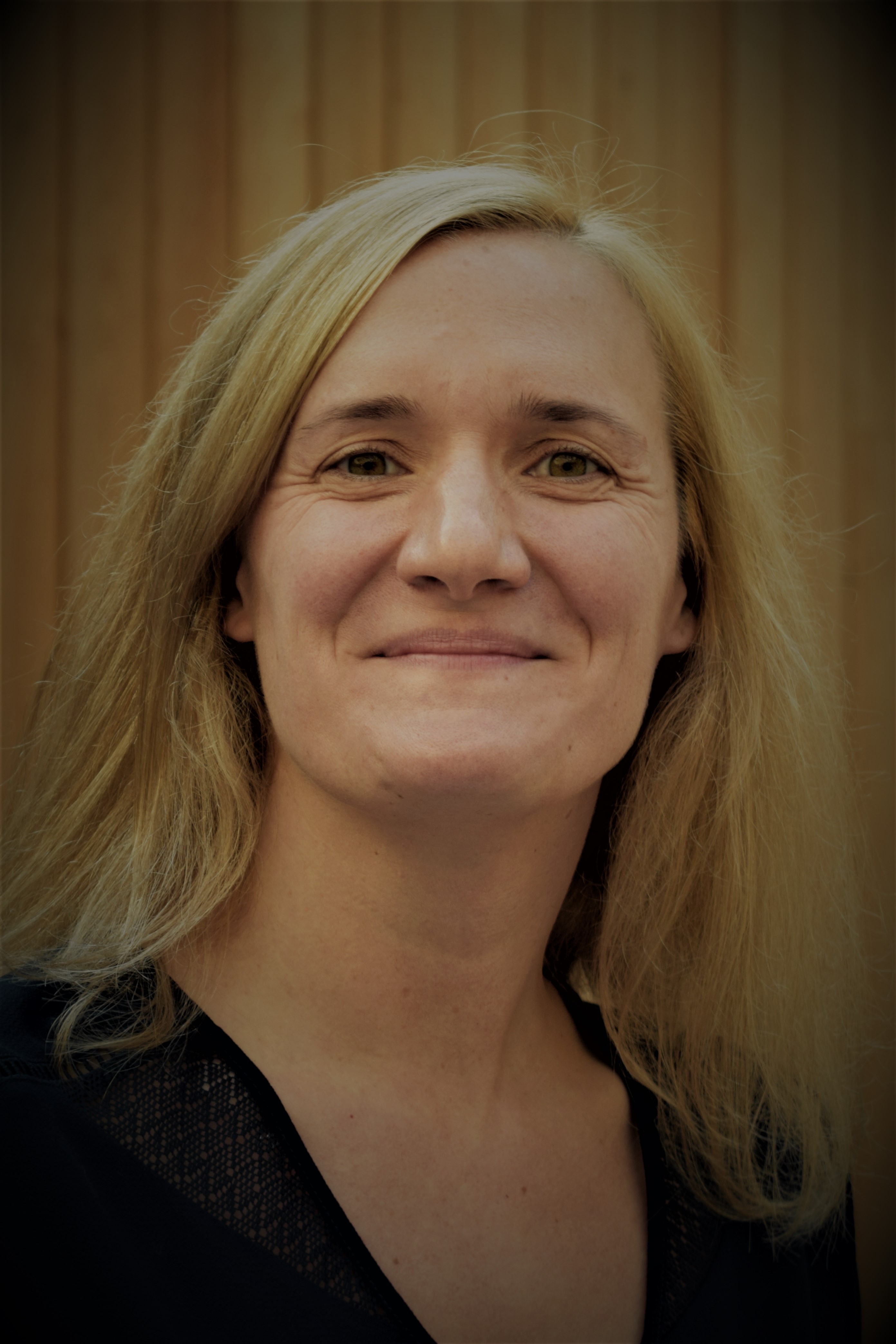
Prof. Peter Hertkorn is a full professor of Computer Science at Reutlingen University's Faculty of Computer Science, specializing in programming languages and databases. He holds leadership roles including Chair of the Examination Board for Media and Communication Informatics B.Sc. and BAföG Officer for the same program. His research focuses on model-driven software development, domain-specific languages, DevOps automation, interactive learning technologies, and distributed ledger technologies. He co-leads the Software Engineering and User Experience (swuxLAB) and Distributed Ledger Technologies (DLT-LAB) research groups. Education background includes a Diplom-Informatiker (master's equivalent) and Dr.-Ing. (PhD) from University of Stuttgart. Professional experience includes 5 years at T-Systems International GmbH and prior academic roles at University of Stuttgart. His teaching focuses on Software Engineering and Database Systems courses. Publications span interactive learning environments, collaborative innovation systems, and AR-based knowledge spaces. Active in academic service roles and interdisciplinary research collaborations since 2009.
Dr. Nan Liu is a Senior Lecturer in Real Estate at the University of Aberdeen Business School, where she has been a faculty member since 2012. She serves as Head of the Real Estate group and is actively involved in research and teaching. Her office is located in the Edward Wright Building, Dunbar Street, Aberdeen. Position: Senior Lecturer Institution: University of Aberdeen School: Business School Department: Real Estate Email: nan.liu@abdn.ac.uk Phone: +44 (0)1224 272211 Dr. Liu's research focuses on residential and commercial real estate, with a strong emphasis on sustainability and innovation. Her key interests include Environmental, Social, and Governance (ESG) factors in real estate, energy efficiency, flexible working spaces, tokenisation of real estate assets, investment behaviours, and governance of the built environment. She also explores urban studies and housing market dynamics, particularly in Scotland. Her recent publications (2025–2012) demonstrate a consistent focus on ESG in commercial real estate, green building premiums, flexible workspace tenancy, housing market transparency, and the impact of economic cycles on energy efficiency. She has published in top journals such as Urban Studies , Energy , Journal of Property Research , and International Review of Financial Analysis . Her work often combines empirical analysis with policy implications, especially in the context of sustainability and urban transition. Dr. Liu is actively involved in research funding and supervision. She currently supervises PhD students in real estate, including Fernanda Antunes, whose project focuses on coworking dynamics. She has secured research grants from the RICS Research Trust and the Carnegie Trust for Scottish Universities for projects on distributed ledgers in real estate and cladding issues in high-rise buildings, respectively. She teaches courses such as Land and Property Economics (PO2009), Principles of Property Valuation (PO2509), and Real Estate Research (BU5030), contributing to both undergraduate and postgraduate programs. Her academic leadership includes coordinating courses and guiding the Real Estate research group. Dr. Liu is affiliated with the Centre for Real Estate Research at the University of Aberdeen, which supports interdisciplinary research in property markets, sustainability, and urban development. She collaborates with colleagues such as Professor Hutchison and has co-authored multiple publications with researchers like Y. Zhao and D. Lo.
Hanna-Riikka Roine is an Associate Professor in Digital Culture at the University of Bergen, affiliated with the Department of Linguistic, Literary and Aesthetic Studies and the Center for Digital Narrative. Her research bridges digital media, narrative theory, and speculative fiction, with a focus on games, imagination, and democratic discourse. Her research interests include: Digital culture and computational media Narrative theory and worldbuilding Game studies, particularly narrative agency in video games Speculative fiction as a tool for imagining futures Transmediality and digital storytelling The role of fiction in democratic imagination Her recent publications explore narrative forms in social media, romance mechanics in games like Dragon Age , and the limits of narrativizing environmental systems. She investigates how digital technologies entangle with human imagination, especially in speculative contexts. Notable research projects include: CO-SPEC (Academy of Finland, 2020–2023): On human-computer entanglement in speculation Imagine, Democracy! (Kone Foundation, 2023–2026): On narrative fiction as a democratic imagination tool in Finland She has co-edited special issues and books on digital environments, games, and speculative fiction, demonstrating leadership in interdisciplinary scholarship. While no formal scientific awards are listed, her funded projects and editorial roles signify academic recognition. She has collaborated with researchers such as Laura Piippo, Esko Suoranta, and Susanna Lindberg, contributing to a vibrant research network. She has also developed innovative pedagogical methods, such as using Twine game jams for assessment in higher education. Her work is situated within a strong digital humanities framework, connecting literary theory with contemporary media and societal challenges.
Taehyung Kim is an Associate Professor at the University of Michigan-Dearborn in the Department of Electrical and Computer Engineering , College of Engineering and Computer Science. His research focuses on power electronics , motor drives , and electric/hybrid power systems for vehicles and aircraft , with an emphasis on renewable energy integration and fault-tolerant control . Education Ph.D., Electrical & Computer Engineering, Texas A&M University M.S., Electrical Engineering, Korea University B.S., Electrical Engineering, Korea University His research interests include energy conversion systems, power electronics for electric vehicles, evaluation and diagnosis of AC motors, and position sensorless control of permanent magnet motors. He leads the KIM Laboratory , which explores unmanned aerial vehicles (UAVs) , battery systems , and powertrain reliability . The 15 most recent articles (2024-2021) highlight his work on hybrid UAVs , fault detection algorithms , cost-effective converters , and powertrain optimization . These publications span power electronics , renewable energy integration , and electric propulsion systems , with applications in transportation electrification and industrial power systems . Scientific Awards NSF Mid Career Advancement Award, 2023 IEEE-IAS Prize Paper Award (2nd Place), 2012 Best Paper Award, IEEE Transportation Electrification Conference, 2021 Listed in "World Top 2% Scientists" (Stanford University, 2020-2024) Listed in Marquis Who’s Who in America Technical Program Co-Chair, 2009 IEEE Vehicle Power and Propulsion Conference Prof. Kim has advised numerous PhD and Master’s students , including Feng Zhou , Sreekanthreddy Chalapala , and Sahithya Parvathareddy . He has secured significant grants from the NSF , Department of Energy , and industry partners like Ford, focusing on smart monitoring , fault identification , and energy management for electrified systems. His lab’s facilities include advanced power electronics labs and hybrid powertrain testing environments .
Qiang Zhu is a Professor in the Department of Computer and Information Science at the University of Michigan-Dearborn, holding the William E. Stirton Professorship (2017–2024). He founded the Data Science/Management Research Laboratory and is affiliated with the Michigan Institute for Data Science (MIDAS). His research spans data science, data management, and machine learning. Ph.D., University of Waterloo M.S., McMaster University M.Eng., Southeast University B.S., Southeast University Research focuses on advanced data indexing, query optimization, and AI-driven data management, with applications in genomics, network systems, and education. His work integrates machine learning with database systems for scalable solutions. Recent publications include topics in federated learning fairness, digital twin middleware, project-based CS education, and genome data indexing. Scientific contributions recognized through awards like the Wilkes Award (2008), ACM Distinguished Scientist (2013), and Springer Nature Editor of Distinction (2025). 2013–2018: Department Chair NSF, IBM, and Ford grants Over 250 conference committee roles He directs the Data Science/Management Research Lab, focusing on collaborative projects in genome analytics and smart computing infrastructures.
Carsten Baum is an Associate Professor at the Department of Applied Mathematics and Computer Science, Technical University of Denmark, working within the Cybersecurity Engineering Center for Quantum Technologies. His research focuses on cryptography, particularly post-quantum security, secure multi-party computation, and quantum-resistant protocols. Primary Affiliation: Technical University of Denmark (DTU) Academic Rank: Associate Professor Research Centers: Cybersecurity Engineering Center for Quantum Technologies Research Interests: Carsten Baum specializes in cryptographic protocols, including zero-knowledge proofs, multi-signatures, and oblivious computation. His work addresses quantum computing threats to classical cryptography and develops resilient post-quantum solutions. Key areas include: Secure multi-party computation (MPC) Post-quantum key agreement Quantum computing's impact on cryptographic security Privacy-preserving technologies Hash function security analysis (e.g., SHA-3) Time-based cryptographic primitives Advising and Projects: As a main or co-supervisor, Baum mentors multiple PhD candidates in post-quantum cryptography and secure protocols. His projects include proactive post-quantum cryptography, quantum key agreement, and long-term security frameworks, reflecting collaborations with institutions across Europe and Asia. Recent Activities: Baum actively organizes and participates in Nordic cryptography workshops, including NordiCrypt Spring 2024 and 2023, fostering academic exchange in cryptographic research.
James O. Fiet is a Professor of Management and the Brown-Forman Chair in Entrepreneurship at the University of Louisville College of Business . His work bridges strategy and entrepreneurship , with over 175 publications and leadership roles in academia. Education : PhD in Entrepreneurship & Strategic Management (Texas A&M), MBA in Entrepreneurship (USC), BA in English (Brigham Young University) His research spans entrepreneurship theory , strategic management , and social enterprises , focusing on institutional logics, poverty alleviation, and time-space dynamics. Recent publications include Time, Space and Entrepreneurship (2021) and Poverty Alleviation and the Science of What's Possible (forthcoming 2022). Scientific recognition includes being ranked 5th most productive U.S. entrepreneurship researcher (2009) and 8th globally . He served as editor of Entrepreneurship Theory and Practice , the #2 cited business journal globally. Awards: Top 1% entrepreneurship researcher (2021), Top 2% scientist worldwide (2021), Emerald Certificate of Excellence (2017).
Manos Athanassoulis is an Associate Professor in the Department of Computer Science at the College of Arts and Sciences, Boston University. He is the Founder and Director of the BU Data-intensive Systems and Computing (DiSC) lab and a member of the BU MiDAS group. His research focuses on data systems, particularly cloud data management, hybrid transactional/analytical workloads, and integration with emerging hardware such as non-volatile memory and heterogeneous computing. His educational background includes a PhD from EPFL (2014), an MSc in Computer Systems Technology, and a BSc in Informatics and Telecommunications from the University of Athens, Greece. Prior to BU, he was a Postdoctoral Researcher and Research Associate at Harvard University, supported by a SNSF Postdoc Mobility Fellowship. His research interests span data systems, database architectures, LSM trees, indexing, storage systems, and performance optimization. He explores how novel hardware can be leveraged to improve data management efficiency and scalability, especially in cloud environments. His recent publications (2021–2025) predominantly focus on LSM trees, covering topics such as compaction policies, Bloom filter tuning, DPU offloading, adversarial resilience, and sustainable caching. Earlier works include foundational contributions on access methods (RUM Conjecture) and optimal key-value stores (Monkey). The trend shows a consistent focus on data system efficiency, adaptability, and robustness under varying workloads and hardware constraints. Scientific Awards: NSF CAREER Award (2022) Facebook Faculty Research Award (2020) NSF CRII Award (2019) Best of VLDB 2017 and Best of SIGMOD 2017 SIGMOD Most Reproducible Paper Award (2017) Multiple ACM SIGMOD Distinguished PC Member recognitions (2018–2025) VLDB 2023 Best Demo Award RedHat Collaboratory Research Incubation Awards (multiple, 2021–2023) SNSF Postdoc Mobility Fellowship (2015–16) IBM PhD Fellowship (2011–12) Dr. Athanassoulis has advised numerous students and collaborators, evident from his co-authorship on works with researchers such as Niv Dayan, Stratos Idreos, and A. Ailamaki. His grants include major awards from NSF, Facebook, and RedHat, supporting research in robust data systems, hardware-software co-design, and learned cost models. He has also been recognized for teaching excellence at Harvard University. He leads the DiSC lab at Boston University, which focuses on data-intensive computing and systems research. The lab explores next-generation data architectures, particularly in cloud and hardware-aware environments. Collaborations with the BU MiDAS group enhance interdisciplinary research in data science and AI.
Nikhil Bansal is a Professor in Theoretical Computer Science at the University of Michigan, Ann Arbor. He earned his PhD from Carnegie Mellon University and previously worked at IBM Research, TU Eindhoven, and CWI Amsterdam. His research focuses on algorithm design, discrepancy theory, and combinatorial optimization. Education: PhD, Carnegie Mellon University Bansal's work bridges classical and quantum computing, with recent publications exploring k -Forrelation, vector balancing, and stochastic scheduling. His algorithmic approaches often combine geometric insights and probabilistic methods. Scientific Awards: Patrick C. Fischer Professor of Theoretical Computer Science NSF Career Award (2023) He has advised numerous PhD and postdoctoral researchers, including Marek Elias, Shashwat Garg, and Makrand Sinha. Bansal actively contributes to program committees (ICALP 2021, STOC 2020, FOCS 2018) and organizes workshops on discrepancy theory and optimization.
Nele Mentens is a full professor at both KU Leuven and Leiden University, where she leads cutting-edge research in applied cryptography, hardware security, and secure embedded systems. At KU Leuven, she is affiliated with the Faculty of Engineering Technology and the Electrical Engineering Department (ESAT), leading the Emerging Technologies, Systems & Security (ES&S) research group at the Diepenbeek campus. Simultaneously, she holds a full professorship at Leiden University’s Leiden Institute of Advanced Computer Science (LIACS), focusing on applied cryptography and security. She has been instrumental in numerous national and international research initiatives, including Horizon Europe and NWO-funded projects. Full Professor, KU Leuven (since 2023) Full Professor, Leiden University (since 2020) Associate Professor, KU Leuven (2014–2023) Post-doctoral Researcher & Lecturer, KHLim / KU Leuven (2007–2014) Ph.D. in Engineering Science, KU Leuven (2007) M.Sc. in Electrical Engineering, KU Leuven (2003) Her research focuses on secure and efficient hardware design, particularly for cryptographic applications on FPGAs, reconfigurable architectures, IoT security, and neuromorphic computing. She explores physical attack resistance, side-channel analysis protection, and trusted computing architectures, with applications in healthcare, industrial monitoring, and endpoint AI. Her work bridges theoretical cryptography with practical hardware implementations, emphasizing energy efficiency and real-time performance. The 15 most recent publications reflect a strong trend toward secure, energy-efficient, and intelligent embedded systems. Topics include neuromorphic AI accelerators, trusted IoT architectures, dynamic reconfiguration for side-channel protection, and secure medical data processing. These works span disciplines such as computer architecture, cybersecurity, digital design, and embedded systems, with a focus on hardware-software co-design and real-world deployment. Nele Mentens has received recognition for her contributions, including: Best Paper Award, DATE'16 Best Paper Nomination, AsianHOST'17 Best Paper Award, CHES'19 She has supervised over 15 Ph.D. students and post-docs, both current and former, and has served as principal investigator in approximately 25 funded research projects. Her work has attracted significant grants from Horizon Europe, NWO, FWO, and national innovation programs. She actively contributes to the academic community through editorial roles in top journals and leadership in major conferences. Nele Mentens leads the ES&S research group at KU Leuven and collaborates closely with LIACS at Leiden University. Her team includes Ph.D. students, post-docs, and research experts working on projects like NimbleAI, NeuroSoC, and TrustedIoT. She has also established secure electronics labs through infrastructure grants and maintains strong international ties with institutions such as EPFL, Ruhr University Bochum, and ETH Zurich.
Hatem Abou-Zeid is an Assistant Professor at the Department of Electrical and Software Engineering in the Schulich School of Engineering , University of Calgary. He holds Adjunct Professor appointments at Queen’s University, Carleton University, and Ontario Tech University, Canada. With a Ph.D. in Electrical and Computer Engineering from Queen’s University (2014), his academic journey includes 7 years of industry research at Ericsson and Cisco , where he led R&D projects resulting in 15+ patents. Queen's University (Ph.D., Electrical and Computer Engineering) Arab Academy for Science, Technology and Maritime Transport (B.Sc. and M.Sc., Electronics and Communications Engineering) His research focuses on 5G/6G wireless networking , immersive communications , and robust machine learning for networks. Recent projects explore trustworthy AI , joint sensing and communication , and pediatric brain-computer interfaces (BCI) . He has published extensively in top venues like IEEE JSAC , GLOBECOM , and IEEE Transactions on Networking , with over 60 publications and 19 patent filings. His scientific awards include the Research Excellence Award 2023 (UCalgary), Early Research Excellence Award 2023 (Schulich), and Best Paper Awards at EMBC 2024 (as advisor) and IEEE ICC 2022 . He leads the WAVES Research Group , mentoring 10+ graduate students and postdocs. Collaborations span institutions like the Hotchkiss Brain Institute and industry partners such as Ericsson and European Space Agency .
Mingyi Hong is an Associate Professor in the Department of Electrical and Computer Engineering at the University of Minnesota , where he leads the OptimAI-Lab . His work bridges optimization theory , machine learning , and signal processing , with a focus on foundation models like LLMs and diffusion models. Education : Not explicitly mentioned in the text Current Projects : NSF grants on bilevel optimization, LLM unlearning, and inverse reinforcement learning Research Themes : Bilevel Optimization : Applications in LLM alignment, unlearning, and wireless systems LLM Safety : Unlearning, alignment with human feedback, robustness Diffusion Models : Inference-time alignment, adversarial training Distributed Optimization : Privacy-preserving algorithms, federated learning Recent Publications highlight trends in LLM unlearning (BLUR, LUME), optimization theory (Barrier Functions, νSAM), and diffusion models (Direct Noise Optimization). His group has secured NSF , AWS , Cisco , and Open Philanthropy grants. Scientific Recognition : IEEE Fellow (2025) SPS Best Paper Award (2022, 2021, 2018) Doctoral Dissertation Fellowship (2024) IBM Pat Goldberg Memorial Award (2022) He mentors PhD students like Siliang Zeng and Xinwei Zhang , and collaborates with institutions including Michigan State University , Amazon , and NIH on projects spanning UHF MRI technology to climate-smart agriculture .
Alexis Dowhuszko is a Researcher in the Department of Information and Communications Engineering at Aalto University, Espoo, Finland. Current research focuses on 6G networks, optical wireless communications, and mobile network optimization through active participation in EU-funded projects including FOCAL (as Principal Investigator), 6G-LEADER, 6GARROW, Cloudify-6G, and WALLPAPER. Educational background: Doctor of Engineering Sciences, Argentine university, 2010 Research expertise spans Visible Light Communication, 6G Networks, and Internet of Things, addressing critical challenges in Quality of Service, Integrated Access and Backhaul, and mmWave communications for urban environments. Work contributes to UN Sustainable Development Goals through sustainable wireless technology development. 2025 publications reveal strong trends in optical wireless integration for backhauling, AI-driven network optimization, and QoE-centric resource management. Key themes include IAB relaying strategies, experimental VLC implementations, and performance evaluation in dense urban deployments across next-generation mobile networks. Dowhuszko has supervised 4 theses and leads multiple research initiatives: FOCAL: Free-space Optical Communications for 6G Aerial-satellite networks (2024-2028) 6G-LEADER: LEArning-Driven and Evolved Radio for 6G Communication Systems (2025-2027) 6GARROW: 6G Ai-native integRated Ran-cOre netWorks (2025-2027) Cloudify-6G: 6G Data-driven Distributed Cloud and Communication System (2023-2026) WALLPAPER: Intelligent wallpaper for sustainable wireless systems (2023-2025) As a core member of the Risto Wichman Group, Dowhuszko collaborates on cutting-edge 6G research and contributes to media-featured projects including LED-based indoor navigation systems and personal radar development.
Jaboury Ghazoul serves as Full Professor of Ecosystem Management at ETH Zurich's Department of Environmental Systems Science since October 2005, holding a concurrent Prince Bernhard Chair of International Nature Conservation at Utrecht University since 2015. His academic journey spans from PhD studies at University of St Andrews to faculty positions at Imperial College London (1998-2005), with extensive fieldwork across tropical regions including Vietnam and Thailand. His educational background includes a 1993 PhD in evolutionary ecology of wasps from University of St Andrews under Prof. Pat Willmer, preceded by biodiversity survey work with Vietnam's Ministry of Forestry (1993-1994) and postdoctoral research at London's Natural History Museum (1995-1998). Ghazoul's research centers on plant reproductive processes in natural and human-altered environments, with three interconnected pillars: Pollination ecology - examining bee behavior and coffee fruit set dynamics in tropical agroforestry systems Forest conservation - investigating landscape fragmentation impacts on tree reproduction and genetic diversity Ecosystem services - quantifying climate and pest-driven shifts in agricultural systems while assessing carbon storage implications His work uniquely bridges molecular genetics, landscape ecology, and human livelihoods in tropical settings. Publications reveal a consistent focus on tropical ecosystems (70%), pollination networks (60%), and human-environment interactions (50%), with growing emphasis on climate change impacts since 2012. Key methodological approaches include field experiments across landscape mosaics, genetic analysis of fragmented populations, and interdisciplinary assessment of ecosystem services. Major recognitions include: ETH Zurich Golden Owl Teaching Award (2011) ATBC Award for Excellent Service (2013) President of Association of Tropical Biology and Conservation (2015) Prince Bernhard Chair appointment (2015) UK Forest Commission Expert Committee membership (2014) Ghazoul has supervised numerous doctoral students through ETH Zurich's environmental programs and secured significant research funding from CIFOR, WWF Netherlands (supporting his Utrecht chair), and Swiss National Science Foundation. His editorial leadership as Biotropica Editor-in-Chief (2006-2013) shaped tropical ecology discourse globally. Current projects integrate coffee agroforestry systems with forest conservation in Southeast Asia, supported by interdisciplinary grants examining climate-resilient agricultural landscapes. He maintains active field research in the Seychelles (evidenced by 'Working hard in the Seychelles' reference) and collaborates with institutions including CIFOR, UK Forest Commission, and Utrecht University's conservation programs. His lab focuses on tropical tree reproductive ecology using molecular tools combined with landscape-scale field studies.
Norbert Krupp is a researcher at the Max Planck Institute for Solar System Research, focusing on planetary science. His work involves studying plasma processes in planetary magnetospheres, particularly those of Jupiter and Saturn, including radiation belts, auroral processes, and moon interactions. His research primarily utilizes in-situ spacecraft data and hybrid/MHD simulations. Key projects include roles as Principal Investigator for ULYSSES-EPAC and Co-Investigator for multiple instruments on missions like CASSINI, MARS EXPRESS, and JUICE. Scientific Awards: Appointed as COSPAR German Delegate Selected as JUICE Interdisciplinary Scientist Krupp has contributed extensively to understanding magnetospheric dynamics, with publications spanning topics such as Saturn's moon interactions (2020), Jupiter's magnetotail (2015), and comparative studies of giant magnetospheres (2014). His work bridges observational data with computational modeling.