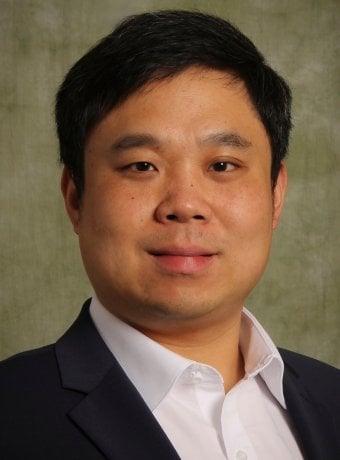
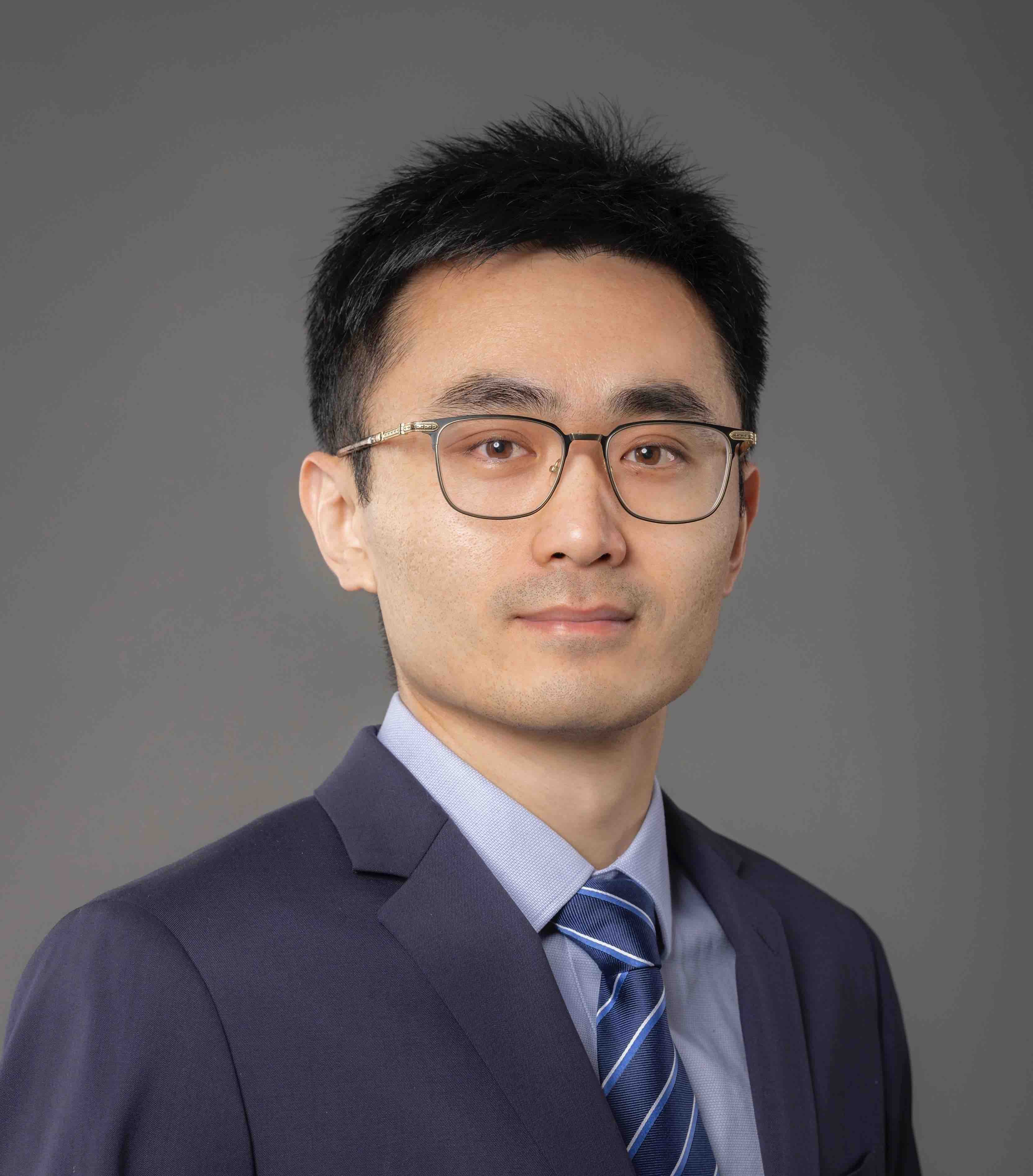
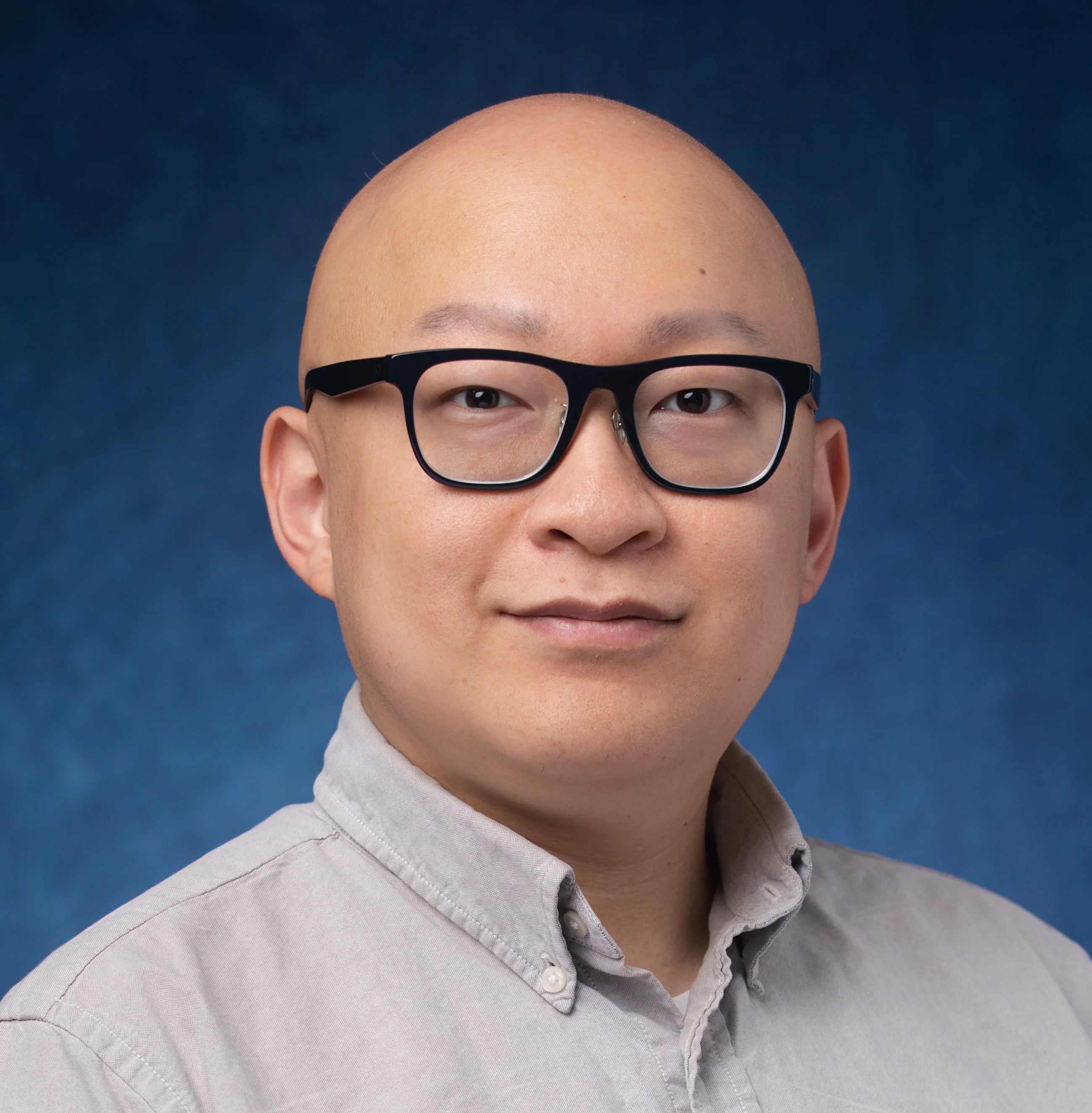
Ronghua Xu is an Assistant Professor at the Department of Applied Computing, Michigan Technological University, specializing in blockchain, IoT, and edge computing. He is a member of the ICC Center for Cybersecurity. Ph.D. (2023), M.S. (2018) in Electrical and Computer Engineering, Binghamton University M.S. (2010) in Mechanical and Electrical Engineering, Nanjing University of Aeronautics & Astronautics B.S. (2007) in Mechanical Engineering, Nanjing University of Science & Technology His research focuses on decentralized security networks, NextG network intelligence, and blockchain applications in IoT systems. Key themes include scalability, interoperability, and resilience in smart vehicular and urban air mobility networks. Recent publications highlight blockchain-enabled architectures for secure data access, federated learning, and edge resource management. Awards include the Graduate Student Excellence Award (2023) and ICC Rapid Seeding Awards (2024). Ronghua Xu actively seeks self-motivated Ph.D. students for his research group. He previously worked at Siemens (2010–2016) on software development and system integration.
Sofie Haesaert is an Assistant Professor in the Control Systems group at the Department of Electrical Engineering, Eindhoven University of Technology. Her work focuses on formal verification and control synthesis methods for cyber-physical systems, particularly through stochastic simulation relations and temporal logic specifications. Education: BSc (cum laude) and MSc (cum laude) in Mechanical Engineering and Systems & Control from Delft University of Technology; PhD from Eindhoven University of Technology (2017) Experience: Postdoctoral researcher at Caltech (2017-2018), then returned to TU/e as Assistant Professor Her research interests include: Cyber-physical systems verification Stochastic control methods Temporal logic specification Markov decision processes Formal methods in control engineering Model abstractions and simulation relations Recent publications show strong focus on: Stochastic temporal logic control Robust and risk-aware control Multi-agent system verification Formal synthesis via simulation relations AI integration in control systems Software tools for formal control Scientific achievements: Veni Grant recipient (2020) Co-developer of the SySCoRe toolset for stochastic control synthesis Contributor to formal verification benchmarks through ARCH-COMP reports She contributes to education through courses on: Control principles for engineered systems Control challenges in autonomous racing Supervisory control of cyber-physical systems Haesaert collaborates across disciplines including computer science, applied mathematics, and robotics, with over 750 citations and significant contributions to formal control theory for stochastic systems. Her work bridges theoretical developments with practical applications in autonomous systems and complex control architectures.
Payam Barnaghi is a Professor and Chair in Machine Intelligence Applied to Medicine at Imperial College London's Department of Brain Sciences, part of the Faculty of Medicine. He holds multiple leadership roles, including Co-Director of the School of Convergence Science in Human and Artificial Intelligence and Deputy Head of Neurology. His research focuses on AI-driven healthcare solutions, particularly in neurosciences and dementia care. He leads the Translational Machine Intelligence group at the UK Dementia Research Institute (UK DRI) and is a Visiting Professor at University College London's Institute of Child Health. His affiliations include the NVIDIA Deep Learning Institute, the British Heart Foundation Centre for Research Excellence, and the UK DRI Care and Research Technology Centre. He has received awards such as the Wellcome Trust Mental Health Ideathon Award (2023) and the IEEE Outstanding Leadership Award (2017). His work emphasizes remote patient monitoring, digital biomarkers, and explainable AI for early health event detection. Key projects include the TIHM (Technology Integrated Health Management) initiative for dementia care, leveraging wearable sensors and machine learning. He contributes to interdisciplinary efforts in smart care ethics and has published extensively on topics like neural network applications, healthcare data analysis, and clinical decision support systems.
Jon Wakefield is a Professor in the Department of Biostatistics at the University of Washington's School of Public Health, with additional appointments in the Department of Statistics. He maintains affiliations with the Fred Hutchinson Cancer Research Center, the Center for Statistics and the Social Sciences, and serves on technical advisory groups for the World Health Organization and United Nations on mortality assessment, child mortality estimation, stillbirths, and pre-term births. Wakefield's research focuses on spatial epidemiology, spatial demography, and small area estimation, with particular emphasis on estimating under-5 mortality in low and medium income countries. His work integrates hierarchical models for survey data, space-time models for infectious disease data, and ecological inference methods for both infectious and non-infectious disease contexts. He has made significant contributions to understanding the links between Bayesian and frequentist statistical procedures, developing innovative methods for spatial modeling and disease burden estimation. His publication record shows a strong focus on methodological development with practical applications in global health, particularly in mortality estimation, infectious disease modeling, and demographic analysis. Recent work has addressed critical issues in pandemic response, including excess mortality estimation during the COVID-19 pandemic and seroprevalence studies. His research increasingly incorporates advanced computational methods, including Template Model Builder and integrated nested Laplace approximations for spatial modeling. Fellow, American Statistical Association (2007) Guy Medal in Bronze, Royal Statistical Society (2000) Member of the National Academies of Sciences, Engineering and Medicine Wakefield leads significant research initiatives funded by NIH/NCI and NIH/NIAID, including projects on spatio-temporal epidemiology and statistical issues in AIDS research. He has developed influential software tools including SUMMER, surveyPrev, and SAE4Health, which enable sophisticated small area estimation and spatial analysis for public health applications. His work with WHO and UN technical advisory groups demonstrates the real-world impact of his methodological contributions to global health measurement.
Keith Decker is an Associate Professor and JPMorgan Chase Fellow in the Department of Computer and Information Sciences at the University of Delaware's College of Engineering. He holds multiple affiliated faculty positions at the Artificial Intelligence Center of Excellence, Data Science Institute, Center for Bioinformatics and Computational Biology, and Institute for Financial Service Analytics. His research spans several key areas of computer science with a focus on Multi-Agent Systems , Distributed Artificial Intelligence , Computational Organization Design , and Bioinformatics . His work bridges theoretical foundations with practical applications in finance, healthcare, and information systems. Dr. Decker's publications reflect trends in distributed AI with emphasis on coordination technologies, agent communication, and information gathering systems. His work has evolved from foundational multi-agent coordination theory to applications in bioinformatics, financial services, and health informatics. DARPA special recognition award for foundational research in coordination technologies Dr. Decker has advised numerous graduate students and led significant research projects including automated genetic annotation, coalition management for electric vehicle-to-grid power systems, and machine learning for automated health coaching. His interdisciplinary work demonstrates strong connections between theoretical AI research and practical applications across multiple domains. He maintains active leadership roles in the academic community, having served as program co-chair for the International Conference on Autonomous Agents and Multi-Agent Systems and other major AI workshops.
Yan Huang is an Associate Professor in the Department of Software Engineering and Game Development at Kennesaw State University (KSU). His work bridges Federated Learning (FL) and Cybersecurity Education , with a focus on personalization and privacy in distributed systems. Research spans Machine Learning , Extended Reality (XR) , and Data Privacy . He has served as Editor of WCMC and Program Co-Chair for CyberSciTech 2020-2024. Research Trends: Recent publications emphasize Federated Learning for non-IID data, VR-based Cybersecurity Education , and Privacy-Preserving Algorithms in IoT and social media analytics. Key subfields include personalized learning architectures, graph learning, and game-theoretic privacy frameworks. Scientific Awards: Excellent Paper Award (Tsinghua Science and Technology, 2021) Best Paper Award (Future Generation Computer Systems, 2019) Best Paper Awards at IEEE SmartWorld 2021, COCOA 2019, and WASA 2019 Grants: Led over $600,000 in NSF and NSA-funded projects, including VR cybersecurity education for K-12 and XR engineering curricula. His lab recruits VR/AR Research Assistants via industry partnerships.
Fabrizio Lombardi is the ITC Endowed Professor at Northeastern University's Department of Electrical and Computer Engineering, part of the College of Engineering. He previously held faculty positions at Texas Tech University, University of Colorado-Boulder, and Texas A&M University. He earned his B.Sc. from the University of Essex (1977), M.Sc. and Ph.D. from the University of London (1982). His research focuses on fault-tolerant computing, VLSI CAD, quantum computing, and configurable computing systems. He has led major projects like the NSF-funded Neural-Network-based Stochastic Computing Architectures for Machine Learning . He holds leadership roles including President of the IEEE Nanotechnology Council (2022-2023), IEEE Computer Society Vice President (2021), and IEEE PSPB member. His 200+ publications span IEEE Transactions on Computers, Nanotechnology, and Design & Test. Awards include IEEE Fellow, Søren Buus Outstanding Research Award, and multiple research fellowships. His work bridges theory and application, emphasizing defect-tolerant nanosystems and energy-efficient computing hardware. Recent innovations include approximate computing methodologies and secure PUF-based hardware designs.
Tasos Dagiuklas is a Professor in the Department of Computer Science and Technology within the School of Engineering and Technology at the University of Bedfordshire. With over 168 publications spanning from 1995 to 2025, he has established himself as a leading researcher in telecommunications and network systems. His extensive publication record demonstrates continuous scholarly contribution across multiple decades in the field. Professor Dagiuklas' research focuses on wireless communications, edge computing, 5G/6G networks, quality of experience (QoE), and federated learning . His work bridges theoretical networking concepts with practical applications, particularly in multimedia delivery and security. He has developed significant expertise in video streaming optimization, network security mechanisms, and resource management in emerging network architectures. His research consistently addresses the evolving challenges of modern communication systems, with recent work increasingly focusing on AI integration in networking. Analysis of his recent publications (2023-2025) reveals a strong trend toward edge computing, federated learning, and security applications in next-generation networks. His work demonstrates a strategic shift from traditional networking concerns to more complex systems involving AI integration, energy efficiency, and heterogeneous environments. The publications show consistent collaboration with researchers across multiple institutions, with particularly strong partnerships with Muddesar Iqbal, Ilias Politis, and Stavros Kotsopoulos. Professor Dagiuklas has made substantial contributions to the academic community through his extensive publication record in high-impact venues including IEEE journals and conferences. His work has evolved from foundational networking research to cutting-edge investigations of AI-enhanced communication systems, reflecting the broader trajectory of the field itself. His research demonstrates both technical depth in specific networking challenges and breadth across multiple application domains.
Jeeseop Kim is an Assistant Professor in the Department of Aerospace and Mechanical Engineering at The University of Texas at El Paso (UTEP), College of Engineering, specializing in robotics, autonomy, and control theory. His research focuses on safety-critical planning and control, with emphasis on bipedal/quadrupedal locomotion, hybrid dynamical system control, and whole-body planning and control. Education: B.S. in Mechanical and Aerospace Engineering, Seoul National University (2014) M.S. in Intelligence and Information (Robotics), Seoul National University (2017) Ph.D. in Mechanical Engineering, Virginia Tech (2022) Postdoctoral Scholar, Mechanical and Civil Engineering, Caltech (2022–2025) His research spans safety-critical control systems for legged robots, including obstacle-aware nonlinear model predictive control (MPC), control barrier functions, and distributed coordination algorithms. Recent work explores adaptive delay estimation, tactile sensing for robotic grasping, and hardware-software co-design for humanoid robots. Key article trends highlight advancements in autonomous inspection robotics, hybrid control architectures, and real-time planning for quadrupedal systems. His work integrates control theory with practical applications in industrial and healthcare domains. Awards: ASME DSCD Rudolf Kalman Best Paper Award (2022) IEEE ICRA Outstanding Paper Award (2023) Jeeseop teaches MECH 4332: Mechanical Computational Applications in Vision and Robotics (Fall 2025). He actively recruits Ph.D. students for Spring/Fall 2026 and seeks motivated undergraduates/MS students with skills in robotics kinematics, programming (C/C++, Python, MATLAB), and CAD design. The AIGIS Lab welcomes applicants with interests in robotics, controls, and autonomous systems.
Andrew O. Arnold is a Principal Applied Machine Learning Engineer at Shopify and an Adjunct Professor at New York University's Tandon School of Engineering, Department of Finance and Risk Engineering. He earned his Ph.D. in Machine Learning from Carnegie Mellon University and a BA in Computer Science and Artificial Intelligence from Columbia University. Education Ph.D., Machine Learning, Carnegie Mellon University BA, Computer Science and Artificial Intelligence, Columbia University His research focuses on robust machine learning , developing models that perform well in low signal-to-noise regimes, handle distributional shifts (transfer learning), and extract features from unstructured data. Key applications include time series analysis and natural language processing in financial and other domains. Recent publications highlight work on large language models (LLMs) for code generation, including multitask pretraining, contrastive learning, and quantization techniques for efficiency. He has contributed to understanding model robustness and adapting NLP methods to dynamic market conditions. Arnold teaches NYU FRE GY 7871: News Analytics and Machine Learning , covering NLP and ML techniques for quantitative trading strategies. The course emphasizes practical applications of sentiment analysis, text relevance, and novelty detection in financial contexts. He has led teams at Amazon Web Services (AI Labs), served as Chief Scientist at Oracle Alpha, and worked at Microsoft Research, IBM Research, and other institutions. His technical expertise spans code generation , anomaly detection , and NLP for commerce , with patents in these areas.
Bo An is a President's Chair Professor and Head of the Division of Artificial Intelligence at the College of Computing and Data Science , Nanyang Technological University, Singapore . He also holds a courtesy appointment as Professor at the School of Physical & Mathematical Sciences and serves as Director of the Centre of AI-for-X. Previously, he was a Nanyang Assistant Professor (2014-2018), Associate Professor at the Chinese Academy of Sciences (2012-2013), and Postdoctoral Researcher at the University of Southern California (2010-2012). His academic journey began with B.Sc. and M.Sc. degrees from Chongqing University, followed by a Ph.D. in Computer Science from the University of Massachusetts, Amherst (advised by Victor Lesser). Research Interests : Artificial Intelligence Multiagent Systems Computational Game Theory Reinforcement Learning Automated Negotiation Optimization Research Impact : Applications in infrastructure security (deployed by US Coast Guard and Federal Air Marshals), e-commerce, sensor networks, and financial technology. Over 150 publications in top venues like AAMAS, IJCAI, AAAI, ICML, NeurIPS, KDD, and ACM/IEEE Transactions. Scientific Recognition : 2010 IFAAMAS Victor Lesser Distinguished Dissertation Award 2012 INFORMS Wagner Prize 2018 & 2022 Nanyang Research Awards 2017 Microsoft Collaborative AI Challenge IEEE Intelligent Systems 'AI's 10 to Watch' (2018) Leadership Roles : Editor-in-Chief of IEEE Intelligent Systems, Associate Editor for AIJ, JAAMAS, and ACM Transactions. Served as General Co-Chair for AAMAS'23 and Program Chair for IJCAI'27.
Om P. Damani is a Professor in the Department of Computer Science and Engineering at Indian Institute of Technology Bombay. He serves as Faculty In-Charge of the Sustainable Development unit of the Center for Policy Studies and is also associated with the Centre for Technology Alternatives for Rural Areas (CTARA). His work bridges computer science with social development challenges, focusing on practical applications for rural communities. Dr. Damani's research interests span Technology for Development of the bottom 80%, System Dynamics: Modeling and Simulation for Social Development, System Architecture, and Data Science. His work demonstrates how computational approaches can address complex development challenges through projects like GramDrishti (for detecting rural infrastructure in satellite images), JalTantra (for optimizing water distribution networks), and FAI (Farm Assessment Index for holistic farming practice evaluation). His publications reveal a consistent focus on applying computer science to solve real-world problems in water management, agricultural systems, and rural infrastructure. His research has been recognized with significant awards including the IIT Bombay Industrial Impact Award 2010, IIT Bombay Impactful Research Award 2019, and Best Poster Award at Agriculture Science Congress 2017. Dr. Damani has successfully translated theoretical research into practical tools that address development challenges, particularly in water resource management and agricultural systems. As an educator, he has mentored numerous PhD students including Chintan Tundia, Shreenivas Kunte, Nikhil Hooda, Sivamuthu Prakash Murugan, Dipak L. Chaudhari, Prateek Kapadia, and Manoj K. Chinnakotla. His teaching portfolio includes courses on System Dynamics: Modeling and Simulation for Development (CS 752), Program Derivation (CS 420), and ICT for Development. Dr. Damani's educational background includes a Ph.D. in Computer Sciences from the University of Texas at Austin (1994-1999), B.Tech. in Computer Science and Engineering from IIT Kanpur (1990-1994), and prior professional experience at IBM T J Watson Research Lab and Akamai Technologies.
Hao Yang is an Assistant Professor in the Department of Civil and Systems Engineering at Johns Hopkins University, with dual affiliations at the Johns Hopkins Data Science and AI Institute and the Johns Hopkins Institute for Assured Autonomy. His research develops Trustworthy Machine Learning methods to enhance urban mobility systems, focusing on traffic safety, equity, and sustainability through ethical AI and human-machine cooperative systems. Yang earned dual bachelor's degrees in Electrical and Computer Engineering from Beijing University of Posts and Telecommunications and the University of London, followed by a Ph.D. in Civil Engineering (Transportation) from the University of Washington. His educational background bridges telecommunications, electrical engineering, and transportation systems. His research integrates spatio-temporal modeling, assured autonomous systems, and multimodal representation learning to address transportation equity and safety. Key projects include edge-AI-powered traffic surveillance, real-time crash identification, and cooperative signal assistance for vulnerable road users. His work emphasizes ethical AI deployment in cyber-physical infrastructure to create sustainable urban mobility solutions. Recent publications reveal a strategic shift toward large language models and multimodal AI for transportation challenges, with strong emphasis on explainability, reliability, and equity in traffic crash prediction, flow forecasting, and autonomous driving systems. This evolution demonstrates his commitment to adapting cutting-edge AI for real-world transportation problems. Yang's scientific contributions have earned significant recognition: Michael Kyte Outstanding Student of the Year Award (2022) High-Value Research Award from AASHTO (2022) Best Paper Award from TRB Information Systems Committee (2023) Best and Outstanding Dissertation Awards (2024) IEEE DTPI Outstanding Paper Award (2022) TRANSFOR22 Data Competition 2nd place (2022) ASCE Bridges Photo Contest First Place (2021) He actively mentors graduate researchers and seeks 2-3 PhD students for Fall 2025 to advance trustworthy AI in transportation. His research is supported by NSF, USDOT, and AASHTO grants including the Real-Time Truck Parking Information System project that received the High-Value Research Award. Current work focuses on edge-AI for traffic safety and multimodal data integration. Yang leads research within Johns Hopkins' Data Science and AI Institute and Institute for Assured Autonomy, collaborating with Transportation Research Board committees. His lab develops real-time perception systems using edge computing and representation learning, with active projects on non-motorized user safety and equitable traffic management for people with disabilities.
Ntzoufras Ioannis is a Professor in the Department of Statistics at the Athens University of Economics and Business (AUEB), School of Information Sciences and Technology, where he has served continuously since 2004 (promoted to Professor in 2015). Previously, he held teaching positions at the University of the Aegean (2000-2004) and completed military service (1999-2000). Education B.Sc. in Statistics and Insurance Science (1994) M.Sc. in Statistics with Application in Medicine, University of Southampton (1995, with distinction) Ph.D. in Statistics, Athens University of Economics and Business (1999) Research Focus His work centers on Bayesian and computational statistics , specializing in categorical data analysis, statistical modeling, and variable selection methodology. He develops sophisticated models for applications in medical research (clinical trials, risk estimation), psychometrics (latent variable models), and sports analytics (football/basketball modeling), with emphasis on computational efficiency and real-world implementation. Publication Trends Recent publications (2023-2025) reveal three dominant trends: (1) Advanced Bayesian variable selection methods for high-dimensional data, (2) Sports analytics applications in football (goal modeling, competitive balance) and basketball (in-play performance), and (3) Development of specialized R packages (ssifs, PEPBVS) for statistical computation. His work consistently bridges theoretical innovation with practical domain applications. Scientific Awards Lefkopouleion Prize for Greece's best statistics thesis (1999-2000) PROSE Award Honorable Mention for 'Bayesian Modeling Using WinBUGS' (2010) Academic Leadership He has supervised graduate students across AUEB's Statistics, Business Analytics, and Data Science programs, and taught postgraduate courses at the University of Athens (Biostatistics), University of the Aegean (Business Administration), and Italian institutions (University of Pavia, Universita Cattolica, University of Bicocca-Milan). As General Secretary of the Greek Statistical Institute (2006-2007), he advanced national statistical initiatives. Research Community He founded and maintains grstats (http://grstats.forumotion.net/), Greece's primary online statistics community, facilitating collaboration among 1,200+ statisticians and data scientists through forums, workshops, and resource sharing.
Dr. Sameer Mulani is an Associate Professor, Associate Department Head, and Director of Graduate Programs in the Department of Aerospace Engineering and Mechanics at the University of Alabama's College of Engineering. He leads the Stochastic Mechanics and Multi-Disciplinary Optimization Laboratory (SMO Lab) and is an integral part of the Remote Sensing Center and Alabama Materials Institute. Dr. Mulani's research spans uncertainty quantification, random vibrations, multi-disciplinary optimization, and composite structures' multi-scale analysis and design. His work combines computational methods with machine learning to develop innovative solutions for aerospace engineering challenges. He has made significant contributions to self-healing composite materials, uncertainty quantification techniques, and optimization of composite structures. His research group has published extensively on topics including polynomial chaos expansion for uncertainty quantification, self-healing composites, stochastic buckling analysis, and machine learning applications in structural mechanics. The publications demonstrate a strong trend toward integrating probabilistic methods with traditional engineering analysis to improve reliability and safety of aerospace structures. AIAA Associate Fellow, Class of 2025 2025 Department of the Air Force Summer Faculty Fellowship Program 2024 Department of the Air Force Summer Faculty Fellowship Program MSC Software Contest Winner (2011) Night on the Town: General Electric Award (2007) DAAD Fellowship (1999-2000) Dr. Mulani has advised numerous graduate students who have gone on to successful careers at institutions including Los Alamos National Laboratory, Cirrus Aircraft, L3Harris, and Lockheed-Martin. His lab collaborates with various research centers including the Remote Sensing Center where they work on antenna design, manufacturing, and integration for aircraft systems. The SMO Lab utilizes advanced software including MSC NASTRAN/PATRAN, ANSYS Mechanical/FLUENT, ABAQUS, SOLIDWORKS, and CATIA for their simulations and analyses.