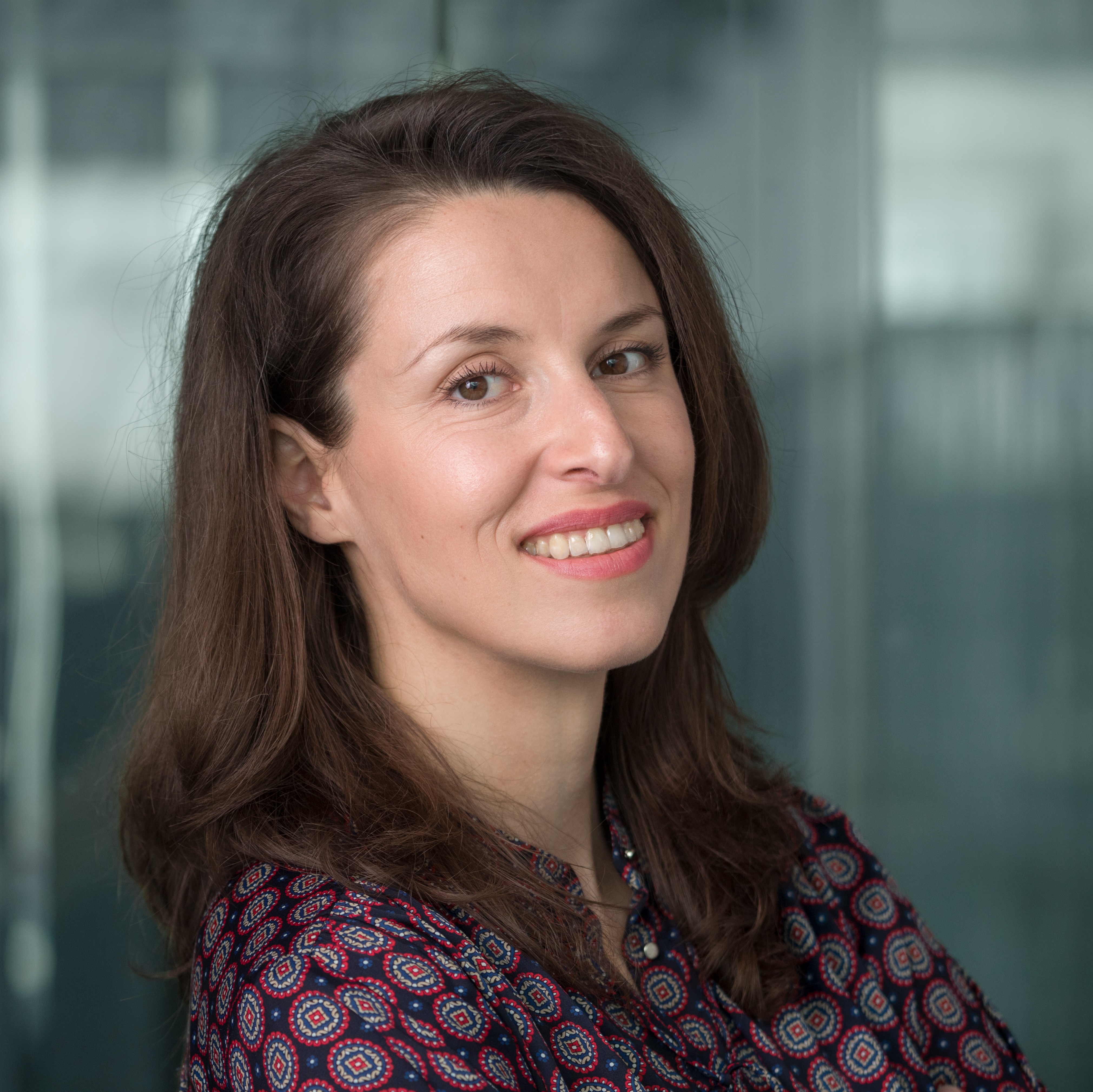
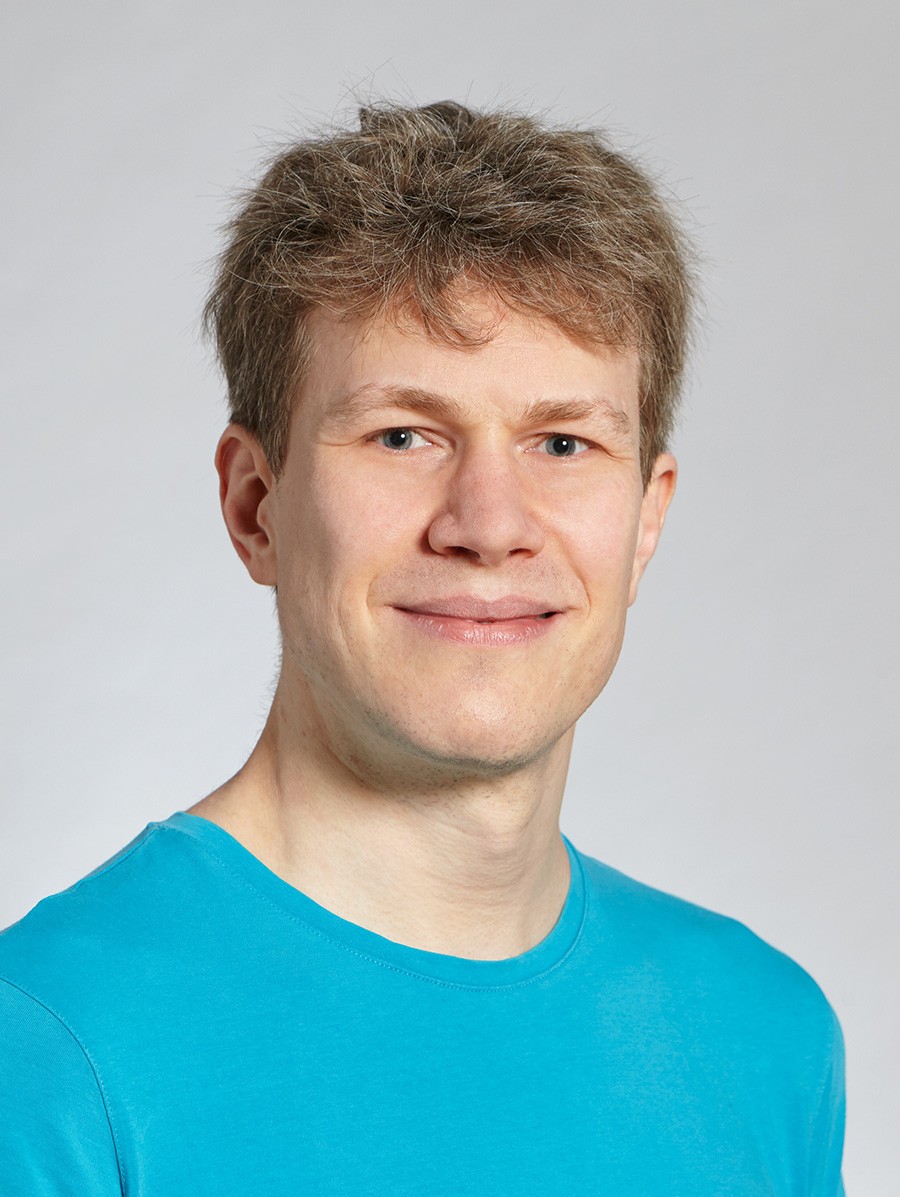
Dr. Teodora Vuković is a computational linguist at the University of Zurich's Faculty of Arts, specializing in multimodal analysis of human interaction and language technology. As Principal Investigator of the CAPIRE and LCP projects, she leads development of automatic tools for analyzing speech, gestures, and facial expressions to identify person-specific patterns while implementing data anonymization techniques.
Prof. Timo Kehrer is a Professor and Head of the Software Engineering Group (SEG) at the Institute of Computer Science, University of Bern. He also serves as Deputy Director of Studies, overseeing academic programs in software engineering. His research focuses on variability modeling, model-based systems engineering, simulation-based testing of autonomous systems, and empirical studies in software development practices. Key areas include software product lines, cyber-physical systems, and the application of formal methods in industrial contexts. Notable contributions include work on Community-driven variability management in open-source software, Automated testing tools like ScoutSL and TEASER , Simulation-based frameworks for self-driving cars (e.g., Sensodat datasets), and Empirical analyses of GitHub Actions workflows and merge conflict resolution. His research bridges theory and practice, addressing challenges in software sustainability, AI-driven development, and the integration of formal verification tools like TLA+. He actively participates in conferences such as VaMoS (Variability Modelling) and contributes to open-source projects in model-driven engineering. Prof. Kehrer collaborates with industry partners to advance tools for model repositories, vulnerability detection (e.g., VUDENC ), and semantic analysis of software changes. His work emphasizes reproducibility, tool support for developers, and educational initiatives to modernize software engineering curricula.
Peter H. Gruber is a Senior Lecturer and Senior Scientist at the Università della Svizzera Italiana (USI), Faculty of Economics, in Lugano, Switzerland. He has been affiliated with USI since 2008. PhD in Physics from TU Wien PhD in Finance from Università della Svizzera Italiana His research spans multiple disciplines, focusing on: Asset Pricing, particularly risk premia and stochastic volatility models Numerical Methods in finance and econometrics Economics of Cryptocurrencies and Entrepreneurship High-Performance Computing applications in economics His publication trends highlight expertise in option pricing models , matrix affine jump diffusion (MAJD) frameworks, and stochastic skewness analysis. Earlier work in particle physics demonstrates interdisciplinary technical proficiency. At USI, he teaches numerical methods using MATLAB and R, and develops computational resources for financial econometrics and macroeconomic analysis.
Prof. Torsten Hoefler is a Full Professor at the Department of Computer Science, ETH Zürich. His research focuses on High-Performance Computing (HPC), parallel systems, networking, and AI-infrastructure. He leads projects on scalable interconnects, network topology design, and cloud computing benchmarks like SeBS. His work bridges theoretical foundations with practical implementations in distributed systems. Research Interests : High-Performance Computing & Networking Parallel Algorithms & Architectures AI Infrastructure & Distributed Systems Chiplet Interconnects & Topology Optimization Key Contributions : Developed tools like ATLAHS (AI/HPC network simulation) Advanced RDMA-based communication protocols (SDR-RDMA) Benchmarks for serverless computing (SeBS-Flow) His recent articles (2025) emphasize adaptive networks, low-precision AI models, and energy-efficient HPC systems. He also explores ethical computing and sustainability in supercomputing through initiatives like Core Hours & Carbon Credits.
Petr Listov is a former researcher at the Swiss Federal Institute of Technology in Lausanne (EPFL), affiliated with the School of Engineering. His work focuses on advanced control systems, particularly Model Predictive Control (MPC) for autonomous systems, robotics, and mechatronics. Listov contributed to developing the PolyMPC software framework, enhancing real-time embedded optimization for applications like rocket control and autonomous driving. His research emphasizes nonlinear control, stochastic systems, and optimization under uncertainty. Education: Completed a doctoral thesis titled Real-Time Nonlinear Model Predictive Control for Fast Mechatronic Systems under supervision at EPFL. Research Interests: Development of MPC algorithms for high-speed systems Applications in autonomous vehicles and robotics Stochastic control and uncertainty quantification Optimization-based control strategies Key Contributions: His publications address real-time MPC implementations, thrust vector control for rockets, and stochastic trajectory planning. Experimental validations include indoor/outdoor rocket testing and automotive hardware-in-the-loop systems. Labs/Teams: Collaborated with the Laboratoire d’Automatique (LA) and contributed to the PolyMPC open-source library.
Dr. Linus Villiger is a Senior Scientist at the Swiss Seismological Service (SED) at ETH Zurich. His research focuses on seismology, geothermal energy, and induced seismicity, with expertise in software/hardware development for high-frequency data acquisition and analysis of hydraulic stimulation experiments. He holds a PhD from ETH Zurich (2020) and has led research projects on geothermal reservoir stimulation and seismic monitoring. Education 2023–present: Senior Scientist at ETH Zurich/SED 2021–2022: Postdoc at ETH Zurich/SED 2016–2020: PhD in Seismology and Geothermal Engineering (ETH Zurich/SED) 2013–2015: Master's in Sustainable Energy Engineering (Chalmers University/Iceland) 2008–2011: Bachelor's in Mechanical Engineering (Northwestern Switzerland) Research Interests Dr. Villiger specializes in hydraulic stimulation experiments , geothermal energy systems , and seismic monitoring . His work integrates hardware/software development for high-frequency data acquisition, analysis of induced seismicity patterns, and characterization of fractured rock reservoirs. Key projects include the BedrettoLab underground facility and Grimsel Test Site stimulations. Grants & Advising He leads EU/CH-funded research projects and supervises student projects (Master level). His work emphasizes scalable reservoir stimulation protocols and risk assessment for geothermal development. Labs & Teams Affiliated with the Swiss Seismological Service (SED), collaborating on large-scale geoscience infrastructure like the Bedretto Underground Laboratory and Grimsel Test Site.
Sanidhya Kashyap is a Tenure Track Assistant Professor at the Robust Large-Scale Systems Software Laboratory (RS3LAB) within the School of Computer and Communication Sciences at École polytechnique fédérale de Lausanne (EPFL). He holds joint appointments in the Systems and Networking (SIN) and Software Engineering (SSC) teaching units under EPFL's IC Faculty. Affiliation: EPFL IC IINFCOM RS3LAB Location: INN 240, Station 14, Lausanne, Switzerland His research focuses on robust systems software design for large-scale environments, with teaching expertise in: Computer systems (operating systems & networks integration) Data-intensive systems Advanced operating systems He currently supervises six doctoral students while maintaining active research and teaching roles.
Michal Friedman is an Assistant Professor at the Department of Computer Science, ETH Zurich, specializing in systems, concurrent computing, programming languages, and sustainable computing. He leads research on designing system fundamentals across software and hardware to enhance performance and efficiency in next-generation computing platforms. Prior to ETH, he completed a postdoc at the same institution and earned his Ph.D. from the Technion under Prof. Erez Petrank, focusing on concurrent data structures for non-volatile memories. Education: Ph.D. in Computer Science (Technion, advised by Erez Petrank), BSc Summa Cum Laude (Technion). Awards include the Eric and Wendy Schmidt Postdoctoral Award (2022), Blavatnik Prize (2021), and Azrieli Fellowship (2018–2021). His work spans persistent memory systems, concurrent algorithms, and energy-efficient computing. Key contributions include PCcheck (ML checkpointing), Dirigent (serverless orchestration), and foundational research on non-volatile memory correctness conditions. He has authored over 15 papers in top conferences like ASPLOS, SOSP, and VLDB, and serves on program committees for systems and programming languages venues.
Prof. Dr. Johannes Lengler is a Lecturer at the Department of Computer Science at ETH Zürich. He focuses on theoretical computer science with specialties in evolutionary algorithms, algorithm design, and network analysis. His research explores the theoretical foundations of optimization heuristics, random graph models, and stochastic processes in computational systems. Lengler has contributed to understanding population diversity in evolutionary algorithms, network connectivity in scale-free models, and algorithmic performance in dynamic environments. His work bridges theoretical insights with practical applications in manufacturing and AI safety. Key research areas include evolutionary computation theory, algorithmic analysis of complex networks, and optimization under uncertainty. His studies often address fundamental questions in computational complexity, such as the efficiency of self-adjusting algorithms and the challenges posed by multimodal landscapes. Lengler frequently collaborates on interdisciplinary projects, applying theoretical methods to real-world problems like laser metal deposition and AI ethics. Publications highlight his expertise in crossover mechanisms, graph traversal algorithms, and rumor spreading dynamics. He has explored the interplay between population diversity and algorithmic efficiency, demonstrating how genetic drift can accelerate optimization processes. His work on expander graphs and scale-free networks contributes to network science, analyzing average distances and connectivity thresholds in complex systems.
Giulia Frascaria is a Research and Teaching Associate and doctoral student in the Division of Media Change & Innovation at the University of Zurich's Department of Communication and Media Research (IKMZ). Her research explores the Internet of Bodies, transhumanism, and cyborgization as indicators of digitalization's societal impact. She holds degrees from the University of Tor Vergata (B.Eng. in Computer Engineering), Vrije Universiteit Amsterdam (M.Sc. in Computer Science), and the University of Amsterdam (M.A. in Literature, Culture, and Society). Her work bridges technical innovation with cultural analysis, examining how digital technologies reshape human existence. Earlier contributions include foundational research in distributed systems and edge computing, reflected in publications such as *ZCSD* and *Griffin*. Giulia's doctoral research is supported by the DSI Excellence Program, focusing on interdisciplinary intersections between technology and society. She actively contributes to academic discourse through conference participation and peer-reviewed publications.
Rodrigo Benedito Otoni is a postdoctoral researcher at the University of Lugano (USI), affiliated with the Faculty of Informatics. His research focuses on automated reasoning techniques for verification, synthesis, and certification, with expertise in model checking, SMT/CHC solving, TLA+ specifications, process algebras, and blockchain technologies including smart contracts. He is based at the East Campus, Sector D, Office D2.09 (Level P2), via la Santa 1, 6962 Lugano-Viganello. Key research areas include formal methods for system verification, blockchain application analysis, and the development of tools for automated reasoning. His work bridges theoretical foundations with practical applications in software verification and distributed systems. The full details of his career are documented in his CV (last updated February 2025), which includes comprehensive information on his academic contributions and professional activities.
Marco Raglianti is a Postdoctoral Fellow and Research Assistant in the Reverse Engineering, Visualization, and Evolution Analysis Lab (REVEAL) at the Faculty of Informatics, Università della Svizzera italiana (USI). His research focuses on software engineering, documentation landscapes, developer communities, and visualization tools. He holds a PhD in Informatics from USI (2025) and M.Sc./B.Sc. degrees in Computer Science from the University of Pisa (Cum Laude). Key contributions include tools like DwarvenMail for documentation analysis, DiscOrDance for Discord community visualization, and Vizor for interactive graph exploration. He co-supervised multiple thesis projects and taught courses in software engineering at USI. His work bridges empirical software engineering with practical tool development, emphasizing developer-centric solutions. Raglianti's publications address topics like UML evolution, VR-based refactoring, and microservices data access patterns. He actively reviews for journals like ACM Transactions on Software Engineering and conferences such as ICSE and ESEC/FSE. His lab's focus on reifying software documentation reflects a commitment to improving developer workflows through systematic analysis and visualization.
Tao Lyu serves as a Doctoral Assistant at the Robust Scalable Systems Software Lab (RS3LAB) within the Institute of Computer Science, School of Computer and Communication Sciences at the Swiss Federal Institute of Technology Lausanne (EPFL). His research concentrates on core systems software challenges, with specific expertise in scalable architectures, fault-tolerant design, and distributed computing frameworks. He investigates methodologies to enhance software reliability while maintaining performance at scale, addressing critical gaps in modern infrastructure resilience. As an active member of RS3LAB, he contributes to the group's mission of developing next-generation systems software solutions through rigorous theoretical analysis and practical implementation.
Philippe Cudré-Mauroux is a Full Professor in the Department of Computer Science at the University of Fribourg, affiliated with the Faculty of Science and Medicine. His research spans data management, big data systems, knowledge graphs, semantic web, and human-AI collaboration. His primary research interests include Data Management , Big Data Systems , Knowledge Graphs , Time Series Analytics , Database Systems , Human-AI Collaboration , and Machine Learning for Data Cleaning . His work integrates theoretical database research with practical applications in smart cities, social media, and healthcare analytics. The recent publications reflect a strong trend toward knowledge graph embeddings , large language models for data quality , time series benchmarking , and human-in-the-loop systems . His research combines symbolic and neural methods, emphasizing schema awareness, explainability, and real-world deployment. He actively supervises numerous PhD and Master’s students and collaborates widely across institutions. His group contributes to open-source tools and benchmarking frameworks for database and AI systems.
Viktor Kuncak is an Associate Professor at the École polytechnique fédérale de Lausanne (EPFL) in the School of Computer and Communication Sciences (IC) , affiliated with the Laboratory for Automated Reasoning and Analysis (LARA) . His work bridges programming languages, formal verification, and automated reasoning. Email: viktor.kuncak@epfl.ch Office: INR 318, EPFL, Lausanne, Switzerland Research Interests: Viktor specializes in formal verification , theorem proving , and program synthesis , focusing on languages, algorithms, and systems for automated reasoning. His research addresses verification of functional programs, constraint solving, and symbolic computation. Recent Publications Trends: His work includes mechanized HOL reasoning, algebraic array theories, interpolation in ortholattices, and symbolic automata complexity. Keywords span automated reasoning, formal methods, and functional programming. Scientific Awards: 2012: 5-year ERC grant (1.5M EUR) ACM SIGSOFT Distinguished Paper Award Invited talks at Lambda Days, Scala Days, and CACM Research Highlights Advising & Grants: Viktor has supervised 15+ PhD students and led a European COST network in automated reasoning. He served as Associate Editor for TOPLAS and co-chaired CAV, FMCAD, and VMCAI conferences. Labs & Teams: He leads LARA , which develops tools like Leon and Stainless for program verification and synthesis. The group focuses on scalable formal methods for reliable software.