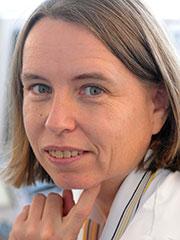
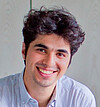
Bettina Kemme is a faculty member at McGill University in Montreal, Canada. Her research focuses on database systems , distributed computing , and cloud data management . She has made significant contributions to database replication, consistency models, and middleware frameworks for scalable applications. Research Themes : Database replication, distributed systems, cloud computing, and software engineering. Notable Collaborations : Jörg Kienzle, Joseph Vinish D'silva, Yunjia Zheng, and Marta Patiño-Martínez. Publications span critical areas such as graph database view management, transactional recovery in key-value stores, and latency-aware publish/subscribe systems. Her work is published in venues like VLDB , ICDE , Middleware , and SRDS .
Adlen Ksentini is a Professor at EURECOM, a leading graduate school and research center in Sophia Antipolis, France, specializing in digital science and communication systems. His extensive research focuses on next-generation mobile networks (5G/6G), network management, and the integration of artificial intelligence with telecommunications infrastructure. Dr. Ksentini actively contributes to major EU research initiatives including 6G-BRICKS and AC3, serving as a key researcher and project leader in the development of future network architectures. Dr. Ksentini's research interests center around network slicing, intent-based networking, edge computing, and the application of machine learning to network management problems. His work bridges theoretical advancements with practical implementations in 5G/6G systems, with particular emphasis on zero-touch network management, energy efficiency optimization, quality of service assurance, and the integration of large language models with network operations. His research has significantly contributed to the development of O-RAN (Open Radio Access Network) frameworks and the evolution of network automation. His recent publication trends reveal a strategic shift toward AI-native network architectures, with increasing focus on integrating large language models (LLMs) with network management systems. His work demonstrates a clear progression from traditional network management approaches to more autonomous, AI-powered systems capable of intent-based configuration, self-optimization, and predictive maintenance. The publications show strong emphasis on practical implementations within the 6G research ecosystem, addressing critical challenges in network slicing, resource allocation, and energy efficiency. As a research supervisor, Dr. Ksentini mentors several PhD students including Abdelkader Mekrache, Karim Boutiba, Bouziane Brik, and Houda Hafi, who frequently appear as co-authors on his publications. His research is primarily funded through major EU research projects such as 6G-BRICKS (Building Reusable Testbed Infrastructures for Cloud-to-Device Breakthrough Technologies) and AC3 (which focuses on Cloud Edge Continuum). Dr. Ksentini is actively involved with the 6G-BRICKS project consortium and the AC3 project team, where he contributes to developing next-generation network architectures that integrate communication, computing, and sensing capabilities. His work within these projects focuses on creating reusable testbed infrastructures and addressing security and trust management challenges in the cloud-edge continuum.
Mauro Pezzè is a Full Professor of Software Engineering at the Università della Svizzera italiana (USI) and Università di Milano Bicocca, leading the STAR research group since 2006. He holds a laurea from the University of Pisa and a PhD from Politecnico di Milano. His research focuses on software testing, analysis, self-adaptive systems, and cloud systems. He has held editorial roles, including Editor-in-Chief of ACM Transactions on Software Engineering and Methodologies (TOSEM), and served on numerous program committees. Education: Laurea (Pisa), PhD (Politecnico di Milano). Professional roles include Dean of the Faculty of Informatics at USI (2009-2013), visiting scientist at UC Irvine and Edinburgh, and technical lead for international projects. He co-authored a seminal book on software testing (Wiley, 2007), with over 670 citations. Research Interests: Software Testing, Self-Adaptive Systems, Cloud Computing, AI in SE, Sustainable Software. Projects include work on field-based testing, failure prediction in distributed systems, and neuro-symbolic approaches for test oracles. Grants and Advising: Led STAR Lab projects in self-healing systems, GUI testing, and semantic matching. Advised numerous PhD/postdoc students (e.g., Ciniselli, Di Grazia, Qiu). Collaborations with European tech firms on R&D initiatives. Labs/Teams: STAR Group at USI/Constructor Institute, Bicocca, and Politecnico di Milano. Current members include postdocs and PhD students working on AI-driven testing and cloud reliability.
Alva L. Couch is an Associate Professor at Tufts University's School of Engineering, Department of Computer Science, with a career spanning over 30 years. His work bridges network/system administration, autonomic computing, and hydrologic data science, focusing on scalable solutions for data management and automated system administration. Education: Ph.D. in Mathematics (1988), B.S. in Architecture (1978), and B.A. in Bassoon/Contrabassoon Performance (1978). Research Interests His research centers on: Network and System Administration: Tools like SLINK, Maelstrom, and Babble for dependency analysis, cloud migration, and policy enforcement. Geo-informatics: MEDFORD metadata language and HydroShare platform for hydrologic data curation and discovery. Autonomic Computing: Promise theory, convergent operators, and closure models for self-managing systems. Recent Work Trends His 2024-2018 publications emphasize: Cloud-based hydrologic data management (AnVILMEDFORD, HydroShare) Metadata standards for interdisciplinary research Machine learning for system administration Agent-based resource sharing models Scientific Awards Liebner Teaching Award (1996) Seymour Simches Advising Award (2017) Best Paper Awards: LISA 1996, AIMS 2008, LISA 2001 LISA 2000 Best Student Paper (with Michael Gilfix) Contributions He developed key software like Peep (network auralization) and Slink (configuration management), supported by NSF grants and industry partnerships. His work with CUAHSI's Water Data Center shapes national hydrologic data infrastructure. He also advocates for science education and privacy in computing.
Anja Feldmann is Director at the Max Planck Institute for Informatics in Saarbrücken and Professor of Internet Network Architectures at Technische Universität Berlin (since 2006). Previously she held a full professorship at Technische Universität München (2002–2006) and conducted research at AT&T Labs Research , Saarland University , and Carnegie Mellon University , where she earned her Ph.D. in 1995. Education Ph.D. in Computer Science, Carnegie Mellon University, 1995 M.Sc. in Computer Science, Carnegie Mellon University, 1991 Diplom in Computer Science, Universität Paderborn, 1990 Research Interests Anja Feldmann’s research centers on measurement-driven understanding of the Internet. She tackles challenges such as software-defined networking , cloud-network interactions , performance debugging , and traffic characterization . A growing focus is the privacy and security of networked systems, evidenced by recent studies on online tracking, DNS security, and disinformation ecosystems. Her group designs scalable measurement platforms that combine passive and active monitoring , programmable data planes , and machine-learning analytics to dissect phenomena ranging from terabit-scale traffic to covert tracking on illegal streaming sites. Recent Publication Themes The 2021-2025 publications reveal a methodological evolution toward large-scale, longitudinal measurement . Topics include: Impact of global events (COVID-19, CrowdStrike outage) on Internet traffic Cross-country tracking ecosystems and privacy leaks DNS root and routing plane stability and security ML-driven real-time monitoring at terabit speeds Disinformation campaigns on encrypted messaging platforms Scientific Awards Gottfried Wilhelm Leibniz Prize (2011) – Germany’s highest research honor Berliner Wissenschaftspreis (2011) Elected Member of the German National Academy of Sciences Leopoldina (2009) Advising & Grants While individual student names are not listed, Prof. Feldmann leads a vibrant team at MPI-INF’s Internet Architecture department. She has supervised numerous doctoral candidates and post-doctoral researchers whose work is reflected in the co-authored papers. Funding sources include the German Research Foundation (DFG) via the Leibniz Prize and EU Horizon projects, although explicit grant numbers are not provided in the source material. Labs & Teams She heads the Internet Architecture department at MPI-INF, located at the Saarland Informatics Campus . The department operates state-of-the-art measurement infrastructure—including programmable switches, honeynets, and global vantage points—to support empirical network science.
Giuliano Casale is a Professor in the Department of Computing at Imperial College London, leading the Quality of Service Research Lab (QORE). His research focuses on performance assurance, resource management, and fault-tolerance in distributed systems. He teaches courses on Probability and Statistics and Scheduling and Resource Allocation at undergraduate and Master’s levels. Casale’s work spans cloud computing, edge AI, and machine learning applications in system modeling. Key contributions include methodologies for performance engineering, anomaly detection, and automated resource management in large-scale systems. He actively participates in international conferences, delivering keynote speeches on topics such as performance evaluation and AI-driven systems. His research integrates queueing theory, machine learning, and generative models to address challenges in distributed software systems. Casale also engages in service activities like PhD admissions tutoring and collaborates on projects involving resilience planning and cloud service optimization. His lab, QORE, emphasizes practical solutions for real-world distributed systems, including edge federations and serverless architectures. Casale’s work bridges theoretical performance analysis with industrial applications, contributing to advancements in both academia and industry.
Dr. Stephan Rave is a Researcher in the Institute for Analysis and Numerics at the University of Münster. He is affiliated with the Applied Mathematics Münster cluster and serves as an Investigator in Mathematics Münster. His work focuses on numerical analysis, scientific computing, and machine learning, with a strong emphasis on model reduction techniques for complex systems. Education : PhD in Mathematics (2012), University of Münster, thesis on finitely summable K-homology. Master's and Bachelor's degrees in Mathematics from the University of Münster. Research Interests : Dr. Rave specializes in model order reduction (MOR) methods, including reduced basis techniques, localized orthogonal decomposition (LOD), and nonlinear approximation strategies. His work addresses challenges in multiscale modeling, domain decomposition, and parametrized partial differential equations. He also develops open-source software tools like pyMOR for MOR and contributes to initiatives like the MaRDI (Mathematical Research Data Initiative) to enhance interoperability in scientific computing. Projects : Key initiatives include the MaRDI project (2021–2026), EXC 2044 Cluster of Excellence (Geometry-based modeling), and MULTIBAT (lithium-ion battery simulation). His research bridges theoretical developments with practical applications in battery modeling, electrochemistry, and computational fluid dynamics. Grants & Awards : Funded by DFG, the German Federal Ministry of Research, and internal university grants, his work addresses strategic areas like sustainable research software and energy storage systems. He leads projects on distributed model reduction and communication-avoiding algorithms. Teaching : Dr. Rave teaches advanced numerical methods courses, including Model Order Reduction, Numerical Methods for PDEs, and Python-based computational labs. He co-organizes seminars and workshops on MOR and scientific software engineering.
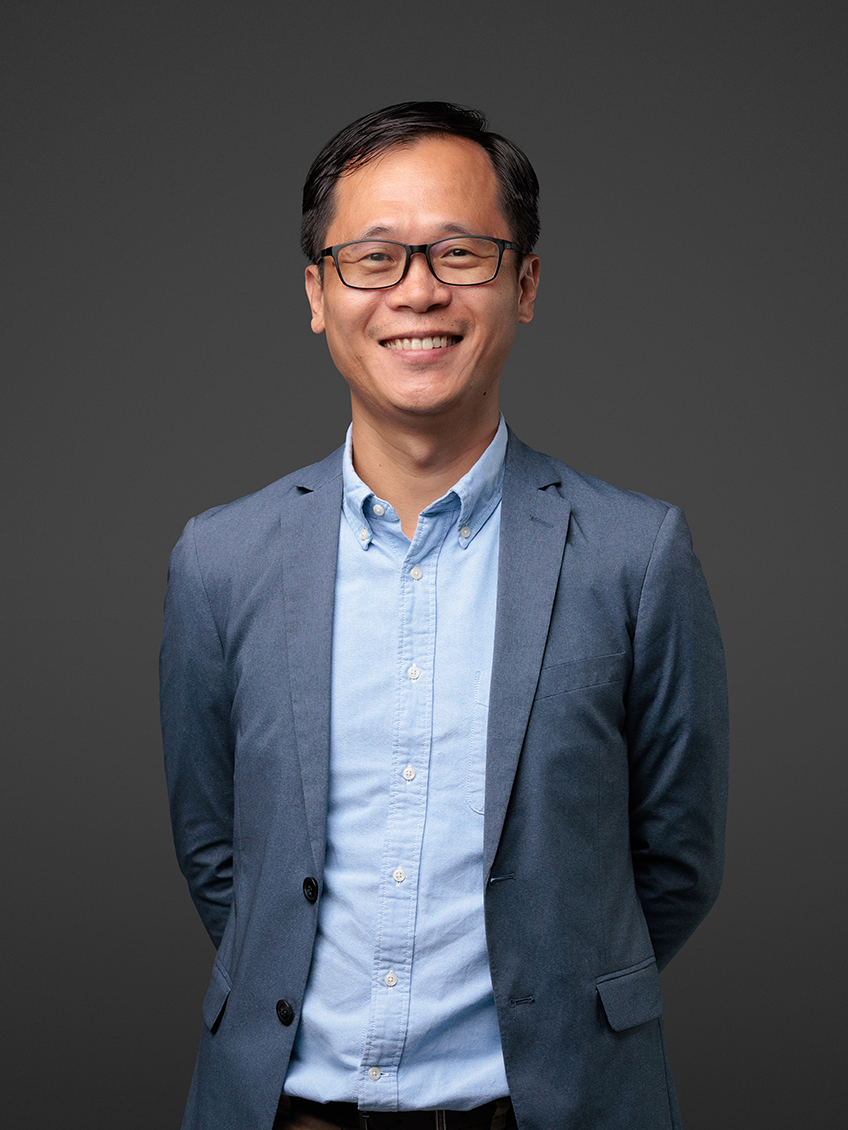
Chen Binbin is an Associate Professor and Associate Head of Pillar (Innovation and Enterprise) in the Information Systems Technology and Design (ISTD) pillar at Singapore University of Technology and Design (SUTD). He serves as Deputy Director for the Future Communications Research and Development Programme (FCP), Singapore. Previously, he was a Principal Research Scientist at the Advanced Digital Sciences Center (now Illinois ARCS), affiliated with the University of Illinois. Education: PhD in Computer Science from National University of Singapore, and Bachelor's from Peking University. Research focuses on wireless networking, distributed systems, and cyber security for critical infrastructures like smart grids and industrial control systems. His work addresses secure communications, intrusion detection, and resilience against cyber-physical threats. Notable contributions include error-estimating coding, provenance verification in ICS, and AI-driven network security solutions. Key awards include the 2010 ACM SIGCOMM Best Paper Award for error-estimating coding research. His grants span agencies like Singapore's National Research Foundation (NRF), Cyber Security Agency (CSA), and Energy Market Authority (EMA). He leads projects on secure smart grid communication, industrial control system defense, and AI-enhanced cybersecurity tools. Technical leadership involves developing frameworks like CyberSAGE for security assessment and CMD for IoT malware detection. Active in collaborations with industry and government, his work bridges theory and practice in securing critical infrastructure systems.
Professor Brett Harris is a faculty member at Curtin University, affiliated with the School of Earth and Planetary Sciences (EPS) within the Faculty of Science and Engineering. He holds a prominent role in the Office of the Provost. His research focuses on subsurface resource technologies, including mineral exploration, CO2 sequestration, and geothermal energy. He has led major initiatives like the DET CRC and MinEx CRC projects, advancing in-hole electromagnetic sensing and distributed acoustic sensing techniques. His expertise spans hydrogeology, geophysics, and environmental geoscience, with notable contributions to aquifer characterization, fault zone dynamics, and CO2 storage monitoring. He coordinates undergraduate courses in electromagnetism, potential fields, and environmental geophysics, while supervising multiple PhD students. Key collaborations include work with government agencies on fractured aquifer detection and geothermal systems. Recent research emphasizes innovative sensor technologies for subsurface imaging, CO2 leakage monitoring, and groundwater sustainability. His work bridges geophysics with applied engineering solutions for resource exploration and environmental stewardship.
Professor Xiaodong Liu is a faculty member at Edinburgh Napier University, affiliated with the School of Computing, Engineering and the Built Environment . His research spans Internet of Things , Edge Computing , Artificial Intelligence , and Cybersecurity , with a focus on decentralized systems and data-driven decision-making. Research Themes : IoT orchestration, federated learning, smart city infrastructure, building maintenance optimization, and automotive cybersecurity. Current Projects : Leading Swarmchestrate (EU-funded), Long-range Perceptive Autonomous Vehicles (Royal Society), and Met-Bot for Disaster Surveillance (Royal Society). His recent publications emphasize privacy-preserving edge learning , semantic IoT data validation , and deep learning for weather prediction . As a supervisor, he has guided PhD students in areas like federated learning, smart building systems, and IoT security. Collaborations include partnerships with institutions in Scotland, China, and Italy, alongside funding from European Commission , Royal Society , and Scottish Funding Council . He contributes to international conferences and journals, with notable work in IEEE Transactions , ACM TAAS , and MDPI publications.
Ruben Martins is an Assistant Professor at Carnegie Mellon University's School of Computer Science and serves as the program director of the Master of Science in Computer Science (MSCS) . His research focuses on the intersection of constraint programming, program synthesis, analysis, and verification, with recent work aiming to make formal methods tools more accessible through automated reasoning. Ruben earned his Ph.D. with honors from the Technical University of Lisbon, Portugal (2013) , followed by postdoctoral research at the University of Oxford (2014-2015) and UT Austin (2015-2017) . Research Interests : Ruben's work bridges constraint programming and program synthesis , with applications in software verification , optimization , and automated reasoning . He has developed award-winning tools like Open-WBO , a modular MaxSAT solver that has won gold medals in international competitions. His publications span top-tier venues such as POPL , PLDI , FSE , SAT , and CP , often addressing real-world challenges from program analysis to network security. Scientific Awards include: Distinguished Paper Award at PLDI 2018 Distinguished Paper Award at FSE 2021 Distinguished Paper Award at SAT 2022 Gold medals for Open-WBO in MaxSAT competitions Teaching & Advising : Ruben mentors Ph.D., Master’s, and undergraduate students in research projects related to program synthesis, formal methods, and constraint solving. He teaches courses such as Bug Catching: Automated Program Verification and Advanced Topics in Logic: Automated Reasoning and Satisfiability , emphasizing hands-on experience with tools like Why3. His advising spans topics from AI-driven program repair to network protocol verification , fostering collaboration across disciplines.
Dr. Alexandra Fedorova is a Professor in the Department of Electrical and Computer Engineering at the University of British Columbia (UBC), with an Associate Member role in the Computer Science department. She leads the Systopia systems research group, focusing on system software design, memory/storage management, and accelerator-centric computing. Her work emphasizes performance optimization, energy efficiency, and hardware-software co-design. She holds a PhD from Harvard University (2006), where she researched operating system scheduling under Margo Seltzer. Prior to UBC, she was an Associate Professor at Simon Fraser University (2006–2015). Fedorova is a recipient of the Alfred P. Sloan Research Fellowship and the Anita Borg Early Career Award. She consults for MongoDB's storage engine team and collaborates with industry on storage and performance challenges. Her research spans tools like Non-sequitur for program trace visualization, studies on storage-class memory (e.g., Optane), and frameworks for GPU acceleration. Recent efforts include Sunstone (spatial accelerator scheduling) and ExtMem (application-aware memory management). Her work bridges low-level systems with high-performance computing needs. Key contributions include optimizing NUMA systems, improving storage engine performance, and exploring processing-in-memory architectures. Fedorova’s projects often involve open-source collaboration, reflected in her GitHub repositories such as vividperf and perf-logging , which support performance analysis tools.
Esfandiar Mohammadi is an Associate Professor at the Institute for IT Security, University of Lübeck, leading the Privacy & Security (PrivSec) group and directing the AnoMed competence cluster. He has held tenured faculty positions since 2019 after postdoctoral research at ETH Zürich (2016-2019) and a PhD at Saarland University (2015). University of Lübeck (2015-present) ETH Zürich (2016-2019) Saarland University (2015) His research focuses on privacy-preserving technologies in machine learning, anonymous communication protocols, and formal verification of security properties. Recent work includes advancements in Mixnet scalability and federated learning with differential privacy guarantees. Key publication trends reveal a strong emphasis on privacy-preserving algorithms for machine learning (2024), cryptographic protocols for anonymous communication (2025), and security analysis of decentralized systems (2023-2025). Collaborations span institutions like ETH Zürich, Saarland University, and industry partners EnergieDock/NAECO Blue for the VeDS project. His group includes 11 researchers (5 PhD students) and software engineers working on topics like Differential Privacy Secure Multi-Party Computation Trusted Execution Environments
Gökhan Seçinti is an Assistant Professor in the Department of Computer Engineering at Istanbul Technical University, Faculty of Computer and Informatics. He currently serves as Vice Dean and has previously held the role of Vice Department Head. His research focuses on next-generation wireless networks, UAV communications, semantic communication, and AI-driven networking solutions. Research Interests: His work spans Unmanned Aerial Vehicles (UAVs) , Semantic and Task-Oriented Communication , Software-Defined and Cognitive Networks , 6G Communications , and AI in Networking . He develops practical testbeds for deep learning-based communication architectures and explores digital twin applications in aerial networks. Publication Trends: Recent publications emphasize decentralized UAV service deployment, beam alignment using UWB localization, TDMA scheduling for aerial swarms, and semantic flow control. These reflect a strong trend toward intelligent, adaptive, and context-aware communication systems for IoT and mobility. Best Paper Award, IEEE, 2022 Best Conference Paper, IEEE, 2016 Best Poster Paper Award, IEEE, 2015 Advising and Grants: He has supervised 4 academic works and leads multiple funded research projects, including TÜBİTAK and SRP grants on federated learning in flying networks, semantic VANETs, AI-based intrusion detection, and UAV-assisted IoT for crisis management. Labs and Teams: His work is supported by active research teams at ITU, focusing on testbed development using SDRs, digital twins, and real-world deployment of UAV networks. He collaborates internationally, including past affiliations with Northeastern University.
Mateo Valero Cortés is a renowned Professor of Computer Architecture at the Polytechnic University of Catalonia and Director of the Barcelona Supercomputing Center (BSC). He has held academic and leadership roles since 1974, advancing high-performance computing (HPC) and computer architecture research. His work includes pioneering contributions to vector architectures, multithreading, and instruction-level parallelism. Education includes a Telecommunications Engineering degree from the Polytechnic University of Madrid (1974) and a PhD in Telecommunications Engineering from the Polytechnic University of Catalonia (1980). His research spans over 700 publications, focusing on HPC systems, parallel computing, and supercomputing infrastructure. Key research interests include vector processing, super-scalar processors, and task-based programming models. Recent work emphasizes scalable architectures for exascale computing and energy-efficient hardware-software co-design. Notable achievements include the Eckert-Mauchly Prize (highest in computer architecture), Seymour Cray Award, and Charles Babbage Prize. He has led initiatives like the Spanish Supercomputing Network (RES) and PRACE (European HPC partnership). Academic affiliations include the Royal Academy of Engineering of Spain, ACM Fellow, and IEEE Fellow. He has received 13 honorary doctorates and awards such as Mexico’s Order of the Aztec Eagle. Current projects include the Mont-Blanc HPC prototype and ERC-funded research on multi-core chip design. His BSC oversees over 300 researchers and manages MareNostrum supercomputers.