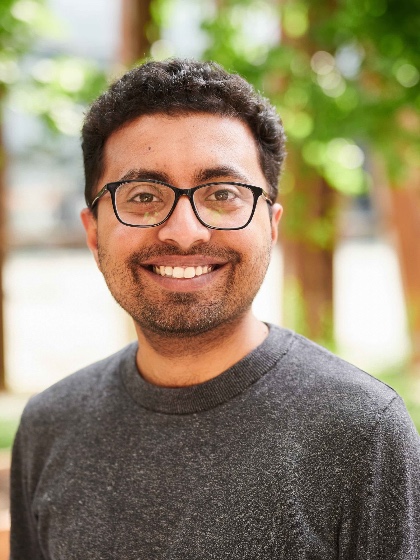
Seth Frey is an Associate Professor in the Department of Communication at the University of California, Davis. His research focuses on computational social science, exploring governance institutions and complex human decision-making through computational methods, large datasets, and web-based experiments. He examines online communities as models of governance, with expertise in computational approaches to institutional design and strategic behavior analysis. Education: Ph.D. in Cognitive Science and Informatics, Indiana University, 2013 B.A. in Cognitive Science, UC Berkeley, 2004 Research Interests: Frey's work integrates data science, lab experiments, and computational modeling to study human organizations and communication. Key areas include governance technology, cognitive mechanisms of social outcomes, and institutional evolution. His projects span online games, sports, and open-source software communities, emphasizing topics like collective action, self-governance, and cooperative behavior. Publications & Funding: His work appears in journals like PNAS and Nature Scientific Reports, and has been funded by NSF, NASA, and the Ford Foundation. He contributes to the Ostrom Workshop at Indiana University and directs the Computational Communication Lab at UC Davis. Teaching: Frey teaches courses on data visualization, simulation methods, and online data analysis in the social sciences.
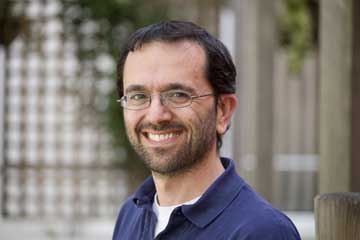
Julia Monk (she/her/ella) is an Assistant Professor of Environmental Studies at New York University (NYU), affiliated with the College of Arts & Science. Previously, she was a postdoctoral scholar at UC Berkeley's Department of Environmental Science, Policy & Management (2022-2024) and earned her PhD from Yale University (2022) and B.A. from Columbia University (2013). Her research integrates ecology, biogeochemistry, and queer science studies to explore animal roles in ecosystems under global change. Education: Ph.D. (Ecology, Evolution, & Conservation Biology), Yale University, 2022 B.A. (Environmental Biology), Columbia University, 2013 Research Focus: Julia examines predator-prey dynamics, nutrient cycling, and land-use impacts in arid and urban ecosystems. She also investigates same-sex behavior in animals through an intersectional lens, collaborating with evolutionary biologists and feminist scholars. Current projects include studying nutrient subsidies from Andean vicuñas, consequences of herbivore population collapses, and ecological effects of transitioning from wild to domestic mammals. Publications Trends: Her work spans field-based biogeochemistry studies, policy advocacy (e.g., octopus conservation), and theoretical critiques of scientific paradigms. Recent articles highlight methodological innovations for quantifying animal-mediated ecosystem processes and interdisciplinary approaches to queer ecology. Grants & Collaboration: Julia's research is funded through NYU and prior grants from UC Berkeley. She leads a multidisciplinary team exploring ecological and social dimensions of animal behavior, with opportunities for student collaboration in field and lab settings. Labs & Teams: Her lab at NYU focuses on integrating field ecology with queer science frameworks. Collaborative networks include the 500 Queer Scientists initiative and partnerships with Latin American research institutions.
Diogo Almeida is an Associate Professor of Psychology and Global Network Associate Professor of Psychology at New York University Abu Dhabi. His research focuses on neurolinguistics and language processing, employing methodologies such as MEG/EEG, fMRI, and cross-linguistic studies. He holds an MSc in Cognitive Science from the Ecole des Hautes Etudes en Sciences Sociales and an PhD in Linguistics from the University of Maryland, College Park. Prior to NYU Abu Dhabi, he held positions at the University of California, Irvine, and Michigan State University. Almeida’s research explores perceptual processes underlying language understanding, including syntactic structure processing, agreement phenomena, and the neural bases of lexical access. His work integrates behavioral experiments with neuroimaging techniques to investigate how linguistic structures are represented in the brain. Key areas include sentence processing selectivity in Broca’s area, cross-linguistic differences in agreement encoding, and the role of phonological and morphological features in real-time language comprehension. His publications span topics like masked priming effects, sociolinguistic influences on speech perception, and the reliability of experimental syntax methods. He leads the Language, Mind and Brain research group at NYU Abu Dhabi, focusing on interdisciplinary approaches to language cognition. Almeida has contributed to debates on empirical rigor in syntax, advocating for robust experimental designs and large-scale data collection to validate theoretical claims.
Ashish Cherukuri is an Associate Professor at the University of Groningen's Faculty of Science and Engineering, affiliated with the Optimization and Decision Systems group. His research focuses on optimization-based control, game theory, and multi-agent systems applied to energy, transportation, and robotics. He holds a Ph.D. from UC San Diego and postdoctoral experience at ETH Zurich. Education: Ph.D., University of California, San Diego (2012–2017) M.Sc., ETH Zurich (2008–2010) B.Tech, Indian Institute of Technology Delhi (2004–2008) Research Interests: Data-driven optimization, distributed algorithms, networked cyber-physical systems, and uncertainty handling in energy and transportation systems. Recent work emphasizes stochastic optimization, game-theoretic routing, and risk-aware control. Awards: Robert E. Skelton Dissertation Award (2017) Outstanding Graduate Student Award (2016) Focht-Powell Fellowship (2012–2015) Grants & Service: Editor for the IEEE Control Systems Society, organizer of Energy-Open 2019, and member of professional societies (IEEE, INFORMS, SIAM). Active in conference organization and academic leadership roles. Labs/Teams: Part of the Jan C. Willems Center for Systems and Control and the Engineering and Technology Institute Groningen (ENTEG). Research integrates theoretical advancements with practical applications in energy networks and smart systems.
Donald C. Haggis is the Nicholas A. Cassas Professor of Greek Studies and Professor of Classical Archaeology at the University of North Carolina at Chapel Hill (UNC-CH). He holds a Ph.D. in Classical Studies from the University of Minnesota and has been affiliated with the American School of Classical Studies at Athens, the British School of Archaeology at Athens, and the University of Michigan. His research focuses on Aegean settlement structure, Minoan Crete, and early urbanization in the Mediterranean. Roles: Department Chair (2020–present), Director of the Azoria Project, Adjunct Professor at Duke University, and Managing Committee member of the American School of Classical Studies at Athens. Education: Ph.D., Classical Studies, University of Minnesota (1992) M.A. and B.A., Classics, Wayne State University (1983 and 1982) Research Interests: Haggis investigates settlement behavior, archaeological landscapes, and socio-political change in the Aegean. His work centers on the transition from Minoan to Archaic Greek urbanism, particularly through the Azoria Project in eastern Crete. Key themes include Minoan-Mycenaean continuity, early state formation, and material culture analysis. Grants & Awards: Recipient of grants from the National Endowment for the Humanities, National Science Foundation, and Wenner-Gren Foundation. Honors include the Best Practices in Site Preservation Award (2012) and Distinguished Alumnus Award (2009). Labs/Teams: Leads the Azoria Project, a long-term excavation and research initiative examining an Archaic city in Crete. Collaborates with institutions like the Institute for Aegean Prehistory and the Research Laboratories of Archaeology at UNC-CH. Publications: Over 50 peer-reviewed articles and books, including Classical Archaeology in Context (2015) and The Archaeological Survey of the Kavousi Region (2005). Recent work explores the Azoria civic complex, Minoan feasting practices, and diachronic cultural landscapes.
Roberto Veneziani is a Professor of Economics at the School of Economics and Finance, Queen Mary University of London. He holds a PhD in Economics from the London School of Economics and Political Science. His research focuses on distributive justice, axiomatic exploitation theory, macroeconomic growth models, and normative principles in economics. He also explores the history of economic thought and political economy through mathematical frameworks. Key areas of research include liberal egalitarian principles, sustainable development, and the distribution of resources between generations. He has published extensively in top-tier journals across economics, political science, and philosophy, including the Journal of Economic Theory , Economic Journal , and Theoretical Economics . Veneziani co-founded the Analytical Political Economy Workshop and sits on editorial boards of journals like the Review of Social Economy . His work bridges economics and philosophy, addressing topics such as sufficientarianism, unequal exchange in globalization, and the ethics of non-interference. Notable contributions include axiomatic analyses of exploitation and the critique of subjective probability models in decision-making under uncertainty. Veneziani collaborates with prominent scholars and has resigned from editorial roles in protest against publisher policies. His research emphasizes interdisciplinary approaches to economic justice and systemic inequality.
Associate Professor Liz Ratnam is a leading academic in the Department of Electrical and Computer Systems Engineering at Monash University, serving as Deputy Postgraduate Director of Education ECSE. Her expertise spans power systems control, energy optimization, and resilient grid design. She holds a BEng (Hons I) and PhD in Electrical Engineering from the University of Newcastle (2006 and 2016), with postdoctoral research at UC San Diego and Berkeley. She previously served as Senior Lecturer and Sub-Dean for Educational Programs at ANU's College of Engineering & Computer Science, supported by a Future Engineering Research Leader (FERL) Fellowship. Her current research focuses on advancing transactive energy markets, EV coordination in distribution networks, and secure grid operations. She leads major grants including the National Facility for Electricity Grid Security (ARC LIEF 2023) and projects on EV fast-charging infrastructure. Education Background: - BEng (Hons I) in Electrical Engineering, University of Newcastle (2006) - PhD in Electrical Engineering, University of Newcastle (2016) Research Interests: Resilient, carbon-neutral power grid design Control and optimization of energy systems Synchrophasor-based estimation for grid stability Transactive multi-agent systems for energy markets Electric vehicle integration and coordination in unbalanced grids Grants & Projects: ARC Linkage Infrastructure Grant LE23010058 (2023): National Facility for Electricity Grid Security ARC Discovery Project DP22010135 (2022): Neural Architecture Search for Deep Learning ARC Linkage Project LP21200473 (2022): Building Australia's EV Fast-Charging Infrastructure Awards & Memberships: Fellow of Engineers Australia Senior Member of IEEE FERL Fellowship (ANU)
Do Young Eun is a Professor in the Department of Electrical and Computer Engineering at North Carolina State University (NC State), with affiliations in Computer Science and Operations Research. He holds a Ph.D. from Purdue University and M.S./B.S. degrees from KAIST, Korea. His research focuses on distributed optimization for machine learning, network modeling, and algorithms for social/wireless networks, with applications in epidemic analysis and graph analytics. Education: Ph.D. in Electrical and Computer Engineering, Purdue University (2003) M.S. in Electrical Engineering, KAIST (1997) B.S. in Electrical Engineering, KAIST (1995) Research Interests: Distributed optimization and machine learning Network modeling and performance analysis Epidemic modeling and control Graph analytics and social network analysis Stochastic processes and algorithms Highlighted Awards: NSF CAREER Award (2006) Outstanding Paper Award, ICML 2023 Best Paper Awards at IEEE ICCCN (2005), IPCCC (2006), NetSciCom (2015) Best Student Paper Award, ACM MobiCom 2007 Advising & Grants: Current advisees include Jie Hu, Yi-Ting Ma, and Feiya Xiang NSF Grant (2024–2027): 'Toward Maximally Efficient Sampling and Optimization for Decentralized Learning' Supervised over 10 Ph.D. students, many in academic or industry leadership roles Labs/Teams: His research group focuses on interdisciplinary projects at the intersection of networking, machine learning, and stochastic systems, with collaborations in academia and industry.
Professor Peter Chin is a Professor of Engineering at Dartmouth College and Director of the Learning, Intelligence + Signal Processing (LISP) Lab. He holds affiliations with the Thayer School of Engineering and serves as Associate Editor of IEEE Transactions on Computational Social Systems. His research bridges signal processing, machine learning, game theory, and differential geometry, with applications in cybersecurity, healthcare, and network analysis. Education: Bachelor of Science in Electrical Engineering, Computer Science, and Mathematics from Duke University (1993) Doctor of Philosophy in Mathematics from MIT (1998) Research Interests: Chin’s work focuses on fundamental questions at the intersection of machine learning, game theory, and signal processing. His lab explores topics like adversarial defense mechanisms, topological machine learning, and computational neuroscience. Recent projects include cybersecurity resilience modeling, medical imaging enhancements via GANs, and multi-agent reinforcement learning frameworks. Publications Trends: His most recent articles address cutting-edge challenges in cybersecurity (e.g., autonomous defense systems), medical AI (e.g., Alzheimer’s classification), and adversarial robustness. A notable 2025 focus is on quantitative resilience modeling for cyber defense, reflecting growing demand for AI-driven security solutions. Awards: Faculty Scholar Award, Duke University George Sherred III Award, Duke University Julia Dale Memorial Award, Duke University Grants & Leadership: Recipient of DARPA cybersecurity research grants Co-chair for SPIE/DSS Cyber Sensing Conference (2013–2020) Developed novel compressive sensing microscope for biological imaging LISP Lab: This interdisciplinary lab pioneers projects like nFlip (multiplayer security game models) and topological machine learning frameworks, emphasizing practical applications of theoretical advancements.
Assoc Prof Frederique Elise Oggier is an Associate Professor in the School of Physical and Mathematical Sciences, Division of Mathematical Sciences at Nanyang Technological University (NTU). She holds a PhD from the Swiss Federal Institute of Technology (EPFL) and has held visiting positions at Caltech and the Research Center for Information Security (Tokyo). Her research focuses on algebraic coding theory, lattice-based cryptography, and applications of number theory to secure and reliable communication systems. Education: Bachelor’s and Master’s in Mathematics from the University of Geneva PhD in Mathematics from EPFL Research Interests: Her work bridges abstract algebra with practical coding challenges, emphasizing lattice codes for wiretap channels, distributed storage systems, and security protocols. Specialized in algebraic structures like cyclic division algebras and modular lattices, her contributions advance both theoretical foundations and real-world implementations of secure communication systems. Publications: Her recent work addresses cutting-edge topics such as MDS codes, non-GRS code constructions, and lattice-based security in noisy channels. These contributions highlight her expertise in coding theory and its interdisciplinary applications. Grants/Advising: While specific grants are not detailed, her prolific publication record reflects sustained research activity. She advises on projects related to distributed storage and secure coding, though student names are not listed in the provided texts. Labs/Teams: Affiliated with NTU’s mathematical sciences division, she collaborates with global researchers on projects such as lattice coding for 5G/6G systems and cryptographic protocols leveraging algebraic number theory.
Professor Daniel Chicksand is a faculty member in the Department of Management at Birmingham Business School, University of Birmingham , where he holds the rank of Professor of Operations and Supply Management . He also serves as the Director of the Distance Learning MBA programme. Daniel has held academic positions at Warwick Business School and Aston Business School prior to joining Birmingham in 2016 as a Reader, being promoted to full Professor in 2021. Education: PhD in Commerce, University of Birmingham (2009) MBA in Business Strategy & Procurement, University of Birmingham (2003) MSc in Industrial Logistics, University of Central England (1996) BSc in Industrial Information Technology (2:1 hons), University of Central England (1995) Postgraduate Certificate in Academic and Professional Practice, University of Warwick (2011–2013) Daniel’s research is centered on Operations and Supply Chain Management , with a strong theoretical foundation in Resource Dependency Theory (RDT) . His work explores power dynamics , value appropriation , and relationship management in buyer-supplier interactions across sectors such as food, construction, and sustainable supply chains. He has a growing interest in servitization and its impact on value creation. His methodological approach is primarily qualitative, using case-based research. The recent publications reflect a consistent focus on power and negotiation in procurement , resilience and disruption in supply chains (including simulation modeling), and sustainability reporting . His research spans both private and public sectors and often involves international collaboration with institutions in the UK, Europe, and the US. Scientific Engagement and Awards: Visiting Lecturer at Audencia Nantes School of Management (France) Visiting Lecturer at Ecole des Ponts ParisTech and Solvay Business School (France/Belgium) Educator for Duke Corporate Education Collaborator with leading researchers from Aston, Cardiff, Cranfield, Loughborough, Linkoping, and Fox Business School Daniel supervises multiple doctoral students and is involved in pilot research projects funded by the British Academy and the Chartered Institute of Logistics and Supply. He also leads two consultancy firms— DDC Solutions Ltd and Opsworks Ltd —delivering bespoke training and education programmes to corporate clients like UBS, KPMG, and Adams Foods. His prior experience as a business owner in African arts and crafts importation provides practical insights into supply chain and operations management, enriching his teaching and research. Laboratories and Research Teams: Member of the Aston Centre for Seritization Research and Practice (2015–present) Collaborative research network across UK, European, and US universities Lead on projects involving discrete-event simulation and gamification in SCM
Funlade Sunmola is a Principal Lecturer in Manufacturing and Industrial Engineering at the University of Hertfordshire , affiliated with the School of Engineering and Computer Science and the Department of Engineering and Technology. He holds a PhD in Computer Science (Artificial Intelligence and Robotics) from the University of Birmingham and has nearly 40 years of professional experience across civil engineering, manufacturing, healthcare, and academia. Education: BEng (Hons) in Civil Engineering, Ahmadu Bello University MSc in Industrial Engineering, University of Ibadan MA in Accounting and Finance, Birmingham City University MPhil in Manufacturing Engineering, University of Birmingham PhD in Computer Science, University of Birmingham Research Interests: Focuses on Applied Artificial Intelligence , Sustainable and Smart Industries , and Industry 4.0 . Key areas include supply chain visibility, blockchain integration, machine learning applications in manufacturing, and virtual engineering. Leads the Duncan Calder Virtual Engineering Lab and oversees MSc Online Engineering Programmes. Grants & Projects: PI of LINK: Digital Direct Connection for Salvage Construction Materials (Circular Economy) PI of N-BICC: Cassava Innovation Deployment Co-I in Solar Cool System (So-Cool) for Smallholder Farmers Labs/Teams: Heads the Duncan Calder Virtual Engineering Lab , focusing on immersive technologies and virtual product design.
Dr. Kirsten E H Jenkins is a Senior Lecturer in Energy, Environment and Society within the Science, Technology and Innovation Studies (STIS) group of the School of Social and Political Sciences at the University of Edinburgh. She serves as Programme Director for the cross-college Energy, Society and Sustainability MSc programme, run in partnership with the School of Geosciences. Jenkins coordinates the 2500-member Energy and Social Science Network and the Energy Justice JISC mailing list, and serves as Managing Editor for the journal Energy Research & Social Science . Dr. Jenkins' educational background includes: Postgraduate Certificate in Academic Practice, University of Edinburgh (2021) PhD in Sustainable Development, University of St Andrews (2016) MRes in Sustainable Development, University of St Andrews (2013) BSc in Sustainable Development, University of St Andrews (2012) Dr. Jenkins' research focuses on energy justice and social justice issues created by energy production and use. She investigates how to make ethically sound energy decisions that locate infrastructure equitably, recognize people's needs, and use appropriate decision-making techniques. Her work spans nuclear energy in the UK, Scottish wind energy, and smart technologies implementation. She examines intersections between fuel and transport poverty and low carbon energy transitions, exploring how to ensure no social groups are disadvantaged by energy choices. Her recent publications demonstrate a strong focus on energy justice frameworks, intersectionality in energy policy, and just transitions from fossil fuels. Jenkins' work bridges theoretical energy justice concepts with practical policy applications, particularly in the UK context. She examines how social equity considerations can be integrated into energy decision-making across the entire energy system, from uranium mining impacts to consumer affordability of new nuclear power. Dr. Jenkins has served as external examiner for postgraduate programs at SOAS University of London and is a member of the Scottish Government's Fuel Poverty Advisory Panel. Her research has been supported by funding from the RCUK Energy Programme, Norwegian Research Council, CREDS, and the ESRC. As an academic advisor, Dr. Jenkins supervises PhD students on topics related to energy justice, just transitions, and energy policy. Her current supervisees include Lara Santos Ayllon, Rebecca Grant, Yujia Ji, Nicolas Silva, Kaja Horn, and Mathilde Rainard. She has previously supervised completed PhDs including Dr. Lillian Sol Cueva, Dr. Lee Towers, and Dr. Adolfo Mejia-Montero. Jenkins has secured research funding for projects including the FAIR project on fuel and transport poverty, the INCLUDE project on inclusive decarbonization, and research on oil and gas transition in the North Sea region. Dr. Jenkins is an active member of the Energy and Social Science Network and collaborates with researchers across multiple institutions including the University of Sussex, University of Manchester, University of Oxford, and Durham University. She serves as Associate Fellow of the Durham Energy Institute and contributes to interdisciplinary research teams examining energy transitions from social science perspectives.
Professor Okeoghene Odudu is the Herchel Smith University Senior Lecturer in Law at the University of Cambridge, Faculty of Law, and a Fellow of Emmanuel College. He is Co-Director of the Centre for European Legal Studies (CELS) and affiliated with the Centre for Law, Medicine and Life Sciences (LML). His academic work focuses on competition law, EU law, and the legal regulation of healthcare systems. MA (Cantab), Law, Sidney Sussex College, Cambridge MA (Keele), Criminology, funded by ESRC DPhil (Oxon), Aspects of Article 101 TFEU, supervised by Professor Paul Craig His research interests lie at the intersection of competition law and public services, particularly in the healthcare sector. He has extensively published on the application of EU competition law to NHS institutions, hub-and-spoke collusion, state aid, and the public/private distinction in EU law. His work combines doctrinal legal analysis with policy-oriented inquiry, often addressing contemporary regulatory challenges such as NHS privatization and crisis-driven competition law relaxation during the pandemic. His recent publications show a strong trend toward analyzing competition law in public service contexts, especially healthcare, and exploring doctrinal nuances in EU antitrust enforcement. He frequently contributes to high-impact legal journals and edited volumes on EU law and competition policy. Kennedy Memorial Trust Scholarship British Academy Mid-Career Fellowship (2011–2012) AHRB Doctoral Funding ESRC MA Funding Professor Odudu has served on the editorial boards of the European Competition Journal , Cambridge Yearbook of European Legal Studies , and Concurrences . He has supervised doctoral research and contributed to major research projects, including a British Academy-funded study on competition law in the NHS. His work is supported by prestigious fellowships and institutional affiliations. He is actively involved in the Centre for European Legal Studies and the Centre for Law, Medicine and Life Sciences, where he collaborates on interdisciplinary research on law, health, and regulation.
Dr. Leila Moslemi Naeni is a Senior Lecturer at the University of Technology Sydney (UTS), School of Built Environment, with a dual appointment in the Faculty of Design, Architecture and Building. She previously served as a Lecturer at UTS (2016-2018) and Sessional Lecturer at Curtin University (2015-2016). PhD in Computer Science (University of Newcastle, 2017) MSc in Industrial Engineering (Sharif University of Technology, 2007) BSc in Industrial Engineering (Iran University of Science and Technology, 2004) Her research focuses on project management under uncertainty, integrating fuzzy systems and mathematical modeling with applications in construction, ESG reporting, and disruptive technologies. She developed innovative methods for statistical control charts in project monitoring and leads research on leveraging blockchain and digital tools for sustainable infrastructure. Recent publications highlight her work on resource-constrained scheduling algorithms, ESG integration in megaprojects, and gamification in project management education. She serves as Review Editor for Frontiers in Environmental Science and on the Editorial Board of Smart and Sustainable Built Environment . 2016 PMI NSW Research Award 2022 Walt Lipke Award 2013 FEBE Postgraduate Research Prize As an active research mentor, she supervises PhD students in machine learning applications, disaster management technologies, and social infrastructure investments. Her teaching emphasizes simulation-based learning, collaborating with Oulo University (Finland) to quantify educational value.