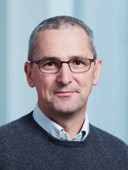
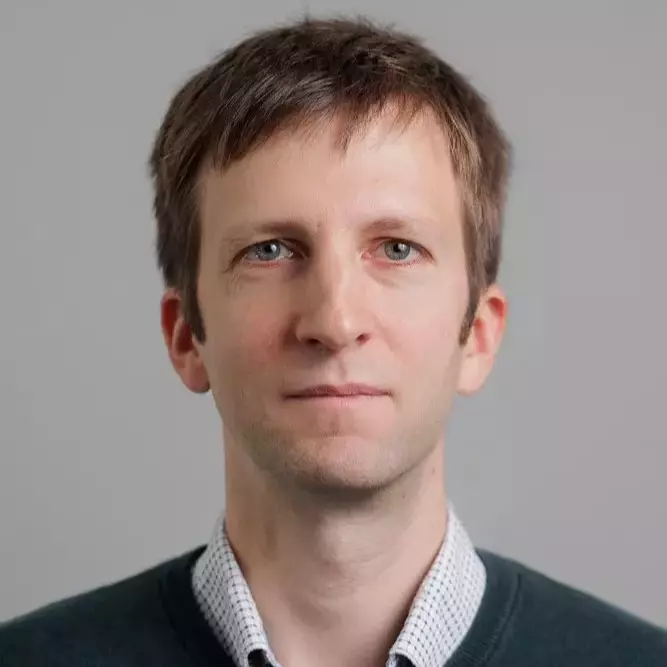
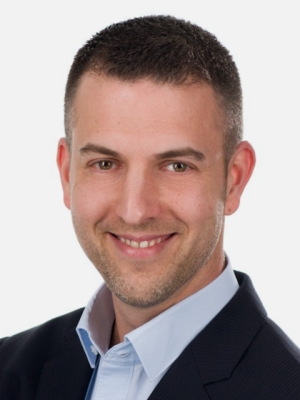
Emmanuel Frossard is a Full Professor at the Department of Environmental Systems Science at ETH Zurich, Switzerland. His research focuses on nutrient efficiency in agricultural systems, particularly phosphorus, nitrogen, zinc, and cadmium dynamics across soil-fertiliser-plant interfaces and semi-natural ecosystems. He integrates advanced techniques like isotope tracing (33P, 15N), NMR spectroscopy, ICP-MS, and molecular methods in laboratory, greenhouse, and field experiments. His work emphasizes sustainable nutrient management strategies to enhance food security while preserving soil health. As President of the Swiss National Research Program on soil (NRP 68), he drives national soil research initiatives. The group also explores nutrient cycling in agroecosystems, aquaponics, and climate-impacted environments like subarctic treelines and vineyards. Recent publications highlight his interdisciplinary approach to nutrient modeling, fertilizer efficiency, trace metal dynamics, and climate adaptation in crops like winter wheat and yams. Collaborations extend to Stanford University (2013) and institutions in West Africa, the Amazon, and Europe.
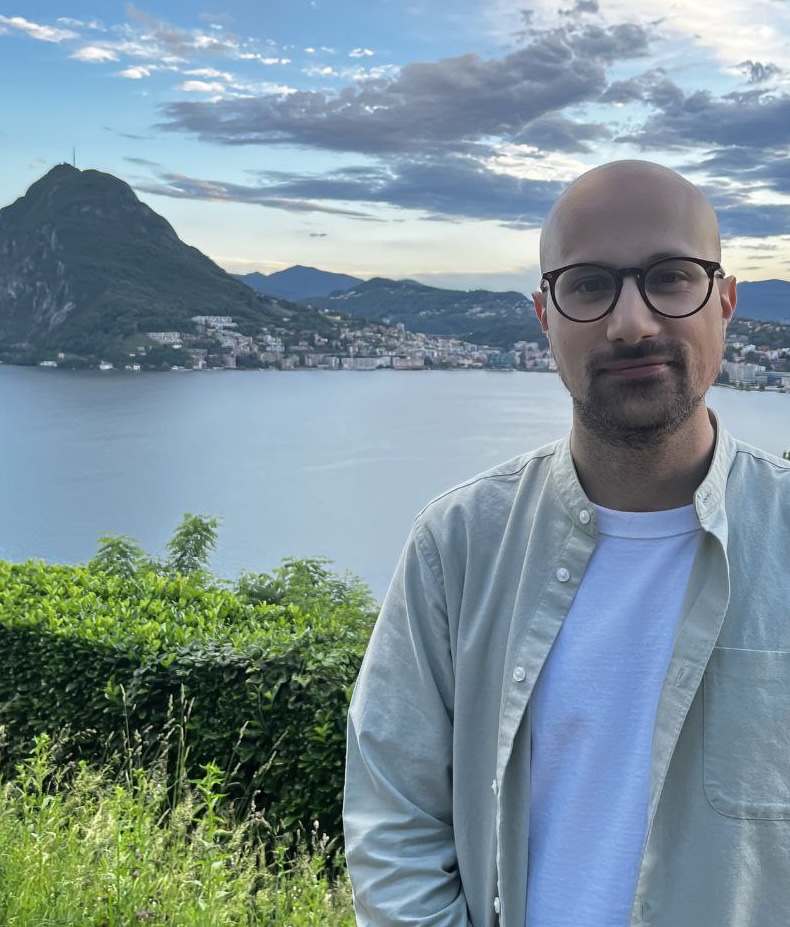
Andrea Cini is a postdoc researcher affiliated with the Graph Machine Learning Group and the Dalle Molle Institute for Artificial Intelligence (IDSIA USI-SUPSI) at the University of Lugano (USI). He also holds a position as a SNSF postdoc fellow at the University of Oxford under Prof. Michael Bronstein, focusing on machine learning for time series forecasting and graph processing. His research integrates graph deep learning methodologies with spatiotemporal dynamics, emphasizing applications in healthcare, energy systems, and intelligent systems. Education: PhD in Computer Science and Engineering (USI, 2020), supervised by Prof. Cesare Alippi MSc and BSc in Computer Science and Engineering (Politecnico di Milano) Visiting researcher at Imperial College London (Prof. Danilo Mandic) Research interests span graph neural networks , time series forecasting , and spatiotemporal data processing . His work has introduced influential methods such as the Torch Spatiotemporal library, and has been recognized with a best paper award. Recent publications emphasize applications in relational conformal prediction, hierarchical forecasting, and energy grid optimization. Awards include the Best Paper Award for contributions to graph-based forecasting methodologies. Current projects are funded by the Swiss National Science Foundation, exploring graph-based reinforcement learning and spatiotemporal modeling at the University of Oxford. Collaborations include affiliations with the Northernmost Graph Machine Learning group at UiT the Arctic University of Norway. His research bridges theoretical advancements and industrial applications in fields like healthcare dynamics prediction and smart grid optimization.
Anna Ferrari is a Researcher at the Research Institute for Statistics and Information Science, University of Geneva. She holds a Ph.D. from the University of Milano-Bicocca and specializes in human activity recognition through sensor-based systems, particularly using inertial data and deep learning techniques. Her work focuses on model personalization and the development of adaptive classification systems for diverse datasets. Her research interests include machine learning applications in sensor technology, data science methodologies for human activity analysis, and the integration of wearable devices. She has contributed to frameworks for collecting and unifying inertial signals to improve activity recognition accuracy. Anna Ferrari's publications span trends in smartphone-based activity recognition, personalized deep learning models, and sensor data homogenization. She actively maintains professional profiles on ResearchGate, LinkedIn, and Google Scholar, reflecting her commitment to academic collaboration and innovation.
Martin Vetterli is a Full Professor and currently serves as President of the Swiss Federal Institute of Technology Lausanne (EPFL). He holds positions in the School of Computer and Communication Sciences, specifically within the Institute of Electrical Engineering and the Audiovisual Communications Laboratory (LCAV). His academic appointments include teaching roles in SSC (Schooling and Student Community) and SIN (School of Computer and Communication Sciences) departments. His research spans wavelet theory, signal processing, telecommunications, and communication systems. Vetterli's work has significantly impacted image and video compression technologies, sensor networks, and self-organizing communication systems. His theoretical contributions in wavelet analysis have found practical applications across multiple domains of information technology. Latsis National Prize (1996) Fellow of the Association for Computing Machinery Fellow of the Institute of Electrical and Electronics Engineers Member of the National Academy of Engineering Vetterli has mentored over 60 doctoral students across Switzerland and the United States, maintaining active interest in their academic and entrepreneurial careers. He directs the Audiovisual Communications Laboratory (LCAV) at EPFL and was founding director of the National Center of Competence in Research in Mobile Information and Communication Systems. His research has yielded approximately fifty patents, leading to startup companies including Dartfish and Illusonic, as well as technology transfers to companies like Qualcomm.
Masashi Sugiyama is a Professor at the Department of Complexity Science and Engineering, Graduate School of Frontier Sciences, The University of Tokyo, where he has been serving since 2014. He concurrently serves as the Director of the RIKEN Center for Advanced Intelligence Project (AIP) since 2016, leading research groups focused on fundamental AI technologies, AI applications, and social issues of AI. His academic journey began at Tokyo Institute of Technology, where he earned his Bachelor, Master, and Doctor of Engineering degrees in Computer Science in 1997, 1999, and 2001 respectively, before becoming an Assistant Professor and later Associate Professor at the same institution. Sugiyama's research primarily focuses on statistical machine learning, with particular expertise in weakly supervised learning, learning from noisy supervision, and learning under distribution shift. His work has established important theoretical frameworks for density ratio estimation, covariate shift adaptation, and non-stationary environments. He has developed numerous practical algorithms including KLIEP (Kullback-Leibler importance estimation procedure), uLSIF (unconstrained least-squares importance fitting), and LSDD (least-squares density difference), which have become standard tools in the machine learning community. Analysis of his recent publications reveals a strong emphasis on reliable and robust machine learning techniques that can handle imperfect supervision and data distribution changes. His work spans theoretical foundations, algorithm development, and practical applications across various domains including bioinformatics, anomaly detection, and dimensionality reduction. The recurring themes in his research include direct density ratio estimation methods, importance weighting techniques, and mutual information-based approaches for various machine learning tasks. Award for Science and Technology from the Japanese Minister of Education, Culture, Sports, Science and Technology (2022) Japan Academy Medal (2017) Japan Society for the Promotion of Science Award (2017) Faculty Award from IBM (2007) Nagao Special Researcher Award from the Information Processing Society of Japan (2011) Young Scientists' Prize for the Commendation for Science and Technology by the Minister of Education, Culture, Sports, Science and Technology Japan (2014) Sugiyama has served as program co-chair for major machine learning conferences including NeurIPS 2015, AISTATS 2019, and ACML 2010 and 2020. He has received prestigious fellowships including the Alexander von Humboldt Foundation Research Fellowship (2003-2004) and the European Commission Program Erasmus Mundus Scholarship (2006). He is the (co-)author of influential machine learning monographs including Machine Learning in Non-Stationary Environments (MIT Press, 2012), Density Ratio Estimation in Machine Learning (Cambridge University Press, 2012), Statistical Reinforcement Learning (Chapman & Hall, 2015), and Machine Learning from Weak Supervision (MIT Press, 2022). At RIKEN AIP, Sugiyama leads research initiatives focused on developing robust AI systems that can operate reliably in real-world conditions with imperfect data. His laboratory maintains an active software development effort, providing open-source implementations of many of his research contributions, which has significantly influenced both academic research and practical applications of machine learning.
Julien Fageot is a Researcher at the École Polytechnique Fédérale de Lausanne (EPFL) in the AudioVisual Communications Laboratory within the School of Computer and Communication Sciences. He previously held postdoctoral positions at Harvard University, McGill University, and EPFL. His educational background includes: Ph.D. in Electrical Engineering at EPFL (2012-2017) M.Sc. Mathematics, Vision, and Learning in ENS Paris-Saclay, France (2011) M.Sc. in Probability and Statistics at Université Paris Orsay, France (2009) École Normale Supérieure, Section Mathématiques, Paris, France (2007-2012) Dr. Fageot's research lies at the intersection of high-level mathematics and data sciences, focusing on mathematical properties of advanced processing tools for sparse signal reconstruction and synthesis. His expertise spans sparsity, random processes, approximation theory, splines, convex optimization, functional analysis, and signal/image processing. He explores probability theory (sparse stochastic processes), optimization theory (sparsity-promoting spline reconstruction), and applications in signal processing (inverse problems, segmentation, detection, CNNs). His publication record demonstrates a clear progression from theoretical foundations of stochastic processes to practical applications in biomedical imaging. Recent work shows increasing focus on machine learning applications while maintaining strong mathematical rigor, particularly in developing sparse representations for medical image analysis. His scientific achievements have been recognized with: Best Paper Award at the MIDL Conference (2019) EPFL Best Doctorate Award (2018) Outstanding PhD Thesis Distinction in Electrical Engineering, EPFL (2017) Education Award from the Life Science Department, EPFL (2013) Dr. Fageot actively mentors students, currently supervising PhD candidate Adrian Jarret and having previously guided Thomas Debarre and Shayan Aziznejad to completion. He has supervised numerous master's theses on spline-based reconstruction and biomedical image analysis. His research is supported by Swiss National Science Foundation grants including the Postdoc.Mobility fellowship for 'Mathematical Models for Analog Data Sciences: the Continuous Way' (2020) and the Early Postdoc.Mobility fellowship for 'Probabilistic and Variational Methods for Sparse Signals' (2018). As a key member of EPFL's AudioVisual Communications Laboratory, he collaborates with Prof. Martin Vetterli, Prof. Michael Unser, and Prof. Christian Genest, bridging theoretical mathematics with practical applications in signal processing and data science.
Sagie Benaim is an Assistant Professor at the School of Computer Science and Engineering at the Hebrew University of Jerusalem. Previously, he was a postdoctoral researcher at DIKU (Department of Computer Science, University of Copenhagen) working with Professor Serge Belongie and was a member of the Pioneer Center for AI. He completed his PhD at Tel Aviv University in the Deep Learning Lab under the supervision of Professor Lior Wolf. Dr. Benaim's research spans computer vision, machine learning, and computer graphics, with a particular emphasis on generative models, neural signal representations, and inverse graphics. His work explores how disentangled representations can be leveraged to better understand and manipulate visual content. He has made significant contributions to 3D scene manipulation, image-to-video generation, and neural rendering techniques. His recent publications reveal a strong trajectory toward advancing generative AI capabilities, particularly in 3D understanding, multimodal generation, and video synthesis. His research consistently bridges theoretical foundations with practical applications, demonstrating innovation in neural representation manipulation for both creative and analytical purposes. Dr. Benaim is actively seeking excellent students and postdocs to join his research group, indicating his commitment to mentoring the next generation of researchers in computer vision and machine learning. His position at the Hebrew University of Jerusalem places him within a vibrant academic community focused on advancing the frontiers of computer science.
Ángel García-Fernández is an Associate Professor at the Polytechnic University of Madrid , specializing in Bayesian inference , multi-target tracking , and nonlinear filtering with applications in signal processing, robotics, and underwater mapping. His work includes the development of Poisson multi-Bernoulli mixture (PMBM) filters, iterated posterior linearization algorithms, and direction-of-arrival (DOA) measurement models.
Grégoire Montavon is a Professor at Charité – Universitätsmedizin Berlin and Research Group Lead at the Berlin Institute for the Foundations of Learning and Data (BIFOLD). His appointment commenced on April 1, 2025, as part of BIFOLD's institutional partnership with Charité. He holds a Master's in Communication Systems from École Polytechnique Fédérale de Lausanne (2009) and a Ph.D. in Machine Learning from Technische Universität Berlin (2013). Master's: Communication Systems, EPFL (2009) Ph.D.: Machine Learning, TU Berlin (2013) Montavon pioneers Explainable AI (XAI) for medical applications, developing methods like Layer-Wise Relevance Propagation (LRP) to verify deep learning models in diagnostics. His work bridges machine learning theory with clinical practice, focusing on model transparency for tumor classification, bias mitigation, and regression strategy analysis. Recent research emphasizes counterfactual explainers and spectral analysis for explanation quality assessment. His 2025 publications reveal a cohesive trajectory: advancing explainability frameworks for distance-based classifiers, diffusion models in oncology, and visual counterfactual systems. Key themes include robustness against dataset shifts, metadata integration for fairness, and formal desiderata for explainer design—consistently targeting real-world medical AI deployment. Award highlights: 2013 Dimitris N. Chorafas Award 2020 Pattern Recognition Best Paper Award 2022 Digital Signal Processing Best Paper Award 2025 XAI Conference Best Paper Award (for XpertAI) As BIFOLD Research Group Lead for Explainable Machine Learning in Medicine, Montavon directs projects funded through Charité-BIFOLD partnerships, including the agility project on deep generative model transparency. His team collaborates with Klaus-Robert Müller and others on NIH/DFG grants for AI-driven cancer treatment personalization and Clever-Hans strategy pruning. He leads the BIFOLD research unit Explainable Machine Learning in Medicine, focusing on clinical AI integration. Current initiatives include ICLR 2025 contributions on foundation model reliability and MedI diffusion frameworks for tumor classification bias reduction.
Prof. Dr. Matthias Rosenthal is a Professor of Multiprocessor and Real-Time Systems at the ZHAW School of Engineering, Zurich University of Applied Sciences (ZHAW), where he also serves as Head of the Research/Focus Area Realtime Platforms. He holds a PhD and MSc in Electrical Engineering from ETH Zurich (1993–1997). His research focuses on multiprocessor systems, hybrid multicore architectures, distributed signal processing, embedded GPU computing, and real-time embedded systems. Key projects include In-Flight GNSS Interference Detection, dAIrector (automated multi-camera live production), and novel AFM techniques for industrial quality control. He has led over 15 industry-focused projects, including collaborations with Innosuisse and companies like Harman International. His work emphasizes real-time systems, FPGA-GPU co-design, and embedded AI solutions. Education: PhD (ETH Zurich, 1997), MSc (ETH Zurich, 1993) Awards: CTI Startup Label (2005) Teaching: Lectures on digital systems, real-time computing, and information theory Notable contributions include advancements in embedded machine learning for food waste management, secure boot concepts for Zynq MPSoC, and low-latency wireless video systems. His research bridges theoretical computer engineering with practical industrial applications.
Sébastien Castelltort is a Full Professor and Head of the Section of Earth and Environmental Sciences at the University of Geneva's Faculty of Science. He holds a Ph.D. in Earth Sciences from the University of Rennes (2003). His career includes roles at ETH Zurich and as an Associate Professor at Sorbonne Universités (2005–2007). His research focuses on climate change impacts on Earth systems, particularly the Paleocene-Eocene Thermal Maximum (PETM) and Middle Eocene Climatic Optimum (MECO). He explores sediment routing systems, paleoclimatic signals in geological records, and planetary geology (e.g., Mars). His fieldwork spans the Gulf of Mexico, Himalayas, Taiwan, and Sahara, analyzing marine sediments, river networks, and ancient climates. Key projects include Swiss National Science Foundation (SNSF) and EU-funded grants investigating climate-driven environmental changes. He also promotes science outreach through initiatives like the Enviroscope and ClimatiZENs project, engaging schools and the public. His research group addresses interdisciplinary questions linking tectonics, climate, and sedimentology. He serves as a leader in Source-to-Sink approaches, integrating stratigraphic and geomorphologic data to decode Earth's history.
Dr. Tobias Heilmann is a Lecturer at the Department of Humanities, Social and Political Sciences at ETH Zurich. His research focuses on statistical inference, change point detection, differential privacy, high-dimensional data analysis, network analysis, and machine learning. He holds a PhD in Statistics from Fudan University, advised by Zhiliang Ying, and has contributed to software packages such as changepoints , GMPro , and APPLE . His work bridges theoretical statistics and practical applications, emphasizing privacy-preserving techniques, dynamic systems analysis, and algorithmic robustness. Key areas include nonparametric methods, contextual bandits, federated learning, and functional data analysis. Recent contributions address challenges in distributed systems, adversarial robustness, and high-dimensional model selection. He has published extensively in top journals like Annals of Statistics , SIAM Journal on Mathematics of Data Science , and IEEE Transactions on Information Theory . Dr. Heilmann's research also involves interdisciplinary collaborations, including social psychology of groups and biomedical applications. His software tools are widely used for change point analysis and community detection in networks. Current projects explore optimal privacy-utility trade-offs and adaptive algorithms for non-stationary environments.
Dr. Scott Keating is a Lecturer at ETH Zurich’s Department of Earth and Planetary Sciences (D-EAPS), affiliated with the Institute of Geophysics. His research focuses on seismic inverse problem methodologies, particularly uncertainty quantification, numerical optimization, and the development of automated workflows for regional inversion updates. Current projects include full-waveform inversion of ambient noise measurements and CO2 storage monitoring using advanced sensor technologies like distributed acoustic sensing (DAS) and accelerometers. His work integrates cutting-edge computational methods, such as probabilistic inversion frameworks and adjoint-based optimization, to address challenges in subsurface imaging and parameter estimation. Applications span environmental seismology, carbon sequestration, and reservoir characterization, with a strong emphasis on practical, cost-effective solutions for real-world problems such as CO2 storage validation. Publications highlight contributions to elastic full-waveform inversion (FWI), including multiparameter analysis using combined geophone and DAS data, and innovative techniques like targeted nullspace shuttling to enhance inversion reliability. His research also addresses data sparsity and modeling uncertainties, advancing methodologies for robust subsurface monitoring and decision-making.
Mathieu Bertrand is a Researcher in the Department of Physics at ETH Zürich, part of the Institute of Quantum Electronics under Prof. Faist's group. His research focuses on mid-infrared quantum cascade lasers (QCLs), particularly on frequency combs, dual-comb interferometry, and RF properties enhancement. He has contributed to advancing technologies such as surface-emitting QCLs and low-dissipation devices. Education: He holds a graduate degree from Grenoble-INP Phelma (France/Grenoble), specializing in semiconductor physics and optoelectronics. Research interests include quantum walk combs, RF-modulated QCLs, and applications in spectroscopy. His work bridges theoretical and experimental physics, with contributions to both fundamental science and practical device development. Teaching: He has taught at ETH Zürich since 2020, including courses on Quantum Optics, Physics Practica, and IT infrastructure management. Previously, he taught electromagnetism at Polytech' Grenoble (2017–2019). Projects: Current projects include developing low-dissipation Quantum Cascade Surface Emitting Lasers (QCSELs) and advancing fiber networks for optical signal distribution. Side projects involve lab automation, interferometer design, and data processing tools. Collaborations: Works with D-ITET on fast signal detection and maintains a lab laser database. Enjoys interdisciplinary projects blending physics, engineering, and design.
Prof. Roland Siegwart is a Full Professor of Autonomous Systems at ETH Zurich's Department of Mechanical and Process Engineering since 2006. He leads the Wyss Zurich Translational Center and previously served as Vice President for Research and Corporate Relations (2010–2014). His academic background includes a Diploma (1983) and PhD (1989) in Mechanical Engineering from ETH Zurich, followed by a decade as a professor at EPFL Lausanne (1996–2006) and visiting roles at Stanford University and NASA Ames. His research focuses on robot systems operating in complex environments, emphasizing adaptive autonomy for applications like aerial robotics, driver assistance, and service robots. He has coordinated EU projects, co-founded multiple spin-offs, and holds IEEE Fellow status. Awards include the IEEE RAS Inaba Technical Award and leadership roles in IFRR and robotics journals. Key contributions span reactive navigation, multi-modal localization (e.g., CompSLAM), and UAV path optimization. His work bridges theoretical robotics with real-world applications like corrosion inspection drones and Mars exploration path planning. Current projects emphasize open-source space systems (ATMOS) and neural radiance fields for perception.