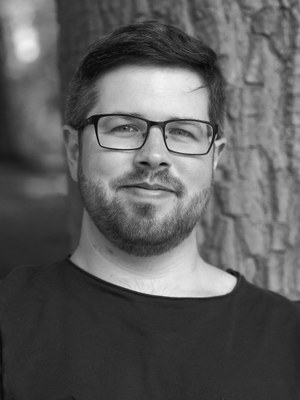
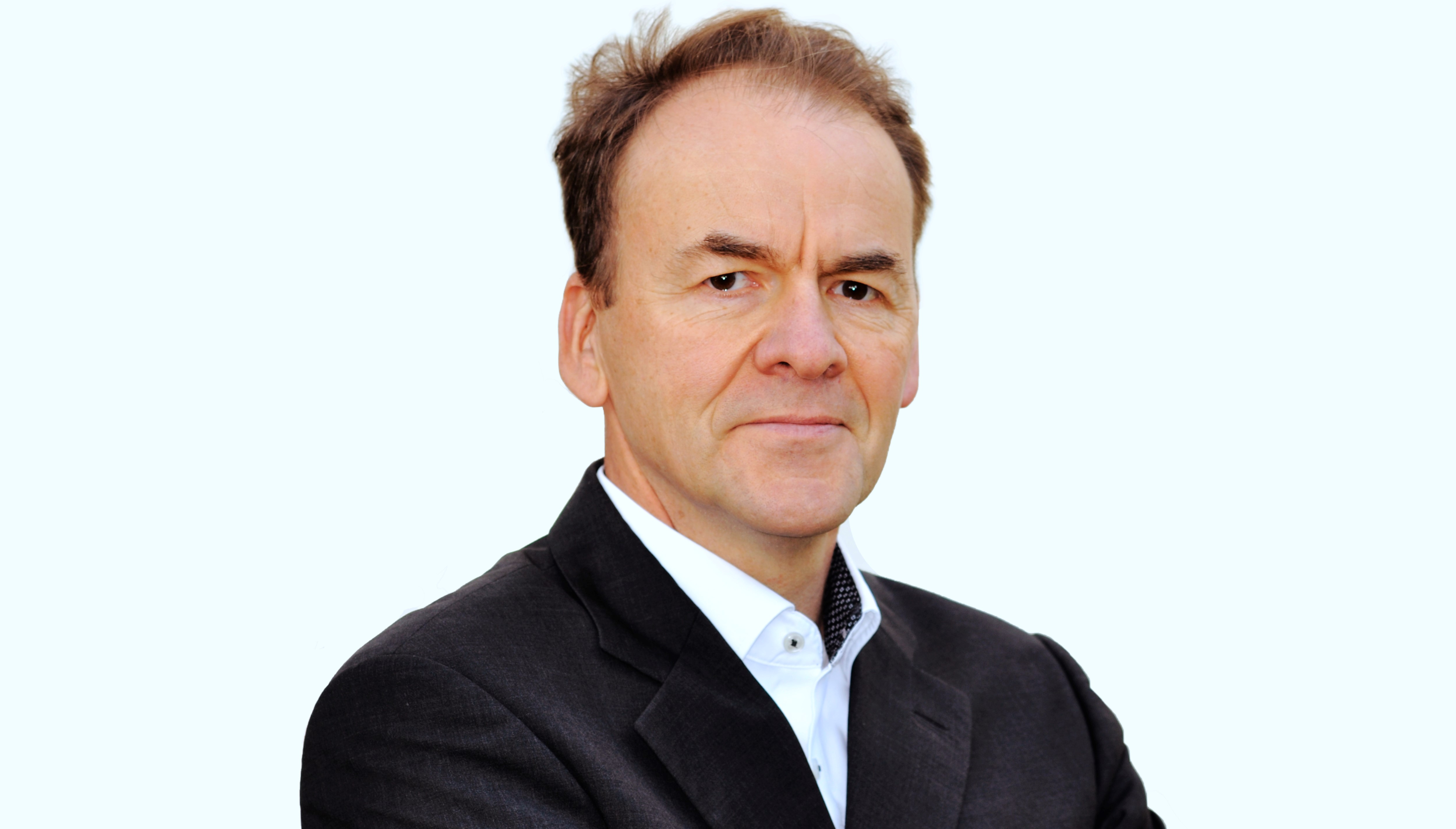
Dr. Michael Dietz is a Researcher at the Chair of Human-Centered Artificial Intelligence ( University of Augsburg , Faculty of Applied Informatics, Institute of Informatics). His work focuses on Human-Computer Interaction , Mobile Assistive Systems , and Signal Processing with Machine Learning applications. Key research trends include: Development of mobile frameworks for real-time affective feedback (SSJ Framework, SenseEmotion) Augmented reality applications for public spaces and ambient media Privacy-preserving machine learning on mobile devices Physiological signal analysis for stress detection in older adults Eye-tracking innovations for visual search detection Explainable AI techniques in facial expression recognition Projects: EmmA (Emotional mobile Avatar) Glassistant (Smart Glasses for MCI patients) SenseEmotion (Multisensorial emotion recognition) SSJ Framework (Social Signal Processing)
Dr. Jakub Kuzilek is a researcher at the Institute of Computer Science, Faculty of Mathematics and Natural Sciences, Humboldt University of Berlin. He is a member of the "Didaktik der Informatik / Informatik und Gesellschaft" (Computer Science Education | Computer Science and Society) research group, also affiliated with the Educational Technology Lab at the German Research Center for Artificial Intelligence. He joined the CSES research group in January 2020 after previously working at the Faculty of Mechanical Engineering, CTU in Prague, and completing a 4-year research stay at the Open University. Dr. Kuzilek completed his Ph.D. in Biomedical Signal Processing using Blind Source Separation methods. His academic journey transitioned from biomedical signal processing to educational data mining when Professor Zdenek Zdrahal from the Knowledge Media Institute (Open University) invited him to work on data mining of student data in the OU Analyze project. Dr. Kuzilek's primary research interests focus on the intersection of machine learning and education. His work centers on Educational Data Mining (EDM) and Learning Analytics (LA), with particular emphasis on explainable AI applications in educational settings. He investigates student behavior in online learning systems, develops predictive models for student success, and explores methods for providing actionable feedback to learners. His research bridges the gap between signal processing techniques from his earlier work and modern educational technology applications, with a strong focus on practical implementations that can directly benefit students and educators. Analysis of Dr. Kuzilek's recent publications (2021-2024) reveals a clear focus on advancing Learning Analytics and Educational Data Mining. His work consistently explores how machine learning can be applied to understand and improve educational outcomes, with particular attention to explainability of predictive models. Key research threads include student success prediction using behavioral data, algorithmic approaches to student grouping, automated feedback generation, and the use of self-assessments in higher education. His methodological approach combines rigorous statistical analysis with practical educational applications, often using real-world educational datasets to validate his findings. Best paper award for "An Automatic Method for Holter ECG Denoising Using ICA" (2011) Second place in CINC Challenge 2011 for "Simple Scoring System for ECG Signal Quality Assessment on Android Platform" (2011) Dr. Kuzilek actively mentors students at various levels, supervising numerous bachelor's and master's theses on topics related to Learning Analytics, Educational Data Mining, and machine learning applications in education. His grant portfolio demonstrates sustained research activity, including leadership roles on projects funded by the Czech Science Foundation, University Development Foundation, and BMBF. His current research focuses on AI-supported personalization in vocational training and implementing AI-based feedback systems in higher education institutions. As a core member of the Computer Science Education | Computer Science and Society research group at Humboldt University, Dr. Kuzilek collaborates with colleagues including Prof. Dr. Niels Pinkwart and other researchers to advance the field of educational technology. His work bridges theoretical research in machine learning with practical applications in real educational settings, contributing to both academic knowledge and tangible educational improvements.
Dr. Sevrine Sailley serves as a Senior Scientist at Plymouth Marine Laboratory (PML) within the Marine System Modelling group, where she leads research on zooplankton, food-web, and higher trophic level dynamics. She additionally coordinates PML's Fisheries and Aquaculture Science to Impact Challenges and chairs the ICES Working Group on Integrative Physical-biological Ecosystem Modelling (WGIPEM), demonstrating significant leadership in marine science policy and international collaboration. Her research centers on marine ecosystem modelling with particular emphasis on: Climate change impacts on marine biodiversity and fisheries sustainability Zooplankton dynamics and food-web interactions across trophic levels Carbon and nutrient cycling processes in polar and temperate ecosystems Development of integrated methodologies bridging natural and social sciences Application of inverse modelling and plankton functional type frameworks Analysis of her publication record (2009-2021) reveals progressive focus from fundamental plankton dynamics to applied climate impact assessments, with recent work (2021) providing critical projections of fish biomass reductions in East Africa under climate change scenarios. Her research consistently employs advanced modelling techniques to address real-world marine conservation challenges while contributing to major assessments like the UK Climate Change Risk Assessment. Dr. Sailley actively participates in funded research projects including CS-NOW and the UK 4th Climate Change Risk Assessment, which support her work in ecosystem dynamics and climate impacts. While specific student mentoring details aren't documented, her senior scientist role at PML suggests involvement in training early-career researchers through collaborative projects and institutional supervision frameworks. Her leadership in ICES WGIPEM facilitates international research coordination and methodological standardization across marine ecosystem modelling communities. Within PML's Marine System Modelling group, Dr. Sailley drives research on higher trophic level processes, integrating her expertise in zooplankton dynamics with broader ecosystem analyses. Her work connects laboratory-based modelling with field observations to enhance predictive capabilities for marine ecosystem responses to environmental change, supporting PML's mission in advancing marine science for societal benefit.
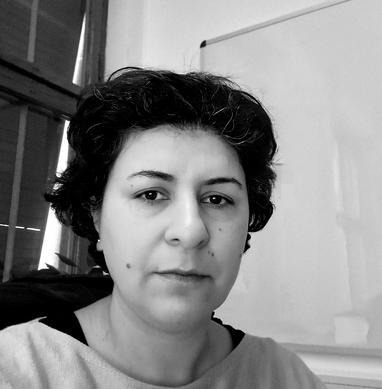
Dr. Salam Traboulsi is a Researcher at Stuttgart University of Applied Sciences (HFT Stuttgart), affiliated with the Competence Center for Digitalization in Research, Teaching & Economics since 2019. She holds a PhD in Computer Science from the University of Toulouse, France (2008). Her work bridges technology and urban innovation, with a focus on developing scalable solutions for modern cities. Research Focus: Dr. Traboulsi specializes in: Smart City ecosystems integrating IoT and 5G Precision technologies for urban positioning and navigation Data management frameworks for large-scale sensor networks Open-source IoT platforms for building efficiency and environmental monitoring Cloud and grid computing infrastructures Key Projects: She leads/contributes to: iCity 2: UDigiT4iCity – Developing urban digital twins using IoT building data and 5G sensor networks iCity 1 – Foundational research on intelligent urban infrastructure systems Publication Trends: Her recent work (2020-2024) emphasizes 5G-enabled urban solutions, including fleet management optimization, indoor positioning systems, and IoT analytics for smart buildings. Earlier research (2005-2013) focused on distributed computing, storage virtualization, and information retrieval systems, demonstrating consistent expertise in large-scale data infrastructure. Academic Engagement: She serves as a scientific reviewer for journals and conferences and teaches in the surveying study area at HFT Stuttgart.
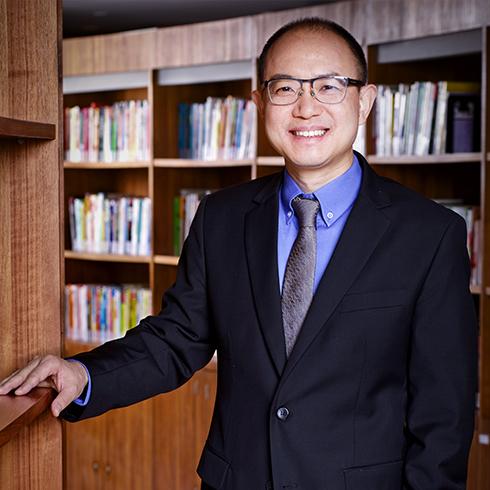
OU-YANG Hui serves as the Dean's Distinguished Chair Professor of Finance and Senior Associate Dean at Cheung Kong Graduate School of Business (CKGSB). With dual PhDs from UC Berkeley and Tulane University, he brings extensive academic expertise combined with significant industry experience from his roles as Managing Director at UBS, Lehman Brothers, and Nomura Securities where he led quantitative strategies teams. His educational background includes: PhD in Finance, University of California, Berkeley PhD in Chemical Physics, Tulane University Postdoctoral Training in Chemical Physics, California Institute of Technology (under Nobel Laureate Rudy Marcus) Professor Ou-Yang's research focuses on the development of asset pricing and corporate finance models, with particular expertise in Asset Pricing, Corporate Finance, Fixed Income, Integrated Models of Asset Pricing, Internet Finance, Moral Hazard, Quantitative Strategies and Research, and Risk Management . His work bridges theoretical finance with practical applications, often exploring how market participants process information and how this affects asset prices and trading strategies. A significant portion of his research examines the interaction between different types of market participants, information asymmetry, and how these factors influence market efficiency and price formation. His extensive publication record demonstrates a consistent focus on understanding market dynamics through rigorous quantitative approaches. His work spans theoretical modeling, empirical analysis, and practical applications in both traditional and emerging financial markets. Professor Ou-Yang has made significant contributions to understanding portfolio delegation, strategic trading, differences of opinion among market participants, and the application of continuous-time models to financial problems. His more recent work has increasingly focused on Chinese financial markets and the unique challenges and opportunities presented by China's economic development and financial innovation. Professor Ou-Yang has received numerous prestigious awards for his scholarly contributions: Barclays Global Investors/Michael Brennan Runner-Up Award for the best paper published in the Review of Financial Studies Outstanding Professor Award (Professor of the Year), Global Executive MBA, Fuqua Business School, Duke University (2004) The Society of Quantitative Analysts Award (2005 Western Finance Association Meetings) Third place award for the best paper at the 2004 China International Finance Association Meeting With his extensive industry experience as a managing director at major financial institutions, Professor Ou-Yang brings practical insights to his academic work and teaching. He has developed various structured products and trading strategies during his industry career, including "Hedging and Outperforming Inflations in China, Hong Kong, Korea, Malaysia, Singapore and Thailand," "Asset Allocation using Macro Signals," and "Relative Value Commodity Strategies." His industry experience informs his research on practical financial problems and enhances his ability to mentor students interested in both academic and industry careers in finance. While the text doesn't explicitly mention specific labs or research teams he leads at CKGSB, his role as Senior Associate Dean and Dean's Distinguished Chair Professor suggests he plays a significant leadership role in shaping the research direction of the finance faculty at CKGSB. His work on Chinese financial markets, internet finance, and the international expansion of Chinese companies indicates he likely oversees research initiatives focused on China's evolving financial landscape and its integration with global markets.
Mattias Polborn is a Professor in the Department of Economics at Vanderbilt University and holds the distinguished position of Distinguished CESifo Affiliate within the CESifo Research Network. His academic career centers on the intersection of political processes and economic policy design. Professor Polborn's research spans three interconnected domains: Political Economy : Analyzing electoral competition, candidate positioning, and voter behavior through game-theoretic models Public Economics : Investigating tax policy, social insurance design, and the political economy of redistribution Industrial Organisation : Examining market structures, externalities, and strategic firm behavior His methodological approach combines theoretical modeling with empirical analysis, particularly evident in structural studies of U.S. presidential elections and policy polarization. Recent work addresses pressing societal challenges including electoral gerrymandering, property rights institutions in developing economies, and the impact of media bias on democratic processes. Professor Polborn's scientific contributions are recognized through his Distinguished CESifo Affiliate status and extensive publication record in top economics venues. His research provides critical insights for policymakers addressing inequality, electoral reform, and institutional design in contemporary democracies. As a Vanderbilt faculty member, Professor Polborn actively supervises graduate students and maintains strong international collaborations through CESifo. His research program demonstrates sustained productivity across four decades, with working papers spanning from 1998 to 2020, reflecting continuous engagement with evolving political-economic challenges.
Dr. Miguel A. Sanchez-Conde is a Talento Fellow (tenure-track equivalent) at the Autonomous University of Madrid, where he is affiliated with the Instituto de Fisica Teorica UAM/CSIC and the Department of Theoretical Physics. He maintains additional research positions at Stockholm University's Department of Physics (since 2014) and Stanford University's Department of Physics (since 2011), reflecting his strong international research profile. Dr. Sanchez-Conde's research focuses on dark matter and gamma-ray astronomy, with particular expertise in indirect detection methods using data from the Fermi Large Area Telescope. His work spans several key areas: Analysis of gamma-ray emissions from dwarf spheroidal galaxies as dark matter targets Study of dark matter subhalos through numerical simulations Investigation of cosmic ray propagation in the Galaxy Search for dark matter signals in galaxy clusters and stellar streams Development of methods for constraining dark matter properties from gamma-ray observations With 212 publications and over 25,000 reads on ResearchGate, Dr. Sanchez-Conde has established himself as a leading researcher in the field of dark matter astrophysics. His recent work (2023-2025) shows a continued focus on refining dark matter search techniques, analyzing Fermi-LAT data from various astronomical targets, and exploring the connections between gamma-ray observations and dark matter properties. The research demonstrates increasing sophistication in handling complex astrophysical backgrounds and developing more sensitive detection methods. Dr. Sanchez-Conde's scientific contributions have been recognized through his competitive Talento Fellowship and extensive collaborations with major international research groups, including the Fermi-LAT collaboration. His work regularly appears in high-impact astrophysics journals and contributes significantly to our understanding of dark matter through indirect detection methods. As a supervisor, Dr. Sanchez-Conde offers students the opportunity to work on forefront research in dark matter physics using data from major space-based and ground-based observatories. His group likely provides training in data analysis, numerical simulation techniques, and the interpretation of astrophysical observations in the context of particle physics models.
Prof. Dr.-Ing. Robert Bach is a Professor at South Westphalia University of Applied Sciences in Soest, Germany, where he has served since 2012. He heads the Department of Electrical Power Engineering and leads the High-Voltage Engineering Laboratory. Previously, he was a Scientific Employee at Technical University of Berlin (1989–1993) and held leadership roles in energy and cable industries. His affiliations include joint research initiatives with European institutions and ongoing consultancy work. His research spans: High-voltage cable testing and partial discharge detection Superconducting power systems for grid enhancement Renewable energy integration and energy policy Insulation materials and electrical fault analysis Recent publications emphasize superconducting cable deployment (e.g., SuperLink), UHF-based discharge localization, and comparative studies of voltage-testing methods. Professor Bach advises graduate students in the High-Voltage Laboratory, focusing on experimental projects. The lab team includes Rouven Berkemeier, Michael Hoischen, and Julian Ramme. While no awards are noted, his industry-academia collaborations and prolific publication record demonstrate significant impact.
Prof. Klaus Thelen is a Professor of Analog and Digital Circuits, Microcontroller Technology, and Automotive Electronics at Ruhr-West University of Applied Sciences. He heads the Institute of Measurement and Sensor Technology and serves as program director for the Bachelor's degree in Automotive Electronics and Electric Mobility, which has been offered since the winter semester of 2017. Dr. Thelen earned his Electrical Engineering degree from RWTH Aachen University, completing his diploma thesis at the Max Planck Institute in Grenoble in 1990. He received his doctorate from ETH Zurich in 1993 for research on optoelectronic integrated circuits based on GaAs. Before academia, he held significant industry positions at Philips Semiconductors (NXP) and Helbako GmbH, focusing on CMOS circuit optimization and automotive electronic control units. His research spans automotive electronics, analog/digital circuit design, microcontroller applications, and advanced sensor technologies. Dr. Thelen specializes in automotive safety systems, temperature measurement techniques, and electromagnetic applications, with particular emphasis on child safety monitoring, radar-based detection systems, and thermal management solutions for automotive electronics. Dr. Thelen's recent publications demonstrate a strong focus on automotive safety innovations, especially child protection systems using radar and sensor technologies. His work bridges electrical engineering principles with practical automotive applications, emphasizing measurement accuracy and system reliability in challenging environments. Developed the Bachelor's program in Automotive Electronics and Electric Mobility Established university cooperation with Qingdao University of Science and Technology Created international partnerships with Wayne State University in Detroit Holds patent for contactless temperature determination in cooking devices Serves as VDE contact lecturer At Ruhr-West University, Dr. Thelen teaches across the Automotive Electronics curriculum, including Introduction to Automotive Electronics, Digital Systems-Microcontroller Technology, and Electrodynamics for the Master's program. His teaching emphasizes practical applications of electronic systems in modern vehicles, preparing students for careers in the rapidly evolving automotive industry.
Daniela González Leiva is a Scientific Associate in the Department of Intravital Toxicology at the Technical University of Dortmund, where she conducts research on liver toxicology, drug metabolism, and bile acid pathways. Her work primarily focuses on understanding the mechanisms of drug-induced liver injury, species differences in toxin metabolism, and the role of various proteins in liver disease progression. Dr. González Leiva's research interests span multiple areas of toxicology with a particular emphasis on hepatotoxicity , bile acid metabolism , and species differences in drug metabolism . Her work combines intravital imaging techniques with molecular and biochemical analyses to investigate how toxins and drugs affect liver and kidney function. She has made significant contributions to understanding acetaminophen toxicity , ochratoxin A metabolism , and the role of WISP1 protein in liver fibrosis and cancer progression. Analysis of Dr. González Leiva's recent publications reveals a consistent focus on liver toxicology with particular attention to bile acid metabolism, drug-induced liver injury, and species differences in toxin processing. Her work frequently employs mouse and rat models to study hepatotoxicity , nephrotoxicity , and metabolic disorders . A notable trend is her investigation of WISP1 protein in liver fibrosis and cancer, as well as her research on how hypoalbuminemia affects toxin distribution and the mechanisms of blood-bile barrier disruption. As a member of the Intravital Toxicology team led by Prof. Dr. Jan G. Hengstler, Dr. González Leiva collaborates with researchers across multiple disciplines including hepatology, nephrology, and analytical chemistry. The team utilizes advanced imaging techniques and molecular analyses to study real-time physiological processes in living organisms, providing insights into the mechanisms of toxicity and disease progression.
Dr. Maiju Myllys is a Scientific Associate in the Intravital Toxicology department at the Leibniz Research Centre for Working Environment and Human Factors in Dortmund, Germany. She works under the leadership of Prof. Dr. Jan G. Hengstler, Head of Department, and maintains an active research position with contact information listed as myllys@ifado.de and +49 231 1084-216. Her research focuses on liver toxicology, bile acid metabolism, and drug-induced liver injury using advanced intravital imaging techniques. Dr. Myllys's primary research interests center on liver-kidney axis interactions , species differences in drug metabolism , and mechanisms of hepatotoxicity . Her work integrates intravital imaging with biochemical analysis to understand the spatio-temporal dynamics of toxins in living organisms. She has made significant contributions to understanding bile acid transport mechanisms, acetaminophen toxicity pathways, ochratoxin A metabolism, and liver fibrosis development. Her research methodology emphasizes real-time observation of toxic processes in vivo, providing insights that traditional in vitro methods cannot capture. Analysis of Dr. Myllys's publication record from 2019-2025 reveals a strong focus on translational toxicology with emphasis on interspecies differences, liver-kidney interactions, and advanced imaging techniques. Her work frequently involves multi-institutional collaborations, as evidenced by her numerous co-authored publications. Key research themes include the development of fluorescent probes for real-time bile acid tracking, investigation of albumin's role in toxin distribution, and exploration of compensatory mechanisms in liver disease. Her 2025 publication on liver macrophages and synthetic mRNA translation represents cutting-edge work at the intersection of nanomedicine and toxicology. Dr. Myllys is an integral member of the Intravital Toxicology team led by Prof. Hengstler, contributing to a research environment that bridges basic science with potential clinical applications. The team's work has significant implications for pharmaceutical development, risk assessment of environmental toxins, and understanding mechanisms of drug-induced organ damage. Her research on bile acid transporters has direct relevance to treating cholestatic liver diseases, while her investigations into species differences help improve translation of preclinical findings to human applications.
Steffen Altmann serves as Professor of Economics at the University of Würzburg and Director of the research unit "Behavioral Economics and Labor Market Performance" at the University of Copenhagen. He maintains an active association with IZA (Institute of Labor Economics) as an Associated Member following leadership roles including Team Leader of the "Personalized Labor Market Policy" research team (2019-2023) and Deputy Program Director for "Behavioral and Personnel Economics" (2007-2014). He earned his Economics degree from the University of Mannheim and completed his Ph.D. at the University of Bonn in 2009, establishing foundational expertise in experimental methodologies. Altmann's research synthesizes behavioral economics , labor economics , and organizational economics to investigate how psychological factors and cognitive constraints interact with economic incentives. His work particularly examines job search dynamics, unemployment duration, and labor market program efficacy through rigorous field experiments , with significant contributions to understanding relational contracts and incentive psychology. His publication trajectory from 2005-2016 reveals an evolution from foundational studies on default effects and cognitive spillovers toward contemporary analyses of digital job search platforms and UI benefit comprehension. This body of work consistently applies behavioral insights to real-world policy design, primarily disseminated through IZA Discussion Papers with subsequent journal publications in top-tier outlets. No public information exists regarding his students or specific research grants, though his directorship roles indicate substantial research leadership. His current focus centers on the Copenhagen-based research unit analyzing behavioral determinants of labor market performance.