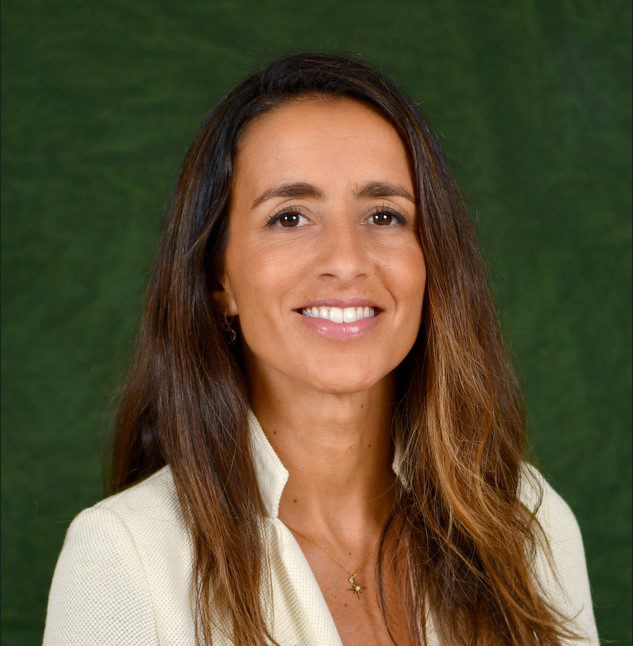
Dr. Paola Falugi is a Senior Lecturer in Electro-Mechanical Engineering at the University of East London and holds an honorary visiting researcher position at Imperial College London. Her expertise spans predictive control systems, data-driven modeling, and energy network optimization under uncertainty. Senior Lecturer, Department of Engineering & Construction, School of Architecture, Computing and Engineering, University of East London Honorary Visiting Researcher, Imperial College London Research focuses on: Predictive control strategies for uncertain systems Data-driven modeling for control applications Optimization methods in energy network expansion Energy management under stochastic conditions Control systems for robotics and mechatronics Recent publications highlight her contributions to: Robust co-design frameworks for building energy systems Machine learning integration in transmission expansion planning Automated scenario generation for optimal control Control strategies for residential buildings with energy storage Her work bridges theoretical advancements in control theory with practical applications in energy systems and building automation.
Dr. Amandine Schaeffer is a Senior Lecturer at UNSW Sydney's School of Mathematics & Statistics, specializing in physical oceanography, marine heatwaves, and jellyfish trajectory modeling. Her research integrates mathematical tools with observational data to study coastal dynamics, boundary currents, and climate extremes. PhD in Physical Oceanography (2010), Mediterranean Institute of Oceanography MSc in Physical Oceanography (2006), University of Toulon Masters in Marine Engineering (2006), SeaTech, Toulon Her research focuses on the East Australian Current's influence on marine heatwaves, submesoscale eddies, and bluebottle drift dynamics. By analyzing HF radar data, Lagrangian drifters, and glider observations, she explores how ocean stratification, wind forcing, and boundary current variability shape coastal climate extremes and ecological processes. The 15 most recent publications reveal trends in marine heatwave drivers, biophysical interactions in boundary currents, and jellyfish transport mechanisms. Key keywords span physical oceanography, climate science, and marine ecology, with sub-fields like eddy dynamics, coastal upwelling, and ocean observing systems. She supervises PhD students Youstina Elzahaby (marine heatwaves), Daniel Lee (bluebottle drift), and Natacha Bourg (boundary current dispersion). Her teaching includes mathematics and statistics courses for life sciences, as well as specialized marine science topics. As leader of the BluebottleWatch project, she bridges academic research with public safety initiatives, leveraging UNSW's oceanographic expertise to address coastal hazards through interdisciplinary collaboration.
Maarten Blommaert is an Assistant Professor at the Department of Mechanical Engineering, Faculty of Engineering Technology at KU Leuven. He leads the Applied Mechanics and Energy conversion (TME) unit at the Geel Campus and heads the Subdivisie EnergyVille TME. His research focuses on numerical optimization of thermal systems, particularly district heating networks, additive manufactured heat exchangers, and plasma-facing components for nuclear fusion reactors. Assistant Professor, KU Leuven Head, Subdivisie EnergyVille TME Member, KIES Institute Member, Leuven.AM Institute Member, EnergyVille Blommaert's research explores three main areas: heat network optimization through automated design tools like PATHOPT, additive manufacturing of high-performance heat exchangers, and thermally resistant wall modules for nuclear fusion reactors. His work combines computational modeling with advanced manufacturing techniques to enhance energy efficiency and reduce carbon emissions. Scientific awards include collaborative research contributions in: Optimizing district heating networks for renewable energy integration Developing next-generation heat exchangers Advancing nuclear fusion reactor technology Blommaert actively supervises research projects in thermal-fluid systems and collaborates with institutions like VITO and EnergyVille. His research team IDEAL (Innovative Design for Energy Applications Lab) specializes in free-shape and topology optimization techniques for energy components and systems.
Hakan Ergun serves as an Associate Professor at KU Leuven's Faculty of Engineering Science within the Department of Electrical Engineering (ESAT). He leads the Subdivisie EnergyVille Electa - Ergun and holds key roles in EnergyVille initiatives, including membership in the Division EnergyVille and the Council of the Faculty of Engineering Science. His research focuses on power systems engineering with specialization in HVDC grid technology, renewable energy integration, and stochastic optimization. Current projects include predictive maintenance for wind farms, congestion management for offshore HVDC grids, and development of hybrid AC/DC grid software tools. His work addresses critical challenges in grid resilience, uncertainty modeling, and multi-national offshore grid coordination. Recent publications demonstrate strong trends in hybrid AC/DC grid optimization under uncertainty, with emphasis on stochastic programming, polynomial chaos expansion, and risk-based operational models. Key themes include offshore grid protection, frequency stability with energy storage, and spatio-temporal variability in power system planning. Ergun actively supervises doctoral candidates including K. Phillips and C.K. Jat. His research portfolio includes significant EU-funded projects such as CROCODILE (Cross-border Coordination of Offshore Grids) and advanced HVDC grid development initiatives with multi-year funding through 2028-2029. He directs the EnergyVille Electa subdivision focused on electrical energy systems applications, collaborating with industry partners on real-world grid implementation challenges. Current work emphasizes practical solutions for multi-GW offshore energy hubs and resilient power systems leveraging HVDC transmission flexibility.
Jussi Kangasharju is a Professor in the Department of Computer Science at the University of Helsinki and leads the Collaborative Networking research group . He is also a supervisor for the Doctoral Programme in Computer Science and a member of IEEE and ACM . Research Interests: Edge Computing Information-Centric Networking Content Distribution Green Networking Future Internet Development Scientific Awards: Best Paper Award (2015) Winner of 9th Helsinki Science Slam Competition (2016) Best Paper Award (2004) Key Projects: He has led initiatives like ELLIS-instituutti (2025–2032) and University Profiling Funding (2025–2030), focusing on transdisciplinary networks and future Internet sustainability. Academic Visits: Notable visits include Seoul National University (2012) and the International Computer Science Institute (2013), further enriching his collaborative work.
Jean-Daniel Penot is a Researcher at CESI's Research and Innovation Department , with expertise in additive manufacturing, materials science, and industrial integration. His work bridges advanced manufacturing technologies with environmental sustainability and educational innovation. Doctorate in Materials Physics (2010) Engineering Degree in Physics (2007) Research Master in Optoelectronics (2007) Penot's research spans Additive Manufacturing and its applications in automotive, nuclear, and construction sectors. He focuses on Laser-Material Interaction , Machine Learning for process optimization, and Sustainable Engineering through life cycle assessments and geopolymer applications. His recent publications emphasize BIM , AM Modular Plants , and Defect Analysis in 3D-printed metals. Penot leads France Additive initiatives and contributes to International Standards as a board member. Penot supervises PhD students including Maryam Houhou and Amal Khabouchi , with a focus on Industrial Security and Energy Transitions . His projects integrate Thermal Comfort , Ultrasonic Inspection , and Quality Assurance in additive manufacturing systems.
Sajjad Fattaheian Dehkordi is a Postdoctoral Researcher in the Department of Electrical Engineering and Automation at Aalto University, Espoo, Finland. His research focuses on advanced energy management systems for modern power grids, with emphasis on distributed and transactive control approaches for resilient and efficient grid operations. His core research interests include: Power system resilience under high renewable penetration Microgrid and energy community optimization Distributed energy resource integration Electric vehicle-grid interaction and V2G systems Real-time congestion and ramping management Analysis of his 2022-2024 publications reveals a dominant trend toward multi-agent transactive frameworks addressing grid stability challenges. His work consistently targets voltage regulation, asymmetrical power flows, and ramping events in distribution systems, leveraging optimization techniques like MILP while incorporating flexibility concepts for renewable integration. Key innovations include distance-driven P2P/P2G transactions and incentive-based congestion management. No scientific awards are documented in the available records. Information regarding student advising, research grants, or leadership roles is not provided in current documentation.
Valentina Cecchi is Associate Professor of Electrical and Computer Engineering and Associate Director of the same department at the University of North Carolina at Charlotte (UNC Charlotte), where she has been a faculty member since 2010. She previously served as Graduate Program Director and Associate Chair of the department from 2019 to 2024. Education background: Ph.D. in Electrical Engineering, Drexel University, Philadelphia, PA Research interests center on electric power systems modeling and analysis, with particular emphasis on optimization of transmission and distribution system planning and operation, grid-enhancing technologies, dynamic line rating of transmission lines, and the integration of renewable and distributed energy resources. Her work spans power system protection, resilience, data-driven analytics, and pedagogical innovation in power engineering education. A consistent thread in her recent publications (2023-2025) is the application of advanced analytics and machine learning to improve real-time monitoring, protection, and restoration of active distribution networks. A complementary focus is the development and evaluation of modern educational methodologies to prepare students for emerging challenges in power and energy systems. Scientific awards: William States Lee College of Engineering Graduate Teaching Excellence Award (2022) Advising & grants narrative: While specific PhD/Master’s students are not listed in the provided text, Dr. Cecchi’s service as Graduate Program Director and her active publication record with student co-authors suggest significant mentoring activity. She has led NSF-supported curriculum updates and educational research efforts, and her work on distribution system resilience, renewable integration, and protection coordination has been funded by multiple agencies and industry partners. Laboratory & teams: Dr. Cecchi is affiliated with the EPIC building (Energy Production and Infrastructure Center) at UNC Charlotte, specifically office 1224, and contributes to the university’s power and energy systems research infrastructure.
Professor George Nakhla holds the Salamander Chair in Environmental Engineering at the Department of Chemical and Biochemical Engineering, Faculty of Engineering, Western University. With a Ph.D. from the University of Illinois at Urbana-Champaign, his career spans decades of groundbreaking research in biological wastewater treatment and bioremediation. Education: Ph.D. (University of Illinois at Urbana-Champaign, 1989), M.Sc. (University of Illinois at Urbana-Champaign, 1987), B.Sc. (University of Khartoum, 1983) His research focuses on biological nutrient removal , anaerobic digestion , and advanced oxidation processes , with recent work exploring vacuum-assisted fermentation systems, micro-aeration for sulfide control, and biochar-enabled co-digestion technologies. Collaborative projects include: Development of the first Communal Biological Nutrient Removal System in Ontario Patented fluidized bed nutrient removal processes Membrane bioreactor systems for biological nutrient removal Investigation of lignin accumulation impacts in cattle manure digesters Optimization of hydrogen production from industrial wastes Dr. Nakhla's work has expanded to include process modeling , bioreactor design , and micropollutant management , with significant contributions to understanding the interplay between operational parameters and microbial ecology in wastewater systems.
Professor Vassilios Angelidis is a distinguished academic in the field of Electrical Engineering, currently serving as a Professor at the Department of Electrical and Computer Engineering of Democritus University of Thrace. He joined the university in June 2024, bringing with him extensive international experience from prestigious institutions including the University of Glasgow, University of Sydney, University of New South Wales (UNSW), and the Technical University of Denmark. Professor Angelidis received his educational foundation with a degree in Electrical Engineering from Democritus University of Thrace, followed by a Master of Applied Science from Concordia University in Canada, and a PhD from Curtin University in Western Australia. He further enhanced his expertise with an MBA from Curtin Graduate School of Business. His research interests span Power Electronics, Renewable Energy Sources, Electrical Power Systems, and Autonomous Electricity Networks. Professor Angelidis has made significant contributions to the development of advanced power conversion techniques, grid integration of renewable energy sources, and the application of artificial intelligence in power system analysis and prediction. His work has been instrumental in advancing the field of smart grid technologies and sustainable energy systems. An analysis of his recent publications reveals a strong focus on power electronics applications in renewable energy integration, particularly in photovoltaic systems and electric vehicle charging infrastructure. His research demonstrates expertise in developing advanced algorithms for power system monitoring and control, with particular emphasis on frequency estimation, phase angle calculation, and power quality enhancement in modern grids with high penetration of distributed energy resources. Among his notable scientific achievements, Professor Angelidis has been recognized as an IEEE Fellow for his significant contributions to power electronics and the conversion and integration of renewable energy sources into power grids. He has also received the prestigious Advanced Research Fellowship for young researchers from the Engineering and Natural Sciences Council of the United Kingdom. Throughout his career, Professor Angelidis has secured research funding from various organizations across Australia, the United Kingdom, Denmark, China, India, and Malaysia, as well as industry partners with global reach. He has served on the International Councils of Beijing Jiaotong University and Universiti Tenaga Nasional (UNITEN), and currently holds the position of Vice President-elect of the IEEE Power Electronics Community. At Democritus University of Thrace, Professor Angelidis is affiliated with the Electrical Machines Laboratory within the Energy Systems Sector, where he leads research on Control and Diagnostic Methods of Electrical Machines. His current work focuses on advancing the integration of renewable energy sources into electrical power systems while maintaining grid stability and reliability.
Prof. Dr. Belgin Emre Türkay is a Professor at the Department of Electrical Engineering, Istanbul Technical University. Her work spans renewable energy systems, smart grids, and power engineering, with a focus on optimization algorithms and energy storage integration. Education: PhD in Electrical Engineering, Istanbul Technical University (1986). Her research interests include: Renewable Energy Systems Smart Electricity Grids Electrical Energy and Power Systems Optimization Algorithms for Dynamic Economic Dispatch Recent publications explore applications of quantum genetic algorithms, grey wolf optimizers, and puma optimizers in power systems, alongside integration of regenerative energy in metro lines and sustainable sources in data centers. Notable scientific recognition includes the Best Paper Track award (2023). Projects include coordinated control of energy storage systems and demand-side management for smart homes (2020-2023).
Torsten Wik is a Professor in Control Engineering at Chalmers University of Technology. He leads the Control Engineering research group and focuses on process control with theoretical and applied methodologies. Institution: Chalmers University of Technology Department: Control Engineering His research spans optimal control, model reduction, and systems with model uncertainties. Applications include energy-saving systems, environmental improvement, biological systems (water purification, recirculating fish farms, LED greenhouse lighting), and battery estimation/modeling/control. Recent work emphasizes battery degradation diagnosis, state estimation, fast charging, and reconfigurable systems. Key methodologies include physics-informed frameworks, machine learning integration, entropy-based predictive algorithms, and hypergraph modeling. Applications extend to electric vehicles, photovoltaic systems, fuel cells, and biofilm reactors. Publications highlight collaborations across engineering domains, focusing on control theory, electrochemical modeling, and real-time optimization. His work bridges theoretical advancements with industrial applications in energy systems, transportation, and sustainable agriculture.
Davood Pourkargar is an Assistant Professor in the Tim Taylor Department of Chemical Engineering at Kansas State University. He is also a Graduate Faculty Member at the Food Science Institute and a Faculty Researcher at the Johnson Cancer Research Center. His work focuses on integrating data with first-principle models to understand complex systems across multiple scales. Ph.D. in Chemical Engineering from Pennsylvania State University (2015) M.S. in Process Simulation and Control from Sharif University of Technology (2010) B.S. in Chemical Engineering from Sharif University of Technology (2008) His research interests span computational multiscale modeling, digital twin development, applied artificial intelligence, and optimization-based control of complex process networks. Dr. Pourkargar's work integrates process systems engineering with artificial intelligence to address challenging problems in chemical, biological, energy, and food systems. He develops intelligent frameworks for controlling complex process networks, designing cyber-physical architectures for smart manufacturing, and advancing system identification using machine learning and process data analytics. A significant aspect of his research involves physics-informed machine learning applied to cancer dynamics modeling and drug distribution in the human body. Dr. Pourkargar's publication record shows a strong focus on predictive modeling and control of chemical processes, particularly ammonia synthesis systems, polysilicon reactor systems, and food extrusion processes. His recent work increasingly incorporates machine learning techniques, especially transformer architectures and physics-informed approaches, applied to both traditional chemical processes and emerging areas like organ-on-a-chip systems for drug discovery. 2024 Carl R. Ice College of Engineering Outstanding Assistant Professor Award NSF EPSCoR Research Fellowship 2023 Kansas EPSCoR First Award AFOSR Faculty Fellowship Big XII Faculty Fellowship Robert F. Smith School Distinguished Junior Researcher Award from Cornell University (2017) O. Hugo Schuck Best Paper Award (2014) Dr. Pourkargar has successfully mentored numerous graduate students through their master's and doctoral research, with several receiving departmental and college-level awards. His research has been supported by significant grants from the National Science Foundation, Kansas EPSCoR, and K-State's Global Food Systems initiative. His lab has presented extensively at major conferences including AIChE Annual Meetings and American Control Conferences. The Intelligent Systems and Process Systems Laboratory (ISPSL) led by Dr. Pourkargar operates computational and experimental facilities in Durland Hall. The lab is expanding into robotic additive manufacturing and autonomous biomanufacturing, supported by research infrastructure grants. The group maintains active collaborations with the Johnson Cancer Research Center and the Terasaki Institute for Biomedical Innovation.
Dr. Yulin Hu serves as a Visiting Professor at RWTH Aachen University, holding the Chair of Information Theory and Data Analytics. His research program bridges theoretical foundations with practical implementations in next-generation wireless systems, with particular emphasis on UAV-aided networks and information-theoretic approaches to communication challenges. His core research interests span multiple interconnected domains: Wireless Communications (especially finite blocklength regimes) Information Theory applications in network design UAV trajectory optimization and network integration Wireless power transfer with nonlinear energy harvesting Edge computing and distributed learning systems Data analytics for network performance optimization Analysis of Dr. Hu's 2025 publication record reveals a concentrated research thrust on UAV trajectory design, where he develops joint optimization frameworks addressing energy efficiency, security, and reliability constraints. His work consistently integrates information-theoretic principles—particularly finite blocklength analysis—to solve practical challenges in ultra-reliable low-latency communications (URLLC) and wireless power transfer. A distinctive feature of his approach is the fusion of deep reinforcement learning with traditional optimization methods for dynamic network scenarios, including no-fly zone constraints and covert operations. While no specific scientific awards are documented in the available materials, his prolific output across top-tier venues demonstrates significant scholarly impact. Details regarding graduate student mentoring and research funding mechanisms remain unspecified in the current documentation. The Chair of Information Theory and Data Analytics, which Dr. Hu leads, functions as a specialized research unit focused on theoretical rigor and algorithmic innovation for wireless systems, though specific laboratory infrastructure or team composition details are not provided.
Michael Lemmon is a Professor in the Department of Electrical Engineering at the University of Notre Dame's College of Engineering. He has been a faculty member at Notre Dame since 1990, contributing significantly to the field of networked control systems and related applications. Education: Ph.D., Electrical Engineering, Carnegie Mellon University, 1990 M.S., Electrical Engineering, Carnegie Mellon University, 1990 B.S., Mathematics, Stanford University, 1979 Professor Lemmon's research focuses on understanding the interrelationship among communication, computation, and control in large-scale sensor-actuator networks. He is particularly known for his pioneering work on event-triggered control systems and for deploying one of the first municipal scale sensor-actuator networks for wastewater management. His current research explores deep learning applications for adaptive control of complex dynamical systems. His work spans theoretical foundations of networked control systems to practical applications in critical infrastructure including smart grids, power systems, and water management systems. Analysis of Professor Lemmon's recent publications reveals a strong focus on event-triggered and self-triggered control methodologies for networked systems. His work bridges theoretical control theory with practical applications in power systems and sensor networks. Key themes include communication efficiency in control systems, stability analysis of networked systems, and the application of these principles to real-world infrastructure challenges. Current Research Projects: "Using Data Science to Protect Tap Water Quality" (Lucy Family Institute, 2022-2023) - Using data science to identify homes at risk for unhealthy tap water and develop mitigation strategies "CPS: SMALL: Learning How to Control - A Meta-Learning Approach for the Adaptive Control of Cyber-Physical Systems" (NSF, 2023-2026) - Developing machine learning algorithms for adaptive control of IoT-enabled manufacturing systems Professor Lemmon teaches several courses including Systems Theory and Applications (EE 30122), Advanced Control (EE 60655), and Introduction to Deep Learning (EE 60572). His teaching spans both undergraduate and graduate levels, with a focus on control systems theory and emerging applications of machine learning in control engineering.