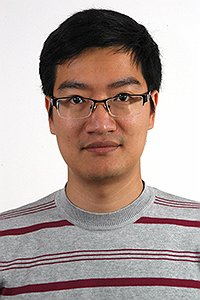
Tuan Phong Ngo is a Researcher in Computer Science at Uppsala University , Sweden, affiliated with the Department of Information Technology under the Disciplinary Domain of Science and Technology . He specializes in formal methods and software verification.
Alessandro Dal Palu' is an Associate Professor at the Department of Mathematical, Physical, and Computer Sciences at University of Parma. He holds a PhD in Computer Science from University of Udine and has been with University of Parma since 2005, transitioning from Researcher to Associate Professor in 2014. His teaching portfolio includes courses on Computer Architecture, Constraint Programming, and Algorithms & Data Structures. His research spans computational logic, bioinformatics, and GPU computing. Notable achievements include the 2007 GULP award for his Ph.D. thesis and the ICLP 2010 best paper award. He has led Italian INdAM-GNCS research projects on GPU applications (2011) and Logic Programming in cancer genomics (2016). Recent publications focus on explainable AI frameworks, bioinformatics applications, and sustainable logistics solutions. His work integrates Answer Set Programming with biomedical challenges like protein structure analysis and cancer genome evolution. He chairs the International Conference on Logic Programming (ICLP 2018) and has organized multiple international workshops on constraint programming. 2007 GULP Award ICLP 2010 Best Paper PI for INdAM-GNCS projects (2011, 2016) Program Committee member for international conferences
Stefan Rass is a full Professor at Alpen-Adria-Universität Klagenfurt (AAU), with additional affiliation at Johannes Kepler University Linz (JKU). He holds the academic title Univ.-Prof. (Universitätsprofessor) and possesses advanced degrees including PD (Privatdozent), Dipl.-Ing. (Diplom-Ingenieur), and Dr. (Doctor). His research spans multiple institutions and projects, with a focus on security and risk management through game theory applications. Professor Rass's research interests center around Security and Risk Management, Decision and Game Theory for Security, Security Infrastructures (including Key Distribution and Management, PKI, and Authentication), Unconditional and network security, Applied Quantum Cryptography, and Complexity Theory and Statistics in Security. His work bridges theoretical computer science with practical security applications, particularly in quantum networks and critical infrastructure protection. His recent publications demonstrate a strong trend toward interdisciplinary security research, combining game theory with quantum cryptography, robotics security, and AI-powered penetration testing. The articles reveal increasing focus on practical applications of theoretical security concepts, with notable work in quantum networks, deniable encryption techniques, robotics security benchmarking, and AI-assisted security testing. His research shows consistent evolution from theoretical foundations toward real-world implementation challenges. Professor Rass leads multiple ongoing research projects including Machine Learning for Risk Management, Safe and Secure Robotic Systems Engineering (SEEROSE), Simulation and analysis of critical network infrastructures in cities (ODYSSEUS), and security for cyber-physical value networks Exploiting smaRt Grid systems (synERGY). These projects, primarily funded by FFG (Austrian Research Promotion Agency), demonstrate his leadership in securing critical infrastructure and developing next-generation security frameworks.
Paul Hurley serves as the Edward J. Sexton Professor of Philosophy at Claremont McKenna College, holding a Ph.D. from the University of Pittsburgh (1988) where his dissertation "The Practical Given" was advised by Kurt Baier and David Gauthier. He previously taught at Pomona College and maintains active scholarly engagement through recent publications and university service. His educational credentials include: Ph.D. in Philosophy, University of Pittsburgh (1988) M.A. in Philosophy, University of Pittsburgh (1986) B.A. in Philosophy with honors, University of Notre Dame (1982) Professor Hurley's research centers on Normative Ethics and Metaethics , critically examining the deontology/consequentialism debate, the interrelationship of reason/desire/value, and applications to political philosophy and markets. His work addresses foundational questions about human rights, property rights, and moral justification across business, law, and political contexts, with particular focus on moral overridingness and non-identity problems. His publication trajectory since 2003 reveals sustained engagement with consequentialist frameworks, evolving toward nuanced analyses of moral verdicts and action theory as seen in his 2018 Journal of Ethics article. The corpus demonstrates consistent focus on ethical tensions between individual rights and collective welfare within political and legal structures. Award highlights include: Three Wig Distinguished Teaching Awards from Pomona College (1992, 1999, 2005) CMC's Glenn R. Huntoon Teaching Award (2016) and David Huntoon Senior Teaching Award (2015) Roy P. Crocker Award for Merit (2011) Tulane University's Murphy Institute Visiting Research Fellowship (2016-2017) While his teaching portfolio spans Ethics, Political Philosophy, and Business Ethics across undergraduate programs, the available documentation contains no specifics regarding graduate student mentorship or external research funding. His current office hours reflect ongoing direct engagement with students at Kravis Center 284.
Prof. Dr. Regina Kreide is a Full Professor of Political Theory and History of Ideas at Justus Liebig University Giessen. She serves as Co-Director of the DFG-funded Collaborative Research Center 'Dynamics of Security' and leads the DAAD ISAP partnership with Universidad de Antioquia in Colombia. Her research focuses on critical analyses of security mechanisms, minority rights, and democratic transformations in global contexts. Her scholarly work engages with: Political and critical theory examining global justice paradigms Securitization dynamics affecting marginalized communities Democratic theory in digital and transnational spaces Housing justice and property relations as sites of political struggle AI's impact on public discourse and democratic deliberation Kreide's publications demonstrate sustained engagement with Habermasian critical theory while addressing contemporary challenges like migration governance, algorithmic power, and housing inequality. Her recent work shows increased focus on material inequalities and technological disruptions to democratic processes. She actively mentors doctoral candidates, having supervised 16 PhD students on topics ranging from digital activism to postcolonial democracy. As project leader for major DFG and DAAD initiatives, she coordinates international research on Roma minorities and security politics. Her team includes four researchers and administrative staff supporting the Collaborative Research Center's operations.
Maria Salamo Llorente is an Associate Professor and researcher in the Department of Mathematics and Computer Science at the University of Barcelona (UB) . She leads the Teaching Innovation Group 'Innovació Docent en Matemàtiques i Informàtica' and is a core member of the Language and Computation Center (CLiC-UB) . Her career spans from postdoctoral work at University College Dublin to extensive contributions in artificial intelligence.
François Bodin is a Professor at University of Rennes 1, actively involved in research at IRISA (Institut de Recherche en Informatique et Systèmes Aléatoires). He leads the Logica research team which focuses on data logistics—developing methods to organize distributed processing chains while considering technical performance, environmental sustainability, data governance, and long-term viability. His work spans multiple interdisciplinary projects including AQMO for air quality monitoring, RUDI for metropolitan open data platforms, and Numpex for Exascale computing. His research interests primarily focus on: Data Logistics and Distributed Processing Systems Exascale and High Performance Computing Sustainable and Energy-Efficient Computing Practices Open Data Platforms for Smart City Applications Parallel Programming and Software Optimization Professor Bodin's recent work demonstrates a strong commitment to reconciling digital performance with environmental sustainability. His projects like AQMO (air quality monitoring) and RUDI (metropolitan data platform) showcase practical applications of his research in urban environments. The Numpex project represents his leadership in preparing French scientific and industrial applications for exascale computing capabilities. Notably, he has made a personal commitment to environmental sustainability by declaring 'For environmental reasons, starting the 01/01/2020 I will not take the plane anymore.' His scientific contributions span several key areas: Exascale computing preparation and software development Metropolitan open data platforms and governance Energy-efficient computing practices Astronomical data processing through the ECLAT laboratory Professor Bodin actively participates in research recruitment and collaborates with various institutions including CNRS, Inria, and industry partners to advance his field. His work bridges theoretical computer science with practical urban and environmental applications, making significant contributions to both academic research and real-world problem solving.
Prof. Dr. Yarema Okhrin serves as Full Professor at the Department of Statistics and Data Science within the Faculty of Economics at the University of Augsburg. He leads the Chair of Statistics and Data Science, which is part of the Business Analytics & Operations and Finance, Accounting, Controlling & Taxation clusters. His research group includes Dr. Sebastian Heiden, Dr. Rui Ren, and several research assistants working on advanced statistical methods and their applications in business and economics. Professor Okhrin's research spans mathematical and statistical models for data-driven problems in business and economics, with particular expertise in statistics, data science, and machine learning. His work focuses on developing methodologies for time series analysis, portfolio optimization, risk management, and statistical process control. Recent research has expanded into high-dimensional statistics, image analysis, and network monitoring applications. Analysis of his recent publications (2023-2025) reveals a strong trend toward interdisciplinary applications of statistical methods, particularly in finance and process monitoring. His work demonstrates increasing integration of machine learning techniques with traditional statistical approaches, especially in portfolio optimization and risk assessment. A notable pattern is the development of specialized statistical methods for high-dimensional data analysis across multiple domains. Professor Okhrin supervises bachelor's and master's theses at the Department of Statistics, with research topics including data mining, time series modeling, forecasting methods, regression analysis, and statistical data analysis. His department offers thesis opportunities in specialized areas such as asymmetric dependencies in financial markets, forecasting, investor sentiment analysis, medical statistics, volatility modeling, multivariate distributions, sustainable investing, and portfolio optimization. The Chair of Statistics maintains active research collaborations and offers academic consulting on statistical issues and data analysis. The department hosts regular research seminars to facilitate exchange of ongoing research projects and maintains connections with industry partners for practical applications of statistical methods.
Li-yao Xia is a researcher at INRIA Saclay in France, with a focus on programming languages, formal verification, and functional programming. His research explores bidirectional programming, lazy evaluation, concurrency, and mechanized verification using tools like Coq and Haskell. His work spans conferences such as ICFP, POPL, and SPLASH, where he has authored and co-authored papers on topics including interaction trees, transactional objects, and demand semantics for cost analysis. He has also served on program committees for Haskell and HIW. For more details, visit his personal website: https://poisson.chat .
Frank Pfenning is a Professor in the Department of Computer Science at Carnegie Mellon University's School of Computer Science. With decades of active research and service in programming languages and logic communities, he maintains a significant presence across major conferences including POPL, ICFP, and ESOP. His research spans foundational work in Programming Languages , Logic and Type Theory , Logical Frameworks , Automated Deduction , and Trustworthy Computing . Recent publications reveal a strong focus on session types, substructural logics, and their applications to concurrency and distributed systems. His work bridges theoretical foundations with practical implementations for reliable communication protocols. Analysis of his publication trends shows a consistent evolution from foundational type theory toward practical applications in concurrent and distributed systems. The integration of logical frameworks with session types represents a signature research trajectory, increasingly addressing real-world challenges in protocol verification and deadlock freedom. As an active community member, Pfenning has served on numerous program committees including POPL (2016-2025), ICFP (2015-2022), and ESOP. His mentoring activities include PLMW@POPL presentations, demonstrating commitment to training next-generation researchers. His technical contributions are primarily disseminated through premier venues in programming languages research. The absence of explicit grant information in available sources suggests focus on theoretical contributions rather than large-scale funded projects, though his sustained conference participation indicates stable institutional support.
Philippe van Basshuysen is a Faculty Member at the CELLS - Centre for Ethics and Law in the Life Sciences at Leibniz University Hannover. His research spans the intersection of philosophy, economics, and ethics, with particular focus on market design, mechanism design, and the ethical implications of algorithmic systems. He maintains an active research profile with publications in top philosophy, ethics, and interdisciplinary journals. Van Basshuysen's research interests include Market Design, Mechanism Design, Decision and Game Theory, Ethics, and Philosophy of Science. His work frequently addresses the ethical dimensions of predictive systems, risk assessment tools, and digital contact tracing applications. He has made significant contributions to understanding the performative aspects of predictive algorithms, arguing that some systems don't merely predict outcomes but actively shape them, creating novel ethical responsibilities. His research also extends to pandemic response ethics, kidney exchange programs, climate change ethics, and refugee distribution mechanisms. His recent publications reveal a strong trend toward examining the ethical implications of algorithmic decision-making in various contexts, from criminal justice to public health. Van Basshuysen has been particularly active in analyzing the ethical trade-offs in digital contact tracing during the COVID-19 pandemic, challenging conventional wisdom about privacy concerns and advocating for more nuanced ethical assessments that consider both privacy risks and public health benefits. His work on performative prediction represents a growing focus on how predictive systems can shape social realities rather than merely reflecting them. Active contributor to the ACM Conference on Fairness, Accountability, and Transparency (FAccT) Published in leading journals including American Philosophical Quarterly, Philosophy of Science, and Kennedy Institute of Ethics Journal Regular contributor to debates on pandemic ethics in Journal of Medical Ethics and Science and Engineering Ethics Van Basshuysen has engaged in significant scholarly discourse around pandemic response ethics, particularly regarding lockdown justification and digital contact tracing. His collaborative work has sparked academic debate on the appropriate ethical frameworks for evaluating government responses to public health emergencies. His research demonstrates an interdisciplinary approach that bridges philosophical analysis with practical policy considerations across multiple domains including healthcare, criminal justice, and environmental policy.
Dr. W.J. (Wilson) dos Santos Silva is an Assistant Professor at the Faculty of Science , University of Utrecht, specializing in AI & Data Science and Biology . His research focuses on creating explainable and robust AI models for multimodal multi-centre medical data , with emphasis on privacy-preserving machine learning and out-of-distribution generalization . PhD in Electrical and Computer Engineering (2022), University of Porto Master's and Bachelor's in Electrical and Computer Engineering (2016), University of Porto Research Interests include: Explainable AI for medical decision-making transparency Privacy-Preserving Machine Learning in healthcare Multi-Centre Data Analysis across institutions Medical Imaging applications in oncology and neurology Recent Publications demonstrate expertise in: Medical image segmentation techniques Cross-modal learning approaches Federated learning for privacy Biomedical data interpretation Generalization in heterogeneous datasets Scientific Contributions include organizing the iMIMIC workshop at MICCAI 2024 and mentoring students receiving competitive awards. Students & Collaborators : PhD Candidates: Valentina Corbetta, Daan Boeke, Miriam Cobo, Aniek Eijpe, Jan van Eck Postdoctoral Researchers: Soufyan Lakbir Former Students: Tingyang Jiao, Laura Latorre, Filipe Campos, etc. Laboratory develops AI solutions for medical imaging , multi-centre collaboration , and ethical AI in healthcare contexts.
Bas Testerink is a Researcher at the Faculty of Science , Utrecht University , focusing on Responsible AI . He works in the AI & Data Science subtheme with research interests in Human-centered Artificial Intelligence and Applied Data Science . Email: b.j.g.testerink@uu.nl Office: Minnaert Building, Leuvenlaan 4, Room 304, Utrecht His research explores Norm Enforcement in distributed systems, Multi-Agent System design, and Runtime Verification mechanisms. Key projects include AI-assisted message processing for police and Norm-based traffic control systems . Recent publications highlight his work on Argumentation-based Inquiry (2022) and Collaborative Monitoring (2016). He also investigates Security Threats in collaborative verification and Organizational Replication through inheritance models. He contributes to: Autonomous Vehicles regulation Crime Analysis through AI Peer-to-Peer Argumentation frameworks His work appears in venues like PRIMA , ECAI , and AAMAS .
Hongjin Liang is an Associate Professor at the School of Computer Science , Nanjing University , China. He is an active researcher and educator in the fields of programming languages and formal verification, with a strong focus on concurrency theory, mechanized proofs, and memory models. Education: PhD in Computer Science (May 2014), dissertation titled Refinement Verification of Concurrent Programs and Its Applications . Research Interests: His research spans formal verification , concurrent programming , memory models , and mechanized reasoning . He is particularly known for his work on verifying concurrent data structures, program logics for concurrency, and certified compilation. He is a member of the PLaX research group . Publications and Impact: Liang has published extensively in top-tier venues such as POPL, PLDI, ESOP, TOPLAS, and CSL-LICS. His work often involves formalizing and verifying complex concurrent systems using interactive theorem provers like Rocq/Coq. Notable contributions include verifying compiler optimizations under weak memory models and developing program logics for randomized concurrent programs. Scientific Awards: Distinguished Paper Award , PLDI 2019 for "Towards Certified Separate Compilation for Concurrent Programs" Teaching and Advising: He teaches undergraduate and graduate courses including Formal Semantics of Programming Languages , Concurrency: Algorithms and Theories , and Compiler Design . He has supervised graduate students and served on numerous program committees for international conferences. Affiliations: He is affiliated with the PLaX research group at Nanjing University and has collaborated with researchers such as Xinyu Feng, Zhong Shao, and Jan Hoffmann.
Stephanie Balzer is an Assistant Professor in the Principles of Programming Group at Carnegie Mellon University's School of Computer Science. She received her PhD from ETH Zurich under Thomas R. Gross and focuses on developing rigorous type systems and verification logics to build failure-free, secure software through compositional and practical methods. Education: PhD (ETH Zurich), Master's (University of Zurich), Semester Thesis (University of Zurich) Her research spans session types , logical relations , and separation logic to ensure correctness and security in concurrent systems. Recent work includes verifying timed message-passing protocols and disentanglement in type systems. Key publication trends include session-typed concurrency , noninterference , and deadlock freedom across programming languages, formal methods, and security domains. She has authored multiple distinguished papers at ECOOP and POPL. Scientific Awards: NSF CAREER Award, ACM SIGPLAN Distinguished Paper, ECOOP Distinguished Paper She advises PhD students including Yue Yao, Yinsen Zhang, and Zak Kent, and has supervised former PhD students like Jules Jacobs (now at Cornell). Her grants include NSF funding for IoT verification , heterogeneous applications , and real-time protocols .