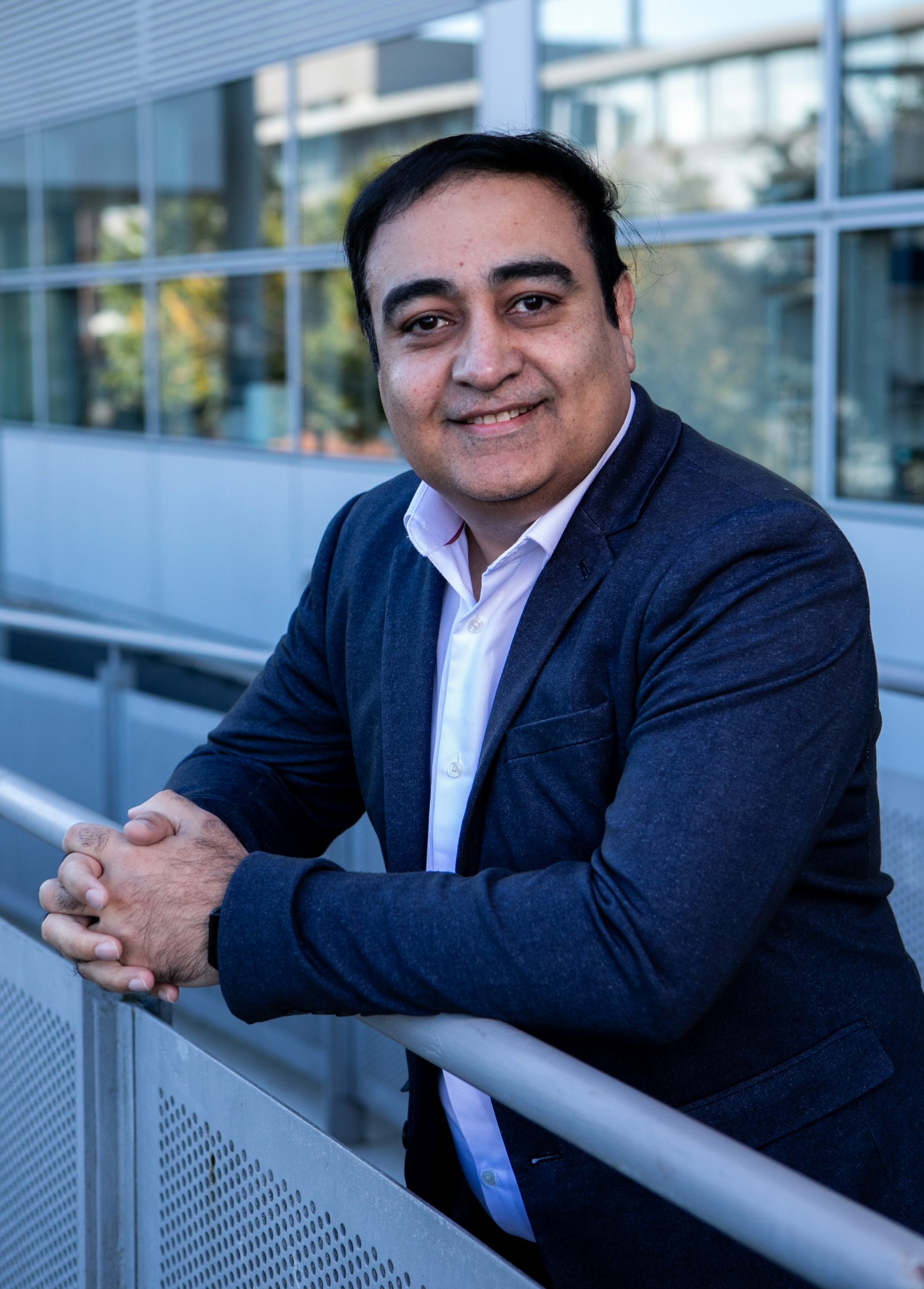
Jia Yu is a researcher affiliated with Arizona State University , Tempe, AZ, USA. Their work focuses on geospatial data management, database systems, and cluster computing frameworks like Apache Spark. They have collaborated extensively with Mohamed Sarwat and other researchers on projects such as GeoSpark , GeoSparkViz , and GeoSparkSim , contributing to scalable spatial data processing and visualization systems. Key research areas include Learned indexing mechanisms (e.g., GLIN) Microscopic traffic simulation Parallel and distributed data processing Interactive geospatial dashboards Column correlation exploitation for database efficiency Integration of visualization with backend data systems Recent publications (2014-2024) demonstrate expertise in geospatial analytics, database indexing, software testing, and Apache Spark-based systems. Notable projects include Turbocharging Visualization Dashboards , HERMIT Indexing , and Spindra Knowledge Graph Management . Work emphasizes both theoretical innovation and practical implementation for handling massive-scale spatial data.
Philipp Rohde serves as a Researcher at the Scientific Data Management research group within the Leibniz Information Centre for Science and Technology (TIB) while pursuing his Ph.D. in Computer Science at Leibniz Universität Hannover. His work bridges academic research and practical implementation in knowledge graph technologies, with emphasis on query processing systems and data validation frameworks. Academic Background: Bachelor of Science (B.Sc.) in Computer Science, Leibniz Universität Hannover Master of Science (M.Sc.) in Computer Science, Leibniz Universität Hannover Research Focus: Rohde specializes in semantic data management with particular expertise in SHACL constraint validation during SPARQL query execution. His methodological contributions address critical challenges in knowledge graph reliability, including constraint propagation in distributed environments, healthcare data integration, and access control mechanisms. Recent work demonstrates innovative approaches to validate data constraints without compromising query performance through techniques like traversal optimization and runtime certification. Research Trends: Analysis of his publication history reveals a concentrated trajectory in knowledge graph validation technologies, with 85% of recent work (2021-2023) focused on SHACL-related constraint processing. His research increasingly intersects healthcare applications, as evidenced by the Knowledge4COVID-19 project, while maintaining strong foundations in distributed systems and semantic web standards. The emergence of certified query processing as a recurring theme indicates growing emphasis on verifiable data integrity in decentralized environments. Project Leadership: Rohde actively contributes to major EU-funded initiatives including: QualiChain (EU Horizon Europe): Developing blockchain-enhanced qualifications frameworks PLATOON (EU Horizon 2020): Creating energy data interoperability solutions P4-LUCAT (ERAMed): Advancing precision medicine for liver cancer iASiS (EU Horizon 2020): Building biomedical text-mining infrastructure Research Environment: As core member of TIB's Scientific Data Management group, Rohde operates within a specialized unit focused on scalable knowledge graph technologies. The team maintains strong connections with Leibniz Universität Hannover's computer science department, facilitating technology transfer between library science applications and academic research. Current infrastructure supports large-scale semantic processing through dedicated knowledge graph validation testbeds and healthcare data integration pipelines.
Walter Binder is a Professor at the University of Lugano, Switzerland, specializing in performance analysis and optimization of Java-based and parallel systems. He has actively contributed to academic committees in conferences such as GPCE, CGO, and ‹Programming›, focusing on virtual machine efficiency, compiler design, and benchmarking methodologies. His research centers on performance profiling tools for the Java Virtual Machine (JVM), including the development of the P3 profiler suite for parallel applications and the Renaissance benchmark suite. Key areas of interest include concurrency, synchronization, dynamic compilation, and multi-language program analysis, with applications in big data processing and stream computing frameworks. Recent publications highlight trends in compiler-level event profiling, AST interpreter optimization, and SQL-to-stream benchmark generation. These works span subfields like SIMD vectorization, task granularity analysis, and native-image startup performance, emphasizing platform independence and low overhead. Notable tools and methodologies developed by Binder have been instrumental in advancing JVM-based parallel computing research. His contributions extend to automated large-scale analysis of public code repositories and performance coaching for fork/join applications.
Dr. Alexander Raschke is a Researcher at Ulm University's Institute of Software Engineering and Programming Languages, where he focuses on improving graphical diagram editors' usability through empirical evaluation and novel interaction techniques. His work spans Abstract State Machines (ASMs), software engineering team processes, and functional programming education. His primary research interests include: Usability of graphical diagram editors and modeling tools Abstract State Machines for formal specification Software engineering challenges in team-based development (communication, workload distribution, quality assurance) Functional programming with Haskell (over 10 years of teaching experience) Recent publications (2023-2025) demonstrate a strong focus on collaborative modeling systems, with significant contributions to versioning approaches for blended modeling environments, query languages for evolving models, and empirical studies on diagram editor usability. His work bridges theoretical formal methods with practical software engineering challenges. As responsible for software engineering projects in academic curricula, he actively develops solutions for team-based software development challenges including continuous integration/deployment, communication frameworks, and programming skill development. He leads the CoreASM project focused on debugging support for Abstract State Machines.
Prof. Dr. Carsten Binnig is a Professor in the Department of Computer Science at Technical University of Darmstadt and leads the “Systemic AI for decision support” research group at the German Research Center for Artificial Intelligence (DFKI). His work bridges database systems and artificial intelligence, focusing on enhancing data management through machine learning techniques and developing efficient systems for modern data challenges. His research centers on “Systems for AI” (applying database techniques to support AI workloads) and “AI for Systems” (using machine learning to optimize traditional database operations). Key interests include query optimization with learned cost models, distributed stream processing, edge-cloud data management, and question answering over heterogeneous data sources like tables and text. He investigates how learned models can replace heuristic approaches in database systems to improve performance and adaptability. Recent publications demonstrate a clear trend toward applying learned models to solve classical database challenges, particularly in cost estimation for query optimization and resource allocation in distributed environments. His work targets real-world applications in edge-cloud infrastructures and data lakes, emphasizing practical implementations that bridge theoretical advances with industry needs. Scientific recognition includes: CIDR 2025 Best Paper Award for “Towards Foundation Database Models” Prof. Binnig actively contributes to the Systems Group at TU Darmstadt, which drives research in data and AI systems as well as distributed networked systems. He leads the DFKI research unit developing systemic AI solutions for decision support, maintaining strong industry collaborations while advancing both theoretical frameworks and deployable systems in data management.
Veli Mäkinen is a Professor at the Department of Computer Science, University of Helsinki, and holds the title of Docent in the same department. He leads the Genome-scale Algorithmics research group and is affiliated with the Helsinki Institute for Information Technology (HIIT). Mäkinen serves as a supervisor for doctoral programmes in both Integrative Life Science and Computer Science at the University of Helsinki. Professor, Department of Computer Science, University of Helsinki Docent, Department of Computer Science, University of Helsinki Supervisor, Doctoral Programme in Integrative Life Science Supervisor, Doctoral Programme in Computer Science Affiliated with Helsinki Institute for Information Technology (HIIT) His research focuses on algorithmic bioinformatics, genome-scale algorithmics, and computational methods for genomic sequence analysis. Mäkinen's work encompasses data structures, string algorithms, and graph theory applied to bioinformatics challenges such as variation detection, sequence alignment, and pan-genome analysis. Recent publications highlight his advancements in graph indexing, elastic founder graphs for scalable genomic analysis, and innovative approaches to colinear chaining. These works often intersect with high-throughput sequencing and quantum computing applications in bioinformatics. Scientific awards include: Hyvä tutkija award, University of Helsinki (2007) Mäkinen has received significant funding through grants such as EU Horizon Europe's "TeamPerMed" project and multiple Finnish Academy grants for research on cancer genetics and genomic epidemiology. He is an active editor for BMC Bioinformatics and has organized key conferences like IWOCA 2016 and WABI 2017.
Kevin Buchin is a Professor at the Department of Computer Science, Faculty of Computer Science at Technical University of Dortmund, where he leads Chair 11: Algorithm Engineering. His work focuses on bridging theoretical and experimental algorithm development, particularly in computational geometry and spatial data analysis. Professor Buchin's research spans several key areas in algorithm engineering, with particular expertise in computational geometry, spatial networks, algorithms for GIS (Geographic Information Systems), and motion planning algorithms. His work combines theoretical foundations with practical applications, developing algorithms that address real-world challenges in spatial data processing and analysis. He has made significant contributions to trajectory analysis, geometric spanners, Fréchet distance computations, and map construction algorithms. His research often involves interdisciplinary collaborations that connect computer science with geographic applications and movement data analysis. An analysis of Professor Buchin's recent publications reveals a strong focus on trajectory analysis and spatial network algorithms. His work consistently addresses fundamental problems in computational geometry while developing practical solutions for real-world applications. Key trends include advancements in Fréchet distance computations, trajectory clustering techniques, geometric spanner constructions, and map-matching algorithms. His research demonstrates a balanced approach between theoretical algorithm development and practical implementation, often resulting in benchmark suites and publicly available code to support reproducibility and further research. Professor Buchin actively supervises student research projects and theses. For Bachelor's theses, he requires successful completion of "Effiziente Algorithmen (EA)" and DAP2 courses, while Master's thesis students should have completed "Algorithmen und Datenstrukturen (AuD)" and ideally specialized courses and seminars in algorithms/algorithm engineering. His group offers final projects in algorithm engineering, geometric algorithms, geometric graphs, networks, GIS algorithms, and motion planning. He has supervised numerous Master's theses, with examples of completed projects available on his group's website. The Algorithm Engineering research group led by Professor Buchin includes Mart Hagedoorn (MSc), Antonia Kalb (MSc), Dr. Guangping Li, Aleksandr Popov (external, MSc), Dr. Carolin Rehs, and student assistants Jan Erik Swiadek and Torben Scheele. The group develops tools like the "Ruler of the Plane" game that illustrates geometric problems and algorithms, which is also available online. They maintain repositories containing game sources, art, and documentation for extending the games, including the "dots & polygons" game and new levels for the art gallery game. The group also produces educational videos illustrating research results, particularly in trajectory analysis, and offers a Coursera course on geometric algorithms.
Dr. Christopher Town is an Affiliated Lecturer in the Department of Computer Science and Technology at the University of Cambridge. He holds dual roles as Bye Fellow and Director of Studies in Computer Science at Jesus College and as a Fellow and Tutor at Wolfson College. His research focuses on bridging the semantic gap between human and machine interpretation of visual data through ontology-based frameworks, with applications in image retrieval, automated surveillance, and biological pattern analysis. Notable contributions include the development of tools like Manta Matcher for marine species identification and algorithms for egg pattern recognition in evolutionary biology. Dr. Town earned his PhD in Computer Science from the University of Cambridge, supported by an Industrial Fellowship from the Royal Commission for the Exhibition of 1851. His academic journey includes pre-doctoral research at AT&T Labs and undergraduate studies at Trinity College, Cambridge. He has supervised over 60 student projects, lecturing courses in Machine Visual Perception and Computer Vision. Awards include the BCS Distinguished Dissertation Award (2005) and recognition for best papers in computer vision and bioinformatics. His interdisciplinary work spans computer science, ecology, and medicine, with publications in journals like Nature Ecology & Evolution and IEEE transactions. He actively promotes academic mentorship through initiatives like the PhD Mentoring Scheme at Wolfson College. Current research explores reproducibility in GANs and the application of deep learning to ecological and medical imaging challenges.
Jörn Hees is a Professor at the German Research Center for Artificial Intelligence (DFKI), affiliated with the Smart Data & Knowledge Services department. His work bridges deep learning, linked data, and knowledge graphs, with projects like TreeSatAI (AI for environmental monitoring) and DeFuseNN (deep network fusion). Research Interests : Deep learning, machine learning, data mining, knowledge graphs, semantic web, linked data, and association modeling. Projects : TreeSatAI (remote sensing AI), MInD (machine intelligence for digital transformation), DeFuseNN (neural network fusion), MOM (multimedia opinion mining). Recent publications focus on outlier detection for tabular data (Fin-Fed-OD, RECol), super-resolution techniques, and transformer-based models. He actively develops open-source tools like the RDFLib Python library and Graph Pattern Learner for SPARQL query generation. No scientific awards are explicitly mentioned in the available data.
Rodrigo Bruno is an Assistant Professor at Instituto Superior Técnico (University of Lisbon) and Senior Researcher at INESC-ID Lisbon. His research bridges Systems and Programming Languages with a focus on optimizing language runtimes for cloud environments (Microservices, Serverless). He previously worked at Oracle Labs Zurich and ETH Zurich. Research Areas Systems Programming Languages Cloud Computing Serverless Computing Operating Systems Key projects include Shell (FCT-funded serverless platform), Graalvisor (polyglot runtime virtualization), and Naos (RDMA networking in Java). His work appears in top venues like NSDI, EuroSys, ATC, and SoCC. Scientific awards include the EdgeEmu Best Paper Award , Best Young Researcher 2022 (INESC-ID), and multiple teaching excellence recognitions. He has served on program committees for EuroSys, NSDI, ATC, and more. Rodrigo Bruno leads a dynamic team including PhD candidates Vasyl Lanko, Bernardo Ribeiro (co-advised), and MSc students like André Páscoa. His research integrates with production systems such as the V8 JS Engine and OpenJDK HotSpot JVM. Current teaching includes Cloud Computing and Virtualization , Computer Systems Engineering , and IT Infrastructure Management . His service spans organizing committees for SESAME, MoreVMs, and artifact evaluation for SOSP.
Professor Graham Morgan is a distinguished faculty member at Newcastle University's School of Computing, where he serves as a Professor in the Department of Computer Science. His research spans multiple domains within computer science with a particular focus on distributed systems, Internet of Things technologies, and the application of gaming technologies to healthcare solutions. He leads several research projects and collaborates extensively with both academic and industry partners across multiple disciplines. Professor Morgan's primary research interests include distributed systems architecture, software transactional memory, IoT simulation frameworks, and the development of serious games for health applications. His work has pioneered approaches that bridge computer science with healthcare, particularly in developing video game-based rehabilitation systems for stroke patients and other therapeutic applications. His recent work has expanded into explainable AI, 6G networking, and advanced simulation techniques for IoT environments. Professor Morgan's publication record demonstrates a clear evolution from foundational work in distributed systems and transactional memory to more applied research in healthcare technology and IoT. His most recent publications (2023-2026) show a strong focus on simulation frameworks for IoT and osmotic computing, explainable AI systems, and the application of AI in clinical decision support. He has developed several notable simulation tools including SimulatorOrchestrator, IoTSimSecure, and SimulatorBridger that address critical challenges in networked systems and healthcare delivery. Principal Investigator for multiple research grants in IoT and healthcare technology Supervisor for numerous PhD and Master's students in computer science Collaborator with healthcare professionals on clinical decision support systems Developer of simulation frameworks for IoT and osmotic computing environments Researcher in AI-enabled clinical decision aids and healthcare applications Professor Morgan leads research teams focused on IoT simulation, serious games for health, and explainable AI. His laboratory develops simulation tools that address real-world challenges in networked systems, energy efficiency, and healthcare delivery. Current projects include the development of 6G-ready simulators, deepfake detection systems, and AI decision aids for clinical settings. He maintains strong collaborations with medical professionals, particularly in stroke rehabilitation and clinical decision support, ensuring his technical research has direct healthcare applications.
Ali Intizar is an Assistant Professor at the School of Electronic & Computer Engineering , Dublin City University (DCU). Previously, he held roles as an Adjunct Lecturer, Research Fellow, and Research Unit Leader at the Data Science Institute, National University of Ireland, Galway. He earned his PhD (with distinction) in 2011 from Vienna University of Technology, Austria. Research interests: Ali specializes in Data Analytics , Internet of Things (IoT) , Stream Query Processing , Data Integration , Distributed and Federated Machine Learning , and Knowledge Graphs . His work applies these technologies to domains such as Smart Cities, Smart Manufacturing, Smart Farming, Environmental Monitoring, and e-Health. Funding & Collaborations: He has secured grants as principal investigator and funded investigator from the European Commission, Science Foundation Ireland, Enterprise Ireland, and industry partners. His research has resulted in over 100 publications in top-tier journals and international conferences. Education: PhD (with distinction), Vienna University of Technology, Austria (2011) Labs & Teams: Ali has contributed to the Data Science Institute at National University of Ireland, Galway, as a Research Unit Leader, and now collaborates with DCU's School of Electronic & Computer Engineering in advancing IoT and distributed machine learning applications.
Michael Hoeding is a Professor at the Brandenburg University of Technology in the Department of Economics . With expertise in network-based applications for commerce and electronic business, his work bridges databases, telecommunications, and enterprise systems. Specialization in database integration and legacy system modernization Key contributions to service-oriented architectures , XML , and SAP ERP optimization Focus on data warehousing (SAP-BI/SAP-BW) and wiki technology for knowledge management His research explores multimedia techniques in training and marketing, Oracle administration , and flash storage applications in database systems. He received the Forschungspreis (research award) from Otto-von-Guericke University Magdeburg in 1998. Notable recent work includes mobile learning applications , single-page website design , and Android development frameworks . His publications span topics from context-based querying to cooperative information systems , reflecting 25+ years of interdisciplinary research. Scientific Awards : Forschungspreis (1998) Grants : Research funding through Fraunhofer Institute participation Teaching : Courses in database systems , software engineering , and mobile applications
K. Psarakis is a researcher in the field of Data-Intensive Systems, focusing on cloud computing, stream processing, and distributed dataflows. Their work bridges theoretical and practical challenges in cloud-native applications and scalable systems. Institution: Affiliated with Data-Intensive Systems Research Focus: Cloud transaction management, autoscaling, geospatial data platforms, and fault tolerance Research Trends Recent publications like Styx and CheckMate highlight innovations in transactional stateful functions and checkpointing protocols. Psarakis also contributes to geospatial data federation (e.g., Topio ) and schema matching techniques ( Valentine ). Collaborations Collaborates with researchers such as G. C. Christodoulou, M. Fragkoulis, and A. Katsifodimos on projects involving open-source platforms and cloud-native systems.
Lingxiao Jiang is an Associate Professor at the School of Computing and Information Systems (SCIS) at Singapore Management University (SMU) in Singapore. His research and teaching interests focus on software engineering, program analysis, testing & debugging, code search & reuse, and deep learning & analysis of code. He is actively involved in multiple research tracks across major software engineering conferences including ASE, ICSE, ESEC/FSE, and MSR. His research interests encompass practical techniques and tools that enhance software quality, increase development productivity, reduce maintenance cost, and improve user experience. He also explores programming languages, systems, security & privacy, data mining, and machine learning to solve software engineering and security problems. His work focuses on context-aware software mining, analysis, and deep learning, with applications in code clone detection, code query processing, bug detection, search for bug fixes, refactoring, and testing & debugging techniques. Professor Jiang's research involves large-scale, diverse, contextual data sources beyond program code, including code change histories, bug databases, test suites, developer activities, user feedbacks, and socio-technical information. His methodology leverages static & dynamic program analysis, code representations, software engineering methodologies, natural language processing, information retrieval, data mining, deep learning, and distributed computing techniques. His research has resulted in numerous publications with significant impact, including the DECKARD tool which received the ACM SIGSOFT Impact Paper Award in 2018. His work spans various areas including scalable code clone detection, deep learning of code, and analysis of software repositories. Scientific Awards: ACM SIGSOFT Impact Paper Award 2018 for DECKARD paper ICSE '18 Distinguished Paper Award for Hierarchical learning of cross-language mappings Professor Jiang actively advises graduate students and has mentored numerous PhD and Master's students to completion. He also leads the Centre for Research on Intelligent Software Engineering (RISE) at SMU, which focuses on high-quality and impactful research in intelligent software engineering. His research has practical applications in various domains including Android security, smart contracts, drone security, and compiler testing.