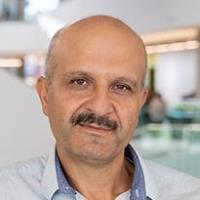
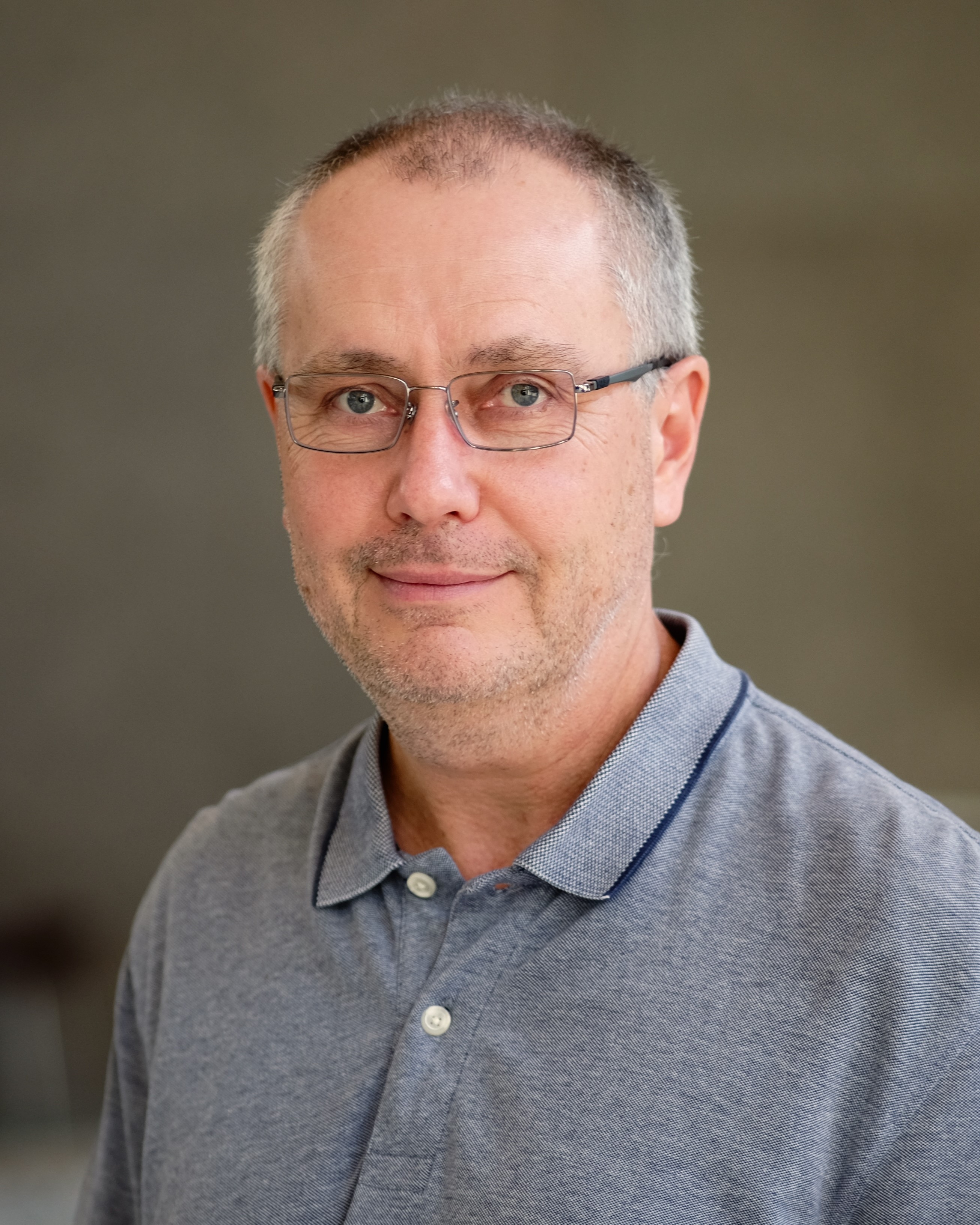
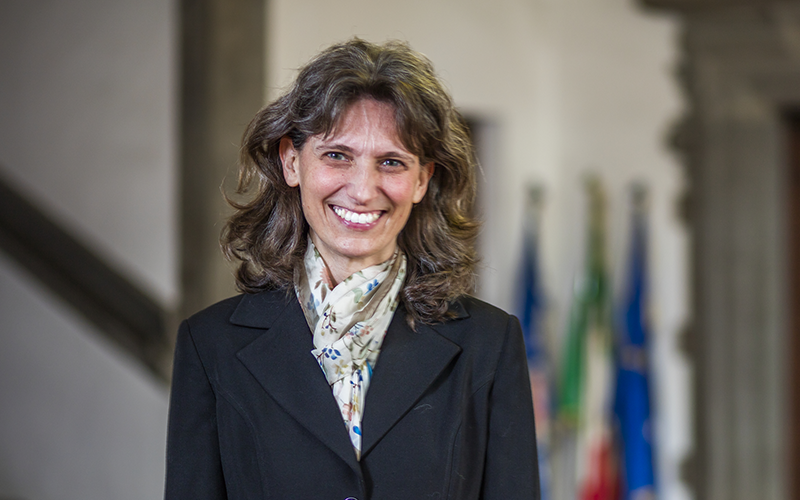
Giacomo Vitali is a Ph.D. candidate in Computer and Systems Engineering at the Politecnico di Torino , Department of Control and Computer Science (DAUIN), while also serving as a Lecturer at the same institution. His research focuses on Quantum Computing , Machine Learning , and Parallel and Distributed Systems . Education: M.Sc. in Physics of Fundamental Interactions (2018) from the University of Pisa Research: Pioneering hybrid quantum-classical algorithms for industrial applications, including BBQ-mIS and DEN models for graph problems and quantum hardware optimization Teaching: Contributing to courses on Quantum Hardware Design and Quantum Computing at the M.Sc. level, as well as undergraduate courses in Computer Science
Nishant Saurabh is a tenured Assistant Professor at the Department of Information and Computing Sciences , Utrecht University , Netherlands. His research focuses on resource and data management , application scheduling , performance modeling , and optimization in large-scale hybrid distributed systems including Cloud, Edge, and Quantum computing. Recently, he has expanded into ML workload scheduling and causal performance attribution across the Cloud-Edge continuum. Research Expertise : Distributed Systems and Cloud Computing Quantum-HPC Middleware Systems Performance Modeling and Optimization ML/AI Workload Scheduling Cloud-Edge Continuum Architectures Observability Frameworks Scientific Leadership : Associate Editor, Springer's Journal of Cloud Computing Editorial Board, Frontiers of AI book series IBM HPC-Quantum Working Committee member Workshop Chair, IEEE IPDPS 2025 Supervision : He has supervised 16+ Master/Bachelor students on projects including container migration, reinforcement learning for serverless computing, and quantum middleware evaluation. Current PhD students include Diogo Landau (Performance Observability), Nathan Keyaerts (LLM Methods), and Negar Alizadeh (Energy Efficiency).
Vahid Rezania is a Professor and Chair of the Department of Physical Sciences at MacEwan University since 2004. He holds a PhD in Theoretical Physics (Institute for Advanced Studies, Iran) and has previously served as a Postdoctoral Fellow and Research Associate at the University of Alberta (2000-2005). Education: PhD in Theoretical Physics (Institute for Advanced Studies, Iran, 2000) MSc in Physics (Shiraz University, Iran, 1995) BSc in Physics (Shiraz University, Iran, 1994) His research integrates biophysics , theoretical physics , and computational modeling to study complex biological systems. Current projects include simulating drug metabolism in the liver and analyzing electrostatic properties of microtubules for cancer therapy applications. Recent publications highlight his interdisciplinary approach: 2024 work on fibrotic liver modeling , 2021 studies of microtubule conductivity , and 2020-2019 collaborations on TTField therapy for glioblastoma. These span computational biology , nonlinear dynamics , and nanobiophysics . Scientific Awards: Strategic Research Grant (2015, 2020) Research Project Grants (2010, 2014, 2018) Dissemination Grants (2008, 2010, 2018) PhD Scholarship (Iranian Ministry of Culture, 1995-2000) First rank graduate (Shiraz University, 1994) Collaborations: University of Alberta University of Calgary University of California, Santa Barbara University of Wisconsin, Milwaukee He has supervised senior student research projects and developed physics courses from first-year to advanced levels. His work bridges mathematical modeling with experimental validation across biological and quantum systems.
Stefan Groote is an Associate Professor in Theoretical Physics at the Institute of Physics, Faculty of Science and Technology, University of Tartu, Estonia. He has held this position since February 2024, having previously served as an Associate Professor from January 2021 to February 2024 and as a Senior Research Fellow from 2016 to 2020. Before joining the University of Tartu, he held positions at Johannes Gutenberg University in Mainz, Germany, where he completed his habilitation in 2003, and at Cornell University as a Post-Doc from 1998-1999. Dr. Groote received his Doctor's Degree in 1997 from the University of Mainz under the supervision of Jürgen Körner, with his dissertation focusing on "QCD-Strahlungskorrekturen in der Physik schwerer Quarks und Baryonen" (QCD radiation corrections in the physics of heavy quarks and baryons). He completed his habilitation (Dr. habil.) at the University of Mainz in 2003, qualifying him for a professorship in Germany. Dr. Groote's research focuses on theoretical particle physics, particularly in the areas of Quantum Chromodynamics (QCD) and quantum field theory. His work spans perturbative and non-perturbative aspects of QCD, including spin in QCD perturbation theory, correlation functions and sum rules, lattice-QCD gauge theories, and the determination of standard model parameters using stochastic methods. His recent research has increasingly focused on non-perturbative approaches to Yang-Mills theories using Dyson-Schwinger equations, finite temperature QCD, and confinement mechanisms. He has published extensively in leading physics journals including Physical Review D, Nuclear Physics B, and Symmetry. An analysis of Dr. Groote's recent publications (2023-2025) reveals a strong focus on non-perturbative methods in quantum field theory, particularly the application of Dyson-Schwinger equations to problems in QCD and Yang-Mills theories. His work spans multiple subfields including finite temperature QCD, confinement mechanisms, electroweak theory, and mathematical aspects of field theory. Collaborations with researchers like Marco Frasca and Anish Ghoshal are prominent in his recent work, indicating strong international research connections in theoretical particle physics. Member of the German Physical Society (since 1995) Member of the AMBER collaboration (since 2025) Member of the management committee of the COST action CaLISTA (since 2022) Associated member of the COMPASS collaboration (since 2018) Dr. Groote serves as a referee for numerous prestigious journals including Physical Review D (since 2003), Letters in Mathematical Physics (since 2006), Annals of Physics (since 2010), and Physical Review Letters (since 2018), demonstrating his standing in the theoretical physics community. He has taught advanced courses at the University of Tartu including Quantum Field Theory, Renormalization Methods in Quantum Field Theory, and Gauge Theory for the Interaction of Elementary Particles, contributing significantly to graduate education in theoretical physics. His research is characterized by rigorous mathematical approaches to fundamental problems in particle physics, with particular emphasis on non-perturbative phenomena that cannot be addressed through conventional perturbative methods.
Dima Krioukov is a Professor at Northeastern University with appointments in the Departments of Physics, Mathematics, and Electrical & Computer Engineering. He is affiliated with the Network Science Institute and leads the DK-Lab research group. His work bridges theoretical physics, mathematics, and network science with applications to the Internet, neuroscience, and cosmology. Primary Office: 177 Huntington Avenue, 2nd floor, Rm. 227, Boston, MA 02115 Additional Locations: The Roux Institute (London and Portland) Contact: +1-617-373-2934 Professor Krioukov's research spans network theory , network geometry , causal sets , and fundamentals of network dynamics . His work establishes connections between geometric properties of networks and their functional characteristics, with applications to navigation in complex systems. He has demonstrated that latent hyperbolic geometry explains heterogeneous degree distributions and strong clustering in real networks, and that the large-scale structure of the universe shares properties with complex networks like the Internet and the brain. His research has led to practical applications including optimal routing schemes for telecommunication networks based on hyperbolic geometry. His recent publications reveal a strong focus on the intersection of geometry and network science, with particular attention to causal sets, Riemann surfaces, and hyperbolic geometry. The research trends show increasing sophistication in connecting discrete network structures with continuous geometric spaces, with applications ranging from quantum gravity to efficient Internet routing. The work demonstrates how fundamental geometric principles govern the structure and function of diverse complex systems across multiple domains. Top 2% scientists worldwide (Stanford University 2024 assessment) USPTO patent on super-scalable routing in telecommunication networks Krioukov leads the DK-Lab, which focuses on theoretical aspects of network science with practical applications. His lab has developed methods to infer latent geometries of networks, created optimal routing algorithms based on hyperbolic geometry, and established connections between network structure and cosmological models. Current projects include research on network geometry, navigation in networks, random graphs and their limits, fundamentals of network dynamics, and quantum gravity applications. The lab maintains strong connections with both theoretical physics and practical network engineering communities.
Inès Montaño serves as Associate Professor in the Department of Applied Physics and Materials Science at Northern Arizona University, where she has led cutting-edge quantum research since joining in 2017 after a 13-year career at Sandia National Laboratories. Her work bridges theoretical condensed matter physics with experimental validation through strong interdisciplinary collaborations. Her academic foundation includes a PhD and Diploma in Physics from the Technical University of Berlin, followed by postdoctoral research at Sandia National Laboratories. These experiences established her expertise in quantum phenomena and nanoscale device modeling. Dr. Montaño's research spans transformative quantum domains with particular emphasis on: Quantum network tomography and secure communication protocols Light-matter interactions in hyperbolic metamaterials Quantum information processing with silicon-based qubits Energy transfer dynamics in bio-inspired nanomaterials Many-body quantum systems and quantum simulation Her publication trajectory reveals accelerating contributions to quantum networking (60% of recent work), with significant expansion into quantum education initiatives and bio-quantum interfaces. The 2022-2025 output demonstrates strategic alignment with national quantum infrastructure priorities. Notable recognitions include: Co-PI for NSF's $25M Engineering Research Center for Quantum Networks Leadership in Nanotechnology Collaborative Infrastructure Southwest Back-to-back faculty impact awards for undergraduate mentees (2018-2019) Prestigious Berliner Fellowship for women in research (2002-2004) As director of the Quantum Photonics and Emerging Phenomena (Q-PEP) group, she secures major grants including NSF quantum initiatives while mentoring next-generation scientists. Her SparCQS program actively develops quantum workforce pipelines through K-12 outreach and undergraduate research experiences, positioning NAU at the forefront of quantum education infrastructure.
Anton Proskurnikov is an Associate Professor in the Department of Electronics and Telecommunications at Politecnico di Torino, Italy. His academic appointment spans the College of Computer, Film and Mechatronics Engineering and the College of Mechanical, Aerospace and Automotive Engineering. Based in office L.240, he maintains an active research program focused on control theory with applications to complex networked systems. Dr. Proskurnikov's research centers on complex networks, multi-agent systems, nonlinear control, and social network analysis, with significant contributions to understanding opinion dynamics and consensus mechanisms. His work bridges theoretical control engineering with practical applications in social dynamics, earning recognition through prestigious awards including the O. Hugo Schuck Best Paper Award (2023). His expertise spans control theory, optimization, and network analysis with implications for sustainable infrastructure and smart cities. His publication trajectory reveals a sophisticated evolution from foundational control theory toward increasingly complex applications in social dynamics and networked systems, with recent emphasis on bounded confidence models, higher-order interactions in social dynamics, and quantum optimization for complex system design. This interdisciplinary approach connects traditional control engineering with emerging challenges in social network analysis. Dr. Proskurnikov has received multiple significant awards: O. Hugo Schuck Best Paper Award (2023) from the American Automatic Control Council EPEPS Best Paper Award (2020) from EPEPS Conference Annual Reviews in Control Paper Prize (2020) from IFAC As an academic advisor, Dr. Proskurnikov currently supervises PhD student Jinze Wu in Electrical, Electronics, and Communications Engineering. His research is supported by the National Research PRIN project "Higher-order interactions in social dynamics with application to monetary networks" (2023-2025), for which he serves as Scientific Manager. He contributes to editorial boards of leading journals including IEEE TRANSACTIONS ON AUTOMATIC CONTROL and INTERNATIONAL JOURNAL OF CONTROL, reflecting his standing in the control theory community. Dr. Proskurnikov is an active member of the Automatica research group within the Department of Electronics and Telecommunications, focusing on systems, automation, and control. His collaborative work extends internationally to institutions including TU Delft, St. Petersburg National Research University, and the University of Groningen, demonstrating his strong international research presence and interdisciplinary approach to complex networked systems.
Viktor Krutianskii is affiliated with the University of Innsbruck , working in the Department of Experimental Physics . He is part of the research team focused on quantum networking , particularly with trapped ions and photon entanglement over long distances. His work bridges quantum optics and quantum information science. His research spans multiple subfields, including quantum entanglement , telecom-wavelength compatibility , and nonlinear optical effects . Key trends in his publications highlight advancements in ion-photon interfaces , distributed quantum sensing , and noise-resilient quantum communication . He has contributed to developing quantum repeaters and multiqubit network nodes .
Kwangsu Lee is an Associate Professor in the Department of Computer and Information Security at Sejong University, specializing in cryptography and computer security. With a research career spanning over two decades, he has established himself as a prominent figure in cryptographic protocols, particularly in identity-based encryption, functional encryption, and digital signatures. His educational background includes a B.S. from Yonsei University (1998), an M.S. from KAIST (2000), and a Ph.D. from Korea University (completed around 2010-2011). Prior to his current position, he served as a Postdoctoral Researcher at Columbia University (2012) and as an Assistant Professor at Korea University (2014-2016). Professor Lee's research interests focus on cryptographic protocols with emphasis on revocable encryption systems, functional encryption, and secure multi-party computation. His work has significantly advanced the field of identity-based encryption, particularly through his studies on revocable storage systems with access control on ciphertexts, revocable identity-based encryption via subset-difference methods, and functional encryption for inner products that can compute on different ciphertexts. His research addresses critical challenges in key management, access control, and efficiency in cryptographic systems. His publication record shows consistent output with 47 research publications since 2003, with recent work focusing on threshold cryptography, multi-signatures, and decentralized functional encryption. His articles demonstrate a clear progression toward more practical cryptographic solutions with improved efficiency while maintaining strong security guarantees. The research spans theoretical foundations to practical implementations, with applications in cloud security, blockchain, and secure data sharing. Professor Lee actively participates in the cryptographic research community, having presented at major conferences including ASIACRYPT, ICISC, and ACNS. He has maintained a strong research trajectory with increasing publication output over the years, particularly in high-impact journals like IEEE Transactions on Information Forensics and Security, Designs, Codes and Cryptography, and IEEE Access. His research has practical implications for secure cloud computing, privacy-preserving systems, and cryptographic infrastructure for modern applications requiring fine-grained access control and efficient key management.
Saleh Hadi Mohammed is an Associate Professor at the Faculty of Computer Science , National Research University Higher School of Economics (HSE), where he has worked since 2015. With over 10 years of academic experience, his expertise spans software engineering, blockchain systems, and intelligent transport technologies. Candidate of Technical Sciences (2013) Engineer in 'Computers, Complexes, Systems and Networks' (2008) Professional training in Moodle-based distance learning Research interests include: Intelligent transport systems and location-based services Software/hardware navigation integration and blockchain applications Cloud services, mobile app development, and MLOps platforms His recent publications analyze MLOps scalability, blockchain donation tracking, and AI-driven navigation for visually impaired users. Notable collaborations involve Springer, IEEE, and CEUR Workshop Proceedings. Scientific awards : Gratitude from HSE Faculty of Computer Science (2024) As a thesis supervisor , he has guided 15+ students in projects ranging from fraud detection to mobile education apps. He also leads SmartMLOps , HSE’s AI service deployment platform (2024), and participated in the Administrative Personnel Reserve Program (2024-2025).
Laura Elisa Marcucci is a Full Professor of Theoretical Nuclear Physics at the Department of Physics, University of Pisa. She serves as Deputy Director of the Department of Physics and as Delegate for Orientation Activities at the University of Pisa. Since 2000, she has been a research associate at the Pisa Section of the National Institute for Nuclear Physics (INFN). Her academic journey includes: Graduated with honors in Physics from the University of Pisa (1995) PhD from Old Dominion University in Norfolk and Jefferson Laboratory in Newport News (2000) Research fellow (2000) University researcher (2002) Associate professor (2016) Full professor in Theoretical Physics of Fundamental Interactions (2020) Professor Marcucci's research focuses on theoretical nuclear physics, particularly on nuclear interaction modeling and the description of light nuclear systems and reactions. Her work spans from fundamental few-nucleon structure to astrophysically relevant reactions involved in Big Bang nucleosynthesis and stellar evolution. More recently, she has expanded her research to nuclear reactions relevant for clean energy production through fusion reactors, serving as the scientific responsible for a PON project in this area. Her publication record shows a consistent focus on few-body nuclear systems, chiral effective field theory applications, and nuclear reactions of astrophysical significance. The most recent publications reveal growing interest in the PTOLEMY experiment for cosmic neutrino background detection, X17 boson theoretical analyses, and advanced modeling of few-nucleon correlation functions using hyperspherical harmonics methods. Professor Marcucci's scientific recognition includes: Fellow of the American Physical Society (2014) Ordinary member of the Italian Physical Society She has supervised numerous bachelor's, master's, and doctoral theses throughout her career. Her research has been supported by various grants, including her current role as scientific responsible for a PON project on fusion energy. She has established productive collaborations with major experimental groups worldwide, including Hall A at Jefferson Laboratory, LUNA and PTOLEMY collaborations at Gran Sasso National Laboratories, and ALICE collaboration at the Large Hadron Collider. Professor Marcucci founded and directed (2018-2022) the nuclear physics section of Frontiers in Physics journal. She has organized numerous conferences and given invited talks at over 50 national and international conferences, demonstrating her active engagement with the global nuclear physics community.
Alberto José Gonçalves Carvalho Proença serves as Full Professor in the Department of Informatics at the School of Engineering, University of Minho, and holds the position of Senior Researcher with Dr. habil at Centro ALGORITMI. His academic career spans over 45 years, beginning at the University of Porto in 1976 before transitioning to the University of Minho in 1977 where he has remained ever since. His educational foundation includes: Licentiate in Electrical Engineering from Coimbra, Portugal (1976) MSc in Digital Electronics from UMIST, Manchester, UK (1979) PhD from Manchester, UK (1982) Dr. habil (Habilitation) from the University of Minho (1998) Professor Proença's research spans from digital electronics to cutting-edge high-performance computing, with core expertise in computer architecture, parallel computing, and heterogeneous computing systems. His work bridges theoretical computer science with practical applications across diverse domains including particle physics (LHC data analysis), forensic science (DNA library systems), materials science (crystallographic imaging), and cultural heritage preservation. Current research focuses on optimizing computational efficiency across heterogeneous resources for scientific applications, addressing challenges in big data processing, parallel random number generation, and scheduling algorithms for distributed environments. Throughout his career, Professor Proença has successfully supervised numerous MSc dissertations and PhD theses while contributing significantly to institutional computing infrastructure. He chaired the University Computer Centre for 17 years (1985-2002), establishing Portugal's first national parallel computing service. For 11 years (2006-2017), he led the Advanced Computing theme in the University of Texas at Austin-Portugal cooperation program. Since 2005, he has directed the university's SeARCH heterogeneous computing cluster, supporting research across multiple scientific disciplines. His research group has developed several influential frameworks including JaSkel (Java Skeleton-Based Framework for Cluster and Grid Computing), HEP-Frame (for LHC data analysis), Im2Cr (crystallographic imaging tool), and CROSS-Fire (risk management decision support system). These platforms demonstrate his commitment to translating theoretical advances into practical tools that address real-world scientific and societal challenges.
Yukio Gunji is a Professor at Waseda University's School of Fundamental Science and Engineering since 2014, with prior 27-year tenure at Kobe University. Holding a Ph.D. in Science from Tohoku University, he bridges Cognitive Science Quantum Logic Bio-inspired Computing Swarm Dynamics through interdisciplinary research. His work reveals quantum-like cognitive structures via Orthomodular lattices from rough set analysis Inverse Bayesian inference systems Asynchronous cellular automata models explaining phenomena like free will paradoxes , virtual agent persuasion , and Physarum plasmodium decision-making . Analysis of 15 recent articles shows strong focus on Lévy walk patterns in ants and fish schools, self-avoiding walk algorithms , and nonlocal cognitive models . Key contributions include Developing Extended Bayesian Inference frameworks Formalizing trilemma structures in consciousness studies Creating heterarchical market models with critical behavior while his Virtual Hand experiments challenge ownership perception boundaries through squeeze machine studies.
Seiichiro Tani is a Professor at Waseda University's Faculty of Education and Integrated Arts and Sciences since April 2024. He previously held prominent roles at NTT Communication Science Laboratories (2003-2024), including Leader of the Computing Theory Research Group and Project Manager of the Research Center for Theoretical Quantum Information. He has also served as a Visiting Professor at Tokyo Institute of Technology (2022-2024) and a researcher at JST's ERATO projects (2004-2009). His academic journey includes a Ph.D. in Computer Science from the University of Tokyo (2006), preceded by M.E. and B.E. degrees from the University of Tokyo and Kyoto University, respectively.
Cesarino Bertini, Ph.D., is an Associate Professor in the Department of Management at the University of Bergamo. His academic work focuses on Mathematical Methods of Economics, Finance and Actuarial Sciences (SSD: STAT-04/A). He holds a Ph.D. in Economic Sciences (quantitative methods) from AGH University of Krakow and a Degree in Economics from the University of Bergamo. His research primarily centers on game theory and strategic decision-making, with applications spanning economics, finance, and the social sciences. Bertini's work explores power indices, cooperative games, and quantum-inspired computational approaches. His publications appear in prestigious journals including Operations Research and Decisions , Entropy , and International Journal of Theoretical Physics . His recent publications demonstrate a strong focus on sub-coalitional solidarity values, quantum entanglement applications, and measuring voting power in complex corporate structures. His work bridges theoretical game theory with practical applications in finance and corporate governance, showing particular expertise in analyzing indirect control mechanisms within complex shareholding networks. Professor Bertini teaches courses including "Elementi di Matematica" and "Teoria dei Giochi e delle Decisioni" at the University of Bergamo, contributing to both undergraduate and graduate education in mathematical economics and decision theory.