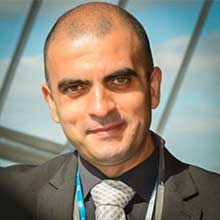
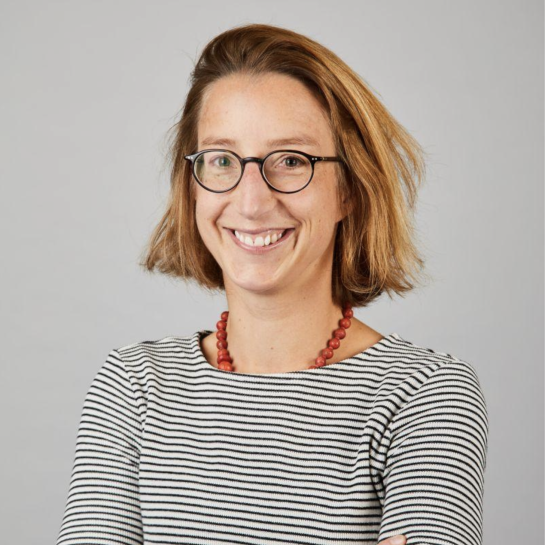
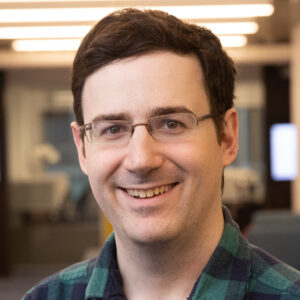
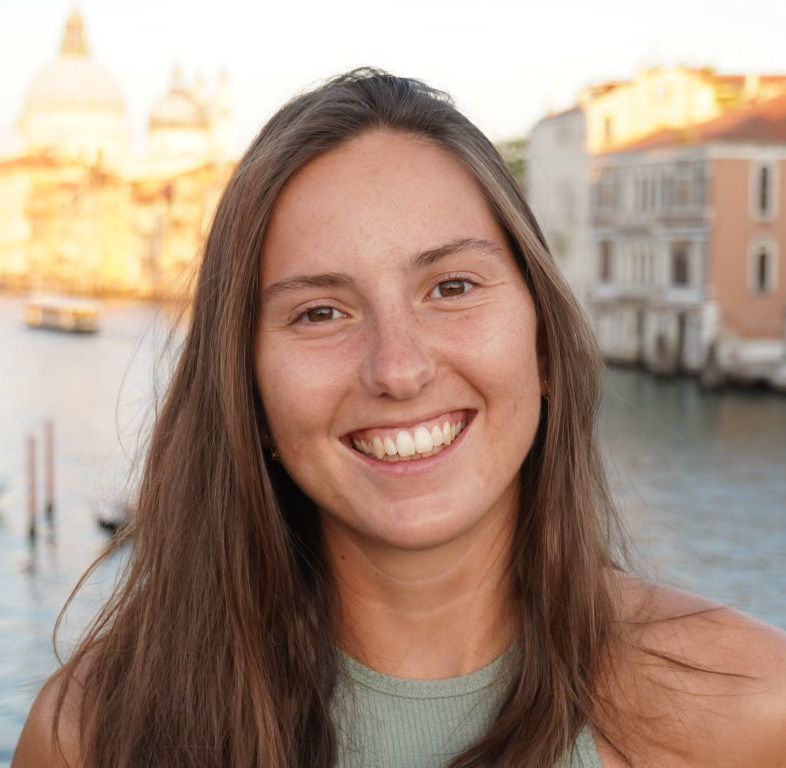
BEZOUI Madani is a Researcher-Lecturer at CESI, affiliated with the 'Engineering and Numerical Tools' research team. He holds a PhD in Operational Research from the University of Science and Technology Houari Boumediène (2019), with a focus on multi-objective programming in portfolio optimization. His academic roles include serving as a pedagogical tutor for FISA training courses and heading the 'Data Sciences' program for 5th-year Computer Science Engineers at CESI. His research interests center on Industry 4.0/5.0, optimization of complex systems, machine learning, IoT/BIM technologies, and scheduling. Notable work includes integrating human-centricity and sustainability into digital twin models and advancing hybrid metaheuristics for multi-objective manufacturing optimization. Recent publications (2021–2024) address preference-driven optimization methods, tabu search algorithms, and IoT network vulnerability detection. He has authored a book on Euclidean graph boundaries and contributed to frameworks for flexible job shop scheduling. His ongoing research focuses on decision-maker preference integration in dynamic scheduling under Industry 5.0 contexts. Advising and grants: No specific advising roles or grants mentioned in the CV. His educational activities emphasize pedagogical leadership in data science and operational research. Labs/teams: Active member of CESI’s Engineering and Numerical Tools group, collaborating on IoT, digital twins, and optimization projects.
Peppino Fazio is an Associate Professor at the Department of Molecular Sciences and Nanosystems, Ca' Foscari University of Venice. He holds a degree in Computer Engineering (2004) and a PhD from the University of Calabria (2008). His research focuses on telecommunications, wireless networks, and quantum key distribution, with contributions to vehicular networks, cybersecurity, and IoT systems. Key career milestones include post-doctoral research in Spain (2008), involvement in EU projects (e.g., ORACOLO), and leadership in StartCup-winning ventures like SPITCH (2014). He has authored over 130 publications, with recent work addressing quantum networks, deep learning for intrusion detection, and multi-layer robotic swarm management. Received StartCup Calabria 2012 and Lamarck Award 2014. Co-founder of SPITCH and developer of the Intelligent Remote Controller (IRC). His research spans theoretical and applied domains, including network emulation, mobility prediction in 5G/6G systems, and medical neuroscience modeling through network operators.
Darko Zibar is a Professor at the Department of Electrical and Photonics Engineering, Technical University of Denmark (DTU), and leads the Machine Learning in Photonics Systems (MLiPS) group. He holds a M.Sc. in Telecommunication and a Ph.D. in Optical Communications from DTU (2004, 2007). As a Visiting Professor, he has contributed to research at Politecnico di Torino, Friedrich Alexander University of Erlangen, University of California Santa Barbara, and University of Colorado, Boulder. Research Interests: Machine learning applications in optical communication systems Digital signal processing for classical and quantum photonics Optimization of Raman amplifiers and frequency combs Nonlinear fiber optic transmission modeling Photonic reservoir computing with silicon microring resonators Scientific Contributions: His work includes record-breaking achievements in optical phase noise measurement (approaching quantum limits) and programmable gain Raman amplifier design (S+C+L band). He has received prestigious awards such as the ERC Consolidator Grant (2017), Humboldt Bessel Research Award (2021), and Villum Investigator Award (2023).
Tejs Vegge is a Professor and Head of the Section for Autonomous Materials Discovery (AMD) at the Department of Energy Conversion and Storage, Technical University of Denmark (DTU). His research focuses on accelerating the discovery of clean energy materials through integrated computational and experimental approaches. Key areas include battery materials, hydrogen/ammonia storage, and electrocatalysts for sustainable fuels. Vegge leads major initiatives like the Pioneer Center CAPeX and the Villum Center V-Sustain, and has received awards such as the August-Wilhelm Scheer Visiting Professorship and the Ellen and Hans Hermers Award. His projects include the CAPeX Center (2023–2036) for P2X materials, the DELIGHT project (2021–2024) on green catalysis, and collaborations like Battery2030+. He supervises multiple PhD students in topics like battery electrolytes, autonomous workflows, and machine learning for materials design. Research Themes: Autonomous materials discovery, AI-driven experiments, sustainable energy systems Key Tools: Density Functional Theory (DFT), high-throughput screening, self-driving labs Recent Trends: Focus on strain engineering for ion conductivity, CO₂ reduction catalysts, and quantum computing applications Publications span over 300 articles, emphasizing interdisciplinary methods like reinforcement learning and Bayesian optimization. Vegge advocates for open-access research infrastructure and has pioneered lab automation frameworks like Finales.
Stefano Nichele is a Professor at Oslo Metropolitan University's Faculty of Technology, Art and Design, where he leads research in the Department of Computer Science with a focus on Artificial Intelligence. His laboratory investigates the intersection of biological and artificial intelligence through neural networks and cellular automata. Research Focus: Nichele's work bridges computational neuroscience, complex systems, and machine learning. Key themes include: Developing AI tools for neuroscience applications like dementia prediction Modeling neural network dynamics using biological and computational approaches Evolutionary algorithms and quantum computing hybrids Cellular automata frameworks for emergent intelligence Research Projects: AI-Mind: Developing AI-based dementia diagnostic tools FeLT: Human-machine-environment interactions in ecological contexts DeepCA: Biological-artificial intelligence integration SOCRATES: Efficient distributed data analysis Publications: His recent works (2024-2025) primarily explore neural network dynamics, cellular automata applications, and computational neuroscience models. The research demonstrates consistent focus on emergent behavior in complex systems and biological computation.
Hannah Keller is a researcher in the field of cryptography and privacy-preserving technologies. Her work focuses on secure multi-party computation (MPC), differential privacy, and post-quantum cryptography. She has collaborated with institutions on topics such as privacy-preserving aggregation, secure noise sampling, and cryptographic protocols. Notable contributions include research on lattice-based cryptography in PQCrypto 2025 and differential privacy in distributed systems. Her publications address challenges in balancing privacy with computational efficiency in machine learning and data analysis.
Liyi Li is an Assistant Professor in the Department of Computer Science at Iowa State University. He holds a Ph.D. from the University of Illinois at Urbana-Champaign, where his research focused on compiler verification and formal methods. After completing his postdoctoral work at the University of Maryland, he expanded his research to include quantum computing, software engineering, and compiler optimization. Education: B.S. in Computer Science, University of Illinois at Urbana-Champaign (2012) M.S. in Computer Science, University of Illinois at Urbana-Champaign (2014) Ph.D. in Computer Science, University of Illinois at Urbana-Champaign (2020) Research Interests: Liyi Li’s work bridges formal methods, programming languages, and quantum computing. Key areas include quantum program verification, compiler correctness, memory-safe dialects (e.g., Checked C), and distributed quantum systems. He emphasizes applying formal techniques to ensure software reliability and security. Awards: 2020 UMD Victor Basili Postdoctoral Fellowship 2019 UIUC Spring Outstanding Teaching Assistant Award 2012 UIUC University Honor (Bronze Tablet) Grants & Advising: Co-PI for NSF Grant NQVL:QSTD (2024–2025) focusing on quantum analog pathways PI for NSF Grant CCF-2422127 (2024–2027) on Just-in-Time Verification Advises over 13 students, including PhD candidates at Iowa State, University of Maryland, and William & Mary Collaborations: Liyi Li collaborates with institutions such as the University of Maryland and works with researchers like Mingwei Zhu and Xiaodi Wu on quantum verification and compiler optimization tools.
Francis Heylighen is a Research Professor at the Free University of Brussels (Vrije Universiteit Brussel), where he directs the transdisciplinary Center Leo Apostel and leads the Evolution, Complexity and Cognition research group. He is also affiliated with the Department of History, Art and Philosophy (HARP), teaching courses such as Complexity and Evolution , Mind, Brain & Body , and Effective Thinking to philosophy students. His work spans cybernetics, complex systems theory, and the concept of the Global Brain , integrating insights from physics, computer science, and philosophy. Research Focus: Emergence of intelligent organization through self-organization, stigmergy, and distributed cognition Key Projects: Principia Cybernetica Project, Global Brain Institute, and computational models of collective intelligence Contributions: Coined the mathematical foundations of the Global Brain concept, developed Challenge Propagation theory for distributed intelligence, and advanced Chemical Organization Theory for modeling autopoietic systems His publications (over 200) and Google Scholar citations (14,000+ with H-index 59) reflect his interdisciplinary impact across evolutionary systems, philosophy of technology, and complexity science. He has received biographical listings in Who's Who and a 2015 Outstanding Technology Contribution Award from the Web Intelligence Consortium.
Sophie de Buyl is an Associate Professor at the Vrije Universiteit Brussel (VUB), actively contributing to interdisciplinary research bridging theoretical physics and biological systems. She is affiliated with the Department of Bio-engineering Sciences and the VUB Data Lab, focusing on mathematical modeling of biological processes, synthetic biology, and biophysics. PhD in Theoretical Physics (2006, Université Libre de Bruxelles) Postdoctoral experience at IHES, UC Santa Barbara, Harvard University Her research spans cosmological singularities, gauge/gravity correspondence, and black hole entropy in her early career, evolving to integrate theoretical physics with experimental biology. Current projects include synthetic gene regulatory circuits, microbial community dynamics, and embryonic development precision. Key publication trends (2025–2019) reflect dual expertise in mathematical physics (Kac-Moody algebras, black holes) and biological systems (microbial ecology, synthetic biology, circadian clocks). Awards highlight early-career recognition by the Belgian Physics Society and Belspo. Supervised FWO PhD projects on dynamic pathway regulation and microbial systems Director of the Interuniversity Institute of Bioinformatics in Brussels since 2020 Her work emphasizes data-driven discovery of general laws in biological systems, with collaborations spanning bioinformatics, microbiology, and computational modeling.
Robert Rand is an Assistant Professor of Computer Science at the University of Chicago, affiliated with the Programming Languages Research Group and the Chicago Quantum Exchange . His research bridges programming languages, formal verification, and quantum computation. Dr. Rand focuses on Quantum Computing , Formal Verification , and Quantum Programming . He develops tools like QWIRE for quantum circuit representation and VOQC for verified quantum compilers. Current work includes a textbook on verified quantum programming. His publications span quantum compiler verification, algebraic quantum languages, and formal methods in quantum computing. Recent projects involve error-correction, type systems, and quantum-classical interoperability through Qunity . Scientific Awards 2023 AFOSR Young Investigator Research Program Award France and Chicago Collaborating in the Sciences Award 2022 Keynote Speaker, Compiler Construction Distinguished paper awards: PLDI 2021, POPL 2019 Victor Basili Postdoctoral Fellowship (UMD) Dr. Rand actively collaborates on NSF-funded EPiQC (Enabling Practical-Scale Quantum Computing) and teaches advanced topics in quantum programming languages. He is currently working on a textbook on verified quantum programming and maintains active research groups in both Programming Languages and Quantum Computing.
Xiangyang Li is a Professor at the University of Science and Technology of China, School of Computer Science and Technology. His work spans interdisciplinary domains including computer science, machine learning, and geoscience. Research Focus: Machine Learning, Recommender Systems, Blockchain, and Computer Vision. Key Contributions: Development of novel algorithms for UWB positioning, code information retrieval benchmarks, and vision-language models. Recent publications highlight trends in large language model (LLM) integration for recommendation systems, quantum-inspired optimization, and cross-chain consensus models. His 2025 work includes collaborations on semantic-driven inference, prompt tuning, and hybrid BFT consensus for blockchain scalability.
Juan Carlos Merlano Duncan is a researcher at the University of Luxembourg, affiliated with the Interdisciplinary Centre for Security, Reliability and Trust (SnT). His work focuses on satellite communications, signal processing, and synchronization techniques for distributed systems.
Dr. Catherine Dubourdieu is a Research Professor and Head of the Institute for Functional Oxides for Energy-Efficient Information Technology at Helmholtz-Zentrum Berlin (HZB). She specializes in functional oxide materials, particularly their integration into energy-efficient information technologies. Her work focuses on thin films of metal oxides, monolithic integration on silicon, and ferroelectric properties for next-generation devices. Education: PhD in Physics, University of Grenoble Postdoctoral Fellowship, Stevens Institute of Technology, NJ, USA Research at Laboratoire des Matériaux et du Génie Physique (LMGP), CNRS, Grenoble Research Interests: Her research explores functional oxides for energy-efficient IT, including ferroelectric materials, thin film characterization, and nanoscale device fabrication. She pioneered monolithic integration of ferroelectric oxides on silicon for low-power logic devices and investigated novel oxide-based memristive systems for neuromorphic computing. Labs & Collaborations: She leads HZB's Functional Oxides Institute, collaborating with global institutions like IBM T.J. Watson Research Center and Okinawa Institute of Science and Technology. Her team develops advanced materials for photovoltaics, energy storage, and CMOS-compatible ferroelectric devices.
Peter H. Aaen is a Reader in Microwave Semiconductor Device Modeling at the University of Surrey, with expertise in RF and microwave device modeling and characterization. His work focuses on developing advanced methodologies for high-power and high-frequency electronic devices, with applications in telecommunications and quantum technologies. Dr. Aaen received his B.A.Sc. in Engineering Science and M.A.Sc. in Electrical Engineering from the University of Toronto, Canada, and his Ph.D. in Electrical Engineering from Arizona State University, USA, in 1995, 1997, and 2005 respectively. Prior to joining the University of Surrey, he was the manager of the RF Modeling and Measurement Technology team at Freescale Semiconductor Inc (formerly Motorola Inc.), bringing significant industry experience to his academic work. Dr. Aaen's research spans several critical areas in microwave engineering, with a particular emphasis on developing multi-physics based modeling methodologies for high-power and high-frequency electronic devices. His expertise includes calibration techniques for microwave measurements, package modeling, development of compact models for microwave power transistors and RFICs, and efficient electromagnetic simulation methodologies for complex packaged environments. He has made significant contributions to understanding frequency dispersion in RF LDMOS transistors, electro-thermal modeling, and the development of measurement techniques for extreme impedance devices. His publication record demonstrates a clear progression from fundamental device modeling to advanced measurement techniques and applications in next-generation communications systems. Recent work has focused on multiphysics measurements, electro-optic field imaging, and the application of nanowire technologies to microwave switches, reflecting the evolving challenges in 5G and beyond communications infrastructure. Dr. Aaen is a Senior Member of the IEEE and active in several technical committees including the IEEE Technical Committee (MTT-1) on Computer-Aided Design, the technical program committee of the IEEE Conference on Electrical Performance of Electronic Packaging and Systems (EPEPS), and the executive committee of the Automatic RF Techniques Group (ARFTG). Dr. Aaen has supervised numerous PhD students whose research has advanced the field of microwave engineering, particularly in areas related to measurement uncertainty, multiphysics characterization of high-power transistors, and nanoscale device integration. His collaborative work spans multiple institutions and has resulted in significant advancements in understanding device behavior under complex operating conditions. His laboratory work focuses on developing novel measurement techniques that combine electro-optic systems with nonlinear vector network analyzers and load-pull measurement systems, enabling unprecedented visualization of electromagnetic field distributions within operating transistors. This work has led to breakthroughs in understanding oscillation mechanisms and thermal behavior in high-power devices.
Noemi Glaeser is a researcher in applied cryptography with a focus on blockchain security and privacy-preserving protocols. She holds a PhD in Computer Science from the University of Maryland and the Max Planck Institute for Security & Privacy, advised by Jonathan Katz and Giulio Malavolta. Her work bridges theoretical cryptography with practical applications in decentralized systems. Education: PhD, Computer Science (2024) - University of Maryland & Max Planck Institute M.S., Computer Science (2021) - University of Maryland B.S., Mathematics & Computer Science (2019) - University of South Carolina Research interests include cryptographic protocol design for blockchains, privacy-enhancing technologies, and scalable decentralized systems. Notable contributions include Naysayer proofs (2024), the Cicada framework for on-chain voting/auctions (2024), and foundational work on coin mixing services (2022). Scientific Awards: NSF Graduate Research Fellowship Professional Experience: Research Intern - a16z crypto (Summer 2023) Research Intern - NTT Research (Summer 2022) She currently seeks industry roles in applied cryptography and blockchain research.