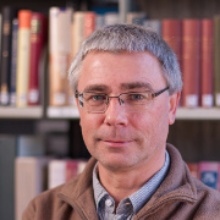
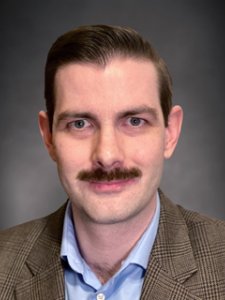
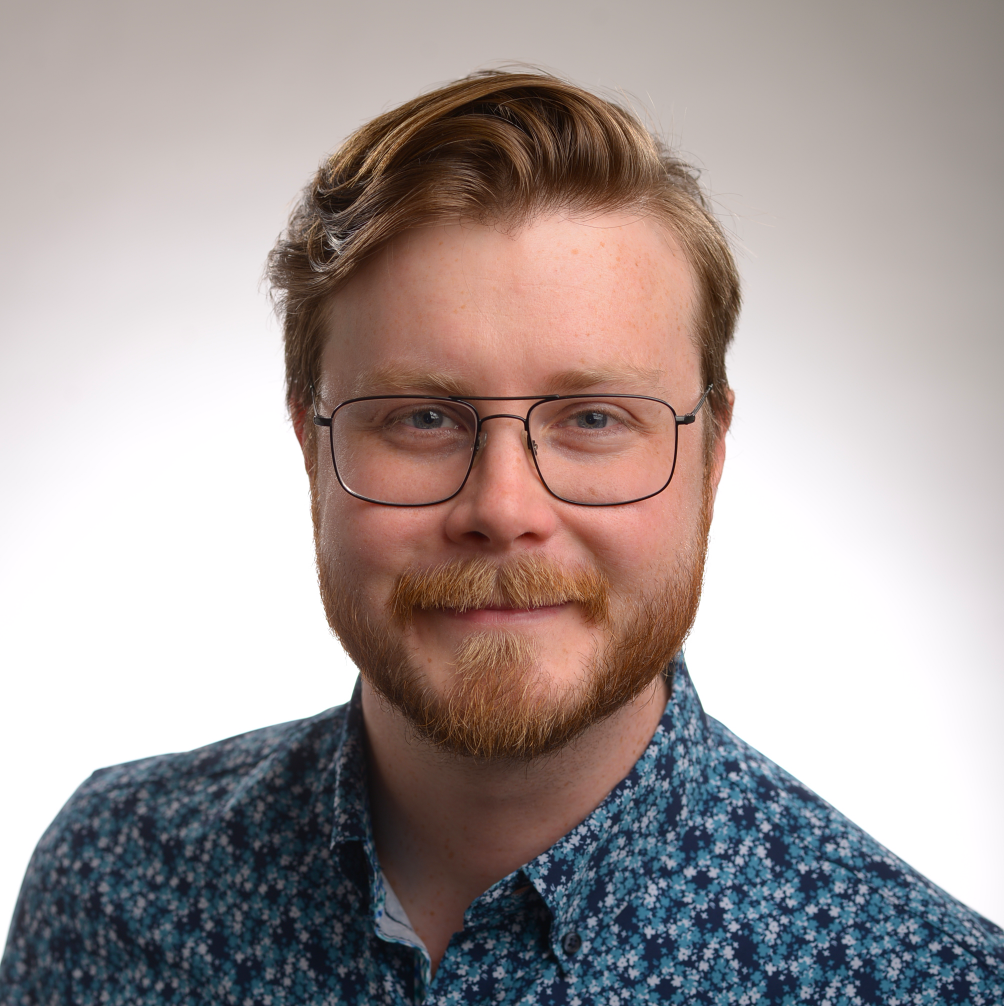
Sameer Naik is a Senior Lecturer at the School of Mechanical Engineering , Purdue University, where he has been actively involved in research since his Ph.D. graduation from Purdue in 2004. His work bridges fundamental combustion science and applied engineering for energy systems. Ph.D., Purdue University, 2004 Dr. Naik's research focuses on gas turbine combustion and internal combustion engines , utilizing advanced laser-based spectroscopy techniques for diagnostics. His expertise spans thermodynamics , combustion chemistry , and environmental impact analysis in propulsion systems. His publication record (10+ peer-reviewed articles) demonstrates technical leadership in laser-induced fluorescence applications, CARS spectroscopy , and high-pressure combustion analysis . These works address critical challenges in sustainable energy and transportation technologies , particularly in reducing emissions from gas turbines. Contact: naiks@purdue.edu
Professor Dinos Arcoumanis FREng is a distinguished academic at City, University of London, where he has served as Professor since 2000. He previously held academic positions at Imperial College London from 1988-2000, progressing from Lecturer to Reader and ultimately to Professor of Internal Combustion Engines. At City University, he has held significant leadership roles including Head of the Aeronautical, Civil and Mechanical Engineering Department, Dean of the School of Engineering & Mathematical Sciences, Pro-Vice-Chancellor for Research and International Links, and Deputy Vice-Chancellor (Research & International) until August 2014. He remains actively involved in research and academic leadership, currently serving as Director of the International Institute of Cavitation Research and Coordinator of the World Cities World Class (WC2) University Network. Professor Arcoumanis holds undergraduate and graduate degrees in Physics, Engineering and Mechanical Engineering from the Aristotelian University of Thessaloniki, Greece (1973), the University of California at Irvine, USA (1980), and the Imperial College of Science, Technology and Medicine, London (1984), respectively. His primary research focuses on internal combustion engines, with specific expertise in combustion, exhaust emissions, and engine lubrication. Professor Arcoumanis has pioneered the application of laser diagnostics and computational fluid dynamics to study internal combustion engines, with particular interest in automotive fuels including renewable and alternative fuels. His work bridges fundamental fluid mechanics with practical engine applications, addressing critical environmental engineering challenges in the transportation sector. His recent research has expanded into cavitation phenomena, fuel cell technology, and the development of sustainable propulsion systems for future transportation needs. Professor Arcoumanis's extensive publication record demonstrates a clear evolution in research focus, beginning with fundamental studies of diesel engine combustion and progressing toward advanced fuel injection systems, alternative fuels, and environmental sustainability. His work consistently bridges theoretical fluid mechanics with practical engine applications, with recent emphasis on cavitation phenomena in fuel systems and the integration of renewable energy technologies with traditional combustion systems. The interdisciplinary nature of his research connects mechanical engineering principles with environmental science, materials science, and energy systems engineering. Professor Arcoumanis has received numerous prestigious awards and honors throughout his career: 1991 Dugald Clerk Prize of IMechE 1995 and 1998 Arch T. Colwell Merit Award of the Society of Automotive Engineers Elected Fellow of the Royal Academy of Engineering (FREng) in 2001 Honorary doctorate from St. Petersburg State Polytechnic University of Russia (2009) Professor Arcoumanis has made significant contributions to academic leadership and professional service. He founded the International Journal of Engine Research (JER) in 1999 and serves as its Editor for Europe. He has coordinated the World Cities World Class (WC2) University Network since 2010, which brings together international institutions in major cities to address research challenges in transport, global health, business, and cultural industries. He has also served as a consultant to Brussels (DG17) and Bechtel Ltd. on the Auto-oil II European Programme (1998-2000), and was appointed Ambassador-at-Large of the Hellenic Republic for Energy Policy and New Technologies in September 2012. His research has been supported by various funding bodies including the Lloyd's Register Educational Trust, which funds the International Institute of Cavitation Research that he directs. Professor Arcoumanis leads the International Institute of Cavitation Research, a partnership between City University London, Loughborough University, and Delft University of the Netherlands. He has established collaborative research teams focused on engine combustion, fuel injection systems, and alternative propulsion technologies. His research group has developed advanced experimental facilities for studying fuel spray dynamics, combustion processes, and cavitation phenomena in engine systems. These teams regularly collaborate with automotive industry partners and international research institutions to address cutting-edge challenges in engine technology and sustainable transportation.
Dr. Jacqueline McCleary is an Assistant Professor of Physics at Northeastern University's College of Science, specializing in observational cosmology with a focus on galaxy clusters and dark matter. She leads research using weak gravitational lensing to study cosmic structures, collaborating on projects like the COSMOS-Web (JWST), SuperBIT (balloon telescope), and LoVoCCS surveys. Her work leverages multi-wavelength data from space, stratospheric, and ground-based observatories. Education: M.S. in Astronomy (New Mexico State University), M.S. and Ph.D. in Physics (Brown University), Postdoctoral Fellow at NASA's Jet Propulsion Laboratory. She transitioned to Northeastern as an ADVANCE Future Faculty Fellow before becoming a tenure-track faculty member in 2022. Research Interests: Dark matter interactions, galaxy cluster dynamics, gravitational lensing techniques, and next-generation observational platforms. Her team develops advanced algorithms and instrumentation for high-resolution imaging. Recent Contributions: COSMOS-Web has enabled unprecedented observations of distant galaxies using JWST, while SuperBIT's stratospheric flights provide diffraction-limited data. Key publications focus on lensing surveys, data reduction techniques, and dark matter-halo relationships. Awards: Recognized as a Northeastern ADVANCE Future Faculty Fellow. Media Engagement: Regularly comments on space exploration, asteroid risks, and cosmic phenomena for public outlets.
Jens von Wolfersdorf is a Professor at the University of Stuttgart's Faculty of Engineering, Department of Mechanical Engineering. His research focuses on advanced thermal management systems for high-speed aerospace applications, particularly in the areas of heat transfer, fluid dynamics, and combustion. He specializes in experimental and numerical methods for analyzing complex flows in rotating and stationary cooling channels, transpiration cooling for rocket engines, and turbulence modeling. His work integrates cutting-edge techniques such as thermochromic liquid crystal (TLC) measurements, particle image velocimetry (PIV), and computational fluid dynamics (CFD) to validate novel cooling configurations. Key projects include the COOREFLEX-Turbo initiative and contributions to the European ATLLAS-II program for high-speed vehicle materials. Recent studies emphasize rotational heat transfer effects in two-pass cooling channels, additive manufacturing of ribbed cooling structures, and validation of coupled FEM-CFD frameworks. His research addresses challenges in aerospace thermal protection, turbine blade cooling, and scramjet combustor efficiency. Publications span over 15 years, with a focus on transient heat transfer, flow visualization, and material characterization for transpiration-cooled systems. Collaborations involve experimental facilities for high-speed flows and advanced thermal measurement systems.
Konstantinos KANAVOURAS is a Doctoral Researcher at the Interdisciplinary Centre for Security, Reliability and Trust (SnT) within the University of Luxembourg, specifically in the Space Systems Engineering research group (SpaSys). He is advised by Prof. Andreas Hein and focuses on model-based systems engineering, software development, and aerospace engineering applications in satellite systems. His research integrates agile methodologies and machine learning for spacecraft design and anomaly detection. Kanavouras holds a Master’s degree from Aristotle University of Thessaloniki (2021) and contributed as an avionics engineer to ESA’s AcubeSAT nanosatellite project under the Fly Your Satellite! program. His work emphasizes lightweight data management tools, PocketQube missions like POQUITO, and fractionated satellite systems for planetary observation. His publications highlight trends in small satellite development, including agile systems engineering practices, thermal anomaly detection via machine learning, and adapting space projects to remote collaboration (e.g., during the pandemic). Key projects include the University of Luxembourg’s first PocketQube mission (POQUITO) and lean approaches to spacecraft subsystems. Current affiliations include the SpaSys group at SnT, with a focus on interdisciplinary collaboration between systems engineering and software development. No scientific awards are listed, but his work aligns with cutting-edge space technologies and mission design.
Xinfeng Gao is a Professor of Mechanical & Aerospace Engineering at the University of Virginia, leading the CFD & Propulsion Laboratory. She specializes in high-performance computing (HPC) algorithms for fluid dynamics, combustion, and plasma systems. Her work integrates numerical methods, parallel computing, and data analytics to address complex engineering challenges. Prior to UVA, she held a professorship at Colorado State University from 2011 to 2023, establishing the CFD and Propulsion Lab there. She earned her PhD in Aerospace Engineering from the University of Toronto in 2008, followed by postdoctoral research at Lawrence Berkeley National Laboratory (LBNL). Her research focuses on three core areas: high-order CFD methods for high-speed flows, parallel adaptive algorithms for spatial and temporal domains, and HPC combined with data analytics for aerospace design optimizations. Applications include reduced-order models for turbulence, propulsion device innovation, and quantum computing for fluid simulations. She collaborates with national labs (LLNL, LBNL), aerospace industries (Boeing), and software companies to translate research into practical solutions. Her recent grants include the NSF Mid-Career Advancement Award (2022–2025) for CFD+DA integration in commercial tools and UVA’s RIG Award (2025–2026) for gas-surface material studies under extreme conditions. She teaches MAE 6720 (Computational Fluid Dynamics) and MAE 3420 (Computational Methods). Key awards include the 2023 University of Virginia Research Achievement Award and the 2022 NSF MCA Award. Her work emphasizes cross-disciplinary innovation, blending computational science with experimental validation through initiatives like the Gas-Surface-Materials RIG project, involving experts from MAE, MSE, Chemistry, and Physics.
David K. Hall is an Assistant Professor in the Department of Aerospace Engineering at Pennsylvania State University, College of Engineering. His research focuses on advanced propulsion systems and aerodynamic integration for next-generation aircraft. He is actively involved in projects related to electric and hybrid-electric propulsion, boundary layer ingestion, and sustainable aviation technologies. Assistant Professor, Department of Aerospace Engineering, Penn State Researcher in Electrified Propulsion and Airframe Integration Contributor to NASA-affiliated research initiatives Dr. Hall's research interests center on improving aircraft efficiency and reducing environmental impact through innovative propulsion technologies. His work emphasizes boundary layer ingestion , distributed electric propulsion , and conceptual aircraft design optimization . He investigates how integrating propulsion systems with airframes can reduce fuel consumption and emissions, particularly in transport aircraft. The recent publications demonstrate a strong trend toward electrified and hybrid-electric aircraft systems, with a focus on mitigating flow distortion, optimizing fan-motor co-design, and assessing the environmental and economic viability of liquid hydrogen-fueled aircraft. His work bridges fundamental fluid dynamics with practical engineering applications in sustainable aviation. Dr. Hall has contributed to significant advancements in understanding the benefits and challenges of boundary layer ingestion, collaborating with leading researchers from MIT and NASA. While no formal scientific awards are listed, his publications in top-tier journals such as Journal of Turbomachinery and AIAA Journal reflect high research impact. He is likely involved in federally funded research projects, particularly through Penn State’s Vertical Lift Research Center of Excellence. He advises graduate students in aerospace research, particularly in propulsion and aerodynamics, though specific names are not listed. His lab or research group likely focuses on computational and experimental analysis of advanced propulsion concepts, possibly involving partnerships with industry and government agencies. Future work may explore cryogenic fuels, supersonic sustainable flight, and autonomy in electric aircraft.
Fraser King is an incoming Assistant Professor in the Department of Atmospheric and Oceanic Sciences (AOS) at the University of Wisconsin–Madison, starting in Winter 2026. He holds a PhD in Machine Learning and Remote Sensing of Precipitation from the University of Waterloo (2022) and is currently a postdoctoral research associate at NASA Goddard Space Flight Center. His research integrates machine learning with atmospheric physics to advance precipitation and snowfall retrieval, cloud microphysics, and climate modeling. He has held research positions at the University of Michigan and NASA Jet Propulsion Laboratory. His research interests include: Climate and Climate Change Radiation and Remote Sensing Synoptic Meteorology Atmospheric and Cloud Physics Large Scale Dynamics Machine Learning and Model Interpretability Arctic Snowfall Prediction His recent publications reflect a strong trend in applying deep learning (e.g., U-Net, CNNs) and unsupervised methods (PCA, t-SNE, UMAP) to radar and satellite data for precipitation and snow microphysics. Key themes include radar gap inpainting, melting layer detection, and dimensionality reduction for physical interpretation. His work bridges geoscience and AI, aiming for interpretable models that enhance physical understanding. Scientific awards and professional service include: Finalist for the 2023 Governor General's Gold Medal, University of Waterloo Associate Editor, Journal of Atmospheric and Oceanic Technology (AMS) Member, AMS Committee on Artificial Intelligence Applications to Environmental Science Executive Council Member, AGU Precipitation Technical Committee Executive Member, Eastern Snow Conference Research Board Fraser King has mentored students through research projects and led educational initiatives such as a 12-week course on machine learning for land cover classification. He has secured research experience through internships at Aquanty Inc. and multiple NASA-affiliated institutions. He founded MapsByFraser, a company combining cartography and satellite data, and has collaborated with Google's Quantum AI team. His technical skills span Python, deep learning frameworks, and high-performance computing platforms. He leads several major research projects: Towards Interpretable Physical Models : Using sparse autoencoders and nonlinear dimensionality reduction to interpret geoscience models. Microphysical Dimensionality Reduction : Applying PCA, t-SNE, and UMAP to identify physical modes in precipitation data. BlindPaint : A U-Net for radar gap inpainting in spaceborne systems. DeepPrecip : A deep learning model for surface precipitation retrieval. iPhone LiDAR : Using consumer smartphones for snow depth measurement via drones. NRCan Machine Learning Land Cover Classifier : Training ML models on Sentinel-2 data. Climate Model Calibration : Using ML to correct biases in snow-related climate variables. CloudSat Snowfall Validation : Validating high-latitude snowfall estimates. Snow Modelling : A Rust-based physical/temperature-index snow model.
Professor Geraint Jewell is affiliated with the University of Sheffield , serving as Director of the Rolls-Royce University Technology Centre in Advanced Electrical Machines (since 2006) and Director of the EPSRC Future Electrical Machines Manufacturing Hub (since 2019). He is a graduate of the university (BEng 1988, PhD 1992) and has held academic roles since 1994. EPSRC Advanced Research Fellowship (2000-2005) Royal Society Industry Fellowship at Rolls-Royce (2006-2008) Former Faculty Director of Research and Innovation (2008-2011) Former Head of Department (2013-2019) His research focuses on power-dense electrical machines for aerospace applications , including permanent magnet machines , switched reluctance machines , and linear actuators . He has supervised ~20 PhD students and led collaborations with Rolls-Royce on high-temperature devices (up to 800°C) and aero-engine starter-generators. Recent publications analyze stator insulation thermal degradation , eddy current control in additively manufactured materials , and magnetic loss prediction in silicon steel. His work spans electromagnetic modeling , core loss calculation , and advanced manufacturing techniques for electrical machines. EPSRC Advanced Research Fellowship (2000-2005) Royal Society Industry Fellowship (2006-2008) He has advised PhD students across topics like consequent-pole PM machines , doubly salient SynRMs , and core loss characterization . His Electrical Machines and Drives Research Group explores modular motor design and magnetic material optimization for aerospace and electric vehicles.
Nicolas Binder is a Professor and Head of the Turbomachinery and Propulsion Research Group at ISAE-SUPAERO . His research focuses on turbomachinery aerodynamics, unsteady flow analysis, and innovative propulsion systems for aerospace applications. Member of EuroTurbo executive committee ASME Member Associate Editor, Journal of Turbomachinery Research expertise in off-design operations and windmilling flows Research Interests : Aerodynamics of turbomachinery in severe off-design conditions Unsteady flow dynamics in turbines Innovative propulsion methods including magneto-hydrodynamics Flow analysis techniques for compressors and fans Recent publications (2024-2021) emphasize transient flow modeling in turbines, windmilling operation optimization, and variable geometry turbine performance. Articles span experimental validation of numerical models, shock wave interactions, and novel propulsion concepts like plasma-thrusters for drones.
Djamel Rezgui is an Associate Professor in Aerospace Engineering at the School of Civil, Aerospace and Design Engineering, University of Bristol, specializing in nonlinear dynamics, aeroacoustics, and flight control of advanced aircraft systems. His research bridges theoretical modeling with experimental validation for next-generation aviation technologies. Education: MEng (Institution unspecified) PhD, University of Bristol (2009) - Thesis: Investigation into Rotor Blade Stability in Autorotation Using Bifurcation and Continuation Methods Research Focus: Dr. Rezgui pioneers experimental control-based continuation techniques for analyzing nonlinear dynamics in rotating-stationary structures and flexible wings. His work on distributed electric propulsion (DEP) systems addresses aeroacoustic challenges in multi-rotor UAVs and eVTOL vehicles, while bio-inspired rotor designs draw from natural samara seed aerodynamics. Key methodologies include bifurcation analysis, whirl flutter stability assessment, and real-time hybrid testing for periodic oscillations. Publication Trends: Recent outputs (2023-2025) reveal concentrated efforts in propeller-wing interaction noise, folding wingtip aeroelasticity, and DEP optimization. Over 40% of his 119 publications tackle aeroacoustic prediction through multi-fidelity solvers, with growing emphasis on turbulent flow effects and phase-synchronized noise reduction for urban air mobility platforms. Research Leadership: Principal Investigator for three major projects: EPSRC MENtOR (EP/S010378/1, £1.2M, 2018-2022), VLN Methods and Experiments for Novel Rotorcraft (£850k, 2018-2021), and VLN MENtOR Bristol (£400k, 2018-2022). Supervised 6 research students with datasets spanning real-time hybrid testing and propeller-wing aeroacoustics. Collaborative Infrastructure: Core member of Bristol's Dynamics and Control group, utilizing wind tunnel facilities for experimental bifurcation analysis of flared folding wingtips and tilting rotors. Active contributor to Vertical Lift Network initiatives and AIAA conferences, with peer-review duties for The Aeronautical Journal .
Dr. Monica Martinez Wilhelmus is the Thomas J. and Alice M. Tisch Assistant Professor of Engineering at Brown University's School of Engineering. She holds affiliations with NASA Jet Propulsion Laboratory (JPL) and is an adjunct professor at the University of California Riverside. Her research integrates experimental and numerical methods to study transport phenomena at the intersection of biology, oceanography, and fluid mechanics. Key interests include sea ice dynamics, remote sensing, and fluid transport by plankton aggregations. Education: B.Sc. in Mechanical Engineering from Universidad Nacional Autonoma de Mexico (2010), M.S. and Ph.D. in Mechanical Engineering from Caltech (2012, 2016). Her postdoctoral work at JPL/Caltech focused on collaborative ocean science projects. Research in the Wilhelmus Lab explores fluid mechanics in environmental and biological systems, with projects like Arctic sea ice tracking, robotic platforms, and plankton hydrodynamics. The lab's work bridges engineering and environmental science to address climate observation challenges and ocean turbulence. Her interdisciplinary approach combines satellite data analysis with field experiments, contributing to understanding Arctic Ocean eddies and submesoscale currents. Collaborative efforts include developing algorithms for ice floe tracking and advancing sediment diagenesis models.
Kourosh Shoele is an Associate Professor in the Department of Mechanical Engineering at Florida State University (FSU), part of the FAMU-FSU College of Engineering. He previously held roles as an Assistant Research Scientist at Johns Hopkins University and a Post-doctoral Researcher at the University of California, San Diego. His research focuses on fluid-structure interaction, computational mechanics, and bioinspired engineering, with applications in renewable energy, aerospace, and biological systems. Education: Ph.D. (2011) and M.Sc. (2006) in Mechanical Engineering from the University of California, San Diego and Sharif University of Technology, respectively, and B.Sc. (2003) from Shiraz University. Research emphasizes multiphase fluid dynamics, aeroelasticity, energy harvesting, and shock wave dynamics. Notable projects include studies on cryogenic fuel storage, bioinspired robotics, and mask efficacy during respiratory disease transmission. His work has been recognized with awards such as the NSF Career Award (2020) and DARPA Young Faculty Award (2019). Advising and Team: Leads the Computational & Theoretical Multiphysics Laboratory (CTML), mentoring graduate students and postdocs across fluid dynamics, thermal management, and robotics. Collaborates on interdisciplinary projects including mask aerodynamics, flexible tree dynamics, and shock-boundary layer interactions. Labs/Teams: CTML Group, with ongoing collaborations in fluid-structure interaction, renewable energy systems, and biomimetic design. Active in publishing high-impact research in journals like Physics of Fluids and Journal of Fluid Mechanics.
James Bellingham is the Bloomberg Distinguished Professor of exploration robotics at Johns Hopkins University, holding primary appointments in the Department of Mechanical Engineering and the Applied Physics Laboratory's Asymmetric Operations Sector. He serves as executive director of the Johns Hopkins Institute for Assured Autonomy and is a member of the Data Science and AI Institute. With over 30 years of expertise, Bellingham pioneered small, high-performance autonomous underwater vehicles (AUVs), leading global expeditions across polar and oceanic regions. His work bridges robotics innovation with environmental monitoring, including oil spill response, Arctic exploration, and NASA collaborations for extraterrestrial oceanic exploration. Bellingham's educational background includes BS, MS, and PhD in physics from MIT. He previously led Woods Hole Oceanographic Institution's Marine Robotics Consortium, creating advanced prototyping facilities and fostering entrepreneurship in robotics. His leadership roles span institutional boards such as the Naval Studies Board and OceanX. His research focuses on advancing AUV capabilities for adaptive sampling, fault detection, and interdisciplinary oceanography. Over 50 publications demonstrate his technical contributions, including AUV design, environmental hazard mapping, and collaborative robotic systems. Awards include National Academy of Engineering induction and military honors for public service.
Ali Akoglu is a Professor in the Department of Electrical and Computer Engineering and a member of the BIO5 Institute at the University of Arizona, where he also belongs to the Graduate Faculty. He serves as the site director for the National Science Foundation (NSF) Industry-University Cooperative Research Center on Cloud and Autonomic Computing, focusing on self-managing cloud systems across multiple layers. His research spans high-performance, domain-specific, and non-traditional computing architectures, with key interests in resource management from distributed systems to System-on-Chip scale, parallel computing to bridge domain scientists and emerging hardware, and reconfigurable architectures for neuromorphic computing. He actively promotes interdisciplinary collaboration to align programming environments with advanced parallel hardware. His research has been funded by prestigious organizations including the National Science Foundation, iPlant Collaborative, U.S. Air Force, NASA Jet Propulsion Laboratories, Office of Naval Research, and the Army Battle Command Battle Laboratory. He advises graduate students and leads research initiatives in adaptive and reconfigurable computing systems. Ali Akoglu earned his PhD in Computer Science from Arizona State University in 2005 and completed his BS in Computer Engineering at Purdue University in 1998. He teaches courses in computer architecture, high-performance computing, and reconfigurable computing, contributing significantly to engineering education and research innovation at the University of Arizona.