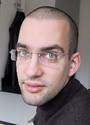
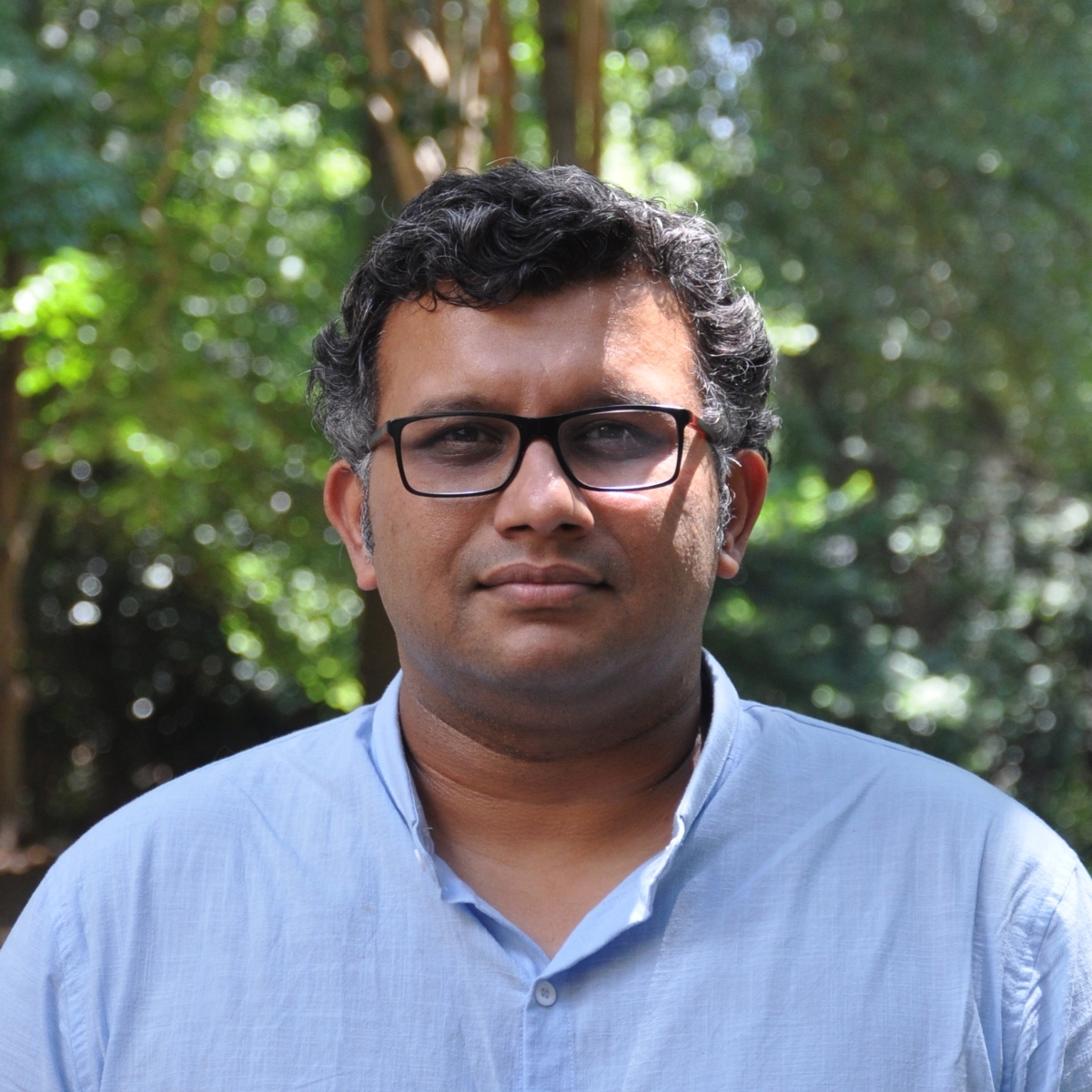
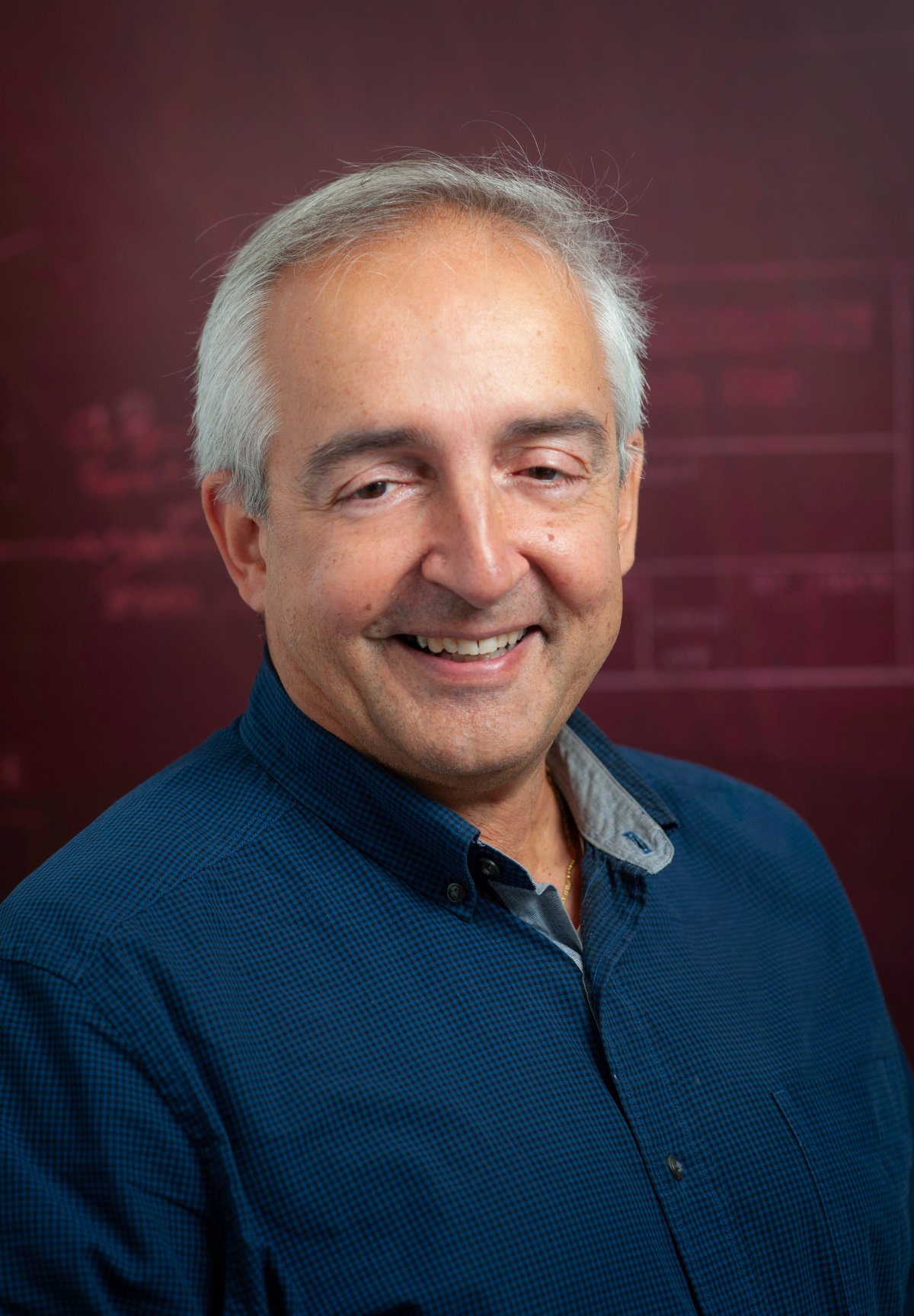
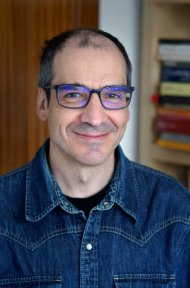
Ambrus Gergely is a Research Fellow affiliated with the Geometry Department at the Hungarian Academy of Sciences. His work bridges discrete mathematics, convex geometry, and probability theory, focusing on geometric configurations, optimization, and combinatorial problems. Research Interests: Discrete Mathematics, Convex Geometry, Probability Theory, Discrete Analysis Grants: Combinatorics in Geometry and Number Theory (2020-2025), Limits of discrete structures (ERC, 2014-2019) His recent publications address vector balancing, Helly-type theorems, and geometric optimization, with a focus on convex bodies, planar sets avoiding unit distances, and extremal problems in discrete geometry. He has made significant contributions to understanding the interplay between convex geometry and probabilistic methods. Scientific Awards: János Bolyai Research Fellowship (Hungarian Academy of Sciences, 2015) Grünwald Géza Memorial Medal (Bolyai János Matematikai Társulat, 2009) Rényi Kató Award (Bolyai János Matematikai Társulat, 2006) Ambrus is part of the GeoScape Research group at the Rényi Institute, collaborating on problems related to convex sets, tight frames, and geometric algorithms.
Prof. Dr. Alexander Braun serves as Professor of Physics at Düsseldorf University of Applied Sciences within the Faculty of Electrical Engineering & Information Technology. His office is located in Building 5, Room 05.2.054, and he can be reached at alexander.braun@hs-duesseldorf.de. His teaching responsibilities include physics courses for engineering students, with a focus on Newtonian mechanics as evidenced by his "Physics for KIT" course (WS 15/16). His academic background includes: Education at Hackettstown High School in New Jersey, USA Physics studies in Göttingen with specialization in Optics and Lasers Research stay at École Supérieure de Physique et Chimie Industrielle in Paris Diploma thesis at Laser-Laboratorium Göttingen on "Laser spectroscopic measurement methods for temperature determination in sprays" (collaboration with Bosch and VW) Doctoral work at Institute for Laser Physics in Hamburg on quantum computing, completed at University of Siegen Prof. Braun's research focuses on physically-realistic optical simulation for autonomous driving systems. Unlike conventional photorealistic approaches, his work emphasizes physically accurate modeling of optical properties, particularly point spread functions (PSF). His research group employs linear system theory combined with artificial neural networks to model measured PSFs, enabling accurate simulation of real-world optical effects on camera systems. This approach allows for creating convolution kernels that transform synthetic scenes into images matching specific camera system characteristics. His publication record shows a clear progression from quantum computing research to applied optics for automotive applications. The 15 most recent publications demonstrate significant focus on how optical aberrations impact AI performance in vision systems, with particular attention to automotive applications. His work bridges traditional optical engineering with modern AI, developing metrics and simulation tools that account for real-world optical imperfections. Key contributions include SOLAS (Superpositioning an Optical Lens in Automotive Simulation) and research on how windshield quality affects AI algorithm performance. Prof. Braun has been active in IEEE P2020 Automotive Image Quality standardization efforts, presenting at conferences like Automotive Glazing 2019. His research has direct practical implications for automotive camera system validation, production quality control, and development of more robust vision systems that can handle real-world optical conditions. His work on quantum annealing and digital annealing also shows continued interest in computational optimization methods, with potential applications in traffic flow optimization and logistics.
Matúš Maciak is an Associate Professor in the Department of Probability and Mathematical Statistics at the Faculty of Mathematics and Physics, Charles University . His research spans nonparametric regression , change-point detection , and statistical modeling in financial and biological contexts . Key research areas: Nonparametric smoothing and robustness Structural break analysis Shape-constrained inference Sparsity and LASSO-based methods Bootstrapping dependent data Recent publications focus on exogenous market changes , longitudinal data modeling , and biological applications like diel movement patterns in fish. Technical reports include contributions to ecological assessment methods and intercalibration processes for water quality. Contact: Email: Matus.Maciak@mff.cuni.cz , maciak@karlin.mff.cuni.cz Office: K151, Sokolovská 83, Prague 8
Prof. Dr. Sabine Jansen is a Professor at the Mathematical Institute of LMU Munich and leads the Working Group on Stochastics and Financial Mathematics . Her research spans Probability Theory , Quantum Statistical Mechanics , and Mathematical Physics , with a focus on cluster expansions, Gibbs point processes, and duality for Markov processes. Email: jansen@math.lmu.de Phone: +49 (0)89 2180 4477 Address: Theresienstr. 39, D-80333 Munich Affiliations: DFG Collaborative Research Center CRC TRR 352, DFG Priority Program SPP2265, Munich Center for Quantum Science and Technology (MCQST) Her research interests include: Stochastic processes and their applications in financial mathematics Quantum statistical mechanics, particularly many-body systems and their collective phenomena Cluster expansions and virial inversion for low-temperature and non-additive systems Duality and intertwining relations in Markov processes Combinatorial approaches to probability and statistical mechanics Recent publications highlight work on: Large deviations and extreme value theory for Weibull-like variables Algebraic methods in continuum particle systems Geometric constraints in hard-particle mixtures Convergence conditions for cluster expansions Quantum quasi-1D jellium and Coulomb systems Applications of Lagrange inversion in combinatorial species She contributes to educational resources through lecture notes and courses, including topics like Quantum mechanics for probabilists and Jump processes . Her group collaborates with international institutions and participates in major research programs.
Mario Botsch is a Professor in the Department of Computer Science at the Faculty of Technology, University of Bielefeld. His research focuses on computer graphics and geometry processing, with major contributions to polygonal mesh modeling, virtual reality, and GPU-accelerated rendering techniques. Research Interests: Immersive data visualization in 3D knowledge spaces Virtual reality for historical relationship discovery Point-based rendering and surface splatting GPU-accelerated geometric modeling Mesh processing and multiresolution modeling Surface reconstruction and anti-aliasing Scientific Contributions: Developed Phong splatting techniques for high-quality rendering Created multiresolution frameworks using displacement volumes Innovated feature-sensitive sampling for mesh optimization Pioneered GPU-based tolerance volume analysis for error control Established OpenMesh data structure for polygonal mesh handling
Dr. Ameet Pinto is an Associate Professor and Carlton S. Wilder Early-Career Professor at the School of Civil and Environmental Engineering , Georgia Tech. His work focuses on microbial ecology of engineered water systems, integrating molecular tools and computational biology to enhance drinking water safety and wastewater treatment sustainability. B.Chem.Eng, Institute of Chemical Technology, Mumbai (2003) M.S. in Civil Engineering, University of Alaska Fairbanks (2005) Ph.D. in Civil Engineering, Virginia Tech (2009) Research interests span drinking water microbiome , comammox/anammox bacterial interactions , metagenomics , and machine learning applications in water quality monitoring. Recent articles highlight innovations in ARTiMiS flow imaging microscopy , microalgal nutrient recovery , and post-disaster water management . Scientific recognition includes: NSF CAREER Award (2018) Paul L Busch Award (2019) IWA MEWE Mid-Career Award (2023) IWA Fellow (2024) Dr. Pinto leads the Pinto Lab , advancing microbial management frameworks for infrastructure and public health, with grants from NSF and DOE . The lab emphasizes translating microbial ecology insights into engineered water system solutions.
Dr. Anton Selivanov is a Lecturer in Control and Systems Engineering at the University of Sheffield , UK. He serves as the School of Electrical and Electronic Engineering REF Lead and contributes to global engineering challenges as an Academic Expert. His research focuses on robust control of dynamical systems described by partial differential equations (PDEs) and delay differential equations. PhD in Discrete Mathematics and Mathematical Cybernetics, St. Petersburg University, Russia Specialist degree in Applied Mathematics and Computer Science, St. Petersburg University, Russia His research interests include: Control theory Distributed parameter systems PDE-based analysis of multi-agent systems Time-delay and networked control systems Dr. Selivanov's recent publications demonstrate a focus on PDE-based control for physical systems, with applications in: Swarm robotics coordination Traffic flow modeling Euler-Bernoulli beam vibration control Multi-agent deployment algorithms His methodological approaches include: Lyapunov functionals Linear matrix inequalities Fourier series analysis
Keith Gubbins is a Professor at Cornell University's College of Engineering, specializing in the molecular thermodynamics of confined fluids within porous and nanoporous materials. His research integrates computational modeling with theoretical frameworks to address fundamental challenges in nanoscale fluid behavior. His primary research domains include: Porous Materials Characterization Molecular Simulation Techniques Thermodynamics of Confined Systems Adsorption Phenomena Phase Transitions in Nanopores Interfacial Pressure Tensor Analysis Nanoscale Wetting Behavior He investigates phenomena such as pressure enhancement in carbon nanopores, melting point depression under confinement, and gas solubility modulation, employing methods like molecular dynamics, density functional theory, and machine learning-enhanced predictive models. Analysis of his 2020-2025 publications reveals three dominant trends: (1) Advancement of characterization methodologies through melting line/triple point analysis in confined geometries, (2) Development of theoretical constructs like the conformal sites theory for heterogeneous surfaces, and (3) Integration of machine learning with classical thermodynamics to model solubility and phase behavior in nanopores. His work consistently demonstrates how nanoscale confinement fundamentally alters fluid properties, with implications for energy storage, gas separation, and nanofluidic device design.
Kiss László Péter serves as an Associate Professor at the University of Miskolc's Faculty of Mechanical Engineering and Informatics, specifically within the Institute of Mechanical Engineering (2013–present), previously affiliated with the Department of Mechanical Engineering (2006–2013). He actively participates in the István Sályi Doctoral School of Mechanical Engineering and maintains a dedicated research profile with 109 publications and 168 citations. His research spans structural mechanics with emphasis on arch and beam stability , buckling analysis , and vibration dynamics . Key methodologies include finite element analysis, Green's function techniques, and boundary value problem solutions. His work bridges theoretical mechanics and practical civil engineering applications, particularly in heterogeneous material systems and earthquake-resistant design. Recent publications (2023–2025) reveal a concentrated focus on non-linear instability phenomena in curved structures, with 15+ articles analyzing geometric imperfections, support conditions, and limit-point buckling. His editorial role in the XIV. Magyar Mechanikai Konferencia underscores leadership in Hungary's mechanics research community. As an educator, he contributes to academic infrastructure through textbooks like Szilárdságtani feladatgyűjtemény (Strength of Materials Problem Collection) and maintains teaching resources via the university's mechanical engineering portal.
LiGuo Huang is an accomplished researcher and academic in the field of software engineering with a publication record spanning over two decades from 2003 to 2025. With 95 publications documented in the dblp database, Huang has established a significant presence in both traditional software engineering domains and emerging areas where machine learning intersects with software development practices. Huang's research has evolved from foundational work in value-based software engineering to cutting-edge applications of artificial intelligence in software analysis and maintenance. Huang's research interests encompass a broad spectrum of software engineering topics, with particular emphasis on value-based software engineering, software quality assurance, defect classification, and software process modeling. More recently, Huang has focused on applying machine learning and deep learning techniques to software engineering problems, including code summarization, vulnerability detection, and software maintenance. This evolution reflects the broader shift in the field toward data-driven approaches for software development and analysis. The publication trends reveal a consistent research trajectory with increasing publication rates in recent years, particularly in the application of machine learning to software engineering problems. Huang's work shows a strategic progression from theoretical foundations in software quality to practical applications of AI in software development. The research spans empirical studies, systematic literature reviews, and novel technical approaches to longstanding software engineering challenges, demonstrating both theoretical depth and practical relevance. Huang has collaborated extensively with researchers across multiple institutions, forming particularly strong partnerships with Jidong Ge, Bin Luo, Chuanyi Li, and Barry W. Boehm. The collaboration with Boehm in early career publications suggests mentorship that evolved into peer collaboration, while more recent work shows Huang mentoring newer researchers who now serve as primary authors on joint publications. Huang's research has practical implications for software development practices, particularly in improving software quality, enhancing developer productivity through AI-assisted tools, and providing empirical evidence for software engineering decision-making. The work bridges theoretical computer science with practical software engineering concerns, making significant contributions to both academic research and industry practice.
Professor David Warton, based at the School of Mathematics & Statistics, University of New South Wales, is a leading ecological statistician advancing data analysis methods in ecology. He leads the Eco-Stats group, which has secured over $9M in ARC funding, and founded Stats Central, the UNSW statistical consulting unit. His cross-disciplinary work spans methodological development for multivariate analysis, species distribution modeling, and ecological theory. Key research areas include: Multivariate abundance data analysis Species distribution modeling with point processes High-dimensional statistical methods in community ecology Machine learning applications in ecological contexts Model selection and error-in-variables regression Recent publications (2023-2025) focus on spatiotemporal modeling, computational innovations for ecological data, and clinical applications of statistical methods. His work emphasizes bridging statistical theory with real-world ecological challenges, particularly in biodiversity and climate change impacts. Scientific awards include the Christopher Heyde Medal (2014), Fellow of the Royal Society of NSW (2020), and recognition as a Highly Cited Researcher (2019-22). He actively supervises students in ecological statistics and machine learning applications.
Andrew R Booker serves as Professor of Pure Mathematics in the School of Mathematics at the University of Bristol. His research focuses on deep connections between analytic number theory, automorphic forms, and L-functions, with significant contributions to computational methods in algebraic number theory. His educational background includes an M.Sc. from the University of Virginia and a Ph.D. from Princeton University. Key research interests span: Analytic properties of L-functions and modular forms Computational algebraic number theory Spectral theory of automorphic forms Diophantine approximation and equations His recent publications demonstrate a consistent focus on murmurations phenomena in modular forms, converse theorems for L-functions, and computational class group algorithms. Booker's scientific recognition includes a Leadership Fellowship (2009-2015) supporting his work on explicit number theory. His grant portfolio features three major projects: Detecting squarefree numbers (2013-2015) L-functions and modular forms (2013-2019) Explicit number theory, automorphic forms and L-functions (2009-2015) He has supervised 9 research students and maintains active international collaborations, including a 2012 visiting position at Kyoto University.
Emmanuel Baccelli is a Professor for 'Open and Secure IoT Ecosystem' at Freie Universität Berlin's Department of Mathematics and Computer Science, holding a dual appointment with Inria (French national research institute for digital sciences) and the Einstein Center Digital Future (ECDF). His research focuses on the intersection of low-power protocols, deeply embedded open source software, and IoT security, addressing the critical trade-off between energy efficiency and security in resource-constrained devices. Professor Baccelli's research interests span Distributed Algorithms, Computer Networks, Internet of Things, Open Source Software Development, Wireless Networks, Internet Architecture, Network Protocol Design & Analysis, Cybersecurity, TinyML, and Standardisation . His work emphasizes Privacy-by-Design principles, advocating for open specifications and open source solutions to enhance user control, privacy, and sovereignty in IoT ecosystems. He investigates how deeply embedded open source software can improve both functionality and security of IoT devices, with particular attention to the technical challenges of maintaining security while preserving energy efficiency. Baccelli's publication record demonstrates consistent contributions to networking standards, particularly in low-power and lossy networks. His research has significantly influenced IoT protocols and standards, with numerous RFC publications that form foundational elements of modern IoT networking infrastructure. His work bridges theoretical networking concepts with practical implementations in constrained environments. As an educator and mentor, Professor Baccelli has advised multiple PhD students through completion, including Koen Zandberg (defended June 2025), Oliver Hahm (defended December 2016), and Juan Antonio Cordero (defended September 2011), with Zhaolan Huang currently working on Ultra-Low Memory Footprint Machine Learning. He actively seeks new students interested in programming, cybersecurity, applied mathematics, communication protocols, and tinyML. Professor Baccelli co-founded and coordinates the RIOT open source community, an operating system for IoT devices based on microcontrollers. His work extends beyond technical domains to include engagement with humanities scholars, lawyers, and designers on open source philosophy and practice. He maintains active involvement in standardization efforts through the IETF, contributing to multiple working groups focused on IoT and networking protocols.
Nikolaos Papanikolopoulos is a Professor, McKnight Presidential Endowed Professor, and Distinguished McKnight University Professor at the University of Minnesota's Department of Computer Science and Engineering. He serves as Director of Graduate Studies for Robotics and Director of the Minnesota Robotics Institute, leading significant research initiatives in robotics, computer vision, and artificial intelligence. His work spans multiple domains including medical applications, transportation systems, and agricultural technology. Department of Computer Science and Engineering, University of Minnesota Director of Graduate Studies for Robotics Director of Minnesota Robotics Institute Director of Center for Distributed Robotics Director of AI, Robotics and Vision Laboratory Education Ph.D. in Electrical and Computer Engineering, Carnegie Mellon University (1992) M.S. in Electrical and Computer Engineering, Carnegie Mellon University (1988) Diploma of Engineering, Electrical and Computer Engineering, National Technical University of Athens (1987) Professor Papanikolopoulos's research focuses on robotics, computer vision, and control systems with applications across diverse fields. His work includes developing miniature robots for search and rescue operations, vision-based systems for intelligent transportation, medical image analysis for kidney tumor detection, agricultural robotics for crop phenotyping, and behavioral monitoring systems for mental health assessment. His laboratory has pioneered innovations in distributed robotics, 3D reconstruction, and real-time computer vision algorithms. His research bridges theoretical advances with practical implementations, resulting in numerous real-world applications across healthcare, transportation, and agriculture. His recent publications demonstrate a clear trend toward applying computer vision and machine learning to solve critical problems in healthcare, particularly in medical imaging for kidney cancer diagnosis and surgical planning. He has also maintained strong research in transportation systems and agricultural robotics, with work on truck parking availability systems and corn phenotyping. The interdisciplinary nature of his work is evident in the diverse applications of his core expertise in robotics and computer vision. Scientific Awards IEEE RAS George Saridis Leadership Award in Robotics and Automation (2016) IEEE Fellow Distinguished McKnight University Professorship Award (2007) NSF Career Award (1995-1998) Multiple best paper awards at major robotics and computer vision conferences McKnight Presidential Endowed Professor (2016-) Professor Papanikolopoulos has advised over 40 Ph.D. and M.S. students who have gone on to successful careers in academia and industry. His research has been supported by more than $35 million in funding from diverse sources including NSF, NIH, DARPA, Department of Homeland Security, and industry partners. His grants span multiple domains including medical applications, transportation systems, homeland security, and agricultural technology. Notable projects include the AI-LEAF Institute for climate-land interactions, the Safety, Security, and Rescue Research Center, and the Center for Robots and Sensors for Human Well-being. He leads the Artificial Intelligence, Robotics, and Vision Laboratory and the Center for Distributed Robotics at the University of Minnesota. These labs focus on developing innovative robotic systems for applications ranging from miniature search and rescue robots to medical imaging analysis tools. His team has developed the Scout robot platform and other specialized robotic systems for various applications including underwater exploration (Aquapod robot) and walking robots (Loper robot). The labs maintain strong collaborations with medical researchers, transportation agencies, and agricultural scientists to address real-world challenges through robotics and computer vision solutions.
Fernando Chamizo Lorente is a Full Professor in the Department of Mathematics at the Faculty of Sciences, Universidad Autónoma de Madrid (UAM). With a career spanning several decades, he has established himself as a prominent researcher in number theory and related fields. His work bridges pure mathematics with applications in mathematical physics and harmonic analysis. His educational background includes a Ph.D. in Mathematics from Universidad Autónoma de Madrid (1994), an Expert in University teaching from UAM (2014), and a Master in Theoretical Physics from UAM (2016). Chamizo's research primarily focuses on Analytic Number Theory, with special emphasis on spectral theory of automorphic forms, exponential and character sums, and lattice point problems. His work extends to Algebraic Number Theory and Mathematical Physics, demonstrating the interconnectedness of these fields. He has made significant contributions to understanding the connections between number theory and harmonic analysis, particularly through his work on Fourier series with number-theoretic implications. Analysis of his recent publications reveals a continued focus on number-theoretic problems with connections to quantum physics, as seen in works on the quantum Talbot effect, Dirac equation solutions, and expanded quantum infinite wells. His mathematical work spans both pure number theory (sums of squares, Diophantine series) and applied mathematical physics, showing remarkable versatility across disciplines. Chamizo has supervised numerous doctoral students including Adrián Ubis, Elena Cristóbal, Dulcinea Raboso, Serafín Ruiz-Cabello, Carlos Pastor, and José Granados. His research has been supported by grants including MTM2014-56350-P, MTM2017-83496-P, and PID2020-113350GB-I00. He is an active member of the mathematical community, serving on editorial boards including Revista Matemática Iberoamericana and Pensamiento Matemático. He has participated in organizing significant mathematical events such as the Polish-Spanish joint meeting and the Quintas Jornadas de Teoría de Números.