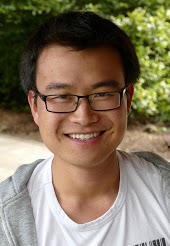
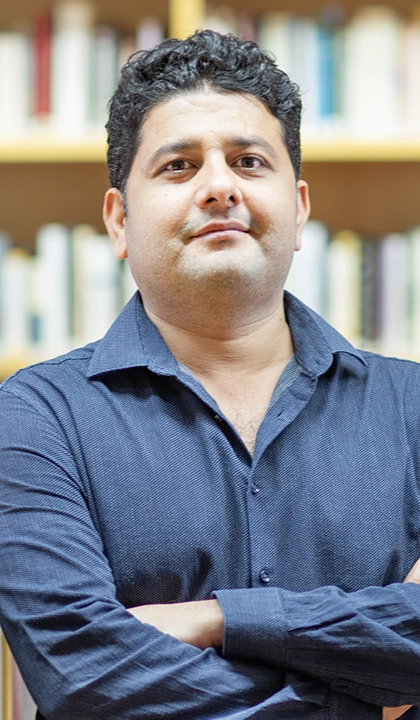
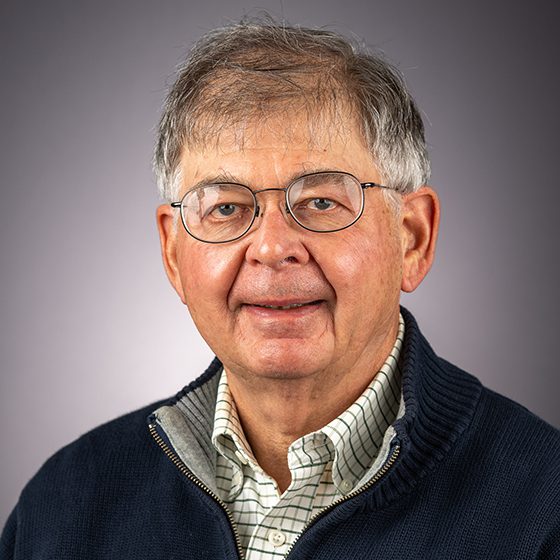
Sam Chow is Associate Professor in Number Theory at the University of Warwick, specializing in diophantine approximation, additive combinatorics, and analytic number theory. His research solves problems at the intersection of diophantine equations, Ramsey theory, and geometric measure theory, with recent breakthroughs on Duffin-Schaeffer conjecture counterexamples and Littlewood's conjecture. Chow organizes the 2025 DECANT conference celebrating Trevor Wooley's 60th birthday and edits for the Bulletin and Journal of the London Mathematical Society. His work develops new combinatorial and analytical methods for classical problems in number theory, frequently involving fractal sets, prime numbers, and polynomial expansions over finite fields.
Samir Siksek is a Professor of Mathematics at the University of Warwick's Mathematics Institute. His primary role includes teaching advanced courses such as MA268 Algebra III and TCC Modular Curves, and he actively contributes to the Number Theory Group at Warwick. Education details are not explicitly stated in the text, but his PhD thesis on 'Descents on curves of genus 1' (1995) is referenced. Research interests focus on Number Theory, particularly Galois representations, Diophantine equations (including Fermat-type equations), arithmetic geometry, and modular forms. His work spans explicit methods for solving Diophantine equations, modular curves, and applications of modular forms. Key contributions include resolving cases of Fermat's Last Theorem over various number fields and advancing techniques in Chabauty methods and the Mordell-Weil sieve. He organizes events like the 'Modular curves and their arithmetic' conference (December 2023) and has contributed to workshops at BIRS, CMI-HIMR, and Banff. His research has been published in top journals like Inventiones Mathematicae and Compositio Mathematica. Professional activities include advising postdocs and PhD students, leading the Warwick Number Theory Seminar, and collaborating on projects like the L-Functions and Modular Forms Database (LMFDB).
Eliza O’Reilly is an Assistant Professor in the Department of Applied Mathematics & Statistics at Johns Hopkins University (JHU) and a member of the Data Science and AI Institute. Her research focuses on the mathematical foundations of data science, combining stochastic and convex geometry, high-dimensional probability, and statistical learning theory. She develops geometric models and algorithms for analyzing complex data structures, with applications in machine learning, optimization, and high-dimensional statistics. Dr. O’Reilly holds a B.S. in Mathematics from the University of Pittsburgh (2013) and a Ph.D. in Mathematics from the University of Texas at Austin (2019), where she was advised by François Baccelli. She completed a postdoctoral fellowship at the California Institute of Technology (2019–2022), sponsored by Venkat Chandrasekaran and Joel Tropp. Her work has been supported by NSF fellowships, including a NSF Graduate Research Fellowship and a NSF Postdoctoral Research Fellowship. Her research interests include: Randomized partitioning algorithms (e.g., Mondrian forests) Regularization in statistical inference and inverse problems Convex and nonconvex optimization methods Determinantal point processes and repulsive models High-dimensional geometry of random convex sets Her publications span theoretical guarantees for machine learning algorithms, optimization frameworks for data-driven problems, and geometric analysis of stochastic processes. Notable contributions include minimax analyses for random tessellation forests and spectral methods for convex regression. She actively collaborates with researchers in applied mathematics, statistics, and computer science.
Jian Liu is an Associate Professor in the Department of Systems and Industrial Engineering at the University of Arizona, College of Engineering, and an affiliated faculty member in the Statistics Graduate Interdisciplinary Program. He has been with the university since 2008, first as a faculty member from 2008–2014 and continuing in his current role since 2014. PhD in Industrial and Operations Engineering and Mechanical Engineering, University of Michigan, Ann Arbor (2008) MS in Statistics, University of Michigan, Ann Arbor (2006) MS in Industrial and Operations Engineering, University of Michigan, Ann Arbor (2005) MS in Mechanical Engineering, Tsinghua University, Beijing (2002) BS in Precision Instruments & Mechanology, Tsinghua University, Beijing (1999) Dr. Liu’s research centers on data analytics and system informatics, with a focus on integrating engineering knowledge, optimization, and statistical learning to model system performance, prognostics, diagnostics, and risk management. His work applies to manufacturing, civil, chemical, and software systems, emphasizing multi-source, multi-scale data fusion in hierarchical and distributed environments. Key research areas include reliability modeling, quality engineering, machine learning, and decision-making under uncertainty. His recent publications demonstrate a strong trend in applying advanced statistical and machine learning methods to real-world systems such as autonomous vehicles, water distribution networks, UAV/UGV surveillance, and healthcare monitoring. The integration of DDDAS (Dynamic Data-Driven Application Systems) frameworks, tensor decomposition, Bayesian modeling, and digital twins reflects a multidisciplinary approach spanning engineering, computer science, and data science. Honorable Mention for the Best Paper in the 2020 IISE Transactions Focus Issue on Quality and Reliability Engineering Honorable Mention for the Best Paper Award, International Conference on Industrial Engineering and Engineering Management, 2020 Outstanding Associate Editor Award, Journal of Manufacturing Systems, Spring 2019 Dr. Liu has secured research funding from the US National Science Foundation, US Department of Homeland Security, and US Air Force Office of Scientific Research. He has collaborated with domain experts on projects related to machining/assembly process improvement, water system service enhancement, and software reliability. He has advised students and contributed to professional leadership as a council member, board director, and currently as president of the Quality Control and Reliability Engineering (QCRE) Division of IISE. He is actively involved in research teams and labs focused on system informatics, data fusion, and reliability engineering, often employing simulation, sensor networks, and real-time data analysis in applications ranging from manufacturing to public health.
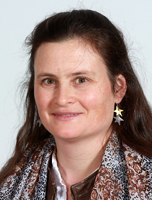
Siegfried Lichtwark is a Senior Lecturer at Monash University affiliated with Turning Point, a health research institute. His work focuses on medical education innovation, particularly Situational Judgment Tests (SJT) for student selection and assessment methodologies. He has contributed to projects like the UMAT Consortium and rural healthcare workforce planning. His research integrates cognitive assessment tools, such as the NART and NZART, to evaluate premorbid IQ and cognitive decline in aging populations. Key Affiliations: Turning Point (Monash University) Research Interests: SJT development, cognitive aging, medical student well-being, and healthcare workforce strategies His publications highlight trends in predictive validity of entrance exams, simulation-based training, and the impact of gluten-free diets on cognitive outcomes. He actively participates in conferences like AMEE and the Australasian Student Selection for Health Professions.
Professor Daniel Eisenstein is a Professor of Astronomy at Harvard University, leading research in cosmology and extragalactic astronomy. He is a key figure in the Baryon Acoustic Oscillation (BAO) method for studying dark energy and has been a central member of major collaborations like the Sloan Digital Sky Survey (SDSS-III Director, 2007–2015) and the Dark Energy Spectroscopic Instrument (DESI, co-Spokesperson 2014–2020). His work focuses on large-scale structure surveys, statistical methods, and high-performance simulations (e.g., the Abacus code). He chairs the Harvard Astronomy Department and serves on boards for advanced telescopes like the Giant Magellan Telescope (GMT). Education: Ph.D. in Astronomy from Harvard (1996), followed by postdocs at the Institute for Advanced Study and University of Chicago. He was a faculty member at the University of Arizona before joining Harvard in 2010. Research Interests: Development of DESI and Euclid surveys; statistical methods for cosmological inference (e.g., three-point correlation functions, neural networks); N-body simulations (AbacusSummit); JADES program (JWST deep extragalactic survey) exploring high-redshift galaxies (e.g., z~14). His group analyzes galaxy formation, reionization, and cosmic history using JWST data, uncovering extreme galaxies and AGN at early cosmic epochs. Scientific Contributions: Over 50 JADES-related papers on high-redshift galaxy populations, including the discovery of the most distant spectroscopically confirmed galaxy. He pioneered DESI’s BAO measurements and led the SDSS-III consortium. His Abacus simulations support DESI’s cosmological analyses. Leadership & Honors: Shaw Prize in Astronomy (2014), National Academy of Sciences member (2014), Simons Investigator (2016). Chairs Harvard’s Astronomy Department and the Cosmology Science Panel for the Astro2020 Decadal Survey. Advising & Grants: Mentors students in DESI analyses and JADES projects. Coordinates multi-institutional efforts for next-gen telescopes like GMT and Euclid. His team’s Abacus simulations leverage Oak Ridge’s Summit supercomputer for cosmological modeling. Labs/Teams: Principal investigator for JADES and DESI; co-lead of the Abacus project; member of the JWST Near-Infrared Camera team and Euclid consortium.
Sunniva Siem is a Professor in Nuclear and Energy Physics at the University of Oslo's Department of Physics. Her research focuses on nuclear structure, gamma-ray spectroscopy, and astrophysical reaction studies. She leads projects involving advanced detector arrays like AGATA and contributes to understanding nuclear level densities and gamma-ray strength functions critical for stellar nucleosynthesis models. Key areas of research include: Experimental studies of nuclear shape evolution and collective excitations Photonuclear reactions and cross-section measurements for astrophysical applications Development of statistical models to interpret gamma-ray decay data Fission fragment properties and angular momentum distributions Recent work has addressed Hoyle state decay mechanisms in carbon-12, triaxiality in ruthenium isotopes, and neutron capture processes in tin and holmium nuclei. Collaborations involve international facilities like the Oslo Cyclotron Laboratory and the AGATA array. Her contributions include advancements in lifetime measurement techniques, calibration of gamma-ray detectors, and benchmarking of reaction models for heavy-element synthesis. Projects include capacity-building initiatives in nuclear physics education and development of next-generation scintillator detectors (OSCAR project).
Brian S. Caffo is a Professor in the Department of Biostatistics at the Bloomberg School of Public Health, Johns Hopkins University, with a secondary appointment in the Department of Biomedical Engineering. He is a leading biostatistician whose work bridges statistical methodology, computational science, and neuroscience. His research interests include: Statistical modeling and computational statistics Functional and resting-state MRI analysis Functional connectivity and brain networks Big data in neuroscience Statistical methods for neuroimaging Data science education and open innovation His recent publications focus on autism, functional mediation analysis, brain connectivity, and statistical modeling in neuroimaging. These works reflect a strong trend toward integrating machine learning, causal inference, and advanced statistical techniques to understand complex brain function and developmental disorders. The keywords consistently point to neuroscience, biostatistics, and data science, with recurring subfields such as fMRI, mediation analysis, hierarchical modeling, and cognitive assessment. Notable scientific awards include: Presidential Early Career Award for Scientists and Engineers (PECASE) Fellow of the American Statistical Association Johns Hopkins Golden Apple Teaching Award Leader of the winning ADHD200 prediction competition team Multiple university and school-level honors in innovation and teaching Caffo has played a major role in academic leadership and mentoring. He co-directs the JHU Data Science Lab and the SMART statistical group, and previously led the Biostatistics graduate programs and admissions. He is actively involved in grant-funded research and educational innovation, particularly through large-scale online learning initiatives like the Coursera Data Science Specialization. He also co-directs the Johns Hopkins High Performance Computing Exchange, supporting advanced computational research across the university. He leads or collaborates with interdisciplinary research teams focused on neuroimaging, autism, and data science, fostering open science and reproducible research practices.
Brian Bailey is an Assistant Professor in the Department of Plant Sciences at the University of California, Davis. His research focuses on developing advanced 3D computational models and tools to understand plant structure-function interactions, radiative transfer, and environmental impacts on plant physiology. He holds a Ph.D. in Mechanical Engineering from the University of Utah (2011–2015). His work integrates novel experimental and modeling approaches, emphasizing high-performance computing and data-driven techniques. Key projects include the Helios 3D biophysical modeling framework and PhoTorch, a Python package for photosynthesis model fitting. Research spans plant-water relationships, canopy energy balance, LiDAR-based canopy reconstruction, and wildfire modeling. Recent studies explore generative AI for soil reflectance simulation, fruit detection algorithms, and thermal imaging improvements for agriculture. His lab collaborates on applications such as vineyard temperature control and almond irrigation efficiency. Bailey’s work bridges disciplines like computer vision, mechanical engineering, and environmental science to advance sustainable agricultural practices.
Asad Rehman, Ph.D., is a faculty member in the Department of Mathematics and Computer Science at Saint Louis University-Madrid (SLU-Madrid), part of the College of Arts and Sciences. His research focuses on next-generation networking technologies, including software-defined networking, cloud and edge computing, 5G/B5G networks, and fault-tolerant systems. Research Interests: Software-defined networking (SDN) and Network Functions Virtualization (NFV) Fault-tolerance and reliability in future networks Cloud and Edge Computing Service Assurance in virtualized environments 5G and Beyond 5G (B5G) Networks Generative AI for urban air mobility and disaster response His recent publications, primarily in IEEE Access and major telecommunications conferences, reflect a strong trend toward resilient, intelligent, and cloud-native network architectures. His work integrates AI-driven solutions with critical communications, particularly in disaster response and public safety. Many of his studies evaluate real-world implementations, performance comparisons (e.g., containers vs. unikernels), and experimental testbeds for 5G applications. Scientific Awards and Recognition: 2024 Research and Conference Travel Grant – SLU-Madrid FCT Ph.D. Research Grant (2015–2019), Portugal Visiting Scholar Grant from Telenor and FCT (2019) TÜBİTAK Project Grant (2013–2014) University of Sunderland International Scholarship (2010–2011) Multiple Certificates of Excellence from Elsevier and IEEE in ethics, research data management, social impact, funding, and industry collaboration Advising and Grants: While no formal students are listed, Dr. Rehman has been supported by significant research funding from national and international bodies, including the EU’s Horizon 2020 program (e.g., 5G-EPICENTRE, DARLENE, AC3, FIDAL, SOCA, 5GO), TÜBİTAK (Turkey), and FCT (Portugal). He has contributed to large-scale collaborative projects focused on public protection, disaster relief, and cognitive cloud-edge systems. Professional Engagement: Dr. Rehman actively contributes to the scientific community as a peer reviewer for IEEE, Springer, Wiley, and Oxford journals. He is a member of several IEEE communities, including IEEE Communications Society, IEEE Future Networks, Cloud Computing, and Smart Cities.
David Ruppert is the Andrew Schultz Jr. Professor of Engineering at Cornell University's School of Operations Research and Information Engineering, and Professor of Statistics and Data Science. He holds dual appointments and has been a faculty member since 1987. His education includes a B.A. in Mathematics from Cornell University (1970), M.A. in Mathematics from the University of Vermont (1973), and Ph.D. in Statistics and Probability from Michigan State University (1977). Research Interests: His work spans functional data analysis, astrostatistics, neuroimaging (fMRI/ICA), environmental statistics, and semiparametric regression. He has pioneered methods in measurement error models, splines, and Bayesian statistics. His research has been continuously funded by NSF, NIH, and EPA since 1978. Publications: Over 130 refereed articles and 5 books, including foundational texts like Measurement Error in Nonlinear Models and Statistics and Data Analysis for Financial Engineering . Recent work includes astrostatistical modeling of galaxy spectral energy distributions and neuroimaging analysis. Awards/Honors: Wilcoxon Prize (1986), ASA/IMS Fellowships, Highly Cited Researcher (ISI), and Distinguished Alumni Award (2014). Teaching: Courses include Financial Engineering, Bayesian Statistics, and Functional Data Analysis. He co-developed four graduate/undergraduate courses at Cornell. Service: Editor of Journal of the American Statistical Association , Director of the MPS Program in Data Science and Statistics (DSS). Impact: 29 PhD students trained, many now leading researchers in academia and industry.
Michael Prähofer is a Lecturer at the Chair of Mathematical Physics at the Technical University of Munich (TUM). He is actively involved in teaching advanced mathematics courses for physicists, including Analysis 3 and 4, and Functional Analysis. His research focuses on interdisciplinary areas such as surface growth dynamics, equilibrium crystal shapes, random matrix theory, and integrable systems. He has contributed extensively to understanding KPZ universality, TASEP models, and Airy processes through collaborations with prominent researchers like Herbert Spohn and Patrik Ferrari. Prähofer also serves as TUMonline Representative and Department Security Officer for Mathematics. His work bridges statistical mechanics, probability theory, and mathematical physics, with applications to stochastic growth processes and exactly solvable models. Research Interests: Surface growth dynamics and KPZ universality Equilibrium crystal shape fluctuations Random matrix theory and Airy processes Integrable systems and exactly solvable models Teaching Highlights: Introduction to Functional Analysis (BV/COME) Mathematics for Physicists (Analysis 2-4) Linear Algebra for Informatics and Statistics Professional Roles: Chaired the 2024/25 Winter Semester courses in Mathematical Physics Developed lecture notes for Analysis 1 LG (2021W) and Linear Algebra for Informatics (2009) Active contributor to TUM's outreach programs in mathematics education
Prof. Nils Paar is a Full Professor at the Department of Theoretical Physics, Faculty of Science, University of Zagreb. He obtained his Ph.D. in theoretical nuclear physics from Technical University Munich (2003) and has conducted postdoctoral research at Technical University Darmstadt (until 2006) and Universitaet Basel (2014-2015). His research focuses on exotic nuclear structure, astrophysical weak-interaction processes, and neutrino-induced reactions. He has published over 137 papers with >4000 citations, delivered 67+ presentations (34 invited), and mentored numerous graduate students and postdocs. He served as Head of the Division for Theoretical Physics and Department of Physics at University of Zagreb, and is a Senate member. Education: Ph.D. (2003, TU Munich), Postdoc (TU Darmstadt), Marie Curie Fellowship (2014-2015, Basel). Key research areas include nuclear structure, exotic nuclei, nuclear astrophysics, computational physics, and symmetry energy studies. He develops relativistic energy density functionals constrained by experimental data, contributing to neutron star modeling and supernova simulations. Research highlights include studies on finite-temperature nuclear excitations, neutrino-nucleus reactions for supernova physics, and parity-violating electron scattering experiments. His work bridges nuclear structure and astrophysical applications, with implications for understanding neutron star properties and heavy element synthesis. Labs/Teams: Active in theoretical nuclear physics groups at University of Zagreb, collaborating with international institutions. His research uses advanced computational methods like Quasiparticle Random Phase Approximation (QRPA) and covariant density functional theory.
Dr. John Mctague is a Professor and Manager of Growth & Yield Research at the University of Georgia's College of Agricultural and Environmental Sciences, affiliated with the Department of Forest and Natural Resources Management. His primary focus is on advancing quantitative methods in forestry, particularly in growth and yield modeling for industrial plantations, tree taper equations, and silvicultural systems. His research spans decades, addressing critical issues in forest biometrics, including stand dynamics, clonal eucalypt plantations in Brazil, and the integration of environmental variables into growth models. Notable contributions include pioneering work on mixed-effects models for Pinus taeda stands and refining inventory techniques for tropical forests. Dr. Mctague's work emphasizes practical applications, such as optimizing tree sorting algorithms and developing site index systems adaptable to genetic and climatic variations. His methodologies often combine statistical rigor with field data, ensuring relevance for both academic and industrial forestry sectors. While no formal awards are listed, his extensive publication record (spanning over 30 years) highlights sustained excellence in advancing forest management science. His research has implications for sustainable resource utilization, climate resilience, and maximizing productivity in plantation forestry.
David D Breshears is a Professor in the Department of Environmental Science at the University of Arizona's School of Natural Resources and the Environment, where he teaches courses including Climate Change and Drylands (ECOL/RNR/WSM 452/552) and Dryland Ecohydrology & Vegetation Dynamics. His research spans dryland ecosystems, climate change impacts, vegetation dynamics, and ecohydrology with particular focus on drought-induced tree mortality and ecosystem transformations. His research interests center on understanding vegetation responses to climate extremes, especially drought and heat waves, with emphasis on dryland systems. He investigates plant mortality mechanisms, ecohydrological feedbacks, and the interactions between climate change and biological invasions. His work integrates field experiments, landscape modeling, and remote sensing to examine how ecosystems respond to global change drivers, with significant contributions to understanding "global-change-type drought" phenomena. Breshears' publication record shows consistent focus on drought impacts, vegetation dynamics, and dryland processes over the past decade. His research demonstrates how climate extremes interact with vegetation structure to drive ecosystem transformations, with particular attention to threshold responses and tipping points. The work spans multiple spatial scales from leaf physiology to continental patterns, with strong emphasis on practical implications for ecosystem management and climate adaptation. Highly Cited Researcher (Clarivate Analytics) in 2020, 2019, 2016, and 2015 Fellow of the American Geophysical Union (2017) Fellow of the Ecological Society of America (2015) Ecosphere Most Cited Paper Award (2017) Sir Walter Murdoch Distinguished Collaborator (2014) Breshears has mentored numerous students including Henry D. Adams (recipient of Los Alamos National Laboratory Director's Postdoctoral Fellowship) and Mallory Barnes (McGinnies Award winner). His research group participates in major collaborative projects including the Biosphere 2 Landscape Evolution Observatory, examining coupled Earth-surface processes. Current work focuses on heat wave impacts on vegetation, Amazon biodiversity threats, and refining predictive models of ecosystem responses to climate change.