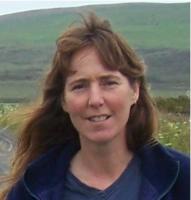
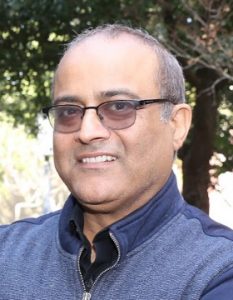
Jukka Tuhkuri is a Professor at Aalto University's Department of Energy and Mechanical Engineering, specializing in ice mechanics and arctic marine technology . He serves as Editor-in-Chief of Cold Regions Science and Technology and became an Honorary Professor at University College London (Department of Earth Sciences) in 2023. His work spans numerical simulations using the Discrete Element Method (DEM) and experimental research in the Aalto Ice and Wave Tank, with fieldwork in both Arctic and Antarctic regions. Research Focus : Understanding ice fracture mechanics, sea ice ridge formation, and ice-structure interaction processes. He investigates how global warming alters ice conditions and affects loads on ships/marine structures, addressing risks from increased Arctic shipping activity. Scientific Awards 2023 POAC Founders Lifetime Achievement Award Teacher of the Year 2003 Espoo Ambassador 2012 1996 Best Dissertation Stipend from Helsinki University of Technology Collaborative Impact : His research directly informs offshore wind engineering and Arctic risk management frameworks through publications like Challenges with sea ice action on structures for Offshore wind (2023) and A comprehensive approach to scenario-based risk management for Arctic waters (2022).
Professor Guoyin Li is a faculty member at the School of Mathematics & Statistics , University of New South Wales (UNSW Sydney). He holds a Ph.D. from The Chinese University of Hong Kong (2007) and has been at UNSW since 2011, currently serving as Professor and Research Director. Research Interests His work spans optimization , variational analysis , and multilinear algebra , with applications in robust optimization , structural engineering , and machine learning . He specializes in nonconvex nonsmooth optimization , tensor eigenvalue problems , and exact semi-definite programming relaxations . Recent Publications His articles focus on robust optimization for structural design, nonlinear approximation techniques, and conic programming for uncertain data. Key journals include Foundations of Computational Mathematics , Mathematical Programming , and Computer Methods in Applied Mechanics and Engineering . Awards and Grants Fellow of the Australian Mathematical Society (2023) 2022 AustMS Medal 2024 Marguerite Frank Award ARC Discovery Grants (2021-2023, 2025-2027) ARC Research Hub Project (2017-2021) Professional Roles He serves on editorial boards of SIAM Journal on Optimization , Optimization Letters , and Journal of Optimization Theory and Applications , and has delivered plenary lectures at international conferences in Austria, Spain, and Canada.
Chih-Chun Wang is a Professor at the Elmore Family School of Electrical and Computer Engineering , Purdue University, with additional leadership roles as Associate Head for Facilities, Planning, and Staff. He earned his Ph.D. in Information Sciences and Systems from Princeton University in 2005, following an M.S. (2002) and B.S. (1999) in Electrical Engineering from Princeton and National Taiwan University, respectively. Research Interests: His work spans Network coding (graph-theoretic capacity, wireless network coding, feedback mechanisms) Coding theory (LDPC codes, Reed-Solomon decoding, iterative algorithms) Information theory (multi-user detection, network information theory) Signal processing (turbo equalization, space-time codes) Control theory (optimal stopping theory) Scientific Contributions: He has published extensively on Age-of-Information (AoI) minimization, low-latency coding, and multi-hop relay optimization. His research trends include Integrating machine learning with network coding Wireless security for Beyond-5G systems Distributed storage networks with intelligent helper selection Delay-constrained communication protocols Awards: Recognized as an IEEE Fellow in 2024 for contributions to network coding and information theory. Teaching: He teaches undergraduate courses like ECE301: Signals and Systems and graduate courses such as ECE639: Error Control Coding , with a focus on iterative decoding, LDPC codes, and network information theory. Advising: Supervised 15+ Ph.D. students, including current advisees Pin-Wen Su (delay-oriented coding), Wonjun Lee (cyber-physical systems), and Giles Bischoff (low-latency systems). Former students hold prominent roles at institutions like Google, Meta, and Intel.
Tyler Custis serves as an Associate Professor at the University of South Dakota's Beacom School of Business, specializing in Business Law and the Legal Environment. His academic appointments reflect deep engagement with contemporary legal challenges in sports, finance, and corporate governance. His educational background includes: JD from University of South Dakota (2013) MBA from University of South Dakota (2012) BS from Texas A&M University (2007) Custis' research focuses on high-impact legal intersections, particularly NCAA regulations, corporate fraud mechanisms, and healthcare compliance failures. His work bridges theoretical legal frameworks with real-world economic consequences, examining how regulatory gaps enable systemic misconduct in sports leagues and financial institutions. Key themes include Title IX implications for athlete compensation, internal control failures in banking scandals, and antitrust considerations in collegiate athletics. His publication portfolio reveals strong emphasis on sports law evolution (2016-2025), corporate ethics case studies (2018-2022), and financial regulation analysis (2019-2024). The research demonstrates methodological diversity spanning empirical analysis of NCAA labor models, forensic accounting of banking fraud, and policy evaluation of legislative responses to corporate misconduct. Award recognition includes: Beacom School of Business Faculty Excellence Teaching Award (2023) Excellence in Teaching Award Nominee (2023) Best Paper Award at ICTO International Conference (2019) Custis actively disseminates research through scholarly presentations at venues including ASHE Annual Conferences, Academy of Legal Studies meetings, and Beacom Scholar Series. His work engages directly with policymakers on NCAA reform and corporate compliance frameworks, demonstrating applied impact beyond academic circles.
Christophe Danjou is an Associate Professor in the Department of Mathematical and Industrial Engineering at Polytechnique Montréal . He joined as a professor in January 2018 and serves as Scientific Director of the Poly-Industries 4.0 Laboratory since June 2021. His expertise spans Industrial Engineering , Industry 4.0/5.0 , Manufacturing Systems , and Blockchain . His research focuses on solving interoperability challenges in digital transformation through ontological approaches (OntoSTEP-NC) and blockchain technology. Key themes include strategic positioning frameworks for Industry 4.0/5.0, knowledge management , and smart manufacturing . Recent work explores digital twins for system-of-systems resilience , data integrity in IoT , and AI-driven food processing optimization . He teaches courses like Industry 4.0 and Manufacturing Processes . Under his supervision, 7 PhD and 6 Master’s students are advancing research in areas such as blockchain-based smart maintenance , distributed manufacturing , and carbon emission traceability . He is affiliated with institutions including IVADO (Member), CIRRELT (Member), and Data Intelligence Lab (Member). His publications highlight contributions to digital transformation across construction, agri-food, and SMEs, with 83 total publications (15+ recent articles shown).
Sylvain Lefebvre is a permanent researcher at INRIA (Institut National de Recherche en Informatique et en Automatique) in France, where he leads the MFX research team since 2018. Previously, he was part of the ALICE group at INRIA Nancy (2009-2018) and the REVES team in Sophia Antipolis (2006-2009). His career includes a postdoctoral position at Microsoft Research Seattle (2005) following his PhD at INRIA Rhones-Alpes under Fabrice Neyret. His educational background includes a PhD in Computer Graphics from Université Joseph Fourier (Grenoble) in 2005, preceded by a Master in Computer Graphics from INP Grenoble in 2001. His habilitation thesis focused on Runtime Texture Synthesis. Lefebvre's research centers on simplifying content creation for highly detailed patterns, structures, and shapes with applications spanning Computer Graphics to additive manufacturing. He develops fast, controllable by-example synthesis approaches that generate content while enforcing user-specified constraints. His work addresses computational challenges through novel data structures and algorithms optimized for GPUs and FPGAs, including his Silice programming language. The ERC-funded ShapeForge project (2012-2017) advanced shape generation for 3D printing, leading to the IceSL software for digital modeling and fabrication. Analysis of his 15 most recent publications reveals a strong focus on additive manufacturing optimization, with recurring themes in structural integrity, material efficiency, and geometric algorithms. His work bridges computer graphics theory with practical fabrication constraints, particularly in microstructure design, slicing techniques, and mechanical metamaterials. The interdisciplinary nature spans computer science, materials engineering, and robotics. EUROGRAPHICS Young Researcher Award (2010) ERC Starting Grant for ShapeForge project (2012) Lefebvre has advised over 25 PhD students and interns including Marco Freire, Thibault Tricard, and Jimmy Etienne. His ShapeForge project received significant ERC funding, supporting research in computational fabrication. He serves on numerous program committees including SIGGRAPH, Eurographics, and SIGGRAPH Asia, reflecting his leadership in the computer graphics community. As leader of the MFX team since 2018, Lefebvre directs research in computational fabrication, focusing on IceSL software development for 3D printing workflows. The team integrates computer graphics techniques with manufacturing constraints, developing tools that simplify complex object design and fabrication while addressing real-world challenges in material usage and structural integrity.
Nikolce Murgovski is an Assistant Professor at Chalmers University of Technology, specializing in Mechatronics . He focuses on electric and hybrid vehicle energy management , autonomous driving systems , and optimization algorithms for powertrain design. His work bridges control theory , battery technology , and transport electrification . Current projects include CHARGE (2023–2026) for charging and trip planning , and EcoPilot (2022–2026) for energy-efficient autopilot development. Collaborates with institutions like Volvo Cars , Swedish Electromobility Centre , and VINNOVA on autonomous vehicle control and thermal energy systems . His recent publications emphasize convex optimization , eco-driving strategies , and collision avoidance in complex environments. He has contributed to tools like CONES for electromobility studies and has led research on hybrid powertrains and predictive energy management .
Professor Jo Smith is a Personal Chair at the University of Aberdeen ’s School of Biological Sciences , specializing in systems modelling, soil organic matter dynamics, and nutrient management. With over two decades at Aberdeen and prior roles at Rothamsted Research and British Petroleum, Smith focuses on carbon sequestration, greenhouse gas emissions, and agricultural sustainability. Research interests include: Soil organic matter and nutrient dynamics in tropical, temperate, and nutrient-depleted soils Climate-smart agriculture across global regions Decision support systems for nitrogen fertilizer optimization Impact of organic resource use on poverty alleviation in Sub-Saharan Africa Machine learning applications in predicting soil nutrient losses Recent publications highlight trends in: Stable isotope analysis for agricultural water management Modelling carbon-nitrogen interactions in data-limited agroforestry systems Policy frameworks for regenerative agriculture and net-zero transitions Tropical peatland emissions and exclosure-based soil restoration High-lignin biofuel byproduct utilization for soil sustainability Collaborations span institutions including: Centre for Ecology and Hydrology (nitrogen cycles, GHG measurements) Nanjing Agricultural University (biochar applications in China) Addis Ababa University (nutrient recycling in Ethiopia) Scottish Government (wind farm carbon calculator development) Makerere University (biogas impact studies in Uganda) Teaching responsibilities include coordinating the Honours Essay course (BI4017/BI4517) and contributing to modules in ecology, environmental science, and risk assessment.
Sean B. Andersson is a Professor in the Department of Mechanical Engineering at Boston University's College of Engineering. His research focuses on optimal estimation, system identification, single particle tracking, robotics, and control theory. He earned his Ph.D. from the University of Maryland, College Park. Education : Ph.D. in Mechanical Engineering (University of Maryland, College Park) His work integrates control algorithms with applications in microscopy, nanofabrication, and multi-agent systems. Recent research trends highlight persistent monitoring, trajectory optimization, MRI reconstruction, and dip-pen nanolithography. He has mentored numerous graduate and undergraduate students, many of whom now hold positions at institutions like MIT Lincoln Labs, University of Pennsylvania, and Juniper Networks. Scientific Contributions : Developed robust multi-agent control policies for data harvesting Advanced single particle tracking with real-time feedback Innovated in non-raster scanning probe microscopy Optimized sensor scheduling via minimax and semidefinite programming His lab team combines theoretical and applied research in robotics and control systems, with alumni contributing to academia, industry, and research labs globally.
Lianne Lefsrud serves as Associate Professor and Risk, Innovation, and Sustainability Chair (RISC) in the Department of Chemical and Materials Engineering at the University of Alberta's Faculty of Engineering. Her interdisciplinary research bridges engineering, social sciences, and policy to transform risk management practices across energy, mining, construction, and railroading industries, directly influencing regulations, building codes, and industry operations for sustainable development. Her academic credentials include: BSc in Civil Engineering (Cooperative Program), University of Alberta (1994) MSc in Interdisciplinary Civil & Environmental Engineering and Sociology, University of Alberta (1996) PhD in Strategic Management and Organization, Alberta School of Business (2014) Dr. Lefsrud's research centers on risk management frameworks for sustainability challenges. She examines hazard identification, social license to operate, and technology adoption drivers in high-hazard industries, with emphasis on prospective risk assessment (e.g., hydrogen infrastructure design) and retrospective analysis (e.g., microplastic pollution impacts). Her work integrates circular economy principles into energy systems while addressing unintended consequences across UN Sustainable Development Goals. Recent publications (2024-2025) demonstrate heavy focus on machine learning applications for rail and construction safety, hydrogen infrastructure risk analysis, and science denial mitigation. Key patterns show cross-industry adaptation of AI for incident prediction, regulatory gap analysis for emerging energy systems, and socio-technical approaches to reconcile sustainability goals with operational realities. Scientific recognition includes: Erb Post-Doctoral Fellowship (University of Michigan) Dow Sustainability Research Fellowship (Ross School of Business) Dr. Lefsrud mentors graduate students through industry-integrated projects like her Sustainable Design course where teams generated patents and city solutions. Her research secures Alberta Innovates funding with 1:4 industrial-to-federal matching, collaborating with Suncor, Transport Canada, and Canadian Standards Association. Grants target practical implementations including railcar inspection systems and hydrogen safety protocols. She co-founded Insight Risk Systems and leads the Lefsrud Lab, prioritizing inclusive teams with under-represented groups (women, Indigenous, LGBTQ2S+, neurodiverse) to tackle 'wicked problems' in sustainability. The lab leverages interdisciplinary partnerships across engineering, computer science, psychology, and environmental sociology for real-world risk management solutions.
Kanchana Kariyawasam serves as Associate Professor in the Department of Accounting, Finance and Economics within Griffith University's Business School. Holding a PhD in IP Law from Griffith University, an LL.M (Advanced) in IP Law from The University of Queensland, and an LL.B (Hons) from the University of Colombo, she maintains active research affiliations with the Law Futures Centre (2009-2024) and Griffith Asia Institute (2019-present). Her research spans Intellectual Property Law with specialized focus on Copyright and Artificial Intelligence, IP and Right to Repair, Patent Law in Biotechnology, and Gender Equality in IP systems. Current projects examine AI-generated works, digital exhaustion doctrine, and NFT legality under Australian copyright frameworks, reflecting strong alignment with Sustainable Development Goals 4 (Quality Education) and 9 (Industry Innovation). Professor Kariyawasam's funded research portfolio includes significant projects such as the WIPO Study on Illegal Retransmission of Live Broadcasts (2023), Queensland Government Ewaste initiatives (2022), and Griffith University's Right to Repair Workshop (2020). Her publications demonstrate consistent output in high-impact journals including European Intellectual Property Review and International Journal of Law and Information Technology , with recent works analyzing AI copyright challenges, spatial data protection, and medical device repair rights. Deputy Vice-Chancellor's 2024 Student Experience of Teaching Survey Commendation Green Impact Gold Award Recipient (2023, Griffith Repair Cafe) Highly Commended Griffith Award for Excellence in Teaching (Large Classes) Two GBS teaching citations She currently supervises five doctoral candidates researching AI data privacy, patent law intersections, and agricultural IP issues, while having successfully completed supervision of four doctoral theses including works on female entrepreneurship and agribusiness marketing. As Coordinator of Griffith Repair Cafe and Steering Committee Member of Australian Repair Network, she bridges academic research with community engagement on repair rights and e-waste reduction.
Robert J. Brunner is a Professor at the University of Illinois with primary appointments in the Gies College of Business (Department of Accountancy) and the School of Information Sciences. He holds affiliate roles across multiple departments including Astronomy, Computer Science, and Statistics, as well as research centers like the Beckman Institute and NCSA. His research focuses on applying statistical/machine learning to solve complex problems in astronomy, finance, and large-scale data science. Education: Ph.D. in Astrophysics from Johns Hopkins University (advisor: Alex Szalay). Postdoctoral work at Caltech on the Digital Sky project. Research Interests: Machine learning applications, computational techniques, data management/visualization, and observational cosmology. His work bridges astrophysical data analysis with modern data science methodologies. Recent work includes developing spatio-temporal neural networks for forecasting, evaluating AI-driven financial analysis tools, and planning for the Vera C. Rubin Observatory. He collaborates internationally on large-scale surveys like the Dark Energy Survey and SDSS. Labs/Teams: Leads data science initiatives at the University of Illinois Research Park. Active in interdisciplinary teams at NCSA and Beckman Institute focusing on algorithm optimization and data-intensive research.
Sharad Mehrotra is a Distinguished Professor at the University of California, Irvine (UCI), leading the Center for Emergency Response Technologies (CERT) and directing the NSF-funded RESCUE project. He previously served at the University of Illinois, Urbana-Champaign, and holds a Ph.D. from the University of Texas at Austin (1993). His research focuses on data management, IoT systems, privacy-preserving technologies, and smart spaces, with contributions to frameworks like TIPPERS and MARS. Education: Ph.D., Computer Science, University of Texas at Austin, 1993 Research Interests: His work bridges database systems, security, and IoT, emphasizing privacy in smart environments. Notable projects include sentient space technologies for disaster response, cryptographic methods for encrypted data queries, and semantic IoT integration. Recent efforts address privacy in multi-owner data systems and resilient community water infrastructure. Awards & Recognition: ACM Fellow (2024) SIGMOD Best Paper (2001), DASFAA Best Paper (2004) NAVWAR Innovation Award (2021) Outstanding Graduate Mentor (2005) Grants & Leadership: As RESCUE PI, he managed $12.5M NSF funding, developing crisis-response software deployed by emergency agencies. Collaborations include the Cal-IT2 institute (UCSD/UCI) and the US Navy’s TIPPERS platform. He co-leads initiatives like the NSF Civic Innovation Challenge for disaster resilience in aging communities. Labs & Teams: Directs UCI’s Information Systems Group and CERT, fostering interdisciplinary research with 60+ members. His teams produce open-source tools (e.g., SEMIoTIC, PrivacySphere) and engage in global partnerships via Fulbright Visiting Scholar programs.
Dr. Danesh Tarapore is an Associate Professor at the University of Southampton specializing in robotics and AI. He focuses on human-robot interaction, swarm intelligence, and autonomous systems. His current research involves developing resilient robotic teams and optimizing learning algorithms for constrained environments. He supervises 6 PhD students in the iPhD MINDS and Computer Science programs. Dr. Tarapore's work bridges theoretical advancements with practical applications in autonomous navigation, multimodal dataset creation, and quality-diversity optimization. His publications span conferences like HRI and journals in robotics and AI. He collaborates with institutions like the University Hospital Southampton and the Boldrewood Innovation Campus. Research Interests: Human-robot collaboration, swarm systems, machine learning, and adaptive control Key Contributions: HRI-SENSE dataset, evolutionary subset selection algorithms, forest navigation frameworks Grants and Funding: Active projects in multi-agent systems and resilient robotics Dr. Tarapore maintains active roles in the robotics community through conference participation and interdisciplinary collaborations.
Thulasi Mylvaganam is a Senior Lecturer in Control Engineering at the Department of Aeronautics, Imperial College London. They specialize in nonlinear control theory, dynamic optimization, and applications to robotics and renewable energy systems. Mylvaganam holds an M.Eng. in Electrical and Electronic Engineering from Imperial College London (2010) and a Ph.D. in Control and Power (2014). They have held roles including Postdoctoral Research Associate (2014–2016), Research Fellow (2016–2017), Lecturer (2017), and Senior Lecturer (2021). Research interests include distributed control, data-driven control, and optimal control strategies for complex systems. They teach courses such as Mechatronics and Computing and Numerical Methods 2 for Aeronautics students. Their work spans robotics, renewable energy systems, and multi-agent systems. Affiliations include the Computational Methods and Mathematical Modelling group and the Robotics Forum. Mylvaganam actively supervises PhD students focusing on advanced nonlinear control topics and emphasizes rigorous academic preparation for prospective candidates.