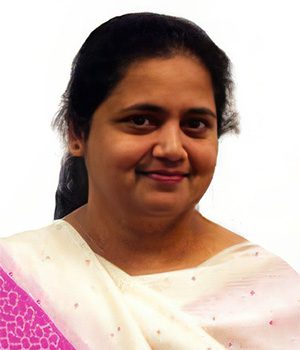
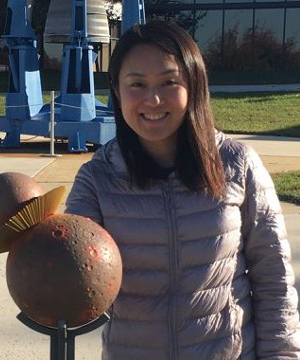
Archana Dubey is a Senior Lecturer at the University of Central Florida (UCF), affiliated with the College of Sciences. She joined UCF in 2001 and holds a PhD in Physics from Bhavnagar University, India (1998). Her postdoctoral research at Rensselaer Polytechnic Institute (RPI) and UCF focused on theoretical and computational studies in physics and materials science. She was promoted to Associate Professor with tenure in 2014 as part of UCF's annual promotions and tenure cycle. Her research interests include electronic structure calculations, nuclear quadrupole interactions, hyperfine interactions, and biomolecular systems such as hemoglobin and rhizoferrin. She employs first-principles methods like Hartree-Fock and density functional theory to investigate material properties at the atomic level. Dr. Dubey's publications span 1998–2013, covering topics such as coordination chemistry of metalloproteins, nuclear magnetic resonance phenomena in biomolecules, and magnetic thin films. Her work has been published in journals like BioMetals , Hyperfine Interactions , and Journal of Applied Physics . She currently supervises graduate and undergraduate students in research projects related to theoretical physics and materials science. Her lab focuses on interdisciplinary studies at the intersection of physics, chemistry, and biology.
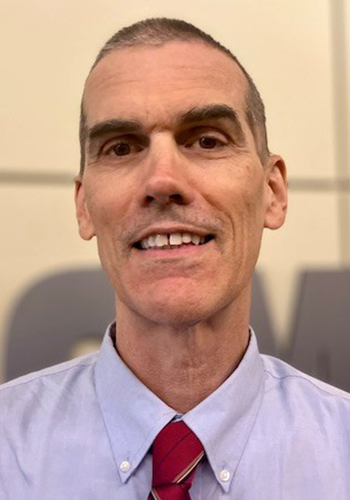
Howard Gifford is an Associate Professor in the Department of Biomedical Engineering at the University of Houston, part of the Cullen College of Engineering. His research focuses on biomedical image formation and system design, particularly in medical imaging technologies such as PET/SPECT and X-ray imaging. He explores how humans extract information from images, emphasizing the optimization of imaging systems for decision-making in clinical settings. Dr. Gifford holds a Ph.D. in Applied Mathematics from the University of Arizona (1997) and a Bachelor’s in Applied Physics from Harvey Mudd College. Before joining UH in 2012, he was an Associate Professor of Radiology at the University of Massachusetts Medical School. His professional affiliations include SPIE and the Medical Imaging Perception Society. His research interests include task-based technology assessment, visual perception variability, and reconstruction algorithms for PET/SPECT. Key areas of application involve optimizing tomographic gamma-ray imaging and x-ray imaging for breast cancer detection. Recent work emphasizes model observers for medical image quality assessment and adaptive feature selection strategies. Dr. Gifford’s publications span model observer development, image reconstruction techniques, and optimization of imaging parameters. He currently offers postdoctoral research opportunities in medical imaging science.
Catherine Schuman is an Assistant Professor in the Min H. Kao Department of Electrical Engineering and Computer Science at the University of Tennessee, Knoxville, part of the Tickle College of Engineering. Her work focuses on neuromorphic computing, spiking neural networks, and AI-driven hardware-software co-design. She holds a Ph.D. and B.S. in Computer Science and Mathematics from the University of Tennessee (2015 and 2010, respectively). Research interests include neuromorphic systems, energy-efficient computing architectures, stochastic devices, and applications of neuromorphic computing in scientific domains like materials science and quantum materials. She emphasizes benchmarking frameworks (NeuroBench) and real-world applications such as radiation detection and control systems. Her recent publications (2023-2025) highlight advancements in neuromorphic hardware-software co-design, spiking reinforcement learning frameworks, and neuromorphic implementations for scientific computing. Notable contributions include frameworks like SpikeRL, NeuroPong, and the RISP neuroprocessor, emphasizing open-source tools for embedded neuromorphic computing. No scientific awards are explicitly listed in the provided information. She actively explores cross-disciplinary applications, including combustion control and materials discovery through AI-enhanced device design.
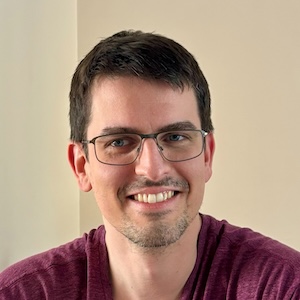
Lucas Lehnert is an Assistant Professor in the Department of Computer Science at the University of Saskatchewan, specializing in Artificial Intelligence and Reinforcement Learning (RL). His research focuses on how intelligent systems can learn to solve complex decision-making tasks through representation learning, abstraction mechanisms, and lifelong learning strategies. He also explores applications of AI/RL in scientific and engineering domains. Education: PhD in Computer Science (Brown University, 2021), MSc (McGill University, 2016), BSc (McGill University, 2014). Postdoctoral positions included Meta's FAIR team (2022–2024) and the Mila Quebec AI Institute (2021–2022). Research interests include reinforcement learning fundamentals, generative AI reasoning, exploration strategies, and reward-predictive representations. His work bridges model-based and model-free RL paradigms, emphasizing scalable and generalizable solutions. Awards include the Best Student Workshop Paper Award (2017) and an NIMH training grant in cognitive neuroscience. His research has been published in top conferences like NeurIPS, ICML, and ICLR. He advises graduate students in RL and collaborates on projects involving transformer-based planning, exploration algorithms, and multi-agent systems. Current work includes developing SearchFormer for efficient planning tasks and exploring maximum entropy exploration methods.
Chadi Assi is a Professor and Tier II Concordia Research Chair at the Concordia Institute for Information Systems Engineering, Concordia University. His research focuses on wireless networks, information security, and smart grid systems, with particular emphasis on reconfigurable intelligent surfaces (RIS), integrated sensing and communication (ISAC), cybersecurity for electric vehicles (EVs), and machine learning-driven network optimization. He has pioneered work on mitigating cyber-physical attacks in power grids and IoT ecosystems, while advancing cooperative communication protocols like RSMA and NOMA. His technical contributions span theoretical frameworks for energy efficiency maximization in hybrid SDMA/NOMA schemes, low-complexity RIS element selection algorithms, and adversarial PINN models for grid dynamics. He also investigates vulnerabilities in EV charging infrastructure and O-RAN synchronization protocols, proposing robust detection mechanisms like PEACE and Grid Mirror. His interdisciplinary work bridges communications, power systems, and AI, addressing challenges in 5G/6G security and resilient IoT provisioning. Key Research Areas: RIS-enabled ISAC networks, EV cybersecurity, meta-learning in communications, IoT malware analysis Current Projects: Grid resilience against load-altering attacks, Movable antenna optimization, federated learning for AGC systems Recent publications (2024-2025) emphasize deep reinforcement learning frameworks for RIS-aided networks, cooperative RSMA performance enhancement, and defense mechanisms against dynamic trigger-based attacks. He has also developed novel datasets for advanced persistent threats and frameworks like ChargePrint for EV charging security analysis. His work is published in top venues including IEEE Transactions on Smart Grid, IEEE JSAC, and IEEE ICC, reflecting contributions to both theoretical advancements and practical system implementations.
Devinder Mahajan is a tenured Professor in the Department of Materials Science and Chemical Engineering at Stony Brook University . He also serves as Graduate Program Director (CME) and Director of the Institute of Gas Innovation and Technology (I-GIT) at the Advanced Energy Research and Technology Center (AERTC). His career spans over four decades, including leadership roles at Brookhaven National Laboratory and international appointments in Italy, Japan, and China. Education : Ph.D. in Applied Chemistry (1979, University of British Columbia), M.Sc. (1976, University of British Columbia), B.Sc. (1972, Panjab University) Dr. Mahajan’s research focuses on low-carbon energy technologies , including CO 2 mitigation, methane hydrate utilization, biomass-to-fuels catalysis, ultra-deep hydrodesulfurization (HDS), extremophiles-mediated hydrogen production for fuel cells, and geothermal energy-minerals extraction. His work bridges chemical engineering, materials science, and environmental policy. His scientific publications (over 318) emphasize clean energy solutions, with recent articles exploring hydrogen storage in graphene materials, pipeline infrastructure for hydrogen blending, CO 2 clathrate hydrates, and photovoltaic/membrane distillation systems. These studies reflect his commitment to decarbonization and sustainable resource utilization. Notable scientific awards include: Marie Curie Senior Researcher (2013-17) Jefferson Science Fellow (2011-12) Outstanding Mentor Award (2009, 2007, U.S. Department of Energy) Crown and Eagle Medal of Honor (2006, RANS) Promising Inventor’s Award (2005, SUNY) Dr. Mahajan actively contributes to professional leadership , serving on editorial boards for the Journal of Renewable and Sustainable Energy and The Open Petroleum Journal . He has organized international workshops on biofuels, methane hydrates, and low-carbon societies, and advised U.S. and Chinese governments on energy policy.
Dr. Seokgi Lee is an Assistant Professor in the Department of Industrial and Systems Engineering at Youngstown State University (YSU), part of the Rayen School of Engineering. Previously, he served as an Assistant Professor in Industrial Engineering at the University of Miami. He holds a Ph.D. in Industrial and Manufacturing Engineering from Pennsylvania State University and B.S./M.S. degrees in Industrial Engineering from Hanyang University, South Korea. His research focuses on distributed control systems, predictive analytics, and simulation-optimization for service engineering processes in supply chains, transportation, and healthcare. Notable expertise includes energy-aware manufacturing systems, prevention service analytics, and applications of machine learning in logistics and healthcare. Dr. Lee’s educational background includes teaching roles at YSU, the University of Miami, and Penn State, covering courses such as Decision Analysis for Engineering, System Analysis and Design, Operations Research, and Production Systems. He has contributed to institutional service through committees like the New Faculty Search in ISEN (YSU) and PhD recruitment in Industrial Engineering (University of Miami). His research trends emphasize interdisciplinary solutions, blending control theory with machine learning to address energy efficiency, healthcare optimization, and sustainable logistics. Recent publications highlight work on dynamic scheduling algorithms, opioid prescribing disparities, and green transportation systems. While no specific awards are listed, his active engagement in academic service underscores his commitment to institutional advancement. Teaching and advising form a core part of his role, with a focus on graduate and undergraduate engineering curricula. His work integrates real-world applications, such as optimizing infusion center operations and modeling energy costs in manufacturing, demonstrating a strong practical orientation.
Dr Nazem Khan is a Departmental Lecturer and Stipendiary Lecturer in Statistics at the Mathematical Institute of the University of Oxford. His research specialization is in Mathematical Finance, focusing on risk modeling, portfolio optimization, and financial engineering. He holds a permanent academic position and can be contacted at nazem.khan@maths.ox.ac.uk . His research interests include advanced risk assessment methodologies, stochastic control in financial systems, and the intersection of payment networks with optimization theory. His work frequently addresses theoretical challenges in arbitrage detection and coherent risk measure applications. Dr Khan's recent publications (2019–2025) explore topics ranging from risk paradoxes in portfolio management to regulatory frameworks for expected shortfall. His work demonstrates a focus on practical applications of theoretical finance models in real-world financial systems. He is affiliated with the Mathematical and Computational Finance research group at Oxford and maintains an academic profile at https://sites.google.com/view/nazemkhan/about . His ORCID identifier is 0000-0003-0146-685X .
Professor Tom Smith is a leading finance academic at Macquarie University, affiliated with the Department of Applied Finance and the Centres for Corporate Sustainability and Environmental Finance and Risk Analytics. He specializes in Environmental Finance, Asset Pricing Theory, Market Microstructure, and Derivatives. His research addresses critical topics such as carbon pricing, climate policy impacts, and sustainable investment strategies. With over 50 PhD students supervised, he has significantly contributed to advancing financial theory and practice. Research interests focus on environmental finance innovations, asset pricing models, and market design. Key contributions include studies on net-zero transitions, carbon accounting, and the socio-economic implications of climate policies. His work bridges theoretical frameworks with practical applications, such as greenwashing detection via AI and retail investor education for impact investing. Notable awards include the 2019 Emerald Literati Award for groundbreaking research in fossil fuel divestment and carbon policy analysis. He leads 17 active research projects, including climate litigation risk analysis and the impact of digital transformation in finance. Media engagements highlight his expertise in university governance and sustainable finance, emphasizing his role as a thought leader in global financial and environmental discourse.
Gregory Markowsky serves as a Senior Lecturer in the School of Mathematics at Monash University, maintaining an active research profile with continuous publication output through 2025. His academic appointment shows no indication of part-time status, emeritus designation, or former staff classification. His research centers on three interconnected domains: Stochastic processes, particularly planar Brownian motion and random walk theory Complex analysis with applications to probabilistic models Graph theory focusing on algebraic and combinatorial structures These areas converge in his investigation of probabilistic phenomena with geometric interpretations. Recent publication trends reveal sustained productivity with 61 research outputs cataloged, including 4 articles in 2025 alone. His work demonstrates consistent methodological focus on stochastic analysis and combinatorial structures, with increasing cross-disciplinary applications in forensic science and econometrics as evidenced by 2024-2025 publications. Markowsky has secured three significant research projects funded by the Australian Research Council, including: "Planar Brownian motion and complex analysis" (2014-2017) as Primary Chief Investigator "Finite Markov chains in statistical mechanics and combinatorics" (2014-2017) "AMSI Industry Internship: Melbourne Storm" (2013) His ORCID profile (0000-0003-1656-337X) documents extensive scholarly activity with international collaborations. Professional engagement includes contributions toward UN Sustainable Development Goals through mathematical applications, though specific goal alignments aren't detailed in available materials. His email contact Greg.Markowsky@monash.edu remains active with current research dissemination.
Amine Benzerga is a Professor of Aerospace Engineering and Materials Science & Engineering at Texas A&M University, holding the General Dynamics endowed chair. As Director of the Center for Intelligent Materials and Structures (CiMMS), he leads cutting-edge research in smart material systems. He is affiliated with the Department of Aerospace Engineering within the College of Engineering, and his work integrates computational and experimental approaches to advance materials science. Education: Ph.D., Material Science & Engineering, École des Mines de Paris, France (2000) M.Sc., Mechanical Engineering, Université Paul Sabatier, Toulouse (1995) B.Sc., Aerospace Engineering, Sup'Aero, Toulouse (1995) Classes Préparatoires, Physics, Lycée Masséna, Nice (1989-1992) Research Interests: His work focuses on Mechanics of Materials , High-Performance Computing , and Anisotropy in Plasticity and Fracture . He explores Ductile Fracture mechanisms, Discrete Dislocation Plasticity , and Macromolecular Mechanics of Polymers . Recent studies include stress triaxiality effects on fracture behavior in magnesium alloys and polymer composites, failure under severe shear, and computational modeling of spall dynamics during hypervelocity impacts. Awards & Honors: Faculty Fellow, Texas Engineering Experiment Station (2014) Select Young Faculty Award, Texas Engineering Experiment Station (2009) National Science Foundation CAREER Award (2008) Highest Honors for Ph.D. Dissertation Work (École des Mines de Paris, 2000) Grants & Advising: Amine has led grants such as the 2019 Multiscale Modeling of Damage Tolerance in Hexagonal Materials and the 2018 CyberTraining: CIC Computational Materials Science Summer School . His advisory work includes supervising experimental and computational studies on void coalescence and plasticity in metals and polymers. Labs & Teams: As CiMMS Director, he oversees interdisciplinary projects in intelligent materials, including shape memory alloys and damage detection via sensory particles. His team collaborates on topics like texture effects in magnesium alloys and fracture locus path-dependence.
Alessandro Rebucci is a Professor of Finance and Economics at Johns Hopkins University, holding joint appointments in the Carey Business School and the Krieger School of Arts and Sciences' Economics Department. He is an NBER Research Associate (IFM Program), CEPR Research Fellow (IMF Programme), and ABFER Fellow. His research focuses on international finance, macroeconomics, and macrofinance, with publications in top journals like the Journal of International Economics and Review of Financial Studies . He has held policy roles at the International Monetary Fund (1998–2008) and Inter-American Development Bank (2008–2013), and served as a Visiting Scholar at the Federal Reserve and Bank for International Settlements. His work examines monetary policy transmission, capital flows, financial crises, and macrofinancial stability. Notable contributions include analyzing China’s monetary policy impact, the valuation of US Treasuries, and household portfolio dynamics during crises. Rebucci advises journals like the Journal of Money, Credit and Banking and organizes conferences such as the Geoeconomics event covered by the Financial Times . His Young Leader Award from the Council for the United States and Italy recognizes his policy-relevant scholarship. He also contributes to VoxEU.org , FT Alphaville , and chairs the Academic Board of Advisors for the Factor Investing Group. His research themes include: Global financial linkages and policy transmission Cross-border capital flow dynamics Quantitative easing effects on housing markets Crisis modeling and macroprudential policies Recent work explores geoeconomic tensions, the role of official reserves, and pandemic-era policy responses. He collaborates on datasets like capital control measures and GVAR model parameters, emphasizing empirical rigor and policy relevance.
Miki Nakajima is an Assistant Professor of Earth and Environmental Sciences and Physics and Astronomy at the University of Rochester. She holds a PhD from the California Institute of Technology. Her dual appointments reflect her interdisciplinary research in planetary science, combining geophysics, astrophysics, and computational modeling. Education: PhD in Planetary Science, California Institute of Technology Research Interests: Planetary Dynamics: Focuses on impact processes, planetary interior evolution, and moon/exomoon formation mechanisms. Specializes in modeling Enceladus plumes and Earth-Moon system origins. Numerical Simulations: Develops advanced computational tools like NcorpiON for collisional system modeling and N-body integration. Early Solar System: Investigates accretion processes, mantle differentiation, and volatile retention during terrestrial planet formation. Research Trends in Publications: Recent work emphasizes giant impact simulations (Moon formation), tungsten isotope systematics, and exomoon formation limitations. Her articles consistently integrate high-fidelity numerical models with geochemical observations. Advising & Grants: No advisees listed; her funding sources likely support computational infrastructure and space mission collaborations. Active in planetary science communities. Labs/Teams: Affiliated with the University of Rochester's Earth and Environmental Sciences department, collaborating with astrophysics groups on interdisciplinary projects.
Nikhil Padmanabhan is an Associate Professor of Physics at Yale University. His research focuses on theoretical and observational cosmology, particularly in the areas of baryon acoustic oscillations (BAO), dark energy probes, and galaxy clustering analysis. He is a key contributor to the Dark Energy Spectroscopic Instrument (DESI) project, which aims to map the universe’s large-scale structure to constrain cosmological parameters. Padmanabhan holds a Ph.D. from Princeton University (2006). His work integrates advanced statistical methods, machine learning, and high-performance computing to analyze galaxy surveys. Research interests include ultra-light dark matter dynamics, cosmic density field reconstruction, and systematic uncertainties in BAO measurements. He has contributed to instrumental design for future surveys like the MegaMapper and NANCY, targeting precision cosmology. Recent studies emphasize optimizing BAO analyses using neural networks, exploring Lyman-alpha forest signals, and probing primordial non-Gaussianity. His publications often address methodological improvements in covariance matrix estimation, redshift weighting, and mock catalog generation for large galaxy surveys. Education : Ph.D. in Physics, Princeton University, 2006 Key Projects : DESI, MegaMapper, NANCY, SDSS-IV Labs/Teams : Part of Yale’s Theoretical Astrophysics group and DESI Collaboration No scientific awards explicitly listed in the provided materials. Advising and grants remain unspecified in the scraped text.
Erik Nystrom is a composer and academic at City, University of London, specifically affiliated with City St George's, where he conducts research and artistic work in electroacoustic and computer music. His practice centers on multichannel sound, spatial texture, and live interactive performance using algorithmic systems. He previously held a Leverhulme Early Career Fellowship at the University of Birmingham’s BEAST studio, contributing significantly to spatial synthesis and performance aesthetics. Education: PhD in Electroacoustic Music, City University, London (supervised by Denis Smalley) MA in Electroacoustic Music, City University, London (supervised by Denis Smalley) Erik’s research explores the intersection of human and machine agency in improvisation, focusing on post-human cognition, nonconscious processes, and the concept of intra-action. His work integrates machine learning, agent-based systems, and real-time synthesis, particularly through the SuperCollider environment. He investigates how algorithmic systems can co-create with human performers, generating emergent sonic textures through feedback and listening behaviors. Key themes include spatial sound, acousmatic improvisation, and the philosophical underpinnings of technological creativity. His 15 most recent works and publications reveal a strong trend toward algorithmic improvisation, cognitive assemblages, and spatial synthesis. The articles and compositions emphasize machine learning, real-time interaction, and the blurring of composition and performance. Subfields such as post-human attractors, topographic synthesis, and listening agents dominate his recent output, reflecting a deep engagement with both technical innovation and philosophical inquiry in music. Scientific Awards: Leverhulme Early Career Fellowship (2015–2018) The Merciful Company Cordwainer's Prize for Outstanding Achievement on the MA Programme Mercer's Music Prize for Most Outstanding Achievement on the PhD Programme Audience Prize at Metamorphoses International Electroacoustic Composition Competition, Brussels (2010) Erik has advised no formal students listed in the text, but his research has been supported through competitive grants such as the Leverhulme Fellowship. He has presented his work globally at major conferences including ICMC, SMC, NIME, and Beyond Humanism. His compositions have been released by empreintes DIGITALes and performed at institutions like the University of Oxford and De Montfort University. He is actively involved in creative labs and research teams, notably through his work with BEAST (Birmingham Electroacoustic Sound Theatre) and participation in symposia such as the IKO/OSIL Symposium in Graz, Austria. His current practice involves developing interactive systems for live spatial performance, often involving collaborative electroacoustic composition with intelligent agents.