Josbert Metselaar, also known as Bart, is a part-time Associate Professor of Advanced Drug Delivery at the University of Twente since 2012 and a part-time Group Leader at RWTH Aachen University since 2015. He holds a PharmD from Utrecht University and a PhD in Pharmaceutics and Immunology (2003). His research focuses on liposomal and polymeric nanomedicines for inflammation and cancer, particularly hematological and solid tumors. His recent publications highlight advancements in Polymeric micelle formulation Tumor-targeted drug delivery Clinical translation of nanomedicines Immune system interactions with nanoparticles He has received major company awards and secured grants from DRG and BMBF. While no student advisees are listed, his work involves collaborations with institutions like Enceladus Pharmaceuticals BV and RWTH Aachen University.
Holger Wrede is a Professor in Electrical Power Engineering at the Düsseldorf University of Applied Sciences since 2014. He leads the Research Group on Power Electronic Energy Systems , focusing on control strategies, system management, and dynamic behavior of power electronics-dominated electrical networks. His work connects with energy transition ( Energiewende ), renewable energy integration, and grid stability. He also serves as Prodekan für Finanzen (Deputy Dean for Finance) and is a member of the In-LUST institute for sustainable urban development. Key research areas: Power electronics, grid control, renewable energy systems Notable projects: 413 MW traction current converter system (Datteln), Waldeck II pumped storage plant expansion Memberships: VDI, VDE, IEEE Contact: Office: 05.1.037, Laboratory: 05.1.045
Prof. Jörg F. Wollert serves as Professor at Aachen University of Applied Sciences (FH Aachen), Germany, where he leads research within the MASKOR institute focusing on next-generation manufacturing systems. His academic career spans over two decades with continuous contributions to industrial automation, evolving from early wireless communication research to current Industry 4.0 leadership. Research focuses on semantic interoperability frameworks for field-level device integration, human-centered gamification in manufacturing workflows, and resilient multi-agent control systems for smart factories. His work bridges theoretical ontologies with practical implementations, emphasizing worker experience through VR training systems and digital assistance. Recent publications demonstrate growing emphasis on context-aware capability inference and adaptive production environments . Analysis of his 2022-2025 publications reveals three dominant trajectories: (1) Semantic architectures for field device interoperability (40% of recent work), (2) Gamification mechanisms enhancing human performance (35%), and (3) Multi-agent systems for production resilience (25%). His research consistently addresses the human-technology interface, with 70% of recent articles incorporating human factors considerations. As founder of the Wireless-Technologies-Kongress series (2006-2008), Prof. Wollert established early frameworks for industrial wireless communication now foundational to Industry 4.0. His MASKOR institute team develops practical implementations including the Digital Twin Academy initiative and IO-Link integration frameworks currently deployed in German manufacturing SMEs.
Prof. Dr. Wolfgang Köck is a Professor of Environmental Law at the Faculty of Law, University of Leipzig, and has been Head of the Department of Environmental and Planning Law at the Helmholtz Centre for Environmental Research (UFZ) until 2024. His work focuses on environmental law , planning law , and sustainable land use , integrating legal frameworks with ecological and economic considerations. He leads interdisciplinary projects like SOILPROM (pollutant transport modeling and legal frameworks) and DoRiF (spatial planning instruments for land consumption reduction). Joint appointment: University of Leipzig & UFZ Editorial roles: Journal of Environmental Law, JEEPL Key memberships: European Environmental Law Forum, IUCN Academy of Environmental Law Research Themes : His work addresses climate adaptation , bioeconomy regulation , and legal-economic interplay in land use . Recent projects analyze renewable energy expansion and Covid-19 spatiotemporal dynamics , emphasizing equity and legal innovation . Students under his supervision explore topics like land use trade-offs and nature's legal rights . Scientific Leadership : He contributes to national and EU legal frameworks, including roles in the German Advisory Council on the Environment (since 2020) and the Board of Trustees of the German Society for Agricultural Law (since 2021). His publications span land consumption reduction , tradable permits , and climate-resilient legal systems .
Thomas Forbriger is a researcher at the Geophysical Institute (GPI) of the Karlsruhe Institute of Technology (KIT), responsible for operating the Black Forest Observatory (BFO). He teaches undergraduate and graduate courses in geophysics, focusing on seismic instrumentation, field exercises, and observatory practice. Research Interests His research spans seismology , instrumentation , and geophysical data analysis . Key areas include: Temporal gravity variations and tidal analysis Seismic surface wave propagation and inversion Calibration and noise reduction in seismic and gravimetric instruments Distributed Acoustic Sensing (DAS) applications Atmospheric effects on seismic recordings Scientific Output His recent work emphasizes strainmeter calibration using DAS arrays , long-period seismic noise reduction , and modeling atmospheric tilt noise . He has contributed to major discoveries, including the 2024 Greenland tsunami that generated global seismic signals for nine days. Teaching & Supervision He currently teaches: Geophysical Field Exercises (Bachelor) Physics of Seismic Instruments (Master) Black Forest Observatory Course / BFO Winterschool (Master) Scientific Seminars (Master) He has supervised over 30 Bachelor, Master, Diploma, and PhD theses, with topics ranging from sensor calibration to full-waveform inversion. Publications & Tools He has authored more than 100 peer-reviewed papers and gray literature contributions. He also maintains lecture notes and software tools for seismic data analysis and instrument calibration.
Dr. Shahram Dehdashti is a researcher at the Chair of Theoretical Information Technology (Lehrstuhl für Theoretische Informationstechnik) at the Technical University of Munich (TUM), working under Prof. Boche. His research spans quantum information science, quantum communication, and quantum machine learning, with significant contributions to theoretical frameworks for future quantum networks and practical implementations in optical systems. His primary research domains include: Quantum Information and Communication Quantum Computing Algorithms Quantum Machine Learning Quantum Optics and Photonics Metamaterials and Transformation Optics Quantum Cognition He investigates quantum channel capacities, quantum-classical signal co-propagation, and quantum-enhanced feature spaces, while uniquely applying quantum probability models to cognitive decision-making processes. Analysis of his 2020-2025 publications reveals accelerating convergence between quantum computing and artificial intelligence, particularly in quantum federated learning for edge devices and quantum-inspired sentiment analysis. His work consistently bridges theoretical quantum information with practical optical implementations, while maintaining distinctive contributions to quantum cognition through experimental protocols for decision modeling. No scientific awards were documented in the source material. There is no evidence of student supervision or grant funding in the available information. Dr. Dehdashti operates within TUM's Chair of Theoretical Information Technology, which focuses on fundamental quantum information processing and theoretical aspects of next-generation communication systems.
Andreas Löpker is a Professor of Mathematics and Stochastics at HTW Dresden, Faculty of Computer Science/Mathematics. He teaches courses like Computer Statistics for Business Informatics , Quantitative Methods for Economists , and Mathematical/Stochastic Models for Media Informatics . Research Areas: Stochastic processes, Markov processes, Queueing theory, Risk theory, Renewal theory Publication Trends: Recent works focus on stochastic gene expression modeling, binomial thinning, fluid overflow analysis, and perturbation methods in Markov chains. Many studies connect queueing theory with risk processes.
Luxi Zhao is a Research Fellow at Technische Universität München's Embedded Systems and Internet of Things department, specializing in Time-Sensitive Networking (TSN) and real-time network calculus. Working under the supervision of Prof. Sebastian Steinhorst, Zhao contributes to projects like ReMiX and 6G-Life, focusing on security, performance analysis, and configuration optimization of deterministic networks. Research Focus: Worst-case latency analysis in TSN networks Runtime configuration and reconfiguration problems Hybrid scheduling of processing and communication Network calculus modeling for heterogeneous systems Security challenges in industrial IoT and autonomous systems Interoperability of IoT systems in Industry 4.0 Teaching Activities: Secure Autonomous Systems (2025) Software Architecture for Distributed Embedded Systems (2025) IoT Security (2025) IoT Remote Lab practical courses across multiple semesters Advanced Seminar series (2020-2025)
Andrey I. Lyakhov is a Professor and Doctor of Computer Science at the Institute for Information Transmission Problems of the Russian Academy of Sciences. He serves as the Head of Laboratory №18 and has been active since 1959. His research focuses on wireless networks, particularly IEEE 802.11 and 802.16 protocols. Position: Laboratory Chief Affiliation: Institute for Information Transmission Problems, Russian Academy of Sciences Research Interests: Wireless Networks, MAC Protocol Analysis, Network Performance, Distributed Control, Multicast QoS, Channel Assignment His work includes analytical modeling of data transmission, beaconing in mesh networks, and studies on network unfairness and congestion. He has contributed to patents in wireless sensor networks and piconet beacon management. Notable publications span wireless LANs, WiMAX, and sensor network optimization. Lyakhov's research has involved collaborations with international conferences and journals, focusing on throughput estimation, channel contention, and quality of service in wireless systems. Recent publications include studies on bandwidth piggybacking (2010), intra-flow interference in mesh networks (2010), and multicast QoS support in WLANs (2007). Earlier works from 1983-2008 cover foundational topics in queueing theory, cache efficiency, and distributed control systems.
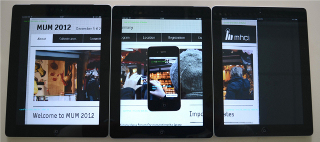
Dr. Ming Li is a researcher at RWTH Aachen University , focusing on interdisciplinary research spanning Human-Computer Interaction (HCI) and Geotechnical Engineering . His work on mobile devices and augmented reality has led to practical applications like MobileVideoTiles for multi-device video display and ACTUI for tangible interfaces using commodity hardware. Email: mingli@informatik.rwth-aachen.de In 2012 , he contributed to Dynamic Tiling Display and Segway AR-Tactile Navigation , emphasizing visual synchronization and vibro-tactile feedback. His recent publications (2020–2025) pivot toward soil mechanics , foamed concrete , and machine learning applications in geotechnical modeling, including Bayesian optimization for soil parameter calibration and multiscale fracture modeling for composites. He received the Best Paper Award at MUM12 . His work explores both mobile technologies and civil engineering materials , suggesting a broad technical scope.
Prof. Dr.-Ing. Annika Raatz serves as the Dean of the Faculty of Mechanical Engineering at Leibniz University Hannover and Executive Director of the Institute for Assembly Technology and Robotics. She leads task groups in advanced manufacturing and contributes to collaborative research centers CRC 1368 Oxygen-free Production CRC 871 Regeneration of Complex Capital Goods Her work bridges academia and industry through roles in the Leibniz School of Optics and Photonics , PhoenixD Cluster , and the German Research Foundation .
Nalini Venkatasubramanian is a Professor at the University of California, Irvine with over three decades of research experience in Internet of Things, Cyber-Physical Systems, and Smart Spaces. Her work bridges theoretical foundations with practical applications in urban infrastructure, environmental monitoring, and healthcare systems, making significant contributions to both academic research and real-world implementations. Her research interests span privacy-preserving IoT systems, semantic modeling of smart environments, federated learning approaches, and resource-constrained computing. She has pioneered frameworks for human-in-the-loop IoT planning, verifiable data management, and context-aware monitoring systems that have been implemented in community-scale deployments. Her work consistently addresses the tension between functionality and privacy in connected environments. Analysis of her recent publications reveals a strong interdisciplinary trajectory, with increasing focus on environmental sustainability, equitable resource allocation, and socially responsible computing. Her research integrates techniques from machine learning, distributed systems, and human-computer interaction to solve complex problems in water infrastructure, power grid security, and community resilience. Dr. Venkatasubramanian has mentored numerous graduate students who have become leaders in their respective fields, and maintains extensive collaborations across computer science, civil engineering, and environmental science disciplines. Her laboratory has produced influential systems including SmartSPEC, REAM, CANOPY, and PrivacySphere, demonstrating her commitment to translating research into practical solutions.
Andrea Vinci is a Researcher at the Italian National Research Council (CNR) under the Institute for High-Performance Computing and Networking (ICAR-CNR) . His work bridges Machine Learning , Internet of Things (IoT) , and Smart City technologies, focusing on scalable solutions for urban data analysis, energy optimization, and cognitive building systems. Research Interests include: Developing multi-density clustering algorithms for urban hotspot detection Designing platform-agnostic IoT applications across edge-cloud architectures Applying quantum computing to energy management and cloud resource allocation Creating deep reinforcement learning models for human-driven smart environments Leveraging LSTM networks and federated learning for occupancy prediction Exploring blockchain-empowered swarm robotics for distributed control Key Scientific Contributions : Best Paper Award at ACM Computing Frontiers 2023 for spatio-temporal crime prediction Pioneering the COGITO platform for cognitive building automation Advancing 32 Gb/s passive optical networks for high-loss environments
Ofer Biran is a prominent computer science researcher at the Technion - Israel Institute of Technology, where he serves as a Professor in the Department of Computer Science within the Faculty of Electrical Engineering and Computer Science. With a research career spanning over three decades from 1988 to present, Biran has established himself as a leading expert in distributed systems and cloud computing. His work bridges theoretical foundations with practical systems implementation, evolving from early theoretical distributed computing research to contemporary cloud infrastructure and policy analytics systems. Biran's research interests focus on the critical challenges of modern computing infrastructure. His early work investigated fundamental theoretical aspects of distributed task solvability and round complexity in distributed systems. Over time, his research evolved toward practical systems challenges, particularly in cloud computing environments. His recent work addresses virtual machine placement optimization, network-aware resource allocation, heterogeneous resource reservation, and policy-driven cloud ecosystems. This progression demonstrates his ability to identify and solve increasingly complex problems as computing paradigms shifted from theoretical distributed systems to large-scale cloud infrastructure. An analysis of his publication trends reveals a clear evolution from theoretical computer science toward applied systems research. His recent publications (2016-2023) predominantly focus on cloud computing infrastructure, policy analytics, and data center networking, while maintaining strong theoretical foundations. Biran has made significant contributions to understanding how to optimize resource allocation in heterogeneous environments, particularly through network-aware VM placement strategies that balance performance, reliability, and efficiency requirements in modern cloud systems. Biran has maintained extensive collaborations throughout his career, working with researchers including Yosef Moatti, Dean H. Lorenz, Shlomo Moran, Shmuel Zaks, Erez Hadad, and Richard E. Harper. His role as co-editor of the 2023 SYSTOR conference proceedings in Haifa demonstrates his continued active participation and leadership in the systems research community. His research has consistently addressed practical challenges in computing infrastructure while maintaining strong theoretical rigor, making significant contributions to both academic understanding and real-world system design.
David Breitgand is a senior researcher at IBM Research specializing in cloud computing, networking, and virtualization technologies. With a publication record spanning from 1997 to 2025, he has established himself as a significant contributor to the fields of cloud infrastructure, network management, and distributed systems. His work shows a clear evolution from traditional network management protocols to modern cloud-native architectures, serverless computing, and edge-to-cloud integration. Dr. Breitgand's research interests focus on optimizing resource allocation in distributed systems, with particular emphasis on cloud-edge continuum architectures. His work addresses critical challenges in network function virtualization, service function chaining, and 5G media applications. He has made significant contributions to the understanding of how to efficiently deploy and manage services across heterogeneous cloud environments, from data centers to the network edge. His research combines theoretical foundations with practical implementations, often resulting in systems that have been evaluated in real-world settings. Analysis of his recent publications (2021-2025) reveals a strong focus on edge-to-cloud integration, with particular attention to 5G media applications, service function chaining in distributed environments, and serverless computing paradigms. His work demonstrates consistent innovation in developing algorithms and frameworks that optimize resource usage while meeting service level objectives. The research spans theoretical foundations, system design, and practical implementation, with publications appearing in top-tier venues like INFOCOM, SYSTOR, and IEEE journals. Dr. Breitgand has collaborated extensively with researchers including Danny Raz, Dean H. Lorenz, and Avi Weit, indicating long-term institutional relationships. His work has been instrumental in several European research initiatives, particularly those focused on 5G media applications and cloud networking. While specific awards aren't documented in the available information, his consistent publication record in high-impact venues and sustained research contributions over nearly three decades speak to his standing in the research community. His research has practical implications for the design and operation of modern cloud and edge infrastructure, with applications in media delivery, network function virtualization, and distributed service deployment. Dr. Breitgand continues to be an active contributor to the field, with ongoing research addressing emerging challenges in the convergence of networking and cloud technologies.