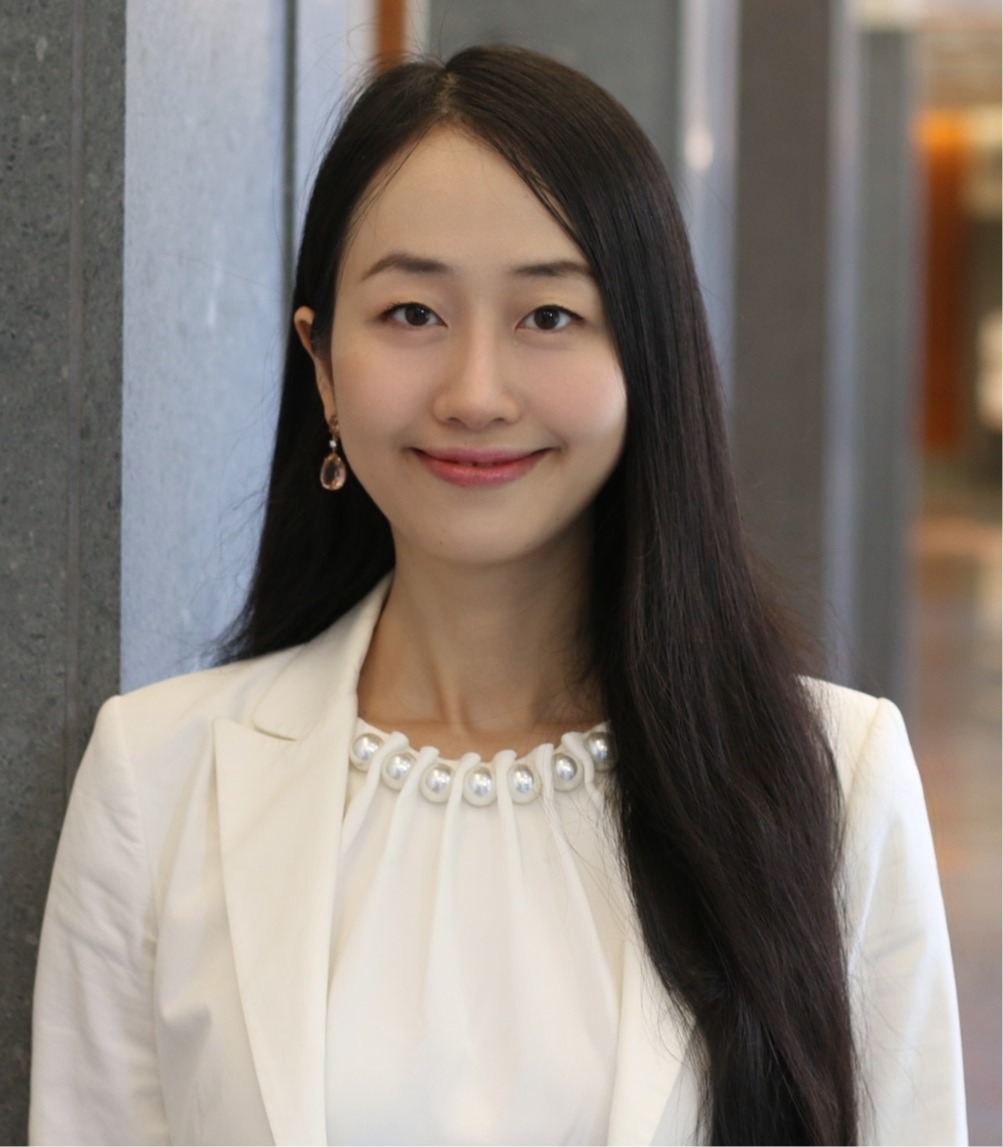
Xuyang WuView profile
Associate Professor
Xuyang Wu serves as Associate Professor at the School of Automation and Intelligent Manufacturing (AiM), Southern University of Science and Technology (SUSTech) in Shenzhen, China. He was promoted from Assistant Professor in June 2025 after joining SUSTech in February 2024, following postdoctoral research at KTH Royal Institute of Technology (2020-2023) and a visiting position at The Chinese University of Hong Kong (2023-2024). His educational background includes: Ph.D. in Communication and Information Systems, University of Chinese Academy of Sciences (2015-2020) B.S. in Applied Mathematics, Northwestern Polytechnical University (2011-2015) Wu's research centers on distributed and large-scale optimization with applications in machine learning and networked systems. His work develops asynchronous algorithms that handle communication delays and coupling constraints, bridging control theory with modern machine learning. Key contributions include barrier function methods for safe resource allocation and delay-agnostic coordinate updates, emphasizing convergence guarantees in decentralized settings. Analysis of his 15 most recent publications (2021-2025) reveals consistent focus on asynchronous distributed optimization across top venues including IEEE Transactions on Automatic Control and ICML. His work demonstrates increasing sophistication in handling non-convex objectives and time-varying networks while maintaining theoretical convergence guarantees, with recent expansion into high-performance decentralized training frameworks. Scientific recognition includes: Best Student Paper Finalist at IEEE International Conference on Control & Automation (2019) While specific advised students and grant details aren't documented in available sources, Wu's publication record indicates active collaboration with researchers at KTH Royal Institute of Technology and The Chinese University of Hong Kong. His work shows clear progression from theoretical foundations toward practical distributed learning applications. Current research focuses on enabling violation-free optimization under constraints and developing communication-efficient decentralized training frameworks for real-world deployment scenarios.