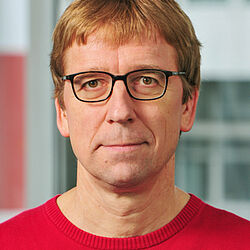
Prof. Stefan Röhl is a Professor of Mathematics and Logistics at the Technical University of Bingen since August 2008. He holds a PhD in Operations Research from Humboldt University Berlin (2001) and has extensive experience in academia and research, including roles at the Zuse Institute Berlin and Vorarlberg University of Applied Sciences. He currently serves on the Senate of the Technical University of Bingen (since 2014) and previously chaired the Examination Board for several engineering programs (2012–2021). His research focuses on logistics, optimization, stochastic processes, and game theory. His notable publications address inventory management, vehicle scheduling, and stochastic dynamic models. Röhl teaches courses in mathematics, logistics, and operations research at both bachelor’s and master’s levels. He has collaborated on industry projects with partners like Vorarlberger Kraftwerke AG, BASF AG, and Deutsche Telekom AG, focusing on optimization of logistics, production processes, and energy management.
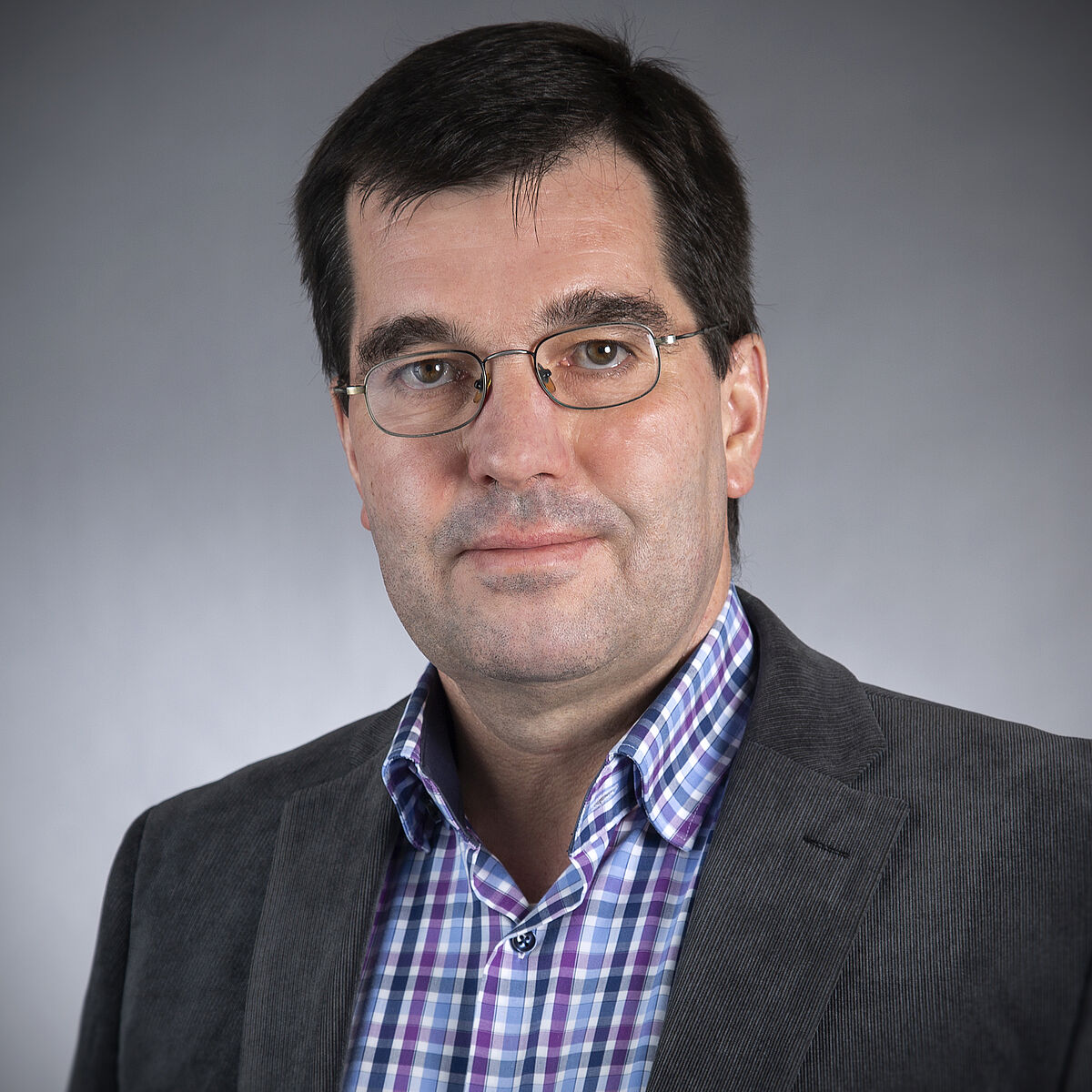
Prof. Dr. Joachim Wagner is a full Professor in the Department of Physical Chemistry at the University of Rostock, where he leads the research group on Complex Molecular Systems. He is affiliated with the Institute of Chemistry within the Faculty of Mathematics and Natural Sciences. His work bridges theoretical and experimental physical chemistry, focusing on soft matter and colloidal systems. Diplom, Saarland University (1995) Doctorate (Dr. rer. nat.), Saarland University (1998) Habilitation in Physical Chemistry, Saarland University (2007) His research centers on the structure and dynamics of soft matter, particularly colloidal suspensions and magnetic nanoparticles. He employs advanced scattering techniques—light, X-ray, and neutron scattering—to probe microstructural and dynamic properties. His work has significant implications for understanding ferrofluids, gels, and field-responsive materials. The 15 most recent articles reflect a sustained focus on colloidal systems under external fields, scattering characterization, and theoretical modeling. Key themes include magnetic anisotropy, relaxation behavior in doped ferrofluids, and structural evolution in aggregating systems. The publications span journals in physical chemistry, condensed matter, and materials science, demonstrating interdisciplinary reach. While no formal scientific awards are listed in the source text, his sustained publication record and professorial position indicate recognition in the field. Prof. Wagner advises graduate students in physical chemistry and leads an active research group. Although specific grants are not mentioned, his research infrastructure implies support through national or institutional funding. His group operates advanced scattering and characterization facilities. The research group 'Physical Chemistry – Complex Molecular Systems' conducts experimental and theoretical investigations into soft matter, focusing on microstructure, dynamics, and response to external stimuli. The team utilizes both in-house and large-scale scattering facilities, fostering collaborations in materials and condensed matter science.
Andrea Rosà is a researcher at the University of Lugano (USI), Switzerland, with a focus on performance optimization, concurrency, and profiling in the Java Virtual Machine (JVM) ecosystem. His work spans tool development, benchmarking, and parallel computing, often targeting metrics related to task granularity and synchronization. He has contributed to major conferences such as SPLASH, APLAS, and GPCE, and is actively involved in program committees and artifact evaluations. His research includes designing profiling tools like P3 and Renaissance, which analyze parallel applications, lock-free operations, and dynamic program behavior. These tools have been instrumental in benchmarking modern JVM performance and identifying variability in workloads. Andrea has authored numerous papers on profiling Java Streams, vector APIs, and multi-language dynamic analysis. His work often addresses challenges in automated benchmarking, runtime transitions, and task granularity optimization.
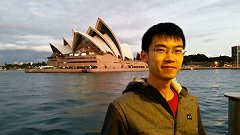
Tian Tan is an Assistant Professor at the Department of Computer Science and Technology , Nanjing University , where he co-runs the PASCAL Research Group . He previously worked as a postdoctoral researcher at Aarhus University (CASA) and earned his Ph.D. in Computer Science from the University of New South Wales (CORG) in 2017, advised by Prof. Jingling Xue. His research focuses on program analysis techniques and tools for programming languages, software engineering, and security. He has developed frameworks like Tai-e for static analysis and contributed to understanding Java reflection and pointer analysis. Education: Ph.D. (UNSW), B.Eng. (Northwestern Polytechnical University) Teaching: Courses on compilers and program analysis Recent work spans compiler design, cross-language pointer analysis, and security frameworks. His publications emphasize context sensitivity, artifact evaluation, and practical implementations. Scientific Awards: Distinguished Artifact Award (OOPSLA'23) Best Artifact Award (ICSE'25) Distinguished Paper Award (ECOOP'16) Distinguished Paper Award Nominee (ISSRE'17) He serves on program committees for SAS'25, ESEC/FSE'25, and SOAP'25, and has reviewed for top-tier venues like TOPLAS, SAS, and ISSTA.
Matthias Felleisen is a Professor in the College of Computer Science at Northeastern University. He is renowned for founding the PLT research group and pioneering the TeachScheme! educational initiative, which evolved into the Bootstrap project. His work spans programming languages, type systems, and educational tools. Affiliation: Northeastern University Academic Rank: Professor Research Interests: Programming Languages, Type Systems, Domain-Specific Languages, Concurrency Models His recent research includes type tailoring, effectful software contracts, and trace contracts. He has contributed extensively to programming language design and implementation, with a focus on gradual typing, language workbenches, and educational frameworks. Conference Contributions (2012-2025): ECOOP 2015-2025: Papers on gradual typing, contract systems ICFP 2016-2024: Research on Typed Racket, blame evaluation, concurrency SPLASH 2012-2023: OOPSLA papers on type migration, macros, visual syntax Mentoring Activities: Keynote speaker at PLMW 2016 ICFP 2020 mentoring sessions
Michael Winter is a composer, sound artist, and researcher currently working as a specialist for the Digital Humanities project 'Commoning Biomedicine: Networking Decentralised Collections of Oral Histories' at the Max Planck Institute for the History of Science in Berlin. He is also the co-founder and director of the nonprofit arts organization The Wulf, which hosts free experimental music performances in Los Angeles. His career bridges artistic practice with rigorous academic research in algorithmic information theory and digital humanities. Winter's research interests focus on the intersections of Algorithmic Information Theory, Music Theory, Digital Humanities, Sound Art, Phenomenology, Mathematics, and Epistemology. His work explores how algorithmic processes shape musical composition, perception, and social structures. He frequently examines the connections between music, mathematics, communication theory, and epistemology, with particular attention to how computational models can illuminate phenomenological experiences. His publications reveal a consistent interdisciplinary trajectory, with recent works like 'A simplicity bubble problem and zemblanity in digitally intermediated societies' (2024) demonstrating his ongoing exploration of how algorithmic information theory relates to social phenomena in the digital age. His research often investigates the emergence of complexity, consensus, echo chamber effects, and niche construction through mathematical models, with applications to understanding Big Data and algorithmization in contemporary society. Winter has extensive experience in digital humanities projects, having worked as a research programmer for Wolfram Alpha and the Brain Operation Database developed by the University of Southern California Brain Project. He was also an artist-in-residence at the Akademie Schloss Solitude in Stuttgart, Germany from 2018 to 2019, and co-founded the Los Angeles-based arts organization The Wulf in 2008, which has become a hub for experimental arts.
Christian Dietrich is a Professor at the Technische Universität Hamburg (TUHH) in the Operating System Group (OSG) . His research focuses on Operating Systems , Real-Time Systems , and Embedded Systems , with specific interests in Software Fault Tolerance , Memory Management , and Software Variability . Projects: ParPerOS (Parallel Persistency OS), ATLAS (Adaptable Thread-Level Address Spaces), CLASSY-FI (Cross-Layer Fault Injection), AHA (Automated Hardware Abstraction), CADOS (Configurability-Aware OS) Supervised Theses: 10+ completed theses on topics like io_uring Integration , Heterogeneous Multi-Core , Virtual Memory Primitives , and Fault Injection His recent publications (2022-2024) address Heterogeneous Computing , Virtual Memory Interfaces , and Crash-Consistent Systems . He received awards including USENIX ATC 2017 Best Paper , RTAS 2015 Best Paper , and ISORC 2022 Outstanding Paper .
Philipp Rohde serves as a Researcher at the Scientific Data Management research group within the Leibniz Information Centre for Science and Technology (TIB) while pursuing his Ph.D. in Computer Science at Leibniz Universität Hannover. His work bridges academic research and practical implementation in knowledge graph technologies, with emphasis on query processing systems and data validation frameworks. Academic Background: Bachelor of Science (B.Sc.) in Computer Science, Leibniz Universität Hannover Master of Science (M.Sc.) in Computer Science, Leibniz Universität Hannover Research Focus: Rohde specializes in semantic data management with particular expertise in SHACL constraint validation during SPARQL query execution. His methodological contributions address critical challenges in knowledge graph reliability, including constraint propagation in distributed environments, healthcare data integration, and access control mechanisms. Recent work demonstrates innovative approaches to validate data constraints without compromising query performance through techniques like traversal optimization and runtime certification. Research Trends: Analysis of his publication history reveals a concentrated trajectory in knowledge graph validation technologies, with 85% of recent work (2021-2023) focused on SHACL-related constraint processing. His research increasingly intersects healthcare applications, as evidenced by the Knowledge4COVID-19 project, while maintaining strong foundations in distributed systems and semantic web standards. The emergence of certified query processing as a recurring theme indicates growing emphasis on verifiable data integrity in decentralized environments. Project Leadership: Rohde actively contributes to major EU-funded initiatives including: QualiChain (EU Horizon Europe): Developing blockchain-enhanced qualifications frameworks PLATOON (EU Horizon 2020): Creating energy data interoperability solutions P4-LUCAT (ERAMed): Advancing precision medicine for liver cancer iASiS (EU Horizon 2020): Building biomedical text-mining infrastructure Research Environment: As core member of TIB's Scientific Data Management group, Rohde operates within a specialized unit focused on scalable knowledge graph technologies. The team maintains strong connections with Leibniz Universität Hannover's computer science department, facilitating technology transfer between library science applications and academic research. Current infrastructure supports large-scale semantic processing through dedicated knowledge graph validation testbeds and healthcare data integration pipelines.
Professor Stefan Großkinsky is Chair of Stochastics and its Applications at the Institute of Mathematics, Faculty of Mathematics, Natural Sciences and Technology, University of Augsburg. His office is located at Universitätsstraße 14, 86159 Augsburg (Space 3014, L1) with contact information including phone +49 821 598 2210 and email stefan.grosskinsky@math.uni-augsburg.de. He maintains an active research profile with publications available on arXiv and Google Scholar (ORCID: 0000-0002-5113-9112). His research focuses on applied probability, stochastic processes, mathematical modelling of complex systems, statistical mechanics, and rare event simulation . Professor Großkinsky investigates how probabilistic models can explain phenomena ranging from ant colonies to wealth distribution, market competition dynamics, and climate extremes. His work bridges theoretical mathematics with practical applications in economics, social systems, and environmental science. Analysis of his recent publications reveals strong trends in applying stochastic models to real-world complex systems, particularly examining competitive dynamics, wealth distribution mechanisms, and extreme value statistics in climate contexts. His research demonstrates the power of probability theory to model diverse phenomena across scientific disciplines. Professor Großkinsky leads a research team including M.Sc. students Chan Yoon Jun, Engel Rafael, and Marcel Schrocke, along with researchers Dr. Angeliki Koutsimpela and Dr. Bas Lodewijks. His previous academic appointments include positions at TU Delft (2020-2021), University of Warwick (2007-2020) where he was affiliated with the Alan Turing Institute and Centre for Complexity Science, University of Cambridge (2005-2007), and TU Munich (2000-2005). His research group operates within the Institute of Mathematics at the University of Augsburg, focusing on developing and analyzing stochastic models for complex systems across various domains including economics, social dynamics, and environmental science. The team maintains active collaborations with other institutions as evidenced by his past affiliations with multiple international research centers.
Stefan Detscher is a Professor at the Faculty of Business and Economics of the University of Economics and the Environment (HfWU), Nürtingen-Geislingen . His academic roles include leadership of the Digital Business School and the Digital Business Institute , with specializations in Digital Marketing & Sales , Digital Business Operations , and Sustainable Management . He also holds the Professorship 'Digitalization in Teaching' and serves as a Digitalization Advisory Board member and Rectorate Coordinator for digital marketing at HfWU. Research Interests Digital business model transformation Web3 applications in marketing AI-driven sales technology (MarSales Tech) Agile growth hacking strategies Metaverse customer experiences Voice commerce integration His work bridges academic rigor with industry practice, evidenced by his three-time 'Talentschmiede' award and leadership in the national marketing initiative mtp - Marketing zwischen Theorie und Praxis e.V. . His publications focus on digital disruption, scenario-based AI planning, and next-gen customer engagement technologies.
Prof. Dr. Manuel Ostermeier leads the Chair of Resilient Operations at the Center for Climate Resilience and the Faculty of Business and Economics at the University of Augsburg. His research focuses on sustainable and resilient logistics concepts in supply chains, with applications in food waste prevention , autonomous vehicles , and data-driven optimization . He collaborates internationally with institutions like the Polytechnic University of Porto and industry partners on projects such as the Green Hospital initiative , which addresses healthcare supply chain sustainability. The chair offers interdisciplinary opportunities for research and teaching. Contact: manuel.ostermeier@uni-a.de | rop@wiwi.uni-augsburg.de Address: Universitätsstraße 12, 86159 Augsburg Research Trends : Analysis of the 15 most recent articles reveals expertise in last-mile logistics (robotics, autonomous vehicles), food waste reduction in retail, and multi-compartment vehicle routing for efficient distribution. Quantitative methods (e.g., mixed-integer programming, heuristic algorithms) are applied to grocery retail , quick commerce , and environmental sustainability .
Professor Wolfgang Reif serves as Director of the Institute for Software & Systems Engineering at the University of Augsburg's Faculty of Applied Computer Science. His research spans multiple domains where formal methods meet practical engineering applications, particularly in software engineering, robotics, and self-organizing systems. Prof. Reif's research interests focus on applying formal verification techniques to complex systems engineering challenges. His work bridges theoretical computer science with practical applications in robotics, manufacturing, and autonomous systems. He has developed approaches for verification of concurrent systems, self-organizing production cells, and human-robot collaboration frameworks. His research demonstrates a consistent pattern of translating theoretical formal methods into practical engineering solutions for real-world problems. The recent publications reveal a strong trend toward integrating artificial intelligence with traditional engineering domains. His team has been particularly active in applying machine learning techniques to robotics, manufacturing processes, and verification problems. The publications show increasing focus on practical implementations of self-organizing systems, with applications in drone swarms, production automation, and composite material manufacturing. The work consistently demonstrates how formal verification can be applied to increasingly complex systems involving AI components. Prof. Reif leads a substantial research group with numerous PhD students and collaborators. His team operates within the Institute for Software & Systems Engineering, where they maintain active collaborations with both academic and industrial partners. The research environment supports work across multiple domains including formal verification, robotics, manufacturing systems, and AI applications. The team has developed several notable frameworks including PROTEASE for swarm robotics, SensorClouds for multi-modal sensor processing, and various verification tools built around the KIV system.
Stefan Traub is a Professor at Ulm University of Applied Sciences (THU), specializing in Web Engineering and Operating Systems. He actively teaches courses such as BSYS (Basic Systems), OPSYS (Operating Systems), and BSRN (Basic Network Technologies), with course materials available online via provided scripts. His research and teaching focus on computer networks and distributed systems, aligning with his technical work on software systems and network infrastructure. Contact details: Room F33, Prittwitzstraße 10, 89075 Ulm. Phone: +49 731 96537-633. Consultation hours are available by appointment, and he utilizes tools like Webex for virtual meetings ( Webex link ). Teaching Areas: Web Engineering, Operating Systems, Computer Networks, Distributed Systems Online Resources: Personal Website , Course Events
Prof. Dr.-Ing. Tobias Meisen is Professor of Technologies and Management of Digital Transformation at the University of Wuppertal, where he leads cutting-edge research in industrial artificial intelligence and digital transformation. He serves as spokesperson of the Interdisciplinary Center for Machine Learning and Data Analytics (IZMD) and chairs the board of SIKoM, a research institute focused on information, communication, and media technologies. He is also a member of the scientific advisory board of the Center for Advanced Internet Studies (CAIS) and contributes as an expert to the parliamentary commission on Artificial Intelligence in North Rhine-Westphalia. Research Interests: His work centers on developing robust, adaptive AI systems for industrial applications, particularly in environments with distributed, heterogeneous, or incomplete data. Key areas include Deep and Machine Learning , Deep Reinforcement Learning , Explainable and Transparent AI , and Knowledge Graphs for semantic interoperability. He emphasizes human-machine collaboration and trustworthy AI in industrial contexts. Recent Research Trends: His 2025 publications reveal a strong focus on transformer and recurrent architectures for motion prediction and radar-based perception in autonomous systems, AI-driven industrial process optimization using GANs, and novel applications of decision transformers in combinatorial optimization. His interdisciplinary work spans AI, manufacturing, sustainability, and data modeling. Scientific Awards: Best Paper Award Young Researcher Award (Germany's Excellence Initiative) Advising and Grants: Prof. Meisen actively mentors researchers, as evidenced by his co-authorship with numerous junior researchers. He leads and participates in national and international R&D projects with both academic and industry partners, securing funding for initiatives at the intersection of AI, digital transformation, and industrial engineering. Labs and Teams: He leads the Interdisciplinary Center for Machine Learning and Data Analytics (IZMD) and chairs the board of SIKoM, fostering collaborative research in AI, data analytics, and information systems. These platforms support interdisciplinary projects bridging computer science, engineering, and social sciences.
Claudia Brumberg serves as a Professor of Logistics within the Department of Economics at Hamburg University of Applied Sciences, operating under the Faculty of Business and Social Sciences. Her research specialization centers on logistics systems with emphasis on: Global supply chain optimization Transportation network design Inventory management strategies Sustainable logistics operations Business process integration Economic impacts of distribution systems Professional engagement includes consultation hours available by email appointment. Direct contact can be established via telephone at +49 40 428 75-6945 for academic inquiries related to her logistics expertise.