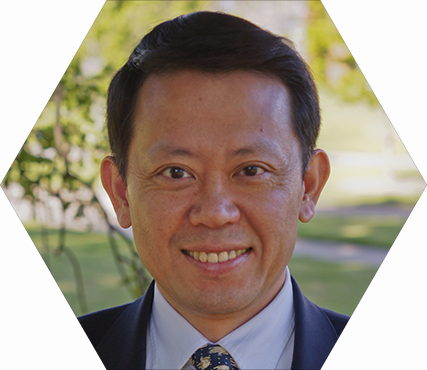
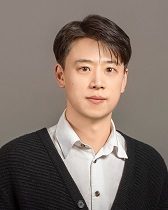
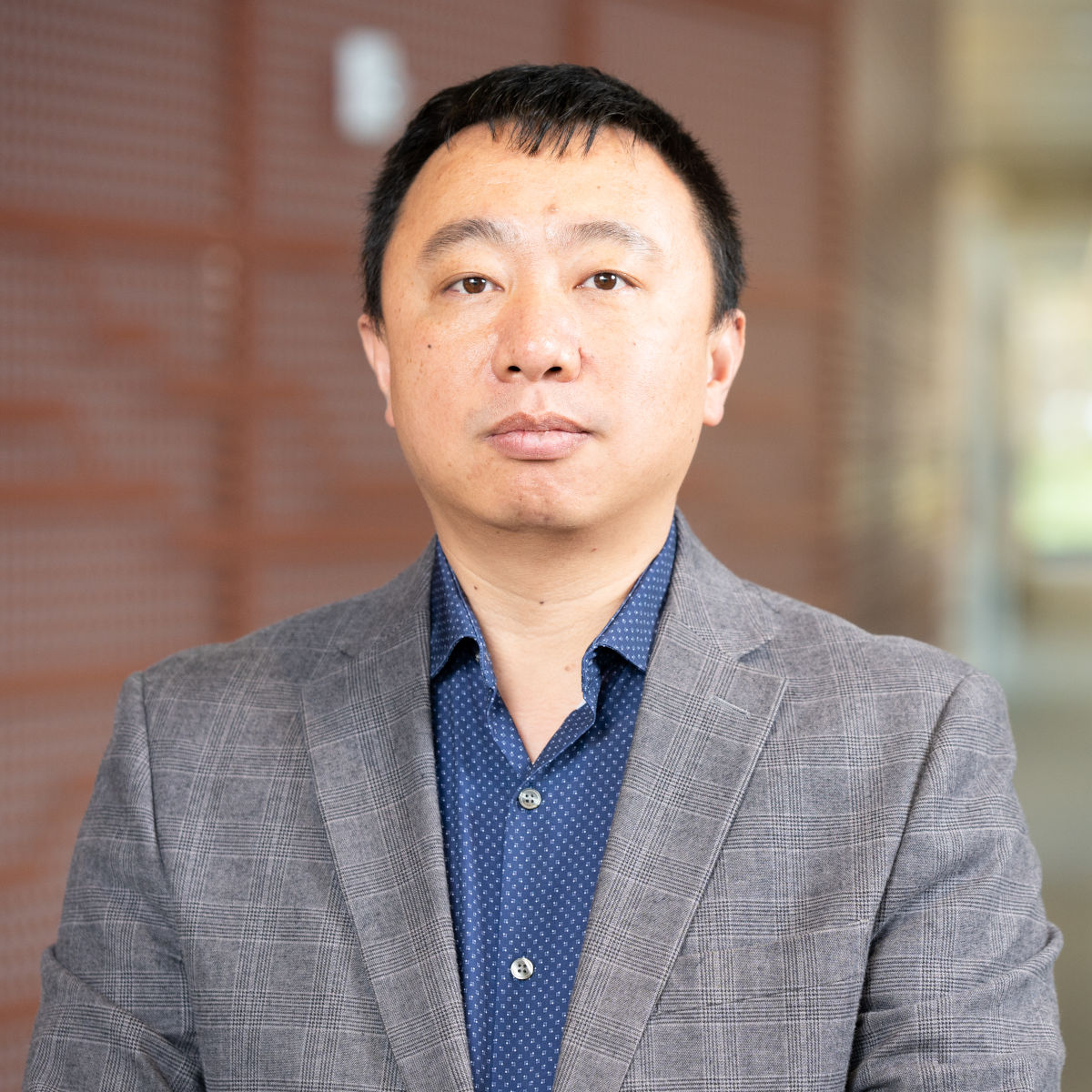
Jennifer Shang is a Professor of Business Administration and Area Director for Business Analytics and Operations at the Katz Graduate School of Business , University of Pittsburgh. With a focus on healthcare analytics, operations management, and e-commerce, she applies data-driven methodologies to enhance patient care, hospital efficiency, and business productivity. Education: PhD in Operations Management, University of Texas at Austin MBA, University of Iowa Bachelor of International Business, National Taiwan University Her research integrates multi-criteria decision-making techniques (e.g., AHP/ANP, DEA) and combines human judgment with quantitative data to improve organizational outcomes. She has published over 140 papers, with recent trends emphasizing healthcare analytics, big data applications, and supply chain optimization in service industries. Scientific Awards: Distinguished Professor for EMBA class 32 (2004-2005) Excellence in Teaching Award for MBA program (2002-2004, 2009-2010) Excellence in Research Awards (2013-2015, 2017-2020, 2021-2022) Best Paper Award (2010) in Information Systems Research Professor Shang teaches courses in operations management, supply chain, statistical analysis, and multivariate data analysis at undergraduate, MBA, EMBA, DBA, and PhD levels. She serves on editorial boards for journals including International Journal of Revenue Management and International Journal of Productivity and Quality Management .
Steven Y. Liang , Regents' Professor at the Georgia Institute of Technology 's Woodruff School of Mechanical Engineering, focuses on precision manufacturing , additive manufacturing , and materials-driven process optimization . His research program bridges materials science and computational mechanics to develop predictive models for advanced manufacturing systems. Ph.D., University of California, Berkeley (1987) M.S., Michigan State University (1984) B.S., National Cheng-Kung University, Taiwan (1980) Dr. Liang's work emphasizes physics-based modeling of thermal-mechanical interactions in machining and additive manufacturing, particularly for Ti6Al4V and Inconel 718 alloys. Recent publications highlight tool wear prediction , laser-assisted micro-milling , and residual stress modeling using machine learning and analytical mechanics. His research has been recognized with the ASME Milton C. Shaw Manufacturing Research Medal (2016) , SME Gold Medal (2021) , and Outstanding Lifetime Service Award of NAMRI/SME (2021) , among others. Funded by federal agencies and aerospace/automotive industries, his work provides scientific foundations for process planning and optimization.
Jingrui He is a Professor and MSIM Program Director at the School of Information Sciences, University of Illinois Urbana-Champaign. She holds multiple faculty affiliate positions including with the Department of Computer Science, National Center for Supercomputing Applications (NCSA), Illinois Informatics, Center for Digital Agriculture (CDA), and Mayo Clinic Arizona. Her research spans machine learning with applications in diverse domains including healthcare, agriculture, security, and finance. Dr. He received her PhD in Machine Learning from Carnegie Mellon University in 2010. Her research focuses on heterogeneous machine learning, active learning, neural bandits, and self-supervised learning. She addresses complex data challenges where multiple types of heterogeneity coexist, developing methods for exploring, understanding, characterizing, and predicting real-world data through statistical machine learning techniques. Her recent publications demonstrate a strong focus on graph learning, federated learning, fairness in AI, and neural bandit algorithms. She has developed innovative approaches for class-imbalanced graph learning, Byzantine-robust federated learning, and privacy-preserving graph machine learning. Her work bridges theoretical foundations with practical applications across multiple domains. Her scientific awards include the Amazon Research Award (2025), ACM Distinguished Member (2023), AAAI Senior Member (2023), FAccT Distinguished Paper Award (2022), NSF CAREER award (2016), and multiple IBM Faculty Awards. She has been recognized as an excellent teacher and received Best Paper awards at major conferences including ICDM and SDM. Dr. He directs the iSAIL Lab and leads several major research projects including the AI Institute for Future Agricultural Resilience Management and Sustainability (AIFARMS). She has successfully mentored numerous doctoral students who have become co-authors on her publications. Her research has been funded through prestigious grants including the NSF CAREER award and IBM Faculty Awards.
Jason Hartline is a Professor of Computer Science at the McCormick School of Engineering, Northwestern University, with a courtesy appointment in Managerial Economics & Decision Sciences. His research bridges computer science and economics, focusing on mechanism design, auction theory, and approximation algorithms. Ph.D. in Computer Science from the University of Washington (2003) Postdoctoral Fellow at Carnegie Mellon University (2003-2004) Researcher at Microsoft Research (2004-2007) His work develops methodologies to analyze and design economic systems using computational theory, particularly in auction mechanisms and non-truthful settings. Key contributions include the textbook Mechanism Design and Approximation and frameworks for Bayesian and prior-independent mechanism design. Recent publications (2018-2023) span topics like non-truthful mechanism learning, multi-dimensional agent modeling, and computational law. Collaborations include researchers from Harvard, Microsoft, and institutions across economics and theoretical computer science. Grants include multiple NSF awards (CCF, ECCS, HDR TRIPODS) for projects in data economics, machine learning integration, and peer grading systems. Former advisees hold academic positions at Stanford, Yale, and Penn State.
Zachary Tatlock is an Associate Professor at the Paul G. Allen School of Computer Science & Engineering at the University of Washington, where he leads the Programming Languages & Software Engineering Group (PLSE) and the SAMPL Group. His research spans programming languages, formal verification, compilers, and computational fabrication. He is also an Amazon Scholar with AWS's Automated Reasoning Group and previously advised OctoML. Tatlock's work bridges theoretical foundations with practical systems, focusing on making it easier to write tricky code while ensuring correctness through rigorous proofs and measurements. PhD in Computer Science & Engineering, University of California, San Diego (2014) Thesis: Reducing the Costs of Proof Assistant Based Formal Verification Advisor: Sorin Lerner BS in Computer Science (Honors) and Mathematics, Purdue University (2007) Professor Tatlock's research focuses on the intersection of programming languages, formal methods, and systems. His work in compilers and formal verification aims to make it easier to write tricky code while ensuring correctness through rigorous proofs. He explores computational fabrication techniques that bridge digital design with physical manufacturing. His recent work on equality saturation (via the egg framework) has transformed program optimization and synthesis. Tatlock also investigates floating-point numerics, distributed systems verification, and hardware/software co-design, always seeking to balance theoretical rigor with practical implementation. Tatlock's recent publications demonstrate a strong focus on equality saturation techniques (egg framework), computational fabrication, and verified systems. His work increasingly integrates machine learning with program analysis and synthesis. There's a clear trajectory toward more practical applications of formal methods in real-world systems, particularly in numerical computing and fabrication. His research group has made significant contributions to e-graph technology, floating-point accuracy, and the verification of distributed systems. Distinguished Paper Award for Rewrite Rule Inference Using Equality Saturation (OOPSLA 2021) Spotlight Paper Award for Dynamic Tensor Rematerialization (ICLR 2021) Distinguished Paper Award for egg: Fast and Extensible Equality Saturation (POPL 2021) Faculty Appreciation for Career Education & Training (FACET) Award (2020) NSF CAREER Award: Verifying Distributed System Implementations (2017) Distinguished Paper Award for Automatically Improving Accuracy for Floating Point Expressions (PLDI 2015) Distinguished Teaching Award Nomination (2015) Professor Tatlock has advised numerous doctoral, master's, and undergraduate students who have gone on to prominent positions in academia and industry, including faculty positions at the University of Utah and Brown University, and leadership roles at companies like OctoML and Certora. His research is supported by significant funding from NSF, DARPA, DOE, and industry partners, totaling millions of dollars. Current grants include projects on computer-aided reasoning, formal verification, computational fabrication, and machine learning systems. He has served on numerous program committees and organized workshops including FPTalks, EGRAPHS, and PNW PLSE. As co-leader of the Programming Languages & Software Engineering (PLSE) research group and affiliate of the SAMPL Group at the University of Washington, Tatlock has developed influential tools including egg (an equality saturation toolkit), Carpentry Compiler, and Odyssey. His group actively collaborates with industry partners including Amazon Web Services, where he serves as an Amazon Scholar. The group has made significant contributions to equality saturation, floating-point accuracy, program synthesis, and computational fabrication, with applications ranging from compiler optimization to 3D printing.
Flavio Bezerra Costa serves as an Assistant Professor in the Department of Electrical and Computer Engineering at Michigan Technological University's College of Engineering. His research focuses on critical areas of modern power systems, including smart grid technologies, renewable energy integration, power system protection, and advanced applications of signal processing and artificial intelligence in electrical power networks. Dr. Costa's research interests span a comprehensive range of power system topics with particular emphasis on Smart Grid technologies, Integration of Renewable Energy Systems, Power System Protection, Control, and Monitoring, Power Quality analysis, Power Systems and Power Electronics, AC/DC Microgrids, High-Voltage Direct Current (HVDC) Electric Power Transmission Systems, and the application of Signal Processing and Artificial Intelligence (including Machine Learning) in power systems. His work bridges traditional power engineering with modern computational techniques to address contemporary grid challenges. Analysis of Dr. Costa's recent publications reveals a consistent focus on wavelet transform applications for power system protection and monitoring, particularly in the areas of fault detection, classification, and location. His research demonstrates strong integration of machine learning techniques with traditional power system protection methods, with significant contributions to transformer protection, transmission line fault analysis, and microgrid stability. The work shows an evolving trajectory from fundamental wavelet-based protection techniques toward more sophisticated AI-enhanced approaches for modern power grid challenges. Dr. Costa maintains an active research program with numerous publications in top-tier IEEE journals and conferences, demonstrating his significant contributions to the field of power systems engineering and protection.
Abolfazl Hashemi is an Assistant Professor in the Elmore Family School of Electrical and Computer Engineering at Purdue University, directing the MINDS Group. He holds a B.Sc. from Sharif University of Technology (2014), and M.S.E. and Ph.D. degrees from The University of Texas at Austin (2016, 2020). His research focuses on Large-Scale Optimization for AI/ML, Learning at the Edge, and Decision-Making under Uncertainty, with applications in Federated Learning, Medical Image Analysis, and Cyber-Physical Systems. He leads the MINDS Group and collaborates with EnCORE and ICON centers. Key research areas include optimizing algorithms for machine learning, robustness in distributed systems, and adversarial learning. He has developed algorithms with mathematical guarantees for efficient deployment under resource constraints. Teaching includes Optimization for Deep Learning (graduate) and undergraduate courses like ECE 20001. He advises the Purdue RoboMaster robotics team and has mentored students through programs like SURF and Summer Stay Scholars. Outreach activities include fostering diversity through robotics competitions and research fellowships. His work bridges theoretical optimization with practical AI applications, emphasizing equitable and robust solutions in federated and decentralized learning.
Professor Mihran Tuceryan is a Professor of Computer Science at Purdue University Indianapolis, affiliated with the Department of Computer Science within the College of Science. He holds a PhD from the University of Illinois at Urbana-Champaign (1986) and a BS from MIT (1978). His expertise spans Computer Vision, Image Processing, Pattern Recognition, and Augmented Reality. Recent research focuses on crime prediction via video analysis, forensic imaging, and distributed tracking systems. He is a Senior Member of IEEE and ACM. Key research interests include augmented reality integration for industrial training, real-time illumination modeling, and monocular SLAM algorithms. His work addresses challenges in photorealistic AR, dynamic object labeling, and medical imaging applications such as hepatic fibrosis detection. He has contributed to projects like the e-DOTS indoor tracking system and forensic 3D impression acquisition. His publications span over three decades, emphasizing real-world applications in security, healthcare, and robotics. Education: Bachelor of Science in Computer Science and Engineering, MIT, 1978 PhD in Computer Science, University of Illinois at Urbana-Champaign, 1986 Awards: Senior Member, IEEE Senior Member, ACM Labs/Teams: Focus on AR, SLAM, and medical imaging applications Collaborative frameworks for distributed visual SLAM
Junjie Qin is an Assistant Professor of Electrical and Computer Engineering at Purdue University’s Elmore Family School of Electrical and Computer Engineering. His research focuses on control systems, optimization, market design, and data analytics applied to power systems and the energy-transportation nexus. He explores challenges in distributed energy resource management, smart grid technologies, and the integration of renewable energy sources. His work addresses issues such as scheduling under limited observability, neural risk-limiting dispatch, and joint optimization of transportation-energy systems through electric vehicle charging strategies. Key research areas include power system stability, inverter-dominated grid dynamics, and machine learning applications in energy systems. He investigates topics like real-time charging control for electric roadways, loss function selection in learning-based optimal power flow, and pricing mechanisms for workplace EV charging. His contributions span theoretical frameworks and practical algorithms, emphasizing data-driven solutions and system-level optimization. While no awards or grants are explicitly listed, his publications reflect a strong focus on advancing smart grid technologies and sustainable energy systems. His advising activities are not detailed here, but his research group likely engages in cutting-edge projects at the intersection of control theory and energy infrastructure.
Kevin Lynch is a Professor of Mechanical Engineering and Director of the Center for Robotics and Biosystems at Northwestern University. He holds a Ph.D. in Robotics from Carnegie Mellon University and a B.S.E. in Electrical Engineering (with honors) from Princeton University. His research focuses on robotic manipulation, robot locomotion, physical human-robot interaction, and distributed control of robot swarms. He has pioneered advancements in exoskeleton control, swarm formation algorithms, and haptic interaction frameworks. Professor Lynch has received significant recognition, including the IEEE Fellow distinction (2010), the Harashima Award (2017), and the Charles Deering McCormick Professor of Teaching Excellence award (2007–2010). He serves as Editor-in-Chief of the IEEE Transactions on Robotics and has authored over 150 peer-reviewed publications. Key contributions include the development of safety-aware human-robot collaboration systems and self-healing swarm control algorithms. He created the ME 333 Introduction to Mechatronics course and the Mechatronics Design Laboratory, fostering interdisciplinary robotics education. His lab, the Center for Robotics and Biosystems, integrates biomechanics with advanced robotics to address challenges in rehabilitation and autonomous systems.
Kaize Ding is an Assistant Professor in Statistics and Data Science at Northwestern University, leading the REAL Lab and affiliated with the IDEAL Institute. He holds a Ph.D. in Computer Science from Arizona State University (2023) under Prof. Huan Liu, with prior degrees from Beijing University of Posts and Telecommunications. His research focuses on reliable AI systems for autonomous decision-making, knowledge-guided algorithms using GNNs/LLMs, and applications in healthcare, environmental science, and cybersecurity. Collaborations include Google Brain, Microsoft Research, and Amazon Alexa AI. Education: Ph.D. in Computer Science, Arizona State University (2023) M.S. and B.S., Beijing University of Posts and Telecommunications Research Interests: Developing robust AI for decision-making under uncertainty Graph-based machine learning for anomaly detection and network analysis Large language models (LLMs) integrated with domain-specific knowledge Cross-domain applications in healthcare diagnostics, environmental monitoring, and cybersecurity Recent Activities: Received Amazon Research Award and Google Research Grant NeurIPS 2025 Area Chair and ARR Area Chair Postdoc opening in AI4Health for swallowing disorder research Recent publications at AAAI, NeurIPS, EMNLP, and KDD Lab & Team: The REAL Lab focuses on advancing AI through interdisciplinary projects. Current students include Ruiyao Xu (PhD), Qingcheng Zeng (co-advised), and over 10 master's/undergraduate researchers. Alumni have moved to top PhD programs at UVa, UIC, and JHU.
Wei Ding is a Professor in the Department of Computer Science at the University of Massachusetts Boston (UMass Boston). She earned her Ph.D. in Computer Science from the University of Houston in 2008. From 2019 to 2023, she served as a Program Director at the National Science Foundation's Division of Information and Intelligent Systems (IIS), overseeing programs in Information Integration, Smart Health, Deep Learning Foundations, and Scalable Systems. Her research integrates knowledge discovery, data mining, and machine learning with applications spanning health sciences, astronomy, geosciences, and environmental sciences. She employs advanced techniques like spatio-temporal modeling, deep neural networks, and semantic analysis to address complex real-world problems such as disease subtyping, physical activity prediction, and environmental forecasting. Her work emphasizes interdisciplinary collaboration and societal impact. Analysis of her recent publications reveals a focus on AI-driven healthcare solutions (e.g., neuroimaging biomarkers, disorder diagnosis), fundamental ML advancements (e.g., generalization, GAN stability), and cross-domain applications (e.g., climate forecasting, animal behavior analysis). Recurring themes include low-data learning, interpretability, and scalable algorithms. Awards & Honors: IEEE Fellow (2023) NSF Director's Award (2022) WISAY Distinguished Woman in Science Award, Yale University (2019) AI for Earth Award (2018) Best Paper Awards (ICTAI 2011, ICCI 2010) Advising & Grants: She mentors PhD and Master’s students in the Knowledge Discovery Lab (KDLab), with alumni at institutions like Facebook, Google, and McKinsey. Her research is funded by NSF, NIH, NASA, and DOE, including: NIH R01: Predicting youth physical activity (2016) NSF EAGER: Machine learning for cancer subtyping (2017) NIH R01: Accelerometer/gyroscope data for activity estimation (2022) Leadership: She directs the KDLab and co-founded the Women in Sciences Club (WINS). She serves as Associate Editor for ACM TKDD, TIST, and KAIS journals.
Lynn Kistler is a Professor in the Department of Physics & Astronomy at the University of New Hampshire (UNH), part of the College of Engineering and Physical Sciences. Her research focuses on plasma physics, space weather, and magnetospheric dynamics, particularly investigating the interactions between the solar wind and Earth's magnetosphere-ionosphere system. She holds a Ph.D. in Physics from the University of Maryland, along with a B.S. from Harvey Mudd College. Dr. Kistler's work emphasizes understanding plasma processes such as ion outflow from the ionosphere, magnetic reconnection, and storm-time magnetospheric evolution. She has led studies using data from missions like the Van Allen Probes, Solar Orbiter, and Cluster, contributing to advancements in instrumentation (e.g., the SWA suite) and computational modeling. Her research bridges observational analysis, theoretical frameworks, and machine learning to address challenges in space weather prediction and plasma dynamics. Key areas of her research include the role of ionospheric ions (O⁺, H⁺) in plasma sheet dynamics, the effects of geomagnetic storms on ring current formation, and the behavior of heavy ions in near-Earth space. She has authored or co-authored over 260 publications, spanning journals like Nature Communications , Geophysical Research Letters , and Journal of Geophysical Research . Dr. Kistler has secured grants and collaborations through initiatives like the NASA Interstellar Mapping and Acceleration Probe (IMAP) and has served as a co-investigator on multiple missions. Her work emphasizes interdisciplinary approaches, combining spacecraft observations with ground-based data and numerical simulations to unravel the complexities of Earth's space environment.
Dr. Michael Gallaugher is an Assistant Professor of Statistical Science at Baylor University. He holds a Ph.D., M.S., and B.S. in Statistics from McMaster University. His research focuses on clustering and classification methodologies, particularly in matrix/tensor variate data, mixed-type data, clickstream analysis, and outlier detection. He has been recognized with prestigious awards including the Vanier Canada Graduate Scholarship and the Banting Postdoctoral Fellowship. Education: Ph.D., Statistics, McMaster University (2020) M.S., Statistics, McMaster University (2017) B.S., Statistics, McMaster University (2015) Research Interests: Dr. Gallaugher's work emphasizes advanced clustering techniques for complex data structures, including high-dimensional datasets, clickstream behavior analysis, and skewed distribution modeling. His contributions span statistical methodology development and applications in fields like bioinformatics and sports science. His recent work explores hidden Markov models for time series and robust co-clustering algorithms. Publications Trends: His publications reflect a strong focus on matrix-variate distributions, skewed data modeling, and algorithmic innovation in clustering. Recent work (2022-2025) highlights advancements in contaminated normal mixtures, co-clustering for high-dimensional data, and spatial regression models. Awards: Vanier Canada Graduate Scholarship Banting Postdoctoral Fellowship Advising & Grants: While no advisees are listed, his research has been supported by grants from the Natural Sciences and Engineering Research Council of Canada. He contributes to statistical consulting services at Baylor and collaborates internationally on methodological projects. Labs & Teams: He is affiliated with Baylor's Department of Statistical Science and collaborates with research groups focused on machine learning and statistical computing.
Boyu Zhang is an Assistant Professor in the Department of Computer Science at the University of Idaho, part of the College of Engineering. He holds a Ph.D. in Computer Science & Technology from Harbin Institute of Technology (2016), an M.S. from the same institution (2009), and a B.S. from Jilin University (2005). His research focuses on medical image analysis, deep learning, and AI applications in healthcare. Key areas include breast cancer detection via ultrasound imaging, explainable AI, graph neural networks for multi-omics data integration, and materials science predictions using machine learning. His work emphasizes interpretability in AI systems, such as the Bi-RADS-Net series for breast cancer diagnosis and the development of sharpness-aware optimizers for medical imaging tasks. He also explores multi-task learning frameworks and novel neural network architectures like SepNet for directional data analysis. His contributions span medical imaging benchmarks (e.g., BUSIS dataset) and computational methods for materials property prediction.