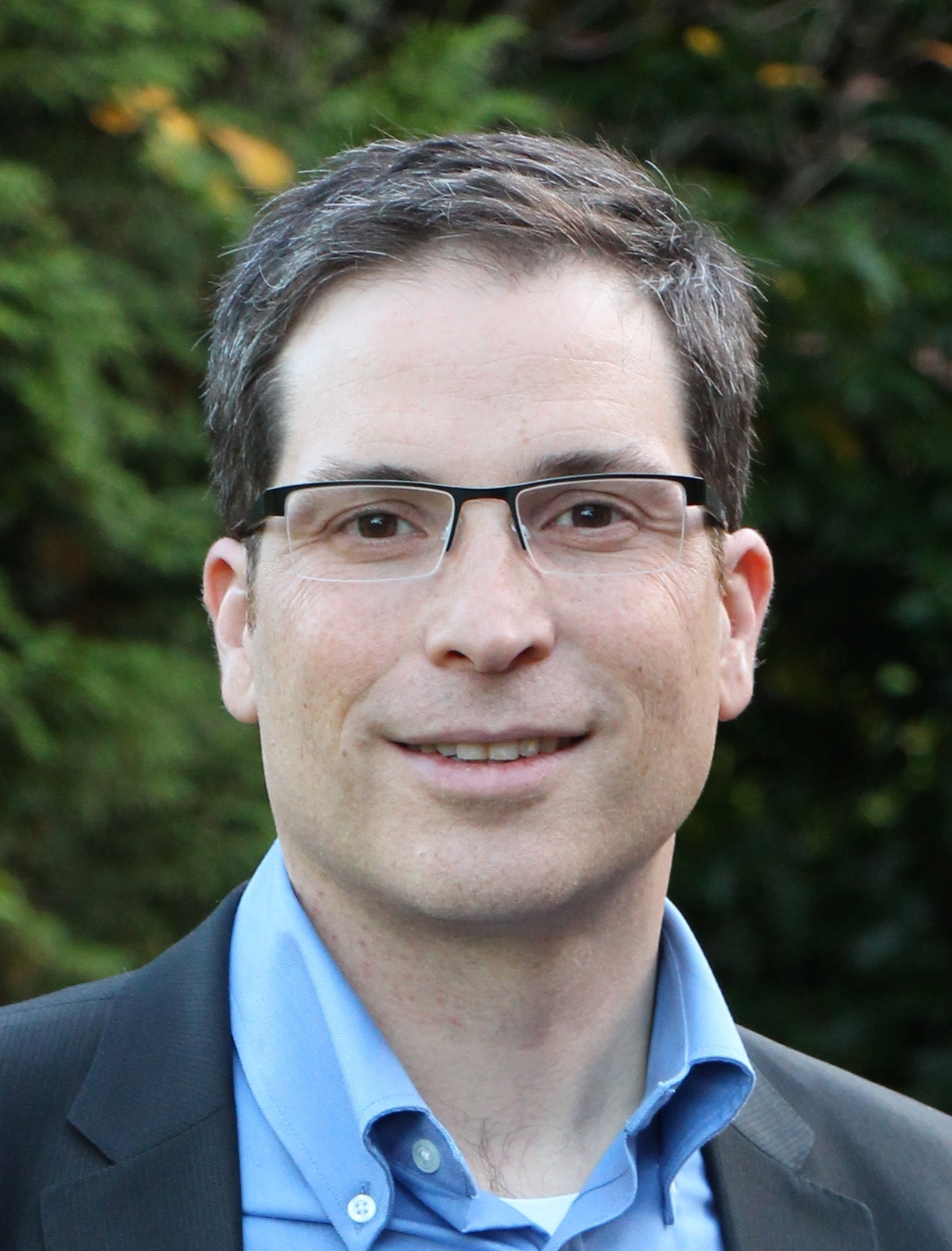
Ola Svensson is an Associate Professor at the School of Computer and Communication Sciences, EPFL. His research focuses on approximation algorithms, combinatorial optimization, computational complexity, and scheduling. He has been supported by grants including the ERC Starting Grant "OptApprox" (2014-2019), SNF grants, and the ERC Consolidator Grant "POTCO" (2023-). He teaches courses such as Advanced Algorithms and Approximation Algorithms and Hardness of Approximation. Education: PhD from IDSIA - Universita della Svizzera italiana (2009) and Master's from Uppsala University (2005). Research Interests: Design and analysis of approximation algorithms for NP-hard problems, scheduling, and computational complexity. He explores limitations of approximation techniques through hardness results and contributes to theoretical computer science. Publications span clustering, scheduling, and graph problems like the Traveling Salesman Problem. Recent work includes learning-augmented algorithms and robust optimization. Awards: I&C teaching award and best paper awards at FOCS (2017) and STOC (2018). Over a dozen PhD students advised, many entering postdocs or industry roles. Labs/Teams: Part of the theory group at EPFL, collaborating on academic projects and course development.
Florian Landis is a Researcher at the Center for Energy and Environment within the School of Management and Law at Zurich University of Applied Sciences (ZHAW). His work focuses on the distributional impacts of energy and climate policy , particularly examining how carbon pricing mechanisms affect different socioeconomic groups in Switzerland. Previously, he held postdoctoral research positions at ETH Zurich (2015-2021) and ZEW Mannheim (2013-2015), and worked as a Short Term Consultant at the World Bank Group (2012). His educational background includes a Doctor of Science (2009-2012) and Master of Science in Physics (2001-2007), both from ETH Zurich. This interdisciplinary foundation enables his unique approach to energy economics problems. Landis specializes in computable general equilibrium modeling applied to climate policy analysis, with particular expertise in carbon pricing, decarbonization pathways, and policy design for energy transitions. His research frequently addresses the tension between policy efficiency and equity considerations, examining how different carbon tax designs impact welfare distribution across households. His publication portfolio shows a clear evolution from computational neuroscience (early work) toward energy economics and climate policy modeling. Recent work focuses on Swiss decarbonization scenarios, with consistent themes of carbon pricing efficiency, distributional impacts, and integrated energy-economic modeling approaches across multiple publications since 2017. Current research projects include: Renewable Fuels and Chemicals for Switzerland (Team member), Integrating very high shares of decentralized renewable energy into the Swiss energy system: Electricity market design and policy (Co-project leader), and DEcarbonisation of Cities and Regions with Renewable GAses (Team member).
Ruben Seiberlich is a Lecturer at the Zurich University of Applied Sciences (ZHAW), School of Management and Law, Department of Banking, Finance, and Insurance. He holds a PhD in Econometrics from the University of Konstanz (2013) and has taught courses such as Advanced Quantitative Methods, Risk Management, and Finanzinstrumente & Portfoliotheorie. His research focuses on statistics, econometrics, and risk management, with notable work on real estate bubble risk, gender discrimination in housing, and partisan bias in inflation expectations. Education: Diplom Volkswirt (2009), Dr. rer. pol. Ökonometrie (2013) Current roles: Study Program Leader for MSc Banking and Finance, Model Performance and Backtesting Leader at Credit Suisse AG Research Interests span empirical economics, risk analysis, and applied econometric methods. His recent articles analyze real estate and gold market bubbles, gender bias in rental housing, and political bias in economic expectations. Key methodologies include semi-parametric decomposition, propensity score matching, and shrinkage estimation. Scientific Networks: Member of the German Statistical Society’s committee for Empirical Economics and Applied Econometrics; ORCID ID 0000-0002-5258-5499.
Matthias Nyfeler is a Lecturer for Physics and Statistics at the Institute of Computational Life Sciences, Zurich University of Applied Sciences (ZHAW), since 2018. He previously served as a Lecturer at Jönköping University (2016-2018) and as a High School Teacher in Physics and Mathematics (2010-2016). His roles include Programme Director for the MSc specialisation in Applied Computational Life Sciences, Head of the Research Group Advance Signal Analytics, and Head of ICLS statistical consulting. Education: PhD in Theoretical Physics (University of Bern, 2005-2010), Master of Science in Physics (University of Bern, 2006-2009), Teaching Diploma for Physics and Mathematics (PHBern, 2010-2011), Postgraduate Studies in Secondary Education (Jönköping University, 2016-2017). His research focuses on Deep Learning and Statistical Signal Processing for applications like Drone Signal Classification and Bioacoustics . He also contributed to Quantum Antiferromagnetism and Cluster Algorithms earlier in his career. His recent publications highlight Robust CNN-based Drone Detection in low SNR environments and Multiscale Deep Learning for RF signal analysis. He led projects such as ChirpNet for AI biodiversity monitoring and TinyML Grasshopper Classifier. Matthias engages in Statistical Consulting and Mathematical Modeling , with a focus on Physical Computing and Radio Signal Processing . His work spans both academic research and applied technology development, including datasets for drone signal classification.
Matthias Kurt Muntwiler is a Researcher at the Paul Scherrer Institute (PSI) in the Photon Science Division's Laboratory for X-ray Nanoscience and Technologies (LXN). He manages the PEARL beamline at the Swiss Light Source and is a member of the Swiss Nanoscience Institute, supporting user experiments across Europe. He earned his diploma (2000) and PhD (2004) in experimental physics from the University of Zurich, Switzerland, followed by postdoctoral work at the University of Minnesota under Prof. Xiaoyang Zhu focusing on ultrafast polaron dynamics. Muntwiler specializes in surface and interface science of ultrathin films, organic semiconductors, and two-dimensional materials. His expertise spans photoelectron spectroscopy for chemical analysis, band mapping, atomic structure determination, and dynamic processes, emphasizing structure-property relationships. He also develops software for experiment control and machine learning-based structural modeling. His publication record (2008-2020) reveals consistent focus on advanced synchrotron-based characterization of nanomaterials, particularly using photoelectron diffraction to resolve atomic-scale interfaces in systems like h-BN nanomeshes, metal-organic networks, and ferroelectric materials. As designer and manager of the PEARL beamline, Muntwiler integrates soft X-ray spectroscopy with scanning tunneling microscopy to enable atomic-resolution studies of novel materials and molecular adsorbates.
Dr. Benjamin Tobias Brem is a Scientist at the Paul Scherrer Institute (PSI) in Switzerland, affiliated with the Center for Energy and Environmental Sciences and the Laboratory of Atmospheric Chemistry. His research focuses on aerosol chemical, microphysical, and optical properties, particularly through long-term observations at the high-alpine Jungfraujoch research station within the Global Atmosphere Watch (GAW) and Aerosol, Clouds and Trace Gases Research Infrastructure (ACTRIS) frameworks. Specializes in aviation emissions and air quality impacts in the APPROPRIATE project Contributes to aerosol-cloud-precipitation interaction studies Develops calibration methods for aerosol monitoring instruments Advances understanding of ice-nucleating particles and ultrafine particle sources His work spans atmospheric chemistry, environmental engineering, and climate science. Recent publications analyze sustainable aviation fuels, Saharan dust transport, and aerosol health effects. He participates in the Swiss Commission for Atmospheric Chemistry and Physics (ACP) under SCNAT.
Glück Florent is an Associate Professor at the Geneva School of Landscape, Engineering and Architecture (HES-SO), affiliated with the Technical and IT school's Computer Science and Communication Systems department. He specializes in embedded systems, system virtualization, and interdisciplinary projects at the intersection of engineering and healthcare. Affiliations: HES-SO Geneve, hepia inIT, and collaborations with medical and industrial partners. Education: Not explicitly listed, but implied through roles and projects involving systems engineering and computer science. Research Interests: His work spans embedded systems design, real-time data processing, and applied machine learning. Key focuses include secure hardware-software co-design (e.g., FPGA-based security), medical device development (e.g., neonatal monitoring systems), and IoT infrastructure for smart buildings and recycling. Project Trends: Florent leads projects combining engineering with societal impact, such as automated recycling systems (LusTra), secure medical diagnostics (BrainCheckX), and educational virtualization platforms (Nexus VDI). Recent work emphasizes AI-driven solutions for healthcare (e.g., cochlear implant support) and decentralized energy management. Grants and Funding: Multiple projects funded by HES-SO Rectorat, CTI, and industry partners, totaling over CHF 400,000 since 2014. Labs/Teams: Active in distributed embedded systems research, leading teams on projects like DPESI (distributed storage) and HERVA (random number validation platforms).
Ueli Schilt is a Research Associate and Doctoral Student at the Lucerne School of Engineering and Architecture, part of the Lucerne University of Applied Sciences and Arts (HSLU). His work focuses on thermal energy systems, renewable generation, and energy efficiency in Swiss urban and regional contexts. He is affiliated with the Institute of Mechanical Engineering and Energy Technology (IME), specifically within the Thermal Energy Storage research group. Role: Research Associate & Doctoral Student Institution: Lucerne University of Applied Sciences and Arts (HSLU) School: School of Engineering and Architecture Institute: Institute of Mechanical Engineering and Energy Technology (IME) Research Focus: Thermal energy storage, multi-energy system optimization, renewable integration Ueli Schilt’s research explores the integration of thermal energy storage in multi-energy systems, solar PV expansion, and heating system retrofits. His work emphasizes temperature considerations, load forecasting, and sensor technology validation. Key projects include decentralized renewable generation in Swiss regions and the SENSHOEK initiative for adaptive heating controls. Recent publications highlight advancements in air quality monitoring, heat pump consumption analysis, and communal energy planning tools. While no scientific awards are explicitly listed, his contributions to peer-reviewed journals and international conferences indicate active academic engagement. Collaborations with Philipp Schütz and other researchers underscore interdisciplinary teamwork in energy modeling and policy support.
Matija Piškorec is a Senior Research Associate at the Faculty of Informatics, University of Zurich. His research spans machine learning, complex systems, and blockchain technologies, with a focus on statistical inference of social influence and network analysis. Primary Affiliation: Faculty of Informatics, University of Zurich Research Interests Machine learning and complex systems Statistical inference of influence in online social networks Blockchain technologies and distributed ledger systems Information visualization and interactive web applications in computational biology Publications His recent work explores blockchain networks like Polkadot and Ethereum, analyzing their structure and consensus mechanisms. Earlier research focuses on social network influence, financial data cohesiveness, and computational biology tools. Awards No scientific awards or honors were explicitly mentioned in the text. Additional Contributions Developed web-based visualization tools (e.g., MultiNets) and applied machine learning to diverse domains, including microbiology and finance.
Dr. Taehoon Kim is a Senior Research Associate at the Blockchain Centre at the University of Zurich, specializing in computational science, blockchain technology, and network analysis. His work bridges theoretical research with practical applications in complex systems. Education: PhD in Biosystems Science and Engineering His research focuses on blockchain dynamics, particularly EVM chains and smart contract development using Solidity. He also explores graph representation learning, network science, and high-performance computing solutions for data-intensive projects at the university's Blockchain and Distributed Ledger Technologies (BDLT) lab. Currently, no scientific awards or publications are listed in the provided text. Taehoon contributes to data observatory initiatives and integrates cloud technologies into his computational frameworks.
Mark Sawley is a Senior Scientist at École Polytechnique Fédérale de Lausanne (EPFL) with dual appointments in the Institute of Mechanical Engineering (IGM) for administration and the School of Management (SGM) for teaching. With over 30 years of experience in academic, government laboratory, and private institutions across Switzerland and Australia, he holds a PhD in Physics and has founded/co-founded two high-tech startup companies. His administrative roles include coordinating ACCES for Computational Engineering promotion and serving as Coordinator for Academic Affairs at the STI Faculty. Dr. Sawley's research spans computational fluid dynamics, discrete element method simulations, and high-performance computing applications. His work bridges multiple disciplines with applications in materials science (concrete simulation), bioengineering (blood flow modeling), marine engineering (America's Cup yacht design), avalanche dynamics, and industrial particulate processing. His recent publications (2018-2021) demonstrate continued activity in applying numerical methods to solve complex engineering problems. His scientific contributions include 37 peer-reviewed journal papers, 58 conference proceedings, and 21 articles for general audiences. His work uniquely connects technical research with science communication through projects like TIMBRE!! and the DEM Gallery, emphasizing the relationship between science and art. 37 scientific papers in international peer-reviewed journals 58 papers in international conference proceedings 21 science communication articles for general audiences Professor Sawley has advised PhD students including Serge Wüthrich (1992) and Olivier Byrde (1997). His Computational Granular Dynamics lab (http://cgd.epfl.ch) provides a platform for interdisciplinary research connecting physics, engineering, and computational science. His administrative leadership in academic affairs and computational engineering promotion demonstrates his commitment to advancing both research and education at EPFL.
Professor Ansgar Kahmen is a leading researcher in Physiological Plant Ecology at the University of Basel's Department of Environmental Sciences, where he has served as a full professor since 2013. His work focuses on the critical interface between plants and their environment, with particular emphasis on understanding how plants function ecologically and how they contribute to ecosystem services essential for human societies. Dr. Kahmen's research interests span plant-environment interactions, stable isotope biogeochemistry, drought response mechanisms in plants, water uptake dynamics, and forest ecosystem functioning. His laboratory investigates fundamental physiological processes that determine plant responses to environmental stressors, particularly drought conditions that are becoming increasingly prevalent due to climate change. His approach combines field observations, experimental manipulations, and advanced isotopic techniques to unravel complex plant-water relationships. Analysis of his recent publications reveals a strong focus on tree hydraulics, drought vulnerability, and water source partitioning in temperate forests. His research has significantly advanced our understanding of how different tree species respond to extreme drought events, with particular attention to water uptake depths, hydraulic failure mechanisms, and recovery processes following drought stress. His work frequently appears in high-impact journals across ecology, plant physiology, and environmental science. Consolidator Grant of the European Research Council HYDROCARB (ERC), 2016 Dr.-Karleugen-Habfast-Award of the German Stable Isotope Association (GASIR), 2012 Starting Grant of the European Research Council COSIWAX (ERC), 2011 Appointed Honorary Fellow at the University of Melbourne, Australia, 2007 Strasburger Award of the German Botanical Society, 2007 Professor Kahmen maintains active collaborations with researchers across Europe and North America. His laboratory contributes significantly to understanding forest responses to climate change, with implications for forest management and conservation strategies. He has supervised numerous PhD students and postdoctoral researchers, though specific names aren't provided in the available documentation. His research has received substantial funding from prestigious sources including the European Research Council, reflecting the significance and innovation of his scientific contributions.
Mark Robinson is a Professor at the Department of Molecular Life Sciences, University of Zurich, and affiliated with the Swiss Institute of Bioinformatics. He leads the Robinson Research Group, focusing on Computational Biology Bioinformatics Single-Cell RNA Sequencing Statistical Genomics His work bridges computational method development with applications in cancer immunology, epigenetics, and developmental genetics. Key research contributions include Development of bioinformatics tools like pubassistant.ch, scDblFinder, and DESpace Advancements in spatial transcriptomics and single-cell data analysis Studies on epigenetic aging and tumor microenvironment dynamics Notable collaborations span institutions in Switzerland, Germany, and international agricultural pest research groups. His recent publications (2023-2025) emphasize Spatial omics data interpretation Interdisciplinary collaboration frameworks Optimized tissue processing methods Computational benchmarks for reproducible research While no specific scientific awards are mentioned in the data, his software tools and methodological papers demonstrate significant impact on open science and bioinformatics communities.
Abraham Bernstein is a Full Professor of Informatics at the University of Zurich (UZH), where he serves as Head of the Dynamic and Distributed Information Systems Group and Director of the UZH Digital Society Initiative. He leads a university-wide initiative with over 180 faculty members investigating the interplay between society and digitalization. His work bridges social science foundations (organizational psychology/sociology/economics) and technical disciplines (computer science, artificial intelligence), creating a unique interdisciplinary approach to digital transformation challenges. Education: Diploma in Computer Science from ETH Zurich Ph.D. in Management with concentration in Information Technologies from MIT's Sloan School of Management Professor Bernstein's research spans the Semantic Web, data mining/machine learning, recommender systems, crowd computing, and collective intelligence. His work uniquely integrates social science perspectives with technical computer science approaches, examining how social and technical elements interact in digital systems. Recent work focuses on explainable AI, ethical decision-making with AI systems, and the societal implications of digital transformation, reflecting his commitment to addressing both technical challenges and their broader societal context. His publication record shows a strong trajectory in multimodal information retrieval, knowledge representation, and human-AI collaboration, with increasing focus on ethical considerations and societal impact of AI technologies. The research demonstrates consistent innovation in bridging technical AI capabilities with human-centered design principles, particularly in areas like explainable recommender systems and democratic applications of AI. Scientific Recognition: Nominated Digital Shaper by Bilanz magazine (2017) Professor Bernstein has supervised over 30 PhD students whose work spans semantic technologies, data mining, recommender systems, and human-AI interaction. His research group has secured significant funding for projects related to digital society, knowledge representation, and AI ethics. As Director of the Digital Society Initiative, he coordinates cross-disciplinary research across UZH's faculties, bringing together scholars from humanities, social sciences, law, economics, and STEM fields to address complex digital transformation challenges. He leads the Dynamic and Distributed Information Systems Group at UZH, which maintains strong international collaborations and contributes significantly to both theoretical advances and practical applications in information systems. The group's work has influenced standards in semantic web technologies and continues to shape discourse on responsible AI development and deployment in society.
Pia Ruttner-Jansen is an External Doctoral Student at the WSL Institute for Snow and Avalanche Research SLF and affiliated with the GSEG group at ETH Zurich since March 2021. Her work focuses on remote sensing and geomatics applications in snow and avalanche research . Education : BSc in Geodesy and Geoinformation (Technical University of Vienna, 2018) MSc in Geomatic Engineering (ETH Zurich, 2021) Her research explores high-resolution snow depth monitoring using drones, terrestrial laser scanning (TLS) , and GNSS technologies to improve avalanche risk assessment and infrastructure safety in alpine regions. Key methodologies include: Low-cost lidar and optical sensors for snow depth mapping Probability-based avalanche run-out modeling Machine learning integration for GNSS residual analysis Recent publications highlight her contributions to automated railway infrastructure monitoring , avalanche core-powder cloud simulation , and keypoint-based TLS deformation detection . Her work emphasizes practical applications for mountain hazard mitigation . Current affiliations include: PhD Student at WSL Institute for Snow and Avalanche Research SLF PhD Student at ETH Zurich's Department of Civil, Environmental and Geomatic Engineering