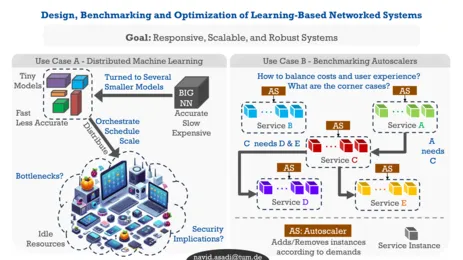
Navidreza Asadi is a Researcher at the Computer Engineering Department , Technical University of Munich (TUM) , working under the supervision of Professor Wolfgang Kellerer. He focuses on the intersection of Machine Learning and Networked Systems , particularly in the context of Edge Intelligence . Collaborates on academic and industrial projects related to distributed machine learning, edge AI, and application-aware system optimization. Previously worked at the EASY Lab, Sharif University of Technology, where he received his MSc in Computer Engineering under Professor Maziar Goudarzi. Research Interests Distributed Machine Learning Edge AI Decentralized Federated Learning Application-Aware System Design and Optimization Scientific Awards SIGCOMM Travel Grant (2025) Labs & Teams Chair of Communication Networks (TUM) 6G Future Lab Bavaria DFG-funded projects (e.g., DFG GGI QCDE, DFG ADVISE)
Xiaowan Liu is a researcher at the GEOMAR Helmholtz Centre for Ocean Research Kiel, specializing in Marine Natural Product Chemistry. Her academic journey includes a Ph.D. in Biomedical Sciences from City University of Hong Kong (2024), an M.Sc. in Ecology from Shenzhen University (2016), and a B.Sc. in Biotechnology from Luoyang Normal University (2012). She previously worked as a Research Associate at City University of Hong Kong Shenzhen Research Institute (2016-2020) and as a Postdoctoral Researcher at SKLMP City University of Hong Kong (2024). Ph.D. in Biomedical Sciences, City University of Hong Kong (2024) M.Sc. in Ecology, Shenzhen University (2016) B.Sc. in Biotechnology, Luoyang Normal University (2012) Liu focuses on discovering anti-osteoporosis compounds through natural products chemistry, leveraging microbial fermentation and metabolomics via HPLC-MS/MS combined with computational tools. Her work includes isolating and structurally elucidating bioactive compounds using NMR, HRMS, and IR spectroscopy. She contributes to the MorphoMarin project (2023-2026), which aims to develop marine-derived BMP stimulators for regenerative medicine through high-throughput screening of 16,000+ marine (micro)organism extracts. Liu's publications span marine drug discovery, microbial interactions, and environmental toxicology. She employs advanced chromatographic and spectroscopic techniques alongside machine learning for metabolomics analysis. Her collaborations include Christian-Albrechts University of Kiel and GEOMAR Centre for Marine Biotechnology (GEOMAR-Biotech). Email: xliu@geomar.de Office: Building 5 (ENB), Room 2.422, Wischhofstrasse 1-3, 24148 Kiel, Germany
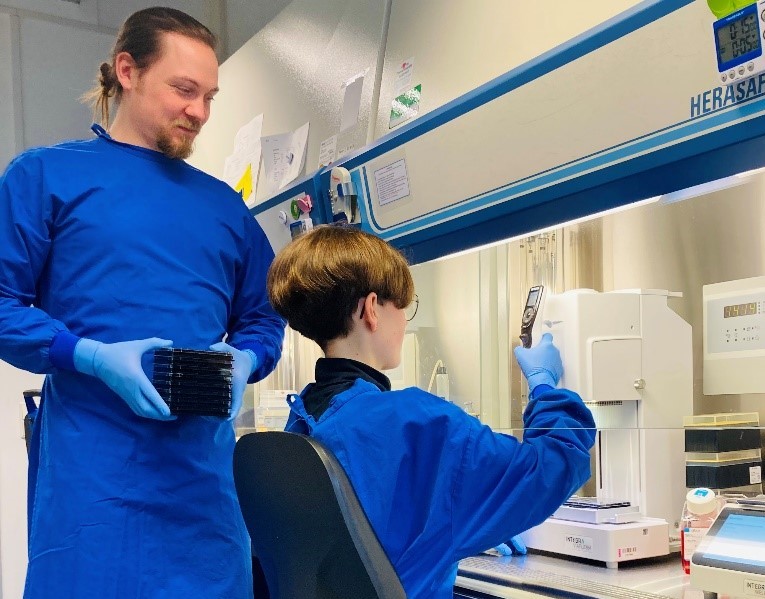
Matthias Braun is Professor of Social Ethics at the Faculty of Protestant Theology at the University of Bonn, holding the Chair of (Social) Ethics since the winter semester of 2022/23. Previously, he was head of the junior research group "Ethics and Governance of New Technologies" at the Friedrich-Alexander University Erlangen-Nuremberg until 2022. His academic journey includes research positions at institutions in Marburg, Erlangen, Bergen, Maastricht, and Oxford. Braun's research focuses on the ethical and governance challenges of emerging technologies, particularly examining how new technologies change social forms of life and institutions. His work spans political ethics, AI ethics, digital twin technology, data governance, and theological ethics. Using empirical and analytical-hermeneutic methods, he assesses social values and norms to develop responsible approaches to technological development. His recent publications demonstrate a clear trajectory toward increasingly sophisticated examinations of technology's societal impacts, with a growing emphasis on practical implementation of ethical frameworks. The research shows deep engagement with both theoretical foundations and concrete applications, particularly in healthcare contexts where ethical considerations have immediate real-world consequences. European Research Council research award recipient Falling Walls Award in Social Science and Humanities Braun leads the ERC-funded project on the ethics of digital twins and collaborates extensively across disciplinary boundaries. His work with the Collaborative Research Center EmpkinS and the Transdisciplinary Research Center "Life & Health" demonstrates his commitment to bridging academic research with practical societal concerns. Through initiatives like the Lunch Series on "Ethics, AI, and Health" and the "SciCom with Kids" program, he actively engages with diverse audiences to foster public discourse on technology ethics.
Kevin-Martin Aigner serves as an Academic Councillor (Akad. Rat) at the Department of Data Science within the Faculty of Science at Friedrich-Alexander University Erlangen-Nuremberg (FAU). He is affiliated with the Professorship of Optimization under Uncertainty & Data Analysis led by Prof. Dr. Liers, focusing on mathematical optimization methods for energy systems and power networks. His work bridges theoretical optimization with practical energy transition challenges. His research centers on optimization under uncertainty, with key interests in distributionally robust optimization, data-driven methods, and sector-coupled energy system modeling. He develops novel approaches for handling renewable energy uncertainties in power grids, solar feed-in variability, and multi-sector energy integration. His methodologies emphasize explainability in optimization processes and robust decision-making under complex uncertainty structures. Recent publications reveal consistent focus on power network optimization (2021-2025), with increasing emphasis on distributionally robust frameworks, explainable AI integration, and regional multi-sector energy modeling. His work demonstrates strong interdisciplinary connections between operations research, machine learning, and sustainable energy systems engineering. Scientific recognition includes: GOR Dissertation Award for "Data-driven Optimization under Uncertainty for Power Networks" Dr. Aigner actively contributes to major research initiatives including: CRC TRR 154: Mathematical Modeling, Simulation and Optimization using Gas Networks (2022-2026, DFG-funded) ESM-Regio: Multi-sector Coupled Energy System Modeling on Regional Level (2021-2024, BMWE-funded) Optimal Control of Electrical Distribution Networks with Uncertain Solar Feed-in (2018-2021) He participates in the Optimization under Uncertainty & Data Analysis (OUDA) research group and has organized academic events including the TRR 154 Summer School on Optimization, Uncertainty and AI (2024) and Women in Optimization 2024. His teaching includes Discrete Optimization I and specialized seminars on Mixed-Integer Nonlinear Optimization.
Jos Lelieveld is Professor in Atmospheric Physics at Johannes Gutenberg University Mainz and Spokesperson of the Paul Crutzen Graduate School, with a concurrent part-time professorship at the Cyprus Institute, Nicosia. He served as Director of the Atmospheric Chemistry Department at the Max Planck Institute for Chemistry from 2000 until August 2025. His career spans atmospheric chemistry, air quality, and climate-health interactions with international collaborations across Europe, Cyprus, and the Amazon. His educational background includes: Undergraduate in Biology, University of Leiden Ph.D. in Physics, University of Utrecht (1990) Lelieveld's research examines atmospheric chemical processes, pollution-climate interactions, and human health impacts. He investigates biogeochemical cycles, ozone formation, and particulate matter effects using advanced modeling and field measurements. Recent work focuses on Mediterranean urban heat islands, Amazonian atmospheric chemistry, and cardiovascular damage from air pollution-traffic noise synergies, emphasizing climate change hotspots like Cyprus. Analysis of his 2024-2025 publications reveals three dominant trends: (1) Urban climate adaptation in Mediterranean regions using high-resolution modeling, (2) Biogenic volatile organic compound dynamics in tropical forests under deforestation pressure, and (3) Mechanistic studies of air pollution's cardiovascular impacts through toxicology and epidemiology. His work increasingly integrates machine learning for health risk forecasting. Details on academic advising and research grants were not specified in source materials, though his leadership in the Paul Crutzen Graduate School indicates significant mentorship responsibilities. His research infrastructure includes the EMAC atmospheric chemistry model and collaborations with the Cyprus Institute's climate research division.
Thomas Berkemeier is a Professor and Group Leader of the Chemical Kinetics & Reaction Mechanisms group within the Department of Multiphase Chemistry at the Max Planck Institute for Chemistry in Mainz, Germany. He leads research on the chemical kinetics of multiphase systems with a focus on the health effects of air pollution and the formation mechanisms of organic aerosols. His work bridges atmospheric chemistry, physiological chemistry, and environmental health through experimental and modeling approaches. Dr. Berkemeier's research interests center on the chemical kinetics of surface and multiphase systems, particularly investigating how air pollutants interact with the respiratory system. His work examines the production of reactive oxygen species in the epithelial lining fluid of lungs, the chemical modification of proteins and lipids due to air pollution, and the formation and oxidative aging of organic aerosols. His research has significant implications for understanding the health effects of air pollution and improving atmospheric models. Analysis of his recent publications reveals a strong trend toward integrating machine learning with traditional chemical kinetics modeling. His work spans from fundamental studies of multiphase reaction mechanisms to applied research on the health impacts of air pollutants. The publications demonstrate expertise in both experimental approaches and computational modeling of complex atmospheric processes, with particular emphasis on reactive oxygen species formation and organic aerosol chemistry. 2016: Otto Hahn Medal of the Max Planck Society 2016: ChBE Postdoctoral Fellowship at Georgia Tech Friedrich Wilhelm Helweg Foundation Award 2012: Best Graduation Award in Chemistry at Bielefeld University Dr. Berkemeier serves in professional capacities including as an Editorial Board member for Atmospheric Chemistry and Physics, Junior Faculty Member of the Max Planck Graduate School, and Ombudsperson at the Max Planck Institute for Chemistry. His research has been supported through prestigious fellowships and institutional funding that enables his interdisciplinary approach to atmospheric chemistry problems. He leads the Chemical Kinetics & Reaction Mechanisms group within the Department of Multiphase Chemistry at the Max Planck Institute for Chemistry. His team collaborates with researchers across disciplines to investigate the complex chemical processes that govern air quality and its impacts on human health, utilizing both experimental and computational approaches to address challenging questions in atmospheric science.
Prof. Dr. Ralf Keidel is a faculty member at the Chair for Scientific Computing , Rhineland-Palatinate University of Technology Kaiserslautern-Landau (RPTU), since 2022. His academic career spans roles at Worms University of Applied Sciences , where he has served as Professor of Computer Science since 1993, Scientific Director of the Center for Technology and Transfer (ZTT) since 2000, and Head of the Technology Transfer Office since 1996. He is a key figure in international collaborations, including the ALICE Collaboration Board at CERN (2003–2023), Bergen pCT Collaboration (since 2018), and the MODE Collaboration (since 2022). His research merges Computer Science with High-Energy Physics , focusing on machine learning , secure heterogeneous distributed systems , and optimization of detectors in particle physics . Projects like SIVERT (2020–2024) aim to enhance Proton Computed Tomography (pCT) for clinical radiation therapy using AI-driven visualization and real-time reconstruction. He also contributes to serious games for financial education and mobile applications for musical training. Key publications highlight his work on differentiable programming for detector optimization, deep reinforcement learning in particle tracking, and convolutional neural networks for radiation topology analysis. His projects often involve interdisciplinary teams from institutions like the University of Bergen , DKFZ Heidelberg , and Western Norway University of Applied Sciences .
Mario Montagud Climent is a researcher at Centrum Wiskunde & Informatica (CWI) , focusing on virtual reality (VR), extended reality (XR), and multimedia systems. His work bridges network protocols, human-computer interaction, and immersive technologies. Key contributions: Multi-party holographic meetings, Edge rendering architectures, and XR quality of experience (QoE) optimization Collaborations: Sergi Fernández, Pablo César, Gianluca Cernigliaro, and other international experts in VR/XR Research spans network programmability for adaptive XR, holographic communications , and explainable AI for spatial audio analysis. Publications highlight QoE assessment and low-cost immersive solutions . Recent articles address real-time multiuser systems, neural 3D reconstruction for UAVs, and 6G federation concepts. His work integrates 5G/6G technologies with applications in cultural heritage and social VR.
Wei Geng is a doctoral researcher and Ph.D. candidate at the Chair of Connected Mobility (I11) in the Department of Informatics at Technical University of Munich (TUM). He is supervised by Prof. Dr.-Ing. Jörg Ott at TUM, advised by Prof. Nitinder Mohan at TU Delft, and mentored by Prof. Dirk Kutscher at HKUST(GZ). His educational background includes: Ph.D. Student at CIT, Technical University of Munich, Munich, Germany (2024.10~) M.Phil. at The Hong Kong University of Science and Technology, Guangzhou, China (2022.9~2024.10) M.Eng. at Fudan University, Shanghai, China (2017~2020) B.Eng. at Harbin Engineering University, Harbin, China (2013~2017) Visiting Student at Politecnico di Milano, Milan, Italy (2023.3) Wei Geng's research focuses on Accelerating Critical Applications by Edge Computing and AI . His work addresses Edge and Fog Computing for latency-sensitive applications, particularly offloading deep learning inference tasks from mobile/IoT devices to edge servers. He investigates ML-enabled networked systems including ML-based task scheduling and distributed inference frameworks. His earlier work at Huawei involved programming language runtime and OS optimization, specifically Golang runtime scheduler and OS kernel improvements. Wei Geng teaches and supervises at TUM: Summer Term 2025: Seminar - Hot Topics in Edge Computing (IN2107, IN4417) Winter Term 2024/25: Master Practical Course: Edge Computing and the Internet of Things (IN2106, IN4261) He actively seeks Master's and Bachelor's thesis students to supervise and maintains regular office hours (13:00-14:00 Tue, Wed) in office 01.05.040. Prior to his Ph.D., he worked as a Full-time R&D Software Engineer at Huawei Technologies (2020-2022), with internships at Ant Group (2019) and eBay (2018).
Zhen Kan is a Professor in the Mechanical and Aerospace Engineering Department at the University of Florida's College of Engineering, with previous affiliations at the University of Iowa and the Air Force Research Laboratory (AFRL). His extensive publication record spans over 15 years with significant output in recent years, indicating an active research career in robotics and control systems. Dr. Kan's research focuses on advanced robotics systems with expertise in temporal logic motion planning, reinforcement learning, and human-robot interaction. His work bridges theoretical control systems with practical robotics applications, particularly in multi-robot coordination, autonomous systems, and wearable robotics. The research demonstrates a strong emphasis on formal methods for ensuring safety and correctness in complex robotic systems. Analysis of recent publications reveals a consistent research trajectory centered around temporal logic specifications for robotic systems, with increasing integration of machine learning techniques. His work shows progression from theoretical control frameworks to practical implementations in quadruped robots, exoskeletons, and multi-robot systems operating in dynamic environments. Dr. Kan has established significant collaborations with researchers across multiple institutions, particularly with Warren E. Dixon (35 co-authored papers), Zhijun Li (23 papers), and Mingyu Cai (22 papers), indicating leadership in collaborative research projects. His publications appear in top-tier venues including IEEE Transactions on Robotics, IEEE Transactions on Automatic Control, and International Journal of Robotics Research. While specific grant information isn't visible in the provided text, the volume and quality of publications suggest substantial research funding. Dr. Kan's work has practical applications in autonomous systems, human-robot collaboration, and assistive technologies, with potential impact in defense, healthcare, and industrial automation sectors.
Arya Mazaheri is a Research Leader at PanocularAI, affiliated with the Technische Universität Darmstadt. His work bridges high-performance computing (HPC) and machine learning, focusing on optimizing large-scale computational systems. Based at Hochschulstr. 10, Darmstadt, Germany, he contributes to GPU acceleration, neural network pruning, and parallel processing. PhD in Performance Engineering of Data-Intensive Applications (2022) Key areas: HPC, Machine Learning, GPU Computing, Neural Network Pruning Research Trends: Mazaheri's publications from 2015-2024 reveal expertise in: Accelerating LLM inference through pipelined speculation Topology-aware network pruning with reinforcement learning GPU-based spacecraft trajectory simulations Performance portability in tensor operations Hardware-independent communication metrics for parallel systems
Prof. Dr. Marco Bohnhoff is Head of Section 4.2 (Geomechanics and Scientific Drilling) at the GFZ Potsdam German Research Center for Geosciences and Professor of Experimental and Borehole Seismology at Freie Universität Berlin. Since 2019, he has served as Executive Director of the International Continental Scientific Drilling Program (ICDP). His research focuses on earthquake physical processes at both reservoir and plate-tectonic scales, with particular emphasis on the North Anatolian Fault in Turkey and induced seismicity from human activities. Bohnhoff's research interests span seismology, seismomechanics, geomechanics, borehole geophysics, and seismic monitoring of induced seismicity. His work investigates earthquake physics, seismotectonics, the seismic cycle at the North Anatolian Fault Zone, shear-wave anisotropy, and wide aperture seismics. He leads the ICDP-driven Geophysical Observatory at the North Anatolian Fault (GONAF) near Istanbul and similar projects in Koyna/India and STAR observatory in Italy. His recent publications reveal trends in fault mechanics, earthquake prediction, and seismic hazard assessment, particularly for the Istanbul region which faces significant risk from a potential M7+ earthquake. His laboratory work combines with field observations to understand the relationship between fault properties, stress states, and earthquake occurrence across different scales. Elected member of the Leibniz-Sozietät der Wissenschaften zu Berlin e.V. (2018) Heisenberg-Fellowship awarded by Deutschen ForschungsGemeinschaft (DFG) (2007) Bohnhoff has supervised more than 10 PhD students to completion and raised approximately 16 million euros in third-party funding. He leads major research projects including the GONAF observatory and participates in international collaborations studying seismic hazards. His work bridges fundamental earthquake physics with practical applications for seismic hazard mitigation, particularly in densely populated regions like Istanbul that face significant seismic risk.
Marius Krüger is a researcher at the Chair of Automation and Information Systems at the Technical University of Munich . His work focuses on human-machine interaction, data-driven process optimization, and AI integration in industrial contexts. Specializes in cyber-physical production systems and digital twin technologies Contributes to embedded systems performance analysis and low-code programming assistance Active in construction machinery data transmission and forming process monitoring His publications highlight expertise in: Execution time optimization for adaptive controllers Synthetic data generation for civil engineering machines Regularization techniques in linear regression for quality prediction OPC UA integration for construction machine communication He collaborates on projects like KI.Fabrik , MiProcess2Twin , and CausAIITI , with recent work addressing Industry 4.0 and 5.0 challenges.
Prof. Jürgen Machann serves as Group Leader of the Division "Metabolic Imaging" at the Institute for Diabetes Research and Metabolic Diseases (IDM), a joint institution of Helmholtz Zentrum München and University of Tübingen. Since joining Helmholtz Center Munich in 2012, he has established himself as a designated expert for MR examinations in national and international metabolic research studies including the German National Cohort (NAKO) and TULIP lifestyle intervention program. His academic trajectory features: Physics studies at University of Tübingen (1988-1995) Scientific work at Section on Experimental Radiology, University Hospital Tübingen (1995-2011) Doctoral thesis in human sciences, Medical Faculty, University of Tübingen (2011) Postdoctoral lecture qualification (Habilitation), Medical Faculty, University of Tübingen (2014) Machann's research pioneers non-invasive phenotyping of metabolic diseases through advanced MRI/MRS techniques. He developed quantitative assessment protocols for whole-body adipose tissue compartments (visceral, subcutaneous) and ectopic fat accumulation in liver/pancreas using specialized segmentation routines. His work integrates big data analysis with deep-learning based segmentation for epidemiological studies like KORA and GNC, revealing critical insights into insulin resistance pathogenesis and type 2 diabetes progression. Current research trends from his 2024-2025 publications demonstrate focused exploration of body composition subphenotypes, dietary impacts on liver fat and brain insulin action, and refinement of adipose tissue quantification methods. His group actively contributes to major research networks including German National Cohort, BeLOVE ("Berlin Longterm Observation of Vascular Events"), and German Center for Diabetes Research (DZD), advancing metabolic risk prediction through cutting-edge imaging analytics.
Dr. Ramona Heim is a researcher at the Institute of Landscape Ecology at the University of Münster , where she leads work in the Biodiversity and Ecosystem Research Group . She holds a Master of Science in Ecology, Evolution and Nature Conservation (University of Potsdam) and a Bachelor of Science in Biology (University of Freiburg). Current Role: Akademische Rätin auf Zeit (Fixed-Term Academic Counselor) since 2025 Prior Roles: PostDoc at University of Münster (2024–2025), University of Zurich (2022–2024), and guest researcher at University of Turku (2021–2022) Research Interests focus on Vegetation Ecology , Fire Ecology , and Biodiversity Conservation in Arctic and subarctic ecosystems. Her work explores climate change impacts on tundra vegetation, fire disturbance effects on carbon/nitrogen cycles, and anthropogenic threats to migratory birds. Publication Trends span 2018–2025, emphasizing: Arctic tundra responses to climate change and fires Bird migration tracking using geolocators Human-wildlife conflict mitigation Microplastic pollution in urban ecosystems High-resolution ecological mapping via remote sensing Honors: Recipient of the Studienstiftung des deutschen Volkes scholarship (2018–2021). Collaborates with international teams across Germany, Switzerland, Finland, and Russia.