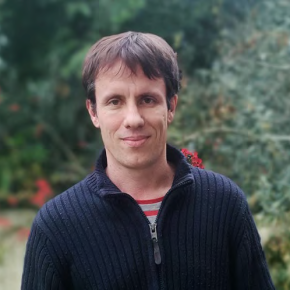
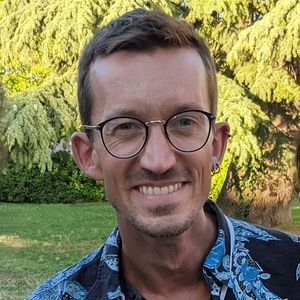
Emanuele Natale is a Researcher at Université Côte d'Azur, affiliated with the CNRS (French National Center for Scientific Research). His work bridges machine learning , computational neuroscience , and theoretical computer science . Focus areas: neural network sparsification, brain organization modeling, multi-agent systems, and distributed computational dynamics Applications in theoretical biology for understanding collective behaviors Scientific Awards : Best Italian Young Researcher in Theoretical Computer Science (2019) Best PhD Thesis in Theoretical Computer Science (2017) Best Student Paper Award, European Symposium on Algorithms (2016)
Christian Schilling serves as Associate Professor in the Department of Computer Science at Aalborg University (AAU), Denmark, where he leads the Distributed, Embedded and Intelligent Systems (DEIS) research group and participates in the Quantum Hub steering group. His academic work centers on critical intersections of computer science, AI safety, and quantum technologies. His research spans formal verification of cyber-physical systems, neural-network control safety, and quantum circuit equivalence checking. Current projects include the Sapere Aude-funded Cosyne initiative for safe neural-network control systems, the DeiC-supported EQuaL quantum computing project, and EU-coordinated STORM_SAFE for critical infrastructure reliability. His methodology integrates tensor decision diagrams with machine learning for quantum verification. No scientific awards are documented in the provided materials. Schilling actively mentors three PhD candidates: Suhaib Al-Rousan (quantum computing/ML co-supervised with Kim G. Larsen and Max Tschaikowski), Fouzi Tabouri (safe neural-network control with Kim G. Larsen), and Asger H. Brorholt (shielded AI in continuous spaces with Kim G. Larsen). His research is funded by Denmark's Independent Research Fund (DFF), Danish e-infrastructure Consortium (DeiC), and Interreg North Sea program, demonstrating sustained grant acquisition capability. He contributes to the CLASSIQUE basic research center and co-organizes major 2025 academic events including the CONFEST Workshop on Formal Methods in Quantum Computing and D 3 A Workshop on Verifiable AI, reflecting active community leadership.
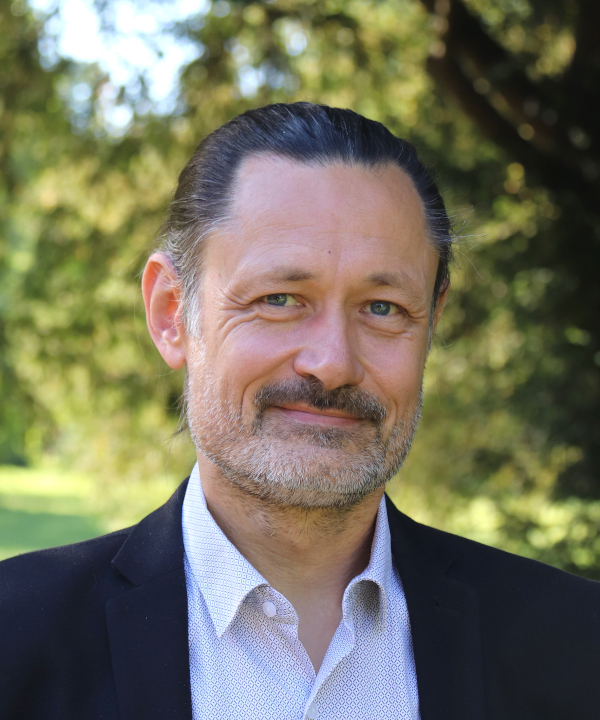
Gabriel Peyré is a CNRS Research Professor at the Department of Mathematics and Applications (DMA) of École normale supérieure (ENS) in Paris, France. A specialist in data science and artificial intelligence, he is renowned for his work on optimal transportation theory and its applications to imaging, machine learning, and neural network training. His research bridges mathematical theory with computational algorithm design, earning him the CNRS Silver Medal (2021) and multiple European Research Council (ERC) grants, including the 2024 Advanced Grant. Research interests include: Optimal Transport Machine Learning AI Theory Image Processing Computational Mathematics Neural Network Training His recent publications focus on advancing optimal transport methods in AI, with applications in neural network learning, spatial transcriptomics, and unsupervised data analysis. He has developed algorithms for large-scale optimal transport computations and contributed to theoretical understanding of transformer models and residual networks. Scientific awards: CNRS Silver Medal (2021) ERC Advanced Grant (2024) ERC Consolidator Grant (2016) ERC Starting Grant (2011) Blaise-Pascal Prize from the Academy of Sciences (2017) He supervises PhD students and postdoctoral researchers, including Raphaël Barboni, Valérie Castin, and Geert-Jan Huizing. His work involves collaborations with institutions like INRIA, MIT, and Heriot-Watt University. Peyré's affiliations include the Center for Data Sciences at ENS, where he contributes to interdisciplinary projects in biology and physics.
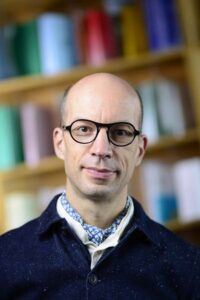
Rob H. Bisseling is a Full Professor in Scientific Computing at Utrecht University's Mathematical Institute and a visiting professor at ENS de Lyon's LIP laboratory (March–May 2024). He holds a BSc/MSc in Mathematics (cum laude) from the Catholic University of Nijmegen and a PhD in Theoretical Chemistry from the Hebrew University of Jerusalem. His research focuses on parallel algorithms, sparse matrix/tensor computations, and hypergraph partitioning, with applications in high-performance computing and numerical methods. He has authored a seminal textbook on parallel scientific computing and contributes to pedagogical resources like video lectures. During his visit to LIP, Bisseling collaborates with the ROMA team under Bora Uçar to advance parallel algorithms for large-scale irregular applications. His work includes developing tools like PMondriaan for sparse matrix partitioning and promoting knowledge transfer through lectures on BSP programming. He engages with researchers, PhD students, and engineers at LIP, extending collaborations to Lyon's Institut Camille Jordan and LabPhys for tomographic reconstruction and statistical physics modeling. His academic career includes roles at Royal Dutch Shell and as Utrecht University's Director of Education (2012–2015). He advocates interdisciplinary approaches, bridging computational methods with applied sciences and engineering challenges.
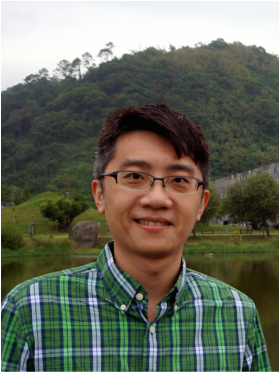
Chu-An Liu is a Research Fellow at the Institute of Economics, Academia Sinica (Taipei, Taiwan). He received a PhD in Economics from the University of Wisconsin-Madison in 2012. His teaching experience includes graduate-level and PhD econometrics courses at National Chengchi University (Spring 2022-present) and National University of Singapore (2013-2015). Research Interests: His work focuses on econometrics , model averaging , and forecast combination , with significant contributions to nonparametric methods, causal inference, and statistical modeling for high-dimensional economic data. Key areas include bounds estimation for continuous treatments, spectral analysis in time series, and model uncertainty frameworks. Publications: He has published extensively in top journals like Journal of Econometrics , Econometric Theory , and Journal of Business & Economic Statistics . Recent trends emphasize kernel regressions, autoregressive models, and integration of machine learning with traditional econometric techniques. Academic Collaborations: He has collaborated with scholars such as Xinyu Zhang, Ying-Ying Lee, and Biing-Shen Kuo on topics spanning model selection, causal inference, and nonstationary data analysis.
Marc Abadie is a full-time Researcher at the University of La Rochelle , affiliated with the Laboratory of Thermal Systems (LST) and the CNRS INSIS department. With a 2023 HDR (Habilitation à Diriger des Recherches) Active membership in ISIAQ , IABP , and IBPSA-France Editorial board member of International Journal of Ventilation , his work bridges air quality, hygrothermal modeling, and ventilation systems. Research focuses on dynamic IAQ simulation tools , Zonal/CFD airflow modeling inside/outside buildings DOMUS hygrothermal software development PANDORE pollutant emission database , supported by 15 recent publications analyzing pollutant dispersion, thermal comfort, and energy-air quality tradeoffs. His scientific awards include 2023 HDR in Sciences Leadership roles in Annex68 , IABP , and RSEIN Editorial contributions since 2023 . Teaching covers ventilation, heat exchangers, and building thermal energy compliance with RE2020 standards.
Antoine Lejay is a Researcher in the Department of Probability and Statistics at the Faculty of Science and Technology, Université de Lorraine. He is affiliated with the Inria PASTA project team and contributes to interdisciplinary initiatives like the Inria Apollon Exploratory Action (2022–2024) and the CNRS MITI project (2024–2025). His roles include Deputy Director of the AM2I division and former Head of the Probability and Statistics team (2016–2022). His research spans Rough trajectories , Stochastic analysis , and Probabilistic numerical methods , with applications in Fragmentation equations , Diffusion modeling , and Digital Humanities . He develops algorithms for stochastic processes in discontinuous media and statistical estimators for non-standard models like skew Brownian motion. Recent publications highlight methodological advancements in Rough differential equations , Hawkes processes for insurance risk, and Fragmentation dynamics . His work combines theoretical analysis (e.g., asymptotic behavior) with computational frameworks (e.g., random walk simulations, interface conditions). Lejay has held leadership positions in the Charles Hermite Federation (2022–2023) and the GdR TRAG (2018–2023). He collaborates with academic and industrial partners, focusing on interdisciplinary applications in insurance, engineering, and porous media.
Cécile Fabre is a Professor of Language Sciences at the University of Toulouse 2 - Jean Jaurès, affiliated with the CLLE laboratory (Cognition, Languages, Ergonomics). She serves as Director of the Maison des Sciences de l'Homme et de la Société de Toulouse (MSHS-T, UAR 3414) and Co-head of the H-SHS (Humanities, Human and Social Sciences) research center of the Comue de Toulouse. Her research focuses on Natural Language Processing (NLP) , Computational Linguistics , and Corpus Linguistics , particularly in extracting semantic information and lexical relations using Distributional Semantics . She has contributed to understanding discourse structures, medical interactions, and morphological derivatives in French. Research Trends include: Distributional Semantics applications in lexical substitution and specialized corpora Discourse organization through empirical analysis and annotated corpora Semantic discrimination of nominalizations and technical terms Corpus-driven studies in French linguistics and NLP Methodological innovations in linguistic annotation and semantic modeling Interdisciplinary collaborations in medical discourse and cognitive sciences
Nabil Hathout is a Research Director at CLLE (Cognition, Languages, Language, Ergonomics), a research unit affiliated with University of Toulouse-Jean Jaurès, CNRS, and other French academic institutions. His work bridges theoretical linguistics with computational approaches, focusing primarily on morphological structure and semantics. Hathout's research centers on derivational morphology, particularly in French, with significant contributions to morphosemantic modeling. His work explores how morphological structure relates to meaning through distributional semantics, computational modeling, and lexical resource development. He has pioneered several important linguistic resources including Démonette, a comprehensive derivational database for French, and ParaDis, a paradigm-based model for morphological organization. His research also extends to word formation processes, morphological predictability, and the computational modeling of morphological paradigms. Analysis of his recent publications reveals a strong focus on developing computational models for derivational morphology, with particular attention to French language phenomena. His work increasingly integrates machine learning approaches with traditional linguistic analysis, especially in the areas of distributional semantics and morphological processing. The Démonette database serves as a cornerstone for many of his research projects, enabling both theoretical investigations and practical applications in language education and processing. Hathout has been actively involved in collaborative research across multiple institutions and has contributed significantly to the development of linguistic resources and methodologies in computational morphology. His work demonstrates consistent engagement with both theoretical linguistic questions and practical computational implementations.
Ludovic TANGUY is a Professor at the Department of Language Sciences, University of Toulouse 2, where he conducts research within the Cognition, Languages, Ergonomics (CLLE) research unit. His academic journey includes a Habilitation à diriger des recherches (HDR) from University Toulouse le Mirail - Toulouse II in 2012 and a PhD from University of Rennes 1 in 1997 with a thesis on Natural Language Processing and interpretation. Professor TANGUY's research spans multiple areas within computational linguistics, with particular focus on Natural Language Processing, corpus linguistics, and distributional semantics. His work demonstrates expertise in analyzing online discourse, particularly through Wikipedia talk pages, and applying computational methods to linguistic phenomena. He has developed innovative approaches for studying sociolinguistic variation using Twitter corpora and neural word embeddings, contributing significantly to understanding how language evolves in digital environments. His recent publications reveal a strong trend toward analyzing computer-mediated communication, with numerous studies examining Wikipedia interactions, conflict detection, and discourse patterns. TANGUY has also made substantial contributions to distributional semantics research, exploring how word embeddings can model semantic relationships in specialized domains like family vocabulary. His work bridges theoretical linguistics with practical applications in information retrieval and natural language processing. As an active researcher with publications spanning from 1997 to 2024, Professor TANGUY has established himself as a prominent figure in French computational linguistics. His collaborative work, particularly with researchers like Lydia-Mai Ho-Dac, Cécile Fabre, and Nabil Hathout, demonstrates a strong network within the academic community. His research has been published in reputable journals and presented at major conferences in computational linguistics and corpus linguistics.
Laurent BOBELIN serves as a Contractual Lecturer-Researcher at INSA Centre Val de Loire, holding dual roles as SDS Board Member and Team Leader. His research is institutionally anchored at LIFO (Laboratoire d'Informatique Fondamentale d'Orléans), a joint research unit between INSA Centre Val de Loire and the University of Orléans, focusing on fundamental computer science. His research portfolio demonstrates deep expertise in Cybersecurity and Cloud Computing , with significant extensions into Formal Methods for complex system architectures. He has pioneered applications in Health Informatics , developing the E-HandicapScale diagnostic platform for disabled patients, and recently expanded into Agricultural Technology with federated learning-based intrusion detection systems. His methodological approach consistently integrates formal verification with practical security enforcement across domains. Analysis of his publication trajectory reveals a strategic evolution from foundational cloud security architectures (2014-2016) toward interdisciplinary applications. His work increasingly bridges cybersecurity with domain-specific challenges—notably in healthcare diagnostics and agricultural IoT—while maintaining rigorous formal methods as the unifying thread. The 2023 agricultural security paper exemplifies his current focus on securing emerging technology ecosystems through distributed learning paradigms. Scientific Awards: No awards were documented in the source materials. Advising and Grants: The provided information contains no details regarding graduate students, research grants, or funded projects. Labs and Teams: As Team Leader and SDS Board Member at INSA Centre Val de Loire, BOBELIN directs research activities within his team while contributing to strategic governance. His primary research affiliation with LIFO connects him to a major French computer science laboratory specializing in algorithms, formal methods, and security, located at the University of Orléans campus (Building IIIA).
Matthieu EXBRAYAT is a Lecturer in Computer Science at the University of Orleans, affiliated with the Fundamental Computer Science Laboratory of Orléans (LIFO). He holds significant administrative responsibilities including Vice President for Digital and Educational Innovation at the University of Orleans and previously served as Co-head of the IT department (2019-2021) and Head of the IMIS Computer Science Masters (2015-2021). His research spans multiple domains with a primary focus on Machine Learning applications in data analysis and visualization, time series analysis, and computer vision applications in archaeology. His work demonstrates strong interdisciplinary connections between computer science and archaeological documentation, particularly in ceramic sherd classification using deep learning techniques. Earlier in his career, he contributed significantly to high-performance databases and probabilistic relational learning, especially Markov logic networks. Analysis of his publication history reveals an evolving research trajectory: beginning with database systems and parallel join algorithms in the early 2000s, progressing through Markov logic networks and clustering algorithms in the 2010s, and more recently focusing on machine learning applications in archaeological imaging and programming language analysis. His recent publications show a clear shift toward practical applications of machine learning in diverse domains while maintaining theoretical rigor. Throughout his career, EXBRAYAT has maintained extensive collaborative research networks, with Lionel Martin appearing as a co-author on 20 publications, followed by Guillaume Cleuziou (14), Jacques-Henri Sublemontier (9), and Quang-Thang Dinh (7). These collaborations span multiple research domains and demonstrate his ability to work across disciplinary boundaries. As an educator, he teaches distributed information systems, programming languages, databases, AI/data mining, and geographic information systems. He has also been actively involved in scientific mediation, delivering numerous public lectures on artificial intelligence topics since 2017, including conferences such as "Living in harmony with AIs" (2023) and "Artificial Intelligence: My new toaster is an AI!" (2019). His administrative contributions are substantial, including roles as Communications Correspondent for the Computer Science Disciplinary Center, Facilitator of the DataCenters ComUE Centre Val de Loire reflection group, and Vice President of Digital Resources at the Leonardo da Vinci Confederal University. He also served as LIFO website webmaster for over a decade (2002-2014) and was responsible for the STIC degree program (now IT degree) from 2004-2008.
Lakhdar Sais is a Professor of Computer Science at the Centre de Recherche en Informatique de Lens (CRIL), CNRS UMR 8188, at Université d'Artois, Faculty of Jean Perrin Sciences in Lens, France. His research focuses on search and representation problems in Artificial Intelligence, including propositional satisfiability, quantified boolean formulas, constraint programming, knowledge representation and reasoning, data mining, and AI applications in Social and Human Sciences. He has supervised numerous PhD students throughout his career, with recent students including David ING (2021-present) working on migration data knowledge extraction, and previously Ikram NEKKACHE (2021), Sofiane TOUATI (2021), and Kahina BOUCHAMA (2020). His research has been recognized with multiple awards including best paper awards at SAT'11 and ICTAI'2009, and first place in the International SAT 2009 competition. His current research projects include the ANR project HYCI (2023-2026) on Hyper-places, Crises, Migrations and Inequalities, Project ERA (2022-2025) on producing new knowledge in juvenile justice and mental health, and ANR project POSTCRYPTUM (2021-2023) on algebraic cryptanalysis for post-quantum cryptography. He has also edited the Handbook of Parallel Constraint Reasoning (Springer, 2018). Scientific Awards: Best paper award at SAT'11 for 'On freezing and reactivating learnt clauses' Best paper award at ICTAI'2009 for 'Learning for Subsumption' ManySAT - First rank at International SAT 2009 competition (Parallel Track) LySAT - Two bronze medals at International SAT 2009 competition (Sequential Track) ManySAT - First rank at SAT Race 2008 competition Professor Sais has taught numerous courses including Artificial Intelligence, Constraint Programming, Knowledge Representation and Reasoning, Expert Systems, Complexity Theory, Advanced Data Structures, Algorithmics, and Functional Programming. He has served as leader of the inference and decision process research group at CRIL (2002-2013) and as Delegate Director of the CRIL laboratory (2013-2018).
Carlos Ramisch is an Assistant Professor in Computer Science at Aix Marseille University, France, affiliated with the TALEP research group at LIS (Laboratoire d'Informatique et Systèmes). His work centers on computational linguistics and natural language processing, with a primary focus on multiword expressions (MWEs), language models, and semantic analysis. He actively contributes to the PARSEME community, organizing shared tasks on verbal MWE identification. His research includes developing the mwetoolkit for MWE discovery and SLICE for interpretable contextual embeddings. He has led funded projects such as SELEXINI (2022-2026) and PARSEME-FR (2016-2021). His methodological innovations span cross-lingual dependency parsing via typological features (NAACL 2019), compositionality prediction for nominal compounds (Computational Linguistics 2022), and lexical substitution datasets (IWCS 2017). He supervises students in NLP internships and co-authored the educational comic strip La grande aventure du TAL . His editorial roles include the LSP series on Phraseology and MWEs, and he has chaired multiple MWE workshops (2010-2022).
Bruno Gaujal is a Research Professor at Inria Grenoble-Rhône-Alpes, affiliated with Université Grenoble Alpes. He obtained his PhD from the University of Nice in 1994 under François Baccelli's supervision and has held positions at AT&T Bell Labs, INRIA, and École Normale Supérieure de Lyon. He previously led the MESCAL (now POLARIS) research group focused on large-scale computing until 2015. His research interests center on performance evaluation, optimization, and control of discrete event dynamic systems with stochastic inputs. Specific areas include: Markov Chains and Markov Decision Processes Reinforcement Learning and stochastic optimization Queueing theory and scheduling algorithms Energy-efficient computing in distributed systems Game-theoretic approaches in network optimization Gaujal's recent publications show strong emphasis on reinforcement learning applications in queueing networks, energy optimization for real-time systems, and scalable algorithms for Markov Decision Processes. His work bridges theoretical frameworks like Whittle indices with practical implementations in cloud computing and distributed systems. He has supervised numerous PhD students including Nicolas Gast (now Inria researcher), Anne Bouillard (Huawei researcher), and Emmanuel Hyon (Paris Nanterre professor). Current students include Hélène Arvis and Romain Cravic. Gaujal co-founded RTaW, a startup specializing in real-time network design tools. At Inria, he leads research in the POLARIS group, focusing on optimization methods for large-scale distributed computing infrastructures. His work involves collaborations with 85+ co-authors across institutions globally.