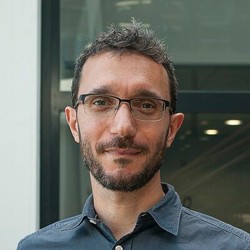
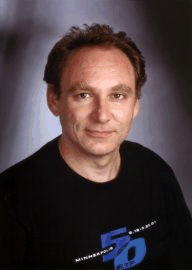
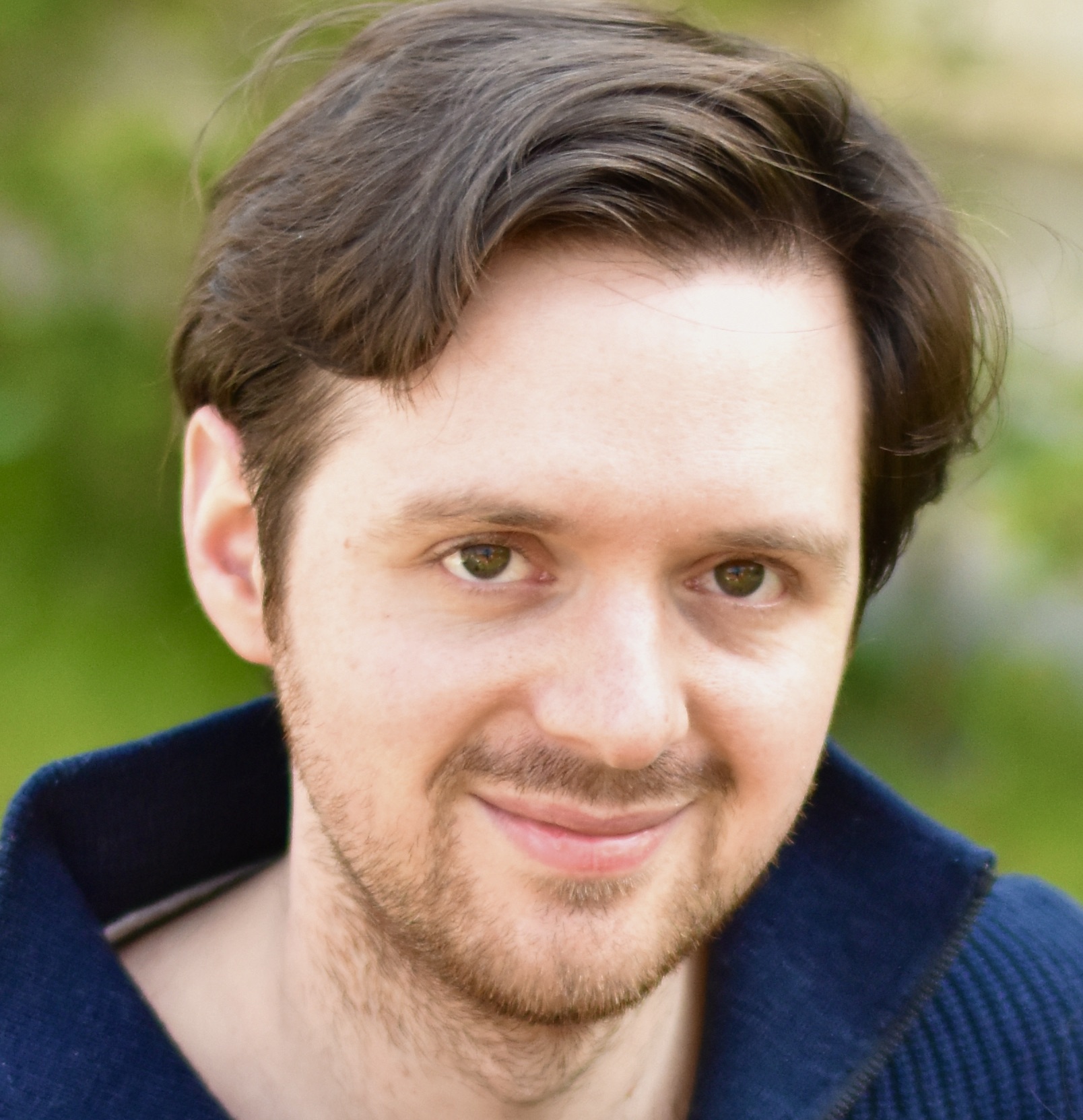
Paolo Papotti is an Associate Professor of Computer Science at EURECOM (France) since 2017, affiliated with the Data Science department. Previously, he was a senior scientist at QCRI (Qatar) and an assistant professor at Arizona State University (USA). He earned his PhD in Computer Science from the University of Roma Tre (Italy) in 2007, following an MEng in Computer Engineering from the same institution in 2003. His research focuses on scalable data management, data integration, data cleaning, and computational fact-checking. Notable contributions include work on knowledge graph rule discovery (Rudik), fact-checking frameworks (Scrutinizer), and data quality systems. His research has been supported by awards such as the 2020 Google Faculty Research Fellowship. Key publications include advancements in table representation learning, LLM-based data querying, and crowdsourced fact-checking validation. His work spans theoretical foundations and practical tools for improving data quality and information trustworthiness.
Alain Durmus is a Professor at École Polytechnique, affiliated with the applied mathematics department (CMAP). His research focuses on computational statistics, machine learning, and stochastic methods, including Monte Carlo algorithms, Bayesian inference, and optimization. He explores topics such as Markov chain Monte Carlo (MCMC), stochastic approximation, and generative models. His work emphasizes theoretical guarantees for algorithms like Langevin Monte Carlo and Hamiltonian Monte Carlo, with applications to high-dimensional Bayesian inference and inverse problems. Key contributions include hypocoercivity analysis of piecewise deterministic MCMC processes, convergence guarantees for stochastic gradient methods, and the development of efficient sampling techniques. He has also contributed to Bayesian imaging and federated learning through works like the QLSD algorithm. Awarded the Best Student Paper Award at ICASSP 2020 for his work on the Sliced-Wasserstein distance. His teaching spans mathematical statistics, stochastic methods, and probability at École Polytechnique and ENS Paris-Saclay. He has also contributed to conferences and workshops on topics ranging from MCMC convergence to optimization in machine learning.
Jon Crowcroft is the Marconi Professor of Communications Systems in the Department of Computer Science and Technology at the University of Cambridge, and serves as the Chair of the Programme Committee at the Alan Turing Institute. He is also a Fellow of Wolfson College, Cambridge, and a visiting professor at the Department of Computing at Imperial College London. With a career spanning over three decades in computer networking research, Professor Crowcroft has made seminal contributions to the development of the Internet and continues to be highly active in cutting-edge research areas. His educational background includes: BA in Physics from Trinity College, University of Cambridge (1979) MSc in Computing from University College London (1981) PhD from University College London (1993) Professor Crowcroft's research spans multiple domains in computer networking and distributed systems. He has worked in Internet support for multimedia communications for over 30 years, with three main focus areas: scalable multicast routing, practical approaches to traffic management, and the design of deployable end-to-end protocols. His current research focuses on opportunistic communications, social networks, and techniques to scale infrastructure-free mobile systems. He is particularly known for his 'build and learn' paradigm for research and has recently been exploring decentralized digital identification systems, smart cities, and edge computing. His work often bridges theoretical foundations with practical implementations, emphasizing privacy-preserving approaches and sustainable network architectures. Professor Crowcroft has received numerous prestigious awards recognizing his contributions to the field, including: Election as Fellow of the Royal Society (2013) ACM SIGCOMM Award (2009) ACM Fellow (2002) Fellow of the Royal Academy of Engineering IEEE Fellow (2004) Chartered Fellow of the British Computer Society Throughout his career, Professor Crowcroft has advised numerous PhD students, including Mark Handley and Pan Hui, who have themselves become influential researchers in the networking community. He has authored several influential books that have been adopted internationally in academic courses, such as 'TCP/IP & Linux Protocol Implementation,' 'Internetworking Multimedia,' and 'Open Distributed Systems.' His research has been supported by various grants and collaborations with both academic institutions and industry partners, contributing to successful startup projects and influencing Internet standards. Professor Crowcroft is actively involved in several research initiatives, including serving on the Scientific Council of IMDEA Networks Institute since 2007 and the advisory board of the Max Planck Institute for Software Systems. He is also a director of the Matrix Foundation, which develops open network protocols. His current research group focuses on privacy-preserving analytics, decentralized systems, and the future of Internet architecture.
Prof. Tijani CHAHED is a Professor at Telecom SudParis, part of Université Paris-Saclay, affiliated with the SAMOVAR laboratory and the NeSS research group. His work focuses on network optimization, edge computing, machine learning applications in telecommunications, and game-theoretical frameworks for distributed systems. He holds a position in the Department of Computer Science and Telecommunications. His research spans resource allocation in 5G/6G networks, energy efficiency strategies for mobile infrastructure, reinforcement learning for dynamic systems, and coalitional game theory for multi-agent systems. Key contributions include optimization of cache allocation in edge computing, latency-critical traffic management (URLLC), and strategic investment models for distributed computing infrastructures. Selected articles highlight advances in edge computing resource management, metaverse data transport over 5G, and energy-efficient sleep mode control for base stations. His work often intersects with industrial applications in green networks and smart grid integration for mobile infrastructure. Collaborations involve institutions like École Polytechnique, INRIA, and industry partners in telecommunications. Current projects include 6G network architectures, metaverse-enabled edge services, and decentralized resource allocation frameworks. Labs/Teams: SAMOVAR Lab (Signal and Media Access Networks, Optical and Radio Networks), NeSS Group (Networked Systems and Services).
Aurèle Maheo is a Research Fellow at the Computer Science Department of Telecom SudParis, affiliated with the Parallel and Distributed Systems (PDS) group. His research focuses on distributed systems, parallel computing, and hardware acceleration, with applications in machine learning and high-performance computing. He has contributed to projects such as SpeedyLoader for optimizing machine learning pipelines and FPGA memory bandwidth improvements. His work bridges theoretical distributed systems principles with practical implementation challenges in large-scale environments. Affiliations: PDS Group, Computer Science Department, Telecom SudParis Research interests include distributed consensus algorithms, system scalability, and hardware-software co-design for accelerating computational workflows. Recent work highlights include presentations on machine learning pipelining techniques and FPGA-based memory optimization strategies.
Bruno Alonso is a CNRS Research Director at the Institute of Chemistry of Montpellier (ICGM), a joint research unit of CNRS, University of Montpellier, and the National School of Chemistry of Montpellier (ENSCM). His work focuses on advanced materials chemistry with emphasis on nanostructured hybrid systems and NMR characterization of organic-inorganic interfaces. Education Engineer, National School of Chemistry of Paris (1993) Doctorate in Materials Science, University of Paris VI (1998) CNRS Research Fellow (2001) Accreditation to Supervise Research, University of Orléans (2006) Bachelor of Fine Arts, University of Paris 1-CNED (2017) Research Interests Dr. Alonso's research centers on hybrid organic-inorganic materials with expertise in sol-gel chemistry , nanoscale self-assembly , and advanced NMR spectroscopy . His group develops: Biomimetic nanocomposites using polysaccharides (chitin/cellulose) and oxides Zeolite systems with controlled heteroelement distribution and acidity Multinuclear NMR methods for probing molecular interactions at interfaces Applications span sustainable materials, energy storage, and catalytic systems with strong emphasis on green synthesis approaches. Publication Trends Analysis of recent publications (2021-2025) reveals dominant themes in zeolite chemistry (40% of output) and biomimetic nanomaterials (30%), with growing integration of computational methods (15%). His work increasingly employs machine learning for NMR prediction and solvent-free synthesis techniques , reflecting industry shifts toward sustainable materials. Collaborative publications span 12 countries with consistent focus on energy applications (hydrogen storage, thermal management) and advanced characterization. Research Infrastructure Based at Montpellier's Balard Research Chemistry Center, Dr. Alonso utilizes ICGM's state-of-the-art facilities including high-field NMR spectrometers and materials synthesis laboratories. His group maintains active collaborations with European institutions for X-ray diffraction, computational modeling, and gas-sensing applications.
Geoffroy Couteau is a CNRS research scientist at IRIF (Institut de Recherche en Informatique Fondamentale), Université Paris Cité, where he conducts research in theoretical and applied cryptography. He obtained his PhD from École Normale Supérieure de Paris in 2017 under the supervision of David Pointcheval and Hoeteck Wee, followed by a postdoctoral position at Karlsruhe Institute of Technology (KIT) from 2017 to 2019. His primary research interests include secure multiparty computation, zero-knowledge proofs, and the theoretical foundations of cryptography, with a particular emphasis on pseudorandom correlation generators and efficiency improvements in cryptographic protocols. He has made significant contributions to fine-grained cryptography, non-interactive zero-knowledge proofs, and post-quantum secure computation. The recent publications reflect a strong trend toward foundational advances in secure computation, with increasing focus on efficiency, practicality, and connections to complexity theory and learning theory. His work often bridges theoretical hardness assumptions with practical protocol design. ERC Starting Grant (2023) for project OBELiSC (Overcoming Barriers and Efficiency Limitations in Secure Computation) Geoffroy Couteau has advised numerous PhD and master’s students, including Dung Bui, Clément Ducros, Eliana Carozza, and Ulysse Léchine. He has also hosted many visiting students and postdocs, fostering a vibrant research group. He has served on the program committees of major conferences such as EUROCRYPT, CRYPTO, TCC, and PKC. He is currently leading research in cryptography at IRIF and is involved in postdoctoral hiring for projects in advanced cryptographic primitives. He maintains a research blog and resource collection for students, including LaTeX templates, a probability cheat sheet, and curated answers to common cryptography questions.
Marie Kratz is a Full Professor at ESSEC Business School (Cergy, France), affiliated with the CREAR - Center of Research in Econo-finance and Actuarial Sciences on Risk . Her work bridges theoretical and applied domains in extreme value theory , heavy-tailed distributions , and risk management , with applications in finance, cybersecurity, and neuroscience. Research Focus : Extreme value theory, risk concentration, cyber risk modeling, Gaussian random fields, and pro-cyclicality in financial risk measures. Collaborations : Active collaborations with Michel Dacorogna, Marcel Bräutigam, and Sibsankar Singha on cyber risk and financial applications. Methodologies : Development of the Normex method for aggregated heavy-tailed risks, hybrid Gaussian-Pareto models, and near-explosive random coefficient autoregressive models. Awards and Recognition : No specific awards mentioned in the text.
Eric TOTEL is a Professor at Telecom SudParis, specializing in cybersecurity and network security. His research focuses on intrusion detection systems, graph-based anomaly detection, machine learning applications in security, and data confidentiality in distributed systems. He has contributed to projects such as DAMS (DDoS mitigation using deep reinforcement learning), Sec2Graph (novelty detection on graph-structured data), and DAEMON (dynamic autoencoder-based anomaly detection). His work emphasizes scalable solutions for multi-step attack detection and privacy-preserving infrastructure for encrypted DNS logs. Key contributions include developing correlation engines for distributed systems, formalizing invariant-based attack detection in web applications, and exploring static analysis for information flow control. He has authored over 50 peer-reviewed publications and served on program committees for conferences like RAID, CRiSIS, and EuroS&P. His HDR (2012) formalized error-detection techniques applied to intrusion detection. Advising and grants: He collaborates on projects funded by French national research agencies and has mentored students in cybersecurity, AI for defense (CAID conferences), and cloud infrastructure security. His research often bridges theoretical models and practical implementations, with tools like STARLORD for 3D graph visualization of security data.
Prof. Joaquin GARCIA ALFARO is a Professor at Telecom SudParis, affiliated with the SCN department. His research focuses on cybersecurity, network security, quantum computing applications, and resilience engineering in cyber-physical systems. He has contributed to advancements in intrusion detection systems, blockchain integration in cellular networks, and privacy-preserving frameworks for IoT and healthcare. University: Telecom SudParis Key Research Areas: Cybersecurity, Quantum Computing, IoT Security, Resilience Engineering Labs: SAMOVAR laboratory His work emphasizes practical solutions for real-world challenges, including secure data provenance, digital twin implementations, and energy-efficient edge computing. Recent research explores quantum-resistant protocols and collaborative drone systems.
Hugo Paquet is a Researcher at INRIA Paris and a member of the ANTIQUE team at École Normale Supérieure , PSL University. He completed a PhD in Computer Science (2015–2019) at the University of Cambridge under Glynn Winskel , focusing on concurrent game semantics for probabilistic programming. His postdoctoral work includes positions at LIPN, Paris (2022–2024, funded by a Marie Skłodowska-Curie Award) and University of Oxford (2020–2022). He has contributed to conferences including LICS , ESOP , FSCD , and POPL . Education : PhD in Computer Science (University of Cambridge, 2019) Research Interests : Probabilistic programming (semantics, inference algorithms, nonparametric models), categorical semantics (game semantics, concurrency models, adjunctions), combinatorial species, and 2-dimensional categories. Teaching : Category Theory (2023–2024), Bayesian Statistical Probabilistic Programming (2021–2022), Lambda-calculus and Types (2020–2021), and small-group teaching at Cambridge (Logic, Discrete Mathematics, Semantics). Awards : Marie Skłodowska-Curie Award under the Paris Region Fellowship Programme Labs : INRIA Paris, ANTIQUE team (2024–present)
Laurent Caraffa is a Researcher at Université Gustave Eiffel, working at the LaSTIG laboratory of IGN (National Institute of Geographic and Forest Information). His research focuses on large-scale 3D data processing, including surface reconstruction from point clouds and images, leveraging triangulated structures and implicit methods. His work also covers indexing and searching within point clouds for large-scale place recognition, with applications in urban environments and navigation systems. Caraffa's research interests span 3D Data Processing, Surface Reconstruction, Point Cloud Processing, Large-scale Place Recognition, Indexing and Retrieval, Big Data, Cloud Computing, Mathematical Optimization, 3D Mapping, and Photogrammetry in degraded conditions. His work bridges theoretical computational geometry with practical applications in geographic information systems and autonomous navigation. His publication record demonstrates significant contributions to distributed 3D processing, particularly through advancements in Delaunay triangulation, watertight surface reconstruction, and neural radiance fields. Recent work shows a clear trajectory toward more efficient and scalable methods for processing massive 3D datasets, with growing emphasis on implicit representations and learning-based approaches for 3D reconstruction. Caraffa actively participates in the scientific community through organizing events like the Big Data Day 2023 at IGN and contributing to major research projects. His work has resulted in publications in top-tier conferences including ICLR, CVPR, ISPRS, and IEEE Big Data, establishing him as a significant contributor to the field of large-scale 3D data processing. As a research supervisor, Caraffa currently co-supervises four PhD students working on projects funded by AID, Criteo, and Huawei, focusing on large-scale place recognition, implicit representations for 3D reconstruction, and 3D reconstruction in degraded conditions. He is also the co-founder of ExtraLabs, a company developing distributed computing solutions for cooperative digital twins, demonstrating the practical impact of his research.
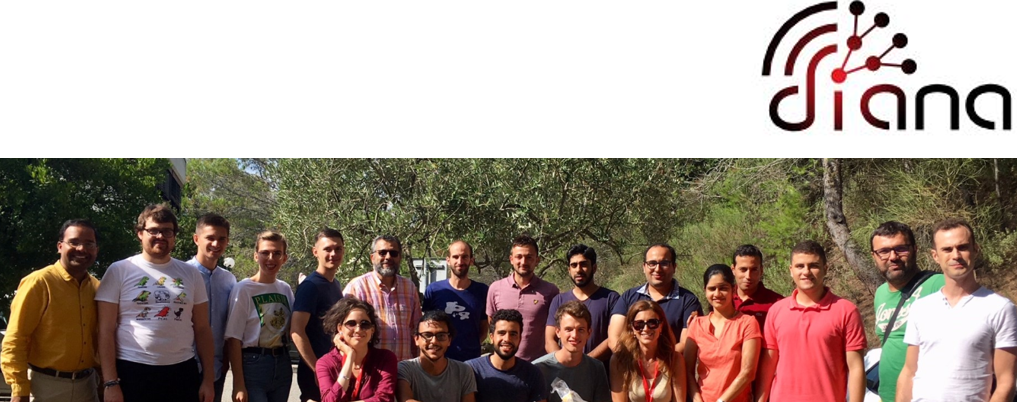
Chadi Barakat is a Senior Researcher (Directeur de Recherche) at Université Côte d'Azur's Inria research center, leading the DIANA project-team. He holds a PhD in Computer Science from University of Nice Sophia Antipolis (2001) and Habilitation (HDR) in 2009, with academic credentials from Lebanese University (1997) and French institutions. PhD: Computer Science (2001), University of Nice Sophia Antipolis HDR: Computer Science (2009), University of Nice Sophia Antipolis Master's: Computer Science (1998), University of Nice Sophia Antipolis BSc: Electrical & Electronics Engineering (1997), Lebanese University His research focuses on Internet measurement and traffic analysis , with significant contributions to Quality of Experience (QoE) modeling, 5G/ICN/SDN network architectures , and network performance evaluation . Recent articles highlight browser-based network monitoring, fidelity-aware network emulation, and ray tracing optimization for radio frequency mapping. He has supervised 12 PhD students to completion and currently directs the Academy of Excellence 'Networks, Information, and Digital Society' at Université Côte d'Azur. His work has received multiple best paper awards at CNSM, CloudNet, and SECON conferences, while serving as associate editor for Elsevier Computer Networks journal and active in ACM/IEEE conference committees. Director, Academy of Excellence 'Networks, Information, and Digital Society' (2025-present) Senior IEEE Member (2010) & ACM Senior Member (2018) General Co-Chair: ACM IMC 2022, ACM CoNEXT 2012 Guest Editor: IEEE JSAC special issue on Internet Sampling
Karim ZKIK is an Associate Professor of Cyber Security and Information Systems at ESAIP Graduate School of Engineering, Angers, France. Previously, he served as an Assistant Professor at the International University of Rabat (UIR), Morocco. His roles include Educational Manager of the Cyber Security track, Head of the Cybersecurity Innovation Hub, and committee member for ABET certification and curriculum design. He actively contributes to academic service, organizing conferences such as the International Conference on Cryptology, Coding Theory, and Cyber Security (I4CS 2022), and serves as a Guest Editor for Computers and Industrial Engineering . His research focuses on cybersecurity for connected systems, blockchain technologies, AI-driven security solutions, and cyber resilience in industrial control systems. Recent work explores integrating blockchain and machine learning for threat detection, secure IoT networks, and supply chain resilience. Key contributions include frameworks for cyber resilience in retail and airlines, blockchain-based crowdfunding security, and SDN-based attack mitigation. ZKIK holds a Habilitation (2024) and PhD in Cyber Security from Université d’Angers and Mohamed V University, Rabat. He holds over 20 certifications from EC-Council, IBM, and Cisco. His work bridges theoretical research and industry applications, addressing challenges in smart environments, industrial systems, and sustainable supply chains.
Vassilis Christophides is a Professor of Computer Science at the University of Crete and holds an advanced research position at Inria Paris, where he leads work in the MiMove team. His research spans databases, web information systems, big data processing, and IoT analytics, with a strong emphasis on entity resolution, data integration, and scalable data mining. He has supervised numerous research projects funded by the European Union and the Greek State, and has published over 130 articles in top-tier conferences and journals. Research Interests: His primary research areas include Databases, Web Information Systems, Big Data Processing and Analytics, and Information Systems for the Internet of Things. He also focuses on entity resolution, knowledge graphs, streaming data, and explainable AI, particularly in the context of anomaly detection and fairness-aware data systems. His recent work explores hybrid attention models for entity alignment and causal analysis in time series classification. Recent Research Trends: Analysis of his recent publications (2021–2025) reveals a strong focus on entity resolution with fairness constraints, explainable anomaly detection, and adaptive scheduling in IoT edge analytics. He also investigates deepfake detection, crop type mapping using satellite data, and structural bias in knowledge graphs, demonstrating a broad and impactful research portfolio at the intersection of data management and machine learning. Scientific Awards: 2004 SIGMOD Test of Time Award Best Paper Award, ISWC 2003 Best Paper Award, ISWC 2007 Advising and Grants: While specific student names are not listed in the provided texts, Christophides has co-authored numerous papers with researchers such as Vasilis Efthymiou, Ioannis Tsamardinos, and Nikolaos Myrtakis, suggesting active mentorship. He has been the scientific coordinator of multiple EU and national research projects, indicating substantial grant leadership and project management experience. Labs and Teams: He is affiliated with the MiMove team at Inria Paris, a research group focused on mobility and data-intensive systems. His work bridges academic and applied research, leveraging Inria’s infrastructure for large-scale data experimentation and innovation in IoT and edge computing environments.