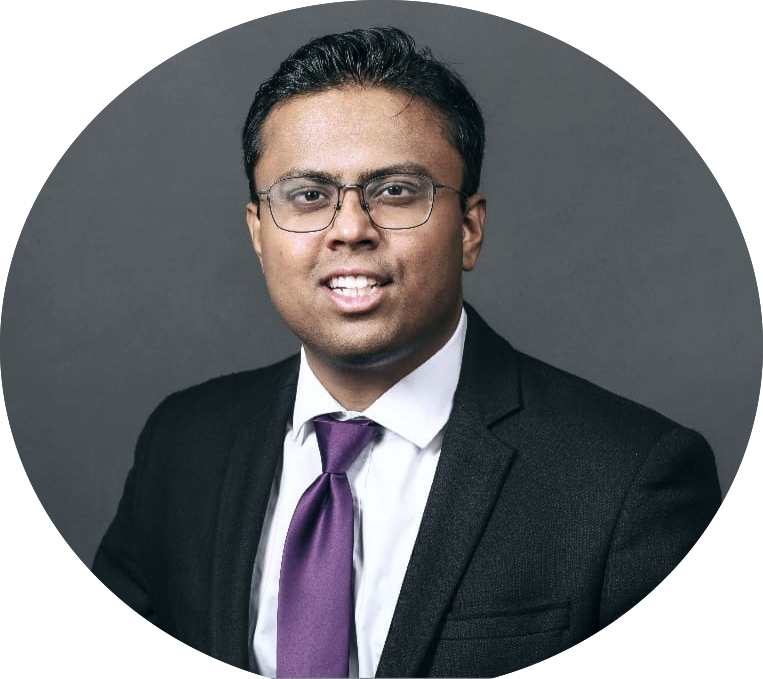
Kai Sun is an academic researcher affiliated with the Department of Computing at Imperial College London's Faculty of Engineering. As the Institute Manager of the Data Science Institute (DSI), she leads blockchain-based research initiatives and serves as academic WP co-lead for the IMI2 IDEA-FAST project. PhD in Computing (2014), Imperial College London MSc in Computing (2010-2014) Her research intersects data science and biomedical applications, focusing on: Blockchain-based decentralized systems for data management Multi-omics analysis in respiratory diseases Machine learning for clinical data interpretation Network analysis in disease modeling Key publication trends reveal expertise in blockchain applications (2019-2021) and multi-omics approaches to asthma phenotyping (2016-2022). Her work spans computational frameworks for disease stratification, federated learning for privacy preservation, and interpretable AI models for biomedical data. Kai Sun has supervised 20 MSc individual projects and internships at Imperial College (2014-2021), and served as lecturer in blockchain technology and cryptocurrency programs (2017-2022). She has organized major conferences including MARBLE 2019, KDD 2018, and BIH 2015. Current research focuses on integrating blockchain with biomedical data ecosystems, including the HNA Centre of Future Data Ecosystem and DSI's EU-funded initiatives.
Professor Karen Yeung is an Interdisciplinary Professorial Fellow in Law, Ethics and Informatics at the University of Birmingham, jointly appointed in the Birmingham Law School and the School of Computer Science . She is a leading global scholar in the regulation and governance of emerging technologies, with over 25 years of experience in interdisciplinary research at the intersection of law, ethics, and informatics. Her work critically examines the implications of artificial intelligence, blockchain, big data, and robotics for democracy, human rights, and the rule of law. Her academic background includes a DPhil in Law from Oxford University, where she was a Rhodes Scholar, and dual undergraduate degrees in Law and Commerce from the University of Melbourne. She previously held a Chair in Law at King’s College London and directed the Centre for Technology, Law & Society (TELOS). Karen Yeung’s research centers on algorithmic regulation and accountability , exploring how computational systems influence decision-making and social behavior. Her work spans legal theory, political philosophy, regulatory governance, and computer science, with a strong focus on democratic values, transparency, and justice in automated systems. She has published extensively, including the edited volume Algorithmic Regulation (Oxford University Press, 2019) and the second edition of An Introduction to Law and Regulation (Cambridge University Press, 2024). Her recent publications reveal a consistent focus on the constitutional, ethical, and democratic challenges posed by AI and digital technologies. Themes include algorithmic risk assessment in criminal justice, citizen scoring , blockchain in healthcare , and EU AI regulation . Her interdisciplinary approach integrates law, ethics, technical design, and policy, advocating for human rights-centered design and democratic oversight to counteract 'ethics washing' in AI development. She has received significant recognition, including being named a Rhodes Scholar . Her policy impact is extensive, with advisory roles in the EU High-Level Expert Group on AI , the Council of Europe , the World Economic Forum , the Nuffield Council on Bioethics , and the NHS . Karen Yeung actively supervises PhD students and leads interdisciplinary research projects, such as a Wellcome Trust Seed Award on blockchain in healthcare governance. She also collaborates with AI researchers and computer scientists to bridge technical and legal perspectives. Her public engagement includes lectures and talks worldwide on the governance of digital transformation and the protection of democratic values in the age of AI. She is affiliated with research initiatives and policy networks including the Digital Regulators Cooperation Forum (DRCF) , the Royal Society , and civil society organizations like the OSCE Office for Democratization and Human Rights and Equinet , working to strengthen human rights and democratic integrity in digital systems.
Dr. Hrishikesh Desai is an Associate Professor of Accounting with Tenure at Arkansas State University (A-State), where he also serves as the Director of the Master of Accountancy (MAcc) with Data Analytics program within the Neil Griffin College of Business. He holds a Ph.D. in Accounting from the University of Melbourne and has prior academic experience as a Tutor at the University of Melbourne and a Chazen Visiting Scholar at Columbia Business School. Research Interests: His research spans a broad spectrum of contemporary accounting issues, including accounting regulation, fraud examination, corporate governance, executive compensation, financial reporting, emerging technologies (particularly AI and blockchain), judgment and decision-making, inter-firm relationships, sustainability reporting, social media disclosures, healthcare economics, personal finance, and taxation. Recent Research Trends: His recent publications (2023–2025) reveal a strong focus on the integration of artificial intelligence and blockchain into accounting education, auditing, and regulatory compliance. Key themes include the use of conversational AI for fraud detection, explainable AI for financial audits, blockchain applications in curricula and smart contracts, and the impact of AI tools like ChatGPT on accounting education. His work combines empirical, experimental, and theoretical methods to address practical challenges in modern accounting. Scientific Awards & Honors: Outstanding Reviewer Award, AFAANZ Conference (2024) Notable Contribution to the Literature Award, AAA AIS Section (2024) CMA Opportunity Scholarship, IMA (2023) Excellence in Reviewing Awards, AAA IAS and FARS Sections (2022) Multiple scholarships and awards from the University of Melbourne and other institutions Advising and Grants: Dr. Desai actively supervises student research, with his advisees winning awards at university symposia and securing competitive research grants. He has secured significant external research funding, including a $25.61 million Arkansas Department of Human Services contract (2025), a $2.07 million DHS grant (2024), and multiple grants from ADHE, ABI, ACFE, and internal university sources, demonstrating strong research leadership and external support. Professional Engagement: He is actively involved in the academic and professional community, serving as a faculty advisor for the CFA Institute Research Challenge and delivering invited presentations on AI, blockchain, and cybersecurity in accounting at conferences such as ARCPA and ICAI.
Konrad Domig is a full Professor and Head of the Institute of Food Science at the University of Natural Resources and Life Sciences, Vienna (BOKU), where he also serves as Deputy Head of the Department of Biotechnology and Food Science. His research is centered on food microbiology, food safety, and fermentation technologies, with a strong emphasis on microbial quality assurance across the food chain. His research interests include food microbiology, food safety, lactic acid bacteria, probiotics, antibiotic resistance, microbiome research, fermentation technology, and food spoilage mechanisms. He investigates microbial spoilage and pathogens in food, develops detection and typing methods, and explores the safe application of beneficial microbes in fermented foods. His work spans plant-based and animal-based food systems, contributing to both traditional and novel food concepts. The recent publications highlight a consistent focus on microbial safety in dairy and fermented products, with increasing attention to molecular detection, spoilage prevention, and microbiome analysis. Themes include Cronobacter, Clostridium, Propionibacteria, and Bifidobacteria, reflecting his expertise in both pathogenic and beneficial microbes. Projects like NutriSafe also show his engagement with digital food safety and blockchain applications. BOKU / tecnet / accent Innovation Award - 2. Platz (2022) B.R.A.I.N. Award at World Nutrition Forum in Cape Town, South Africa (2018) AGRANA-Forschungs-Förderung (2016) science2business Award 2016 - 3. Platz (2016) Innovation Award 2013 (2013) FERCHAU Innovationspreis (2013) science2business Award 2013 - 1. Platz (2013) Nominierung für den BOKU Teaching Award (2011) Dr. Hermann-Zittmayr-Preis für Verdienste auf dem Gebiet der Milch- und Molkereiwirtschaft (2010) Wirtschaftkammerpreis der WK Wien (2009) Österreichischer Hygienepreis (2008) Domig has led over 100 research projects, many under the FFoQSI COMET program, focusing on food safety, spoilage, and quality. He has supervised numerous research students and contributes to national and international food safety networks. He leads core facilities in food processing and bioinformatics and is involved in strategic research initiatives. His work integrates laboratory science with real-world applications in industry and policy. He is a key member of BOKU’s Core Facilities, including Mass Spectrometry, Food & Bio Processing, and Bioinformatics. He leads research teams on microbial spoilage, antibiotic resistance, and fermentation optimization. His collaborations span across departments and include industrial partners, public agencies, and international research consortia.
Dr. Anna Wolf serves as Specialist for Industry Analyses at the ifo Center for Innovation Economics and Digital Transformation since January 2021, following her role as Specialist for Forecasts and Industry Analyses at the ifo Center for Macroeconomics and Surveys (2012-2020). Her expertise spans economic analysis, industry studies, and business climate assessment with particular focus on retail, manufacturing, and crafts sectors across the German economy. Her academic foundation includes: PhD (Dr. oec. publ.) in Economics from Ludwig-Maximilians-Universität München (2005-2009) Diploma in Statistics and Developmental Sociology (1996-2002) with thesis on "Factors Influencing Subjective Poverty in Russia" State-certified translator for Russian language from Universität Erlangen-Nürnberg Study abroad at National University of Ireland, Galway (2000-2001) Dr. Wolf's research centers on macroeconomic forecasting, industry-specific analysis, and digital transformation impacts. She has established herself as a leading expert on business climate indicators, particularly for the chemical industry, with regular commentary on economic trends. Her recent work examines blockchain adoption (rising from 6.9% to 9.7% of German companies 2023-2025) and AI implementation (13.3% of companies as of 2023), analyzing how emerging technologies reshape business processes. Analysis of her publication record reveals consistent focus on real-time economic challenges, from the global financial crisis through pandemic disruptions to current geopolitical tensions. Her research methodology combines quantitative economic analysis with sector-specific surveys, producing actionable insights for policymakers and industry stakeholders. The thematic evolution shows increasing attention to digital transformation alongside traditional macroeconomic forecasting. Her major research projects include: "Web3-Durchdringung in der deutschen Wirtschaft" (2023), commissioned by Hanseatic Blockchain Institute e.V. for Federal Ministry for Economic Affairs and Climate Action "Gemeinschaftsdiagnose 2016-2018" funded by Federal Ministry for Economic Affairs and Energy As a prominent economic commentator, Dr. Wolf regularly interprets business climate data for media outlets and policymakers, bridging academic research with practical business applications through her industry expertise and methodical analysis approach.
Prof. Dr. Claus Pias holds a Professorship for Theory and History of Media at Leuphana University of Lüneburg and is affiliated with the DFG-Researchgroup "Cultures of Critique." His academic work spans multiple disciplines within media studies, cultural theory, and digital technologies, establishing him as a significant figure in German media scholarship. Dr. Pias's research interests encompass Cultural Informatics, Media and Communication Studies, Cultural Studies, Art History, Philosophy, and Digital Media. His transdisciplinary approach bridges theoretical frameworks with practical applications, particularly in understanding the historical and theoretical dimensions of media technologies. He has made significant contributions to the study of digital culture, media theory, and the philosophical implications of technological systems, with particular focus on blockchain technologies, systems theory, and digital governance structures. His recent scholarly output demonstrates a consistent engagement with both contemporary digital phenomena and foundational theoretical frameworks. Dr. Pias's work often intersects media history with current technological developments, revealing historical continuities in our relationship with media technologies. His publications show increasing attention to data infrastructure, scoring systems, and the societal implications of digital technologies. Dr. Pias has been recognized with several prestigious awards, including: Fundraising-Preis (2017) from Leuphana University, awarded at the Dies Academicus Forschungspreis (2012) from Leuphana University Wissenschaftskolleg zu Berlin fellowship (2009), an internationally recognized research fellowship As an active researcher, Dr. Pias leads and participates in numerous collaborative projects, including the Stanford-Leuphana Summer Academy series (2021-2024), which fosters German-American academic exchange, and research on social credit systems that examines data infrastructure in Eastern and Western contexts. His work demonstrates strong grant acquisition capabilities and international collaboration networks. Dr. Pias contributes to the academic community through his leadership in the DFG-Researchgroup "Cultures of Critique" and his organization of significant academic events that bridge theoretical scholarship with practical technological understanding. His presence in press and media discussions on digital culture and media theory extends his scholarly impact beyond academia.
Dr. Kok Chiang Liang is a Lecturer and Program Coordinator for Electrical and Electronic Engineering at the School of Engineering , part of the College of Engineering, Science and Environment at Newcastle Australia Institute of Higher Education (NAIHE). He previously worked at DSO National Laboratories and SUSS, receiving multiple awards including the Design Innovation Award and Teaching Excellence Gold Awards . He holds a PhD and BEng (Honours) from Nanyang Technological University (NTU). Education PhD, Electrical & Electronic Engineering, NTU (2014) BEng (Honours), Electrical & Electronic Engineering, NTU As a researcher, Dr. Kok focuses on ASIC design for power management , robotics , artificial intelligence , and energy harvesting applications . His work bridges IoT and sustainable engineering, with over 50 publications in Q1/Q2 journals and conferences. Notably, he has pioneered innovations in medical device design, urban sustainability, and educational technology. His recent articles highlight trends in sustainable electronics and AI integration across domains. He has received significant recognition, including two Best Paper Awards and substantial research seed funding (over S$260,000). Dr. Kok also contributes to community service as a District Councillor and Grassroots Volunteer in Singapore, and serves on the STEM Industrial Advisory Board and IEEE committees . Scientific Awards Design Innovation Award (Individual), DSO National Laboratories (2018) Teaching Excellence Gold Award, SUSS (2020, 2025) Best Paper Award, 3rd ICESA (2021) Best Paper Award, 6th ICPEE (2024) Dr. Kok’s leadership extends to research grants as Principal Investigator and Co-PI, and to policy advisory roles for Singapore’s Ministry of Education. His interdisciplinary approach combines technical innovation with societal impact, reflected in his roles at People’s Action Party Meet-the-People Sessions and Ang Mo Kio Town Council .
Panos N. Patatoukas is a Professor and the L.H. Penney Chair in Accounting at UC Berkeley's Haas School of Business. He serves as Co-Faculty Director for Sustainable & Impact Finance and Faculty Director at the Center for Financial Reporting & Management. PhD, MPhil, MA - Yale University MSc - London School of Economics (with distinction) BA - Athens University of Economics & Business (valedictorian) His research bridges accounting, corporate finance, law, and economics with focus areas: Corporate financial reporting and valuation ESG sustainability measurement and investing Cross-industry economic linkages Firm/macroeconomic performance measurement Nowcasting using financial + environmental data Research trends show increasing focus on climate finance, big data applications, and ESG investing. His work on satellite imagery analysis and carbon emission valuation has gained significant media attention. Scientific recognition includes: AAA/AICPA Notable Contributions (2017, 2019) UC Berkeley Distinguished Teaching Award (2018) Earl F. Cheit Outstanding Teaching Awards (2012-2022) Fortune Magazine Top-10 Under 40 Professor As an educator, he has directed Berkeley ExecEd programs on financial data analysis and corporate finance for lawyers, while maintaining active collaborations with organizations across sectors through executive education and consulting engagements.
Professor Mark Perry is a distinguished academic in the Department of Computer Science at Brunel University London, where he serves as a Professor in Human-Computer Interaction within the College of Engineering, Design and Physical Sciences. With over 25 years of experience in Computer Science education and research, he has established himself as a leading figure in user-centered technology design and interdisciplinary research at the intersection of computing, social science, and design. His educational background includes: PhD (1997) in Computer Science (Human-Computer Interaction) from Brunel University London MSc in Cognitive Science (1993) from University of Wales, College of Cardiff BA (Hons.) Psychology - 2:1 (1992) from University of Wales, College of Cardiff Professor Perry's research focuses on 'user studies' with particular expertise in human-computer interaction, computer supported cooperative work, and the design of mobile, ubiquitous, distributed, and collaborative technologies from a user-centered perspective. His work combines interaction analysis, ethnography, and ethnographically-informed research techniques to investigate collaborative work with the applied aim of supporting design. His recent work has centered on digital money systems, mobile payment technologies, financial technology (fintech), and decentralized finance (DeFi), examining how these technologies are used and experienced across different cultural contexts. His recent publications demonstrate a strong focus on the intersection of financial technology and user experience, particularly examining digital currency systems across different cultural contexts. His research on digital money has been recognized by the Blackett Review's Distributed ledger technology: beyond blockchain and the Parliamentary Office of Science and Technology report on Alternative Currencies, with submissions to House of Lords and DCMS inquiries on Central Bank Digital Currencies and blockchain technology. Among his notable achievements: Royal Society Kan Tong Po International Fellowship (2018) Technical Programme Chair for ACM CHI'18 (premier international HCI conference) Member of ACM SIGCHI Executive Committee (2019-2021) ACM CHI Associate Chair (2007, 2009, 2012-14) and Subcommittee Chair (2010, 2015) Professor Perry has extensive experience in research funding and supervision, having served as Principal and Co-investigator on numerous projects including the EPSRC/Digital Economy project 'Smart Money' on distributed ledger enabled central bank issued digital currencies. He has supervised over 180 undergraduate and postgraduate research projects and successfully graduated 11 PhD students. His consultancy work spans major organizations including Microsoft Research, Hewlett-Packard, the BBC, and various financial technology companies. He has held visiting positions at Edinburgh University, Bristol University, Stockholm University, and Stanford University. He is actively involved in academic service, having contributed to the Quality Assurance Agency for Higher Education's Subject Benchmark Statement for Computer Science (2022) and serving on multiple international conference committees including ACM CHI, MobileHCI, and CSCW.
Vincenzo Arceri serves as an Assistant Professor (non-tenure) in the Department of Mathematical, Physical and Computer Sciences at the University of Parma. Previously, he held a postdoctoral position at Ca' Foscari University of Venice (2019-2021) following his 2020 PhD completion at the University of Verona, where he also earned his Bachelor's (2014) and Master's (2016) degrees in Computer Science. His academic trajectory demonstrates continuous progression in static analysis research. His educational foundation includes: PhD in Computer Science (2020), University of Verona MSc in Computer Science (2016), University of Verona BSc in Computer Science (2014), University of Verona Arceri's research centers on static program analysis with specialization in string analysis for dynamic languages, abstract interpretation frameworks, and blockchain security verification. He has developed novel techniques for smart contract analysis across Ethereum (EVMLiSA), Hyperledger Fabric, and Tezos platforms, addressing critical issues like cross-contract invocations and read-write conflicts. His work bridges theoretical formal methods with practical security applications in decentralized systems. Recent publications (2023-2025) reveal a strategic research pivot toward blockchain verification, comprising 60% of his output. Key contributions include the Tarsis string domain for automata-based analysis, LiSA framework extensions for multi-language support, and specialized tools for EVM bytecode. His work consistently addresses precision-performance tradeoffs in abstract interpretation while expanding into machine learning applications for code analysis. Arceri actively seeks research collaborators, stating he "is always looking for strong and motivated students to work with me." His projects EVMLiSA, LiSA, and Tarsis demonstrate sustained research funding through GitHub maintenance and industrial collaborations like the GoLiSA experience report. He has developed curricular materials for graduate courses including Static Analysis and Software Verification at Parma. He maintains active connections with the Software and System Verification research group, previously at Ca' Foscari University of Venice and currently through open-source contributions at University of Parma. His GitHub repositories and Zulip community engagement foster collaborative development of static analysis tools, particularly for blockchain applications.
Wafa Badreddine is a Lecturer at the University of Picardie Jules Verne, affiliated with the REDO research group within the Networks and Data Domain. Her academic work focuses on advancing wireless body area networks, blockchain consensus mechanisms, and time-series forecasting methodologies for distributed systems. Her research spans critical intersections of computer science and applied engineering, with deep expertise in Wireless Body Area Networks (WBAN) for healthcare monitoring, blockchain consensus optimization for IoT environments, and hybrid neural architectures for time-series prediction. She investigates cross-layer protocol design to enhance data reliability in medical sensor networks while developing parallel consensus algorithms to reduce latency in distributed ledgers. Her work consistently bridges theoretical networking principles with real-world healthcare and industrial IoT applications. Publication analysis reveals a concentrated research trajectory in three synergistic domains: healthcare-oriented wireless networking (40% of output), blockchain scalability for constrained devices (35%), and AI-driven forecasting models (25%). Recent work demonstrates increasing integration of spiking neural networks with traditional consensus protocols and sophisticated clustering techniques for multivariate time-series analysis, indicating a strategic convergence toward intelligent distributed systems for medical and industrial applications. Dr. Badreddine actively contributes to the REDO research ecosystem (Réseaux, Données et Objets), a multidisciplinary group specializing in network architectures, data processing frameworks, and embedded object systems. This collaborative environment enables her work on next-generation protocols for resource-constrained networks and distributed ledger technologies.
Martijn de Waal is a Full Professor at the Civic Interaction Design department within CREATE-IT APPLIED RESEARCH at Amsterdam University of Applied Sciences . His work focuses on the intersection of public space , smart cities , and digital civics , emphasizing collaborative urban design and resilience in the face of technological and societal challenges. Research Themes Public Space & Urban Resilience Blockchain & Digital Governance Media Architecture & Networked Urbanism Commons & Collaborative Systems More-than-Human Design His recent articles highlight trends in designing civic platforms for blockchain societies, urban resilience post-COVID-19, and media architecture for public engagement. He explores how digital technologies reshape civic participation and urban governance, often bridging human and non-human perspectives. Scientific Contributions include frameworks for neighborhood resilience , public code standards , and commons-based urban design . His media and press contributions address public values in algorithmic societies and data transparency . Labs & Teams : Active in CREATE-IT APPLIED RESEARCH and Media Architecture Institute , collaborating internationally on urban interaction design and digital platforms for societal challenges.
Visara Urovi is an Associate Professor at Maastricht University's Data Science Institute within the Faculty of Science and Engineering. Her research focuses on blockchain applications, AI-driven healthcare solutions, and privacy-preserving data sharing frameworks. Education: PhD in Computer Science Key research areas include: Blockchain technology for secure health data exchange AI models in respiratory disease monitoring Regulatory compliance for digital health systems Speech analytics as diagnostic tools Recent publications highlight trends in: Blockchain-based accountability mechanisms Speech recognition for COPD and asthma tracking Responsible data science frameworks Scientific awards include the Grant for the Web (2020). She has supervised PhD candidate Yan Y. (2025 thesis) and organized academic events like the Women in Data Science Maastricht Datathon (2022).
Jared Coleman is an Assistant Professor of Computer Science at Loyola Marymount University. He holds a Ph.D. in Computer Science from the University of Southern California and both a B.S. and M.S. in Computer Science from California State University Long Beach. Previously, he worked as a Member of Technical Staff (MTS) at Aerospace Corporation. Education: Ph.D. in Computer Science, University of Southern California B.S. & M.S. in Computer Science, California State University Long Beach Research Interests: Cooperative multi-agent systems Distributed and decentralized computing Online algorithms Distributed ledger technology Internet of things (IoT) Artificial intelligence and large language models Language revitalization, particularly Owens Valley Paiute Community Engagement: Member of the Big Pine Paiute Tribe of the Owens Valley Active in revitalizing the Owens Valley Paiute language
Giulia Fanti is the Angel Jordan Associate Professor of Electrical and Computer Engineering at Carnegie Mellon University. She holds courtesy appointments in the Computer Science Department and Machine Learning Department, and is affiliated with CyLab Security and Privacy Institute. Her research focuses on security and privacy in distributed systems, blockchain technology, and privacy-enhancing machine learning. Ph.D., Electrical Engineering & Computer Science, University of California, Berkeley (2015) M.S., Electrical Engineering & Computer Science, University of California, Berkeley (2012) B.S., Electrical & Computer Engineering, Olin College of Engineering (2010) Her research spans three major areas: privacy-preserving data sharing using generative models like GANs, privacy in decentralized networks under adversarial conditions, and blockchain scalability with rigorous mathematical modeling. She actively explores privacy-utility tradeoffs in synthetic data generation and secure federated learning frameworks. Recent publications highlight her expertise in blockchain economics, privacy-preserving machine learning, and secure consensus algorithms. Articles span topics like game-theoretic liquidity provisioning, federated learning with synthetic data, and differential privacy in distributed systems. These works demonstrate her focus on bridging theoretical guarantees with practical implementations. Scientific recognition includes: Best Paper Award Finalist @ ACM IMC Best Paper Award Finalist @ SIGMETRICS 2025 ICML 2025 Oral Presentation ICLR 2025 Honorable Mention Atlantic Council Senior Fellowship World Economic Forum Global Future Council Fellowship She advises numerous doctoral students and postdocs, including current advisees Shuaiqi Wang, Sangyun Lee, and former students now at institutions like HKUST, NTU, and University of Ottawa. Her group collaborates extensively through initiatives like the Upanzi Network and Secure Blockchain Initiative. Research teams include CyLab-Africa, which she co-directs, and CMU's Secure Blockchain Initiative. Her work has been funded by NSF awards and industry grants.