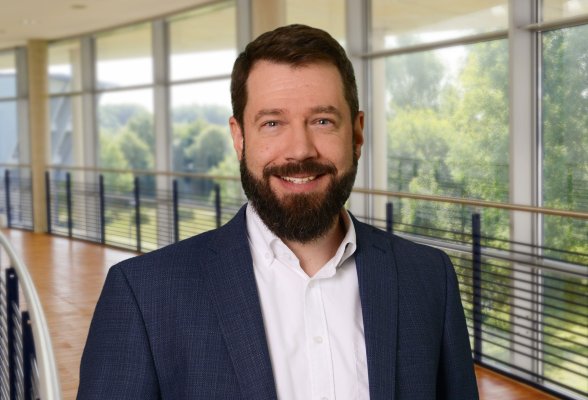
Prof. Dr. Ingo Schünemann is a Professor of Media Management at bbw Hochschule - University of Applied Sciences in Berlin. He leads the Media Management program and holds academic roles at HTW Berlin. His expertise spans media economics, educational innovation, and film production. He earned a PhD in Media Studies from TU Berlin and a Diplom-Betriebswirt from Fachhochschule Köln. Research interests include blended learning models for media education, German SME economic dynamics, and creative industry processes. He actively engages with media industries through roles at Splendid Medien AG and Polarlicht Film GmbH. His filmography includes directorial and production credits in independent cinema. Administrative roles include Vice President of Teaching and Program Director for Media Economics programs. Collaborates with institutions like fib Research Institute on applied media studies projects.
Xingang Shi is a Professor in the Department of Computer Science and Technology at Tsinghua University's School of Information Science and Technology. With over 126 publications spanning from 2006 to 2025, he maintains an active and influential research program in computer networking, with recent expansion into quantum network optimization. His work consistently appears in top-tier venues including INFOCOM, IEEE/ACM Transactions on Networking, and SIGCOMM. Dr. Shi's research focuses on network security, software defined networking, traffic engineering, and network anomaly detection. His recent work shows increasing emphasis on quantum network optimization and advanced security verification techniques. He has developed innovative approaches to routing protocols, congestion control, and inter-domain routing analysis, with practical applications in real-world network infrastructure. His publication trends reveal a steady evolution from traditional networking topics toward more sophisticated security and optimization frameworks. The 15 most recent publications demonstrate strong integration of machine learning techniques with networking fundamentals, particularly in anomaly detection and traffic engineering. His work increasingly addresses quantum networking challenges while maintaining strong contributions to conventional network security and performance optimization. As a leading researcher in his field, Dr. Shi has made significant contributions to network verification methodologies and security protocol testing frameworks. His recent papers on model checking-based security testing and proactive network policy verification represent important advances in ensuring network reliability and security. Through his extensive collaboration network (particularly with Zhiliang Wang, Xia Yin, and Han Zhang), Dr. Shi has built a productive research ecosystem that bridges theoretical networking concepts with practical implementation challenges. His work on quantum network optimization represents an emerging frontier in his research portfolio.
Yongqiang Chen is a Professor at the Chinese Academy of Sciences in the School of Engineering, Department of Computer Science and Engineering. With over 15 years of continuous research contributions spanning from 2005 to 2025, Dr. Chen has established himself as a versatile scholar working at the intersection of theoretical mathematics, machine learning, and practical engineering applications. Dr. Chen's research expertise encompasses: Machine Learning and Causal Inference, with recent focus on large language models and out-of-distribution generalization Signal and Image Processing, particularly in keyword spotting and watermarking applications Optimization Algorithms for engineering and management problems Theoretical Mathematics, including partition functions and combinatorial identities Engineering Management and Project Governance in construction contexts His recent publication trajectory (2023-2025) reveals a strategic evolution toward integrating causal reasoning with modern neural architectures, while maintaining strong connections to practical applications. Dr. Chen's work demonstrates exceptional interdisciplinary range, bridging pure mathematics with cutting-edge AI development and engineering solutions. His publications in venues like AAAI, NeurIPS, and IEEE Transactions reflect both theoretical rigor and practical relevance across multiple domains including renewable energy, neuroscience, and construction management. Dr. Chen maintains active collaborations with researchers across institutions, particularly with Bo Han on causal language models, James Cheng and Yiping Ke on brain network analysis, and various colleagues in engineering management. His research group appears to focus on developing theoretically sound yet practically applicable computational frameworks that address real-world challenges while advancing fundamental knowledge in machine learning and optimization.
Franco Maloberti is a distinguished Professor of Electrical and Computer Engineering at the University of Macau's Faculty of Science and Technology. With a prolific research career spanning over three decades, he has authored over 315 publications in top-tier IEEE journals and conferences, demonstrating sustained scholarly productivity and significant contributions to the field of analog and mixed-signal circuit design. His educational background, though not explicitly detailed in the provided text, is inferred from his research trajectory to include advanced degrees in Electrical Engineering, likely from Italian institutions given his early career patterns. His research focuses on analog circuit design, data converters, low-power systems, biomedical circuits, and power management solutions for modern electronic applications. Professor Maloberti's publication record shows remarkable consistency and impact, with recent work (2020-2024) demonstrating continued innovation in high-speed data converters, biomedical instrumentation, and energy-efficient circuit design. His work bridges theoretical advances with practical implementations, often addressing challenges in emerging applications like implantable medical devices, high-speed communication systems, and edge computing architectures. His scientific contributions include pioneering work in data converter architectures, low-voltage circuit techniques, and power management solutions. The breadth of his research is evident in publications spanning IEEE Journal of Solid-State Circuits, IEEE Transactions on Circuits and Systems, and major conferences like ISCAS, ISSCC, and ESSCIRC. Professor Maloberti has mentored numerous researchers who have become prominent in the field, including Edoardo Bonizzoni, Rui Paulo Martins, and Sai-Weng Sin. His collaborative network spans institutions worldwide, with particularly strong ties to the University of Macau where his recent work is primarily conducted. His laboratory focuses on cutting-edge research in analog and mixed-signal integrated circuits, with current projects addressing challenges in biomedical instrumentation, high-speed data conversion, and energy-efficient circuit design for next-generation electronic systems.
Prof. Marcus Giamattei is a Professor of Economics (Education) at the Frankfurt School of Finance & Management. He previously held positions at Bard College Berlin (Professor of Macroeconomics) and the University of Passau (Assistant Professor), where he remains an External Fellow. He is affiliated with CeDEx at the University of Nottingham. His research focuses on macroeconomics, behavioral economics, and experimental methods, particularly exploring bounded rationality, cooperation dynamics, and corruption mechanisms. He developed classEx and LIONESS Lab, pioneering tools for interactive economic experiments in educational and field settings used globally. His work bridges theoretical economic inquiry with practical applications in teaching and policy. Education: PhD and Habilitation in Economics from the University of Passau. His research has been published in journals such as the Journal of Money, Credit and Banking, Experimental Economics, and Plos One. His recent studies analyze gender differences in post-competition honesty, spillovers of incentive schemes, and experimental evidence on inflation dynamics. Prof. Giamattei’s contributions include advancing digital experimentation tools that enable researchers and educators to conduct experiments outside traditional lab settings. These platforms (classEx and LIONESS Lab) facilitate large-scale, real-world behavioral studies in over 70 countries.
Niklas Klein is a Professor at the Department of Information and Communication at Flensburg University of Applied Sciences. He also serves as Vice President for Studies and Teaching on the Executive Board. His academic background includes a PhD from the University of Kassel (2011) and earlier degrees from the University of Paderborn. His research focuses on context-aware systems, ubiquitous computing, and smart grid technologies. He has contributed to projects like the Future Internet Smart Grid Application (2013), activity recognition using inertial sensors (2011), and XML/XQuery transformation frameworks (2005–2011). His work emphasizes time synchronization in sensor networks and user-centric service creation. Notable publications include studies on context prediction stability, energy management in smart grids, and DAG-based context reasoning architectures. He has advised over 20 Master's and Bachelor's students in areas like distributed systems and communication technologies. Klein has secured funding for projects such as the KLIMASCHUTZ-PLANER (2013–2014) and IT2Green Pinta (2012–2014). He organizes workshops like AwareCast and serves on technical program committees for CAPS 2012 and Context 2011. Additional service includes managing the alumni network for Kassel University's Communication Technologies chair and supporting international student recruitment.
Bernd Freisleben is a Professor at Philipps University of Marburg in the Department of Mathematics and Computer Science, leading the Distributed Systems research group. His work focuses on distributed systems, wireless communication, and emergency communication networks. He is affiliated with the Verteilte Systeme (Distributed Systems) group and the emergenCITY project, emphasizing resilient disaster communication and smart city technologies. Research interests include disruption-tolerant networking (DTN), machine learning applications in multimedia analysis, and energy-efficient wireless protocols. His group develops tools like ProgDTN for programmable DTN and the BatRack device for wildlife monitoring. Students under his supervision include Hicham Bellafkir (PhD since 2021), Markus Sommer (PhD since 2020), and Daniel Schneider (PhD since 2020). Key projects include Nature 4.0, a networked sensor system for biodiversity monitoring, and the ForestEdge initiative for unobtrusive environmental monitoring. Recent publications highlight work on resilient networks, deep learning for multimedia, and bio-inspired data storage solutions.
Thierry Turletti is a Professor at INRIA with extensive research in computer networking, wireless communications, and network virtualization. His work focuses on network emulation, software-defined networking, 5G networks, and content-centric networking with numerous publications spanning over two decades. His primary research interests include developing advanced network emulation frameworks that maintain high fidelity in distributed environments, optimizing wireless network performance through innovative ray tracing techniques, and creating robust programmable networks with optimal failure recovery. His work bridges theoretical networking concepts with practical implementations, particularly in the areas of mobile edge computing and 5G network optimization. Recent publications demonstrate a clear trend toward solving practical networking challenges in large-scale distributed environments, with emphasis on network emulation fidelity, wireless signal propagation modeling, and network function placement. His research spans broad disciplines including computer networking, telecommunications engineering, and distributed systems, with specific focus on radio frequency mapping, network monitoring, and mobile network optimization. Dr. Turletti has been instrumental in developing network experimentation frameworks and tools that enable researchers to conduct realistic network testing in controlled environments. His work on Distrinet and Sophia-node represents significant contributions to the field of network testbeds and emulation platforms.
Dimitrios Makrakis is a Professor affiliated with the University of Ottawa, Canada. His research focuses on interdisciplinary areas at the intersection of computer networks, cybersecurity, and biomedical engineering. Key research interests include blockchain technology applications in healthcare and finance, molecular communication for nanonetworks, vehicular networks security, and optogenetic-based communication systems. He has collaborated extensively with researchers like Abdelhakim Hafid and Binod Vaidya, producing impactful work in IEEE journals and conferences. His work spans theoretical and applied domains, such as developing secure authentication protocols, analyzing blockchain protocols in quantum contexts, and designing biomedical sensor systems. Notable contributions include frameworks for federated learning in healthcare, privacy-enhanced authentication systems, and bio-inspired nanogenerators for medical applications. Makrakis has also contributed to network protocols optimization in software-defined data centers and vehicular communication networks. Publications highlight his expertise in interdisciplinary fields: from quantum-resistant blockchain strategies to machine learning-driven price prediction in cryptocurrency markets. His research often bridges fundamental science with real-world applications, addressing challenges in privacy, security, and efficiency across distributed systems.
Mihaela Vela is a Senior Lecturer at the Department of Language Science and Technology at Saarland University. Her research focuses on machine translation evaluation, post-editing strategies, and translation technologies. Prior to her academic role, she worked as a researcher at the Language Technology Lab of DFKI (2007–2011), contributing to projects like ontology schema extraction from financial news. She holds a PhD in Computational Linguistics (2011) from Saarland University, supervised by Hans Uszkoreit and Thierry Declerck, and a Licentiate degree in Linguistics from West University of Timisoara. Her teaching portfolio includes courses such as Translation and Content Management , Applied Language Technologies , and Machine Translation , reflecting her expertise in integrating computational methods with translation practice. She has developed tools like TeLeMaCo (a collaborative teaching repository) and Catalog (a post-editing interface). Her work emphasizes improving translation workflows through better CAT tool design, metadata preservation, and cognitive load analysis in post-editing tasks. Key contributions include the SubCo corpus of learner translations and studies on post-editing effort in low-resource languages. Her research bridges theoretical linguistics with practical applications, addressing challenges in legal text classification, parliamentary discourse analysis, and neural post-editing systems.
Mounir Bensalem is a Ph.D. candidate and research assistant at the Institute of Computer and Network Engineering within the Faculty of Electrical Engineering, Information Technology, and Physics at Technical University of Braunschweig, Germany. His research focuses on integrating machine learning and edge computing into next-generation network architectures, particularly in optimizing LoRa, analyzing reconfigurable intelligent surfaces (RIS), and applying reinforcement learning to edge serverless functions. He holds an Engineering Diploma and M.Sc. in Information Systems from the National Engineering School of Tunis. Education: Master’s Degree in Information System Techniques (2017), National Engineering School of Tunis. Engineering Diploma in Industrial Engineering (2017), National Engineering School of Tunis. Key Research Areas: Machine Learning, Edge Computing, 5G/6G Networks, Network Security, and Reconfigurable Intelligent Surfaces. Projects: EU Horizon MANOLO (2024–2026), H2020 FISHY (2020–2023), DFG FOR 2863 (2019–2022), and H2020 mF2C (2017–2020). Awards: Best Paper Award (2022) for work on IoT buffer size benchmarking. Lab/Team: Part of Prof. Jukan’s group at TU Braunschweig, focusing on communication networks and edge computing.
Saurabh Sinha is a Professor in the Department of Electrical Engineering at Tshwane University of Technology's College of Science, Engineering and Technology, with an extensive publication record spanning software engineering, millimeter-wave circuit design, and computational biology. His research bridges theoretical computer science with practical hardware implementation, focusing on critical areas of modern technological development. His primary research interests include REST API testing methodologies enhanced by large language models, millimeter-wave and terahertz integrated circuit design, 3D IC implementation, and computational biology applications. Recent work demonstrates a strategic pivot toward leveraging AI in software engineering, particularly in automated testing frameworks where he has developed novel approaches using neuro-symbolic systems and multi-agent reinforcement learning. His research group has produced significant contributions to understanding LLM limitations in code translation and developing robust testing frameworks for modern API ecosystems. Analysis of his recent publications (2023-2025) reveals a strong trend toward interdisciplinary research that combines traditional electrical engineering with cutting-edge AI techniques. Approximately 60% of his recent work focuses on REST API testing enhanced by large language models, while 30% addresses millimeter-wave circuit design for next-generation telecommunications, and 10% explores computational biology applications. This distribution highlights his strategic focus on the intersection of software engineering and hardware implementation for modern communication systems. Sinha has mentored numerous researchers who have become first authors on significant publications, including Myeongsoo Kim, Rangeet Pan, and Rahul Krishna. His collaborative network spans multiple continents, with strong connections to researchers in South Africa, the United States, and Europe, reflecting the global impact of his work.
Dennis McLeod is a Professor at the University of Southern California , specializing in Database Systems , Ontology Engineering , and Semantic Heterogeneity resolution. His work bridges Federated Database Systems and Web Engineering , focusing on component-based architectures, adaptive ontologies, and geospatial data processing. Key Research Areas : Semantic heterogeneity, ontology-driven data mining, mobile web information management, and distributed systems. Collaborations : Extensive partnerships with researchers like Qing Li , Cyrus Shahabi , and Stefania Leone across institutions. Publications (2014-1995) span topics from component-based web engineering to distributed earthquake science , with recent work on geostreaming, social network tag-geotag analysis, and spam filtering using ontologies. His contributions include frameworks for multi-resolution document transmission , object-oriented database sharing , and adaptive query optimization in federated systems. Scientific Impact : Co-chairs and tutorials at major conferences (VLDB, CoopIS, ICDE). Co-edited proceedings for ICWL 2008 and contributed to Expert Database Systems (1989-1991). Pioneered INTERBASE for controlled sharing in federated databases (1990).
Dr. Gregory Duveiller is a Project Group Leader at the Max Planck Institute for Biogeochemistry in Jena, Germany, where he leads the Ecosystem Function from Earth Observation group under the Biogeochemical Integration department. With a PhD in Agronomical Sciences (2011) and postdoctoral experience at the European Commission Joint Research Centre (2011-2021), his work focuses on leveraging satellite Earth Observation data to understand terrestrial ecosystems' role in the Earth System. Research Interests: Land-atmosphere interactions, remote sensing of vegetation, spatio-temporal statistical analysis, land cover/use dynamics, and climate impacts on ecosystems. Scientific Awards: 2020 JRC Excellence Award (Shared) 2019 JRC Young Scientist Excellence Award 2016 JRC Scientific Excellence Award (Shared) 2006 Aspirant FNRS PhD Scholarship Advising: No formal advisees listed in available records. Publications: Recent work includes studies on sun-induced fluorescence, GPP estimation, deforestation impacts on drought vulnerability, cloud formation dynamics due to tree distribution, and biodiversity-ecosystem function relationships using satellite data. Email: gduveiller@bgc-jena.mpg.de
Kaba Mustafa is an Assistant Professor of Economics at Koç University, İstanbul. He holds a Ph.D. in Economics from the European University Institute and previously served as a post-doctoral researcher at the Max Planck Institute for Research on Collective Goods in Bonn, Germany. His research focuses on political economy, behavioral economics, and public policy, with a particular emphasis on applied microeconometrics, field experiments, and large-scale survey experiments. Mustafa’s academic contributions include groundbreaking work on the economic consequences of authoritarian takeovers in local governance, the impact of female leadership on workplace dynamics, and the role of social norms in vaccination attitudes. His research has been recognized with prestigious grants, including the EU Horizon Marie Skłodowska-Curie Actions PF Grant and TÜBİTAK’s International Fellowship for Early Stage Researchers. Recent articles highlight his interdisciplinary approach, analyzing topics such as vote-buying mechanisms, Olympic Games’ economic effects, and class-based policy preferences. His work frequently employs innovative methods like synthetic control analysis and Difference-in-Differences designs to address causal relationships in complex socio-economic phenomena. Awards: EU Horizon Marie Skłodowska-Curie Actions PF Grant, TÜBİTAK International Fellowship Grants: Multiple research grants supporting field experiments and policy analysis Mustafa is affiliated with Koç University’s College of Administrative Sciences and Economics and collaborates with international research networks, including the Max Planck Institute. His research agenda also explores migrant integration challenges in Turkish municipalities and the visibility of public services in shaping local policies.