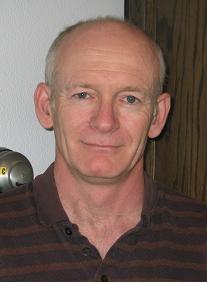
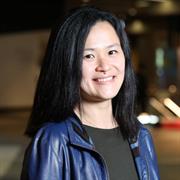
Frédéric Pascal is a Full Professor at CentraleSupélec, part of the University of Paris-Saclay, and a member of the Laboratoire des Signaux et Systèmes (L2S). His research focuses on statistical signal processing, machine learning, and robust estimation techniques, with applications in radar detection, covariance matrix estimation, and information geometry. He has held roles including Coordinator of AI activities at CentraleSupélec and Head of the "Signals and Statistics" group at L2S. His academic journey includes a PhD from University Paris X – Nanterre (2006) and an HDR (2012) from University Paris-Sud. His work emphasizes adaptive signal processing in non-Gaussian environments, with contributions to robust covariance estimation, M-estimators, and applications in radar systems and biomedical signal processing. He has authored over 100 journal/conference papers and serves as an Associate Editor for IEEE Transactions on Signal Processing and Elsevier Signal Processing. Current research interests include AI transparency, data-driven methods for industry 4.0, and health-related signal analysis.
Larry Goldstein is a Professor of Mathematics at the University of Southern California, specializing in probability theory, mathematical statistics, and their applications. He holds a Ph.D. in Mathematics from the University of California, San Diego (1984). His research focuses on distributional approximation via Stein’s method, high-dimensional statistics, concentration inequalities, and statistical efficiency, with applications in epidemiology and biomedical monitoring. He has organized and participated in numerous conferences, including the 'Stein’s Method: The Golden Anniversary' in Singapore (2022) and the 'BIRS Stein Conference' in Banff (2022). Goldstein teaches advanced courses such as Probability Theory, Statistical Consulting, and Mathematical Statistics, often incorporating modern computational tools like R. He has led international summer programs at the University of Perugia, Italy, on topics including mathematical statistics and high-dimensional probability. His work bridges theoretical foundations with practical applications, including modeling transdermal alcohol concentration and analyzing complex sampling designs in cohort studies. His contributions to Stein’s method include developing couplings for distributional approximation and concentration inequalities. Goldstein’s teaching emphasizes statistical inference, machine learning, and data analysis, reflecting his dual focus on rigorous theory and real-world problem-solving.
Yashar Hezaveh is an Associate Professor at the University of Montreal's Faculty of Arts and Sciences, Department of Physics. He holds the Canada Research Chair in Astrophysical Data Analysis and Machine Learning. His work focuses on using gravitational lensing and machine learning to map dark matter distributions in galaxy halos, advancing our understanding of dark matter's nature. He completed his PhD at McGill University in 2013, earning recognition for groundbreaking research on high-redshift dusty star-forming galaxies. Education: PhD in Physics (McGill University, 2013) Affiliations: Kavli Institute for Theoretical Physics, Flatiron Institute's Center for Computational Astrophysics Research interests include applying deep learning to analyze gravitational lensing data, Bayesian neural networks for dark matter mapping, and cosmological simulations. Notable projects include the CASTOR mission and advances in radio interferometry image reconstruction. His work bridges astrophysics and machine learning, addressing challenges in cosmic structure analysis. Awards: Hubble Fellowship (2015), Top 10 Quebec Science Discoveries (2013). Grants: Leads multiple projects on dark matter, AI-driven stellar mass measurement, and astrophysical data analysis funded by NSERC, FQRNT, and the Simons Foundation. Students: Supervised four Master's theses on topics like Bayesian lensing inversion and machine learning for galactic archaeology. He contributes to collaborative initiatives like the Centre de recherche en astrophysique du Québec (CRAQ), fostering interdisciplinary astrophysics research.
Lasse Heikkinen is a Senior Lecturer at the Department of Technical Physics, Faculty of Science, Forestry and Technology, University of Eastern Finland. His work spans applied physics, process tomography, and educational technology, with a focus on innovative teaching methods like flipped classrooms during the pandemic. Current Role: Deputy Head of Department, Senior University Lecturer Research Themes: Electrical impedance tomography for industrial processes, flipped teaching frameworks, and physics education adaptation to remote learning. Recent publications highlight his dual expertise in process tomography (gas-solid flows, pharmaceutical monitoring) and pedagogical innovation (learning analytics, flipped classrooms). He has contributed to educational manuals and toolkits for teacher training. Key Projects: Technology education infrastructure development (2015–2024), pandemic-era teaching adjustments (2022). Collaborations: Active in international process tomography conferences and multidisciplinary teams like the Ameba project.
Nisar Ahmed is an Associate Professor at the University of Colorado within the Aerospace Engineering Sciences department. His research focuses on the intersection of Artificial Intelligence , Robotics , and Autonomous Systems , emphasizing decision-making under uncertainty, sensor fusion, and human-machine collaboration. Key research interests include: Active Inference for autonomous planning Decentralized Data Fusion in multi-robot systems Machine Self-Confidence and competency assessment Reinforcement Learning for spacecraft and robotic guidance Uncertainty Quantification in dynamic environments Recent publications highlight trends in Pareto-optimal decision-making , Bayesian optimization , contextual bandits , and trust calibration for UAS and planetary rovers. His work integrates probabilistic modeling with real-time autonomy , ensuring robustness in applications like search-and-rescue missions and lunar exploration. Contact: Nisar.Ahmed@Colorado.EDU
Yongfeng Zhang is an Associate Professor in the Department of Computer Science at Rutgers University. He is also the Director of the AIOS Foundation . His research focuses on Machine Learning, Data Mining, Recommender Systems, and Explainable AI , with notable contributions to fair and personalized AI, AI for science, and social good. Education and Experience: PhD in CS (2011–2016) from Tsinghua University Postdoc at UMass Amherst (2016–2017) Joined Rutgers as Assistant Professor (2018), promoted to Tenured Associate Professor (2024) Research Interests: Machine Learning, Data Mining, Information Retrieval, Recommender Systems, Natural Language Processing, ML Systems, AI Agents, Explainable AI, Fairness, and AI for Science. Recent Achievements: Received the 2024 ACM SIGIR Test of Time Award, 2024 Presidential Teaching Excellence Award, and multiple NSF grants. He has advised over 15 PhD students and led projects on trustworthy AI, generative recommendation, and causal inference. Awards: 2024 ACM SIGIR Test of Time Award 2021 NSF CAREER Award 2015 Microsoft PhD Fellowship Grants & Labs: Led NSF grants on explainable AI, conversational recommendation, and neural-symbolic AI. Active in the AIOS platform development and multiple research labs.
Larry Smolinsky is the Roy Paul Daniels Professor of Mathematics at Louisiana State University (LSU), a position he has held since 2013. He has been a Professor at LSU since 2000, serving as Chair of the Department of Mathematics from 2004 to 2010. His academic journey includes roles as Associate Professor (1992–2000), Assistant Professor (1987–1992), and Josiah Willard Gibbs Instructor at Yale University (1985–1987). Smolinsky's research focuses on actuarial science , bibliometrics/informetrics , and mathematics education . He co-leads LSU's Actuarial Science program, providing resources like capstone credit guidance and exam preparation advice. His work in informetrics includes analyzing citation patterns, altmetric indicators, and collaboration dynamics. He also explores STEM education methodologies, such as online vs. handwritten homework effectiveness in calculus courses. His editorial roles include serving on the Journal of Informetrics board since 2022. He received the H.M. 'Hub' Cotton Award for Faculty Excellence (2012) for his contributions. Current teaching includes Long-Term Actuarial Mathematics courses (Math 4045/4046). Smolinsky's research bridges theoretical mathematics and applied fields like actuarial modeling, legal testimony, and educational innovation. His recent work critiques citation metrics and evaluates interdisciplinary programs such as Mathematics and Finance dual disciplines.
Raaz Dwivedi is Assistant Professor in Operations Research and Information Engineering at Cornell University and Cornell Tech. His research develops statistical and computational methods for personalized decision-making, focusing on causal inference, reinforcement learning, and distribution compression. Recent publications advance kernel thinning techniques, counterfactual inference methods, and adaptive nearest-neighbor algorithms with applications in healthcare and recommendation systems. Research appears in top venues with 15+ publications since 2022. Awards and honors: Blackwell-Rosenbluth Award (2024) ASA Best Student Paper Award (2022) MIT LIDS Best Presentation Award Harvard Teaching Excellence Award FODSI Postdoctoral Fellowship Holds PhD in EECS from UC Berkeley and BTech from IIT Bombay.
Fabio Nobile is a Full Professor at the École Polytechnique Fédérale de Lausanne (EPFL) in the School of Basic Sciences (SB), Department of Mathematics (MATH), holding the CADMOS Chair in Scientific Computing and Uncertainty Quantification. He leads the CSQI (Chair of Scientific Computing and Uncertainty Quantification) group. His work focuses on numerical methods for partial differential equations (PDEs), uncertainty quantification, stochastic modeling, and computational fluid dynamics. He is involved in collaborative projects involving fluid-structure interaction, cardiac electro-mechanics, and energy systems. Professor Nobile has extensive teaching experience, including courses on advanced analysis, stochastic simulation, and numerical integration of stochastic differential equations. He supervises numerous PhD students and has contributed to over 200 peer-reviewed publications, covering topics such as low-rank approximation methods, multilevel Monte Carlo techniques, and optimal control under uncertainty. His research emphasizes interdisciplinary applications, including biomedical engineering (e.g., personalized cardiac simulations) and renewable energy (e.g., probabilistic load forecasting). He collaborates with industries and academic institutions globally, advancing computational methodologies for engineering and scientific challenges.
Jennifer Tang is a Postdoctoral Associate at the Massachusetts Institute of Technology (MIT), holding dual appointments in the Institute for Data, Systems, and Society (IDSS) and the Laboratory for Information and Decision Systems (LIDS). She conducts her research under Professor Ali Jadbabaie, focusing on interdisciplinary problems at the intersection of information theory, network science, and social dynamics. Her position is temporary as she actively seeks a permanent academic role through the 2025 job market. Her academic credentials include: Ph.D. in Electrical Engineering and Computer Science from MIT, advised by Professor Yury Polyanskiy Bachelor of Science in Engineering (B.S.E.) in Electrical Engineering from Princeton University, with independent work supervised by Paul Cuff Dr. Tang's research program centers on theoretical and applied aspects of information theory, including channel capacity, quantization, and data compression. She investigates prediction and estimation in high-dimensional settings, data analytics for complex systems, and mathematical modeling of social dynamics and inference in multi-agent networks. Her work employs tools from statistics, optimization, and network theory to address challenges in communication, decision-making, and societal systems, with particular emphasis on opinion dynamics under social pressure and efficient representation of probability distributions. Analysis of her publication record reveals consistent contributions to information-theoretic limits, social network modeling, and compression techniques. Her works frequently appear in top venues like IEEE Transactions on Information Theory and major conferences (ISIT, CDC, ACC), demonstrating expertise in bridging theoretical foundations with real-world applications in networked systems and societal challenges. Her scientific achievements have been recognized with: Best Student Paper Award at IEEE International Symposium on Information Theory (ISIT) 2022 Best Student Paper Award at IEEE Machine Learning for Signal Processing (MLSP) 2022 Student Competition Winner at the Shannon Centennial Celebration Dr. Tang maintains an active teaching portfolio, having served as instructor for MIT 1.022: Introduction to Network Models (Spring 2025) and teaching assistant for multiple core courses including 6.008 (Introduction to Inference), 6.041/6.431 (Probabilistic Systems Analysis), 6.437 (Inference and Information), and 6.439 (Statistics, Computation and Applications). She also contributed to the MIT Women's Technology Program as a Mathematics Instructor during summer 2017. Her research is embedded within MIT's Laboratory for Information and Decision Systems (LIDS) and Institute for Data, Systems, and Society (IDSS), two premier interdisciplinary laboratories fostering collaboration on data-driven decision-making, societal challenges, and foundational theory in information and systems.
Dr. Yuanyuan Yuan is a Researcher at the Department of Computer Science, ETH Zurich, Switzerland, based at CNB H 104.1, Universitätstrasse 6, 8092 Zurich. Her work bridges computer security and machine learning with a focus on practical vulnerabilities in deployed AI systems. Her research centers on exposing and mitigating security flaws in deep learning deployments, particularly targeting trusted execution environments (TEEs) and on-device inference systems. Key contributions include pioneering side-channel attacks against TEE-shielded neural networks (CipherSteal, HyperTheft), bit-flip attack surfaces in DNN executables (BitShield), and novel testing methodologies for neural network robustness. She investigates cache/timing side channels, ciphertext analysis, privacy leakage in partitioned ML, and concept-based explainability. Analysis of her 2023-2025 publications reveals a cohesive focus on offensive security research for AI infrastructures, with consistent contributions to top venues in security and machine learning. Her work demonstrates expertise in low-level system interactions (memory, cryptography) applied to ML security, spanning attack vectors, defensive mechanisms, and validation frameworks. The research trajectory shows increasing sophistication in exploiting hardware-software interfaces while developing practical hardening techniques for real-world deployments.
Fady Alajaji is a Professor of Mathematics and Engineering at Queen's University, with a cross-appointment in the Department of Electrical and Computer Engineering. He holds a B.E. from the American University of Beirut, and M.Sc. and Ph.D. from the University of Maryland, College Park. His research focuses on information theory, coding for communication networks, probability models (e.g., Polya urns, contagion processes), and applications of information theory to machine learning (e.g., generative adversarial networks, data privacy). He has served as Associate Editor for the IEEE Transactions on Information Theory and has received awards for research and teaching. His work spans theoretical foundations (e.g., Shannon limits) and practical coding techniques for wireless systems. Education: B.E. (1988), M.Sc. (1990), Ph.D. (1994) in Electrical Engineering from the University of Maryland. Roles: Professor of Mathematics and Engineering, Cross-appointment in Electrical and Computer Engineering. Research Interests: Information theory, coding for communication networks, stochastic processes (network epidemics, Polya urn models), machine learning applications (information bottleneck, GANs), and data privacy. Recent work includes optimal signaling schemes for sensor networks, privacy-aware estimation, and curing models for contagion networks. Publications: Over 100 journal/conference papers, including foundational work on joint source-channel coding, hybrid digital-analog coding, and theoretical bounds for communication systems. Recent trends focus on information-theoretic machine learning and network science. Awards: Premier's Research Excellence Award (2001), Golden Apple Teaching Award (2015). Grants/Advising: Supervised postdoctoral fellow Jian-Jia Weng. Active in conference organization and editorial roles. Labs/Teams: Member of the Mathematics and Engineering Communications and Information Theory Group at Queen's University.
James V. Burke is a Professor of Mathematics at the University of Washington with extensive contributions to optimization theory and its applications. His academic career spans several decades, during which he has developed fundamental theories in nonsmooth and convex optimization, variational analysis, and computational methods for complex optimization problems. Research Focus Burke's primary research centers on convex-composite optimization , where he has established critical theoretical foundations and practical algorithms. His work on weak sharp minima has become foundational in optimization theory, providing essential insights into solution stability and error bounds. He has made significant advances in gradient sampling algorithms for nonsmooth, nonconvex optimization problems, which have broad applications in engineering and data science. More recently, Burke has applied optimization techniques to state estimation problems , particularly developing robust Kalman smoothing methods using Student's t-distributions and other non-Gaussian models. His research bridges pure mathematical theory with practical computational methods, demonstrating consistent innovation across multiple subfields of optimization. Academic Contributions Burke has taught numerous graduate-level courses including Math 509 (Optimal Control), Math 554 (Linear Analysis), and specialized courses on convex analysis and optimization. His research collaborations span multiple institutions, with frequent co-authorship with leading optimization researchers such as Tim Hoheisel, Adrian Lewis, and Michael Overton. He regularly presents his work at major conferences including SIAM Optimization and ICCOPT, with his most recent presentation at the SIAM Conference on Optimization in Seattle (June 2023).
Marc Toussaint is Full Professor leading the Learning & Intelligent Systems Lab at TU Berlin's EECS Faculty. His research integrates machine learning, optimization, and AI reasoning to solve fundamental robotics problems like physical reasoning and human-robot interaction. He holds a physics diploma from University of Cologne and PhD from Ruhr-Universität Bochum. Key research themes include: Task-motion planning integration Reinforcement learning for robotics Physical simulation and control Probabilistic inference methods Recent publications focus on efficient kinodynamic planning, belief space planning under uncertainty, and neural policy learning. He develops open-source robotic tools like the 'robotic python package' used in academic courses worldwide. Toussaint collaborates with Amazon Robotics and MIT CSAIL, and has held positions at Max Planck Institute and University of Stuttgart.
Flora Salim is a Professor in the School of Computing Technologies at RMIT University. She serves as co-Deputy Director of the RMIT Centre for Information Discovery and Data Analytics (CIDDA) and an Associate Investigator of the ARC Centre of Excellence in Automated Decision Making and Society. Her research focuses on human behavior modeling, machine learning with time-series and spatio-temporal data, and edge AI applications in IoT and wearables. Flora has secured over $10M in research funding from ARC, industry partners, and government bodies. Notable awards include the 2021 PACM IMWUT Distinguished Paper Award, 2019 Humboldt-Bayer Fellowship, and RMIT's 2018 Research Impact Award. She leads the CRUISE research group and has held visiting professorships at the University of Kassel and University of Cambridge. Editorial roles: Associate Editor of PACM on IMWUT, Area Editor of Pervasive and Mobile Computing Steering Committee member of ACM UbiComp Her work bridges ubiquitous computing and machine learning, with applications in urban analytics, mobility, and health monitoring. Recent projects include self-supervised learning for multimodal data and forecasting with heterogeneous time-series. Supervision areas: Deep learning for sensor data, explainable AI, and wearable-based emotion sensing Teaching programs: Master of Artificial Intelligence and Master of Data Science