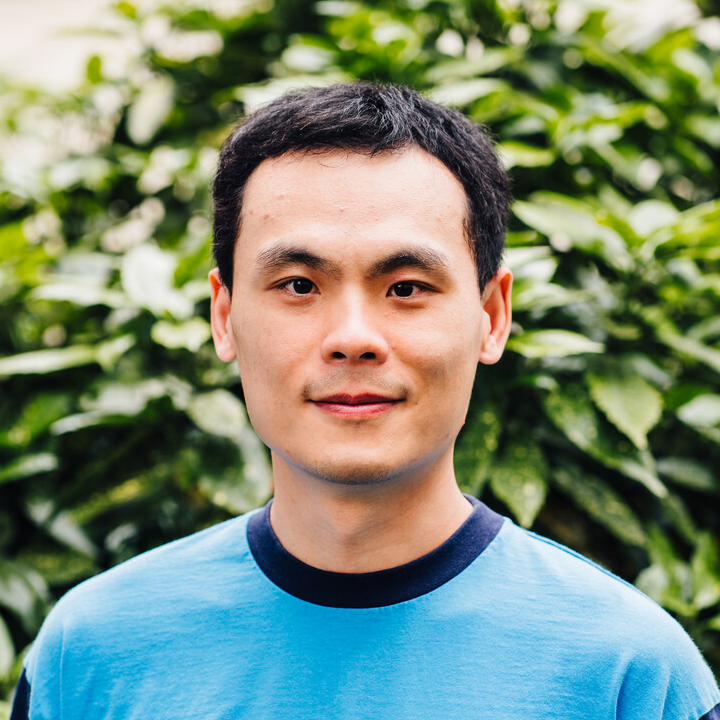
Edgar Weippl is a Professor at the Faculty of Computer Science, University of Vienna, where he serves as Vice Dean and Head of the Research Group Security and Privacy. His work spans cybersecurity, blockchain, and machine learning, with teaching roles in information security and software security courses. Current Positions: Vice Dean (Faculty of Computer Science), Head (Security and Privacy Research Group), Deputy Head (Neuroinformatics & Knowledge Engineering Groups) Research Interests: Cybersecurity, blockchain, IoT security, code obfuscation, privacy technologies, reinforcement learning, and socio-technical systems security Selected Publications: Focus on blockchain privacy, VoWiFi security, code obfuscation, and reinforcement learning applications
Hongkai Wen is a Professor (Chair in Machine Learning Systems) in the Department of Computer Science at the University of Warwick, UK. He holds dual appointments as a Fellow of the Alan Turing Institute (serving as Independent Scientific Advisor for BridgeAI and member of Turing Research Ethics team) and previously worked as Senior Research Scientist at Samsung AI Centre Cambridge and postdoctoral researcher at Oxford University. Education: Computer Science, Keble College, University of Oxford Research Focus: Develops intelligent multi-modal perception systems for real-world deployment with extreme computational efficiency. Core expertise spans ML systems optimization, neural architecture search, and cross-disciplinary applications in robotics, urban mobility, and wearable/IoT security. Pioneered event-based vision techniques and training-free NAS frameworks. Publication Trends: Recent work (2023-2025) demonstrates accelerating innovation in diffusion model efficiency, on-device AI deployment, and sensor fusion techniques. Dominant themes include computational resource optimization for edge devices, multi-modal temporal modeling, and privacy-preserving spatial analytics, with significant contributions to NeurIPS, ICML, and CVPR venues. Scientific Recognition: Best Paper Award, AutoML Conf 2023 (T-CET) Best Paper Runner-up, SenSys 2024 (AdaFlow) Best Paper Awards: IPSN 2014 & EWSN 2013 1st/2nd Place, Zero Cost NAS Competition (AutoML'22) Mentorship & Funding: Actively supervises PhD candidates through thesis committees at Warwick, Ulster, and Queensland universities. Secured National AI Strategy Fund for Macro Neural Architecture Search research. Recruits annually for PhD positions with scholarships from UKRI, Turing Institute, and industry partnerships. Research Leadership: Heads the AI/ML Systems (AMS) Division at Warwick, directing a 15+ member team developing deployable ML frameworks for mobile/robotic platforms. Maintains active collaborations with Samsung AI Centre and Turing Institute's BridgeAI programme on ethical AI deployment.
Yue Li is the Leonard Case Jr. Professor in the Department of Civil and Environmental Engineering at Case Western Reserve University. He specializes in resilient and sustainable infrastructure systems, focusing on structural reliability, probabilistic design, and climate change adaptation. His research addresses risk assessment for infrastructure under extreme events, including earthquakes, hurricanes, and climate impacts. Education: PhD in Civil Engineering, Georgia Institute of Technology, 2005 Research Interests: Dr. Li’s work integrates advanced statistical methods and data-driven approaches to enhance infrastructure resilience. Key areas include: Probabilistic modeling of structural systems Risk-informed decision-making for multi-hazard mitigation Climate change impacts on material durability and performance Asset management and lifecycle cost analysis Notable Contributions: His recent publications emphasize data-driven resilience metrics for water systems and seismic risk assessment for bridges. He has pioneered frameworks for evaluating infrastructure vulnerability under climate change, including corrosion effects and extreme weather adaptation. Awards: ABSE Outstanding Paper Award (2023) Case School of Engineering Teaching Award (2020) Nomination for John S. Diekhoff Award (2019) Leadership Roles: Dr. Li serves as Section Editor for the ASCE Journal of Structural Engineering and chairs multiple technical committees on safety and reliability. He leads initiatives to standardize multi-hazard design practices and resilience evaluation methodologies.
Lou Safra is Assistant Professor in political psychology at the Center for Political Research (CEVIPOF) of Sciences Po , Paris, and co-directs the Evaluation of Democracy Research Group at the Laboratory for Interdisciplinary Evaluation of Public Policies (LIEPP) . She is also associate researcher at the Institut d’Études Cognitives (École Normale Supérieure, Paris), bridging political science with cognitive neuroscience. Education: PhD in Cognitive Science, École Normale Supérieure, Paris (2017) Research Interests: Lou Safra investigates the cognitive mechanisms underlying social and political behaviour , focusing on leader choice and cooperation . She adopts an ecological and evolutionary perspective to understand inter-individual differences across space and time. Her methodological toolkit includes behavioural experiments , social surveys , computational modelling , and cultural artefact analysis such as paintings and books. Publication Trends: Her recent work (2020–2024) explores how early-life adversity shapes trust and authoritarian preferences , how cultural evolution influences concepts like love in literature, and how public opinion on defence issues evolves during the Ukraine war . Studies appear in high-impact journals spanning political science , psychology , behavioural economics , and cultural evolution . Scientific Awards & Funding: No specific awards or fellowships are listed in the provided text. Advising & Grants: No named students or specific grant details are provided in the text. Labs & Teams: She is affiliated with CEVIPOF–Sciences Po , LIEPP , and the Laboratoire de Neurosciences Cognitives & Laboratoire de Neurosciences Cognitives et Computationnelles at ENS, indicating active collaboration across political science, cognitive neuroscience, and computational modelling teams.
Dr. Sheila J. Roberts serves as Acting Vice Provost for Academic Affairs and Associate Professor in the Department of Geology within Bowling Green State University's School of Earth, Environment and Society. She has held academic positions at BGSU since 1994, progressing from Assistant Professor to her current rank while assuming administrative leadership in 2018. Education Ph.D., University of Arizona (1992) M.S., University of Arizona (1988) B.S., Colorado School of Mines (1986) Research Interests Her work centers on Environmental Geochemistry , Groundwater Hydrology , and Environmental Geology , with field studies examining metal contamination in water and soil systems. Current research investigates spatial and temporal chemical changes in the Ottawa River and Wood County groundwater, focusing on agricultural impacts and urban river management. Publication Trends Her 2002-2008 publications reveal consistent focus on environmental contamination assessment through GIS integration and field sampling. Key themes include dam removal impacts on urban rivers, groundwater recharge area identification, and quantitative analysis of metal accumulation in soils – demonstrating methodological innovation in environmental management. Teaching and Research Projects Dr. Roberts teaches undergraduate courses including Introduction to Geology and Environmental Geology, plus graduate courses in Hydrogeology and Aqueous Geochemistry. Her active research includes: Water sampling analysis of Ottawa River (Toledo, OH) for spatial/temporal chemical changes and metal contamination Groundwater chemistry studies in Wood County (OH) assessing metal contamination from agricultural sewage sludge application
Dr. Chen Wang is an Assistant Professor in the Department of Computer Science and Engineering at the University at Buffalo. He holds a PhD from Nanyang Technological University and a B.Eng from the Beijing Institute of Technology. His research focuses on robotic perception, vision, and learning, emphasizing algorithm development for autonomous systems. He is affiliated with the Spatial AI and Robotics Lab (SAIR Lab) and serves as an Associate Editor for The International Journal of Robotics Research (IJRR) and IEEE Robotics and Automation Letters (RA-L) . His work spans neuro-symbolic AI, SLAM systems, and reinforcement learning for robotics. Dr. Wang's research interests include creating efficient algorithms with theoretical guarantees, open-source distribution, and real-world validation. He has contributed to areas like visual navigation, few-shot detection, and robot autonomy frameworks. His educational background in electrical engineering and robotics underscores his expertise in bridging theory and practical applications. Notable contributions include the iWalker framework for humanoid robots, AirSLAM for visual SLAM, and SuperPC for 3D point cloud processing. His editorial roles and conference service (e.g., CVPR Area Chair) reflect his leadership in the field. The SAIR Lab under his direction advances spatial AI, robotics, and autonomous systems through interdisciplinary collaboration.
Robert T. Grimm Jr. is a Professor of the Practice and the inaugural Levenson Family Chair in Philanthropy and Nonprofit Leadership at the University of Maryland's School of Public Policy. As Director of the Do Good Institute, he leads a campus-wide initiative empowering students to drive social impact through programs like the Do Good Challenge and the Food Recovery Network. His work has spurred transformative partnerships, resulting in new faculty endowments, facilities like Thurgood Marshall Hall, and initiatives such as the Do Good Accelerator. He holds a PhD from Indiana University, Bloomington, and has served in senior roles at AmeriCorps, including developing the Social Innovation Fund. His research focuses on philanthropy, nonprofit leadership, and civic engagement, with notable contributions to understanding volunteerism trends and charitable behavior in the U.S. Affiliations: Civic Innovation Center, Do Good Institute Leadership, NASPAA Board Key Achievements: Founded the Food Recovery Network, launched the Do Good Challenge, and contributed to national policy through congressional testimony. His awards include the 2021 Regents Award for Public Service Excellence and the 2019 Distinguished Alumni Award from Indiana University. Grimm’s research bridges academic inquiry with practical solutions, shaping nonprofit strategies and student leadership programs. Grants and partnerships have enabled programs addressing food waste, mental health access, and environmental conservation. The Do Good Institute’s ventures include 400 menstrual product dispensers on campus and partnerships saving millions of pounds of food annually. Labs/Teams: Directs the Do Good Institute and collaborates with the Do Good Lab, focusing on actionable research to advance social innovation and nonprofit efficacy.
Edmund Thompson is a Professor in the Management Strategy & Organisation School at the University of Bath's School of Management. He serves as Director of Doctoral Programmes and is affiliated with research centres including the Centre for Future of Work and the Centre for Climate Adaptation & Environment Research (CAER). Holding a PhD from the London School of Economics (1995), his research focuses on entrepreneurship, firm/national competitiveness, and their interplay with psychology, culture, and political economy. He actively supervises PhD students and contributes to UN Sustainable Development Goals. Key projects include studies on counterfeit purchasing ethics and customer-led distribution systems. His work bridges social sciences and business strategy, emphasizing real-world problem-solving through interdisciplinary approaches. Education: PhD in Role of Business in EU Political Integration (LSE, 1995) Main Research Areas: Entrepreneurship, Competitiveness, Individual Psychology, Political Economy Affiliations: Centre for Sustainable Energy Systems (SES), Centre for Regenerative Design & Engineering (RENEW) His recent articles explore student satisfaction dynamics, personality traits in gambling, and PhD supervision impacts. Thompson prioritizes scholarly careers addressing global challenges and mentors students aiming to contribute to impactful research. Grants/Projects: 'Counterfeit Purchasing’s Ethicality' (2020–), 'Customer-Led Distribution System' (2017–2019) He is involved in labs/teams advancing sustainability and climate adaptation research, reflecting his commitment to addressing contemporary societal and environmental issues.
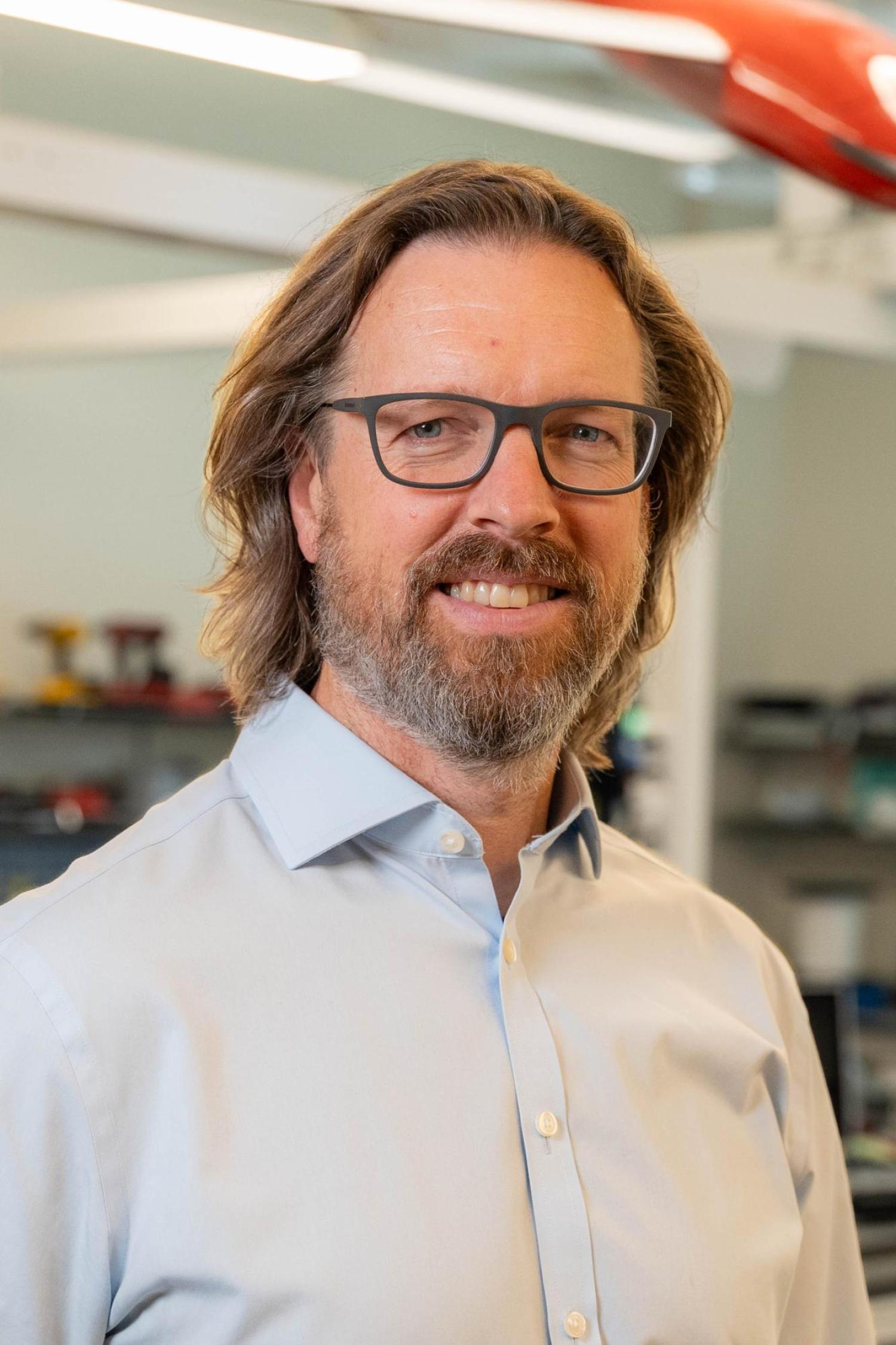
Eric Frew is a Professor in the Department of Aerospace Engineering Sciences at the University of Colorado Boulder. He holds leadership roles including Director of the Autonomous Systems Interdisciplinary Research Theme (ASIRT) and former Director of the Research and Engineering Center for Unmanned Vehicles (RECUV). His research focuses on autonomous systems, heterogeneous unmanned aircraft systems, and optimal distributed sensing. He earned his PhD from Stanford University in 2003, and has been a faculty member at CU Boulder since 2004. Education: PhD, Aeronautics and Astronautics, Stanford University, 2003 MS, Aeronautics and Astronautics, Stanford University, 1996 BS, Mechanical Engineering, Cornell University, 1995 Research Interests: Networked unmanned systems Optimal distributed sensing Controlled mobility in sensor networks Miniature self-deploying systems Guidance and control of unmanned aircraft in complex atmospheric phenomena Notable Awards: Outstanding Mentor Award (2023) AIAA Associate Fellow (2013) NSF CAREER Award (2009) Grants and Labs: Leads the Center for Autonomous Air Mobility and Sensing (CAAMS), and has conducted field campaigns such as TORUS (Targeted Observation by Radars and UAS of Supercells). His work integrates theoretical research with practical deployment of autonomous systems for environmental monitoring and severe weather studies. Labs/Teams: Active in CAAMS and RECUV, collaborating with industry/government on pre-competitive research in autonomous air mobility and sensing.
Marcel Fratzscher serves as President of the German Institute for Economic Research (DIW Berlin) and Professor of Macroeconomics at Humboldt University of Berlin. He holds membership on the Advisory Board of the German Federal Ministry for Economic Affairs and Energy and maintains a prominent public presence as a columnist for Zeit Online, Financial Times, and Project Syndicate. His research spans macroeconomics, financial markets, economic inequality, European integration, monetary policy, and gender distribution. Fratzscher critically examines the social market economy, focusing on how economic policies affect inequality across demographic groups. His expertise includes pension systems, labor market dynamics, migration economics, and climate policy impacts on industry. His approach combines rigorous academic analysis with practical policy recommendations, often challenging conventional wisdom in economic discourse. Fratzscher's recent publications reveal a consistent thematic focus on economic inequality and social justice. His articles analyze paradoxical trends like falling wage inequality alongside rising overall income inequality, discrimination in the workplace (including weight-based discrimination), and the economic costs of social issues like crime fear and gender-based violence. He consistently advocates for policy reforms in pension systems, minimum wage structures, migration policy, and housing markets. As an advisor and public intellectual, Fratzscher bridges academic research and policy implementation. His recommendations often challenge conventional wisdom, such as his arguments against the notion that migration is economically costly or that minimum wage increases necessarily harm employment. He has proposed innovative solutions like the 'Boomer solidarity tax' to address old-age poverty without burdening younger generations. Fratzscher leads DIW Berlin, one of Germany's premier economic research institutions, where he oversees research on critical economic and social issues facing Germany and Europe. The institute's Socio-Economic Panel (SOEP) provides longitudinal data that informs much of his research on inequality and social dynamics. Under his leadership, DIW Berlin continues to shape economic policy debates through evidence-based analysis and forward-looking recommendations.
Steven Haberman is a Professor of Actuarial Science at Bayes Business School, City, University of London. He has held senior leadership roles, including Deputy Dean, Director, and Dean of Bayes Business School until 2015. Prior to this, he was Dean of the School of Mathematics (1995–2002). His academic journey began at the University of Cambridge (BA in Mathematics), followed by PhD and DSc in Actuarial Science from City University. He has served as a Lecturer in Actuarial Science since 1974 and worked part-time at the Government Actuary's Department (1986–2006). He is a Fellow of the Institute of Actuaries and Royal Statistical Society. Research focuses on mortality modeling (e.g., the Renshaw-Haberman model), longevity risk, pensions, and annuities. He has authored/co-authored 5 books and over 180 papers, and edited journals like Journal of Pension Economics and Finance . Awards include an honorary doctorate from the University of Haifa (2018) and research prizes from the Institute of Actuaries. He has supervised 33 doctoral students and served on professional bodies like the Institute and Faculty of Actuaries and the Financial Reporting Council’s Board for Actuarial Standards. Current roles include Editor-in-Chief of Risks and Chair of the Board of Governors of the London Foundation for Banking and Finance.
Lin Cai is a Professor in the Department of Electrical & Computer Engineering at the University of Victoria, Canada. She holds prestigious fellowships including NSERC Steacie, IEEE, CAE, and Royal Society of Canada. Her research focuses on wireless communications, networking, and mobile computing, with emphasis on protocols for multimedia and IoT systems. She has led projects in vehicular networks, UAV-assisted systems, and federated learning for edge intelligence. Dr. Cai has advised over 20 students, many of whom have received awards and prominent roles in academia and industry. She has authored numerous high-impact papers, secured grants from NSERC, CFI, and industry partners, and serves in leadership roles at IEEE and educational institutions. Notable contributions include work on congestion control, network security, and autonomous systems. Education: BEng (Nanjing U. of Sci. & Tech.), MASc/PhD (University of Waterloo) Affiliations: IEEE Vehicular Technology Society Board of Governors, IEEE ComSoc Distinguished Lecturer Awards: 2020 IEEE N2Women 'Star in Networking', RSC Fellow 2024, Best Paper Awards (ICC 2008, WCNC 2011) Research Labs: Connected Autonomous Vehicles (CAV) Lab, AI-driven Networking Group Her work integrates networking, AI, and control theory to address challenges in 6G, IoT, and smart transportation. She actively promotes diversity through initiatives like the 'Riko-chan' STEM manga series.
Gregory Prastacos is a Professor of Management Science and former Dean (2012-2024) at Stevens Institute of Technology's School of Business. He holds degrees from Columbia University, including a doctorate in Operations Research. His academic leadership spans roles as Rector of Athens University of Economics and Business (AUEB, 2007-2011) and founding director of AUEB’s International MBA Program and Management Science Laboratory. His research focuses on analytics, innovation, and digital transformation, with over 60 journal articles and 11 books. Notable awards include the Edelman Award (1979) and INFORMS Honorary Medal (2008). Education: B.Sc. and M.Sc. in Computer Science (Columbia University), Ph.D. in Operations Research (Columbia University). Research interests include supply chain analytics, technology management, and leadership ethics. His work on blood inventory management was recognized in Science magazine. As Dean at Stevens, he achieved AACSB accreditation, launched new programs, and secured NSF funding for the CRAFT Center. He co-chairs AACSB's Digital Transformation Affinity Group, leading the MaCuDE initiative to redefine business education for the digital era. Awards include Stevens' inaugural Leading by Example Award (2024), ROI New Jersey’s Higher Education Influencer (2022, 2024), and the Jacques Barzun Award (2017). He has advised Fortune 500 companies and served on boards of Deloitte, Onassis Foundation (USA), and the Hellenic Management Association. Grants and leadership: Over 25 major research projects funded by EU, Greek Ministry of Research, and others. Key initiatives include the MaCuDE program (AACSB/PwC, 2019), the Athens International Airport Impact Study (2009), and the Mapping Black Sea Research (2004). He has supervised 7 doctoral students and authored/co-authored influential works like Managerial Decision Making (2009) and Leading and Managing in the Digital Era (2024). Consulting and industry ties include Deloitte’s Management Consulting Practice (1997-2002), strategic advising for telecoms, banking, and logistics sectors. He launched OMAS SA, a leading Greek consulting firm, and co-founded the Business Confucius Institute of Athens.
Erik Prytz is a Senior Associate Professor in Cognitive Science at the Department of Computer and Information Science (IDA) at Linköping University. His research focuses on applying human factors principles to improve safety-critical systems, particularly in emergency response domains such as first aid, disaster medicine, and prehospital care. He holds a PhD in Human Factors Psychology and has served in roles including Director of the Forum Securitatis graduate school and Program Chair for the Cognitive Science BSc program. Education: PhD in Human Factors Psychology (Old Dominion University, 2014), MSc in Cognitive Science (LiU, 2010). Research Interests: Simulation-based training, stress and mental workload, emergency responder teamwork, and human-system interaction in crisis scenarios. His work emphasizes interdisciplinary collaboration, combining cognitive science, computer science, and medicine to enhance emergency response systems. Recent projects explore driver behavior toward emergency vehicles, ad-hoc responder group dynamics, and optimal placement of bleeding control kits in public spaces. He contributes to initiatives like the Center for Advanced Research in Emergency Response (CARER) and the Forum Securitatis graduate school. Erik’s teaching includes courses on human factors, distributed cognition, and emergency response systems. He actively participates in curriculum development and quality assurance committees within the Faculty of Arts and Sciences.
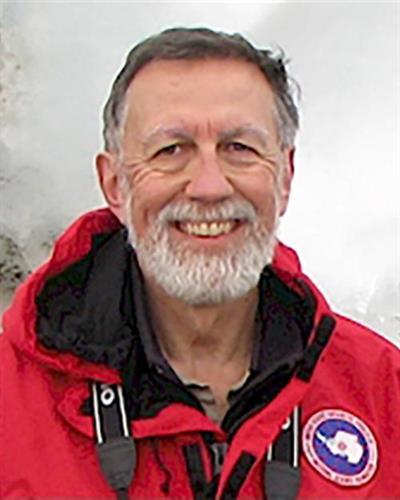
Samuel Kounaves is a Professor of Chemistry at Tufts University and a Visiting Professor at Imperial College London's Department of Earth Science & Engineering. His research focuses on planetary chemical analysis and astrobiology, particularly the search for life on Mars and icy moons like Enceladus and Europa. He led the Wet Chemistry Lab (WCL) on NASA's Phoenix Mars Lander, discovering perchlorate in Martian soil, a finding revolutionizing understanding of Mars' habitability. His work also includes studying oxychlorine chemistry's effects on biomarkers and developing in-situ analytical instruments for extraterrestrial exploration. Education: DSc (PhD) in Chemistry, Université de Genève (1985) MS and BS in Chemistry, California State University, San Diego (1978, 1975) Research Interests: Planetary geochemistry, astrobiology, Mars habitability, oxychlorine chemistry, and development of analytical instruments for space missions. His team investigates how biomarkers degrade under Martian conditions and designs sensors for detecting life on icy ocean worlds. Recent Contributions: Key publications include studies on perchlorate's role in Mars' chemistry, microbial survival in extreme environments, and mission concepts for Enceladus exploration. He has received awards such as the Kavli Foundation Award and NASA Achievement Awards for his Phoenix mission leadership. Grants & Funding: Major NASA grants for oxychlorine research, sensor development (e.g., MICA), and studies on Mars' organic matter preservation. Awards: Fellowships from the Geological Society, Royal Society of Chemistry, and AAAS, alongside NASA recognitions.