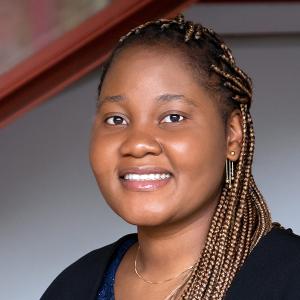
Omobolanle Ogunseiju is an Assistant Professor in the School of Building Construction at Georgia Institute of Technology . She holds a Ph.D. in Environmental Design and Planning from the Department of Building Construction at Virginia Tech. Education: Ph.D. in Environmental Design and Planning, Virginia Tech Current Role: Assistant Professor, Georgia Tech School of Building Construction Her research focuses on integrating wearable robotics and Artificial Intelligence (via digital twin , cyber-physical systems , and data sensing ) to improve construction workforce safety, health, and well-being . She explores ethical implications of automation in construction, particularly in human-technological dynamics. Key research trends include: Advancing smart communities through robotics and AI Exoskeleton evaluation for ergonomic risk reduction Mixed reality environments for construction education Data analytics for cognitive and physical risk assessment Professional identity development in construction engineering students Industry-academia alignment for sensing technology integration Scientific awards: Outstanding Doctoral Candidate, Myers-Lawson School of Construction Outstanding Doctoral Student, College of Architecture and Urban Studies at Virginia Tech Teaching philosophy emphasizes experiential learning , engagement techniques , and hierarchical assessments . She developed the Construction Cost Management course at Georgia Tech and will lead Construction Technology courses. Previously, she taught Smart Construction , Building Systems Technology , and Wireless Sensing in Construction Management at Virginia Tech.
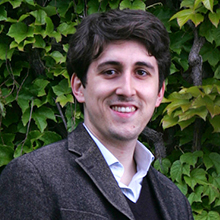
Juan-Pablo Correa-Baena is an Associate Professor at the Georgia Institute of Technology , holding the Goizueta Early Career Faculty Chair in the School of Materials Science and Engineering. He leads the Materials for Solar Energy Harvesting and Conversion research initiative at the Institute for Materials (IMat) and Strategic Energy Institute, aiming to consolidate Georgia Tech's expertise in photovoltaics and interdisciplinary energy research. Education: PhD in Environmental Engineering, University of Connecticut (2014) MS in Environmental Engineering, University of Connecticut (2011) BS in Management and Engineering for Manufacturing, University of Connecticut (2008) His research focuses on the chemistry-structure-property relationships of low-cost semiconductors for optoelectronic applications. Key areas include halide perovskites , nanoscale control , and advanced deposition/characterization techniques . He develops atomic layer deposition and synchrotron-based imaging to address metastable material behavior. Recent publications highlight innovations in dimensional control , machine learning for thermal stability , and flexible photovoltaic devices . His work integrates materials synthesis , quantum phenomena , and industrial scalability . Scientific recognition: Highly Cited Researcher (Web of Science, 2019–2021) Nature Index Leading Early Career Researcher in Materials Science (2019) NSF, DoE, and industry-funded projects Students and team: He advises 14 graduate students and postdocs, including Sanggyun Kim, Diana LaFollette, and Leonardo Josué Lugo Salas, fostering interdisciplinary collaboration through workshops and symposia.
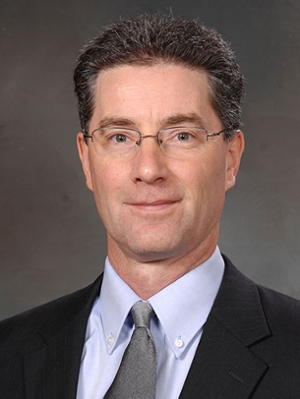
Professor Darren Robinson holds the Chair in Architectural and Urban Sciences at the University of Sheffield 's School of Architecture and Landscape, where he serves as Director of Research. His work bridges social, building, and urban physics through multiscale modeling approaches. RCUK Innovation Fellowship (2018-2021, £268k) Leverhulme Research Programme Grant (2015-2020, £3.4M) EPSRC grant for Model-Predictive Control in buildings (2016-2019, £541k) His research focuses on statistical modeling of human behavior in buildings, urban energy simulation , and integrated assessment modeling for climate policy. Key contributions include stochastic occupant behavior models and urban metabolism frameworks. Notable awards include the Sustainability Science Best Paper Award (2020) , CIBSE Napier-Shaw Medal (2007), and Fellowships from FIBPSA and the Research Council of Norway. He leads the People, Environments and Performance and Multiscale Simulation research groups.
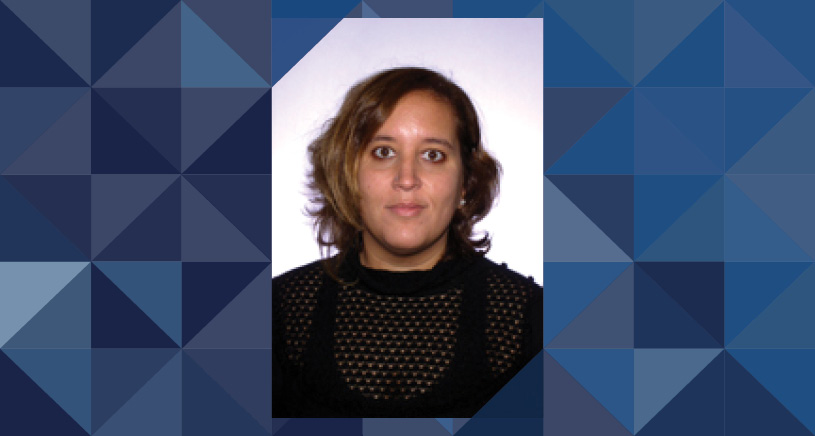
Filippo Mezzanotti is an Associate Professor of Finance at the Kellogg School of Management, Northwestern University. His research bridges corporate finance with innovation economics, fintech, and historical analysis of financial systems. He teaches Finance II (Corporate Finance), focusing on capital structure, investment decisions, and valuation methods. Doctor of Philosophy (2016), Business Economics, Harvard University Master of Arts (2014), Economics, Harvard University Master of Science (2010), Economics, Universita Commerciale Luigi Bocconi Bachelor of Arts (2008), Economics, Universita Commerciale Luigi Bocconi Mezzanotti's work examines how financial frictions shape real economic activity. Key areas include technology adoption dynamics during liquidity shocks, patent policy effects on corporate innovation, and private equity's role in crisis resilience. His empirical approach frequently leverages historical events like the Great Depression and Sherman's March for modern economic insights. Recent publications analyze critical issues in financial technology (mobile payments in India), corporate R&D allocation under funding constraints, and legal frameworks affecting patent litigation. His research reveals connections between demographic factors, debt restructuring mechanisms, and institutional recovery patterns. Faculty Research Fellow, National Bureau of Economic Research (2024-present)
Patrick Schneider is an Assistant Professor in the Department of Economics and Public Policy at Imperial Business School , UK. He completed his PhD at the London School of Economics and Political Science and previously worked as an Economist at the Bank of England (2015-2018). His research lies at the intersection of macroeconomics, household finance, and public economics, with a focus on unconventional stabilization policies and behavioral biases. Education: PhD Economics, London School of Economics and Political Science (2025) MPhil Economics, University of Oxford (2015) Bachelor of Economics (Hons) & Bachelor of Arts, UNSW Sydney (2011) His recent work explores how behavioral biases affect retirement account access policies and intergenerational equity. Analysis of his publications reveals trends in macroeconomic policy distributional effects , productivity dynamics , and market power . He has contributed to debates on Brexit's economic implications and stabilization mechanisms in financial systems. While no specific scientific awards are documented, his research engages with critical policy questions through empirical analysis and behavioral economic modeling. He maintains an active presence on academic and policy discussions via platforms like Bluesky, focusing on macroeconomic policy transparency and trust in financial systems.
Professor James Im serves as Professor of Materials Science in the Departments of Earth and Environmental Engineering and Applied Physics and Applied Mathematics at Columbia University, with an office at 1106 S.W. Mudd (Mail Code 4701). His academic career spans over three decades at Columbia, where he progressed from Assistant Professor (1991-1994) to Associate Professor (1995-2002), and ultimately to full Professor (2002-present), including a tenure as Chair of the Materials Science and Engineering Program (2002-2014). His educational background includes a B.S. with Distinction in Materials Science from Cornell University (1984) and a Ph.D. in Electronic Materials from MIT (1989), followed by postdoctoral research at Caltech (1989-1991). Cornell University: B.S. Materials Science (1984) MIT: Ph.D. Electronic Materials (1989) Caltech: Postdoctoral Scholar (1989-1991) Im's research centers on ultra-rapid phase transitions in beam-irradiated thin films, specifically focusing on laser crystallization of silicon films , energy-beam-induced melting and solidification , and nucleation in discontinuous phase transitions . His work employs experimental, computational, and theoretical approaches to develop innovative semiconductor materials for advanced displays, solar cells, and integrated circuits. Notably, his invention of Sequential Lateral Solidification (SLS) technology has been licensed to major display manufacturers (Samsung, LG, Sharp) and implemented in products by Apple, Blackberry, and Nokia. Current research focuses on advancing the Spot-Beam Crystallization (SBC) platform using fiber lasers for next-generation microelectronics. His publication record spans environmental aerosol studies (2019-2024), oilfield operations technology (2002-2014), and foundational atmospheric research (1980s), reflecting interdisciplinary expertise bridging materials science, environmental engineering, and petroleum technology. The most recent works emphasize low-cost sensor development and aerosol monitoring. Professional recognition includes membership in prestigious societies: Bohmisch Physical Society Sigma Xi Alpha Sigma Mu Materials Research Society American Physical Society Im's research group maintains strong industry connections through technology licensing and collaborative projects, particularly in display manufacturing. His leadership as former department chair demonstrates administrative commitment alongside scientific innovation. The laboratory leverages state-of-the-art laser systems and beam delivery optics for materials development, with recent focus shifting toward environmental monitoring applications while maintaining core semiconductor research.
Mark Burris is the Herbert D. Kelleher Professor in the Department of Civil & Environmental Engineering at Texas A&M University's College of Engineering, where he also serves as Division Head of Transportation & Materials Engineering. He is additionally a Research Engineer with the Texas A&M Transportation Institute, demonstrating his dual commitment to academic research and practical transportation solutions. With a career spanning over two decades since joining Texas A&M in 2001, Burris has established himself as a leading expert in transportation economics and traveler behavior. Burris's research focuses on the intersection of transportation economics, behavioral psychology, and infrastructure management. His work primarily investigates traveler responses to pricing mechanisms, particularly value pricing and high-occupancy toll (HOT) lanes. He has pioneered research combining traditional transportation engineering with behavioral economics to understand seemingly irrational traveler choices, such as paying to use express lanes that are sometimes slower than toll-free alternatives. His research has significantly advanced the understanding of travel time value, reliability valuation, and how psychological factors influence transportation decisions. Analysis of Burris's recent publications reveals a strong trend toward integrating behavioral economics with transportation engineering, with increasing attention to equity considerations in road pricing, the impacts of emerging technologies like autonomous and connected vehicles, and innovative methods for measuring traveler responses. His work consistently addresses practical transportation challenges while advancing theoretical understanding of travel behavior. Burris has served in prominent leadership roles, including a six-year term as chair of TRB's transportation economics committee. He has advised numerous federal agencies, serving on NCHRP panels and participating in FHWA expert forums on road pricing. His expertise is widely recognized in both academic and professional transportation circles. As an educator, Burris has advised over 60 graduate students and numerous undergraduates, teaching core courses including CVEN 307 (Introduction to Transportation Engineering), CVEN 454 (Urban Planning for Engineers), and CVEN 632 (Transportation Engineering: Economics). His research portfolio includes substantial funding from FHWA, NCHRP, and various state transportation agencies, with recent projects focusing on behavioral economics applications to managed lanes, vehicle miles traveled fee equity, and the impact of emerging mobility technologies.
Veronica J. Berrocal is an Associate Professor in the Department of Biostatistics at the University of Michigan School of Public Health. Her work focuses on developing statistical methods for spatial, spatio-temporal, and longitudinal data with applications in environmental health, atmospheric sciences, and medical fields including rheumatology and reproductive endocrinology, contributing to public health protection through research and EPA advisory roles. Her educational background includes: PhD in Statistics from the University of Washington (2007) MSc in Statistics from Michigan State University (2002) Dr. Berrocal specializes in creating statistical models for dependent data structures, particularly spatial and spatio-temporal frameworks. Her research addresses environmental determinants of health such as air pollution, weather patterns, built environment, and socio-economic factors, with direct applications in atmospheric sciences, environmental epidemiology, and medical domains like rheumatology and reproductive health. She develops hierarchical models for environmental risk prediction, calibrates geophysical models, and leverages complex data sources including social media for exposure assessment. Her recent publications (2016-2019) demonstrate consistent methodological innovation in spatial statistics applied to critical public health challenges. Key themes include nonstationary spatial prediction for environmental resources, distributed lag modeling of pollutant interactions, and advanced spatio-temporal frameworks for fMRI and urban pollution mapping. Her work bridges statistical theory with practical health impact assessments across atmospheric science, environmental epidemiology, and medical imaging domains.
Privatdozent Dr. Andreas Faust is a leading researcher at the European Institute for Molecular Imaging (EIMI) at the University of Münster, where he heads the Chemical Targeting Lab. His work focuses on developing innovative imaging agents for medical diagnostics, particularly in radiopharmaceutical chemistry and molecular imaging. He maintains strong affiliations with the Department of Nuclear Medicine at the University Hospital Münster and participates in the "Cells in Motion" excellence cluster, contributing to cutting-edge research at the intersection of chemistry, medicine, and imaging technology. Dr. Faust completed his chemistry studies at the University of Münster, earning his Diploma in 1999, followed by his doctoral degree (Dr. rer. nat.) in 2003 with research on artificial caffeine receptors. His academic journey continued with positions at the Department of Organic Chemistry and the Department of Nuclear Medicine before becoming head of the chemistry group at EIMI in 2011. Dr. Faust's research centers on organic and medicinal chemistry with specialization in radiopharmaceutical chemistry . His team develops novel tracers for diagnostic molecular imaging using positron emission tomography (PET), single-photon emission computed tomography (SPECT), optical imaging, and photoacoustic imaging. A significant portion of his work focuses on creating specific ligands for the alarmins S100A8/S100A9 and bacteria-specific tracers based on complex carbohydrates or siderophores. His research has important applications in inflammation imaging, infection diagnostics, and cancer theranostics, with emphasis on improving metabolic stability and target specificity of imaging agents. His publication record demonstrates consistent contributions to molecular imaging, with recent work emphasizing bacteria-specific PET tracers, inflammation imaging targeting S100 proteins, and novel optical imaging probes. The research shows a clear trajectory toward developing clinically applicable imaging agents with improved specificity and metabolic stability, particularly in the areas of infection diagnostics and inflammation monitoring. 2017: Best Poster Award at Symposium "Molecular Imaging Agents in Medicine," Groningen 2009: Young Investigator Award at Deutscher Röntgenkongress, Berlin 2005: Best Scientific Poster Award at 4th Annual Meeting of the Society of Molecular Imaging, Köln Dr. Faust leads multiple significant research projects, including as Coordinator of a project on immune cell distribution imaging (2019-2024) and as Principal Investigator for CRC-project A03 "Targeting of S100A8/A9 for imaging of inflammatory disorders" and research on vascular graft infections (both 2021-2024). His Chemical Targeting Lab comprises a multidisciplinary team working at the intersection of chemistry, microbiology, and medical imaging, securing substantial funding from the Innovative Medicines Initiative and DFG Collaborative Research Centre. The Chemical Targeting Lab maintains state-of-the-art facilities for chemical synthesis, radiochemistry, and biological testing. The lab collaborates extensively with microbiologists, clinicians, and imaging specialists to translate basic research into clinical applications. Current research directions include optimizing bacterial imaging probes for clinical diagnostics and developing new inflammation-specific tracers for early disease detection, with particular focus on S100A9-targeted imaging and siderophore-based bacterial detection systems.
Sami Hietala serves as a Senior Lecturer at the Department of Chemistry, University of Helsinki. He holds a Docent title in the same department and acts as a supervisor for doctoral programmes in Chemistry and Molecular Sciences, as well as Materials Research and Nanosciences. University: University of Helsinki Department: Department of Chemistry Academic Rank: Senior Lecturer His research focuses on polymers, microgels, and responsive materials. Key projects include Functional Microgels, Multiresponsive Polymers, and Hydro- and Organogels. He collaborates internationally on polymer science and nanotechnologies, with extensive outputs in pharmaceutical and food hydrocolloids. Recent publications highlight innovations in lignin nanoparticle interfacial behavior (2025), amniotic stem cell hydrogels (2025), and oleogel systems (2025). Earlier works (2024) emphasize lignin adsorption dynamics and polysaccharide characterization. Scientific Awards: Teaching Award (2007) Karl Clason Rheology Award (2022) Hietala has organized Nordic Polymer Days (2024) and served on doctoral thesis committees. His ORCID (0000-0003-1448-1813) and contact details are publicly listed.
Phillip J Ansell is an Associate Professor in the Department of Aerospace Engineering at the University of Illinois. He serves as the Director of the Center for High-Efficiency Electrical Technologies for Aircraft (CHEETA), focusing on advancing sustainable aviation through innovative propulsion and energy systems. His research interests include aerodynamics optimization, hydrogen propulsion, electric aircraft integration, and cryogenic technologies. Ansell has received prestigious awards such as the AFOSR Young Investigator Award (2015), ARO Young Investigator Award (2017), and the Lawrence Sperry Award (2023), recognizing his contributions to sustainable aviation and flow control technologies. His work spans interdisciplinary areas like hydrogen fuel cell systems, airfoil design, and electrified aircraft architectures. Recent research emphasizes sustainable aviation frameworks, cryogenic hydrogen storage, and propulsion-airframe integration. Ansell has collaborated on projects involving distributed propulsion systems, wind energy optimization, and advanced plasma actuators for flow control. His leadership in CHEETA drives innovations in superconductivity and high-temperature superconducting components for next-generation aircraft. Notable contributions include studies on laminar flow control, transonic aerodynamics, and the technical challenges of integrating MW-scale hydrogen propulsion systems. His publications reflect a blend of theoretical modeling, experimental validation, and systems engineering approaches to address aviation's sustainability challenges.
Joseph T. Mahoney is the Caterpillar Chair and Professor of Business Administration at the Gies College of Business, University of Illinois at Urbana-Champaign. He also serves as Associate Director of the Illinois Strategic Organizations Initiative (ISOI). His research focuses on strategic management, organizational economics, and governance theory, emphasizing topics like resource-based views, transaction costs, stakeholder management, and firm growth dynamics. Mahoney is a Fellow of the Strategic Management Society (2013) and an AOM Fellow (2012). Key research interests include Edith Penrose’s growth theory, real options analysis, and the interplay between corporate governance and stakeholder interests. His work bridges classical economic theories with modern organizational challenges, addressing topics such as firm boundaries, strategic decision-making under uncertainty, and institutional frameworks. Recent publications highlight explorations into resource redeployment, stakeholder governance frameworks, and the Penrose Effect. His contributions emphasize theoretical rigor while addressing practical managerial implications. Professional recognitions include leadership roles in academic initiatives and editorial contributions to journals like Strategy Science and Strategic Management Review . His research has been widely cited, with notable works on transaction cost economics and strategic alliances.
Bin Nan serves as Chancellor's Professor in the Department of Statistics at the University of California, Irvine, where he develops statistical and machine learning methodologies to advance biomedical research and improve human health outcomes through rigorous data analysis. His educational credentials demonstrate a strong quantitative foundation: Ph.D. in Biostatistics, University of Washington (2001) M.S. in Biostatistics, University of Washington (1999) M.S. in Statistics, Virginia Commonwealth University (1997) M.S. in Aerospace Engineering, Beijing University of Aeronautics & Astronautics (1987) B.S. in Aerospace Engineering, Beijing University of Aeronautics & Astronautics (1984) Nan's research program focuses on developing cutting-edge statistical methods for survival analysis, longitudinal data, high-dimensional inference, and machine learning, with direct applications to epidemiology, bioinformatics, and brain imaging. His work addresses critical challenges in biomedical data such as temporal dependence in neuroimaging sequences, estimation of large correlation matrices, and analysis of disease onset with terminal events, all aimed at identifying biomarkers for earlier disease diagnosis. Analysis of his recent publications (2015-2023) reveals a consistent trajectory toward methodological innovation in handling complex biomedical data structures, particularly through de-biased lasso techniques for survival models, neural network applications to censored data, and specialized approaches for longitudinal data with terminal events. These advances predominantly support Alzheimer's disease research and transplant outcome studies. No specific scientific awards were documented in the source material. His research program maintains continuous funding through National Science Foundation and National Institutes of Health grants, including a recent $1.8 million award for Alzheimer's disease methodology development. Nan actively collaborates with the UCI Alzheimer's Disease Research Center and UCI Center for the Neurobiology of Learning and Memory, though student advising details were not provided. His teaching portfolio includes advanced graduate courses in probability theory, survival analysis, and high-dimensional inference. Nan operates within interdisciplinary biomedical research teams focused on translating statistical innovation into clinical applications, particularly through brain imaging analysis and biomarker identification for neurodegenerative diseases.
Rebecca L. Walker is a Professor in the Department of Philosophy (College of Arts and Sciences) and a Professor of Social Medicine in the School of Medicine at the University of North Carolina at Chapel Hill. She also serves as Core Faculty in the Center for Bioethics and is an Adjunct Professor in Public Policy. Her research focuses on biomedical ethics, particularly animal research, phase I clinical trials, and genomic ethics. Dr. Walker holds a Greenwall Foundation post-doctoral fellowship in bioethics and health policy (completed in 2001), and has held visiting faculty positions at the University of Michigan. She teaches courses on bioethics, virtue ethics, and the philosophy of medicine at both undergraduate and graduate levels, and contributes to the medical school curriculum in social and health systems. Her academic leadership roles include serving on UNC’s Animal Care and Use Committee, co-directing the Hospital Ethics Service’s education program, and leading NIH-funded grants such as the CMORE project on healthy volunteer research ethics. She is a Hastings Center Fellow (2021) and has authored/co-edited influential works like Of Mice and Primates: Virtue Ethics and Animal Research (2025) and The Social Medicine Reader (2019). Dr. Walker’s research spans ethical issues in biotechnology, distributive justice in healthcare, and the moral status of nonhuman animals. Her recent projects include a study on correctional health care providers’ professional challenges and a National Human Genome Research Institute grant examining incidental enhancements in gene editing technologies. She actively engages in policy debates around genomic screening, animal welfare, and translational research ethics. Her awards and recognitions include the Hastings Center Fellowship, which acknowledges her contributions to ethical scholarship in health, science, and technology. Her work bridges philosophical theory with applied ethics, emphasizing virtue ethics and interdisciplinary collaboration across medicine, policy, and the social sciences.
Bärbel Finkenstädt Rand is a Senior Tutor at the Warwick Medical School , University of Warwick, with extensive research contributions at the intersection of statistics, machine learning, and biomedical sciences. Her work focuses on developing advanced methodologies for analyzing temporal and spatio-temporal data, particularly in circadian rhythms and disease dynamics. Research Themes : Bayesian inference, Hidden Markov Models, circadian rhythm stability, transcriptional bursting, and wearable sensor data analysis. Collaborations : Chronotherapy Group at Warwick, Université Paris-Saclay, and interdisciplinary teams across medicine, genetics, and computational biology. Publications reveal a strong emphasis on circadian health monitoring, gene expression dynamics, and epidemic modeling using stochastic frameworks. Her recent work prioritizes personalized medicine applications through telemonitored biomarkers and IoT platforms . Methodological Innovations include spline-based HMMs, distributed delay systems, and harmonic modeling for nonstationary time series. Applications span oncology, sleep medicine, and population ecology.