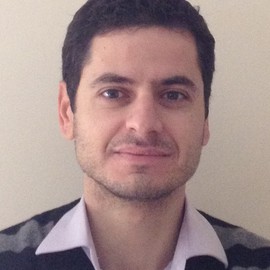
Vincent Dufour-Décieux is a researcher at the Professorship for Energy and Process Systems Engineering at ETH Zürich , focusing on developing computational methods for material screening in separation processes and global net-zero transitions. He earned his Master's in Materials Chemistry from Ecole Polytechnique (France) and a PhD in Materials Science from Stanford University , where he pioneered statistical methods combining Kinetic Monte Carlo and random graph theory to study planetary diamond formation. Research Highlights: Application of Classical Density Functional Theory (cDFT) for 100x faster adsorption property predictions in porous materials Development of science-based definitions for "hard-to-abate" emissions to guide climate action prioritization Integration of Coulombic interactions in cDFT for CO2 adsorption accuracy Article Trends : His work spans computational materials science (cDFT, random graph theory) and climate policy analysis, with recent publications in Joule , AIChE Journal , and Physical Review E . These studies emphasize scalable solutions for carbon capture, material screening efficiency, and accurate thermodynamic modeling. Collaborations : Active in international conferences (FOA15, MolMod, Gordon Research Conference) and cross-institutional projects with teams at Stanford, ETH Zürich, and industry partners.
Prof. Peter Müller is a Full Professor at the Department of Computer Science at ETH Zurich since 2008. Previously, he held positions as Assistant Professor at ETH Zurich (2003-2008), Researcher at Microsoft Research Redmond (2007-2008), and IT project manager at Deutsche Bank. He earned his Diploma in Computer Science from Technical University of Munich (1996) and his Dr. rer. nat. from University of Hagen (2001) with a dissertation on modular verification of object-oriented programs. His research focuses on enabling correct software development through programming languages, verification methods, and tools. Key areas include formal verification for Rust and Go programs (Prusti and Gobra projects), separation logic, security protocols, and distributed systems verification. Müller's work emphasizes practical verification techniques for real-world systems, including secure router implementations and smart contract verification. Recent research trends highlight advancements in hyperproperties, modular reasoning for iterators and closures in Rust, and formal validation of verification tools. His methodologies bridge theoretical foundations with industrial applications, addressing challenges in concurrency, memory safety, and security assurance. Notable contributions include the SCION internet architecture, the Prusti verifier for Rust, and formal verification frameworks for distributed systems. His work often integrates rigorous mathematical foundations with scalable software engineering practices.
Ueli Grossniklaus is an Ordinary Professor at the University of Zurich within the Faculty of Mathematical and Natural Sciences , affiliated with the Department of Plant and Microbiology . His work focuses on plant developmental biology, particularly epigenetic and genetic mechanisms governing reproduction and adaptation. Key Courses: Epigenetics, Plant Biology Workshop, Group Seminars on Current Research Laboratory Techniques: Advanced methods in plant cell mechanics, transcriptomics, and genome editing Research Interests span plant epigenetics, reproductive biology, and the interplay between environmental stress and genetic regulation. He investigates: Mechanistic control of gametogenesis and fertilization Epigenetic contributions to plant adaptation Evolutionary implications of asexual reproduction Biophysical forces in plant cell growth Publication Trends (2025–2018) reveal expertise in: Arabidopsis and fern model systems Epigenetic regulation (DNA methylation, histone dynamics) Apomixis and hybrid seed failure mechanisms Biomechanics of pollen tubes and carnivorous plants Genome editing tools (CRISPR) and long-read sequencing Scientific Collaborations include interdisciplinary projects on: Microfluidic devices for plant cell analysis Gene drive ecology and ethics 3D imaging of plant reproductive structures Advising and Grants focus on mentoring through research internships in developmental biology, genetics, and systems biology. His lab engages in: Epigenetic response to environmental stress Cell wall mechanics in reproduction Computational modeling of plant growth Laboratory Teams integrate plant biologists, bioengineers, and computational scientists to study: Mechanistic gene regulation Evolutionary developmental biology Microrobotics for cellular force measurement
Yuning Jiang is a Visiting Professor at the École Polytechnique Fédérale de Lausanne (EPFL), affiliated with the Automatic Control Laboratory (LA3) within the School of Engineering (STI). He teaches the doctoral course Optimal Control for Dynamic Systems and contributes to research in distributed optimization, model predictive control (MPC), and smart grid technologies. His work bridges theoretical advancements in control systems with practical applications in power networks and autonomous systems. Current research emphasizes scalable solutions for AC optimal power flow, real-time MPC for embedded systems, and robust optimization under uncertainty. His research interests span Optimal Control , Power Systems , Smart Grids , and Federated Learning . Notable contributions include distributed algorithms for large-scale power systems and privacy-preserving co-simulation frameworks. Recent publications focus on microservice deployment in satellite-terrestrial networks and real-time pricing mechanisms for vehicle-to-grid (V2G) integration. Yuning holds a position in the EDEE-ENS unit under EPFL’s Academic Affairs division (VPA-AVP-DLE), reflecting his role in academic administration and teaching infrastructure. His lab, the Automatic Control Laboratory, focuses on cutting-edge research in control theory and its interdisciplinary applications.
Dr. Chenhao Chu is a Professor at ETH Zürich, holding the Professur für Elektronik (Professorship for Electronics). He specializes in RF/mm-Wave circuits, AI-driven design methods, and advanced power amplification technologies. His research focuses on energy-efficient, wideband systems, antenna-in-package solutions, and GaN-based applications for 6G and beyond. Education: Ph.D. in Electronic Engineering, University College Dublin (2022) M.Sc. in Electronic Information Engineering, City University of Hong Kong (2017) Research Interests: His work bridges AI and hardware design, emphasizing reconfigurable circuits , high-linearity power amplifiers , and mm-Wave phased arrays . Key areas include: AI-assisted rapid design synthesis III-V/Si co-design for mm-Wave Efficient antenna integration Dynamic load modulation techniques Awards: Award-winning researcher with distinctions including the First Place Best Student Paper Award (2022 Royal Irish Academy Colloquium) and multiple HEPA-SDC Competition Awards (2021-2022). Recognized for innovations in PA efficiency and design automation. Advising & Grants: Leading projects on 6G PA architectures and AI-driven RF design. Active in IEEE with contributions to conferences like IMS and ARFTG. No explicitly stated grants mentioned but widely cited in industry-academia collaborations. Labs & Teams: Associated with ETH Zürich's Electronics Laboratory, focusing on next-generation wireless systems. Collaborates internationally on 5G/6G infrastructure and mm-Wave innovations.
Chen Liu is an Assistant Professor in the Department of Computer Science at City University of Hong Kong and the Principal Investigator (PI) of the Machine Learning and Optimization (MLO) group. His research focuses on building reliable machine learning models, particularly studying robustness and privacy properties of deep neural networks from an optimization perspective. University: City University of Hong Kong Academic Rank: Assistant Professor Students: Supervises multiple PhD, MPhil, and postdoctoral researchers. Education: Holds a Ph.D. (2022) and MSc (2017) in Computer Science from École Polytechnique Fédérale de Lausanne (EPFL), and a BSc (2015) in Computer Science from Tsinghua University. Research Interests: Adversarial robustness, privacy-preserving machine learning, optimization algorithms, dataset distillation, generative models, and theoretical analysis of loss landscapes. His work addresses challenges like catastrophic overfitting, architecture overfitting in distilled data, and stable adversarial training methods. Article Trends: Recent publications explore adversarial robustness under l0/l1 norms, gradient inversion for data reconstruction, evolutionary factor searching in finance, and meta-tuning for out-of-domain few-shot learning. These works emphasize optimization techniques to enhance model reliability and generalization. Scientific Awards: Microsoft Research Ph.D. Scholarship Programme (2017–2019) Advising and Grants: Supervises a diverse team of current and former students, with collaborations across institutions like George Mason University and Zhejiang University. Research supported by academic and industry grants. Labs and Teams: Leads the MLO group, which investigates fundamental ML theory and algorithms to improve system reliability. The group's work spans adversarial training, dataset distillation, and generative model optimization.
Desmond Elliott is an Associate Professor and Villum Young Investigator at the Department of Computer Science, University of Copenhagen. His research focuses on vision-language models, multilingual and multimodal processing, with particular emphasis on tokenization-free language modeling approaches. He leads a research group actively working on pixel language models and cross-lingual multimodal understanding. University of Copenhagen, Department of Computer Science Villum Young Investigator Associate Editor for JAIR (2025-2028) Senior Area Chair for ACL 2025 Elliott's research spans vision-language integration, multilingual NLP, and multimodal machine learning. His work explores how language models can operate directly on visual pixels without traditional tokenization, enabling more seamless integration of vision and language processing. He investigates compositional generalization in multimodal systems, retrieval-augmented image captioning, and cross-lingual transfer in vision-language tasks. His group develops methods for low-resource language processing and creates benchmarks for evaluating multimodal systems across diverse cultural contexts. His recent publications demonstrate strong trends in pixel-based language modeling, synthetic dataset generation through retrieval augmentation, and multilingual vision-language processing. The work spans theoretical advances in model architectures and practical applications in areas like medical text analysis, food culture understanding, and social media content moderation. His research often bridges computer vision and natural language processing with a focus on making these technologies accessible across diverse languages and cultures. Best Paper Honorable Mention at CVPR Visual Concepts Workshop 2025 Best Long Paper Award at EMNLP 2021 Area Chair Favourite paper at COLING 2018 Elliott actively supervises student projects in BSc and MSc programs related to his research interests. His research has received substantial funding from Google (2024-2025), Facebook (2022-2024), Villum Foundation (2021-2026), Novo Nordisk Foundation (2019-2024), and European Union (2023-2026). He regularly recruits postdocs for projects including the Danish Foundation Models project and the Responsible AI for the People Project. His group holds regular meetings on Tuesdays from 13:00-14:00 in IF G.03, with an active mailing list for announcements. The research environment appears collaborative, with frequent co-authorship across institutions and regular participation in major NLP and computer vision conferences.
Sai Praneeth Karimireddy is an Assistant Professor in the Thomas Lord Department of Computer Science at the University of Southern California (USC), with a courtesy appointment in the Ming Hsieh Department of Electrical and Computer Engineering. He previously held an SNSF postdoctoral fellowship at UC Berkeley under Michael I. Jordan and earned his PhD at EPFL advised by Martin Jaggi. He co-leads the Federated Learning and Data Quality working group at MONAI (NVIDIA) and collaborates with researchers at Apple Research. His research lies at the intersection of optimization, machine learning, statistics, and economics, with a strong focus on federated learning, privacy-preserving machine learning, data valuation, and AI for healthcare. He investigates how data quality, privacy, and incentives shape collaborative ML systems, especially in high-stakes domains like medicine. His work has been deployed at companies such as Meta, Google, OpenAI, and Owkin. His recent publications span top-tier venues including NeurIPS, ICML, ICLR, and JMLR, with influential contributions such as the SCAFFOLD algorithm for federated learning. His research shows a consistent trend toward building robust, private, and incentive-compatible collaborative learning systems, with increasing emphasis on real-world deployment in healthcare and decentralized data markets. 2023 SNSF Mobility Fellowship 2022 Patrick Denantes Memorial Prize for best thesis in computer science 2022 EPFL thesis distinction (top 8%) 2021 Chorafas Foundation Prize for exceptional applied research Capitol One Fellow (2025) He is actively mentoring PhD students and leads a research group focused on foundational and applied challenges in federated and privacy-preserving ML. He teaches graduate courses at USC, including CSCI 599 on Optimization for Machine Learning and CSCI 699 on Privacy-Preserving Machine Learning. He serves as an area chair for ICLR 2025 and co-organizes major workshops on incentives in data sharing and federated learning. His lab collaborates with institutions like NVIDIA, Apple, and Argonne National Laboratory, and he is building a research program centered on sustainable, equitable, and trustworthy AI ecosystems.
Jean-Louis Scartezzini is an Honorary Professor at École Polytechnique Fédérale de Lausanne (EPFL), affiliated with the School of Architecture, Civil and Environmental Engineering (ENAC) and the Solar Energy and Building Physics Laboratory (LESO-PB). His research focuses on natural/artificial lighting, solar energy systems, and building technology, with a strong emphasis on energy efficiency and sustainability. Director of LESO-PB since 1994 Founded and led several institutes, including the Institute for Infrastructure, Resources, and Environment (2002–2009) Doctorat in Physics from EPFL (1986) Extensive international collaborations, including visiting roles at NUS (2009) and LBNL/UCLA (1988) Research interests include: - Daylighting and lighting control systems - Passive/active solar technologies - Urban microclimate and energy systems - Stochastic simulation and predictive control Recent work addresses climate change impacts on energy systems, urban sustainability, and machine learning applications in energy optimization. Key publications span lighting health impacts, renewable integration, and microclimate modeling Awards include the European Solar Prize (2001/2002) and Walsh-Weston Bronze Medal (1998) Mentored over 20 PhD students, many leading in academia and industry (e.g., Marilyne Andersen at EPFL, Flavio Foradini at E4Tech).
Georgia Fragkouli is a Researcher affiliated with ETH Zürich's School of Computer and Communication Sciences, working within the Institute of Computer Engineering and Communication Systems. Her role is part of the Professorship for Networked Systems, focusing on advanced networking and distributed systems research. She specializes in analyzing network performance, security, and transparency, with a particular emphasis on BGP convergence dynamics, anomaly detection, and decentralized computing architectures. Her research interests include network protocol validation, machine learning-based traffic analysis, and improving internet transparency through innovative measurement frameworks. She has contributed to projects like MorphIT for packet-level transparency and explored failure mitigation in globally distributed systems. Notable recent work includes studies on transient forwarding anomalies, iBGP convergence effects, and data-plane performance consistency. Her publications span both theoretical advancements and practical implementations, aiming to bridge gaps between networking theory and real-world deployment challenges.
Mathias Lerch serves as Lecturer and Head of the Urban Demography Laboratory (URBDEMO) at the School of Architecture, Civil and Environmental Engineering (ENAC) of the Swiss Federal Institute of Technology Lausanne (EPFL). With expertise spanning population dynamics, urbanization, and demographic estimation, he bridges demography with urban planning and environmental science through interdisciplinary research on mortality, fertility, and migration patterns. His research centers on Population and Development, International Demography, and Urban Demography, examining how socioeconomic and environmental factors interact with demographic change. Methodologically, Lerch specializes in data collection, linkage, quality assessment, and advanced statistical modeling for demographic estimation and multi-regional projection, with particular focus on migration systems, fertility transitions, and mortality disparities in urban contexts. Analysis of his 15 most recent publications (2017-2025) reveals consistent investigation into migration patterns across rural-urban continua, fertility transitions in developing regions, and mortality outcomes in urban environments. His work demonstrates methodological innovation through multi-regional projection techniques and large-scale dataset integration, significantly advancing demographic estimation practices and policy-relevant insights for urban population growth. Dr. Lerch currently advises PhD students Beckendorff Dorothee and Du Wenxiu while teaching courses including Urban Demography and Border Forensics at EPFL. His advisory work focuses on training the next generation of demographers in quantitative methods and urban population analysis. As head of URBDEMO, Lerch leads a research team developing systemic frameworks for understanding urban population dynamics. The laboratory's work integrates demographic methods with urban studies to address contemporary challenges in urbanization, migration flows, and sustainable city development through innovative data linkage and modeling approaches.
Prof. Dan Olteanu is a full professor at the Department of Informatics, University of Zurich, leading the Data Systems and Theory (DaST) group. He holds visiting professorships at the University of Oxford and is an emeritus fellow of St Cross College. His academic journey includes a PhD from Ludwig Maximilian University (2005), postdoctoral roles at Saarland University and Cornell University, and prior faculty positions at Oxford (2007–2020). He has also worked in industry with companies like LogicBlox and RelationalAI, focusing on database systems and AI. Education: Bachelor’s in Computer Science, Politehnica University of Bucharest (2000) PhD in Computer Science, Ludwig Maximilian University (2005) Professional Roles: Full Professor, University of Zurich (since 2020) Visiting Professor, University of Oxford Emeritus Fellow, St Cross College Editorial Roles: ACM TODS, VLDBJ, SIGMOD Conference Chair: ICDT Council (since 2022) His research focuses on data systems theory, including query optimization, probabilistic databases, factorized databases, and in-database machine learning. He co-authored the seminal book Probabilistic Databases (2011) and has pioneered algorithms for efficient machine learning over relational data and incremental maintenance of analytical workloads. His work emphasizes scalable, theoretically grounded solutions for real-world data challenges. Awards: ICDT 2019 Best Paper Award ACM SIGMOD 2018 Distinguished PC Member Award ERC Consolidator Grant (2016) Oxford Outstanding Teaching Award (2009) Grants & Funding: Supported by Google, Microsoft Azure, Amazon AWS, EPSRC, and the European Commission. His research bridges academia and industry, with contributions to commercial systems like LogicBlox and RelationalAI. Labs & Teams: Heads the DaST group at Zurich, focusing on data systems theory and applications. Collaborates widely in the database and AI communities.
Martin Rajman is a Senior Scientist at École Polytechnique Fédérale de Lausanne (EPFL) with multiple affiliations across the institution. He holds positions in the School of Computer and Communication Sciences (SIN - Teaching, SCI IC MR Group, SSC - Teaching) as well as in the Vice Presidency for Strategic Development (VPS Artificial Intelligence) and the Vice Presidency for Academic Affairs (SNAI Administration). He serves as the Executive Director of Nano-tera.ch, a large Swiss Research Program funding collaborative multi-disciplinary projects in Health and the Environment. Rajman's research spans the intersection of artificial intelligence, natural language processing, and information retrieval. His work demonstrates a consistent focus on developing practical applications of computational linguistics and machine learning techniques. Early in his career, he contributed significantly to syntactic parsing, stochastic language models, and vector space representations for text. More recently, his research has expanded into deep learning applications for 3D reconstruction, empathetic conversational agents, and distributed analytics systems. His publications reveal a trajectory from foundational NLP research toward increasingly applied and interdisciplinary work connecting AI with healthcare, environmental monitoring, and human-computer interaction. Analysis of his recent publications (2015-2024) shows a clear evolution toward more applied AI research with strong interdisciplinary connections. While maintaining his core expertise in natural language processing and information retrieval, his work has expanded into computer vision, healthcare applications, and sustainable computing. The publications demonstrate increasing collaboration across disciplines, with applications in medical imaging, mental health support systems, environmental monitoring, and human-centered AI. His leadership role in the Nano-tera.ch program reflects this interdisciplinary approach, connecting computing research with real-world challenges in health and environmental contexts. Rajman has mentored several PhD students including Ailomaa Marita, Eckard Emmanuel, Melichar Miroslav, and Veselý Martin. His research has been supported through the Nano-tera.ch program, which has funded more than 100 research projects with over 95 million CHF in public funding. He has also managed more than 20 European projects during his tenure as Director of the EPFL Global Computing Center. As Executive Director of Nano-tera.ch, Rajman leads a significant research initiative connecting EPFL with national and international partners. His work bridges academic research with industry applications, notably through collaborations with eBay on product ranking technology and with Elsevier on article recommendation systems. His leadership extends to managing large-scale research programs while maintaining an active research agenda and mentoring the next generation of computer scientists.
Xuming He is an Associate Professor at the School of Information Science and Technology (SIST), ShanghaiTech University, where he leads the PLUS Lab. His research spans computer vision and machine learning with a focus on developing algorithms that operate effectively under limited supervision and evolving data conditions. His core research interests include weakly-supervised and few-shot learning for scenarios with sparse annotations, continual learning frameworks for knowledge retention during sequential task acquisition, semantic segmentation techniques for scene understanding, and multimodal vision-language representations. He emphasizes interpretable machine learning to build transparent AI systems capable of human-understandable reasoning, addressing critical challenges in model trustworthiness and deployment reliability. Recent publications reveal strong trends toward novel class discovery in long-tailed recognition scenarios, physics-informed generative modeling for scientific applications, and robust segmentation under distribution shifts. His work increasingly integrates large language models for multimodal reasoning while maintaining focus on efficiency in resource-constrained environments like robotic grasping and medical imaging analysis. He actively mentors students, having supervised Qian He to PhD completion and Chuanyang Hu to Master's degree in 2023. He welcomes prospective graduate students through ShanghaiTech's Computer Science & Technology program and offers undergraduate research projects requiring minimum six-month commitments. The PLUS Lab under his direction drives innovation in learning under supervision constraints, with recent work spanning medical tumor analysis, cross-view geolocation, photonic computing, and semiconductor design verification. The lab's research bridges theoretical advances with practical applications across healthcare, robotics, and scientific discovery domains.
Dr. Alexander Artikis is an Associate Professor of Artificial Intelligence at the University of Piraeus and a Research Associate at the National Centre for Scientific Research (NCSR) "Demokritos". He leads the Complex Event Recognition (CER) group , focusing on symbolic and probabilistic approaches to event recognition and forecasting. University of Piraeus (2025–present) NCSR Demokritos (2017–present) Complex Event Recognition Group (2017–present) His research spans Artificial Intelligence and Distributed Systems , with a focus on: Complex Event Recognition (CER) : Developing logic-based systems for detecting events in real-time data streams Event Calculus : Creating probabilistic and incremental versions for runtime reasoning Multi-Agent Systems : Modeling norm-governed interactions Maritime Informatics : Applying CER to vessel trajectory analysis and fleet management Key publications reveal trends in: Neuro-symbolic forecasting models combining deep learning and logic-based reasoning Symbolic automata with memory for pattern detection Online learning techniques for dynamic event rule generation Tensor-based formalizations for efficient temporal reasoning Handling uncertainty in real-time maritime data streams Optimizing memory usage for scalable stream processing He contributes to open-source tools like RTEC (Run-Time Event Calculus) and holds a European patent on complex event forecasting. His work addresses challenges in: Proactive decision-making systems Knowledge Graph consistency Hybrid human-machine discovery of movement patterns Big Data analytics for time-critical applications