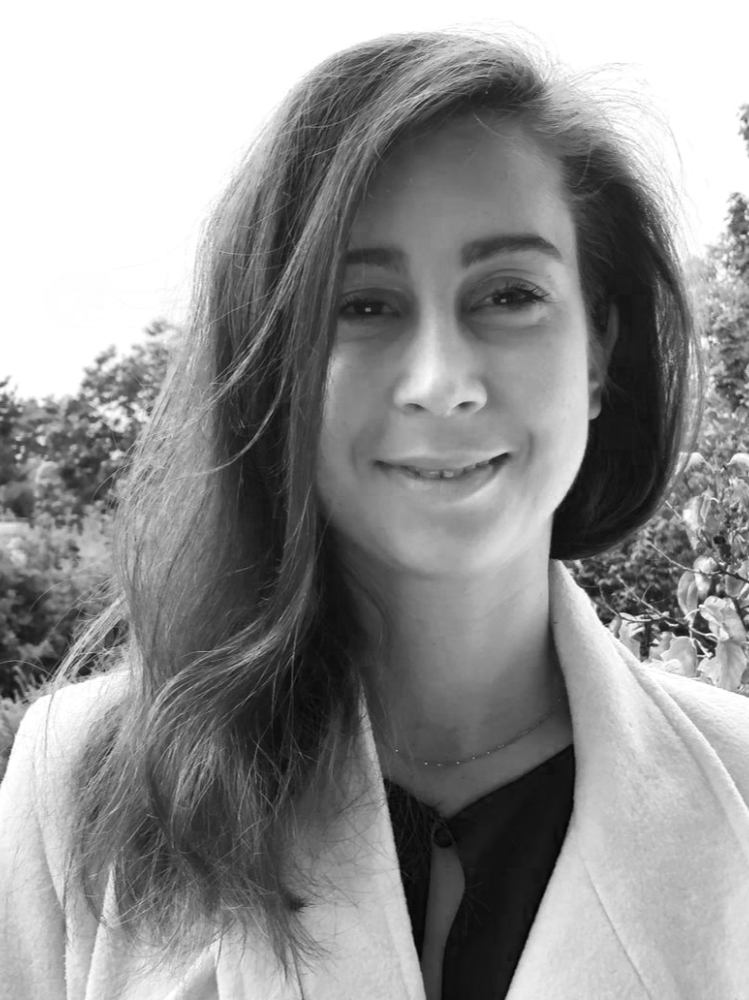
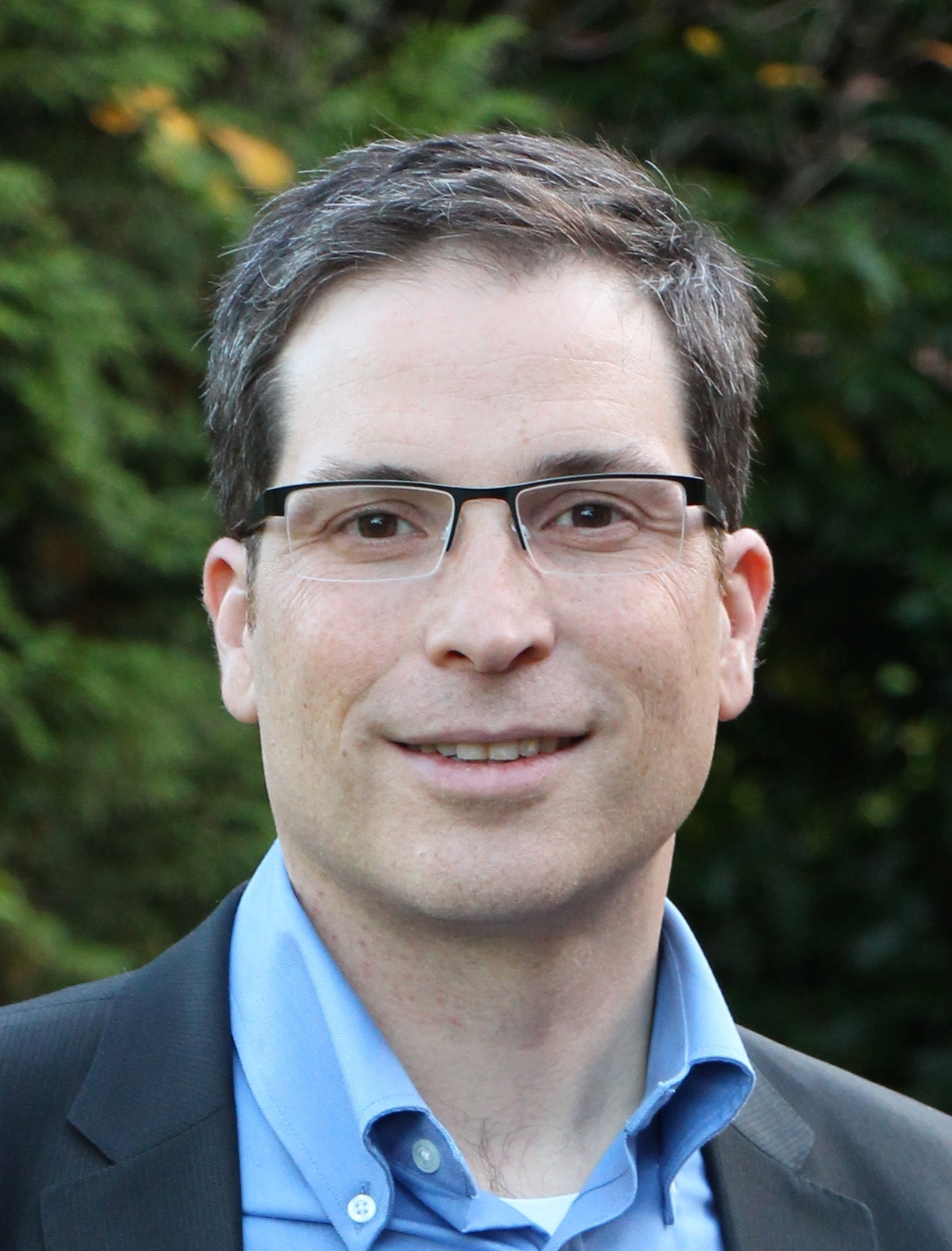
Felicitas Holzer is a Postdoctoral Fellow affiliated with the Bioethics Program at FLACSO Argentina, a WHO collaborating center. She serves on the editorial board of Development World Bioethics and has held international roles at institutions including the Hastings Center, Yale Interdisciplinary Center for Bioethics, and the European Commission's Directorate-General for International Partnerships (DG INTPA) in Brussels. Education: PhD in Political Philosophy (Sorbonne University), Master's in History and Philosophy of Science (University of Cambridge), BSc in Economics, MPhil in Political Philosophy, and MPhil in Bioethics. Her research bridges bioethics, socio-economic justice, and political philosophy, focusing on triage ethics, rare diseases, public health ethics, and global justice. Recent projects include an SNF-funded initiative on The Ethics of Triage and consulting work for the WHO on equitable vaccine access through COVAX. Key trends in her publications include analyses of vaccine distribution equity, triage guidelines, and pandemic management frameworks. Her work spans empirical and theoretical domains, emphasizing justice in global health policies and practices. Scientific Awards: DAAD Funding, CONICET Scholarships, Brocher Foundation Support, MTZ Foundation Grants. Holzer collaborates with institutions like the World Health Organization and contributes to interdisciplinary networks such as the UK-Latin American Network of Political Philosophy. She has worked on projects related to health policy, resource allocation, and ethical frameworks for global health governance.
Ueli Schilt is a Research Associate and Doctoral Student at the Lucerne School of Engineering and Architecture, part of the Lucerne University of Applied Sciences and Arts (HSLU). His work focuses on thermal energy systems, renewable generation, and energy efficiency in Swiss urban and regional contexts. He is affiliated with the Institute of Mechanical Engineering and Energy Technology (IME), specifically within the Thermal Energy Storage research group. Role: Research Associate & Doctoral Student Institution: Lucerne University of Applied Sciences and Arts (HSLU) School: School of Engineering and Architecture Institute: Institute of Mechanical Engineering and Energy Technology (IME) Research Focus: Thermal energy storage, multi-energy system optimization, renewable integration Ueli Schilt’s research explores the integration of thermal energy storage in multi-energy systems, solar PV expansion, and heating system retrofits. His work emphasizes temperature considerations, load forecasting, and sensor technology validation. Key projects include decentralized renewable generation in Swiss regions and the SENSHOEK initiative for adaptive heating controls. Recent publications highlight advancements in air quality monitoring, heat pump consumption analysis, and communal energy planning tools. While no scientific awards are explicitly listed, his contributions to peer-reviewed journals and international conferences indicate active academic engagement. Collaborations with Philipp Schütz and other researchers underscore interdisciplinary teamwork in energy modeling and policy support.
Dr. Matthias Schu is a Lecturer at the Institute of Communication and Marketing within Lucerne School of Business at Lucerne University of Applied Sciences and Arts. He holds a doctorate in E-Commerce Internationalization from the University of Fribourg (Switzerland) and a business degree with specialization in Trade from Saarland University (Germany). With over a decade of industry experience, he has held leadership positions at Praktiker Deutschland, Swiss Federal Railways (SBB), and Coop Group. Research Focus: Dr. Schu's expertise spans E-Food ecosystems, Quick Commerce logistics, Omnichannel retail integration, and international e-commerce strategies. His work examines behavioral economics in sustainability, returns management optimization, and algorithmic nudging techniques. Current projects include: Algorithmic Nudging for Sustainability in E-Commerce Marketing, Loyalty and Sustainability in Swiss E-Commerce Returns Management in Swiss Online Retail Lock-In Effects in E-Food markets Professional Activities: He operates three advisory startups: 'Dr. Matthias Schu | retail | ecommerce | internationalization strategy', 'Disrupt Retail', and 'E-Food Consult', providing strategic guidance to retailers and producers. An active thought leader, he serves on the etailment Expert Council, reviews academic journals, and delivers keynote addresses on retail innovation.
Laurent Donzé is a Professor of Applied Statistics and Modelling at the Department of Informatics, Faculty of Economics and Social Sciences, University of Fribourg. He is also a Research Professor at KOF ETH Zurich and a Professor of Econometrics at the University of Neuchâtel. He leads the ASAM research group and has extensive experience in teaching mathematics, econometrics, and statistics. His educational background includes a Ph.D. in Econometrics from the University of Fribourg, followed by research roles at IRE and KOF ETH Zurich. His academic journey reflects deep engagement with statistical methodology and applied economic research. Donzé's primary research interests lie in applied statistics, particularly survey methodology, fuzzy statistics, imputation, causal inference, matching techniques, and wage discrimination analysis . He has made significant contributions to the development and application of fuzzy statistical tools, especially in defuzzification and fuzzy regression. His recent publications (2019–2025) demonstrate a consistent focus on fuzzy confidence intervals, fuzzy p-values, fuzzy ANOVA, and fuzzy regression models , often applied to real-world datasets like SHARE and Swiss SILC. These works emphasize robust statistical inference under uncertainty and contribute to both theoretical and applied advancements in fuzzy statistics. Among his scientific recognitions is the Best Student Paper Award at IJJCI 2020 . He has also edited special issues and contributed to leading journals and conferences in computational intelligence and fuzzy systems. Donzé has been involved in numerous research and teaching initiatives, including grants from the Swiss National Science Foundation, mentoring at the Swiss Study Foundation, and leadership in statistical societies. He has supervised research projects and collaborated with institutions such as Nestlé, the Swiss Federal Statistical Office, and pharmaSuisse. He is actively involved in academic and professional communities, serving as president of the Education and Research section of the Swiss Statistical Society and contributing to the development of statistical infrastructure in social sciences.
Arianna Marchioro is a Researcher at the Laboratory for fundamental BioPhotonics (LBP) within the School of Engineering (STI) at École Polytechnique Fédérale de Lausanne (EPFL). She holds additional roles as Lecturer in the STI-SMX and EDCH-ENS departments, focusing on teaching and research in biophotonics and materials science. Education: She earned a BSc (2005-2008), MSc (2008-2010, EPFL/Imperial College London), and PhD (2010-2014) in Chemistry from EPFL, followed by a postdoctoral position at the University of Washington (2014-2016) under the Gamelin Group. Research Interests: Her work centers on photomedicine , nanoparticle surface chemistry , and interfacial charge transfer dynamics . Specific areas include probing aqueous interfaces via second-harmonic scattering, electrochemical heterogeneity in catalytic surfaces, and supramolecular complexes in biomedical contexts. Recent studies highlight ion-specific effects on nanoparticles, water orientation at semiconductor interfaces, and aerosol particle detection limits. Teaching: She instructs courses such as Electron & Energy Transfer in Organic & Hybrid Systems , Materials: From Chemistry to Properties , and Optical Properties of Materials , though some courses await formal approval. Labs & Collaborations: As part of the LBP, she contributes to advanced biophotonics research, with ongoing projects on bio-inspired materials and nonlinear optical techniques for surface analysis. Notable students include Marie Bischoff, Bingxin Chu, and Igor Nahálka.
Dr. José-Víctor Ríos-Rull is a Researcher at the Department of Economics, University of Pennsylvania. His work bridges macroeconomic theory with empirical analysis, focusing on financial markets, inequality, and economic fluctuations. University: University of Pennsylvania Department: Economics Email: vr0j@upenn.edu His research spans broad disciplines including Macroeconomics, Financial Economics, and Inequality. Recent papers address the role of credit scores in economic mobility, wealth dynamics across life cycles, and the interaction of fiscal policy with global financial integration. Key trends in his 15 most recent articles (2025–2009) include modeling credit market frictions, analyzing inequality drivers via demographic data, and exploring time-inconsistency in organizational decision-making. He frequently collaborates with economists like Satyajit Chatterjee, Dean Corbae, and Enrique G. Mendoza.
Dimitri Konstantas is a Full Professor of Computer Science at the University of Geneva, where he maintains an active research program at the intersection of mobile computing and healthcare applications. His work spans over two decades with significant contributions to mobile health systems, particularly through the MobiHealth project, and serious gaming applications for mental health treatment through the PlayMancer project. Professor Konstantas' research interests focus on the development of innovative mobile health technologies, including wireless body area networks for patient monitoring, quality of service mechanisms for mobile healthcare applications, and location-based services for seniors. His work bridges computer science with practical healthcare applications, demonstrating a strong commitment to translating theoretical research into real-world solutions that improve patient care and health outcomes. Analysis of his recent publications reveals a consistent trajectory in mobile health systems with a particular emphasis on applying ambient intelligence and serious gaming techniques to healthcare challenges. His work shows evolution from foundational mobile networking research to applied healthcare technologies, with increasing focus on psychological applications and therapeutic interventions through digital means, particularly in the treatment of eating disorders. Professor Konstantas has been instrumental in leading major European research projects including MobiHealth and PlayMancer, which have resulted in numerous publications and practical implementations of mobile health technologies. His work has established important frameworks for mobile quality of service, patient monitoring systems, and therapeutic gaming applications that have influenced the field of digital health. His laboratory work has centered around the development of the MobiHealth system for remote patient monitoring and the PlayMancer platform for digital therapy applications, demonstrating his commitment to creating practical, deployable health technology solutions that address real clinical needs.
Mark Sawley is a Senior Scientist at École Polytechnique Fédérale de Lausanne (EPFL) with dual appointments in the Institute of Mechanical Engineering (IGM) for administration and the School of Management (SGM) for teaching. With over 30 years of experience in academic, government laboratory, and private institutions across Switzerland and Australia, he holds a PhD in Physics and has founded/co-founded two high-tech startup companies. His administrative roles include coordinating ACCES for Computational Engineering promotion and serving as Coordinator for Academic Affairs at the STI Faculty. Dr. Sawley's research spans computational fluid dynamics, discrete element method simulations, and high-performance computing applications. His work bridges multiple disciplines with applications in materials science (concrete simulation), bioengineering (blood flow modeling), marine engineering (America's Cup yacht design), avalanche dynamics, and industrial particulate processing. His recent publications (2018-2021) demonstrate continued activity in applying numerical methods to solve complex engineering problems. His scientific contributions include 37 peer-reviewed journal papers, 58 conference proceedings, and 21 articles for general audiences. His work uniquely connects technical research with science communication through projects like TIMBRE!! and the DEM Gallery, emphasizing the relationship between science and art. 37 scientific papers in international peer-reviewed journals 58 papers in international conference proceedings 21 science communication articles for general audiences Professor Sawley has advised PhD students including Serge Wüthrich (1992) and Olivier Byrde (1997). His Computational Granular Dynamics lab (http://cgd.epfl.ch) provides a platform for interdisciplinary research connecting physics, engineering, and computational science. His administrative leadership in academic affairs and computational engineering promotion demonstrates his commitment to advancing both research and education at EPFL.
Quentin Nicolas is a Postdoctoral Fellow at the Department of Environmental Systems Sciences, ETH Zürich , working in Heini Wernli's group. He obtained his Ph.D. in Earth and Planetary Science from UC Berkeley and holds a Master's in Applied Mathematics from École Polytechnique, France. Research Focus : Climate dynamics, tropical atmospheric dynamics, geophysical fluid dynamics, and interdisciplinary applications in medical modeling. Key Collaborations : William Boos (UC Berkeley), Bruce Buffett (UC Berkeley), Geoffrey Vallis (WHOI/SOR Bon Ventre), Irene Vignon-Clementel (Inria Paris). His work on tropical orographic precipitation couples moist convection with mountain flow dynamics to explain rainfall distribution. He also studies seasonal precipitation extremes via plume buoyancy frameworks and superrotation physics with Geoffrey Vallis. Earlier work involved medical modeling for liver surgery and transplantation. Scientific Awards : Best Student Paper Award, Geophysical Journal International (2023) Outstanding Student Presentation Award (OSPA), AGU Fall Meeting (2021) His publications span climate dynamics, geophysical fluid dynamics, and clinical biomechanics , with recent studies on wind sensitivity in tropical rainfall and MAC wave excitation in Earth's core. Quentin maintains active code repositories on GitHub for climate modeling and precipitation analysis.
Kieran James Walsh is a Lecturer at the Department of Management, Technology, and Economics of ETH Zürich, affiliated with the KOF Swiss Economic Institute. His primary research focuses on macroeconomics, international finance and trade, finance, and applied econometrics. He has published extensively on topics such as competitive equilibrium uniqueness, fiscal stimulus effects, and asset pricing models. Key Research Areas: Macroeconomic modeling with DSGE frameworks Equilibrium multiplicity and stability in general economic models Climatic and geopolitical risk analysis for economic systems Wealth inequality and financial market dynamics Recent Publications: His 2025 work includes a model of expenditure shocks and heterogeneity analysis in fiscal stimulus responses. Earlier works explore topics like the equity premium puzzle (2020) and climate risk pricing in municipal bonds (2024).
Mark Robinson is a Professor at the Department of Molecular Life Sciences, University of Zurich, and affiliated with the Swiss Institute of Bioinformatics. He leads the Robinson Research Group, focusing on Computational Biology Bioinformatics Single-Cell RNA Sequencing Statistical Genomics His work bridges computational method development with applications in cancer immunology, epigenetics, and developmental genetics. Key research contributions include Development of bioinformatics tools like pubassistant.ch, scDblFinder, and DESpace Advancements in spatial transcriptomics and single-cell data analysis Studies on epigenetic aging and tumor microenvironment dynamics Notable collaborations span institutions in Switzerland, Germany, and international agricultural pest research groups. His recent publications (2023-2025) emphasize Spatial omics data interpretation Interdisciplinary collaboration frameworks Optimized tissue processing methods Computational benchmarks for reproducible research While no specific scientific awards are mentioned in the data, his software tools and methodological papers demonstrate significant impact on open science and bioinformatics communities.
Dr. Anna Graff is a Postdoctoral Researcher at the Distributional Linguistics Lab in the Department of Comparative Language Science at the University of Zurich, Switzerland. With an interdisciplinary background spanning biological anthropology and linguistics, her research focuses on the relationship between structural linguistic diversity patterns and molecular genetic diversity distributions across global populations. Dr. Graff completed her PhD in Linguistics at the University of Zurich (2020-2024), following specialized training in Human Evolutionary Studies at the University of Cambridge (2019-2020) and undergraduate studies in Biology and General Linguistics at the University of Zurich (2016-2019). Her academic path includes research assistant positions at the University of Zurich's Paleontology Institute and Mathematics Institute, demonstrating her broad interdisciplinary foundation. Her research interests prominently feature linguistic typology , evolutionary linguistics , and molecular anthropology , with specialized focus on linguistic diversity hotspots and their emergence through contact and isolation processes. Dr. Graff employs innovative methodological approaches that bridge linguistic analysis with population genetics, using genetic admixture as a proxy for historical population contact to study linguistic borrowing patterns globally. Dr. Graff's publication record demonstrates significant contributions to interdisciplinary research, with recent publications in high-impact journals including Science Advances and Scientific Data. Her work spans linguistic database development (ATLAs database), methodological innovation (Densify R package), cultural evolution of musical instruments, and paleoparasitology, reflecting her commitment to cross-disciplinary scholarship. Her scientific contributions include: Groundbreaking research on genetic-linguistic correlations in language contact scenarios Development of the Areal Typology of Languages of the Americas (ATLAs) database Creation of computational tools for linguistic data processing Studies on cultural evolution across diverse domains Innovative approaches to interdisciplinary data integration As a postdoctoral researcher, Dr. Graff continues to advance interdisciplinary methodologies that connect linguistic patterns with genetic and anthropological data, contributing to our understanding of human cultural and biological evolution through innovative research approaches that transcend traditional disciplinary boundaries.
Debra Zuppinger-Dingley serves as Research Associate in the Department of Evolutionary Biology and Environmental Studies at the University of Zurich (2014–present) and Program Manager for the PhD Program in Ecology at the Life Science Zurich Graduate School (2015–present). Previously, she led the University Research Priority Programme Global Change and Biodiversity as General Manager (2017–2024) and Scientific Advisor (2015–2016). Her academic foundation includes: B.Sc. Hons in Terrestrial Ecology and Biogeography and B.Sc in Cellular Biology and Psychology from University of KwaZulu-Natal, South Africa M.Sc. in Environmental Sciences, University of Zurich (2008–2009) Ph.D. in Ecology, Life Science Zurich Graduate School (2010–2014) Dr. Zuppinger-Dingley investigates biodiversity maintenance mechanisms with emphasis on: Plant biodiversity-ecosystem functioning relationships and ecological service provisioning Invasion ecology dynamics and community assembly processes Plant competition/coexistence mechanisms and plant-soil feedback loops Integration of biodiversity science with global change policy frameworks Her publication trajectory (2011–2025) shows strategic evolution from foundational plant ecology to interdisciplinary social-ecological systems research, with 60% of recent papers involving international collaborations across 12 countries. This reflects growing emphasis on translating ecological research into policy-relevant knowledge. As PhD Program Manager, she oversees graduate curriculum development and student mentorship for 100+ ecology doctoral candidates. Her URPP leadership coordinated €4.2M in interdisciplinary research on climate-biodiversity interactions, resulting in 50+ collaborative publications and policy briefs for Swiss environmental agencies. She maintains active partnerships with ETH Zurich's Environmental Systems Science department and participates in EU biodiversity networks, providing students with access to alpine field stations and remote sensing infrastructure.
Abraham Bernstein is a Full Professor of Informatics at the University of Zurich (UZH), where he serves as Head of the Dynamic and Distributed Information Systems Group and Director of the UZH Digital Society Initiative. He leads a university-wide initiative with over 180 faculty members investigating the interplay between society and digitalization. His work bridges social science foundations (organizational psychology/sociology/economics) and technical disciplines (computer science, artificial intelligence), creating a unique interdisciplinary approach to digital transformation challenges. Education: Diploma in Computer Science from ETH Zurich Ph.D. in Management with concentration in Information Technologies from MIT's Sloan School of Management Professor Bernstein's research spans the Semantic Web, data mining/machine learning, recommender systems, crowd computing, and collective intelligence. His work uniquely integrates social science perspectives with technical computer science approaches, examining how social and technical elements interact in digital systems. Recent work focuses on explainable AI, ethical decision-making with AI systems, and the societal implications of digital transformation, reflecting his commitment to addressing both technical challenges and their broader societal context. His publication record shows a strong trajectory in multimodal information retrieval, knowledge representation, and human-AI collaboration, with increasing focus on ethical considerations and societal impact of AI technologies. The research demonstrates consistent innovation in bridging technical AI capabilities with human-centered design principles, particularly in areas like explainable recommender systems and democratic applications of AI. Scientific Recognition: Nominated Digital Shaper by Bilanz magazine (2017) Professor Bernstein has supervised over 30 PhD students whose work spans semantic technologies, data mining, recommender systems, and human-AI interaction. His research group has secured significant funding for projects related to digital society, knowledge representation, and AI ethics. As Director of the Digital Society Initiative, he coordinates cross-disciplinary research across UZH's faculties, bringing together scholars from humanities, social sciences, law, economics, and STEM fields to address complex digital transformation challenges. He leads the Dynamic and Distributed Information Systems Group at UZH, which maintains strong international collaborations and contributes significantly to both theoretical advances and practical applications in information systems. The group's work has influenced standards in semantic web technologies and continues to shape discourse on responsible AI development and deployment in society.
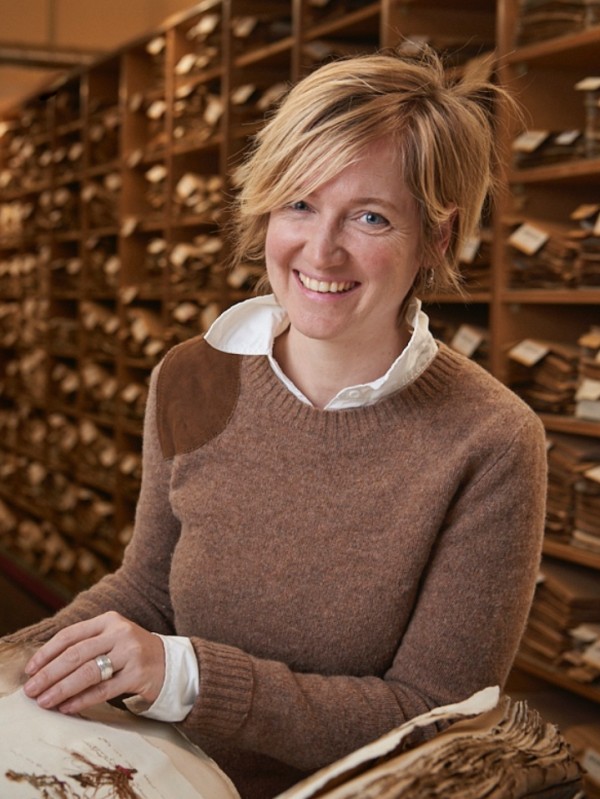
Alessia Guggisberg is a Lecturer at the Department of Environmental Systems Science, ETH Zürich, where she serves as Herbarium Curator of Phanerograms (Z+ZT) at the Institute of Integrative Biology. With a PhD from the University of Zurich and postdoctoral experience at the University of British Columbia, she specializes in plant evolutionary biology and genomics. Her research integrates historical herbarium collections with modern genomic techniques to address fundamental questions in plant evolution and biodiversity. 2003-2008: PhD in Biology, Institute of Systematic Botany, University of Zurich, Switzerland 2001-2002: MSc in Biology, Institute of Biology, University of Neuchâtel, Switzerland 1997-2001: BSc in Biology, University of Neuchâtel, Switzerland Dr. Guggisberg's research focuses on plant evolutionary biology and genomics. Her current projects involve monitoring genetic changes through time and space in members of the genus Murbeckiella (Oreophytoneae - Brassicaceae). She is investigating the phylogeny of the genus using whole-genome sequence data and morphological trait analyses, reconstructing the phylogeography of M. pinnatifida across European mountain ranges, and conducting retrospective genomic monitoring of Swiss populations over the last two centuries. Additionally, she leads several digitization projects at the United Herbaria Z+ZT, including the inventory of the diatom collection of Friederich Meister and the digitization of Gentianaceae holdings. Her work bridges historical botanical collections with modern genomic techniques to address evolutionary questions related to plant adaptation and biodiversity. Dr. Guggisberg's publication record demonstrates a consistent research trajectory spanning plant systematics, evolutionary genomics, and herbarium science. Her early work focused on polyploid complexes and biogeographic patterns in Primula , while later research shifted toward genomic analyses of Arabidopsis and invasive species like Canada thistle. More recently, her publications highlight her growing expertise in herbarium digitization and the application of historical collections to contemporary evolutionary questions. A notable trend is the increasing integration of genomic techniques with traditional botanical methods, reflecting the evolving nature of plant evolutionary research. Dr. Guggisberg has secured multiple SNSF (Swiss National Science Foundation) fellowships, including an SNSF Early Postdoc Mobility Fellowship and an SNSF Advanced Postdoc Mobility Fellowship, demonstrating recognition of her research potential by a major funding agency. She has also received funding from the ETH Library for multiple digitization projects at the United Herbaria Z+ZT. Dr. Guggisberg has been involved in mentoring students and researchers through her various academic positions. Her grant history includes SNSF fellowships that supported her postdoctoral work at the University of British Columbia. More recently, she has secured funding from the ETH Library for multiple digitization projects at the United Herbaria Z+ZT, including the inventory of the diatom collection of Friederich Meister and the digitization of Gentianaceae holdings. She also coordinates sampling for a 3-year pilot study monitoring genetic diversity of plant, fungal, and animal species in Switzerland. Dr. Guggisberg works within the Professur für Ökologische Pflanzengenetik (Chair of Ecological Plant Genetics) at ETH Zürich. She serves as Herbarium Curator of Phanerograms at the United Herbaria Z+ZT. She collaborates with several research groups from the University of Zurich, the University of Basel, the University of Heidelberg, and the Naturalis Biodiversity Center. Her work also involves coordinating with the ETH Library on digitization projects and collaborating with citizen science initiatives like www.floravs.ch.