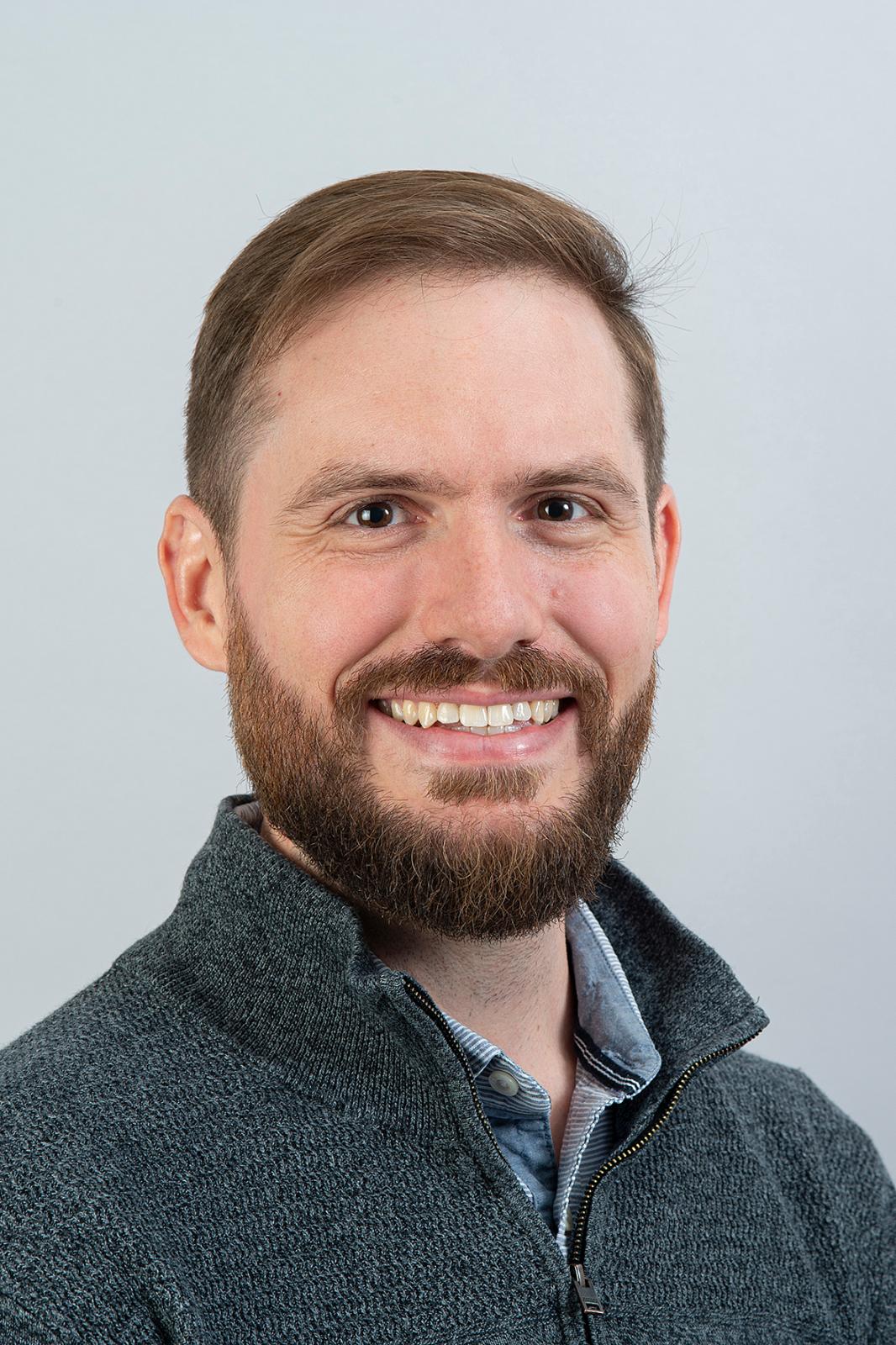
Dr. Erwin Riegler is a Lecturer at the Department of Information Technology and Electrical Engineering (D-ITET) at ETH Zurich. His research focuses on information theory, signal processing, and their applications in communication systems, with particular expertise in analog compression, matrix completion, and uncertainty principles. He has contributed to theoretical frameworks for rate-distortion analysis, lossless compression techniques, and the design of efficient algorithms for MIMO systems. Key research areas include: Information-theoretic limits of data compression Signal processing in analog systems Algorithmic approaches for sparse signal recovery Optimization techniques in MIMO communication channels Recent work emphasizes interdisciplinary applications, such as neural networks for measure theory and probabilistic methods for signal separation. No scientific awards are explicitly mentioned in the provided texts. His academic contributions span over 30 peer-reviewed articles since 2001, covering topics from string theory to modern communication systems.
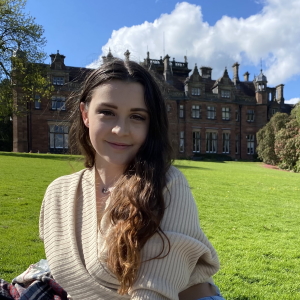
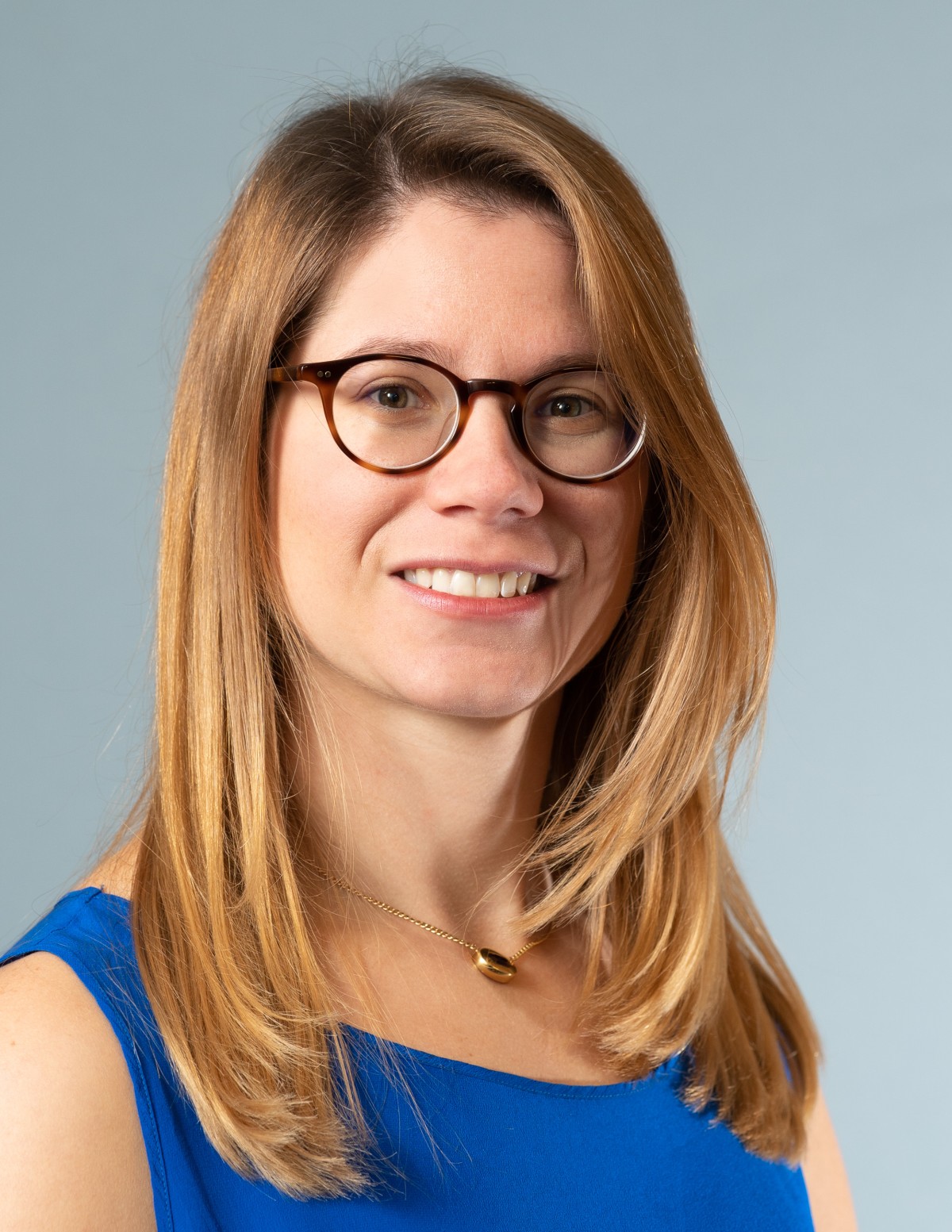
Federica Lanza is a Lecturer at the Department of Earth and Planetary Sciences at ETH Zurich, affiliated with the Schweiz. Erdbebendienst (SED), the Swiss Seismological Service. Her work focuses on seismology, geophysics, and geothermal systems, with expertise in induced seismicity, fault dynamics, and advanced monitoring technologies like Distributed Acoustic Sensing (DAS). She teaches courses such as Seismic Waves II in the Autumn Semester 2025. Her research integrates field experiments, computational modeling, and machine learning to address challenges in seismic hazard assessment, geothermal energy development, and tectonic processes. Key areas include forecasting induced earthquakes at geothermal sites, analyzing fault interactions in fold-and-thrust belts, and developing innovative sensor systems for subsurface monitoring. Dr. Lanza collaborates on large-scale projects like the Utah FORGE initiative, advancing techniques for real-time seismic monitoring and fracture network characterization. Her contributions bridge fundamental geophysical research with practical applications in energy systems and risk mitigation.
Dr. Devin Crichton holds the Professorship for Physics at ETH Zürich, focusing on observational cosmology and radio astronomy. His research centers on large-scale structure studies, galaxy cluster physics, and cosmic microwave background (CMB) analysis through major experiments like the Atacama Cosmology Telescope (ACT) and the Hydrogen Intensity Real-Time Analysis eXperiment (HIRAX). Key projects include developing SKA simulation frameworks and investigating 21cm intensity mapping for cosmological insights. His work spans telescope instrumentation (e.g., HIRAX antenna design), CMB power spectrum analysis, and SZ-selected cluster catalogs. Contributions include advancing understanding of cosmic string wakes and quasar feedback mechanisms through multi-wavelength observations. Dr. Crichton collaborates on international initiatives such as the Simons Observatory and LiteBIRD, addressing questions about dark energy, neutrino physics, and early universe cosmology. His technical expertise includes data pipeline development for real-time analysis and precision measurement systems for radio telescope noise characterization.
Dr. Matteo Fadel is a Lecturer in the Department of Physics at ETH Zürich, affiliated with the Professur Hybride Quantensysteme (Hybrid Quantum Systems Group). His research focuses on quantum physics, quantum information, and quantum metrology, with particular emphasis on mechanical systems, Bose-Einstein condensates, and spin squeezing phenomena. Fadel explores theoretical and experimental aspects of macroscopic quantum coherence, entanglement dynamics, and quantum gravitational effects. He has contributed to developing protocols for detecting non-locality and Bell correlations in many-body systems, as well as advancing quantum teleportation and remote state preparation techniques. Research Interests : Quantum non-Gaussianity, entanglement quantification, precision measurement, topological quantum systems, and gravity-related quantum effects. His work bridges theoretical studies with experimental implementations, such as parity measurements in circuit quantum acoustodynamics and spin squeezing in atomic ensembles. Fadel’s contributions span both foundational quantum theory and applied quantum technologies, including novel approaches to distributed quantum sensing and metrological complementarity. While no specific grants or awards are listed in the text, his publications reflect sustained engagement with cutting-edge topics in quantum physics. Advising details and lab affiliations are not explicitly provided, but his research group likely focuses on hybrid quantum systems and their applications in sensing and computation. His research also touches on machine learning for bosonic functionals and the quantum marginal problem in many-body systems.
Prof. Christoph Studer is a Full Professor of Integrated Information Processing at ETH Zurich's Department of Information Technology and Electrical Engineering. He leads the Integrated Systems Laboratory and directs SwissChips. His research focuses on wireless communication, machine learning, signal processing, and hardware-efficient algorithms, with applications in B5G systems, sensing-communication integration, and low-power signal processing. He holds a Ph.D. and M.S. from ETH Zurich (2009 and 2006) and has held academic positions at Cornell University before returning to ETH in 2020. Notable honors include the NSF CAREER Award (2017), ETH Medal for Doctoral Dissertation (2011), and multiple teaching awards. Education: M.S. and Ph.D. in Information Technology and Electrical Engineering, ETH Zurich (2006, 2009) Visiting Researcher, Stanford University (2005) Research Interests: Develops algorithms and hardware for high-throughput, low-power wireless systems. Key areas include: B5G multi-antenna systems and simultaneous sensing-communication (SISCO) Analog-to-feature (A2F) conversion for low-power signal classification Hardware-software co-design for efficient microchip integration Publications: Focus on channel charting, jammer mitigation, and deep learning for communication. Recent work includes CSI2Vec, jammer-resilient synchronization, and distributed MIMO systems. Awards: US NSF CAREER Award (2017) Michael Tien Teaching Award (2016) ETH Medal for Doctoral Thesis (2011) Labs/Teams: Leads the Integrated Systems Laboratory at ETH and directs SwissChips, a national initiative for integrated circuit development.
Prof. Zoltan Kunszt is a retired Adjunct Professor at the Department of Physics, ETH Zürich. He has held academic positions since 1968, including roles at L. Eötvos University in Budapest and visiting scientist appointments at CERN, DESY, and other institutions. His research focuses on high-energy accelerator physics, quantum chromodynamics (QCD), and theoretical particle physics. Kunszt has contributed to collider physics, precision calculations, and Monte Carlo methods for collider experiments. He obtained his PhD in 1971 from L. Eötvos University. His work spans over five decades, addressing topics such as scattering amplitudes, unitarity methods, and Higgs physics. Research Themes: High-energy physics accelerators (LEP, HERA, Tevatron, LHC), QCD dynamics, loop calculations, Monte Carlo simulations, and precision collider phenomenology. Key Contributions: Development of numerical unitarity techniques, NLO QCD calculations, and Higgs production studies via gluon fusion. His work underpins theoretical tools used in analyzing particle collisions at CERN and other facilities. Publications: Over 30 articles, including foundational work on one-loop amplitudes, unitarity methods, and Monte Carlo tools for collider experiments. Recent contributions focus on precision techniques in quantum field theory.
Cesare Alippi is a Full Professor at the Faculty of Informatics, Università della Svizzera italiana (USI), and also holds a professorship at Politecnico di Milano, Italy. He serves as a visiting Professor at Guangdong University of Technology (China) and Consultant Professor at Northwestern Polytechnic of Xi'an (China). His academic leadership extends to multiple international institutions where he has served as a visiting researcher including UCL (UK), MIT (USA), ESPCI (France), CASIA (China), A*STAR (Singapore), and University of Kobe (Japan). Professor Alippi's research interests center around graph-based learning, adaptation and learning in non-stationary environments, and intelligence for embedded, cyber-physical systems and IoT. His work bridges theoretical foundations with practical applications in sensor networks, environmental monitoring, and industrial processes. He has established significant research infrastructure including the Wireless Embedded Systems (WEmSy) Lab and the Internet of Things Lab, with notable deployments for marine environment monitoring in Queensland, Australia and the Fiji Islands, as well as rockfall and landslide monitoring systems across Italy and Switzerland. His research output shows a clear evolution toward graph-based deep learning approaches for time series analysis, anomaly detection, and spatiotemporal forecasting, reflecting the growing importance of graph neural networks in handling complex relational data in non-stationary environments. Major Awards: IEEE CIS Enrique Ruspini Meritorious Service Award (2024) IEEE CIS Outstanding Computational Intelligence Magazine Paper Award (2018) Gabor Award from International Neural Network Society (2016) IBM Faculty Award (2013) IEEE Instrumentation and Measurement Society Young Engineer Award (2004) Professor Alippi has held significant leadership roles including Past Board of Governors member of the International Neural Network Society, Past member of the Administrative Committee of the IEEE Computational Intelligence Society, and Past Vice-President for Education of the IEEE Computational Intelligence Society. He has served as Associate Editor for Proceedings of IEEE and several other prestigious journals. His research has been supported through numerous grants including an IBM Faculty Award in 2013 specifically for research on Intelligent Embedded Systems working in non-stationary environments. His research infrastructure includes the Wireless Embedded Systems (WEmSy) Lab and the Internet of Things Lab, with notable deployments including a sophisticated automatic, adaptive, sustainable and reliable wireless monitoring system for marine environments deployed in Queensland, Australia (2007) and under deployment at the Fiji Islands (2014-2015). He has also led several top-world deployments for rockfall and landslide monitoring across Italy and Switzerland since 2010, demonstrating the practical impact of his research in real-world harsh environments.
Natasha Sharygina is a Full Professor of Informatics at the University of Lugano (USI) in Switzerland. She leads the USI Formal Verification and Security group, focusing on improving software and hardware verification through formal methods like model checking and SAT/SMT techniques. Her research emphasizes applying these methods to computer security, electronic design, and program analysis. Education: PhD in Informatics from The University of Texas at Austin (2002). Research Interests: Her work spans formal verification, model checking, SMT-based solvers, and security analysis. She develops theoretical frameworks and practical tools for verifying large-scale systems, with applications in safety-critical and distributed computing environments. Funding & Awards: Her research has been supported by grants from the Swiss National Science Foundation, EU STReP/COST projects, Hasler Foundation, and TASSO Career Award. She has been recognized with the ACM Recognition of Service Award and CMU Technical Excellence Awards. Grants & Projects: Key initiatives include 'Beyond Symbolic Model Checking through Deep Modelling' (2019–2023), EU-funded 'Rich-Model Toolkit', and Swiss TASSO Career Award (2005–2010). She has led efforts in parallel SMT solving and runtime verification. Labs & Teams: Director of the USI Formal Verification and Security Lab, which develops tools like Golem (CHC solver) and OpenSMT (SMT solver). Collaborates globally on projects like SAFARI and FunFrog for program verification.
Ola Svensson is an Associate Professor at the School of Computer and Communication Sciences, EPFL. His research focuses on approximation algorithms, combinatorial optimization, computational complexity, and scheduling. He has been supported by grants including the ERC Starting Grant "OptApprox" (2014-2019), SNF grants, and the ERC Consolidator Grant "POTCO" (2023-). He teaches courses such as Advanced Algorithms and Approximation Algorithms and Hardness of Approximation. Education: PhD from IDSIA - Universita della Svizzera italiana (2009) and Master's from Uppsala University (2005). Research Interests: Design and analysis of approximation algorithms for NP-hard problems, scheduling, and computational complexity. He explores limitations of approximation techniques through hardness results and contributes to theoretical computer science. Publications span clustering, scheduling, and graph problems like the Traveling Salesman Problem. Recent work includes learning-augmented algorithms and robust optimization. Awards: I&C teaching award and best paper awards at FOCS (2017) and STOC (2018). Over a dozen PhD students advised, many entering postdocs or industry roles. Labs/Teams: Part of the theory group at EPFL, collaborating on academic projects and course development.
Florian Landis is a Researcher at the Center for Energy and Environment within the School of Management and Law at Zurich University of Applied Sciences (ZHAW). His work focuses on the distributional impacts of energy and climate policy , particularly examining how carbon pricing mechanisms affect different socioeconomic groups in Switzerland. Previously, he held postdoctoral research positions at ETH Zurich (2015-2021) and ZEW Mannheim (2013-2015), and worked as a Short Term Consultant at the World Bank Group (2012). His educational background includes a Doctor of Science (2009-2012) and Master of Science in Physics (2001-2007), both from ETH Zurich. This interdisciplinary foundation enables his unique approach to energy economics problems. Landis specializes in computable general equilibrium modeling applied to climate policy analysis, with particular expertise in carbon pricing, decarbonization pathways, and policy design for energy transitions. His research frequently addresses the tension between policy efficiency and equity considerations, examining how different carbon tax designs impact welfare distribution across households. His publication portfolio shows a clear evolution from computational neuroscience (early work) toward energy economics and climate policy modeling. Recent work focuses on Swiss decarbonization scenarios, with consistent themes of carbon pricing efficiency, distributional impacts, and integrated energy-economic modeling approaches across multiple publications since 2017. Current research projects include: Renewable Fuels and Chemicals for Switzerland (Team member), Integrating very high shares of decentralized renewable energy into the Swiss energy system: Electricity market design and policy (Co-project leader), and DEcarbonisation of Cities and Regions with Renewable GAses (Team member).
René Itten is a Senior Lecturer and Senior Researcher at the Institute of Natural Resource Sciences , part of the Zurich University of Applied Sciences (ZHAW) School of Life Sciences and Facility Management . He holds a MSc and BSc in Environmental Engineering from ETH Zurich and a CAS in University Didactics from PHZH. His work focuses on: Advanced Life Cycle Assessment (LCA) Environmental impacts of renewable energy systems Digital transformation in sustainability Blockchain applications for supply chain transparency Biodiversity and resource footprint analysis He leads the Life Cycle Inventory Modelling and LCA Databases research group and teaches modules on Advanced Life Cycle Assessment and Sustainability Assessment . Recent projects include: NPower : Balancing nitrogen/phosphorus flows in regional budgets Multifuel SOFC system : Maritime energy sustainability Coffee Blockchain : Supply chain digitization BioVaR : Biodiversity risk assessment Secure Management Platform : Shared process resources His 15 most recent publications examine environmental implications of: High-altitude floating solar power systems Biodiversity impacts in battery mining Blockchain in coffee supply chains Photovoltaic thermal hybrids Multifunctional device sustainability Circular economy in biorefineries He has presented at international conferences including LCA FOOD, Life Cycle Innovation Conference, and LCM, with particular expertise in geospatial analytics and environmentally-extended input-output modeling.
Dr. Dan Jurafsky is a Professor at the Department of Linguistics within Stanford University's School of Humanities and Sciences. His work spans computational linguistics, natural language processing, and AI ethics, with a particular focus on language model behavior, speech recognition, and ethical implications of anthropomorphism in AI systems. His recent research explores HumT for measuring human-like tone in LLMs, AnthroScore for anthropomorphism detection, and methods for improving low-resource language support through data augmentation and multilingual representation learning. He has also developed open-source tools like string2string for string algorithms. Jurafsky's publications address critical issues in NLP, including grounding gaps in conversational models, causal interpretability in linguistic tasks, and representational biases in multilingual models. His work emphasizes interdisciplinary applications, from educational NLP tools to Sumerian transliteration datasets, while advocating for rigorous statistical power analysis and ethical model evaluation.
Boegli Alexis is an Associate Professor at Haute Ecole Arc - Ingénierie (HES-SO) since 2018, with a PhD in Science from the University of Neuchâtel. Specializing in embedded systems, RF technologies, and energy-efficient electronics, he focuses on applications requiring high constraints such as energy autonomy and compactness. His research spans BLE-based localization, dielectric elastomer actuators, and energy harvesting for biomedical devices. His educational background includes a BSC in Computer Science and Communication Systems from HES-SO and advanced studies in Microengineering at EPFL. He teaches courses like Electrotechnics I and co-supervises doctoral students in interdisciplinary projects. Key research areas include: RF Localization Systems (BLE AoA/AoD) High-Voltage Electronics for Capacitive Actuators Zero-Power Wearable Energy Harvesting Smart Sensor Networks Recent work demonstrates sub-meter accuracy in IoT localization systems using BLE and developed ultra-high-voltage (7kV) converters for dielectric elastomer actuators. His 2025 research explores inverted actuation cycles for facial prosthetics, reducing energy consumption by 1.5%. Patents include a BLE-based access control system combining RF positioning and video analysis (2022) and a real-time regulatory compliance method for wireless transmitters (2013). Collaboration with EPFL and CSEM drives technology transfer in industrial and biomedical applications. His projects often involve Innosuisse, SNSF, and industry partners.
Julia Wirth is an Associate Professor at HES-SO's Haute Ecole Arc, focusing on experiential marketing, territorial marketing, and digital media. She holds a BSc in Economic Law and an MSc in Business Administration with a specialization in intercultural management and Russian/Chinese communication. Her research emphasizes virtual reality (VR) in tourism and destination branding, particularly in Switzerland and Russia, exploring topics like sustainable consumption, hybrid immersive experiences, and eye-tracking analysis for marketing effectiveness. Education: BSc HES-SO in Economic Law; MSc HES-SO in Business Administration Key Research Areas: VR in territorial promotion, 4D storytelling, mediatization shifts, and cultural values in branding Her work bridges theoretical frameworks and empirical studies, addressing challenges in digitalization and sustainability. Notable projects include analyzing VR's role in tourism management and evaluating 360° video's impact on consumer engagement. Awards: None explicitly listed Grants/Projects: Research collaborations with institutions in Russia and Switzerland, including studies on cultural heritage and sustainable tourism She contributes to academic conferences and journals, focusing on innovative marketing tools and their managerial implications in cultural and tourism sectors.
Glück Florent is an Associate Professor at the Geneva School of Landscape, Engineering and Architecture (HES-SO), affiliated with the Technical and IT school's Computer Science and Communication Systems department. He specializes in embedded systems, system virtualization, and interdisciplinary projects at the intersection of engineering and healthcare. Affiliations: HES-SO Geneve, hepia inIT, and collaborations with medical and industrial partners. Education: Not explicitly listed, but implied through roles and projects involving systems engineering and computer science. Research Interests: His work spans embedded systems design, real-time data processing, and applied machine learning. Key focuses include secure hardware-software co-design (e.g., FPGA-based security), medical device development (e.g., neonatal monitoring systems), and IoT infrastructure for smart buildings and recycling. Project Trends: Florent leads projects combining engineering with societal impact, such as automated recycling systems (LusTra), secure medical diagnostics (BrainCheckX), and educational virtualization platforms (Nexus VDI). Recent work emphasizes AI-driven solutions for healthcare (e.g., cochlear implant support) and decentralized energy management. Grants and Funding: Multiple projects funded by HES-SO Rectorat, CTI, and industry partners, totaling over CHF 400,000 since 2014. Labs/Teams: Active in distributed embedded systems research, leading teams on projects like DPESI (distributed storage) and HERVA (random number validation platforms).