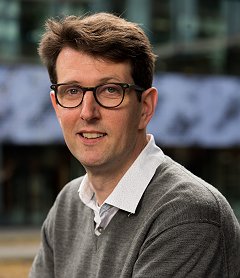
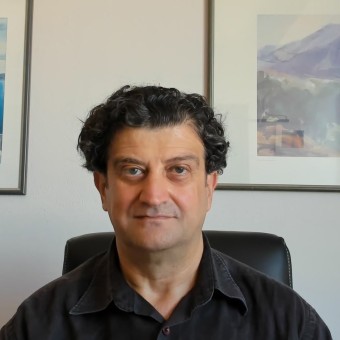
Panagiotis G. Zervas is an Associate Professor at the Department of Electrical and Computer Engineering, University of Peloponnese (since 2020). His expertise spans audio signal processing, music information retrieval, and natural language processing for knowledge extraction. He teaches courses including Signals & Systems, Digital Signal Processing, and Machine Learning. His research focuses on AI-driven applications in sound analysis, music feature extraction, and multimodal information processing. Education: PhD (2007) in Electrical Engineering from the University of Patras, specializing in Greek prosody modeling for text-to-speech systems. Previous roles include Assistant Professorships at Hellenic Mediterranean University (2015–2020) and Technical Educational Institute of Crete (2008–2015). Research Interests: Natural Language Processing (NLP) for text analysis and large language models (LLMs) Audio signal processing, voice analysis, and embedded systems AI applications in job market analytics and skills frameworks Machine learning for music information retrieval Notable Projects: Principal Investigator in EU projects EU-ALMPO (2025–), Train4Blue (2025–), GROWTH4BLUE (2024–), and MICROIDEA (2024–) World Bank consultant (2023–) for AI-driven employment systems in Greece and Pacific Islands Publications in journals like 'Acoustics' and conferences like WAC 2022 and Forum Acusticum 2023 Office: Building K, Office K2.07 | Contact: pzervas@uop.gr
Mandalaki Maria serves as an Associate Professor in the School of Architecture at the Technical University of Crete (TUC), holding a permanent position within the Teaching and Research Staff. Her office is located in Building K4 (Ground Floor), Room K4 120/Ι.10 at the TUC campus, with contact email mmandalaki@tuc.gr and phone number 282100 6169. Her research centers on Building Energy Efficiency and Solar Shading Systems, with specialized focus on Photovoltaic Integration, Daylighting optimization, Thermal Comfort management, and Sustainable Energy Planning for Mediterranean contexts. She investigates how shading devices can simultaneously control solar radiation and generate renewable energy, particularly emphasizing residential applications where visual comfort must balance energy production. Analysis of her publication trends reveals a dominant research trajectory from 2012-2020 where 60% of output concentrated on dual-function shading systems in 2020. Her work consistently addresses Mediterranean-specific challenges, demonstrating progression from foundational design principles (2020) to multi-criteria optimization (2016) and regional implementation frameworks (2014), always targeting the thermal-daylight-energy triad. Scientific Awards No scientific awards were documented in the provided information. Advising and Grants No explicit references to student supervision, grant funding, or research projects appear in the source materials. Her current focus appears centered on publication-driven research within architectural energy systems. Labs and Teams She is formally associated with the ARMIX research group in the School of Architecture, which likely focuses on architectural energy integration based on contextual analysis of her publications and institutional structure.
Professor Konstantinos Politis is a distinguished academic in the Department of Statistics and Actuarial Science at the University of Piraeus, where he has served since 2004, progressing from Assistant Professor to his current position as Professor (2025-present). His academic career spans prestigious institutions including the University of Manchester, University of Southampton, and the University of Cambridge where he earned his PhD. Education: B.A. in Mathematics, University of Athens (1989) MSc in Statistics, University of Sheffield, UK (1991) PhD in Statistics, University of Cambridge, UK (1997) Professor Politis specializes in stochastic processes with particular focus on ruin theory, risk analysis, and actuarial mathematics. His research examines complex probability models related to insurance risk, surplus processes, renewal theory, and failure rate analysis. He has made significant contributions to understanding the mathematical properties of insurance risk models, particularly in the Sparre Andersen framework and compound Poisson processes. His work bridges theoretical probability with practical applications in actuarial science and financial risk management. His extensive publication record demonstrates consistent contributions to leading journals in probability and actuarial science. The research trajectory shows evolution from foundational work on ruin theory and risk models toward more sophisticated analyses of renewal processes, failure rate functions, and stochastic bounds. His recent work focuses on precise mathematical characterizations of recurrence times, convolution properties, and monotonicity in stochastic systems. Professor Politis has co-authored significant textbooks including Introduction to Probability: Models and Applications (2019) and Introduction to Probability: Multivariate Models and Applications (2021) with Balakrishnan and Koutras, as well as his Greek-language work Introduction to the Theory of Collective Risk (2012, 2nd ed. 2016). In teaching, Professor Politis has contributed to both undergraduate and graduate education, offering courses including Probability I, Special Topics in Probability, Variance Analysis, Loss Distributions, Generalized Linear Models, and Risk Theory II. His academic journey reflects a deep commitment to advancing statistical theory while maintaining practical relevance to actuarial science and risk management.
Professor Dimitra Kaklamani is a distinguished faculty member at the School of Electrical and Computer Engineering at the National Technical University of Athens (NTUA), where she serves as a Professor in the Division of Information Transmission Systems and Material Technology. With over 300 publications to her name, she has established herself as a leading researcher in microwave engineering, wireless communications, and computational electromagnetics, having progressed through academic ranks from Lecturer (1995) to Professor (2009). Her research spans numerous critical areas in electrical engineering: Microwave Theory and Techniques Wireless Communications and MIMO Systems Computational Electromagnetics Object-Oriented and Distributed Computing Security & Privacy in Networked Systems Machine Learning Applications in Telecommunications Professor Kaklamani's research trajectory demonstrates a natural evolution from traditional microwave engineering toward cutting-edge areas like AI-enabled wireless communications and privacy-preserving network architectures. Her recent work (2023-2025) shows particular focus on intelligent metasurfaces for wireless communications, federated learning applications in next-generation networks, and security aspects of 5G/6G systems. This reflects both continuity with her foundational work in computational electromagnetics and adaptation to emerging technological frontiers. She serves as Editor of an international book by Springer-Verlag (2000) in applied Computational Electromagnetics and regularly reviews for IEEE journals, demonstrating her standing in the scholarly community. Her teaching portfolio is equally comprehensive, ranging from foundational courses like Linear Circuits Analysis to advanced topics such as Computational Electromagnetics and Machine Learning in Mobile Computing, reflecting her broad expertise across electrical engineering disciplines.
Michael D. Bond is a Professor in the Department of Computer Science & Engineering at Ohio State University's College of Engineering. He leads the Programming Languages and Software Systems (PLaSS) Research Group, which focuses on designing program analyses and software and hardware systems that enhance computing reliability, scalability, and security. His academic service includes general chair for PLDI 2027, program committee membership for multiple top conferences, and committee roles in SIGPLAN Research Highlights (2024-2027). Professor Bond's research spans programming languages, systems, and security, with particular expertise in memory management, concurrency, hardware transactional memory, information flow control, and predictive race detection. His work bridges theoretical foundations with practical implementations, as evidenced by numerous open-source projects accompanying his publications. The PLaSS group has made significant contributions to understanding and improving memory models, developing efficient garbage collection techniques for modern architectures, and creating novel approaches to secure programming in languages like Rust. Analysis of his recent publications reveals a clear trajectory toward addressing security and reliability challenges in modern computing systems, particularly through language-based approaches. His work increasingly focuses on Rust programming language security mechanisms, memory disaggregation for datacenters, and advanced techniques for detecting and preventing concurrency bugs. The research demonstrates strong continuity in exploring memory models and concurrency while adapting to emerging hardware trends and security challenges. Outstanding Teaching Award, Department of Computer Science and Engineering, Ohio State University (2018) Lumley Research Award, College of Engineering, Ohio State University (2016) OOPSLA 2015 Distinguished Paper and Artifact Awards NSF CAREER Award ACM SIGPLAN Outstanding Doctoral Dissertation Award Intel PhD Fellowship Professor Bond actively mentors several PhD students including Chujun Geng, Vincent Beardsley, Chris Xiong, Victor Chen, and Noah Charlton, with external co-advisee Zixian Cai at Australian National University. His research is currently supported by multiple NSF grants including SaTC-2348754 (2024-2027), CyberCorps-2336531 (2024-2029), and CSR-2106117 (2021-2025), reflecting sustained funding for his work in information flow control, security, and systems research. The PLaSS Research Group maintains a strong presence in both academic and industrial communities, with graduated PhD students securing positions at major technology companies like Google, Amazon Web Services, and Huawei, as well as academic positions at institutions like UIUC and IIT Kanpur. The group's work combines theoretical rigor with practical implementation, consistently producing open-source artifacts that enable reproducibility and further research in the systems and programming languages community.
Steve Blackburn is a research scientist at Google DeepMind and professor of computer science at the Australian National University in the College of Engineering and Computer Science. His primary research focus is on programming language implementation, with expertise spanning memory management, virtual machines, and performance analysis. He has served in significant leadership roles including Associate Dean for Diversity and Inclusion (2016-2019) and as Program Chair for PLDI 2015 and General Chair for PLDI 2023. Blackburn's research interests center on making software run faster and more power-efficiently on modern hardware. His primary areas include microarchitectural support for managed languages, fast and efficient garbage collection, and the design and implementation of virtual machines. He maintains a strong interest in sound methodology and infrastructure for successful research innovation. His work bridges theoretical computer science with practical systems implementation, with particular focus on memory management frameworks and performance benchmarking. His publication record reveals a consistent focus on memory management systems, with recent work exploring garbage collection in modern contexts including CRuby, Julia, mobile devices, and memory-disaggregated datacenters. His research shows an evolution from foundational garbage collection algorithms toward practical implementations addressing real-world constraints in contemporary programming languages and hardware platforms. A notable trend is his increasing focus on quantifying and understanding the true costs of garbage collection in production environments. Fellow of the ACM Blackburn has supervised numerous doctoral students including Zhen He, John Zigman, Robin Garner, Ting Cao, and currently advises Wenyu Zhao, Zixian Cai, and others. He has also served on multiple program committees for major conferences including PLDI, ASPLOS, ISMM, and OOPSLA, demonstrating his significant contributions to the programming languages and systems research community. His service includes editorial roles for ACM Transactions on Programming Language Applications and Systems from 2017-2020. He leads two major research infrastructure projects: the MMTk memory management framework and the DaCapo benchmark suite, both of which have become foundational tools for researchers in programming languages and systems. These projects reflect his commitment to shared research infrastructure and reproducible methodology in systems research.
Zhenjiang Hu is a Chair Professor and Dean of the School of Computer Science at Peking University. He serves as Director of the Programming Languages Laboratory and has held significant academic positions including Professor at the National Institute of Informatics and University of Tokyo. BS and MS from Shanghai Jiaotong University (1988, 1991) PhD from University of Tokyo (1996) Lecturer/Assistant Professor at University of Tokyo (1997) Associate Professor at University of Tokyo (2000) Full Professor at National Institute of Informatics (2008) Full Professor at University of Tokyo (2018-2019) Professor Hu's research primarily focuses on programming languages and software engineering, with special emphasis on functional programming, bidirectional transformation, and software adaptation. His work explores transformational programming approaches for automatic program optimization, systematic parallelization of sequential programs, efficient manipulation of structured documents, and bidirectional model transformation for software development. His research has significantly advanced the field of bidirectional programming, developing foundational theories and practical applications that enable more reliable and maintainable software systems. His recent publications demonstrate a strong trajectory in bidirectional programming, program synthesis, and graph processing. The research shows increasing sophistication in handling program transformations, with growing emphasis on practical applications in software engineering contexts. His work increasingly integrates formal methods with practical programming language design, creating systems that maintain theoretical soundness while addressing real-world software development challenges. The research spans multiple venues including top conferences like PLDI, POPL, ICFP, and OOPSLA, reflecting its broad impact across programming language research. Fellow of JFES (Japan Federation of Engineering Society, 2016) ACM Distinguished Scientist (2016) Member of Academia Europaea (2019) IEEE Fellow (2020) Member of Engineering Academy of Japan (2020) Professor Hu actively mentors students and has welcomed excellent candidates to join his group through Peking University's International Elite PhD Program and Boya Postdoctoral Fellowship Program. He serves on numerous program committees for major conferences including PLDI, POPL, ICFP, and OOPSLA, and holds editorial positions for prestigious journals such as Journal of Functional Programming and Science of Computer Programming. His leadership extends to conference organization, having served as PC Chair for CNCC 2024 and General Co-Chair for SoICT 2019. As Director of the Programming Languages Laboratory at Peking University, Professor Hu leads a research team focused on advancing programming language theory and practice. His lab has developed influential frameworks like BiGUL for bidirectional programming and Fregel for graph processing. The laboratory maintains strong international collaborations and contributes to both theoretical foundations and practical implementations in programming languages and software engineering.
Andy D. Pimentel is a Full Professor at the University of Amsterdam, where he chairs the Parallel Computing Systems (PCS) group within the Systems and Networking Lab at the Informatics Institute. His work focuses on the design, programming, and run-time management of multi-core and multi-processor computer systems, with particular attention to performance, power/energy consumption, system dependability, and design productivity. His academic background includes: PhD in Computer Science, 1998, University of Amsterdam MSc in Computer Science, 1993, University of Amsterdam Professor Pimentel's research spans multiple critical areas in modern computing systems. His primary interests include multi-core embedded systems, system-level design and simulation, design space exploration, performance and power analysis, system dependability, hardware/software co-design, run-time resource management, and Edge AI. His work addresses the growing challenges of making computer systems faster, more sustainable, energy efficient, reliable, and secure in an era of increasing computational demands and climate concerns. The PCS group he leads performs research on the modeling, analysis and optimization of extra-functional aspects of computing systems, which play a pivotal role in their work. An analysis of Professor Pimentel's recent publications reveals a strong focus on edge computing, distributed AI, and energy-efficient system design. His work bridges theoretical computer architecture with practical implementation challenges, particularly in the context of resource-constrained environments. Key trends include the adaptation of AI models for edge devices, thermal management in advanced architectures, and optimization of multi-core systems for both performance and energy efficiency. His research increasingly addresses sustainability concerns in computing, reflecting broader industry and academic priorities. His notable scientific achievements include: IEEE CEDA Outstanding Service Recognition Award DATE Fellow Award Professor Pimentel has served in numerous leadership roles in the academic community, including as General Chair of Design Automation and Test in Europe (DATE) 2024, Vice General Chair of IEEE/ACM Embedded Systems Week 2025, and General Chair of IEEE/ACM Embedded Systems Week 2026. He has secured significant research funding for projects related to sustainable computing, edge AI, and multi-core system design. His professional service includes board membership with the ICT Research Platform Nederland (IPN) since 2020 and leadership roles in major conferences such as DATE, Embedded Systems Week, and SAMOS. The Parallel Computing Systems group he chairs is a vibrant research team within the Systems and Networking Lab at the Informatics Institute. The PCS group focuses on the challenges of modern computing systems, particularly addressing the extra-functional aspects like performance, power consumption, and system dependability. Their work is highly relevant to current technological challenges in edge computing, sustainable systems design, and the integration of AI into resource-constrained environments.
Nikolaos Samaras is a Full Professor at the Department of Applied Informatics, School of Information Sciences, University of Macedonia in Thessaloniki, Greece. He has been serving as director of the Computational Methodologies & Operations Research (CMOR) Laboratory since April 2016. His academic career includes positions as Assistant Professor (2007-2012) and Lecturer (2003-2007) at the same institution, and earlier as an adjacent Lecturer at the Technological Institute of Western Macedonia (1998-2000). Dr. Samaras earned his Diploma in Applied Informatics from the University of Macedonia in 1996 and his Ph.D. in Applied Informatics from the same university in 2001. His educational background forms the foundation for his extensive research in computational optimization and operations research. Professor Samaras's research focuses on the interface between computer science and operations research, with particular expertise in linear and nonlinear optimization, network optimization, integer optimization, and scientific computing including HPC and GPU programming. His work has resulted in the development of new algorithmic families for optimization problems, efficient GPU implementations of the revised simplex algorithm, and novel algorithms and software for operations research. His research spans theoretical algorithm development, practical implementation, and real-world applications across various engineering and scientific domains. His extensive publication record includes over 35 journal papers in prestigious venues such as Computers and Operations Research, European Journal of Operational Research, and Journal of Artificial Intelligence Research, more than 85 conference papers, and four textbooks (two in English and two in Greek). His work has been recognized through citations and the Thomson ISI/ASIS&T Citation Analysis Research Grant in 2005. ACM Senior Member (2016) Thomson ISI/ASIS&T Citation Analysis Research Grant (2005) Editorial board member of Operations Research: An International Journal Reviewer for numerous top journals including Mathematical Programming Computation and European Journal of Operational Research Professor Samaras has supervised four current Ph.D. students working on hybrid simplex algorithms, large-scale optimization using Apache Hadoop, algorithmic procedures in matrix theory, and smoothed complexity analysis. He has successfully guided five Ph.D. students to completion, including Nikolaos Ploskas who won the 2014 HELORS Doctoral Dissertation Award. Additionally, he has supervised 45 master's theses and 84 bachelor's theses. His research group has secured funding from diverse sources including the European Union, Greek Secretariat of Research and Technology, and industry partners like Veltio Greece LTD. The Computational Methodologies & Operations Research (CMOR) Laboratory, which he directs, focuses on developing and implementing optimization algorithms with applications in transportation, energy systems, and business process design. The lab has produced notable software tools including Euclides and Visual LinProg, which have educational applications in linear programming.
Andreas Papasalouros is an Associate Professor at the Department of Mathematics, University of the Aegean. He holds a Ph.D. in Engineering from NTUA (2004), a Diploma in Electrical and Computer Engineering (2000), and a BSc in Physics (1992). His research focuses on Educational Technology , Adaptive Hypermedia , and Ontology Engineering . Education Ph.D. in Mechanics, School of Electrical and Computer Engineering, NTUA (2004) Diploma in Electrical and Computer Engineering, NTUA (2000) BSc in Physics, National and Kapodistrian University of Athens (1992) Research Interests Papasalouros's work centers on leveraging UML and Ontologies for designing Educational Software . He explores Automated Assessment systems, Accessibility solutions (e.g., TeX-to-Braille), and Mobile Learning applications. His studies often intersect with Collaborative Learning and Semantic Web technologies. Key Contributions His publications span Adaptive Hypermedia , Ontology-Driven Learning , and Accessibility Tools . Notable works include Ob-AHEM (2002), Grid4All Ontology (2008), and TeX-to-Braille Transcribing (2017). Recent trends emphasize Game-Based Learning and Query Log Analysis for ontology creation. Courses Taught New Technologies in Education (3rd semester) Introduction to Computer Science (2nd semester) Advanced Programming Languages (6th semester) Postgraduate Course in New Technologies in Education
Kostas Vlachos is an Assistant Professor in the Department of Computer Science and Engineering at the University of Ioannina, Greece. He has been in this position since 2014, following prior teaching roles at the University of Thessaly (2007–2013). He is a member of the Information Processing and Analysis (I.P.AN.) research group and actively supervises PhD, MSc, and diploma students in robotics and control systems. PhD, School of Mechanical Engineering, National Technical University of Athens, 2004 MSc, Interdepartmental Postgraduate Program in Automation Systems, National Technical University of Athens, 2000 Diploma in Electrical Engineering, Technical University of Dresden, Germany, 1993 His research focuses on robotics and control, with emphasis on microrobotics , haptic mechanisms , medical simulators , and autonomous navigation . He has made significant contributions to over-actuated marine platforms, reinforcement learning for navigation, and tactile robotic systems. His work bridges mechanical engineering and computer science, particularly in intelligent robotic control. The 15 most recent publications highlight a strong trend in autonomous marine robotics , multi-agent reinforcement learning , and intelligent control systems . Key themes include energy-efficient control, obstacle avoidance, sensor fusion, and learning-based navigation. The research spans from theoretical control design to real-world implementation in unmanned surface vehicles and microrobots. Best Student Paper Award, 9th Hellenic Conference on AI (SETN 2016) Vlachos has supervised over 30 students at various levels and has participated in multiple national and European research projects in robotics and automatic control. His teaching includes courses such as Computational Mathematics, Robotics, and Robotic Systems. He collaborates extensively with researchers like E. Papadopoulos and K. Blekas. He leads research within the Information Processing and Analysis (I.P.AN.) group, focusing on intelligent perception and control of robotic systems. His lab works on mobile manipulators, haptic devices, mini-robots, and marine platforms, integrating simulation (ROS/Gazebo) with real-world experimentation.
Irene Koronaki is a Professor at the National Technical University of Athens , affiliated with the School of Mechanical Engineering and the Thermal Engineering Section . She serves as Director of the Laboratory of Applied Thermodynamics, Cooling Technology & Refrigerated Vehicles since 2022 and has held academic roles at NTUA since 1999. Her research focuses include thermodynamics, heat pumps, energy efficiency, and renewable energy systems. Diploma in Mechanical Engineering, NTUA (1996) PhD in Thermal Engineering, NTUA (2000) Postdoctoral Researcher, NTUA (2002) Her research spans thermodynamics of cooling cycles, heat pumps, power cycles, energy saving in buildings, and thermal energy storage. She has pioneered work in nanofluids, solar cooling, and CO2 absorption systems. Her publications and projects reflect expertise in Stirling engines, hybrid solar collectors, and building energy optimization. Her recent articles highlight advancements in superfluid thermodynamics, solar PV/T systems, and medical robotics. Awards include the Edward F. Obert Award (2022) and leadership of the 2021 ASHRAE Student Design Competition winning team. She serves on ASME and ASHRAE committees and co-authored educational materials for refrigeration and energy inspection standards.
Wei Yang is an Associate Professor in the Department of Computer Science at the University of Texas at Dallas, actively contributing to software engineering research through program committee roles at ICSE, FSE, ASE, and ISSTA conferences since 2015. His research focuses on software testing innovation , particularly in mobile security, GUI testing, and AI-driven test automation. Key contributions include frameworks for malware analysis (MalScan), UI exploration (Guardian, Vet), and neural network testing (DeepPerform, EREBA), addressing critical challenges in test oracle generation, flaky tests, and resource-constrained environments. Recent work demonstrates a strategic shift toward LLM and foundation model applications for testing, with 2023-2026 publications exploring vision-language models for GUI testing, parameter ownership in collaborative AI development, and instruction alignment in large language models. This evolution reflects the field's broader trajectory toward AI-integrated quality assurance.
Petros Varthalitis serves as an Assistant Professor in the Department of Economics within the School of Economic Sciences at Athens University of Economics and Business (AUEB). His academic trajectory includes significant roles at the Economic and Social Research Institute (Ireland), University of Glasgow, and Scottish Fiscal Commission, complemented by a visiting scholar position at the Central Bank of Greece. His institutional affiliations demonstrate deep engagement with European fiscal policy institutions and central banking frameworks. Dr. Varthalitis specializes in theoretical and applied macroeconomics, with concentrated expertise in fiscal and monetary policy analysis using Dynamic Stochastic General Equilibrium (DSGE) models for both open and closed economies. His research portfolio critically examines fiscal and currency unions, debt consolidation mechanisms, and structural reforms in public finance. Methodologically, he integrates advanced modeling techniques including Heterogeneous Agent New Keynesian (HANK) frameworks and machine learning applications to address contemporary economic challenges. Analysis of his 15 most recent publications (2020-2025) reveals three dominant research clusters: Euro Area fiscal architecture (debt sustainability, HANK modeling, fiscal spillovers), crisis response economics (comparative analysis of Global Financial Crisis and COVID-19 impacts, intangible investment dynamics), and methodological innovations (machine learning for economic data construction, asymmetric link functions in risk modeling). His work consistently bridges academic rigor with policy relevance, particularly regarding fiscal policy design in monetary unions. Dr. Varthalitis maintains active contributions to policy institutions including the Economic and Social Research Institute and Scottish Fiscal Commission. His scholarly output appears in premier journals such as Journal of Economic Dynamics and Control and International Journal of Central Banking, alongside authoritative edited volumes from Cambridge University Press and MIT Press. While his research demonstrates significant policy impact, specific grant funding details and student mentorship activities are not documented in the available materials.
Konstantinos Blekas is a Professor at the Department of Computer Engineering and Informatics, University of Ioannina, Greece. He is affiliated with the Polytechnic School and teaches advanced courses such as 'Machine Learning' (MYE002) and 'Probability and Statistics' (MYY304). His research focuses on Machine Learning, Intelligent Agents, Computer Vision, and Bioinformatics, with particular expertise in Reinforcement Learning, Deep Learning, and their applications in autonomous systems, traffic management, and aerospace engineering. Education: Ph.D. in Electrical and Computer Engineering, National Technical University of Athens (1997) Diploma in Electrical Engineering, National Technical University of Athens (1993) Research Interests: Dr. Blekas explores cutting-edge topics in machine learning, including generative adversarial networks (GANs), multi-agent systems, and reinforcement learning for autonomous navigation. His work spans domains such as unmanned surface vehicles, air traffic management, and medical informatics. Notable contributions include advanced frameworks for flight trajectory modeling, urban traffic optimization, and brain functional network analysis. Awards and Recognition: While specific awards are not explicitly listed, his extensive publications and contributions to AI and robotics reflect significant academic impact. Advising and Grants: He supervises research in machine learning applications, though specific student names or grant details are not provided in the texts. His courses emphasize practical implementation, with resources available on e-learning platforms like e-course.uoi.gr. Labs and Teams: Engaged in collaborative projects involving robotics and AI, though no specific lab names are mentioned. His work integrates interdisciplinary approaches across computer science, engineering, and biomedical fields.