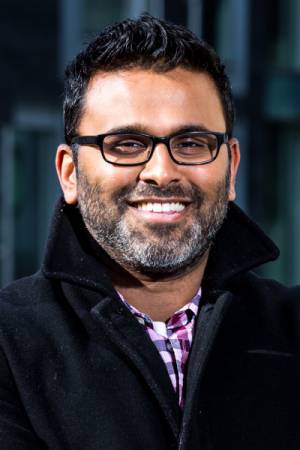
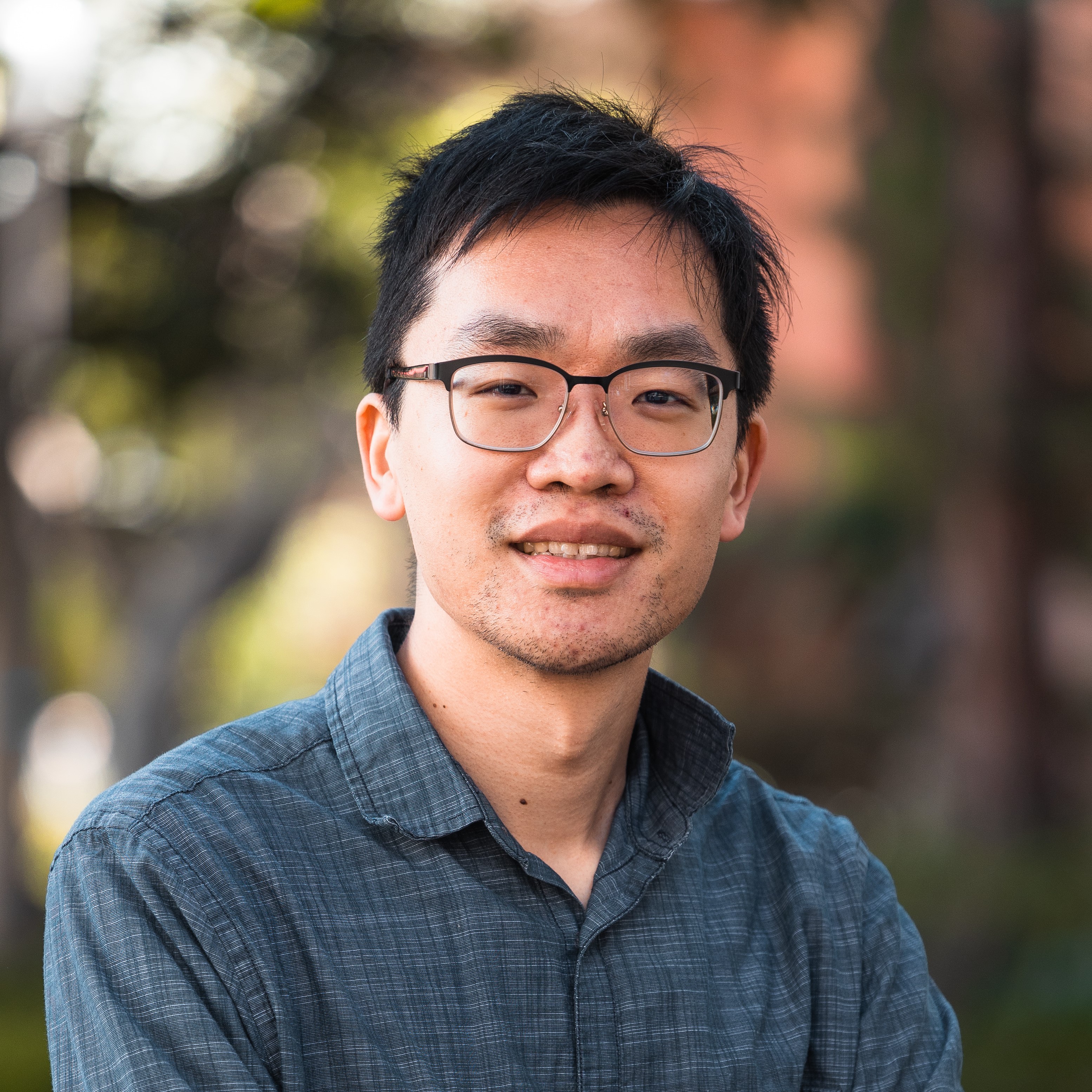
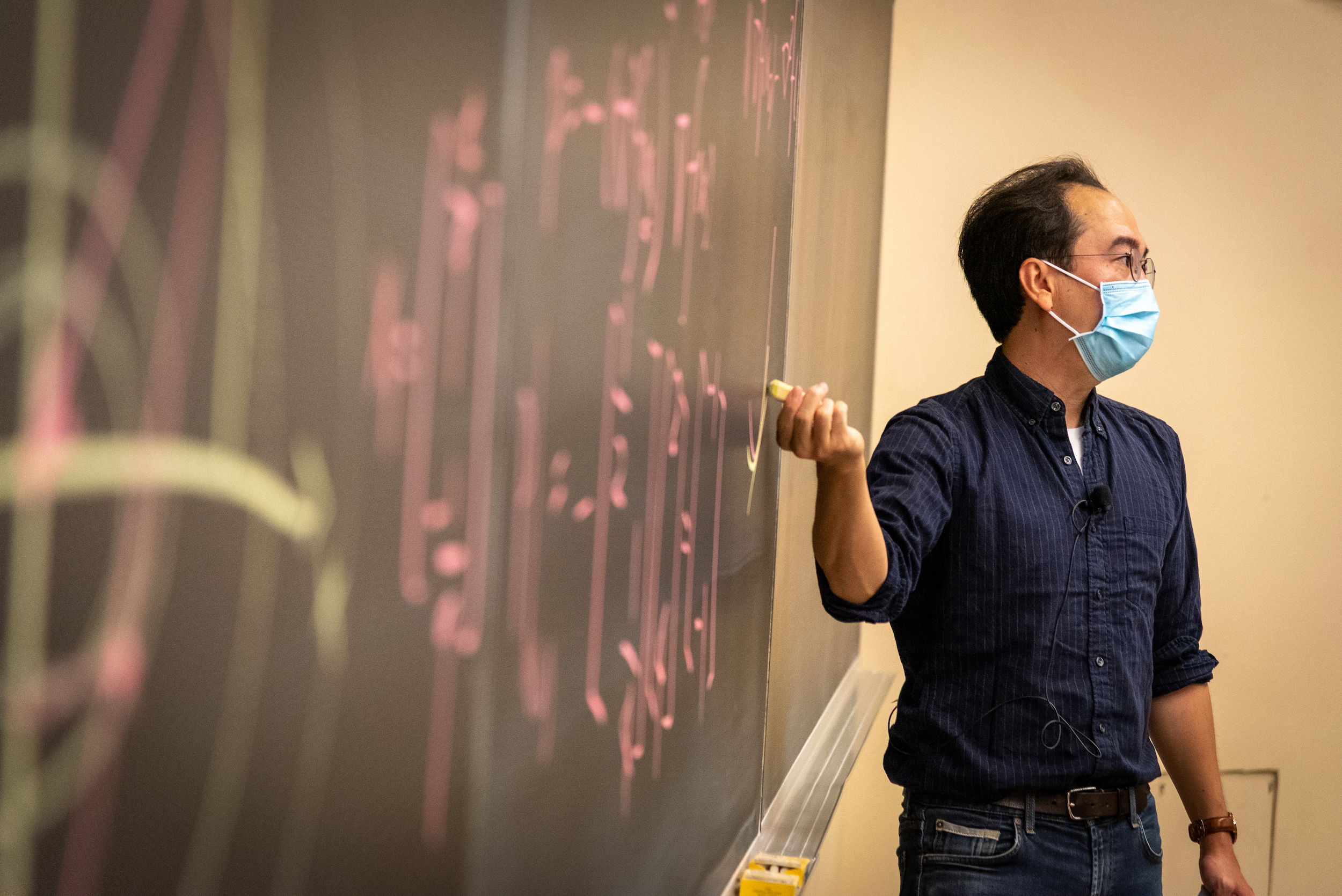
Deva Kannan Ramanan is a Professor at the Robotics Institute of Carnegie Mellon University , focusing on computer vision , machine learning , and human-centered robotics . His work bridges neurorobotics and visual perception , with applications in autonomous driving and 4D reconstruction . Research Topics Computer Vision 3-D Vision and Recognition Visual Servoing Neurorobotics Human-Centered Robotics Graphics & Creative Tools His recent publications in CVPR , ICRA , and ICCV emphasize 4D human reconstruction , neural rendering , and vision-language models for autonomous systems. He serves as General Chair of CVPR 2027 and Program Chair of CVPR 2018 , with IARPA funding for aerial-ground rendering (2023-2027). Current students include PhD candidates Sally Chen, Kangle Deng, and Zhiqiu Lin, while past advisees like Arun Vasudevan and Olga Russakovsky now hold positions at Amazon and Meta respectively.
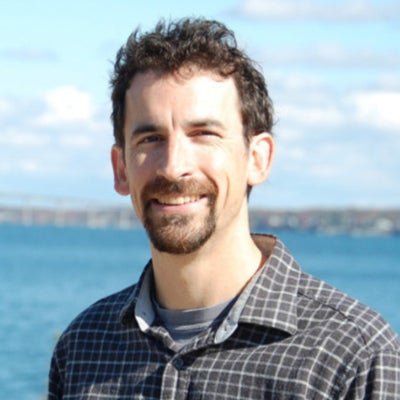
Stephen Licht is an Associate Professor of Ocean Engineering and Graduate Director at the University of Rhode Island's College of Engineering, where he directs the Robotics Laboratory for Complex Underwater Environments (R-CUE). His research focuses on developing maritime robots capable of operating in dynamic and unpredictable environments through biologically inspired propulsion, distributed pressure sensing, model-based optimal control, and compliant underwater manipulation technologies. Ph.D. in Oceanographic and Mechanical Engineering from MIT/WHOI Joint Program (2008) B.S. in Mechanical Engineering from Yale University (1998) Former Senior Research Scientist at iRobot and Senior Robotics Engineer at Vecna Robotics Current Research Affiliate with MIT Department of Mechanical Engineering Former Visiting Faculty at Libera Università di Bolzano (2019-2020) Dr. Licht's research spans marine robotics with emphasis on biologically inspired propulsion systems that provide high authority and bandwidth thrust, nonlinear attitude control for maneuvering in dynamic conditions, compliant underwater manipulation technologies, and unmanned aerial monitoring of coastal structures. His work bridges mechanical engineering principles with oceanographic applications to create more capable underwater robotic systems that can operate in complex marine environments. His recent publications demonstrate a strong trend toward soft robotics applications for deep-sea exploration, with particular focus on jamming grippers and neutrally buoyant manipulation systems. The research also shows increasing integration of additive manufacturing techniques for field-deployable solutions and computational methods for autonomous systems operating in challenging marine environments. His work spans fundamental control theory, mechanical design, and practical field applications. Dr. Licht has secured significant research funding as both Principal Investigator and Co-Principal Investigator from major organizations including the Office of Naval Research, NOAA, NSF, and various university collaborations. His grants focus on advancing unmanned underwater vehicle technology, soft robotics for deep-sea applications, and coastal monitoring systems. Active mentor to numerous graduate and undergraduate students in Ocean Engineering Successful track record of student placements at organizations including Jaia Robotics, Scripps Institution of Oceanography, FORSSEA Robotics, and government research labs Collaborates with researchers at MIT, WHOI, University of Connecticut, University of Maine, and international institutions Licht leads the R-CUE lab which develops innovative solutions for underwater robotics challenges, with particular expertise in biomimetic propulsion, soft robotics for deep-sea applications, and autonomous systems for environmental monitoring. The lab maintains strong industry connections with OceanGate Inc. and FabNewport, and engages with local educational institutions through outreach programs with Roger Williams Middle School.
Amir Zamir is a tenure-track Assistant Professor of Computer Science at the Swiss Federal Institute of Technology Lausanne (EPFL) in the School of Computer & Communication Sciences. Previously, he worked at UC Berkeley, Stanford, and UCF with prominent researchers including Silvio Savarese, Jitendra Malik, Mubarak Shah, Rahul Sukthankar, and Leonidas Guibas. He currently leads the Visual Intelligence & Learning Lab at EPFL and serves as chief scientist of Duranta, having previously been the CVML chief scientist of Aurora Solar (a Forbes AI 50 company valued at $4B in 2022) from 2015 to 2022. Dr. Zamir's research spans computer vision, machine learning, and artificial intelligence, with a focus on developing general multi-modal/multi-task vision systems that operate as active agents in the real world. His work emphasizes slow science principles, seeking fundamental understanding over quick publications. Key research areas include embodied vision, multimodal foundation models, computational imaging, and vision-language integration. His notable projects include 4M, Taskonomy, Gibson Environment, Omnidata, and MultiMAE, which have significantly influenced the field of computer vision and embodied AI. Zamir has made substantial contributions to the computer vision community through numerous high-impact publications and leadership roles. His work demonstrates a consistent focus on creating vision systems that go beyond narrow and passive methods toward more general, active, and embodied approaches. The trajectory of his research shows increasing sophistication in handling multiple modalities and tasks within unified frameworks, culminating in recent work on multimodal foundation models that can handle diverse vision tasks. Dr. Zamir has received numerous prestigious awards including the Young Researcher Award 2022 from ECCV, the PAMI Mark Everingham Prize 2022, SIGGRAPH 2022 Best Paper Award for CLIPasso, CVPR 2018 Best Paper Award for Taskonomy, and CVPR 2016 Best Student Paper Award. He is also an ELLIS Faculty Scholar and received the NVIDIA Pioneering Research Award in 2018 for the Gibson Environment. As an advisor, Dr. Zamir has mentored numerous PhD students including Roman Bachmann, Andrei Atanov, Rishubh Singh, Jason Toskov, Kunal Pratap Singh, Zhitong Gao, Mingqiao Ye, and Muhammad Uzair Khattak. His former PhD students include Oguzhan Kar (now at Apple), Alexander Sasha Sax (co-advised with Jitendra Malik, now at Meta FAIR), and Teresa Yeo (now at MIT-Singapore Alliance). Dr. Zamir teaches several advanced courses including CS-503 Visual Intelligence, CS-500 AI Product Management, COM-304 Intelligent Systems, and ENG-615 Topics in Autonomous Robotics. Dr. Zamir leads the Visual Intelligence & Learning Lab at EPFL, which focuses on developing fundamental methods for visual intelligence that can operate effectively in real-world environments. The lab takes an interdisciplinary approach combining computer vision, machine learning, robotics, and cognitive science to create systems that can perceive, understand, and interact with the world. Current research directions include multimodal foundation models, computational imaging, embodied vision, and personalization of generative models.
Hao Su is an Associate Professor in the Department of Computer Science and Engineering at University of California, San Diego . He serves as Chairman & CTO of Hillbot Inc , and leads the SU Lab which focuses on building autonomous systems that learn actively in physical environments. His affiliations include the Institute for Learning-enabled Optimization at Scale , Artificial Intelligence Group , Contextual Robotics Institute , Halicioğlu Data Science Institute , and Center for Visual Computing . As a researcher in Computer Vision, Robotics, and Neural Geometry , he has made significant contributions to 3D foundation models, reward-free world models, diffusion policy frameworks, and GPU-accelerated simulation environments. His 2024-2025 publications include advancements in hand-eye calibration, dynamic mesh reconstruction, and multi-stage robotic manipulation. His scientific awards include: Frontiers of Science Award (2025) TPAMI Young Research Award (2025) NSF CAREER Award (2023) ACM SIGGRAPH Best Doctorate Thesis Honorable Mention (2019) He has served as Program Chair for CVPR 2025 and Area Chair for ICLR 2022 and NeurIPS 2023 , while previously serving as Publication Chair for 3DV 2016 and Program Committee for SIGGRAPH Asia Workshops .
Robin Jia is an Assistant Professor in the Thomas Lord Department of Computer Science at the University of Southern California (USC) , where he leads the AI, Language, Learning, Generalization, and Robustness (Allegro) Lab . His research focuses on enhancing the reliability and robustness of large language models (LLMs) through mechanistic understanding, benchmarking under distribution shifts, and neurosymbolic integration. Key affiliations include collaborations with the USC Keck School of Medicine and contributions to legal frameworks like the EU's Digital Services Act. Robin's research spans multiple domains, including: Scientific analysis of LLM capabilities in in-context learning , data memorization , and numerical reasoning Advancements in robust NLP systems , emphasizing uncertainty estimation and calibration Development of methods combining LLMs with symbolic solvers for complex reasoning tasks Interdisciplinary applications in medicine and law , such as privacy-preserving synthetic data generation and medical misconception evaluation . His recent publications (2024-2025) address Fourier-based numerical embeddings (NeurIPS), neurosymbolic planning (NAACL), and multimodal benchmarking (COLM), with a strong emphasis on privacy , fairness , and transparency . Scientific awards include the Google Research Scholar Award (2023) , SoCalNLP Symposium Best Paper Awards , and ACL/EMNLP outstanding papers . He advises PhD students like Johnny Wei and Ameya Godbole, and has secured grants from the NSF , USC-Capital One , and USC-Amazon .
Tommi Jaakkola is the Thomas Siebel Professor of Electrical Engineering and Computer Science and the Institute for Data, Systems, and Society at the Massachusetts Institute of Technology. He received his MSc in theoretical physics from Helsinki University of Technology in 1992 and his PhD from MIT in computational neuroscience in 1997. After completing a postdoctoral position in computational molecular biology as a DOE/Sloan fellow at UCSC, he joined the MIT EECS faculty in 1998. His research advances how machines can learn, predict or control, and do so at scale in an efficient, principled, and interpretable manner. His work in machine learning extends from foundational theory to modern applications, focusing especially on statistical inference and estimation tasks that lie at the heart of complex learning problems. He designs new methods, theory and algorithms to automate the use and generation of semi-structured data such as natural language text, images, molecules, or strategies. Jaakkola applies and develops algorithms to solve multi-faceted recommender, retrieval, or inferential tasks (particularly in biomedical contexts), design and optimize molecules or reactions for drug design, and model strategic, game theoretic interactions. His recent work heavily focuses on diffusion models, protein structure prediction, molecular design, and generative AI, with significant publications in top conferences including ICML, NeurIPS, and ICLR. His scientific contributions span multiple disciplines with significant impact in both theoretical machine learning and practical applications in computational biology and chemistry, including notable work on antibiotic discovery published in Cell. Current advisees: Julia Balla, Bowen Jing, Hannes Stärk, Peter Holderrieth, Chenyu Wang Recent graduates: Gabriele Corso (Boltz PBC), Ezra Erives (DE Shaw), Jason Yim (Xaira) Jaakkola maintains an active research program through MIT's Computer Science and Artificial Intelligence Laboratory (CSAIL) and the Institute for Data, Systems, and Society (IDSS), with his office located in the Stata Center (32-G470). His work bridges theoretical machine learning with practical applications, making significant contributions to both the academic field and potential real-world impact in healthcare and drug discovery.
Sicun Gao is an Associate Professor in the Computer Science and Engineering department at the University of California, San Diego. His research focuses on practical algorithms for NP-hard search and optimization problems in computational systems, emphasizing combinatorial perspectives in numerical and statistical contexts to achieve reliable autonomy. Research Interests: Automated reasoning, Hamilton-Jacobi reachability, safe reinforcement learning, control barrier functions, and optimization in cyber-physical systems. Teaching: Courses on AI search, optimization, and graduate research seminars. The 15 most recent publications highlight advancements in safe AI control, motion planning, and policy optimization, often integrating neural networks with formal verification. Awards include the IEEE Power & Energy Society Technical Committee Prize Paper Award and the IROS RoboCup Best Paper Award. He advises PhD students working on AI-driven control and robotics, with alumni placed at institutions like Seoul National University, Amazon, and Apple. Grants include NSF Career, Air Force Young Investigator, and DARPA Assured Autonomy funding. His lab develops tools like dReal for automated reasoning in nonlinear theories over the reals.
Nima Fazeli is an Assistant Professor of Robotics at the University of Michigan (2020–Present), holding courtesy appointments in Computer Science & Engineering (CSE) and Mechanical Engineering. He directs the Manipulation and Machine Intelligence (MMint) Lab, focusing on enabling dexterous robotic manipulation through multimodal representation learning, tactile sensing, and model-based reasoning. His work integrates mechanics, perception, controls, and planning to achieve autonomous interaction with uncertain environments. Education: PhD, MIT (2019); MSc, University of Maryland (2014); BSc, Amirkabir University of Technology (2011) Research interests emphasize embodied intelligence , including visuo-tactile fusion, contact dynamics modeling, and cross-modal learning. Recent work explores tactile shadows, deformable object manipulation, and language-guided robot control. His research is supported by the NSF CAREER grant and National Robotics Initiative, with applications in manufacturing, assistive robotics, and space systems. Publications span topics like tactile sensing hardware (e.g., GelSlim 4.0), visuo-tactile implicit representations (ViTaSCOPE), and failure recovery policies (Racer). His team’s work has been featured in outlets like The New York Times and BBC. Key Awards: NSF CAREER Grant (2024) Teaching includes Introduction to Robotic Manipulation . Collaborations involve cross-disciplinary projects with mechanical, electrical, and biomedical engineering groups.
Maja J Matarić is the Chan Soon-Shiong Chaired and Distinguished Professor of Computer Science at the University of Southern California's Viterbi School of Engineering, with courtesy appointments in Neuroscience and Pediatrics. She serves as founding director of the USC Robotics and Autonomous Systems Center, co-director of the USC Robotics Research Lab, and Principal Scientist at Google DeepMind. Previously, she held leadership roles as USC's interim Vice President of Research (2020-2021) and Vice Dean for Research (2006-2019). Her educational background includes: PhD in Computer Science and Artificial Intelligence from MIT (1994) MS in Computer Science from MIT (1990) BS in Computer Science from University of Kansas (1987) Matarić pioneers Socially Assistive Robotics (SAR) , a field her lab named, focusing on human-robot interaction that provides assistance through social rather than physical support. Her research targets critical health and wellness challenges including post-stroke rehabilitation, autism spectrum disorder therapy, cognitive exercises for Alzheimer's patients, ADHD academic support, and mental health interventions. She develops systems modeling user engagement, personality, and motivation, with extensive real-world deployments in schools, rehabilitation centers, and homes. Analysis of her recent publications reveals dominant themes in cognitive health robotics (2025 CHI paper on LLM-powered elder care), pediatric assistive technology (2025 IDC speech therapy review), and adaptive preference modeling (2025 HRI contrastive learning work). Her research consistently bridges machine learning with human-centered design for vulnerable populations. Major scientific recognition includes: ACM Athena Lecturer Award (2024) ACM Eugene L. Lawler Humanitarian Award (2024) ACM Fellow (2020) Presidential Mentoring Award (2011) Multiple society fellowships (AAAS, IEEE, AAAI) As a dedicated mentor, Matarić has championed underrepresented groups through CRA-W, placing numerous women in faculty positions. She leads USC Viterbi's K-12 STEM Outreach Program serving low-income Los Angeles schools and authored The Robotics Prime for student education. Her research has secured significant funding enabling real-world technology transfer, with documented impact in rehabilitation centers and homes through deployable SAR systems. Her Robotics Research Lab at USC drives innovation in embodied AI, with current projects spanning LLM-integrated elder care robots, ADHD academic companions, and autism therapy systems. The lab emphasizes co-design with end-users and rigorous real-world validation across diverse populations.
Sham Kakade is the Rampell Family Professor of Computer Science and Professor of Statistics at Harvard University, co-director of the Kempner Institute. His research focuses on advancing artificial general intelligence through foundational work in reinforcement learning, large-scale learning systems, and autonomous agent architectures. He earned his PhD in 2003 from the Gatsby Computational Neuroscience Unit at University College London. His work emphasizes scalable optimization algorithms, distributed systems for foundation models, and understanding emergent capabilities in neural architectures. Research interests include full-stack training pipelines for foundation models, mathematical principles of large-scale learning systems, and bridging language models with embodied intelligence. He advises prospective students with backgrounds in applied deep learning or theoretical computer science, offering access to the Kempner Institute's computational resources. He serves on committees for the ACM Prize in Computing and Sloan Research Fellowships, co-organizes the Simons Symposium on Theoretical Machine Learning, and chaired COLT 2011. His lab works at the intersection of theory and practice, addressing challenges in AI's societal impact and technical scalability. Labs/Teams: Co-directs the Kempner Institute, fostering collaborations between AI researchers and social scientists. Active in Harvard's SEAS community.
Roberto Martin-Martin is an Assistant Professor of Computer Science at the University of Texas at Austin, where he leads the Robot Interactive Intelligence (RobIN) Lab. His research bridges robotics, computer vision, and machine learning to enable robots to operate autonomously in human-centric environments like homes and offices. Previously, he was a Postdoctoral Scholar at the Stanford Vision and Learning Lab working with Fei-Fei Li and Silvio Savarese, and an AI Researcher at Salesforce AI. Education: Ph.D. and M.Sc. in Robotics from Technische Universität Berlin (TUB), advised by Professor Oliver Brock B.Sc. from Universidad Politécnica de Madrid Dr. Martin-Martin's research focuses on developing AI algorithms that combine reinforcement learning and imitation learning with advanced planning and control to address core challenges in robot perception. His work spans mobile and whole-body manipulation, dexterous and contact-rich interactions, and long-horizon tasks in unstructured environments. He takes inspiration from human cognition through psychology and cognitive science to develop solutions for skills ranging from simple pick-and-place operations to complex tasks like cooking and furniture assembly. His recent publications demonstrate a strong trend toward enabling robots to learn from human demonstrations, particularly through video, and to safely adapt these demonstrations to their own morphology. There's significant emphasis on mobile manipulation, bimanual tasks, and developing hardware that supports robust robot learning through trial and error. His work shows increasing integration of large language models and vision-language models to enhance robot understanding and task execution. Scientific Awards: RSS Pioneer (2020) Winner of Amazon Picking Challenge (2015) RSS Best Systems Paper Award (2016) ICRA Best Paper Award IROS Best Mechanism Award Amazon Faculty Award AAAI Young Faculty IJCAI Early Faculty Nominated for Best Paper at IROS (2014, 2017) Dr. Martin-Martin advises PhD students including Arpit Bahety, who is working on mobile manipulation and learning. He serves as Chair of the IEEE Technical Committee on Mobile Manipulation and is a co-founder of QueerInRobotics. His research is supported by industry partnerships and academic funding sources that enable his lab to develop both hardware and software innovations in robotics. He directs the Robot Interactive Intelligence (RobIN) Lab at UT Austin, which takes a holistic approach to robot intelligence, developing both the hardware (like the BaRiFlex gripper) and software frameworks necessary for robots to learn from interaction. The lab's research addresses the full pipeline from perception to action, with particular emphasis on learning from human demonstrations, safe exploration, and adapting to novel objects and environments.
Mauro Bambi is an Associate Professor at Durham University Business School and an Associate Fellow at the Institute of Advanced Studies. His research focuses on Macroeconomic Theory, Endogenous Growth, Habit Formation, and Behavioral Economics. He earned his PhD from the European University Institute (2007) and held positions at ETH Zurich and the University of York. He directs the Centre for Macroeconomic Policy (CEMAP) and has been recognized with the 2008 Italian Association of Applied Mathematics award for his PhD thesis. Education: PhD in Economics (European University Institute, 2007); Postdoctoral Fellowships at Université Catholique de Louvain (Belgium) and ETH Zurich (Switzerland). Research Interests: Macroeconomic Theory and Policy Design Endogenous Growth and Fluctuations Habit Formation in Economic Models Behavioral Economic Preferences Mathematical Methods in Macroeconomics Key Contributions: His work on habit formation models, time-to-build frameworks, and policy design has influenced macroeconomic theory. Recent studies analyze post-COVID demand shifts and pandemic economic impacts. Awards: 2008 Graduate Prize for Best PhD Thesis (Italian Association of Applied Mathematics). Advising and Leadership: Supervised PhD students like Federico Bertoni and Xinyi Xu. Directed CEMAP from 2019–2022, fostering macroeconomic policy research. Active in interdisciplinary collaborations at the Institute of Advanced Studies. Labs/Teams: Leader of CEMAP, collaborating with global institutions on macroeconomic policy analysis.
Dr. Jimeng Sun is a Health Innovation Professor at the Siebel School of Computing and Data Science and Carle Illinois College of Medicine at the University of Illinois Urbana-Champaign. Co-founder of Keiji AI , he leads groundbreaking research at the intersection of artificial intelligence and healthcare, actively deploying clinical AI systems and developing frameworks like PyHealth and Therapeutics Data Commons . His research spans four major areas: Clinical AI Systems : Developing interpretable models (e.g., RETAIN) for patient similarity, temporal event prediction, medication recommendation, and clinical outcome forecasting Drug Discovery : Creating molecular optimization frameworks, drug-target interaction models, and AI-driven platforms Clinical Trials : Pioneering patient-trial matching, outcome prediction, and optimization frameworks using deep learning and graph neural networks Biosignal Analysis : Advancing sleep staging, seizure classification, and automated EEG/Cardiac monitoring systems With over 500 top-tier publications (including in Nature , NEJM AI , and leading AI conferences) and an h-index of 99, his work has been recognized with the Top 100 AI Leaders in Drug Discovery and Advanced Healthcare award. He maintains active collaborations with institutions like Massachusetts General Hospital , Medidata Solutions , and OSF Healthcare . His recent publications reveal a strong focus on: Reinforcement learning applications in medical data analysis Large language model adaptation for clinical tasks Knowledge graph integration with AI systems Synthetic data generation for healthcare Multi-modal learning in clinical contexts Explainable AI for medical applications Dr. Sun's lab ( Sunlab ) emphasizes practical impact over theoretical work, actively collaborating with hospitals and healthtech companies. He welcomes contributions from clinicians, researchers, and industry partners through initiatives like his AI for Health webinar series .
Jiatao Gu is an Assistant Professor in the Department of Computer and Information Science (CIS) at the University of Pennsylvania, with a part-time role as Staff Research Scientist at Apple (MLR). He holds a Ph.D. in Electrical and Electronic Engineering from the University of Hong Kong (2018) and a B.Eng. in Electronic Engineering from Tsinghua University (2014). His research focuses on generative machine learning and AI agent interaction with the physical world, emphasizing multi-modal systems spanning language, images, videos, and 3D. Key themes include efficient modeling , flexible architecture design , and scalable decision-making frameworks . 2025: ICLR paper on DART framework 2024: TMLR work on GFlowNet alignment 2023: NeurIPS research on diffusion stability 2022: ACL papers on speech translation Recent publications explore diffusion models for text-to-image synthesis, 3D reconstruction, and efficient sampling techniques. His work addresses fundamental challenges in attention mechanisms, entropy collapse, and multi-stage distillation while advancing non-autoregressive translation and vision-language reasoning . Prospective students can apply through his recruitment process at UPenn. Prior affiliations include Meta AI (FAIR Labs) and academic collaborations with institutions like New York University's CILVR Lab.
Alessio Lomuscio is a Professor of Safe Artificial Intelligence at Imperial College London, holding the prestigious Royal Academy of Engineering Chair in Emerging Technologies and recognized as an ACM Distinguished Member. He leads the Safe AI Lab, which focuses on developing methods and tools for the verification of AI systems to ensure their safe and secure deployment in applications of societal importance. His research spans verification and robust learning for neural networks and decision trees, robust machine learning in aviation and finance, monitoring of machine learning systems, assurance for autonomous systems and AI, and verification and validation of neuro-symbolic systems. Lomuscio has made significant contributions to formal verification methods for AI systems, particularly in the context of safety-critical applications. His recent publications demonstrate a strong focus on neural network verification techniques, with applications across multiple domains including finance, aviation, and autonomous systems. His work bridges theoretical advances in formal methods with practical applications in real-world AI systems, addressing critical challenges in AI safety and trustworthiness. Scientific Awards: Royal Academy of Engineering Chair in Emerging Technologies ACM Distinguished Member Lomuscio has served in numerous leadership roles, including as Co-Director (2023-present) and Deputy Director (2019-2023) of the UKRI Centre for Doctoral Training in Safe and Trusted Artificial Intelligence. He has also held positions as Director of Strategy and Planning (2017-2020), Member of Management Committee (2013-2020), and Deputy Head of Department (2016-2017). His editorial service includes roles as Associate Editor for Artificial Intelligence Journal and Editorial Board Member for Journal of Artificial Intelligence Research and Journal of Autonomous Agents and Multi-agent Systems. His research group actively mentors students and researchers, with current openings for PhD and postdoctoral positions focused on AI verification and safety. Lomuscio's work has established him as a leading figure in the field of safe and verifiable AI systems, with significant contributions to both theoretical foundations and practical applications.